
Europe is having a rough time economically, and 2026 is not making things easier. From sky-high inflation to mountains of debt and sluggish growth, many countries across the continent are struggling to keep their finances healthy.
Some face war damage, others carry decades of debt, and a few are simply stuck in a rut they cannot seem to escape. Understanding who is struggling and why can help make sense of the bigger economic picture shaping everyday life for millions of people.
Ukraine
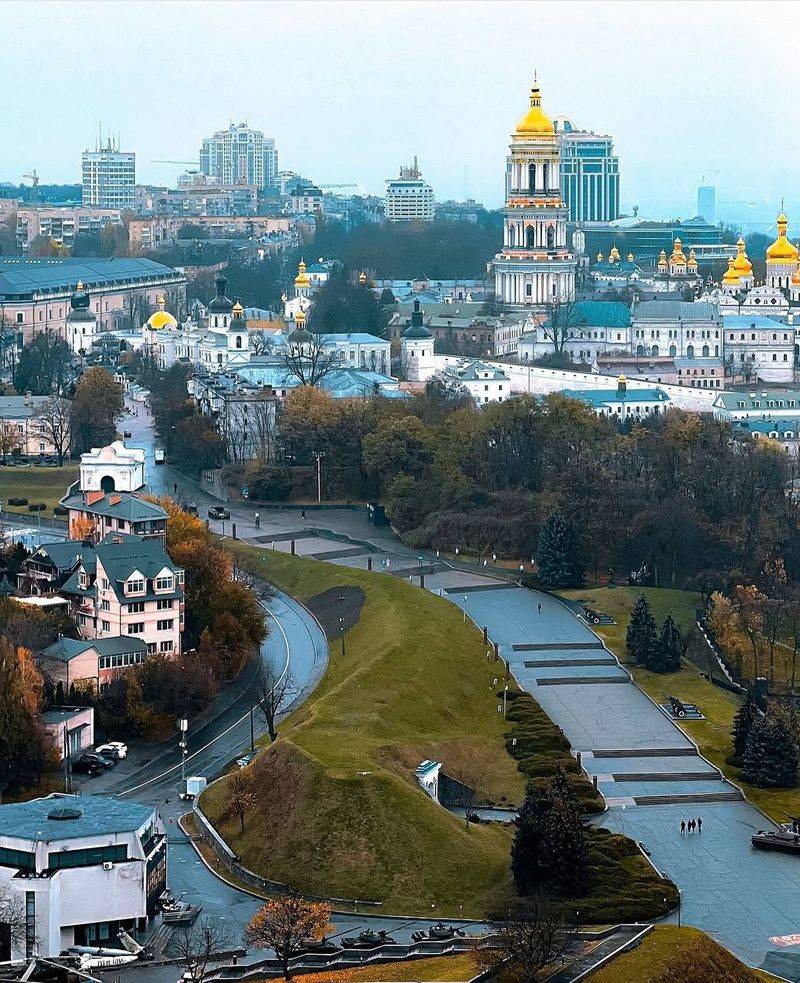
Fighting a war and running an economy at the same time is an almost impossible task, and Ukraine knows this better than anyone. The IMF projected real GDP growth of only 1% to 1.6% for 2026, a number that feels almost optimistic given the scale of ongoing destruction.
Infrastructure damage, energy blackouts, and mass displacement keep pulling the economy backward even when aid money flows in.
Inflation hit 8.6% year over year in April 2026, and the IMF expected it to climb toward 10.5% by December. That means everyday goods keep getting more expensive for ordinary Ukrainians already stretched thin.
Large-scale foreign financial assistance has been the main lifeline keeping the currency and banking system from collapsing entirely.
Labor shortages are a serious problem too, as millions of workers have fled abroad or been mobilized into the military. Reconstruction needs are enormous, and the bill grows with every month of conflict.
Without sustained donor financing, economists warn that even basic macroeconomic stability could become very hard to maintain.
Turkiye

Imagine paying nearly 29% more for groceries than you did just a year ago. That is the reality many households in Turkiye face, with the IMF projecting average consumer-price inflation of around 28.6% for 2026.
It is a massive improvement from the jaw-dropping triple-digit rates seen a couple of years back, but it still stings hard for families trying to budget.
Real GDP is expected to grow around 2.9%, which sounds decent until you consider that inflation is eating away at whatever income gains people make. Tight monetary policy has been the main weapon against rising prices, but keeping interest rates high also makes borrowing expensive for businesses trying to invest and grow.
The balancing act is genuinely tricky.
End-2026 inflation is forecast near 23%, down from 30.9% at the close of 2025, which shows the direction of travel is at least positive. Slower wage growth is helping cool prices, but workers feel the squeeze when their paychecks do not stretch as far.
Getting inflation down to normal levels without triggering a sharp recession remains the central economic challenge for policymakers in Ankara.
Romania
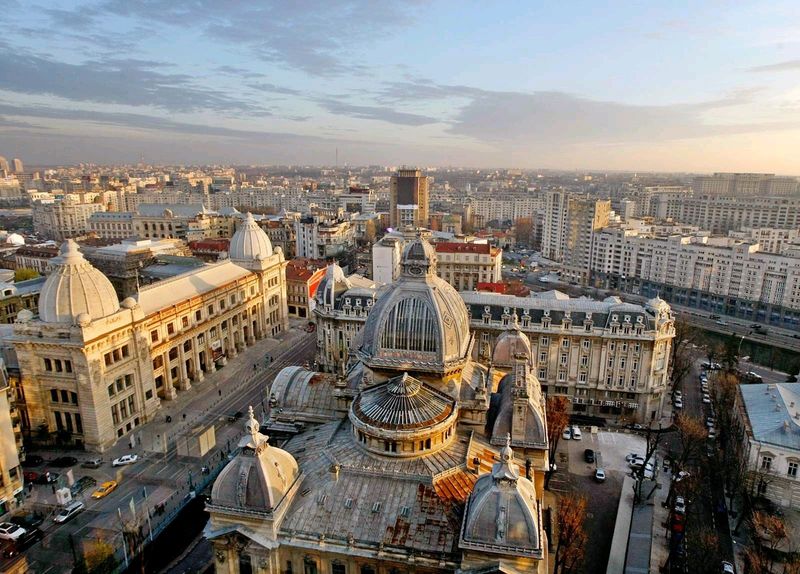
Romania is caught in a frustrating triple squeeze that would give any finance minister sleepless nights. The European Commission expects GDP to grow by just 0.1% in 2026, which is barely a heartbeat above zero.
Meanwhile, inflation is averaging 7.0%, meaning prices are rising much faster than the economy is actually growing.
Making things trickier, the government deficit is forecast at 6.2% of GDP, one of the highest in the entire EU. To try to close that gap, authorities have introduced tax increases and frozen public-sector wages and pensions.
Those measures hit household budgets directly, pulling down the consumer spending that could otherwise help the economy pick up speed.
Public debt is still lower than in countries like France or Italy, sitting around 59% of GDP in 2025, but it is climbing quickly toward a projected 63.4% by 2027. EU-funded investment programs provide some hope, acting as a financial cushion that keeps construction and infrastructure projects alive.
Without that external support, Romania’s economic situation would look considerably darker heading into the second half of the decade.
Moldova
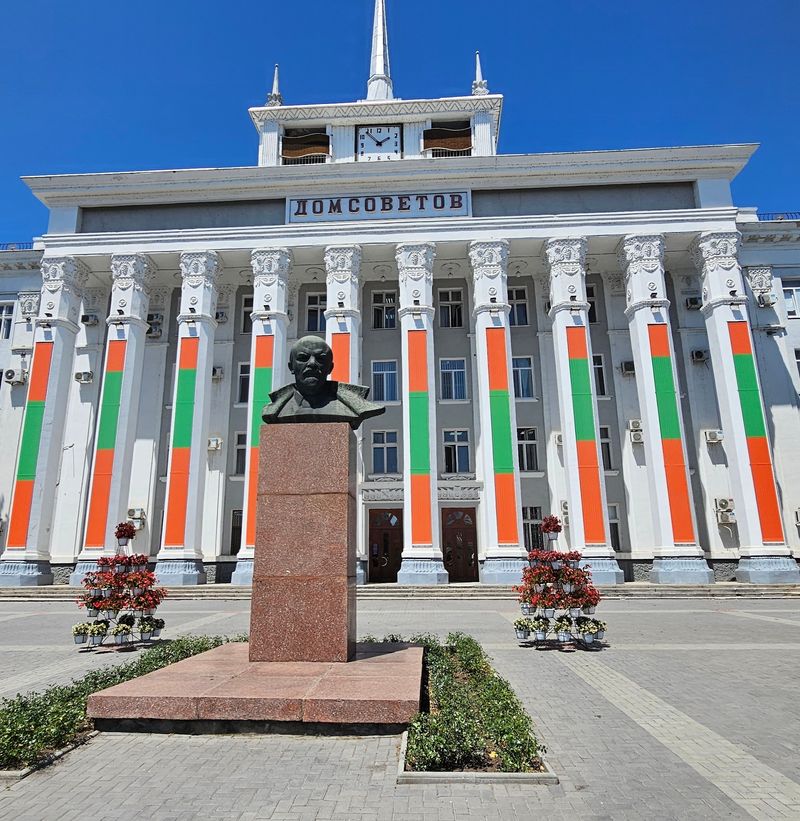
Squeezed between Romania and a war zone, Moldova carries more economic risk per square kilometer than almost any other country in Europe. Its economy is tiny, its energy supply is fragile, and a large share of its working-age population has emigrated in search of better opportunities abroad.
That brain drain makes building a stronger economy at home extremely difficult.
An IMF assessment in May 2026 lowered expected growth to about 1.5% while projecting average inflation of 8.1%. Renewed energy pressures were cited as a key reason for the downgrade, since Moldova depends heavily on imported power and fuel.
When energy prices spike, the impact ripples quickly through transportation costs, heating bills, and food prices.
The current-account deficit could approach a staggering 19.6% of GDP in 2026, meaning Moldova imports far more than it exports and relies heavily on remittances and foreign loans to cover the gap. EU integration efforts offer a genuine path toward better infrastructure, investment, and institutional quality.
However, the road to that better future requires navigating significant structural reforms that take years to produce visible results for ordinary citizens.
Russia

For a few years, Russia’s defense spending boom made it look like the economy was powering along just fine. Now that sugar rush is fading fast.
The IMF projects real GDP growth of just 1.1% for 2026, and the World Bank was even more cautious, forecasting only 0.8%. After years of wartime stimulus, the slowdown is becoming increasingly hard to paper over.
Consumer-price inflation is averaging around 5.6%, which sounds manageable compared to some neighbors, but high interest rates designed to fight that inflation are making loans expensive for businesses and households alike. International sanctions continue to restrict access to technology, financial markets, and key imports, creating bottlenecks that slow productivity across many sectors of the economy.
Energy exports and government spending remain the two main pillars holding the economy upright. The trouble is that wartime fiscal commitments are enormous, and sustaining them while growth slows puts real pressure on the budget.
Labor shortages caused by military mobilization add another layer of stress. Without meaningful productivity improvements, Russia faces the prospect of an economy that grows more slowly than its ambitions and obligations require.
Italy

Italy has one of the most beautiful countries in the world and one of the heaviest debt loads in Europe. Those two facts have coexisted for decades, but the combination gets more uncomfortable every year that growth stays weak.
The European Commission expects GDP to expand just 0.5% in 2026, which is barely enough to keep pace with population needs, let alone chip away at the debt pile.
Gross public debt is projected to climb from 137.1% of GDP in 2025 to 139.2% by 2027. That is a number so large it is hard to visualize.
To put it simply, Italy owes more than a full year of everything its entire economy produces, and then some. Rising interest costs mean a bigger slice of the budget goes toward debt payments rather than schools, hospitals, or infrastructure.
EU-funded investment is providing a helpful boost, keeping construction and modernization projects moving. But weak consumer spending and an uncertain export environment make organic growth hard to generate.
The core problem is a kind of economic catch-22: slow growth makes the debt harder to manage, and the debt burden makes bold growth-supporting investments harder to afford.
France

France has long prided itself on a generous social model, excellent infrastructure, and a strong industrial base. The problem in 2026 is that paying for all of it has become increasingly awkward.
The European Commission forecasts GDP growth of only 0.8%, which is not terrible, but it is not nearly enough to fix the country’s growing fiscal headache.
The government deficit is forecast to stay at 5.1% of GDP, nearly double the EU’s 3% reference limit. Public debt is heading toward 118% of GDP this year and is expected to break 120% by 2027.
As debt climbs, interest payments grow, and those payments compete directly with spending on public services that French citizens expect and value.
Unemployment is another sore spot, rising from 7.7% in 2025 to an expected 8.3% in 2026. More jobless workers means less tax revenue and more social spending, which makes the deficit problem worse in a self-reinforcing cycle.
France still has a large, diversified economy with genuine strengths in aerospace, luxury goods, and energy. But restoring fiscal discipline without killing already modest growth is a genuinely difficult policy puzzle with no painless solution.
Finland

Finland is not a country most people associate with economic trouble, which makes its current situation all the more surprising. After growing just 0.2% in 2025, the economy is only expected to expand 0.8% in 2026.
For a country known for its innovation, education system, and high living standards, that is a disappointing performance by any measure.
The unemployment rate averaging 10.1% is the real shocker. That figure is among the highest in the entire European Union, and it represents a serious drag on consumer spending and tax revenues.
Weak residential construction has been one culprit, as higher borrowing costs hit the housing market hard and left many construction workers without projects.
Public finances are under pressure too, with the government deficit forecast at 4.5% of GDP and public debt rising toward 93% by 2027. That trajectory is not catastrophic, but it is moving in the wrong direction for a country that traditionally prided itself on fiscal prudence.
Growing investment in defense and data infrastructure offers some optimism for future job creation. However, translating those long-term investments into near-term employment and consumer confidence is a challenge Finland has not yet fully solved.
Belgium

Belgium is home to the EU’s headquarters, but that prestigious address has not insulated it from some serious fiscal headaches. The European Commission projects GDP growth of just 0.7% in 2026, which is underwhelming for a wealthy country with a highly educated workforce and strong service sector.
The economy is moving, but not nearly fast enough to solve the underlying budget problem.
The government deficit is forecast at a stubborn 5.2% of GDP, and public debt already sat at 107.9% of GDP at the end of 2025. By 2027, that debt could climb to 112.8%, a trajectory that makes bond markets nervous and raises borrowing costs over time.
Belgium also faces a classic structural squeeze: an aging population means healthcare and pension costs keep rising while the working-age population grows more slowly.
Defense spending is also increasing, adding another line item to an already stretched budget. Inflation of 3.4% is not extreme, and unemployment at 6.6% is manageable, so the economy is not in crisis territory.
The real risk is that without meaningful fiscal reform, Belgium’s debt could reach levels where reducing it becomes genuinely painful. Small adjustments now are far less disruptive than large corrections forced by a future market reaction.
Germany
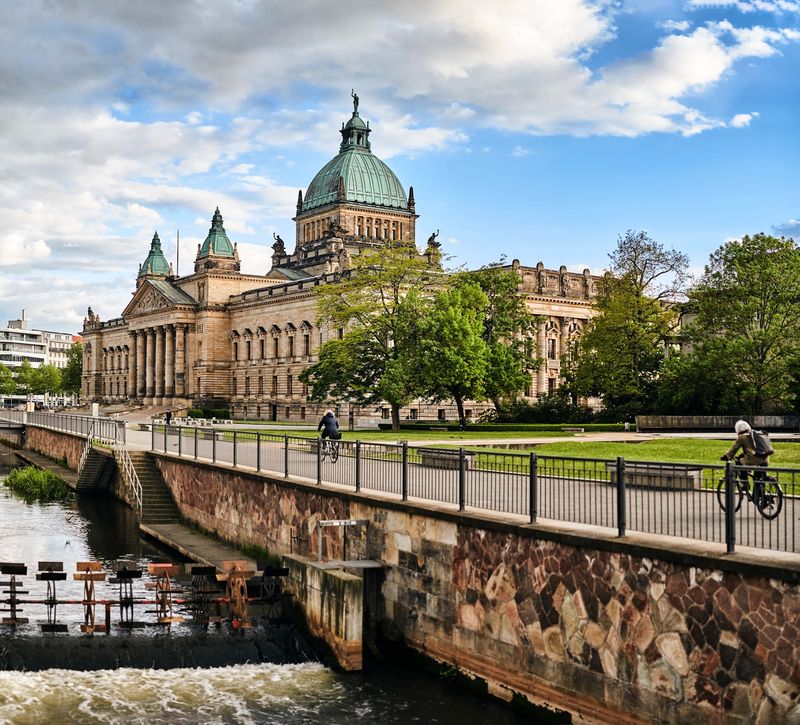
Germany used to be the engine of the European economy. Right now, that engine is sputtering.
After two consecutive years of recession, the European Commission expects only 0.6% growth in 2026 and 0.9% in 2027. For the continent’s largest economy, those numbers send ripples of concern well beyond Germany’s own borders.
High energy costs have been brutal for German industry, which relies heavily on energy-intensive manufacturing. Car factories, chemical plants, and steel producers have all felt the pain of expensive electricity and gas.
Export demand has also softened as key trading partners slow down, leaving German manufacturers with fewer orders and more uncertainty about the year ahead.
Public investment and rising defense expenditure should provide some economic stimulus, but they will also push the government deficit higher, creating a new fiscal tension for a country that traditionally guards budget discipline fiercely. Because Germany sits at the center of European supply chains and trade networks, its weakness does not stay neatly inside its borders.
Slower German demand reduces orders for suppliers in Poland, Czech Republic, Austria, and beyond, spreading the economic chill across the wider region.
Hungary

Hungary’s economy has bounced back into growth mode, but look a little closer and the fiscal picture starts to look uncomfortable. The European Commission projects GDP growth of 1.8% for 2026, which is one of the better performances in Central Europe.
The catch is that the government deficit is expected to jump to 6.2% of GDP, one of the highest in the EU this year.
Public debt is climbing from 74.6% of GDP in 2025 toward 76.8% by 2027. That would not be alarming on its own, but Hungary’s interest costs are particularly painful.
Debt-servicing expenses were close to 5% of GDP in 2024, the highest level in the entire European Union. Paying that much just to service existing debt leaves very little room for productive investment or emergency spending.
Inflation of 3.2% is relatively contained, but the combination of a big deficit, rising debt, and sky-high interest costs creates a fragile fiscal position. Any unexpected shock, whether from a global slowdown, energy price spike, or loss of EU funding, could quickly make things worse.
Hungary’s challenge is to grow fast enough to generate the tax revenues needed to bring those borrowing costs under control before the window closes.
Slovakia

Slovakia built its modern economy on car factories and export manufacturing, and for a long time that strategy worked brilliantly. Now the cracks are showing.
The European Commission expects only 0.8% GDP growth in 2026, a pace that feels especially slow for a country that spent the 2000s and 2010s as one of Europe’s fastest-growing economies.
Inflation of 4.3% is notably above the euro-area average, which hurts Slovak households more than headline numbers suggest, because wages have not kept pace. The government deficit is forecast at 4.6% of GDP this year and could widen further to 5.4% by 2027 without additional policy action.
Public debt is projected to rise from 61.4% of GDP in 2025 to nearly 67% by 2027, a fast enough increase to raise eyebrows in Brussels.
Slovakia’s heavy reliance on European export markets is both a strength and a vulnerability. When German or French consumers spend less, Slovak factories feel it almost immediately in order books.
Fiscal consolidation measures are necessary to stabilize the budget, but they also pull spending power out of the domestic economy at exactly the wrong moment. Finding a way to tighten the budget without completely killing consumer demand is Slovakia’s central economic challenge right now.
Austria

Austria is the kind of country that usually sits comfortably in the middle of European economic rankings, not too troubled, not too flashy. But 2026 has pushed it into uncomfortable territory.
After a prolonged weak patch, the European Commission expects GDP to grow just 0.6% this year, barely enough to generate meaningful new jobs or government revenue.
Inflation at 3.0% and unemployment at 5.8% are not alarming in isolation, but the fiscal picture adds real pressure. The government deficit is projected at 4.1% of GDP, above the EU’s 3% threshold, while public debt climbs to 83.4% of GDP in 2026 and continues rising toward 84.9% in 2027.
Austria has not historically been a high-debt country, so this upward drift is a genuine shift in its fiscal profile.
Aging-related costs are a major driver of spending pressure. Healthcare and pension demands grow as the population gets older, and those costs are difficult to reduce politically without significant voter backlash.
Defense investment is also rising, adding another pressure on the budget. Fiscal consolidation measures are helping slow the deterioration, but they also restrain the domestic spending that could otherwise help the economy grow its way out of the current slow patch more quickly.
Bosnia and Herzegovina

Bosnia and Herzegovina does not carry the enormous debt loads that trouble Italy or France, but it faces a different kind of economic frustration: growth that is simply too slow to close the income gap with the rest of Europe. The IMF projected GDP growth of just 2.0% for 2026, which sounds reasonable until you realize how far behind EU living standards the country still sits.
Inflation of 5.4% is uncomfortably high for a population with limited purchasing power, and the current-account deficit is widening to 4.9% of GDP. Weaker European demand hits Bosnia’s exporters hard, since the country sells much of its output to EU neighbors.
Rising labor costs and declining competitiveness make it harder to win new business in a crowded regional market.
Domestic political uncertainty is another drag that economists politely list as a downside risk but locals know is a constant source of frustration. Bosnia’s complex governance structure can slow decision-making on key reforms to a crawl.
The IMF estimates that faster implementation of EU-related reforms could lift long-term growth by 0.5 to 1 percentage point annually. That might sound small, but compounded over a decade it would make a meaningful difference to wages, employment, and living standards for ordinary Bosnians.
United Kingdom

Britain is not in crisis, but it is stuck in a frustrating slow lane that is starting to feel permanent. The IMF projected GDP growth of just 1.0% for 2026, a modest figure that reflects an economy struggling to find its footing after years of inflation shocks, Brexit adjustment costs, and weak productivity growth.
For a G7 economy, that is a disappointing result.
Higher energy prices are pushing inflation back up just when households were hoping for relief. The IMF warned that monetary policy needs to stay tight enough to stop energy-driven price rises from spreading into wages and other goods.
That means borrowing costs stay elevated for longer, which squeezes mortgage holders, small businesses, and anyone relying on credit to invest or expand.
Fiscal flexibility is limited too. The government must balance stabilizing its debt level with funding public services that have faced years of underinvestment.
There is no obvious easy option available. Spending more risks spooking bond markets; cutting back risks further weakening a sluggish economy.
For households and businesses, the practical reality is expensive borrowing, slow wage gains in real terms, and a government with limited room to offer meaningful relief anytime soon.
Share this story