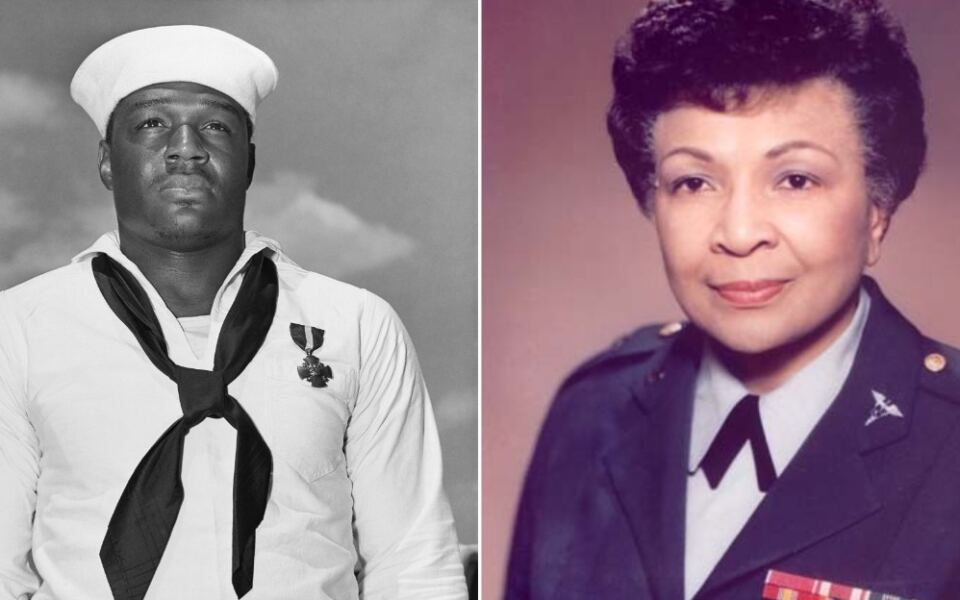
Throughout American history, Black men and women have stepped up to serve their country even when their country did not always treat them fairly. Their bravery on battlefields, in the skies, and behind the scenes helped shape the military we know today.
Many of them fought two battles at once: one against foreign enemies and one against discrimination at home. Their stories deserve to be told, remembered, and passed on to every generation that follows.
Crispus Attucks
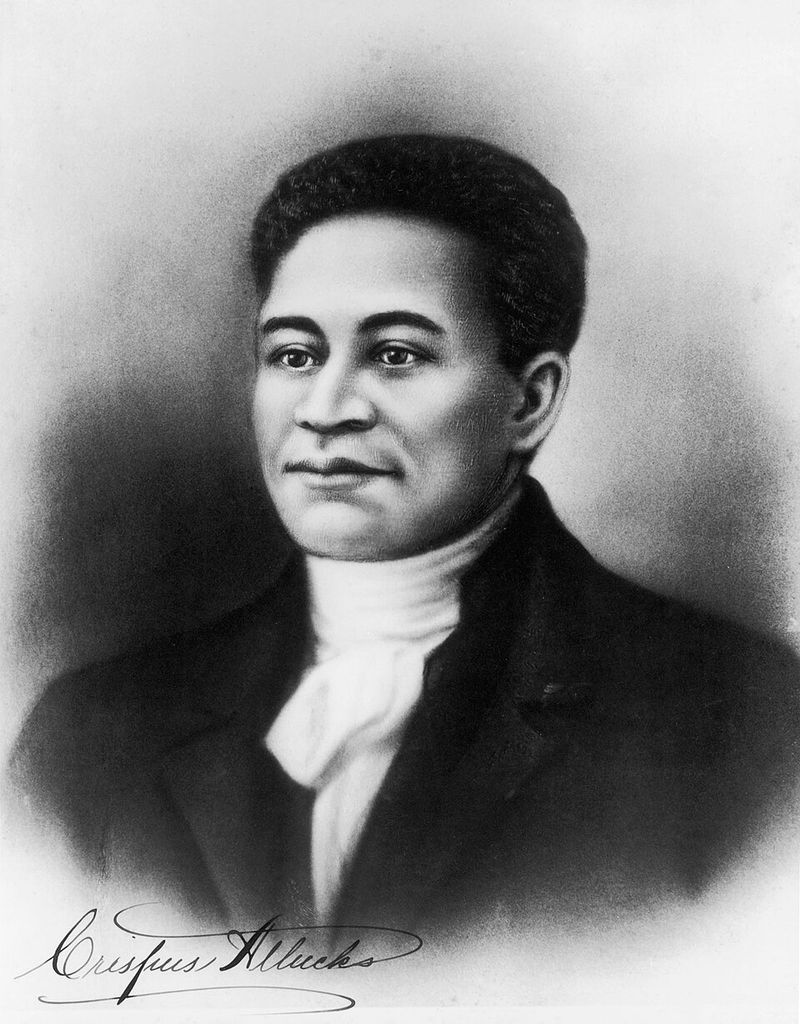
Before the Revolutionary War had a name, Crispus Attucks had already given his life in the conflict that would define a nation. A sailor of African and Indigenous ancestry, Attucks was part of a crowd that confronted British soldiers in Boston on the night of March 5, 1770.
When the troops opened fire, Attucks was struck by two musket balls and became one of five men killed in what history would call the Boston Massacre.
Colonial leaders quickly used his death as a rallying cry against British rule. His name appeared in pamphlets and speeches, making him a powerful symbol even before the war officially began.
In later generations, African Americans claimed Attucks as an early symbol of Black sacrifice in the fight for American independence. A monument honoring him stands on Boston Common today.
The details of his life remain mostly unknown, but his place in that pivotal night is firmly documented.
Peter Salem
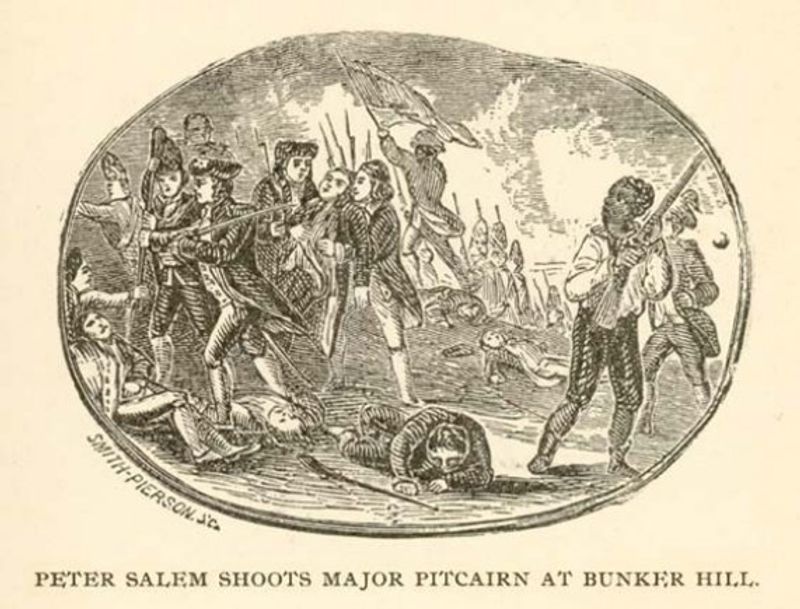
Peter Salem’s path from slavery to the battlefield is one of the Revolutionary War’s most compelling stories. Born enslaved in Framingham, Massachusetts, around 1750, he was emancipated shortly before joining the colonial militia.
He fought at Lexington and Concord, two of the war’s very first engagements, and later stood his ground at the Battle of Bunker Hill on June 17, 1775.
American tradition has long credited Salem with firing the shot that killed British Major John Pitcairn during that battle. Historians approach that claim carefully, noting that colonial accounts pointed to Salem while British accounts described multiple soldiers firing at once.
What the record clearly supports is that Salem kept enlisting long after many others went home. He served through campaigns at Saratoga, Monmouth, and beyond.
His years of continued service make him one of the most documented and dedicated Black soldiers of the entire Revolutionary War period.
William Harvey Carney
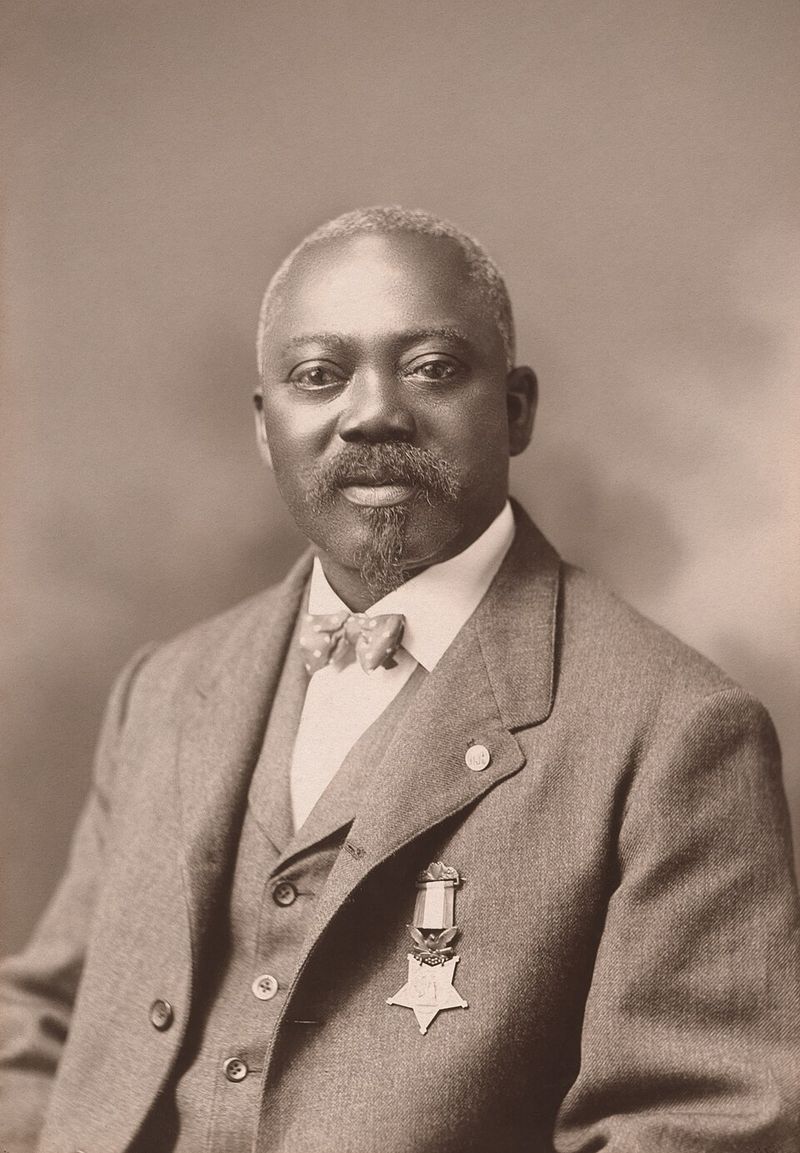
When the color bearer of the 54th Massachusetts Infantry fell during the assault on Fort Wagner, William Harvey Carney did not hesitate. He grabbed the regimental flag and pushed toward the Confederate fort, even as soldiers around him fell under heavy fire.
Born enslaved in Virginia, Carney had made his way to Massachusetts and enlisted in one of the Union Army’s most celebrated Black regiments.
The assault on July 18, 1863 was brutal. Carney was seriously wounded but never let the colors touch the ground.
He carried the flag safely away as Union troops withdrew from the fort’s walls.
His act of determination became one of the Civil War’s most remembered moments. Carney survived the war and eventually received the Medal of Honor in 1900.
His official citation specifically recognizes him for seizing the flag after the color sergeant fell and bringing it safely back despite multiple wounds sustained under intense enemy fire.
Robert Smalls
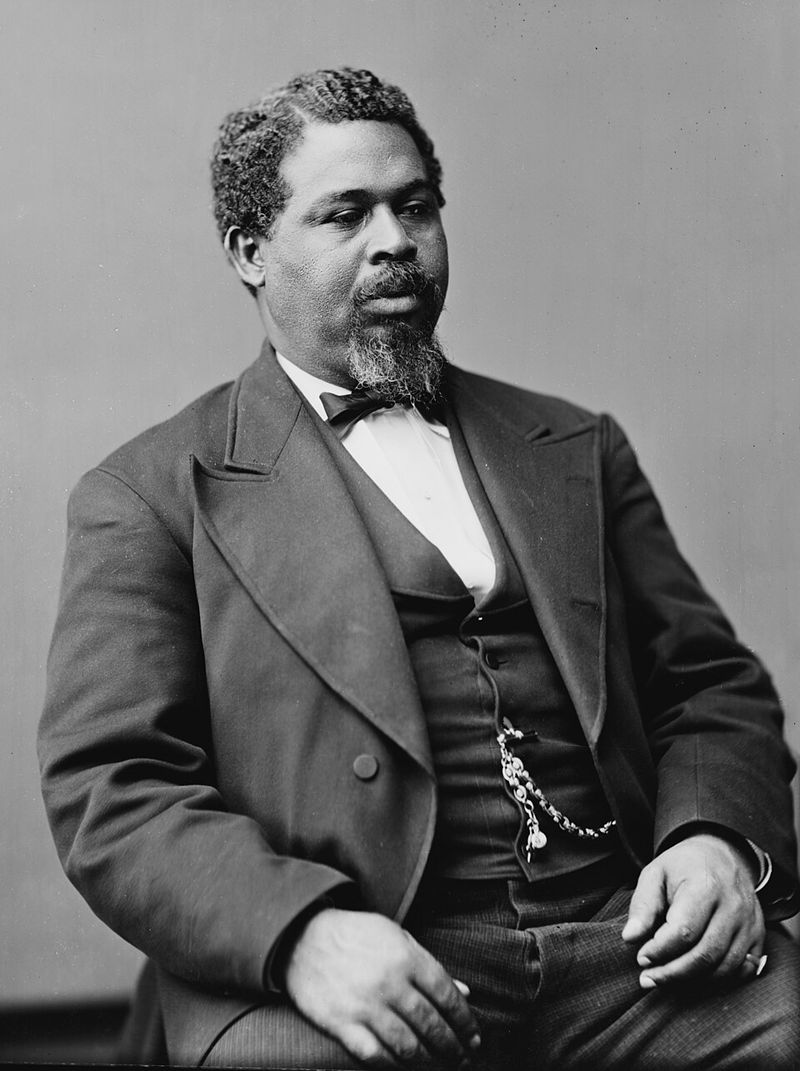
Robert Smalls pulled off one of the most audacious escapes in American history, and then turned that single act into a lifetime of service. In May 1862, Smalls was an enslaved pilot aboard the Confederate transport steamer Planter, docked in Charleston Harbor.
After the ship’s white officers went ashore one night, Smalls and other enslaved crewmen took control of the vessel, picked up family members from a nearby wharf, and navigated through Confederate-held waters using the correct signals to pass guarded forts.
They surrendered the Planter to the Union Navy, delivering both the ship and valuable knowledge of Confederate harbor defenses. Smalls later served aboard Union vessels and eventually commanded the Planter himself.
After the war ended, he entered politics and served in the South Carolina legislature and the U.S. House of Representatives.
His career made him one of the most influential Black political figures of the entire Reconstruction era.
Henry Johnson
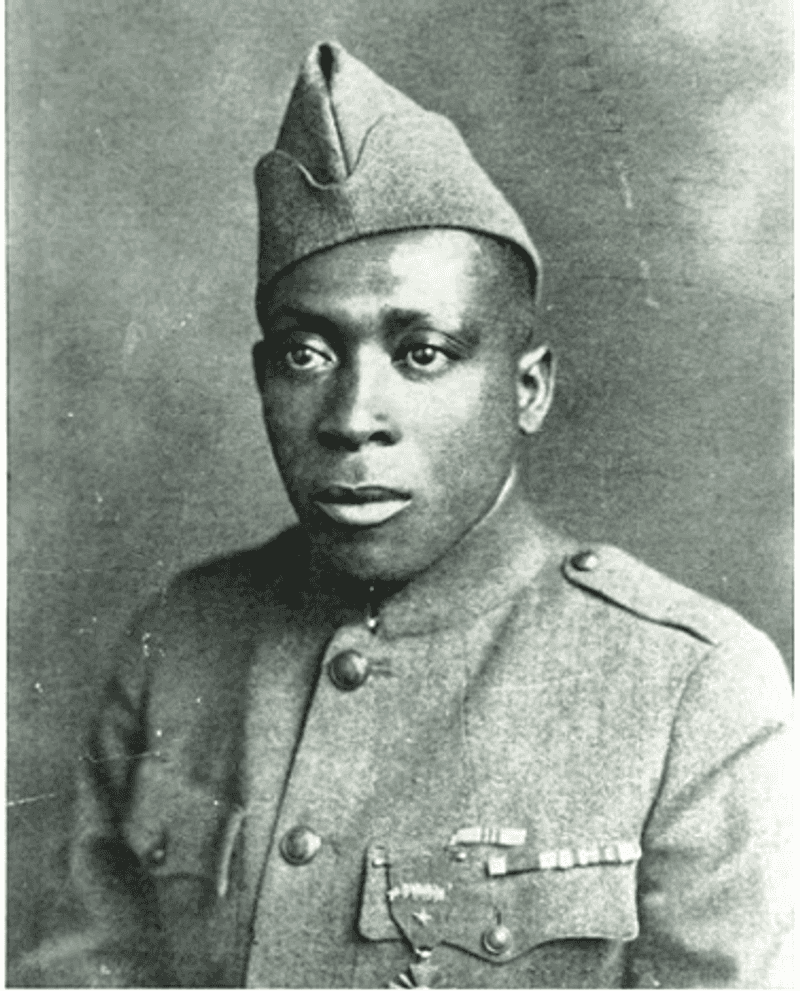
Henry Johnson’s fight on the night of May 15, 1918 lasted only minutes but left a mark that took nearly a century to fully honor. Assigned to the 369th Infantry Regiment, known as the Harlem Hellfighters, Johnson served under French command because the U.S. military remained segregated.
When at least a dozen German soldiers attacked the forward position he shared with fellow soldier Needham Roberts, Johnson refused to retreat.
Roberts had already been badly wounded. Johnson, despite his own injuries, kept fighting with his rifle, grenades, and eventually a bowie knife, preventing German troops from dragging Roberts away as a prisoner.
France awarded Johnson the Croix de Guerre avec Palme, one of its highest military honors, not long after the battle. American recognition took far longer.
He received the Distinguished Service Cross posthumously in 2002 and the Medal of Honor in 2015, more than 97 years after the night he earned it.
Eugene Bullard
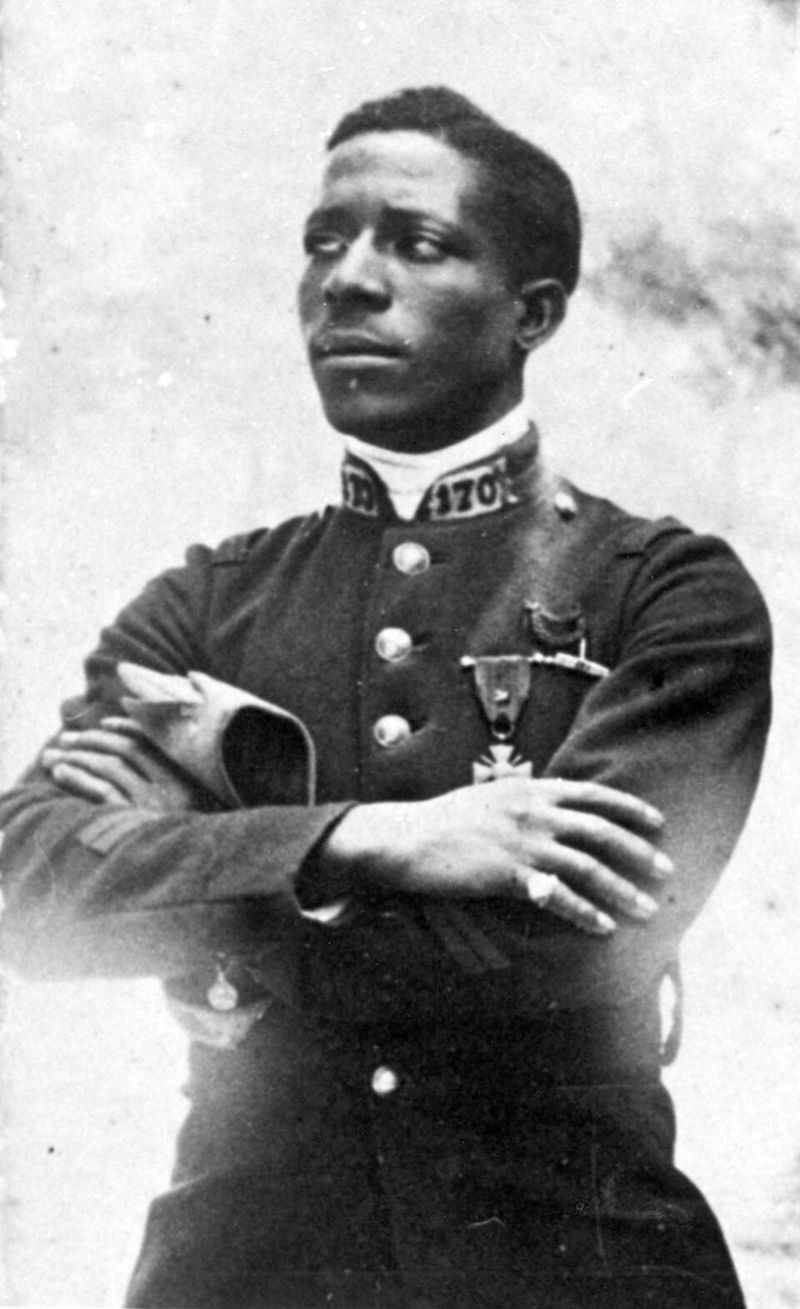
Eugene Jacques Bullard made history in the skies over France at a time when the United States military would not let him fly at all. Born in Georgia, Bullard left the American South as a young boy, eventually reached Europe, and built a life in France.
When World War I began, he joined the French Foreign Legion and was wounded at the Battle of Verdun before transitioning into aviation training.
In 1917, Bullard became a pilot in the French air service, flying combat missions and earning recognition from a country that valued his contributions. The National Museum of the U.S.
Air Force credits him with one confirmed aerial victory.
When Germany invaded France in 1940, Bullard fought again in defense of his adopted country. France awarded him multiple honors over the course of his life.
Back in the United States, his remarkable story went largely unrecognized for decades before historians brought it to wider attention.
Doris “Dorie” Miller
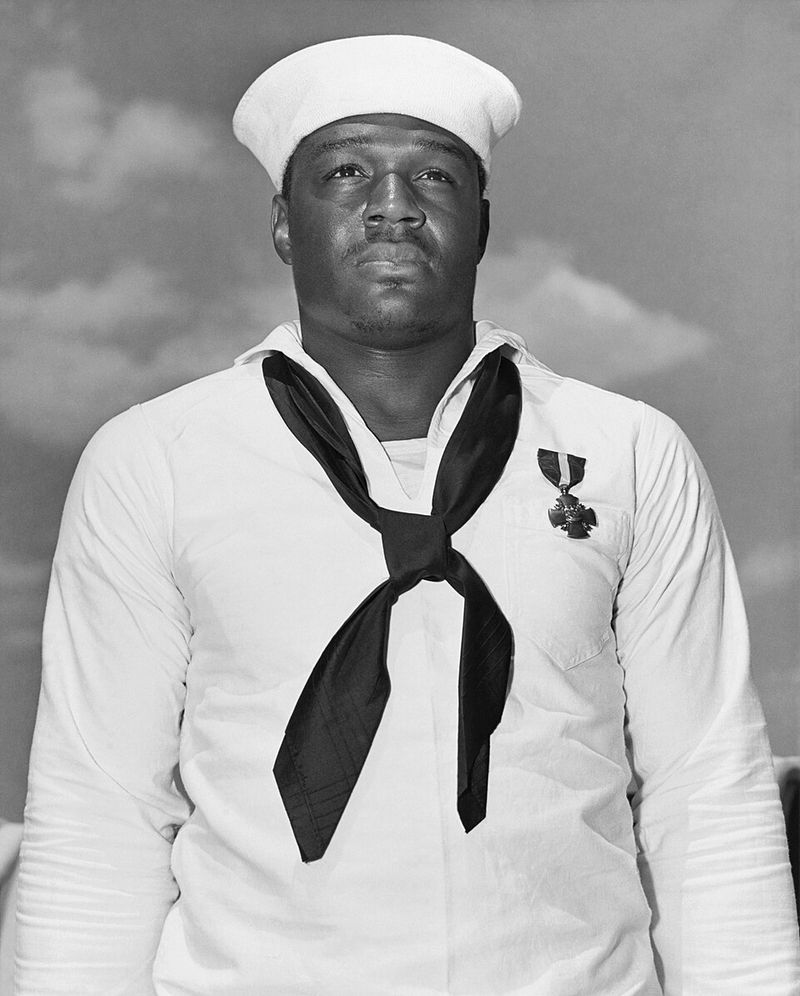
Doris Miller was a mess attendant aboard the USS West Virginia, one of the lowest-ranked positions available to Black sailors in a deeply segregated Navy. On December 7, 1941, that rank meant nothing when Japanese aircraft swept over Pearl Harbor.
Miller moved quickly to help wounded sailors, including his mortally injured commanding officer, carrying men through chaos and fire.
With no formal training as a gunner, Miller then took position at an unmanned anti-aircraft machine gun and fired at attacking aircraft until ordered to abandon the area. His actions under fire were steady and deliberate, not panicked.
He became the first Black sailor to receive the Navy Cross, then the Navy’s second-highest decoration for valor. Miller continued serving after Pearl Harbor until November 1943, when the escort carrier USS Liscome Bay was struck by a torpedo near the Gilbert Islands.
Miller was among the sailors who did not survive the sinking.
The Tuskegee Airmen
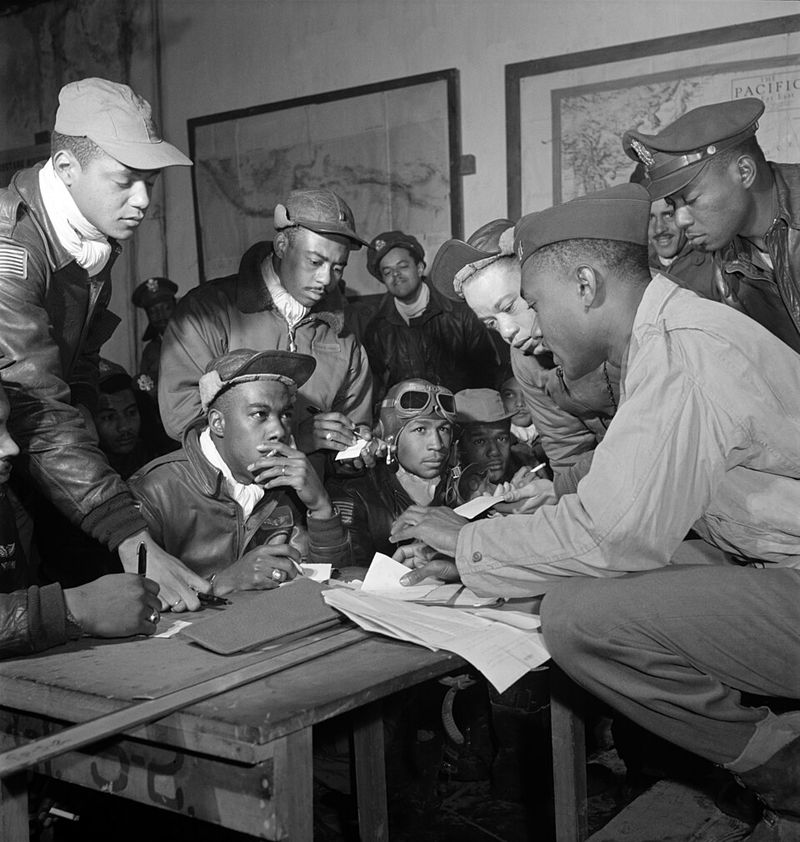
The Tuskegee Airmen were not a single soldier but a full generation of Black pilots, navigators, mechanics, and support personnel who proved what military leadership had long tried to deny. Their aviation program operated out of Tuskegee, Alabama, during a period when the entire U.S. armed forces remained racially segregated.
Black pilots trained there flew combat missions in North Africa and Europe, including high-stakes bomber escort operations over enemy territory.
A popular claim held that the Airmen never lost an escorted bomber to enemy fighters. Historians have since shown that record is a myth, with documented losses during certain missions.
What holds up is their overall combat effectiveness and the professional standard they maintained throughout the war.
Their broader impact extended far beyond aerial records. By performing at the highest levels, the Airmen directly challenged racist arguments about Black military ability and helped build the case for desegregating the U.S. armed forces after the war ended.
Ruben Rivers
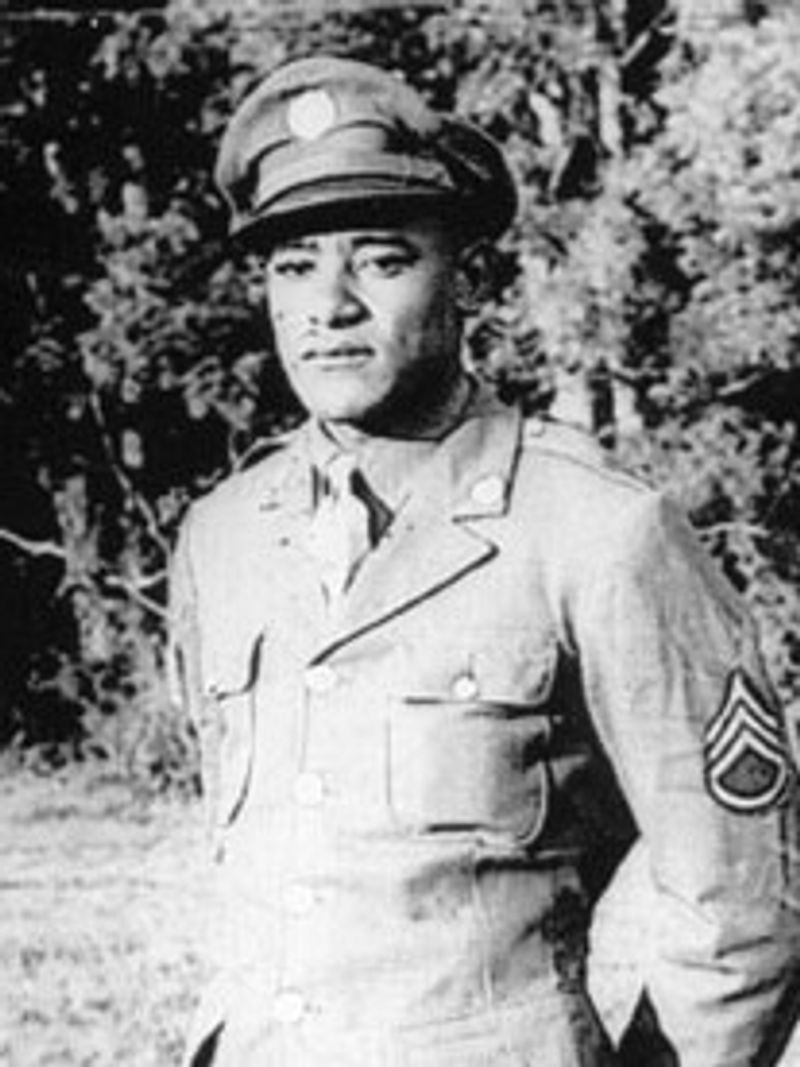
Staff Sergeant Ruben Rivers kept fighting after most soldiers would have accepted evacuation, and his decision to stay cost him his life while saving others around him. Rivers served with the 761st Tank Battalion, an all-Black unit known as the Black Panthers, during the push through France in the fall of 1944.
On November 16, his tank hit a mine near Guébling, France, and the explosion left his leg severely injured.
Rivers refused medical evacuation, took command of another tank, and continued leading his crew through the following days of intense combat. On November 19, his company ran into heavily fortified German anti-tank positions.
Rivers stayed forward and kept engaging the enemy while other vehicles pulled back. His tank was hit, and he was killed.
His commanding officer immediately recommended him for the Medal of Honor, but the award did not come during his lifetime. After a Department of Defense review of racial disparities in World War II honors, Rivers received the Medal of Honor posthumously in 1997.
Milton L. Olive III
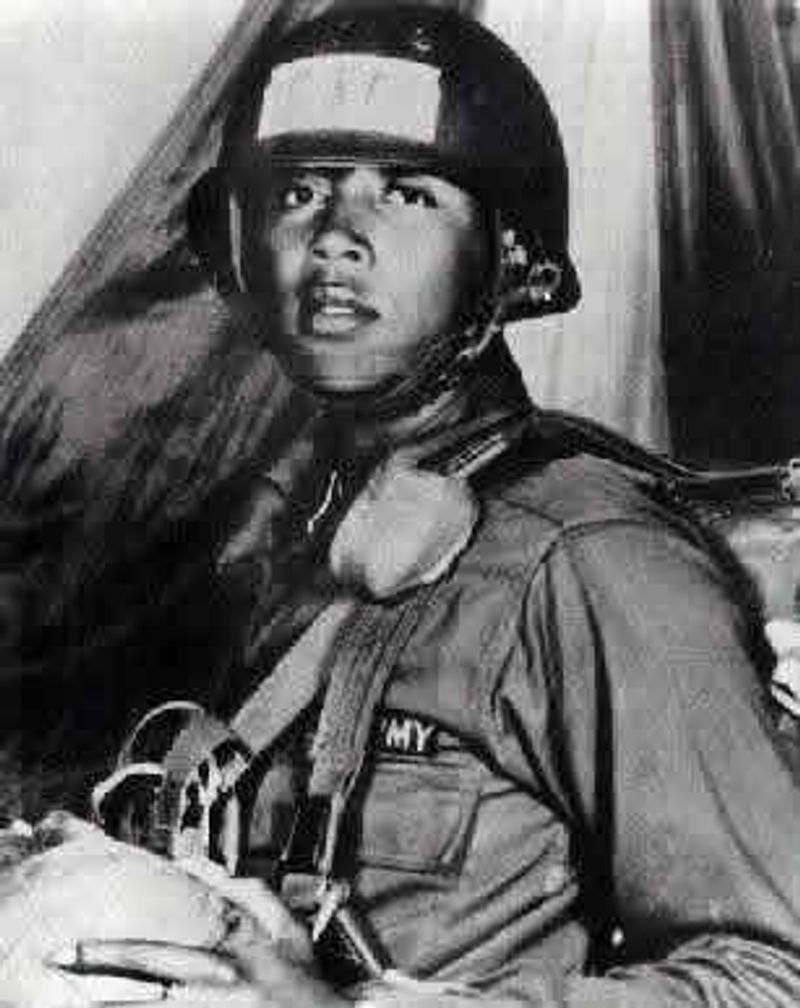
At 18 years old, Milton Lee Olive III made a decision in a fraction of a second that saved four lives at the cost of his own. On October 22, 1965, Olive was on patrol with the 173rd Airborne Brigade near Phu Cuong, South Vietnam, when his platoon came under attack from Viet Cong fighters.
During the chaos, a grenade landed directly among Olive and four fellow soldiers.
Rather than diving away from the blast, Olive grabbed the grenade and fell on it, absorbing the full explosion with his body. All four soldiers around him survived.
President Lyndon B. Johnson presented the Medal of Honor to Olive’s family at the White House in April 1966.
Olive became the first African American soldier of the Vietnam War to receive that distinction. His act of selflessness in those final seconds stands as one of the most extraordinary examples of battlefield sacrifice in American military history.
Lawrence Joel
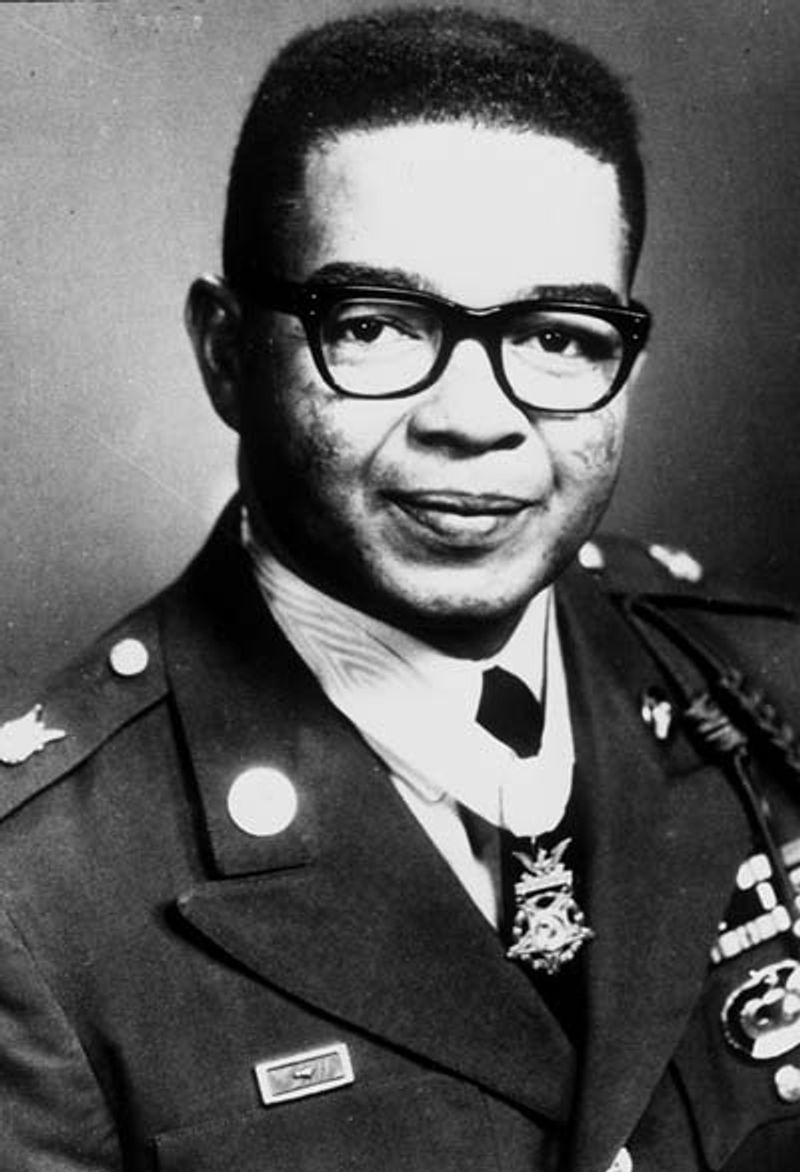
Lawrence Joel ran toward danger on November 8, 1965, not because it was unusual for a soldier, but because his job as a medic demanded it every time a bullet found a fellow serviceman. Joel was serving with the 1st Battalion, 503rd Infantry when a large Viet Cong force launched a fierce attack.
Within the first moments of contact, American soldiers were already falling wounded around him.
Joel pushed forward through enemy fire to reach casualties, treating soldiers while being shot at himself. He was wounded during the fighting but continued working, moving from man to man and organizing medical care throughout the battle.
President Lyndon B. Johnson presented Joel with the Medal of Honor in 1967.
His recognition carried historical weight beyond the personal honor: he became one of the most prominent Black Army medics to receive the nation’s highest award for valor, a recognition that highlighted both individual courage and the broader contributions of Black military medical personnel.
Colin Powell
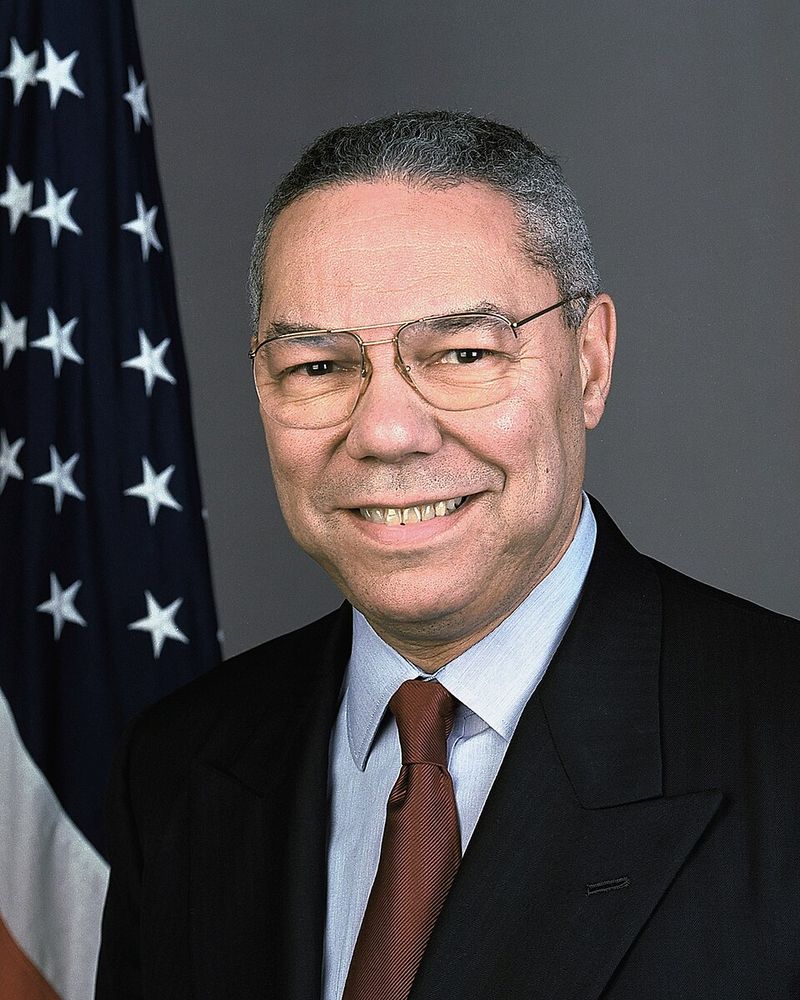
Colin Powell’s rise through the Army represents a form of barrier-breaking that played out not on a single battlefield but across four decades of sustained achievement. The son of Jamaican immigrants, Powell grew up in New York City and entered the Army through ROTC after graduating from the City College of New York.
He served in Vietnam and steadily built a career that moved through combat commands, staff positions, and senior advisory roles.
In 1989, President George H. W.
Bush appointed Powell as Chairman of the Joint Chiefs of Staff. He was the first African American to hold the position and, at 52, the youngest person to serve in that role at that time.
He led the Joint Chiefs through Operation Desert Storm.
After retiring from the Army in 1993, Powell returned to government as Secretary of State under President George W. Bush, becoming the first African American to hold that office as well, adding another chapter to an already landmark career.
Cathay Williams
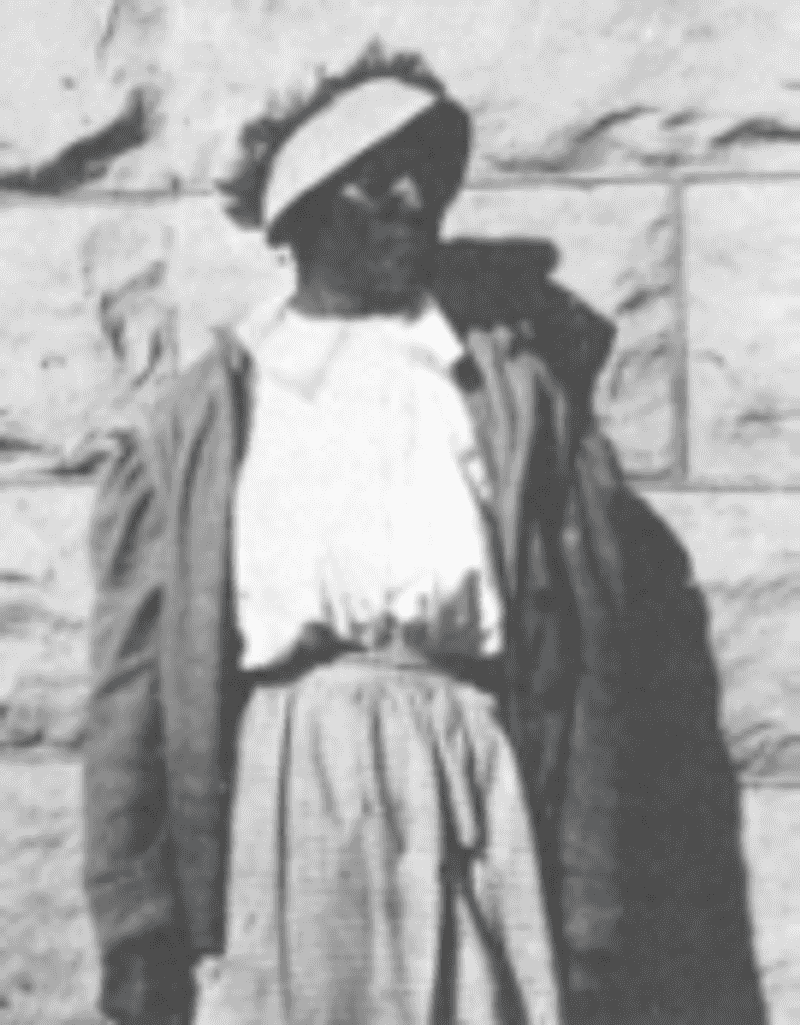
Cathay Williams found a way into the U.S. Army that no regulation had anticipated, and she served for nearly two years before anyone discovered her secret.
Born to an enslaved mother and a free father in Missouri, Williams worked with Union forces during the Civil War as a cook and laundress. In November 1866, she walked into a recruitment office and enlisted under the name William Cathay, presenting herself as a man.
Williams joined the 38th U.S. Infantry, one of the Black regiments whose members would later be collectively known as Buffalo Soldiers.
She served on frontier duty until repeated illness led an Army surgeon to examine her more closely and determine she was a woman. She received an honorable discharge in October 1868.
The National Park Service identifies Williams as the only known woman to have served in the U.S. Army as a Buffalo Soldier, placing her story at the intersection of Black history and women’s military history in a way that remains singular to this day.
Charity Adams Earley
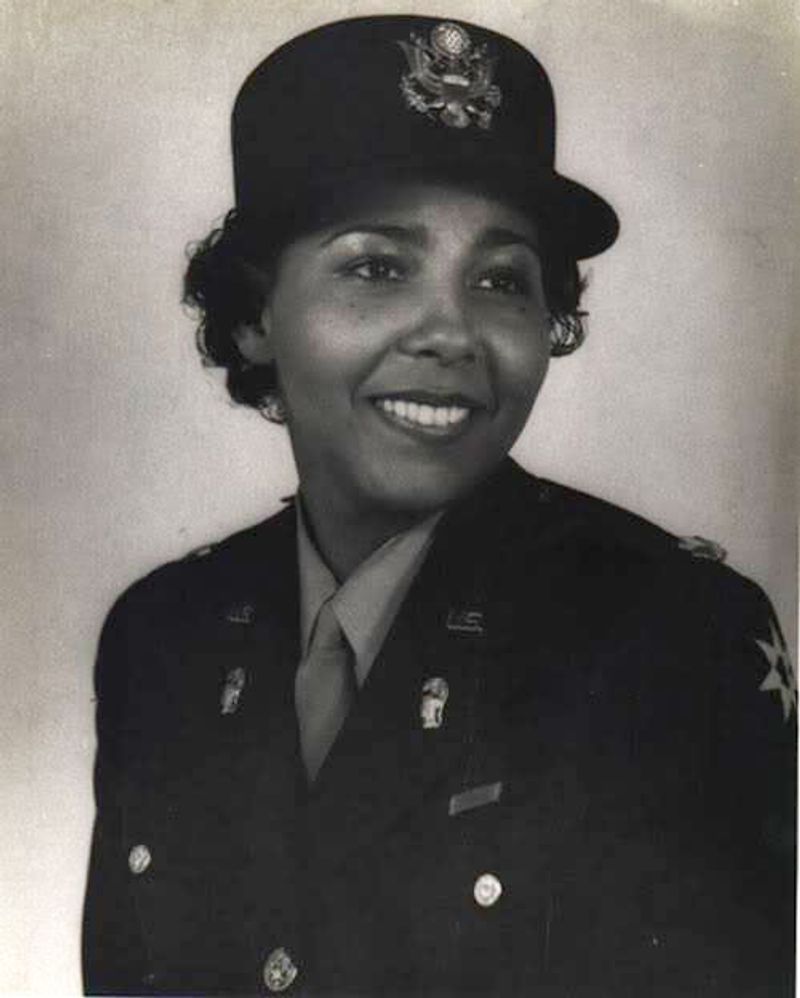
Charity Adams walked into a mail sorting facility in Britain in 1945 and turned what looked like an impossible backlog into an organized operation that moved millions of pieces of correspondence. Adams commanded the 6888th Central Postal Directory Battalion, known as the Six Triple Eight, a unit made up primarily of Black women serving overseas in the Women’s Army Corps.
When the unit arrived in Birmingham, England, millions of pieces of mail for American troops had piled up for months. Working in three shifts around the clock, the women developed a sorting system efficient enough to clear roughly 17 million pieces of mail during their overseas assignment.
Adams rose to lieutenant colonel, the highest rank then available to a woman in the Women’s Army Corps. She was also the first Black woman commissioned as an officer in that branch.
Her leadership of the Six Triple Eight remains one of the most distinctive contributions by a Black woman officer during the entire war.
Hazel Johnson-Brown
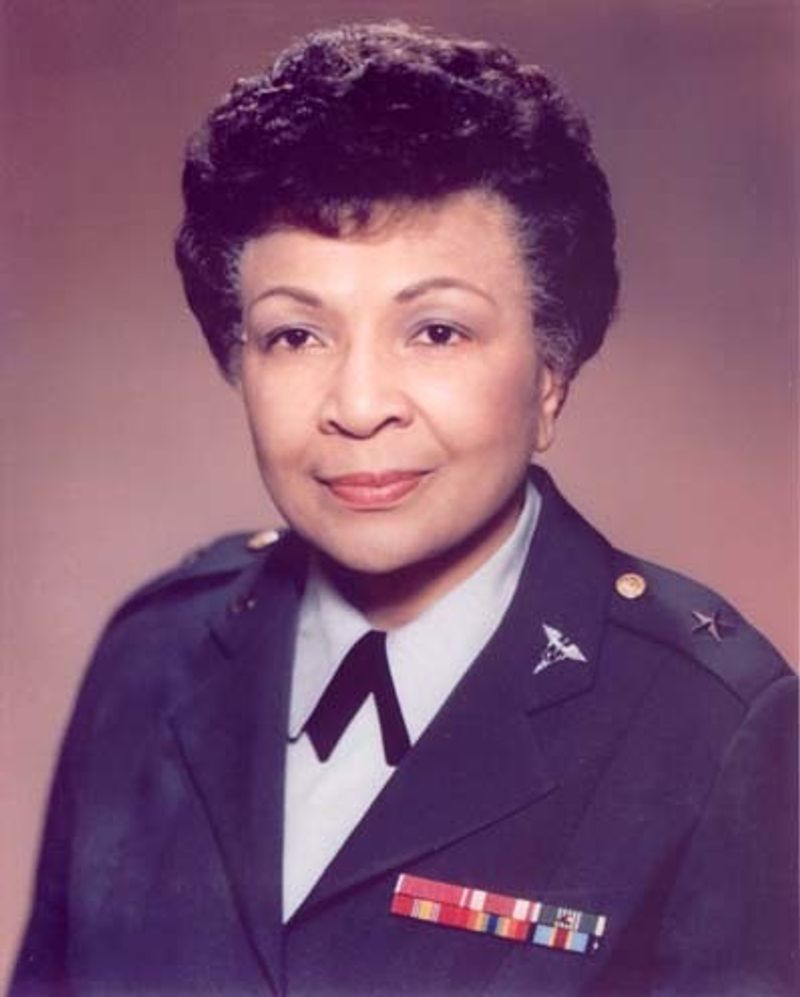
Hazel Johnson-Brown spent decades moving through a military institution that had not always been built with her in mind, and she reached the top of it anyway. Early racial discrimination in educational access shaped her path toward nursing, and she eventually entered the Army Nurse Corps in the 1950s.
Over the following years, she advanced through roles in clinical nursing, education, administration, and military leadership.
In 1979, Johnson-Brown was promoted to brigadier general, becoming the first Black woman in the history of the U.S. military to hold the rank of general officer. The promotion was not just personal: it marked a visible shift in who the military recognized as capable of senior command.
She also served as chief of the Army Nurse Corps, overseeing thousands of military nurses across the service. Her career helped demonstrate how thoroughly the armed forces had changed since the era of segregated units and closed opportunities that had defined military life for earlier generations of Black Americans.
Alwyn Cashe
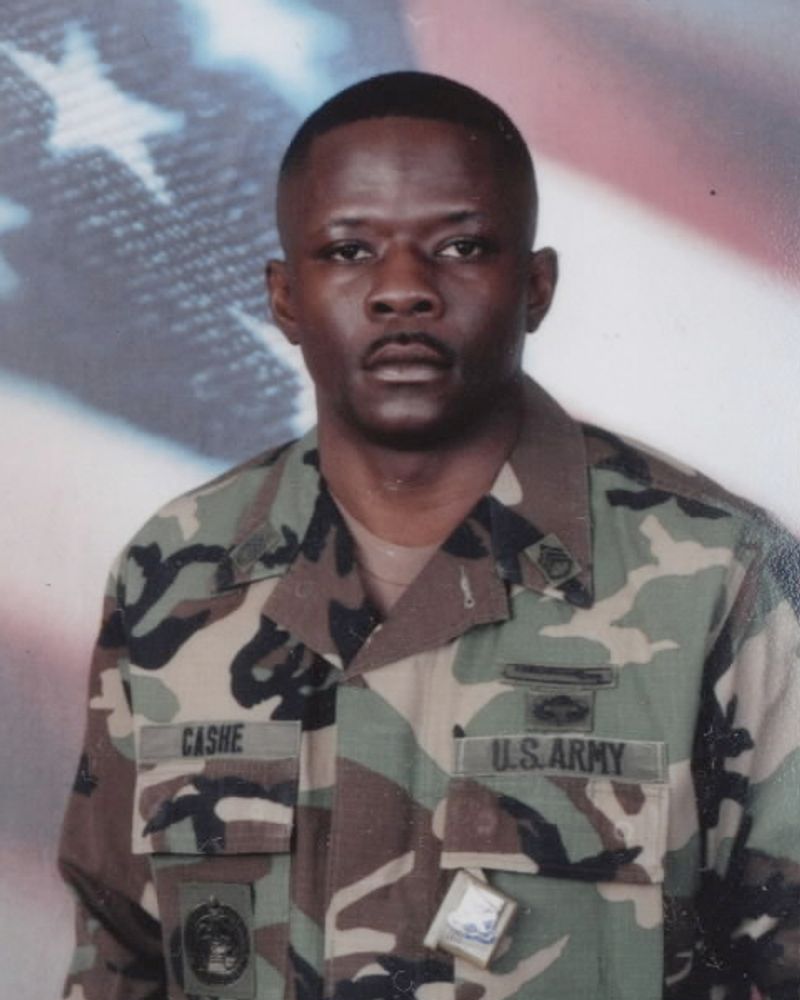
Alwyn Cashe had already escaped a burning vehicle when he turned around and went back in, and then went back again. On October 17, 2005, Cashe was leading a nighttime patrol near Samarra, Iraq, when his Bradley Fighting Vehicle was hit during an enemy attack and burst into flames.
He managed to get out, but soldiers were still trapped inside.
His uniform, soaked in fuel, caught fire as he pulled men from the wreckage. He kept returning despite the flames and the severity of his own burns.
Even after sustaining injuries over much of his body, Cashe insisted that other wounded soldiers be evacuated before him.
Cashe passed away from his injuries on November 8, 2005. He initially received the Silver Star for his actions, but advocates pushed for a higher recognition.
President Joe Biden posthumously awarded Cashe the Medal of Honor in December 2021, more than 16 years after the night he gave everything to bring his soldiers out alive.
Vanessa Guillen
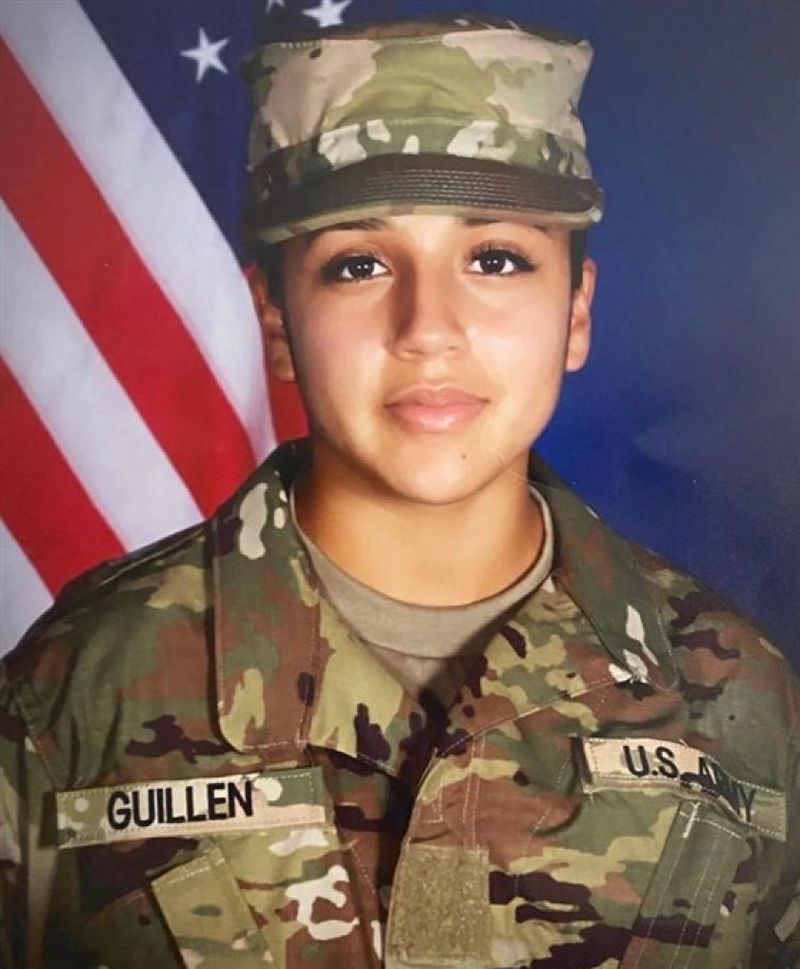
Vanessa Guillen was a U.S. Army specialist of Mexican American heritage whose 2020 murder at Fort Hood in Texas sparked a national conversation about how the military handles reports of sexual harassment and assault.
Guillen disappeared from the base in April 2020, and her remains were later found near the Leon River. The circumstances surrounding her disappearance drew immediate attention from her family, advocates, and eventually Congress.
Protests followed, along with congressional hearings and an independent review of conditions at Fort Hood. Legislation bearing her name was introduced in Congress to address gaps in military accountability.
Major reforms connected to her case were enacted through the fiscal year 2022 National Defense Authorization Act. Those provisions included requiring independent investigation of formal sexual harassment complaints and broader changes to how serious offenses move through the military justice system.
Her case remains one of the most significant catalysts for military reform in recent memory, and her name continues to represent the push for accountability within the armed forces.
Share this story