Some of the most consequential conversations in modern history never appeared in official minutes or public transcripts. They happened in dining rooms, reading lounges, and private meeting halls where membership was selective and the press was not welcome.
From London’s Pall Mall to Washington’s embassy row to the redwood forests of California, private clubs created spaces where politicians, scientists, financiers, and diplomats could speak without formal record. Understanding these institutions does not require conspiracy theories.
The documented history alone is remarkable enough, and this list walks through 13 clubs whose rooms intersected directly with the decisions that shaped nations.
1. Carlton Club, London, England
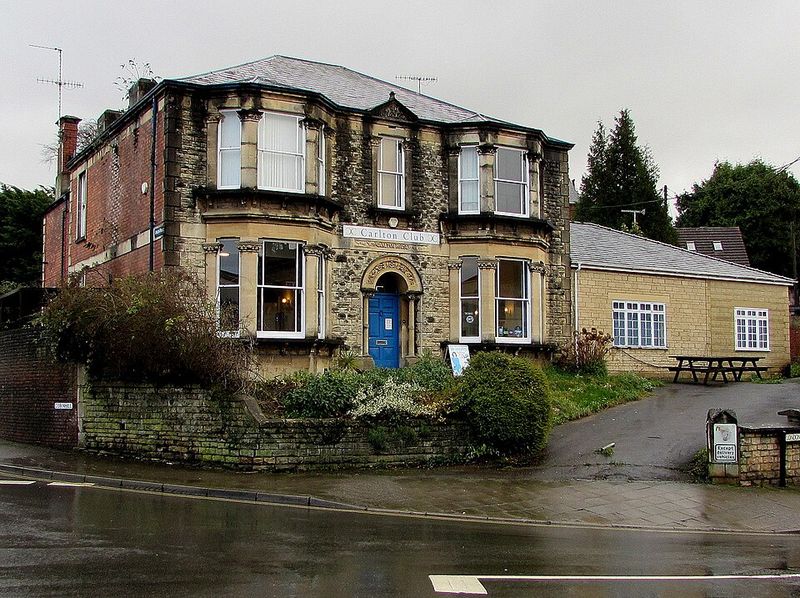
On October 19, 1922, a single afternoon meeting inside one London club ended a government. Conservative MPs assembled at the Carlton Club to vote on whether to continue supporting the coalition led by Liberal Prime Minister David Lloyd George.
Stanley Baldwin argued that Lloyd George’s leadership posed a direct threat to Conservative stability. The vote went against the coalition, Austen Chamberlain resigned as party leader, and Lloyd George’s government fell within days.
Founded in 1832 by Tory peers and MPs, the Carlton Club was built to give the Conservative Party a permanent organizational base before formal party headquarters existed. The 1st Duke of Wellington was among its founding members.
Its original Pall Mall building was destroyed during the Blitz in 1940, and the club relocated to St James’s Street.
In 2012, the club ended its long-standing policy of excluding women from full membership, a change that had cost it at least one prominent political member years earlier.
2. Reform Club, London, England
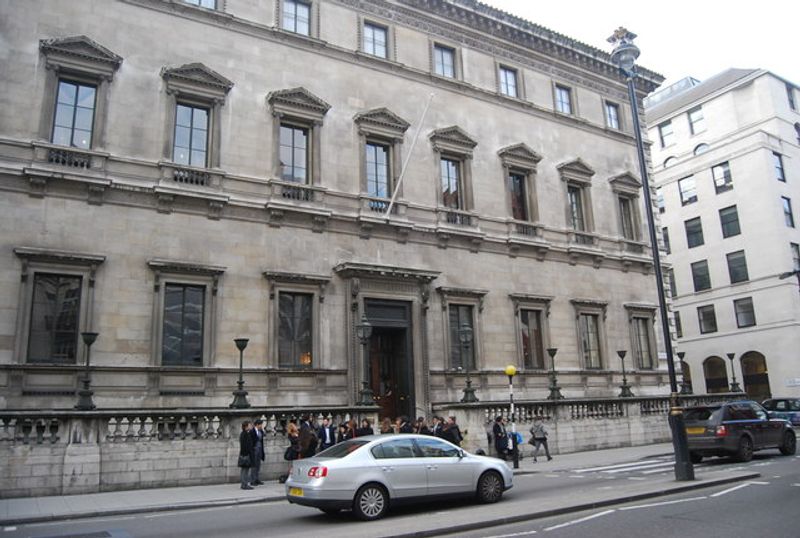
When the Great Reform Act of 1832 reshaped British politics, its supporters needed somewhere to organize, coordinate, and meet. The Reform Club opened in 1836 on Pall Mall to serve exactly that purpose, bringing together Radicals and Whigs who wanted a social center that matched their political ambitions.
Architect Sir Charles Barry, who also designed the Houses of Parliament, created the club’s magnificent Pall Mall clubhouse. Inspired by the Palazzo Farnese in Rome, the building opened in 1841 and immediately drew attention for its scale and design.
At one point, 237 of the 385 Whig MPs held membership.
The club formally abandoned its party affiliation after the Liberal split over Irish Home Rule in 1886. By 1981, it became one of the first traditional London gentlemen’s clubs to admit women on equal terms.
Jules Verne’s fictional Phileas Fogg is perhaps its most famous literary member.
3. Brooks’s, London, England
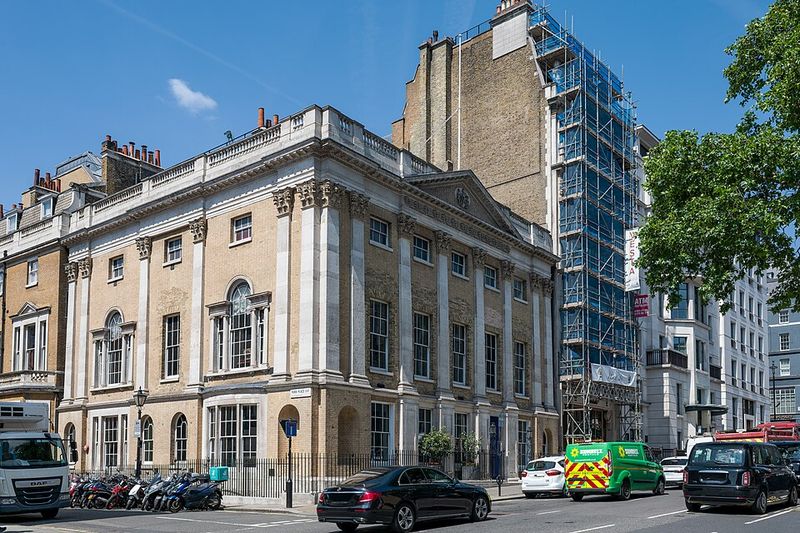
Founded in March 1764 by twenty-seven prominent Whig nobles including the Duke of Portland, Brooks’s quickly became the political and social center of Whig life in Georgian Britain. Charles James Fox joined the following year at the age of sixteen and became so central to its culture that the club was often called his personal court.
The current clubhouse on St James’s Street was designed by Henry Holland and completed in October 1778. Its Great Subscription Room, with a segmental barrel vault ceiling and large Venetian window, served as the backdrop for political conversations that rarely made it into formal records.
During the Melbourne administration in the 1830s, nearly half of Brooks’s members were sitting MPs.
High-stakes gambling was part of the club’s reputation, but the social environment was inseparable from its political function. Personal relationships and face-to-face negotiation drove 18th-century British politics, and Brooks’s provided the room where those relationships formed.
4. White’s, London, England
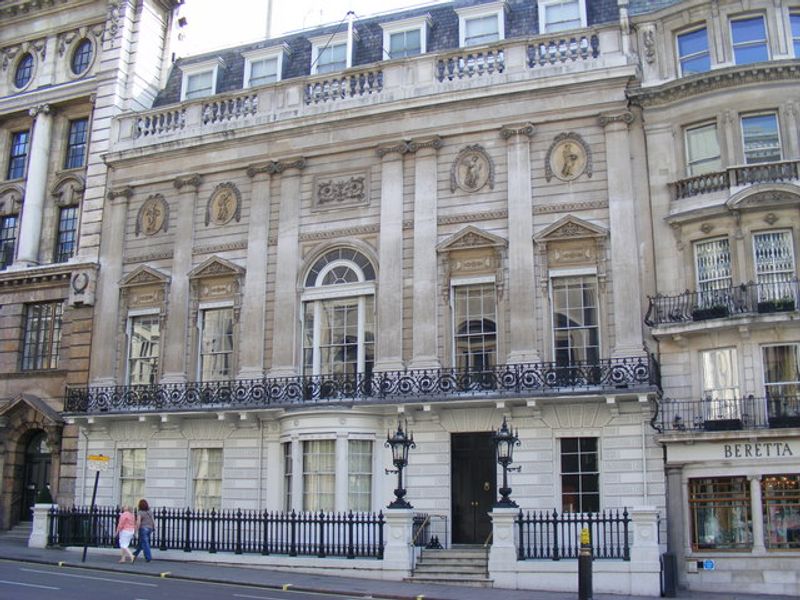
Starting life in 1693 as a chocolate house run by Italian immigrant Francesco Bianco, White’s has had more time than almost any institution in Britain to accumulate political significance. Jonathan Swift called it the “bane of half the English nobility,” which was probably not meant as a complaint by the members who gathered there.
By 1783, White’s had become the unofficial social headquarters of the Tory party, positioning itself directly across the political divide from Brooks’s nearby. The famous bow window on the ground floor became a status symbol in its own right, with the seat reserved for the most socially dominant members of the moment, including Beau Brummell and later the Duke of Wellington.
White’s maintained a strict men-only policy for centuries. David Cameron resigned his membership in 2008 over that policy.
King Charles III and Prince William have both been members, placing the club inside royal social networks as well as political ones.
5. The Travellers Club, London, England
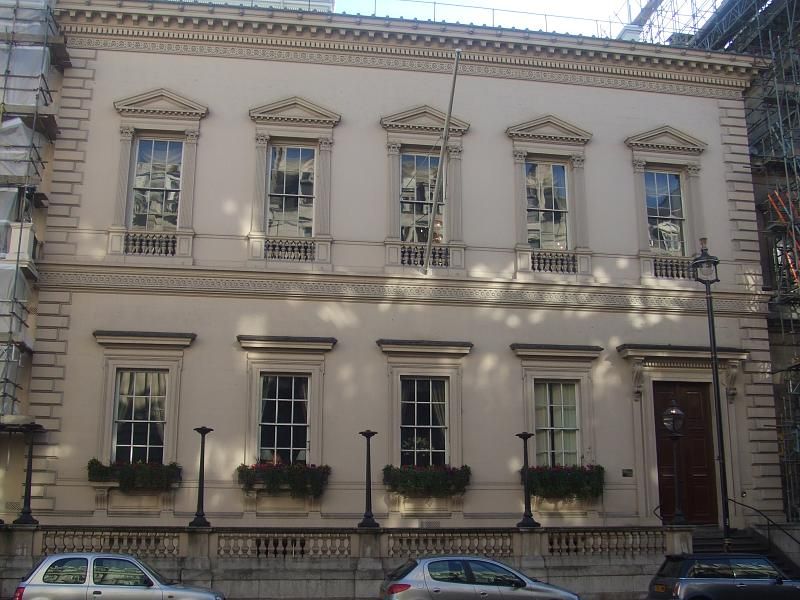
Founded in 1819 at the initiative of Viscount Castlereagh, then Foreign Secretary and Britain’s representative at the Congress of Vienna, the Travellers Club was designed from the start for people with international connections. Original membership rules required that applicants had traveled at least 500 miles outside the British Isles in a direct line.
Sir Charles Barry designed the club’s current Pall Mall building, completing it in 1832 before he began work on the Houses of Parliament. Early committee members included future Prime Ministers the Earl of Aberdeen and Viscount Palmerston.
The club attracted foreign secretaries, ambassadors, explorers, and officials from multiple governments, earning it the informal nickname the “Foreign Office Canteen.”
Informal diplomacy is difficult to document precisely because it is informal. A private meal between officials from two countries might be purely social or might allow both sides to test ideas before committing anything to an official memorandum.
The Travellers provided the environment where that kind of contact was possible.
6. The Athenaeum, London, England
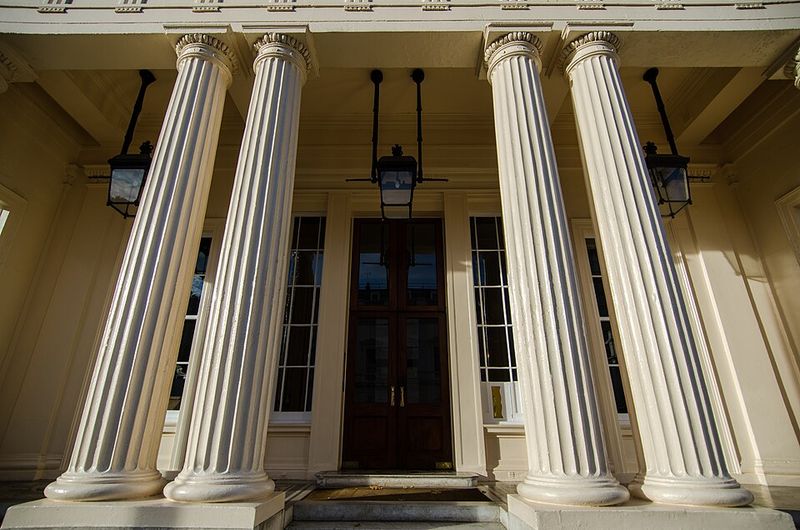
John Wilson Croker, First Secretary to the Admiralty, helped establish the Athenaeum in 1824 with a specific goal: bring together people who had achieved distinction in science, literature, the arts, and public life, and let them talk to one another. Sir Humphry Davy served as first chairman.
Michael Faraday was the first secretary. That combination alone signals what kind of institution this was intended to be.
Charles Darwin, Charles Dickens, and numerous cabinet ministers, bishops, and judges eventually joined. By 1837, 86 privy councillors held membership.
Fifty-one Nobel laureates appear across the club’s membership records. Unlike most gentlemen’s clubs of the era, the Athenaeum banned gambling and prioritized intellectual exchange over aristocratic connection.
During World War II, prominent scientists including Henry Tizard and Patrick Blackett used the clubhouse to discuss technologies including radar. Government officials and scientific experts occupied the same rooms regularly, and that proximity had consequences that formal records only partially capture.
7. Union League of Philadelphia, Philadelphia, Pennsylvania
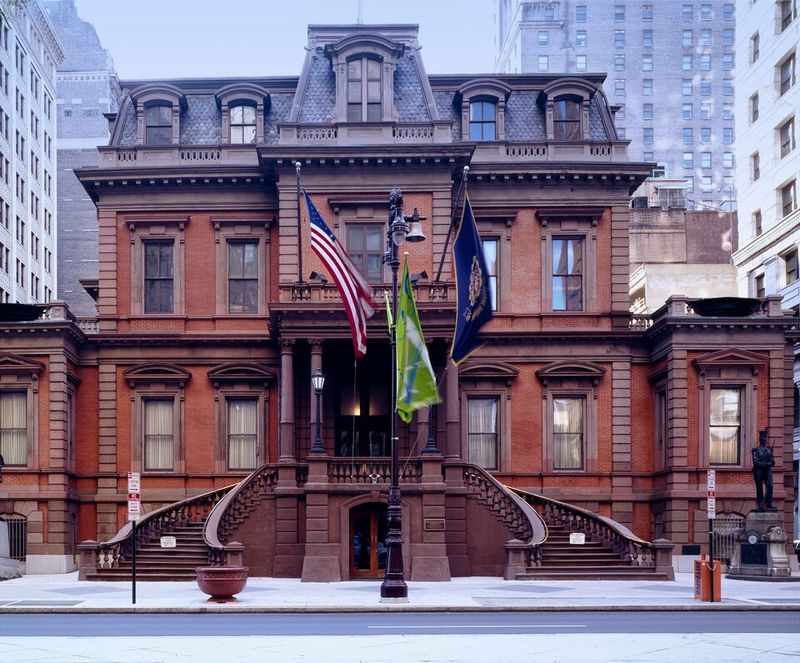
Founded on November 22, 1862, the Union League of Philadelphia did not pretend to be politically neutral. Its motto, “Amor Patriae Ducit” (Love of Country Leads), reflected a direct commitment to supporting President Abraham Lincoln and the Union cause at a moment when Philadelphia’s economic ties to the South made such loyalty politically complicated.
The League helped organize Black regiments for the Union army and actively worked to mobilize political and financial support for the federal government. After the Civil War, it became deeply integrated into Republican political networks in Pennsylvania.
Between Reconstruction and 1906, five of the seven Pennsylvania governors were League members. Eight Philadelphia mayors between 1866 and 1916 were active Union Leaguers.
The club’s Second Empire-style building was completed in 1865 and added to the National Register of Historic Places in 1979. The League admitted its first Black member in 1972 and its first female member in 1983, both changes arriving considerably later than the ideals expressed in its founding documents.
8. Union League Club of New York, New York City, New York
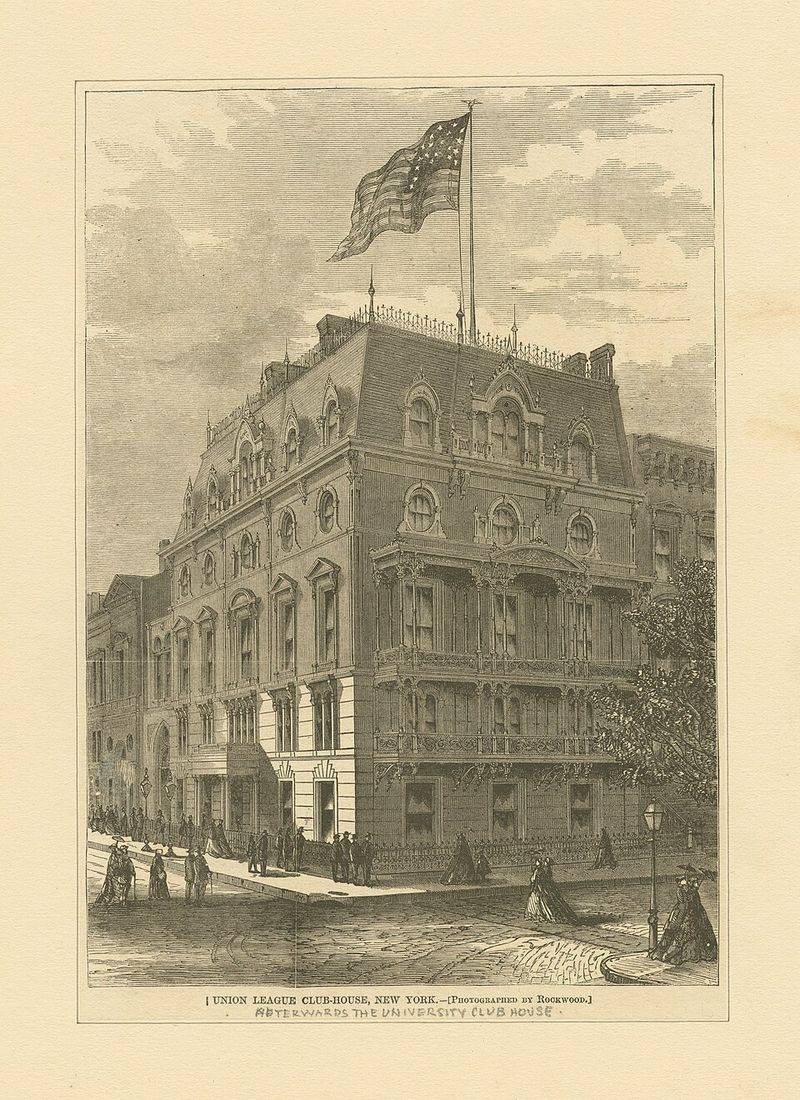
Founded on February 6, 1863, the Union League Club of New York came together during one of the most politically charged moments in American history. New York City had a significant population opposed to the war, and the club’s founders, including Frederick Law Olmsted and George Templeton Strong, wanted to win the political elite over to the Union cause.
The club organized and funded three regiments of United States Colored Troops. On July 13, 1863, during the New York Draft Riots, club members armed themselves and defended their first clubhouse from attack.
After the war, members helped establish the Metropolitan Museum of Art, the American Museum of Natural History, and contributed funds toward the base of the Statue of Liberty.
Fifteen U.S. presidents have held membership. Theodore Roosevelt managed his early political career from the club’s chambers.
The current clubhouse at 38 East 37th Street, designed by Benjamin Wistar Morris, opened in 1931. In 1937, the club voted to drop its restriction against non-Republican members.
9. Cosmos Club, Washington, D.C.
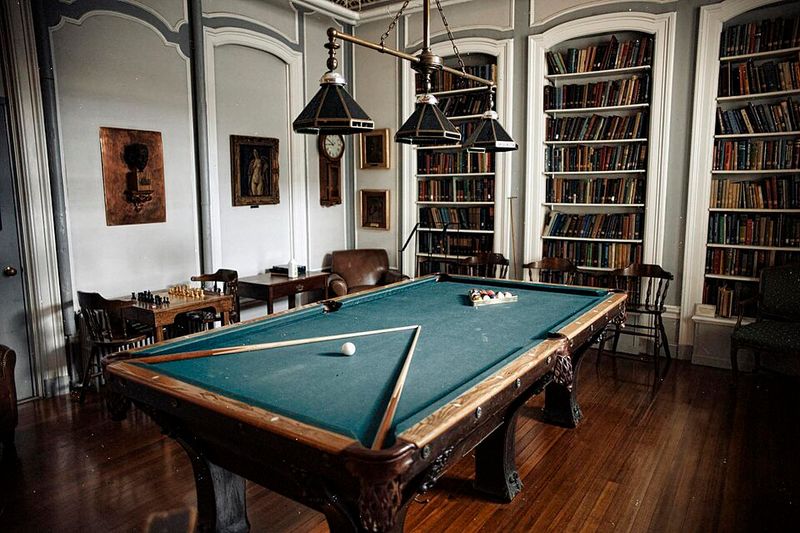
John Wesley Powell, the Civil War soldier and Grand Canyon explorer, hosted the founding meeting of the Cosmos Club at his Washington home in 1878. The vision was specific: create a gathering place for people distinguished in science, literature, art, the learned professions, and public service, and let those networks intersect in one private institution.
The result exceeded the original ambition. Membership over the club’s history includes three U.S. presidents, 14 Supreme Court justices, 36 Nobel Prize winners, 61 Pulitzer Prize winners, and 55 recipients of the Presidential Medal of Freedom.
The National Geographic Society was founded at the club in 1888. The Wilderness Society was established there in 1935.
The club moved to the Townsend Mansion on Massachusetts Avenue in 1952, a Beaux Arts building now listed on the National Register of Historic Places. African American members were admitted starting in 1962.
Women gained full membership in 1988, more than a century after the club’s founding.
10. Alfalfa Club, Washington, D.C.
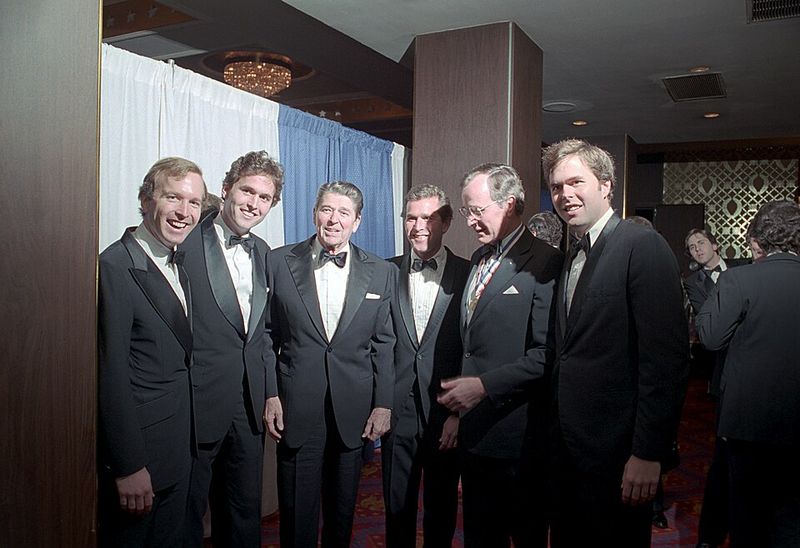
Founded in 1913 by four southerners, the Alfalfa Club holds exactly one event per year: a private black-tie dinner on the last Saturday of January, traditionally held at the Capital Hilton. The gathering honors Confederate General Robert E.
Lee’s birthday, features humorous speeches, a political roast, and a mock presidential nomination, and is closed to the press.
Approximately 200 members belong to the club, drawn from the senior ranks of government, the military, the judiciary, and major corporations. Membership opens only when a spot is vacated.
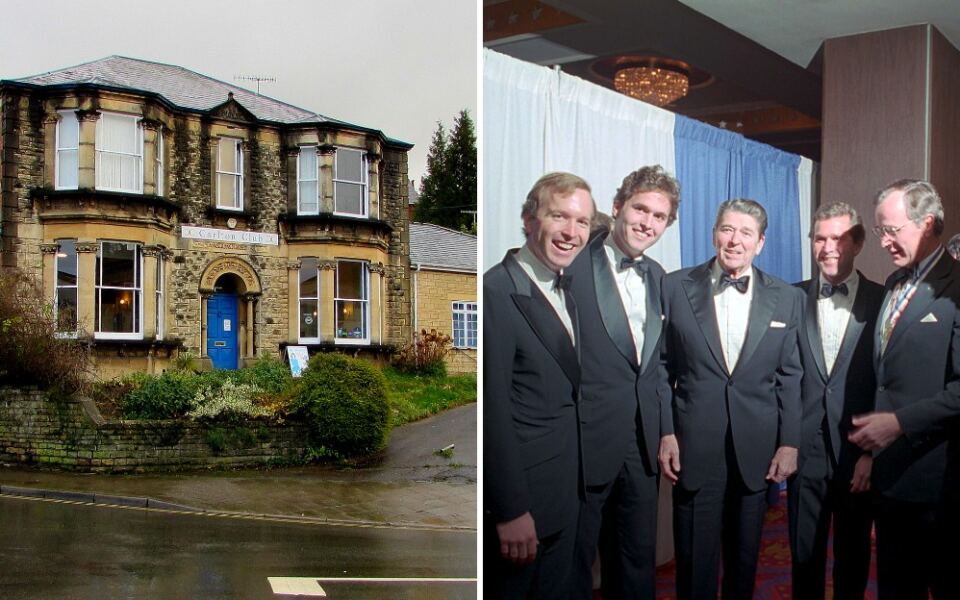
Presidents including Harry Truman, Richard Nixon, Ronald Reagan, George H.W. Bush, Barack Obama, and Donald Trump have attended or held membership.
Bill Clinton boycotted the 1993 dinner because the club had no female members. That decision accelerated change: Sandra Day O’Connor, Elizabeth Dole, and Katharine Graham became the first women admitted in 1994.
O’Connor later served as the club’s first female president and only female mock presidential nominee.
11. Century Association, New York City, New York
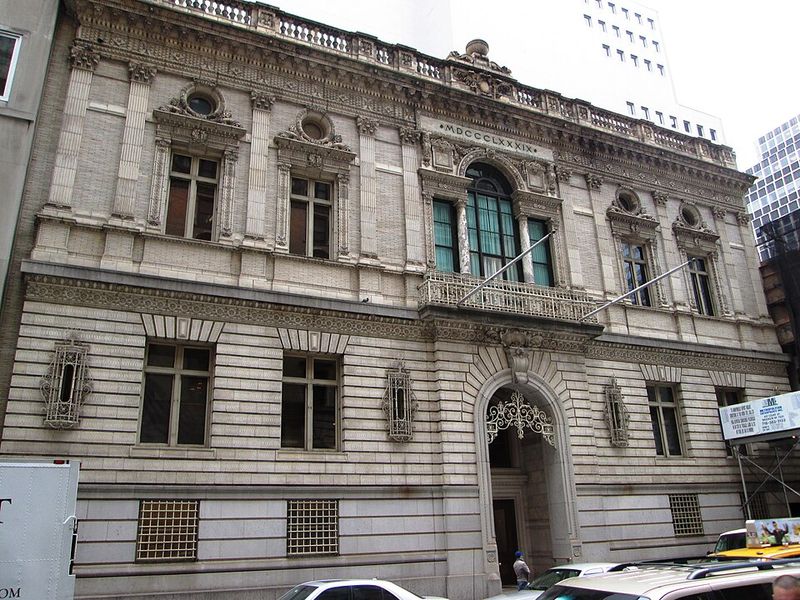
One hundred men received the original invitation when the Century Association was founded on January 13, 1847, and the name stuck. The club emerged from a merger of the Sketch Club and the Column Club, built around literature, the fine arts, and the social connections between people working in those fields and in public life.
During the Civil War, the Century served as headquarters for the U.S. Sanitary Commission, a civilian organization providing medical care and support to Union soldiers.
The plan for the Metropolitan Museum of Art developed through conversations among club members, including Henry W. Bellows.
Eight U.S. presidents, ten Supreme Court justices, and 43 cabinet members appear in the club’s historical membership records.
The current clubhouse at 7 West 43rd Street, designed by McKim, Mead and White in Italian Renaissance style, opened in 1891 and became a New York City Landmark in 1967. Women were admitted beginning in 1988, following years of legal challenges that stretched the process considerably longer than the club’s progressive cultural reputation might have suggested.
12. Bohemian Club and Bohemian Grove, San Francisco and Monte Rio, California
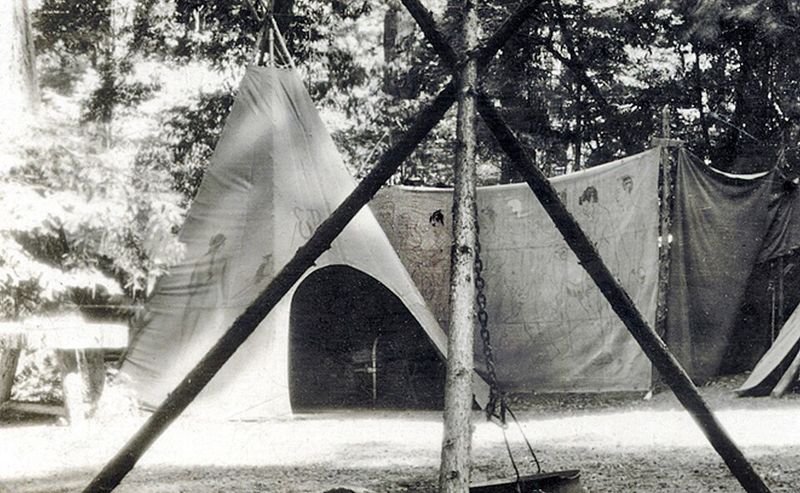
When the Bohemian Club was founded in San Francisco in 1872, its members were mostly journalists, artists, and musicians. The club’s motto, “Weaving Spiders Come Not Here,” was meant to signal that business dealings had no place in a gathering devoted to fellowship and the arts.
Over the following decades, the membership expanded considerably to include corporate executives, military leaders, and U.S. presidents.
The annual Bohemian Grove encampment, held each July in a 2,700-acre redwood forest in Sonoma County, has attracted Herbert Hoover, Richard Nixon, Ronald Reagan, and George H.W. Bush among many others.
In September 1942, members of the S-1 Executive Committee, which oversaw early stages of the Manhattan Project, met at the Grove. Attendees included Ernest Lawrence, J.
Robert Oppenheimer, James B. Conant, Arthur Compton, and Harold Urey.
Archival records at the Herbert Hoover Presidential Library document his attendance across multiple decades. The club characterizes the retreat as recreational.
Outside accounts, journalistic investigations, and participant testimony have produced additional descriptions. What every private conversation contained remains beyond the reach of the historical record.
13. The Links, New York City, New York
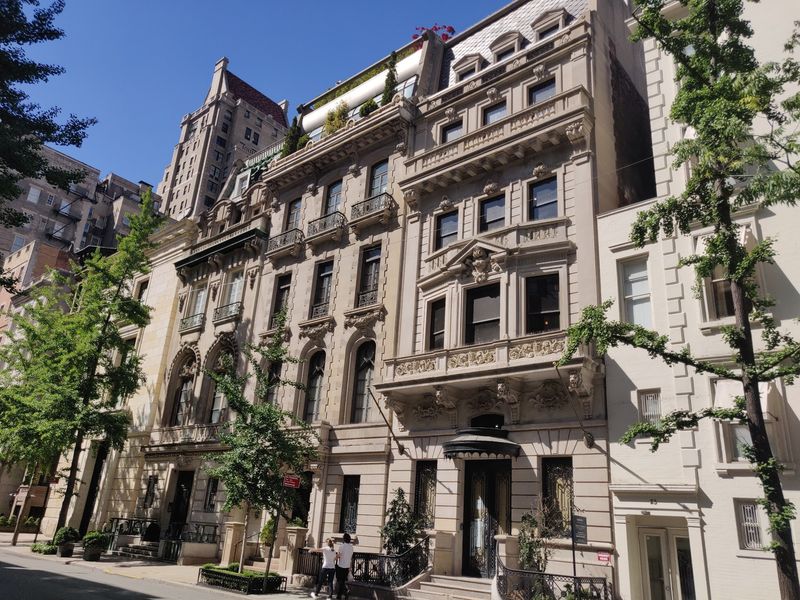
Charles Blair Macdonald, a celebrated golf champion and co-founder of the United States Golf Association, established The Links in 1916 or 1917 with a stated goal of preserving the “true spirit of the game.” The club’s Georgian Revival clubhouse at 36 East 62nd Street on Manhattan’s Upper East Side was designed by Cross and Cross and opened in 1917.
The membership that gathered there quickly moved beyond golf enthusiasts. Early members included Charles H.
Sabin, president of Guaranty Trust, James Stillman of National City Bank, and prominent attorneys and financiers. By the 1960s, the club was recognized as a preferred gathering spot for America’s most powerful corporate executives.
By 2010, observers still described it as a preserve of the old banking elite.
The USGA holds its annual dinner at The Links, and every sitting USGA president receives honorary membership. That connection keeps the club formally tied to golf while its membership network continues to reflect the overlap between finance, law, and institutional authority that has defined it from the beginning.
Share this story