China is home to some of the most unusual places on Earth. From ancient walls to futuristic cities, the country offers sights that cannot be found anywhere else.
Each one tells a story about history, nature, or clever engineering. Here are fifteen of them worth knowing about.
1. The Great Wall Stretching Across Mountain Ridges
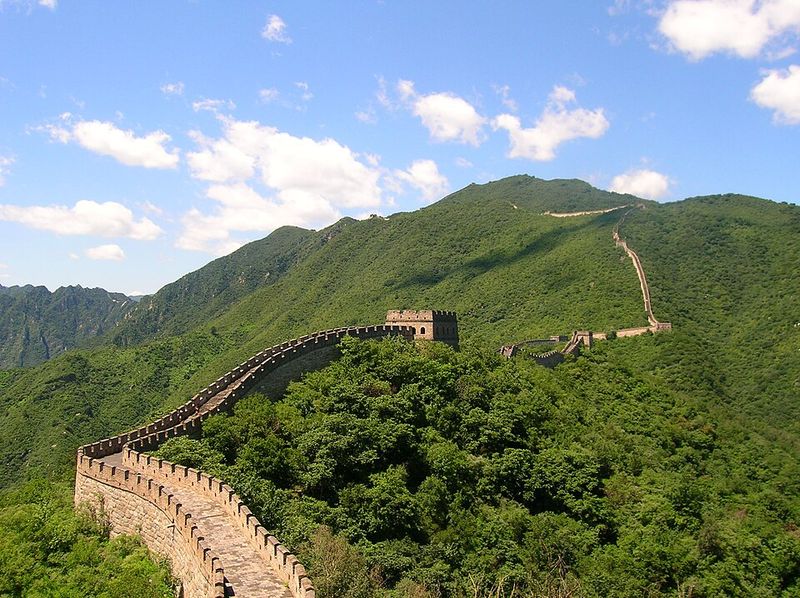
Picture a stone ribbon rolling over hills for thousands of miles. That is the Great Wall, built and rebuilt by many dynasties, with major sections finished during the Ming era.
The wall is not one single line. It is a network of walls, towers, and fortresses, and total measured length is often given as more than 13,000 miles.
Some parts are well restored, while others have crumbled into wild, grassy ridges.
Visitors often pick Mutianyu or Badaling for easy access near Beijing. Jinshanling offers fewer crowds and sweeping views.
Wear sturdy shoes, because the steps are steep and uneven in many places.
Go early in the morning for softer light and cooler air. Bring water, since shops can be far apart on remote stretches.
Walking even a short section helps you feel the scale of this massive project.
2. The Terracotta Army in Xi’an
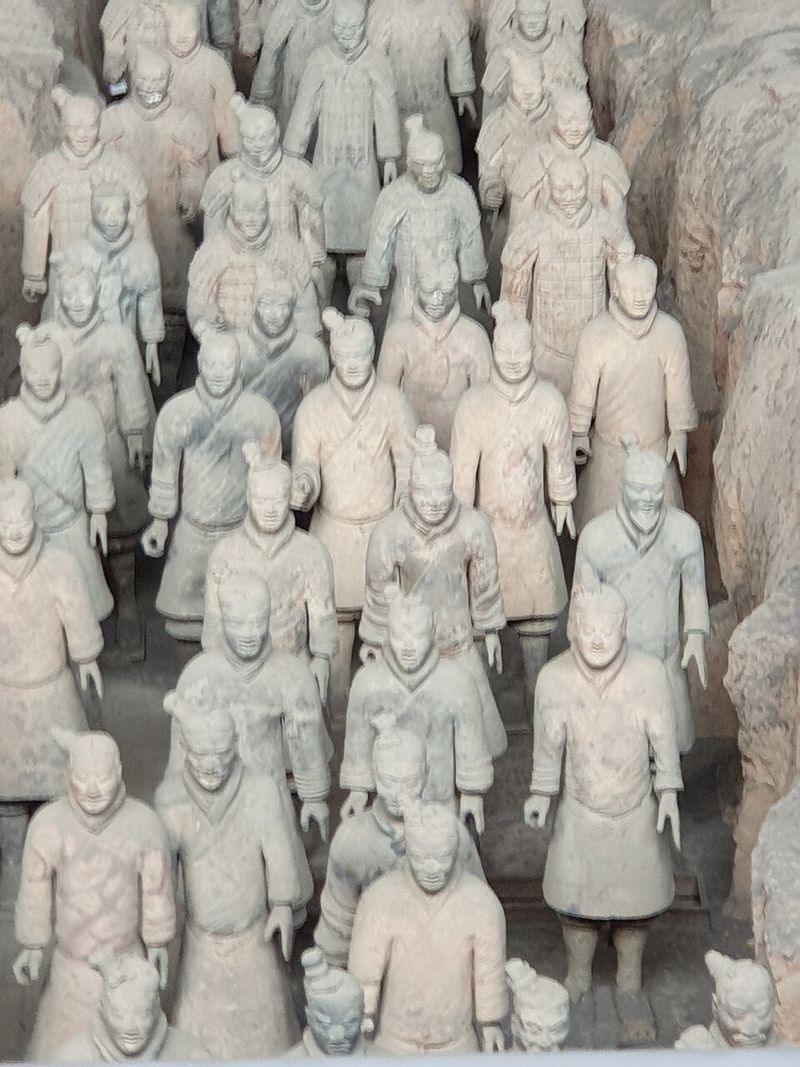
In 1974, local farmers digging a well hit something hard. What they found turned out to be one of the great archaeological discoveries of the twentieth century.
The Terracotta Army guards the tomb of Qin Shi Huang, the first emperor of unified China, who died in 210 BCE. Thousands of clay soldiers have been uncovered, along with horses, chariots, and weapons.
Experts say each figure has its own face, hairstyle, and expression.
The statues were once painted in bright colors, but the paint faded quickly after exposure to air. Researchers still work to protect what remains.
The site is about an hour from central Xi’an. Plan at least half a day, and consider hiring a guide to explain the three main pits.
Pit 1 is the largest and most impressive for first-time visitors.
3. Zhangjiajie’s Towering Sandstone Pillars
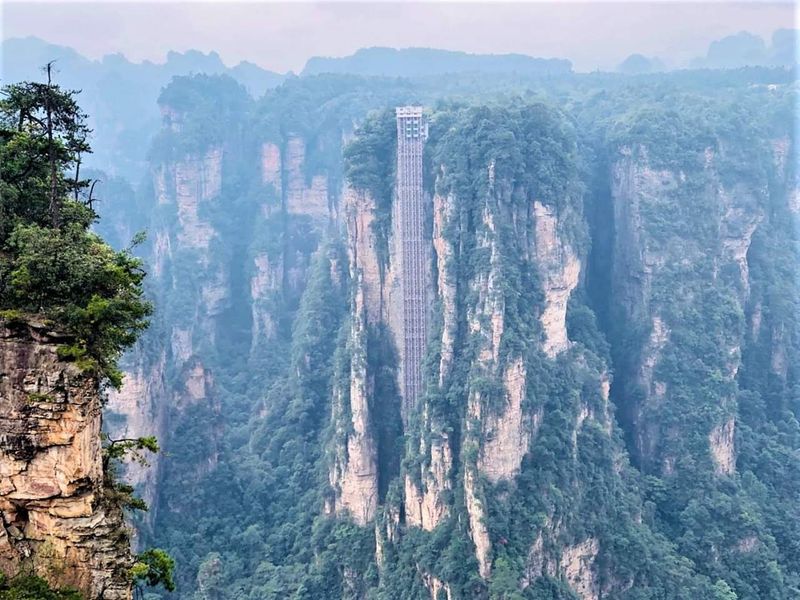
Thousands of stone columns rise from the forest like giant green fingers. Zhangjiajie National Forest Park in Hunan province is famous for these quartz sandstone pillars, some towering more than 650 feet.
Wind, rain, and time carved the rock over millions of years. Mist often drifts between the columns, which gives the park a dreamlike feel.
Many people know it because the scenery inspired the floating mountains in the film Avatar.
One peak was even renamed Avatar Hallelujah Mountain in 2010.
Visitors can ride the Bailong Elevator, a glass lift built into a cliff, or hike along well-marked trails. Check the weather before you go, since fog can hide the views.
Spring and autumn usually bring the most comfortable temperatures and clearer skies.
4. The Rainbow Mountains of Zhangye Danxia
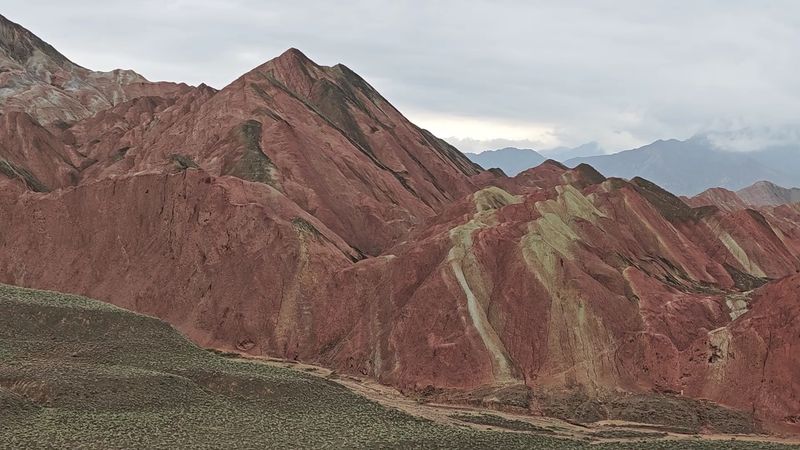
Stripes of red, orange, yellow, and teal ripple across the hills of Gansu province. Zhangye Danxia looks painted, yet every color comes from nature.
The layers formed from sandstone and minerals that were deposited over about 24 million years. Tectonic movement later lifted and tilted them, and erosion revealed the bands.
The area is part of a UNESCO World Heritage listing called China Danxia.
Boardwalks and viewing platforms guide visitors around the main sections. Sunrise and sunset bring out the richest tones, while midday sun can wash colors out.
Rain can make the hues look deeper, but it can also close some paths. Photos online are often edited to look more vivid, so expect softer shades in person.
Even so, the patterns are truly remarkable.
5. The Enormous Leshan Giant Buddha
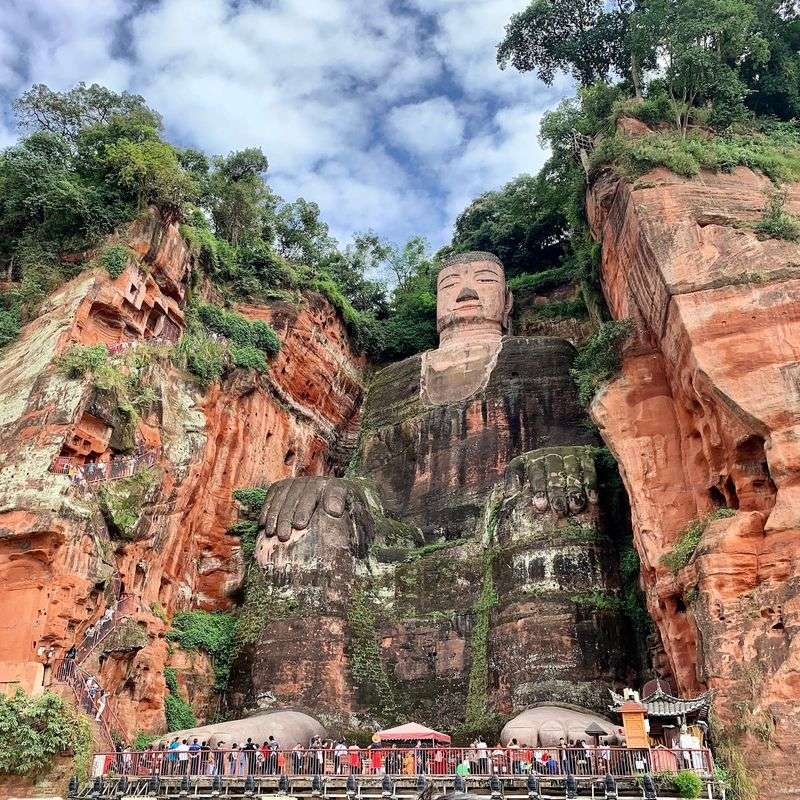
Carved straight into a cliff, this Buddha sits 233 feet tall and looks calmly over the meeting of three rivers. Its toes alone are big enough for people to sit on.
A monk named Haitong began the work in 713 CE, hoping the statue would calm dangerous river currents. The project took about 90 years and was finished by his students.
Rock waste from the carving fell into the water, which is said to have helped settle the flow.
The statue also has a hidden drainage system that helps protect the stone from rain damage.
You can view it from a boat for the full scale, or walk the narrow stairs beside the figure for a close look. Expect lines on holidays, so weekdays are best.
6. Chongqing’s Train Passing Through a Residential Building
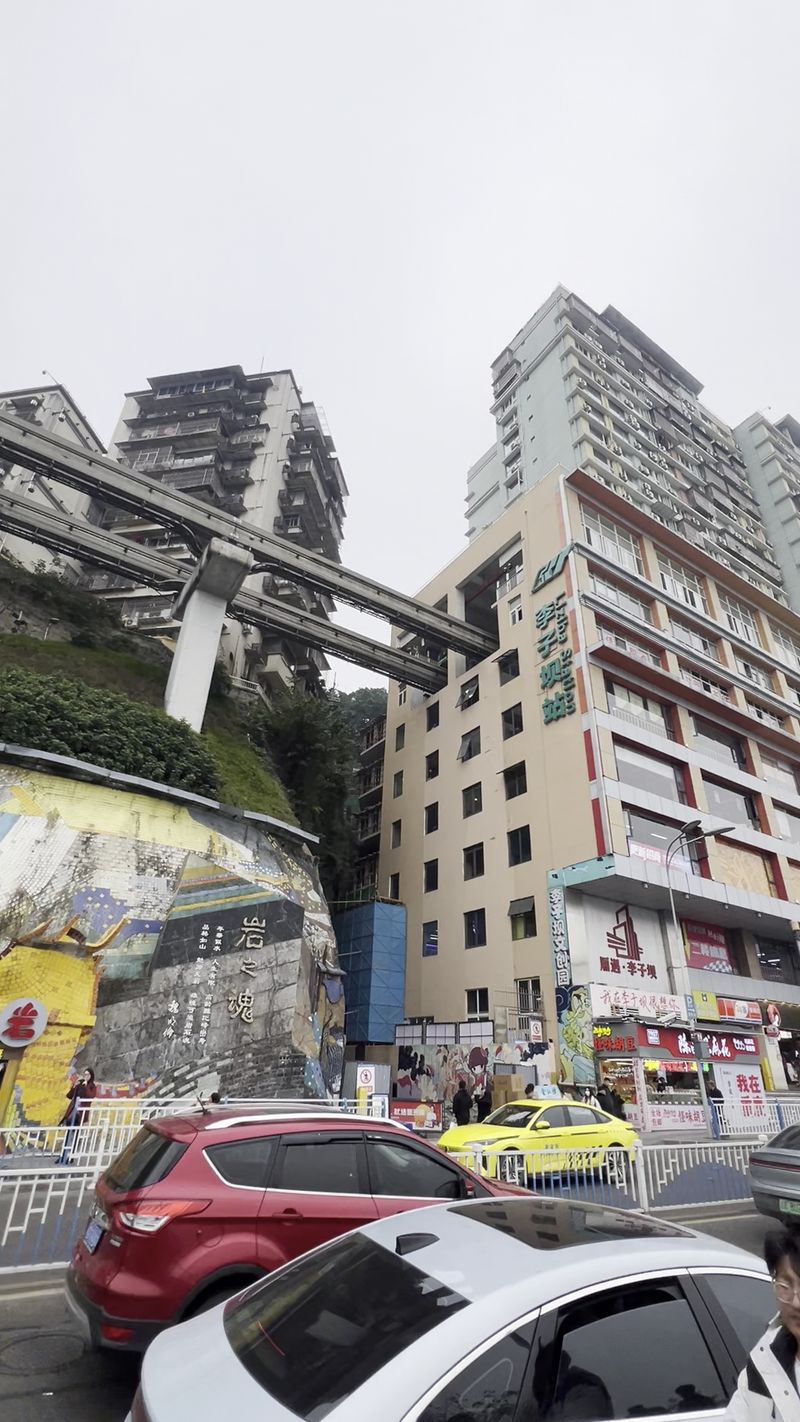
Few commuters expect to see a train slide through an apartment tower. In Chongqing, it happens every day.
Line 2 of the city’s light rail passes through the sixth to eighth floors of a residential building near Liziba station. The city is built on steep hills, so planners had to be creative with space.
Engineers designed the structure so the track and the building are separate, which reduces vibration and noise.
Residents say they barely hear it, thanks to noise barriers and rubber pads.
Tourists gather at the Liziba viewing platform to watch trains pop in and out. Visit during daylight for clear photos, and expect a crowd at peak hours.
The spot shows how a crowded city can solve a transport puzzle.
7. The World’s Largest Radio Telescope, FAST
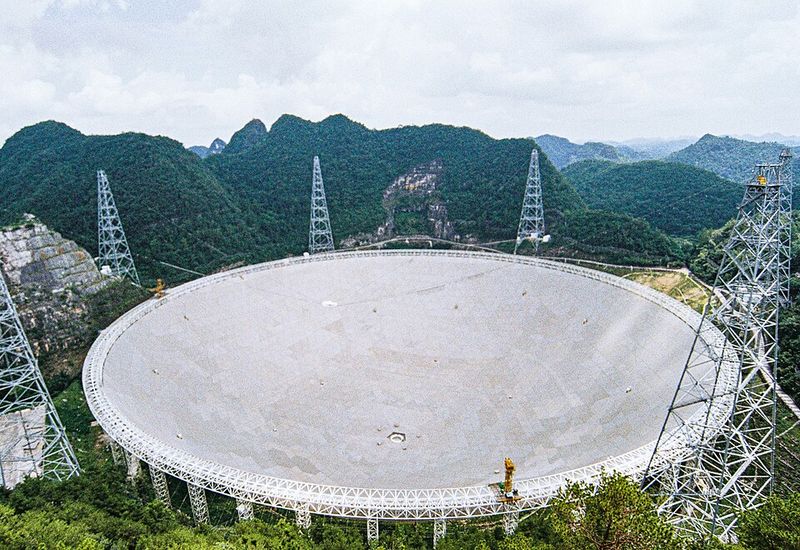
Hidden in a bowl-shaped valley in Guizhou, a silver dish about 500 meters wide listens to the universe. FAST stands for Five-hundred-meter Aperture Spherical Telescope, and it is the largest single-dish radio telescope in the world.
It began operating in 2016. The dish is made of thousands of aluminum panels that can shift shape to point at different parts of the sky.
Scientists use it to find pulsars, study gas in distant galaxies, and search for faint signals.
Hundreds of new pulsars have already been discovered with its help.
A visitor area allows tourists to see the telescope from a viewing platform nearby. Access rules can change to protect the instrument from radio interference, so check official information before traveling.
Phones may need to be switched to airplane mode in restricted zones.
8. Fujian’s Massive Circular Tulou Buildings
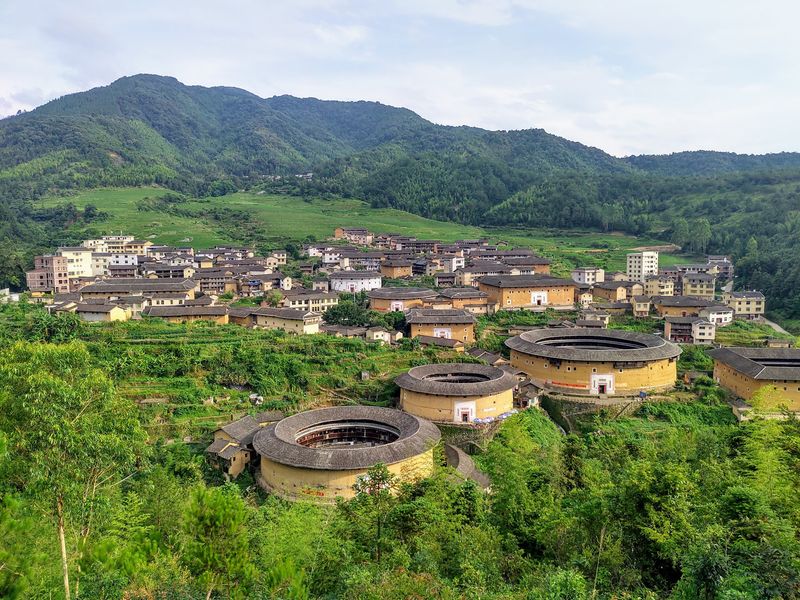
From above, they look like giant donuts resting on green hills. Tulou are rammed-earth homes built by the Hakka people in Fujian, some of them centuries old.
Walls can be several feet thick, which kept families safe and helped keep rooms cool in summer and warm in winter. A single tulou might house dozens of families around a shared courtyard.
Many have a well, a hall for ancestors, and storage for food.
In 2008, UNESCO listed a group of them as a World Heritage Site.
Visitors can stay overnight in some buildings, which is a great way to see daily life. Tianluokeng and Chuxi are popular clusters.
Bring a light jacket, since mountain evenings can be cool, and ask before photographing residents.
9. The Hanging Temple Built Into a Cliff Near Datong
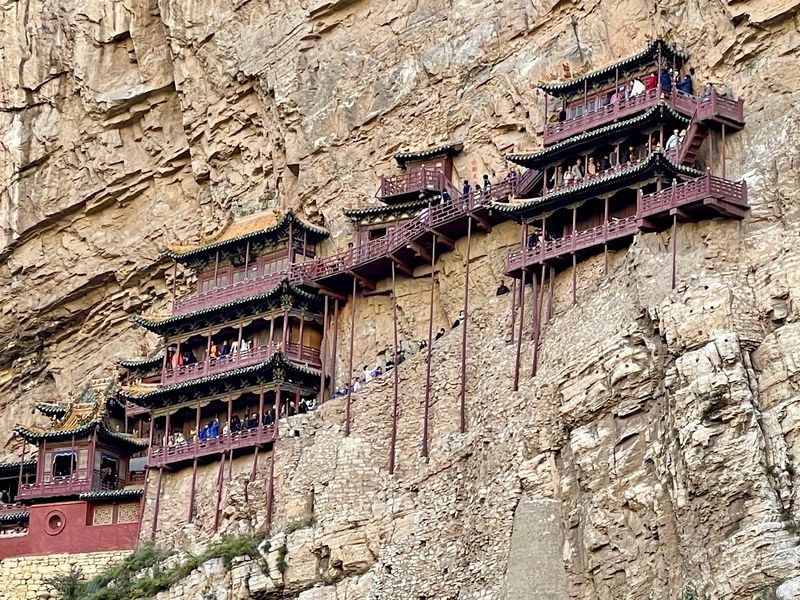
Some buildings seem to defy gravity, and Xuankong Temple is one of them. Perched on a cliff face near Mount Heng in Shanxi, it sits about 200 feet above the valley floor.
It was first built more than 1,500 years ago. Wooden beams are set into holes in the rock, and the structure leans on the cliff for support.
The cliff overhang also shields the temple from much of the rain and sun.
Inside, Buddhist, Taoist, and Confucian statues share the same space, which is rare.
The walkways are narrow, and the number of visitors allowed at one time is limited for safety. Those afraid of heights may find it a bit thrilling.
Datong is the closest city, and the temple makes an easy day trip.
10. The Forbidden City’s Enormous Imperial Palace Complex
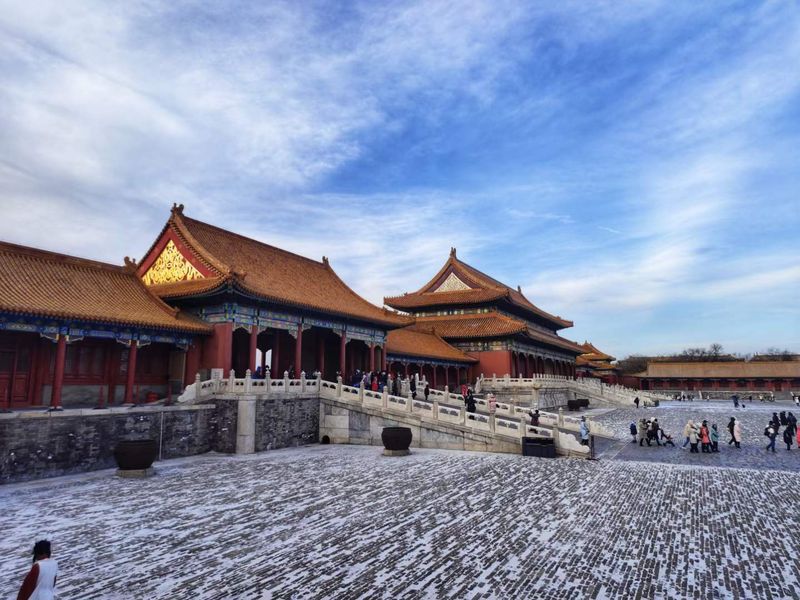
For nearly 500 years, ordinary people could not step inside these red walls. The Forbidden City in Beijing was home to 24 emperors of the Ming and Qing dynasties.
The complex covers about 180 acres and contains roughly 980 buildings. Golden roof tiles, carved marble, and painted beams show the high status of its rulers.
The layout follows a strict north-south line, with the most important halls at the center.
Today it houses the Palace Museum, with a huge collection of art and artifacts.
Tickets often sell out, so book online in advance and bring your passport. Enter from the south through Tiananmen Square side and exit north to Jingshan Park.
Allow at least four hours to see the main halls and gardens at a relaxed pace.
11. Harbin’s Gigantic Winter Ice City
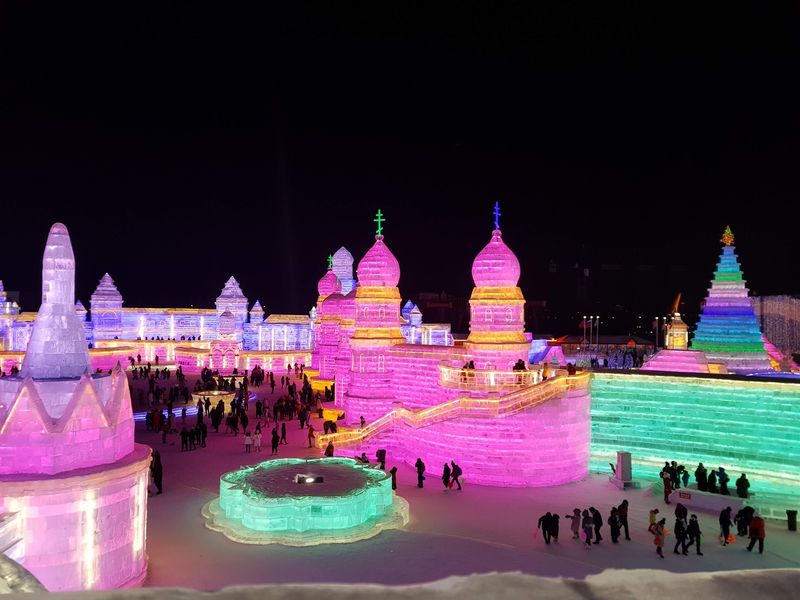
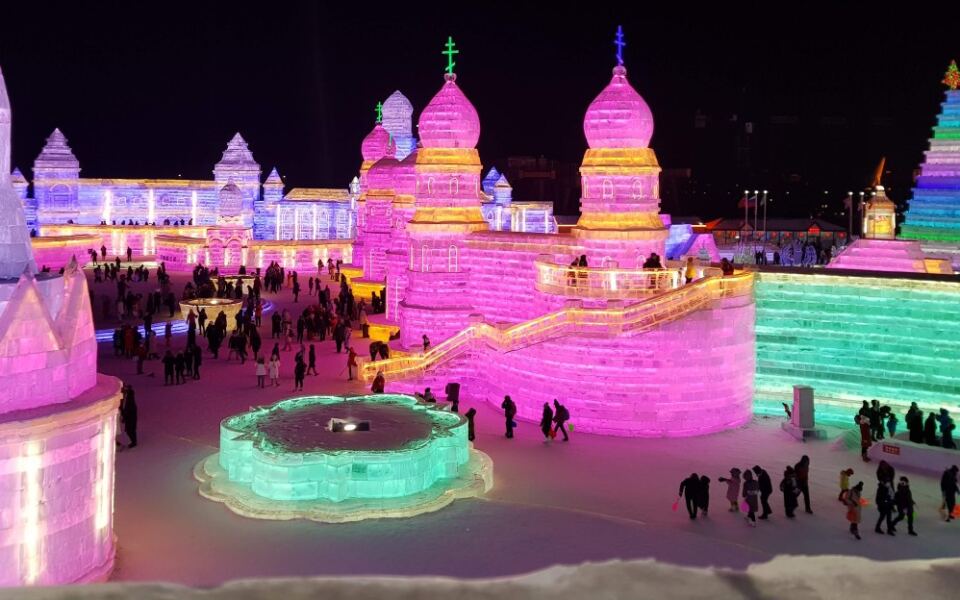
When temperatures drop far below freezing, Harbin builds a city out of ice. The Harbin International Ice and Snow Festival begins in early winter and often runs into February.
Workers cut huge blocks of ice from the frozen Songhua River. They stack them into towers, castles, and slides, then add colored lights that glow after dark.
The Ice and Snow World park covers a vast area and draws crowds from across the world.
Nighttime temperatures can reach minus 20 degrees Celsius or lower.
Dress in layers, wear insulated boots, and bring warm gloves, because phones and cameras can lose battery fast. Hot snacks like candied hawthorn and roasted sweet potatoes are popular.
Try to go in the evening, when the lights make the sculptures look their best.
12. The Glass-Bottom Bridge Over Zhangjiajie Grand Canyon
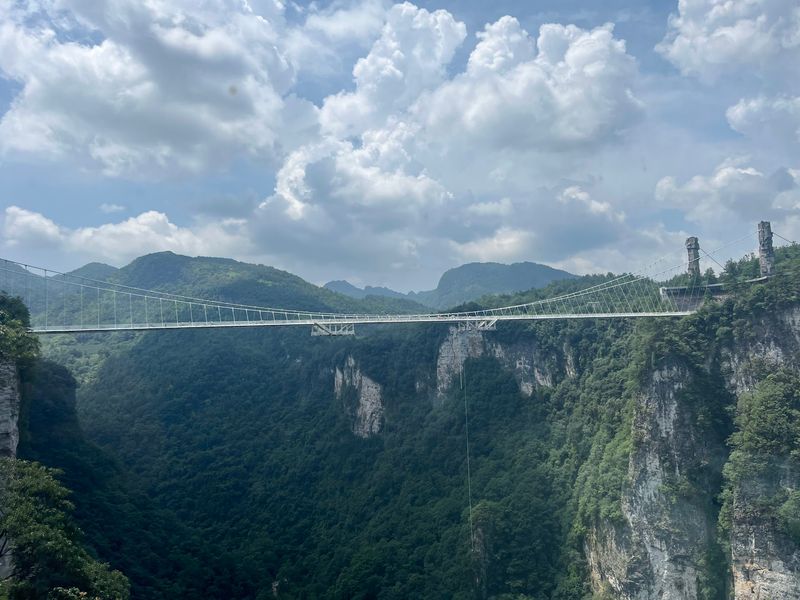
Look down and you see nothing but air. The Zhangjiajie Grand Canyon Glass Bridge opened in 2016 and stretches about 430 meters across a deep gorge.
It hangs roughly 300 meters above the valley floor. The floor is made of layered glass panels, built to carry large numbers of people.
Designers, including architect Haim Dotan, wanted visitors to feel as if they were floating.
Officials limit the number of people on the bridge at once, and visitors wear shoe covers to keep the glass clear.
The area also offers bungee jumping for the very brave. If heights make you nervous, walk slowly and keep your eyes on the horizon.
Clear mornings give the best views of the canyon walls.
13. The Spectacular Longji Rice Terraces
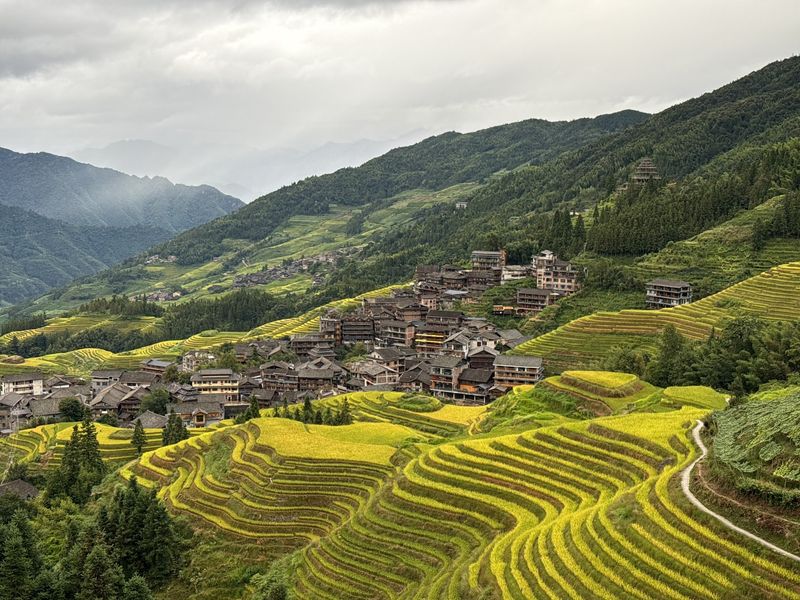
Hillsides here look like giant staircases carved by hand, and in a way, they were. The Longji Rice Terraces in Guangxi, often called the Dragon’s Backbone, have been farmed for hundreds of years.
The Zhuang and Yao peoples built the terraces to grow rice on steep land. Water flows from level to level through channels, which keeps the fields wet without wasting it.
Colors change with the seasons. Spring brings silver, water-filled paddies, summer turns the slopes green, and autumn paints them gold.
Villages like Ping’an and Dazhai have walking paths and viewpoints. Wear comfortable shoes, as the trails climb steadily.
Many guesthouses serve bamboo-tube rice, a local specialty. Stay overnight if you can, since early morning light is the best time for photos.
14. Shanghai’s Bund Facing the Futuristic Pudong Skyline
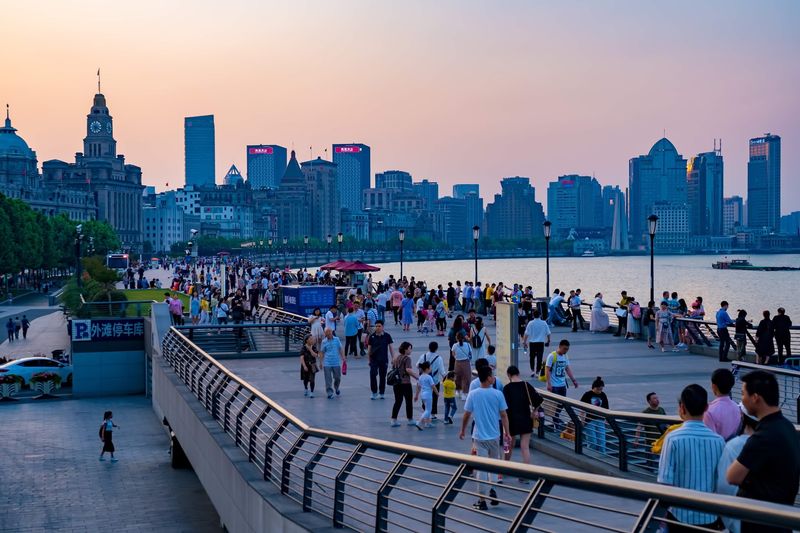
On one side of the river stand grand stone banks from the 1920s. On the other rise glass towers that look like props from a science fiction film.
The Bund is a waterfront promenade in Shanghai lined with historic buildings in many European styles. Across the Huangpu River, Pudong’s skyline features the Oriental Pearl Tower, the Shanghai Tower, and the Jin Mao Tower.
Pudong was mostly farmland until the early 1990s.
That fast change makes the view a striking contrast of old and new.
Visit at dusk, when the lights switch on and the water reflects them. Weekends can be crowded, so arrive early for a spot along the railing.
A short river cruise offers a different angle on both sides.
15. The Giant Panda Research and Breeding Centers of Sichuan

Few animals charm people the way a chewing panda does. Sichuan is home to most of the world’s wild giant pandas, and its research centers help protect them.
The Chengdu Research Base of Giant Panda Breeding is the best known. Scientists there study panda health, diet, and behavior, and they work to raise cubs that may later join conservation programs.
Pandas were moved off the endangered list to vulnerable in 2016, thanks in part to such efforts.
An adult panda can eat as much as 12 to 38 kilograms of bamboo each day.
Arrive early in the morning, when the animals are most active and feeding. Afternoons often find them napping.
Respect the rules about noise and distance, since the work here supports real conservation goals.
Share this story