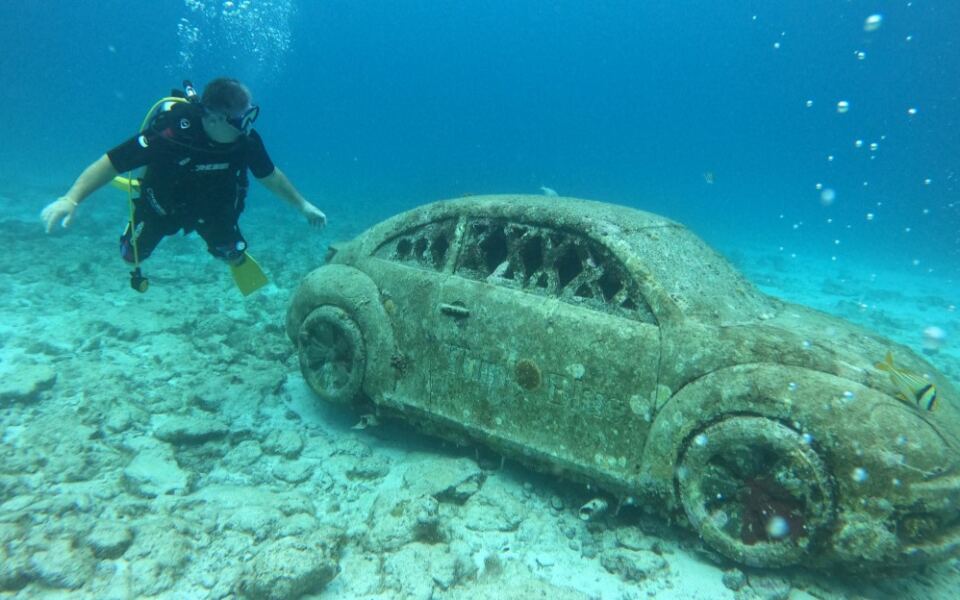
Some of the most surprising attractions on Earth sit below the waterline. Around the world, artists, historians, and resort designers have built museums, restaurants, hotels, and even sunken cities that you can visit by snorkeling, diving, or simply sitting beside a giant window.
This list brings together sculpture parks, ancient Roman ruins, a Red Sea battlefield, and a few places where you can eat or sleep beneath the surface. Some are easy to reach with just a mask and snorkel.
Others call for scuba training or a reservation made well ahead of time. Whether you love travel, art, history, or simply wondering what is under the waves, there is probably a spot here that will make you want to pack a swimsuit and start planning.
MUSA Underwater Museum of Art, Cancún and Isla Mujeres, Mexico
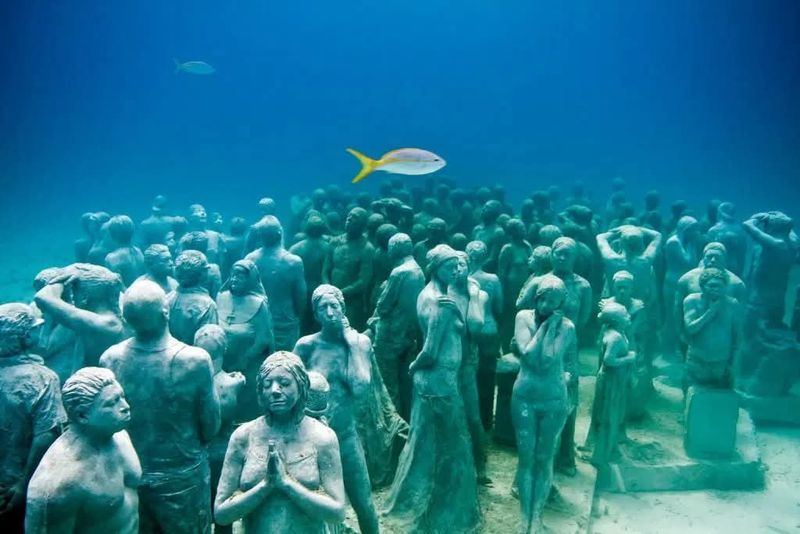
Picture an art gallery where the walls are made of seawater and the curators include coral and sponges. MUSA turns the Caribbean seabed off Cancún and Isla Mujeres into a gallery that keeps changing as marine life settles on the sculptures.
The works are spread across several galleries, so there is more than one spot to explore. Two of the best known are Manchones and Punta Nizuc, and both appear in bookable excursions that the museum currently offers.
Scuba divers can see the pieces up close, and snorkelers can float above them. Travelers who do not want to get in the water at all can also join a glass-bottom boat trip, which makes this one of the easier underwater art attractions to visit.
Over time, the surfaces of the sculptures become homes for living organisms, which means each visit can look a little different from the last. If your group includes both divers and non-divers, this is a handy place to plan around, since everyone has a way to take part.
Museo Atlántico, Lanzarote, Spain
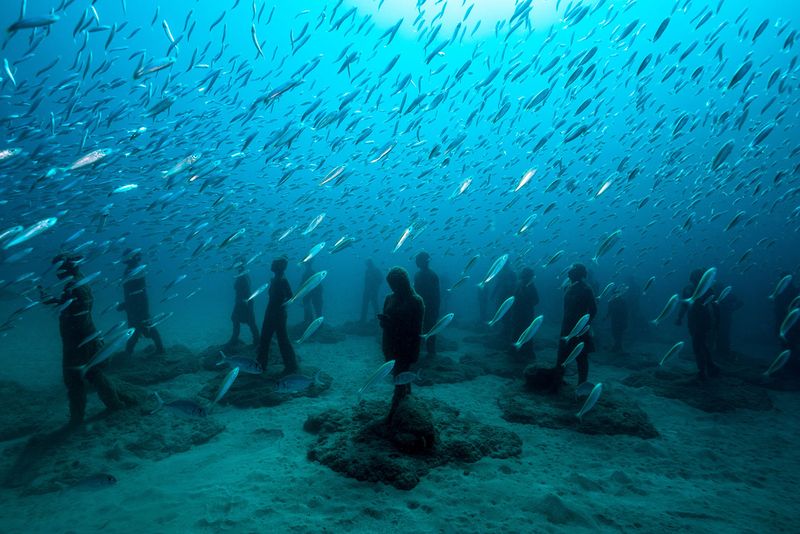
Dozens of human figures stand on the sand off Playa Blanca, and they are all looking in different directions. Museo Atlántico sits in the Canary Islands at roughly 12 meters deep, according to Spain’s official tourism portal.
Artist Jason deCaires Taylor created the sculptures, and they explore themes that range from conservation to migration. They also give marine organisms new surfaces to settle on, so the artwork slowly becomes part of the reef.
Visits are organized through dive centers on Lanzarote. Divers need the right training for the depth, but introductory courses can be arranged on the island for people who are new to the sport.
I would suggest booking early in your trip so you have wiggle room if the sea conditions are not ideal. The Atlantic can be less predictable than a calm bay, and a flexible schedule makes the whole experience more relaxed.
MUSAN, Ayia Napa, Cyprus
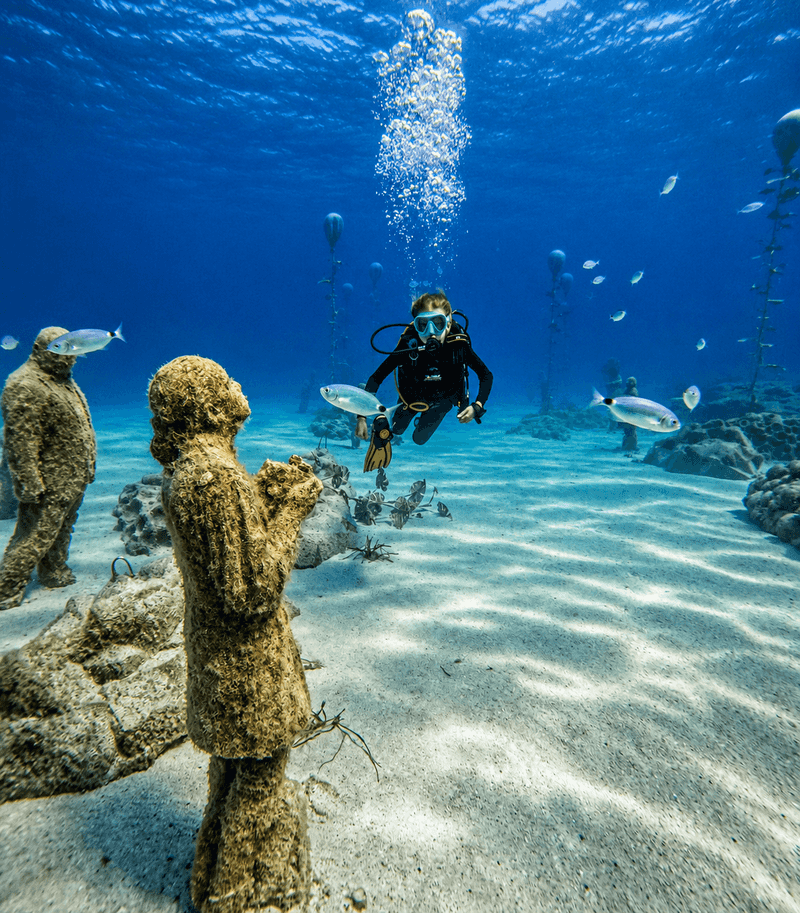
A forest growing on the sea floor sounds like a fairy tale, yet MUSAN makes it real. The Museum of Underwater Sculpture Ayia Napa holds 93 artworks, including tree-like forms and human figures that share space with the surrounding marine habitat.
The site lies roughly 200 meters offshore and reaches a maximum depth of around 10 meters. That mix of shallow water and a short distance from the coast means different kinds of visitors can enjoy it.
Scuba divers, freedivers, and snorkelers can all explore the collection. Choosing the right option depends on your comfort in the water, and each one gives a slightly different view of the sculptures.
The museum remains operational, and its official website lists visitor access along with current working hours for its visitor facilities. Check that page before you go, since schedules can shift from one season to the next.
Molinere Underwater Sculpture Park, Grenada
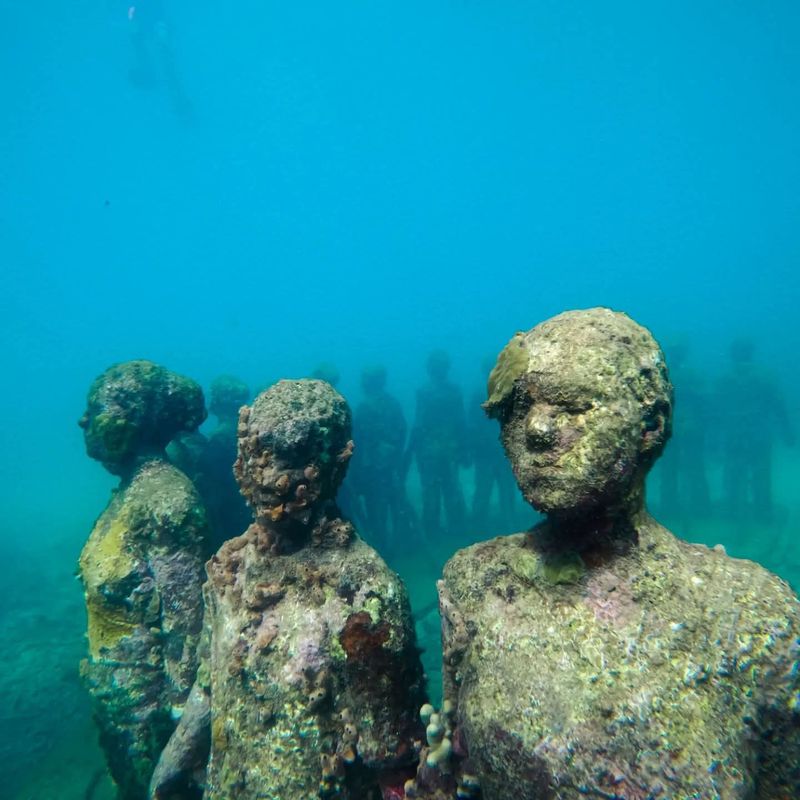
Back in 2006, Grenada made a bold move that helped start a worldwide trend. The Molinere Underwater Sculpture Park was installed that year and is often credited with pioneering the idea of sculpture that doubles as habitat.
One of its works, called Vicissitudes, shows a circle of children holding hands beneath the surface. It is one of the most photographed pieces in the park.
The park lies within the Molinere-Beauséjour Marine Protected Area, so both snorkelers and divers can visit. Because it is a protected area, conservation fees now apply for visitors.
Grenada has kept investing in the attraction by adding new sculptures and moorings. That means the park is not frozen in time, and a return trip could show you something that was not there before.
Plan your visit with a local operator who can explain the rules.
A World Adrift, Carriacou, Grenada
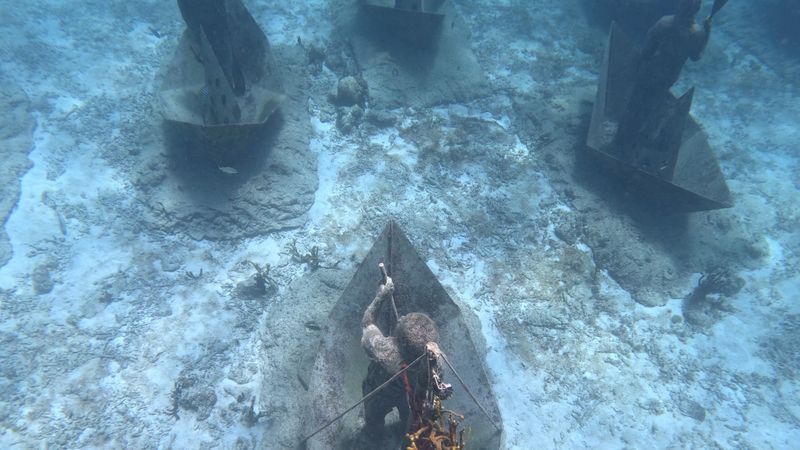
Thirty little boats sail across the seabed, and each one is steered by a local schoolchild. A World Adrift near Carriacou is Grenada’s newer underwater gallery, and its design is easy to remember.
The installation speaks to the vulnerability of small island nations to climate change. It also works as an artificial reef, giving marine life new places to live.
Sitting about four meters underwater near Hillsborough, the sculptures are shallow enough for snorkelers to see. Scuba divers can visit too, so groups with mixed experience levels can enjoy it together.
That shallow depth makes this one of the more approachable underwater museums anywhere. If you are curious about underwater art but nervous about going deep, this is a gentle place to begin.
Ask a local tour operator about boat transport and the best time of day to go.
Museum of Underwater Art, Great Barrier Reef, Australia
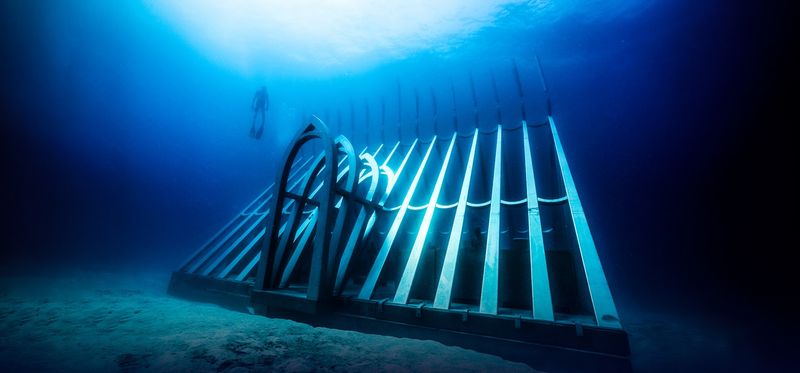
Swimming through a work of art is not something many museums let you do. At John Brewer Reef near Townsville, the Museum of Underwater Art on the Great Barrier Reef invites visitors to do exactly that.
Two major installations are the Coral Greenhouse and Ocean Sentinels. They were created to link marine conservation with visual storytelling.
The Coral Greenhouse is a huge submerged architectural piece that divers can move around and through. Reef life develops around it over time, so the structure keeps blending into its surroundings.
Current tours welcome scuba divers, freedivers, and snorkelers. The museum also continues to run special reef and conservation experiences, which is a nice bonus for travelers who want to learn something while they swim.
Book through the museum’s official channels to find the latest options.
Underwater Museum of Art, Grayton Beach, Florida
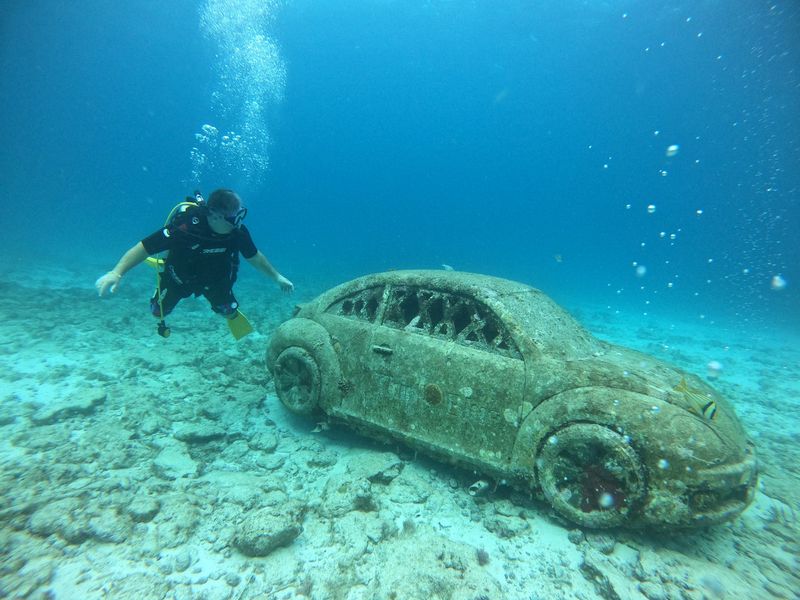
About a mile offshore from Grayton Beach State Park, Florida’s Gulf Coast has its own underwater contemporary art museum. Not many people expect to find one along the Panhandle.
The Underwater Museum of Art places large sculptural pieces on a permitted section of seabed. They also function as artificial reefs, giving fish and other marine life new surfaces to use.
The collection keeps growing and is planned to reach more than 50 installations. That ongoing expansion gives repeat visitors a reason to come back.
Since the museum sits in roughly 58 feet of water, it is mainly an attraction for scuba divers. Casual swimmers and snorkelers will not get the same view, so this one is best saved for certified divers who want something different from a typical reef dive.
Cannes Underwater Eco-Museum, France
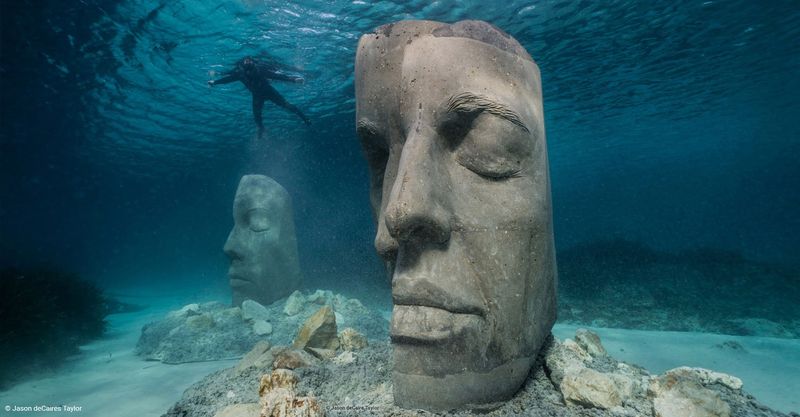
Good news for anyone without scuba gear: a mask and snorkel are enough here. Just offshore from Île Sainte-Marguerite near Cannes, six enormous sculpted faces rest between three and five meters below the Mediterranean.
They sit roughly 84 to 132 meters from shore, so the swim is manageable for comfortable swimmers. Better still, admission is free.
Cannes Tourism lists the attraction as open every day throughout 2026. That makes it one of Europe’s easiest underwater art experiences to fit into a trip.
Since the faces are large, they stand out even in water that is only a few meters deep. Pair the visit with a day on the island, and bring a snorkel set if you have one, since having your own gear keeps the plan simple and flexible.
Submerged Archaeological Park of Baia, Italy
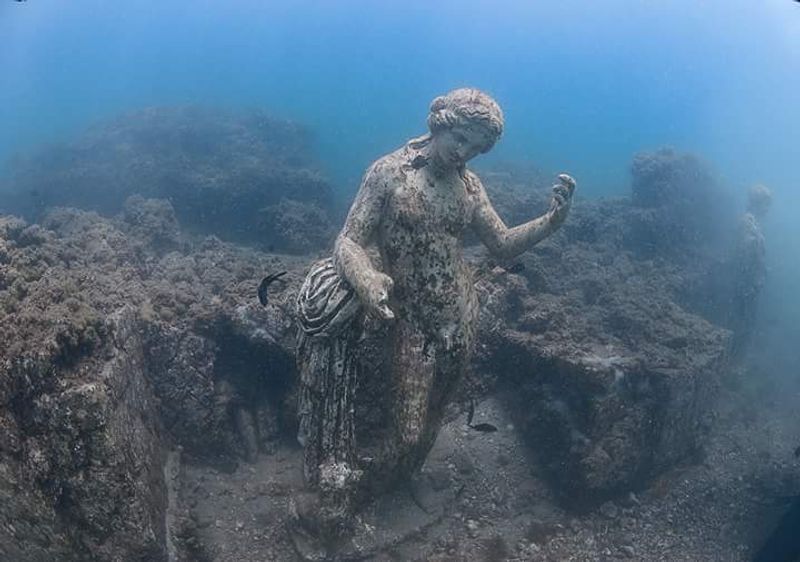
Imagine snorkeling above Roman villas instead of walking through their ruins. That is possible near Naples at Baia, where centuries of volcanic activity caused part of an ancient Roman resort town to sink beneath the Gulf of Pozzuoli.
The remains include mosaics, roads, villas, columns, and the submerged Nymphaeum of Emperor Claudius. Seeing them under the water gives the history a very different feel than a museum case would.
Guided dives and snorkeling excursions currently operate throughout the week. A guide helps you understand what you are looking at, which matters when ruins are covered in marine growth.
The site is often described as a kind of underwater Pompeii. Book a guided outing ahead of time, since access is organized and the park is protected.
Yonaguni Underwater Monument, Japan
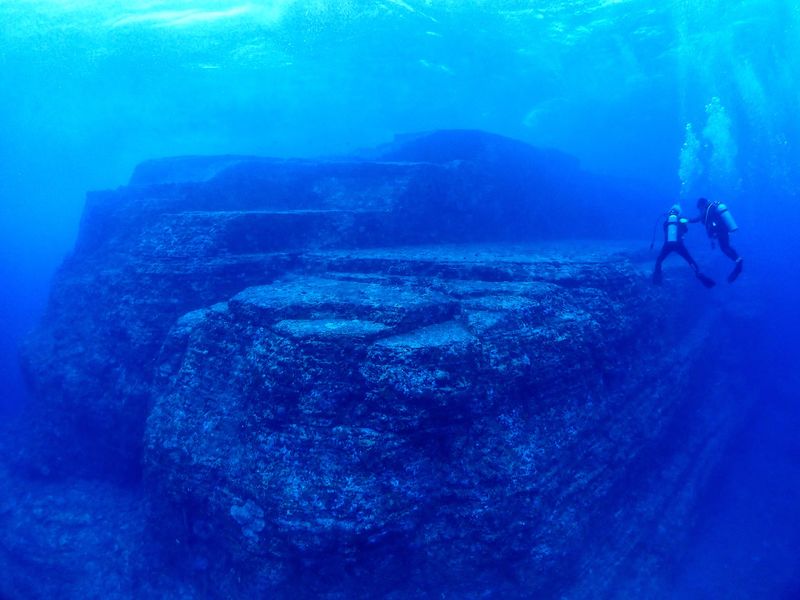
Few underwater places spark as much debate as the giant rock formations off Yonaguni Island in Okinawa. Terraces, steps, walls, and sharp angles make the site look like the ruins of a monumental structure.
Experts continue to argue about how much of its shape is natural and whether people modified it. Nobody has settled the question, which is part of the appeal.
Whatever its origin, the site is real and remains one of Yonaguni’s signature dive spots. Okinawa’s official tourism guide currently lists the Underwater Ruins as a dive attraction at depths reaching roughly 25 meters.
Because of the depth, this is a destination for certified divers. Visitors who want to decide for themselves whether it is natural or built should plan a trip with a local dive shop on the island.
Aqaba Underwater Military Museum, Jordan
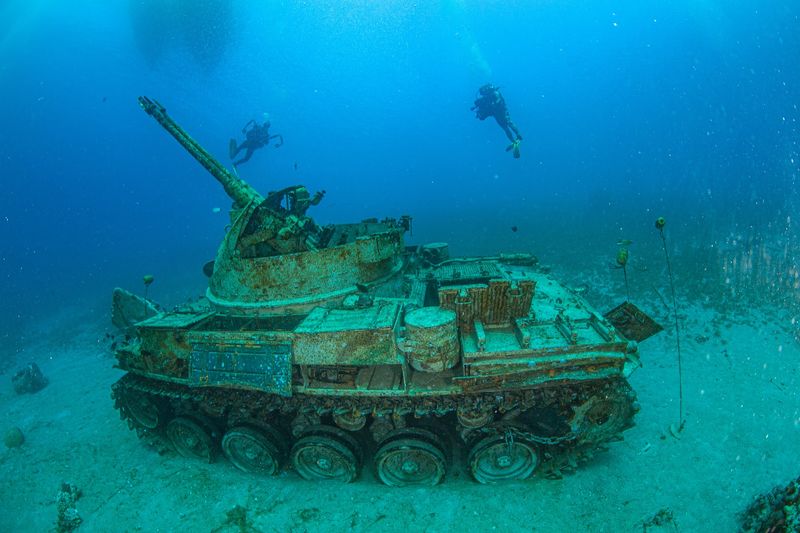
Tanks, anti-aircraft guns, armored vehicles, and even a combat helicopter sit beneath the Red Sea near Aqaba. The sight is unusual enough to make seasoned divers curious.
Jordan created the Underwater Military Museum by placing decommissioned military equipment on the seabed in a formation meant to resemble a battlefield. A total of 19 pieces are included in the installation.
Today it works as both a diving attraction and an artificial reef. Marine life has been settling on the equipment, giving old machinery a second purpose.
Jordan’s official tourism board continues to promote the museum and points visitors to licensed local dive centers for excursions. Using a licensed operator is the smart way to go, since they know the site and can handle the practical details.
Lošinj Historical Underwater Park, Croatia
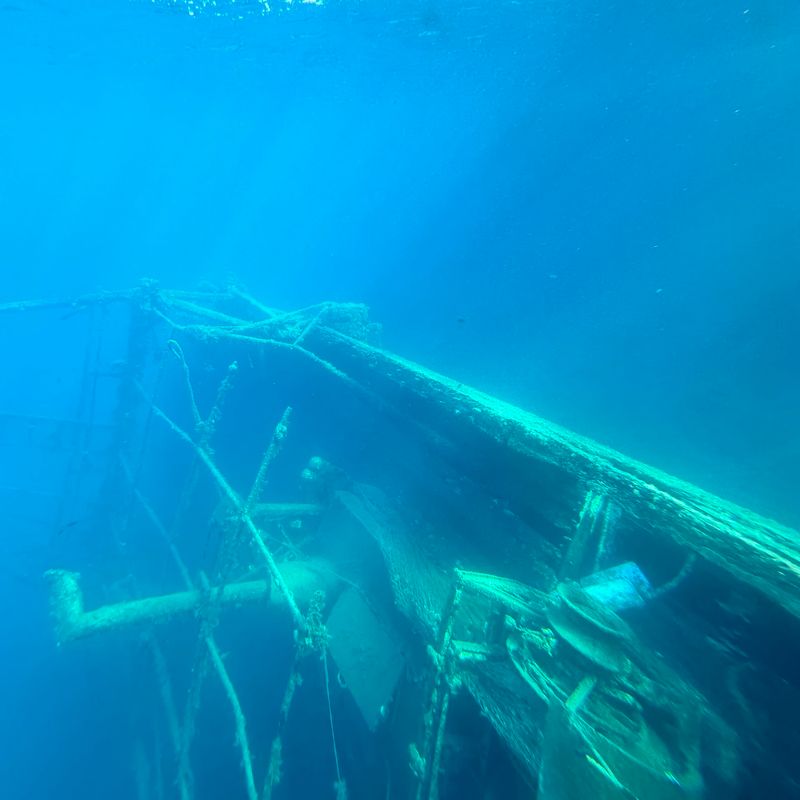
Croatia’s Čikat Bay hides a small history museum between five and 15 meters beneath the Adriatic. It is a compact way to learn about the region’s maritime past.
The Lošinj Historical Underwater Park includes 11 exhibits from different periods. You will find replica ancient amphorae, historic cannons, anchors, and military equipment.
Its centerpiece is a life-size replica of the ancient Greek athlete known as Apoxyomenos. The statue is a fitting star, since an original Apoxyomenos was famously found in these waters.
Certified divers can explore the route of about 300 meters. Beginners can try it with an instructor through a discovery dive, so you do not need to be experienced to see it.
Contact a local dive center in advance to arrange your visit.
Christ of the Deep, Key Largo, Florida
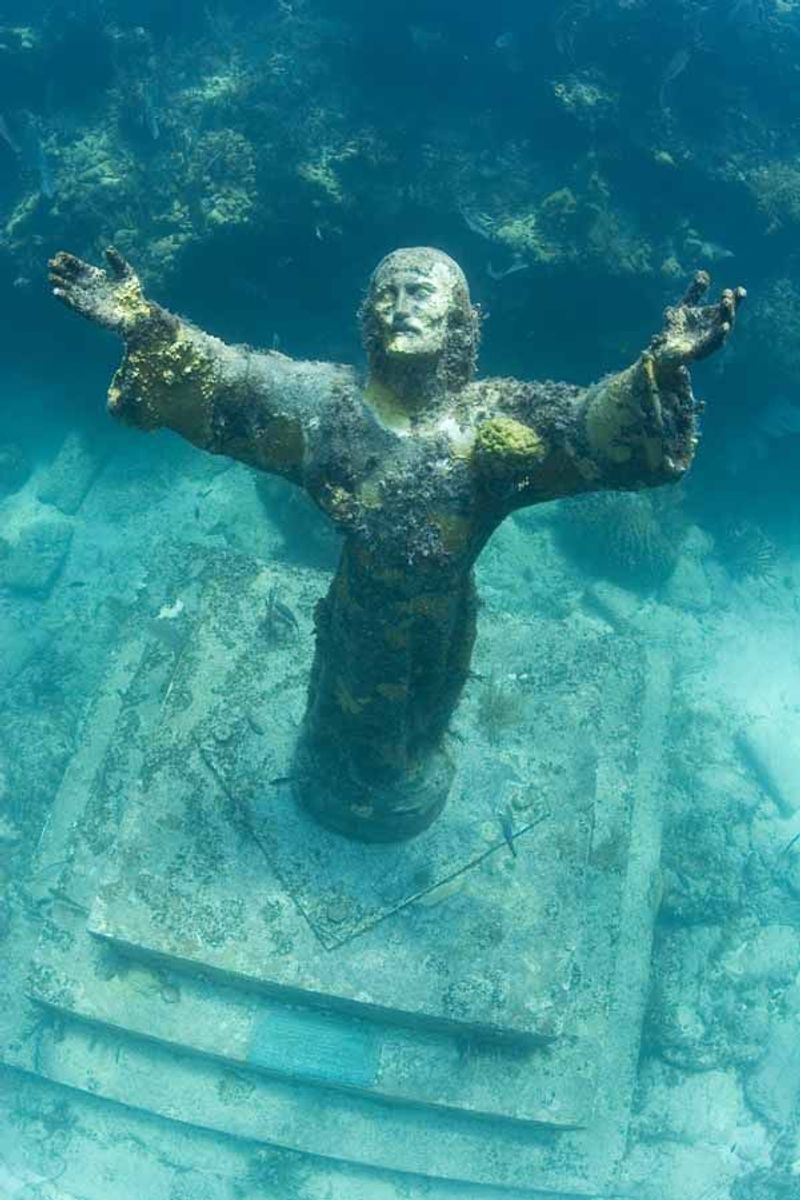
With its arms raised toward the surface, this bronze statue is one of the Florida Keys’ most recognizable underwater landmarks. It rests among the coral formations of Key Largo Dry Rocks in approximately 25 feet of water.
Since it sits relatively close to the surface, travelers do not necessarily need scuba certification to see it. A pair of fins and a snorkel can be enough on a clear day.
Snorkeling operators regularly include the statue on reef excursions. Divers can also descend for a closer look at the figure and the reef around it.
Choose a boat trip that visits Key Largo Dry Rocks specifically, because not every reef tour stops at the same place. Calm, clear days give the best view of the statue.
Deep Dive Dubai, United Arab Emirates
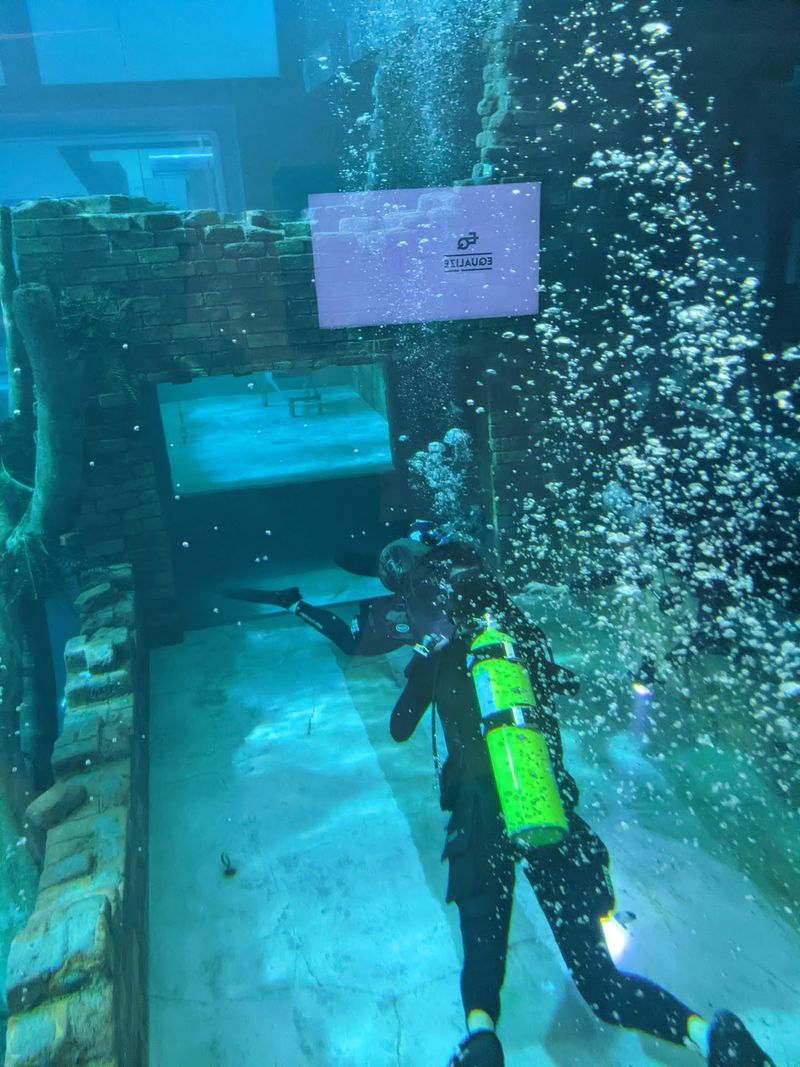
A swimming pool that goes down 60 meters is not what most people expect in the desert. Deep Dive Dubai holds around 14 million liters of freshwater inside a massive indoor attraction.
Inside is a detailed sunken city filled with rooms, cars, arcade machines, furniture, and other odd objects for divers to investigate. It feels more like exploring a movie set than a regular dive site.
Certified divers can head to deeper sections. Beginners can join guided introductory dives, so you do not have to be an expert to try it.
There are also snorkeling and underwater walking experiences, which means diving certification is not required for every activity. Book your chosen activity ahead of time and check what each one includes.
Jules’ Undersea Lodge, Key Largo, Florida
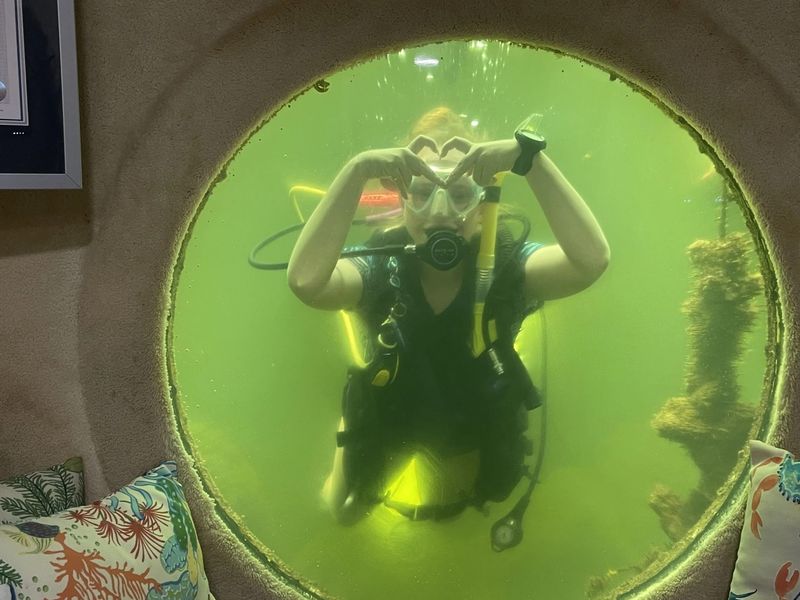
Here, scuba diving is the front door to your hotel room. Jules’ Undersea Lodge sits inside a lagoon in Key Largo, and guests stay in a submerged habitat instead of making a quick dive and heading back up.
Current overnight Aquanaut Adventure packages include meals, scuba tanks, weights, and accommodation inside the habitat. That covers many of the basics in one booking.
The surrounding MarineLab Undersea Park remains operational. Overnight participants generally need scuba certification or must meet specific instructor-supervised requirements.
Since the requirements are particular, contact the lodge early to confirm what your group needs. It is a stay that rewards planning, and the details are worth sorting out before you arrive.
Under, Lindesnes, Norway
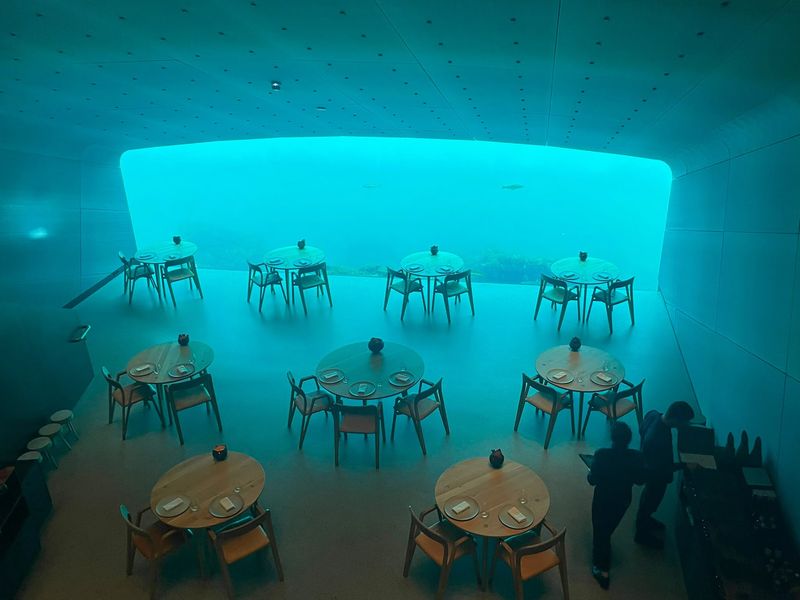
At Under, you stay dry while the North Atlantic puts on the show outside the window. The concrete restaurant extends down into the sea, and its dining room sits approximately five meters below the surface.
A huge panoramic window offers views of fish, changing light, rough seas, and other marine life. Guests eat a seasonal menu focused heavily on ingredients from Southern Norway.
The restaurant is Michelin-listed and continues to operate from its seaside location in Lindesnes. It is currently taking reservations.
Since seating is limited and the setting is so unusual, reserve well ahead. Lindesnes is a remote area, so build the meal into a larger trip along Norway’s southern coast.
Ithaa Undersea Restaurant, Maldives
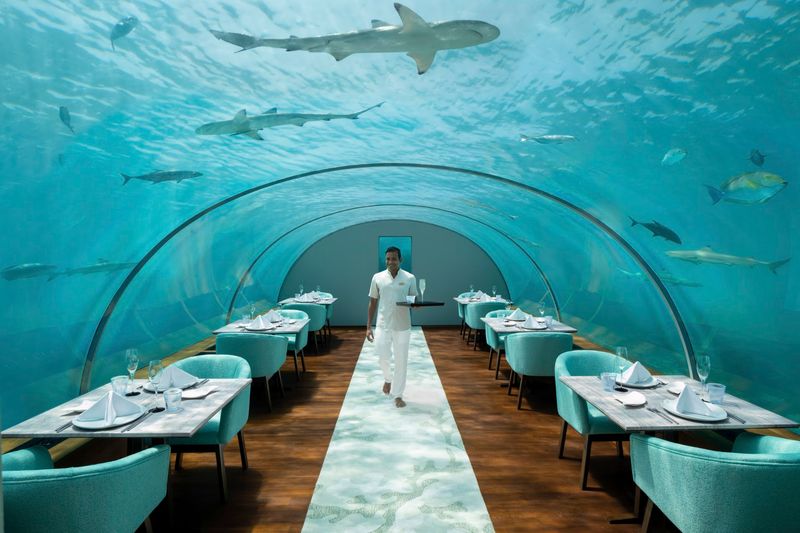
Dining five meters below the Indian Ocean sounds like a movie idea, but Ithaa has been doing it since 2005. It is located at Conrad Maldives Rangali Island.
Curved transparent walls give diners a nearly panoramic view of the surroundings. Reef fish, rays, sharks, and other marine life move past outside.
The intimate restaurant accommodates only 14 guests per service. That small size keeps the room quiet and easy to appreciate.
Ithaa remains fully operational in 2026, with reservations available and special dining events scheduled throughout the year. Booking early is wise, because a room that seats just 14 fills up fast.
8 Undersea Restaurant, Hurawalhi, Maldives
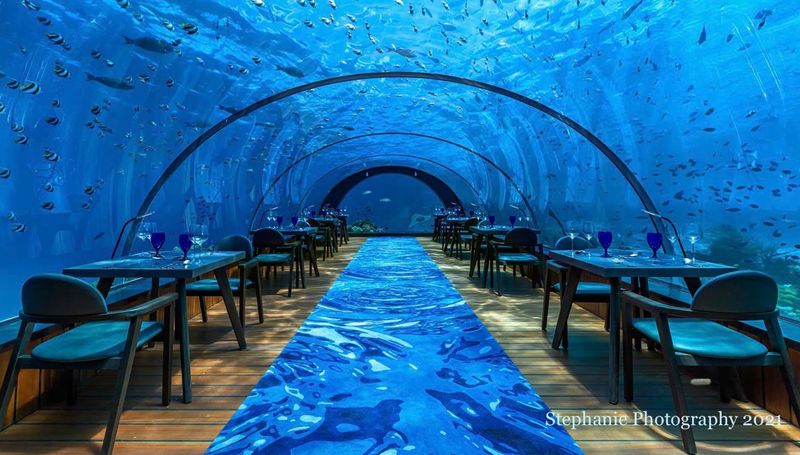
The name tells you exactly where you are going: 5.8 meters beneath the surface. Hurawalhi Maldives’ all-glass undersea restaurant surrounds diners with views of the reef.
Guests are served multi-course tasting menus while the reef life moves around them. The setting is the main attraction, and the menu supports it.
Only around 20 diners can be seated at once. That keeps the experience surprisingly intimate despite the enormous glass structure around the room.
The restaurant currently offers two lunch sittings and an evening dinner service. Guests staying at other resorts can also submit booking requests, so you do not have to be a Hurawalhi guest to try for a table.
Subsix, Niyama Private Islands Maldives
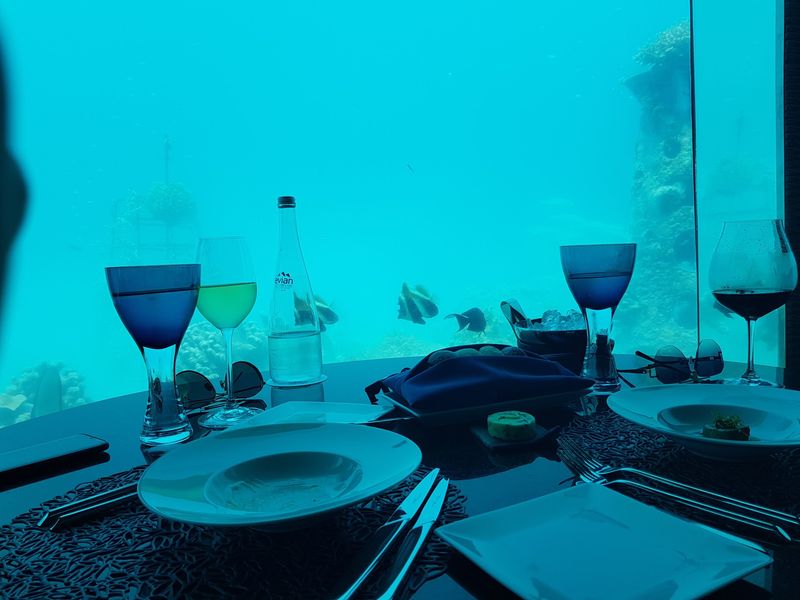
Getting to dinner by speedboat is only the start at Subsix. Guests then descend below the Indian Ocean into an interior with marine-inspired furniture, elaborate lighting, and wide underwater views.
The current concept centers on Nikkei cuisine, which combines Japanese and Peruvian influences. It gives the venue a food identity that goes beyond the setting.
Subsix is also used for champagne breakfasts, private events, dinners, and nighttime parties. That flexibility sets it apart from restaurants that only serve one meal.
Niyama currently lists Subsix as operational, although opening schedules can change with weather and seasonal conditions. Confirm timing with the resort before building plans around it.
The Underwater Room at The Manta Resort, Tanzania
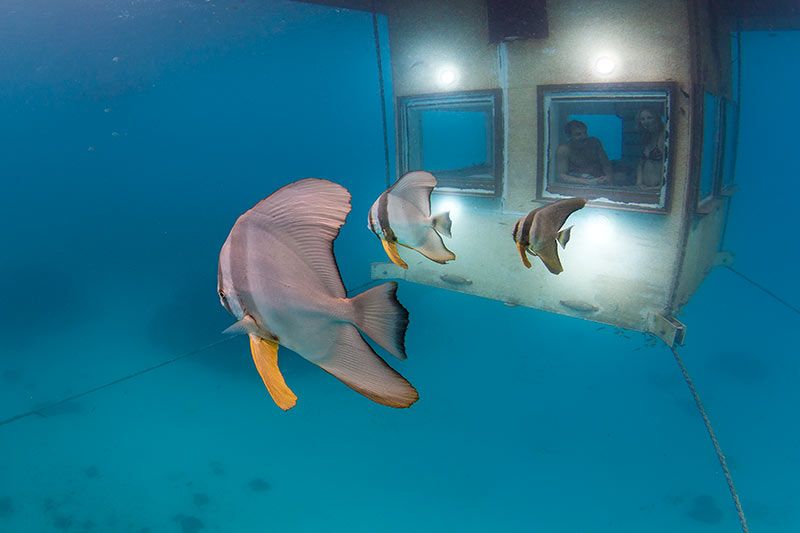
For perhaps the strangest overnight stay on this list, head to Pemba Island in the Zanzibar Archipelago. The Manta Resort’s Underwater Room is a floating structure with several levels.
Its bedroom sits completely below sea level. Large windows show the surrounding reef, and fish pass by the glass at night.
Above the water are a lounge and a private roof deck. Guests get both an ocean escape and an underwater bedroom in the same accommodation.
The resort continues to offer the room, although availability is deliberately limited. If this one is on your wish list, reserve as early as you can and be flexible with your dates.
Share this story