Across Europe, people have built homes on cliff edges, volcanic rock, and steep coastal slopes. These towns show how creative and determined communities can be when land is hard to use.
Each one offers a real look at history, engineering, and daily life in dramatic settings. Here are thirteen places that prove a tough location can still become a lasting home.
1. Ronda, Spain
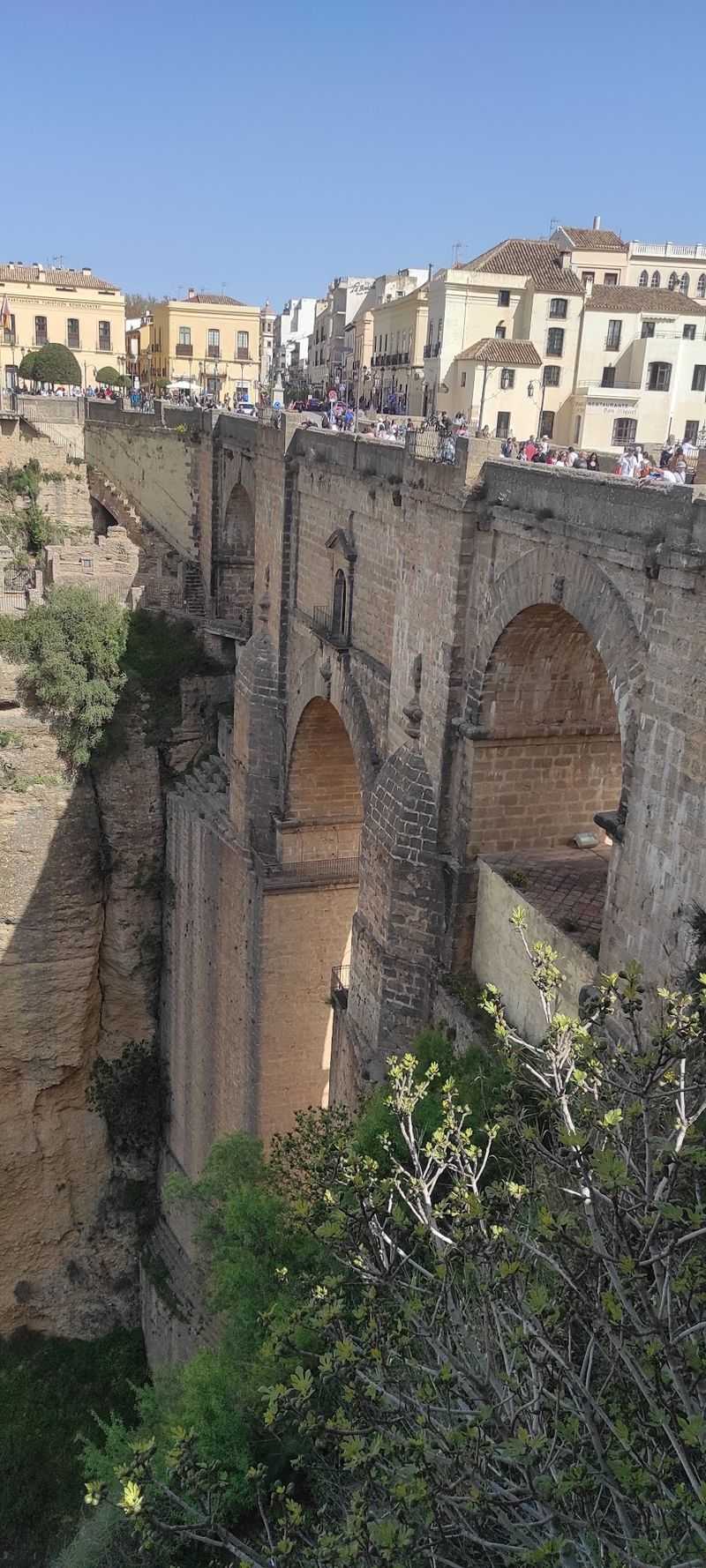
A single stone bridge holds this town together, quite literally. Ronda sits on two sides of a gorge about 120 meters deep, and the Puente Nuevo links the old Moorish quarter with the newer part of town.
Construction of the bridge finished in 1793 after an earlier attempt collapsed and killed dozens of workers. Today it is one of the most photographed sights in Andalusia.
Walk down the paths below the bridge for the best view of the gorge and the river far beneath it. Early morning is a calm time to visit, before tour groups arrive.
Ronda is also known as the birthplace of modern bullfighting, and its old bullring is among the oldest in Spain. Pair a visit with a stop at the Arab Baths, which are well preserved and easy to tour in under an hour.
2. Civita di Bagnoregio, Italy
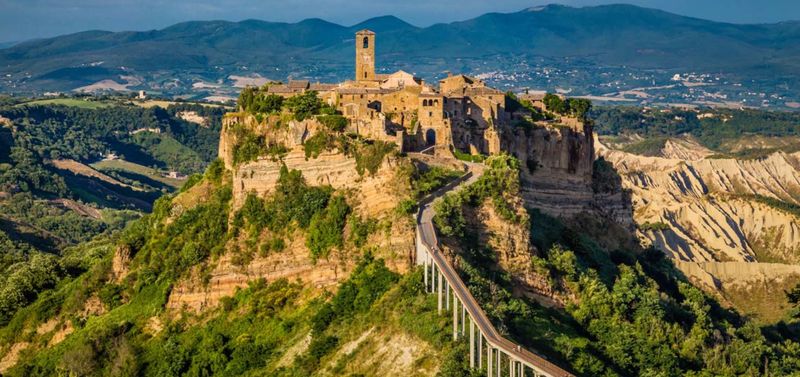
Nicknamed the dying town, Civita di Bagnoregio stands on a crumbling plateau of soft volcanic rock. Erosion has worn away the land around it for centuries, leaving the village reachable only by a long footbridge.
Etruscans founded the settlement more than 2,500 years ago. Earthquakes and landslides slowly shrank it, and only a handful of people live there year round.
Visitors pay a small fee to cross the bridge, and the climb is steady but short. Once inside, you will find quiet lanes, a small main square, and views over the Calanchi valley.
Come in the morning if you want a peaceful stroll. Fog often settles in the valley then, and the town looks like it is floating above the clouds.
3. Bonifacio, France
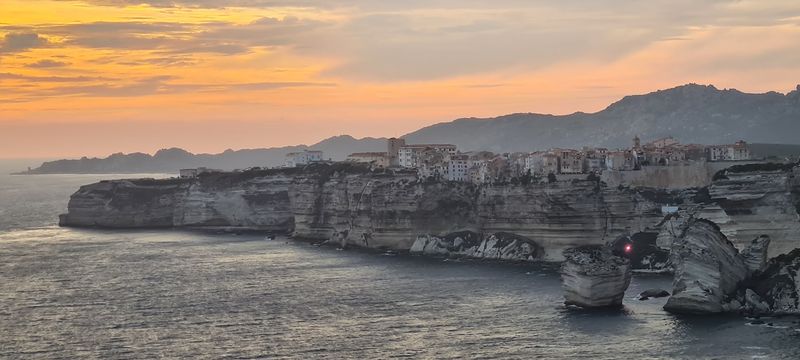
Picture houses leaning over a limestone cliff with the sea churning far below. That is Bonifacio, the southernmost town on Corsica, set on chalky white cliffs that have been carved by wind and waves.
The old citadel was built by Genoese settlers in the 9th century as a fortress, and its walls still guard the upper town. Some buildings seem to hang over empty air, and parts of the cliff have been undercut by the sea.
Take the boat tour from the harbor to see the cliffs and sea caves from the water. You can also walk the Staircase of the King of Aragon, which has 187 steps cut into the rock.
On clear days, you can spot Sardinia across the strait, only about 11 kilometers away.
4. Meteora, Greece
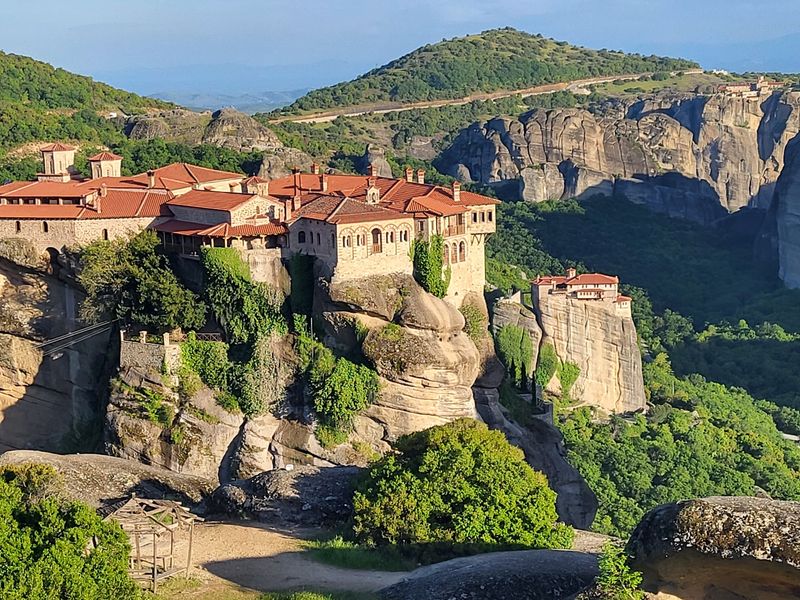
Few sights look as unlikely as monasteries sitting on top of giant stone pillars. Meteora, in central Greece, features rock towers rising up to 400 meters, and religious communities have lived on them for centuries.
Monks first climbed here in the 11th century, seeking quiet and safety. Early residents used long ladders and rope nets to haul people and supplies up the cliffs.
Six monasteries are still active today, and visitors can reach them by road and stone steps. Dress modestly, as shoulders and knees should be covered, and check opening days since each monastery closes on a different weekday.
Meteora is a UNESCO World Heritage Site. Sunset is a favorite time to visit, when the rocks glow warm orange above the nearby town of Kalambaka.
5. Castellfollit de la Roca, Spain
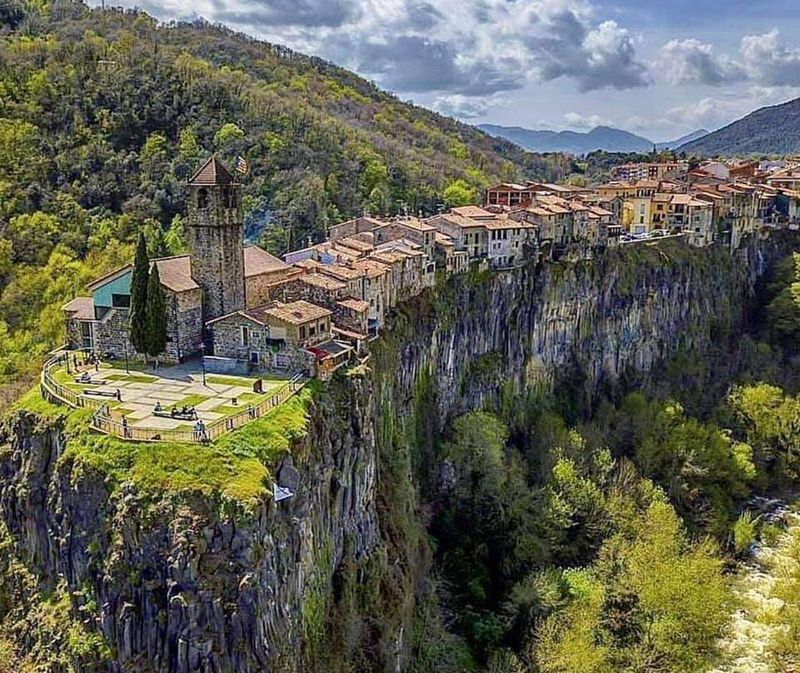
Only one street wide in places, Castellfollit de la Roca runs along the top of a basalt cliff about 50 meters high and nearly a kilometer long. Houses sit right at the edge, so the stone wall seems to continue straight into the buildings.
The cliff formed from lava flows thousands of years ago, then rivers cut away the surrounding land. The town lies inside the Garrotxa Volcanic Zone Natural Park in Catalonia.
A church with a tall tower stands at the tip of the cliff, and a viewpoint nearby gives a neat look down to the river. The village is small, so a visit can fit into a short stop.
Hikers often combine it with trails through the nearby volcanic cones and beech forests.
6. Rocamadour, France
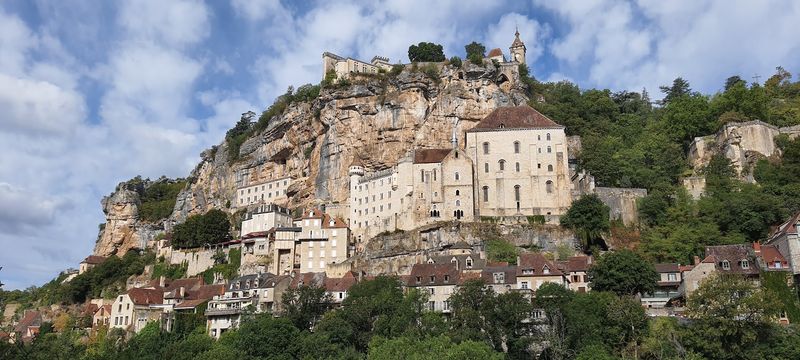
Stacked like a stone staircase, Rocamadour clings to a cliff above the Alzou canyon in southwestern France. Chapels, houses, and a castle rise one above another on the rock face.
Pilgrims have been coming here since the Middle Ages to visit a famous statue known as the Black Madonna. Many climbed the 216 steps of the Grand Staircase on their knees as an act of devotion.
Today, visitors can take a lift or walk the steps. Cheese lovers should try the local Rocamadour, a small, soft goat cheese with a creamy flavor.
For a full view of the village, go to the viewpoint at L’Hospitalet across the canyon. The scene is especially striking in the early evening when the lights come on.
7. Pitigliano, Italy
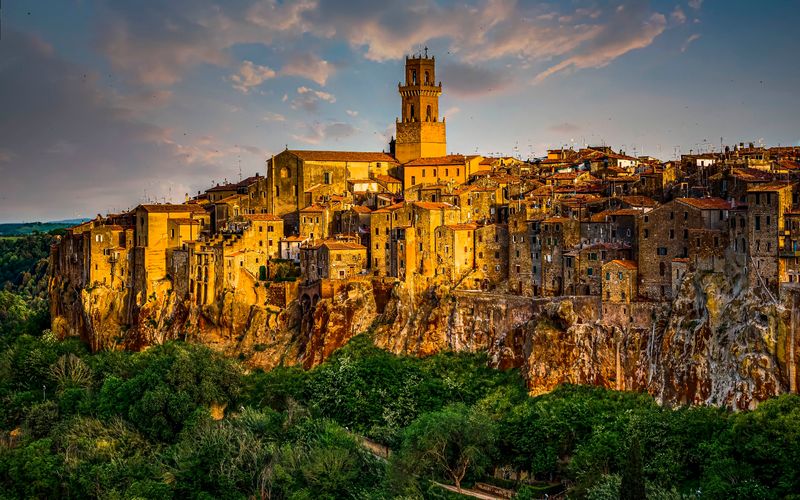
Golden-brown houses seem to grow right out of the rock in Pitigliano. The town sits on a ridge of tufa, a soft volcanic stone, with deep ravines on three sides.
Etruscans carved paths and tombs into the cliffs long ago, and some of those routes, called vie cave, can still be walked. Cellars dug into the stone are used today to age local white wine.
The town was once home to a sizable Jewish community, which earned it the name Little Jerusalem. A museum and a restored synagogue tell that story.
Try sfratti, a honey and walnut pastry linked to the town’s Jewish heritage. Visit in the late afternoon, when the stone glows and the shadows stretch across the valley.
8. Cuenca, Spain
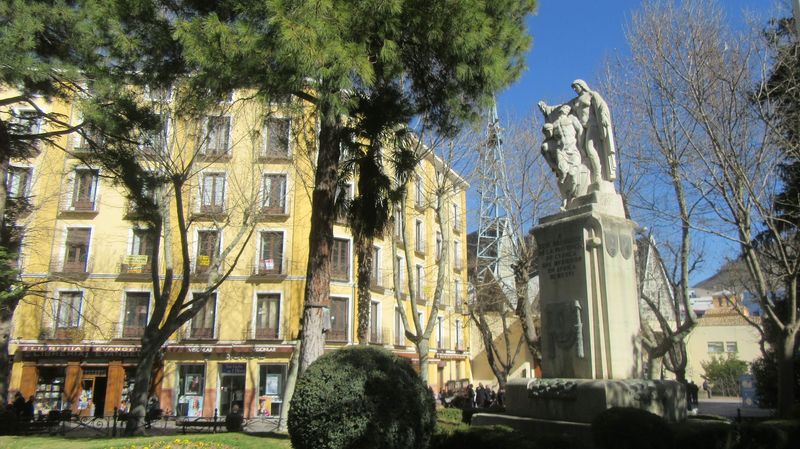
Houses that appear to hang in midair are the calling card of Cuenca. Its famous Casas Colgadas, or hanging houses, have wooden balconies that stick out over the Huécar gorge.
The town sits on a rocky ridge between two rivers, a spot first chosen for defense by the Moors. Later, Christian rulers built churches and homes, and the old quarter is now a UNESCO World Heritage Site.
One of the hanging houses holds a museum of abstract art, a surprising treat inside such an old building. A slim pedestrian bridge, the Puente de San Pablo, offers a thrilling walk above the gorge.
Wear comfortable shoes, because the streets climb steeply. The upper town near the cathedral is quieter, and you can enjoy views across pine-covered hills.
9. Manarola, Italy
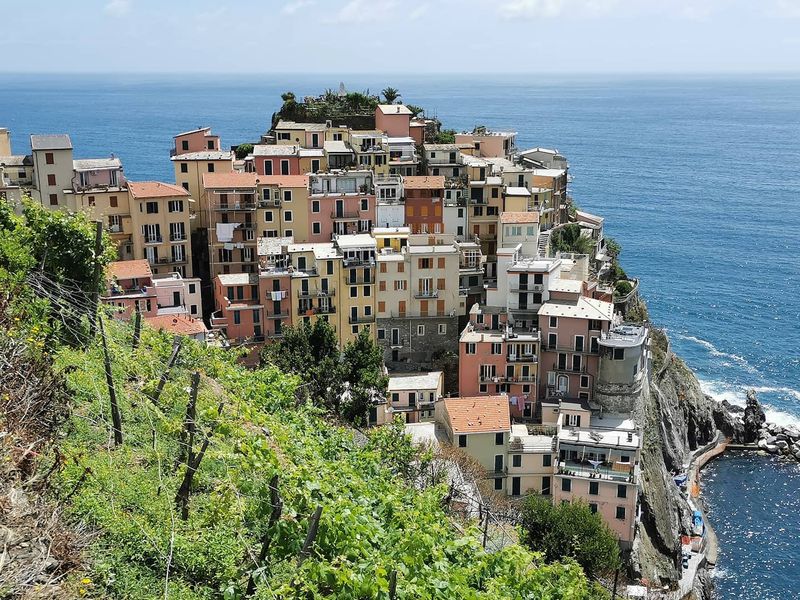
Manarola proves that even a rocky cliff can become a colorful neighborhood. Pastel houses crowd the slope above a tiny harbor in Cinque Terre, on the Ligurian coast.
Residents carved terraces into the steep hills over centuries, planting vines and olive trees to make use of every bit of land. The area is known for Sciacchetrà, a sweet wine made from grapes grown on those narrow ledges.
A short path leads to a viewpoint on the east side of town, a favorite place to watch the sunset. The village is small enough to explore on foot in a couple of hours.
Trains connect it to the other four Cinque Terre villages, so day trips are simple. Bring sturdy shoes, as the lanes and trails are steep and uneven.
10. Monsanto, Portugal
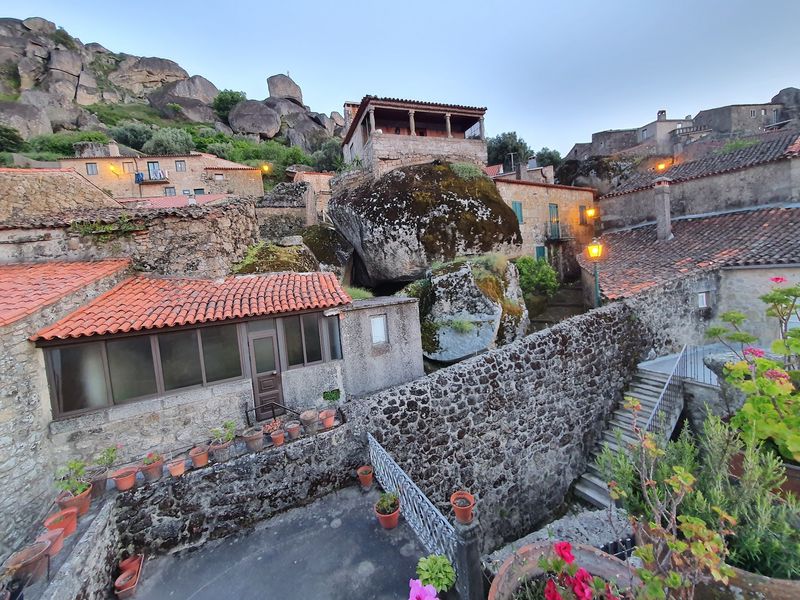
Giant boulders are not obstacles in Monsanto, they are walls and roofs. Homes here are tucked between and beneath huge granite rocks on a hillside near the Spanish border.
In 1938 the village was named the most Portuguese village in Portugal, a title that brought it lasting fame. A castle ruin crowns the top, reached by a winding path of stone steps.
One house is wedged under two massive boulders, with a roof made partly from the rock itself. Walkers can explore the narrow lanes, which are paved with uneven stone, so good shoes help.
The view from the castle stretches across the plains of the Beira region. Try local dishes such as roasted kid goat at a small family restaurant in the village.
11. Albarracín, Spain
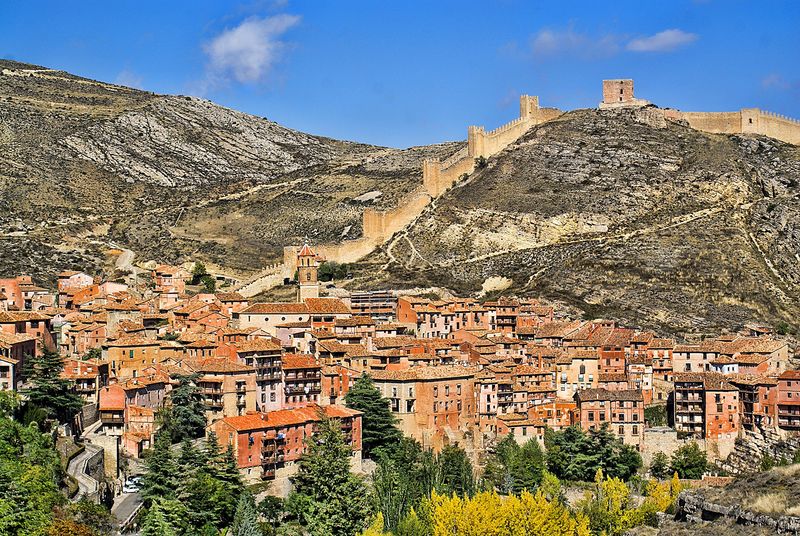
Rosy-colored walls give Albarracín a glow that changes through the day. The town rests on a rocky bend of the Guadalaviar River in Aragon, with houses squeezed onto a narrow ridge.
A long wall, built in the Middle Ages, climbs the surrounding hills like a stone ribbon. Many buildings have wooden beams and balconies that lean out over tight, twisting streets.
The local plaster is tinted with reddish clay, which explains the warm color. Walk up to the wall towers for views across the valley and the town’s roofs.
Nearby cliffs hold prehistoric rock paintings that are over 6,000 years old, and guided visits can be booked in the area. Winters are cold here, so pack a warm jacket if you visit outside summer.
12. Sant’Agata de’ Goti, Italy
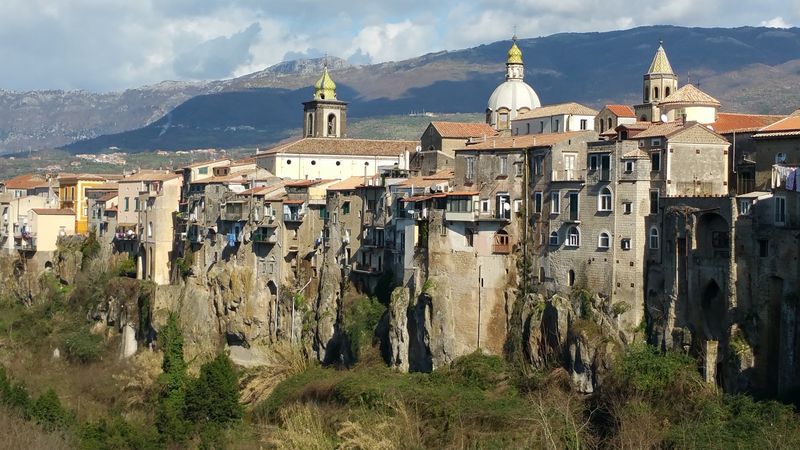
Hidden in Campania, Sant’Agata de’ Goti sits on a block of tufa rock surrounded by two small streams. Its cliff-edge houses look as though they grew out of the stone itself.
The town dates back to ancient times and was once settled by the Samnites. Today, a medieval layout of narrow lanes, small piazzas, and old churches remains.
Look for the stone bridge that leads into the old center and the Duomo, with its Romanesque features. Some homes have balconies hanging over the ravine, which adds to the drama of the view.
The town is also known for local wine, especially Falanghina, so a tasting is a good idea. Because it is far from big tourist crowds, you can enjoy a quiet, relaxed visit.
13. Positano, Italy
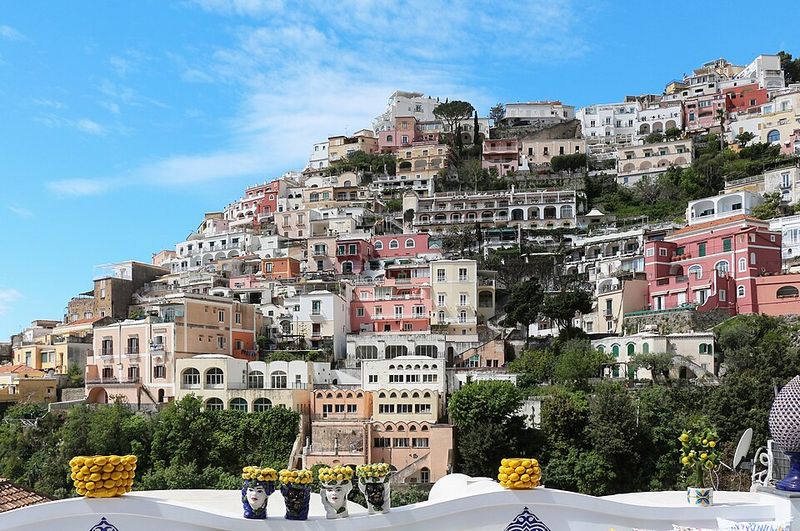
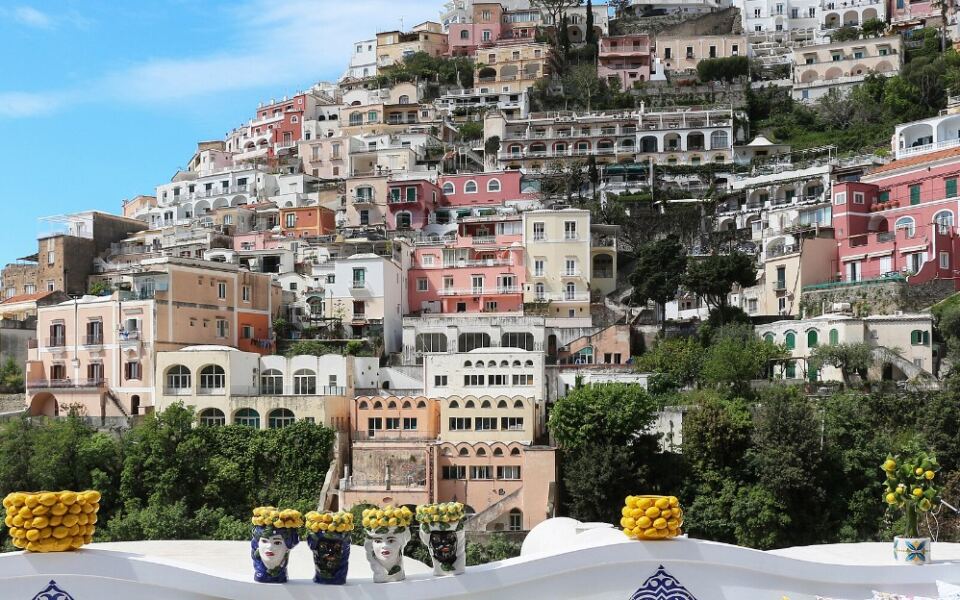
Houses tumble down the hillside in Positano like blocks stacked by a giant. The town sits on the Amalfi Coast, where steep slopes plunge straight into the Tyrrhenian Sea.
Once a quiet fishing village, it grew popular in the 20th century when artists and writers came to visit. Narrow stairways, more than a thousand steps in some areas, connect the homes and shops.
Because roads are tight and winding, many people use local buses or boats to arrive. Walking is the easiest way to get around, so bring comfortable shoes.
Spend time at Spiaggia Grande, the main beach, or take a short ferry to nearby spots. Local lemons are a signature product here, and you can find them in drinks, desserts, and soaps throughout town.
Share this story