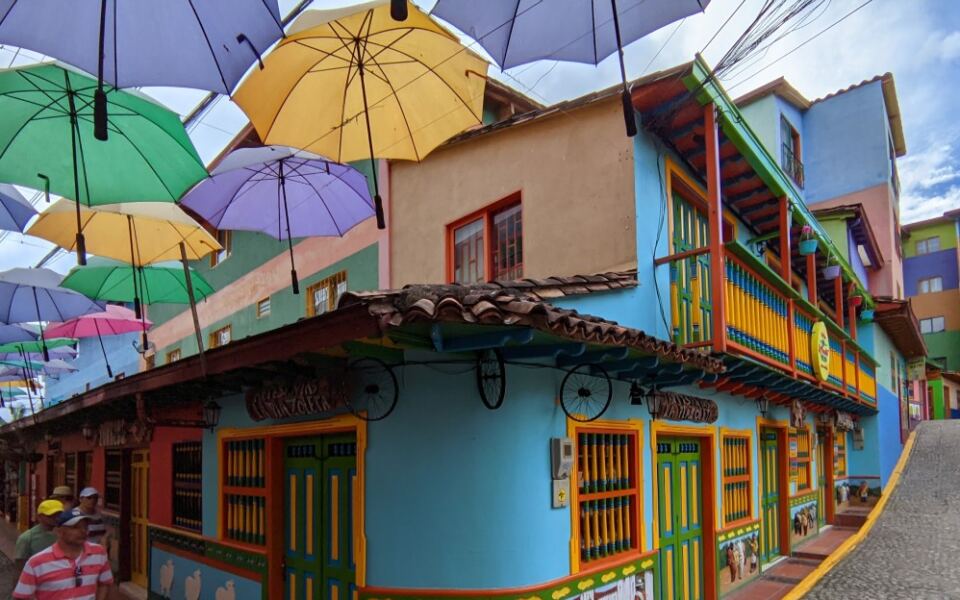
Guatapé is a small Colombian town packed with bright colors, big views, and surprising stories. It sits beside a huge reservoir about two hours from Medellín.
Its houses wear painted pictures, and a giant rock towers nearby. Here are the places and traditions that make a visit unforgettable.
El Peñón de Guatapé
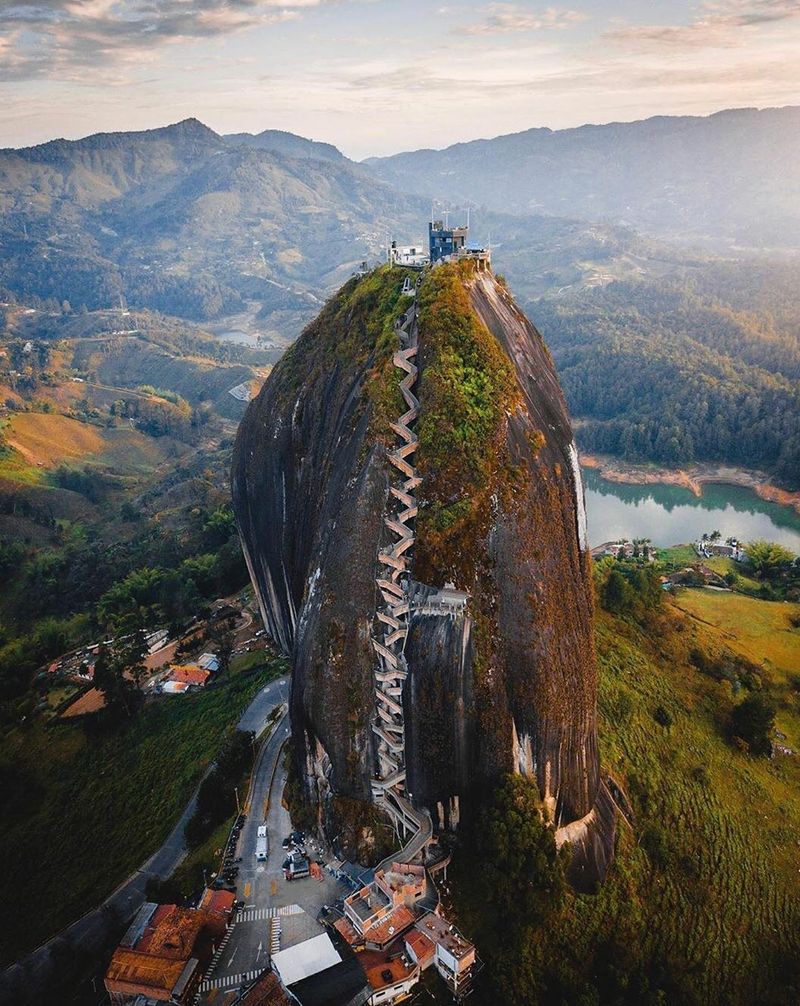
Seven hundred and forty steps sound like a lot until you see the view waiting at the top. El Peñón rises about 220 meters, and the staircase hugs the rock like a zipper.
Local climbers first reached the summit in 1954 using planks and homemade supports.
Most people finish the climb in about half an hour. Go slowly, stop at the landings, and drink water along the way.
Nobody gives out medals for speed, but the scenery is a fine prize.
At the top, the reservoir spreads out in a puzzle of water, forested peninsulas, and tiny islands. Bring a hat, because the sun feels stronger up there.
Early mornings are cooler and less crowded, so you can enjoy the view without elbowing for a photo spot.
Fun fact: official stair counts have changed over the years, but the local tourism office now says 740. Count them yourself if you feel brave.
Your legs will certainly keep track, and so will your phone’s step counter.
Guatapé’s Painted Zócalos
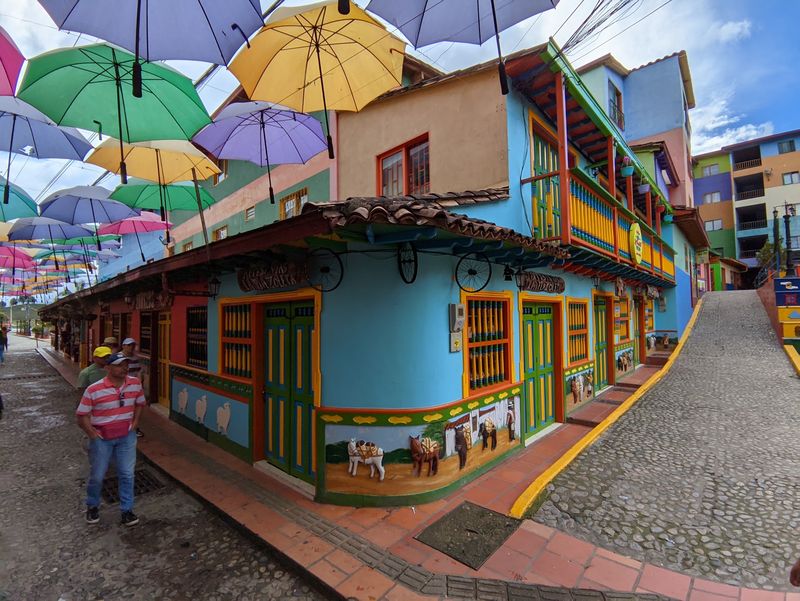
Look down, not up, and Guatapé starts telling its story. The painted panels along the lower walls of houses are called zócalos.
They are more than pretty decoration.
Long ago, families used them to show what they did for a living. A loaded mule might point to a muleteer, while cattle or weaving scenes hinted at other jobs.
The town’s economy once ran on farming, cattle, mule trains, and mining, so the walls became a neighborhood résumé.
Today the designs have grown wider. You will spot flowers, fish, boats, landscapes, and even El Peñón itself.
Colombia’s tourism authority says the tradition has decorated buildings since the early 20th century.
Try a game as you stroll. Pick a house, study its panels, and guess who lived there.
You will notice small details, like a tiny bird or a wavy line of water, that most quick visitors miss. Walking here is like flipping through a giant outdoor picture book of local life.
Plazoleta de los Zócalos
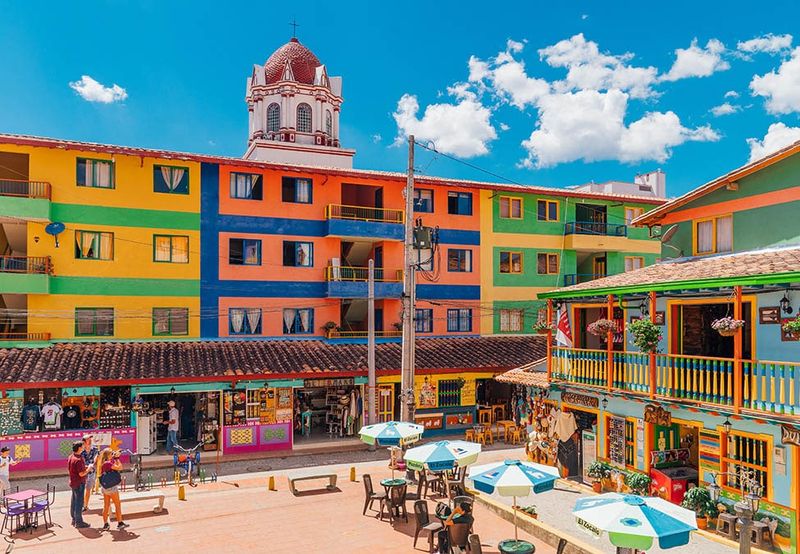
Picture a box of crayons that spilled onto a town square. That is the Plazoleta de los Zócalos.
Painted stairways, bright facades, cafés, and craft shops all crowd around a small public space.
The square was created to mark the town’s bicentennial. It has since become a gathering place for local food and handmade goods.
The official tourism guide calls it Guatapé’s most colorful heart, and it is hard to argue.
Here is a tip from experience: timing matters. During day-trip hours, the plaza fills up fast, and you end up photographing the backs of other visitors.
Come in the early morning or late afternoon instead.
With fewer people around, you can study individual designs up close. Check the tiny carved details, the neat painted borders, and the scenes tucked into corners.
Then grab a snack from a nearby vendor and sit for a bit. Good people-watching is part of the fun, and the colors look even better when you are not rushing.
Calle del Recuerdo
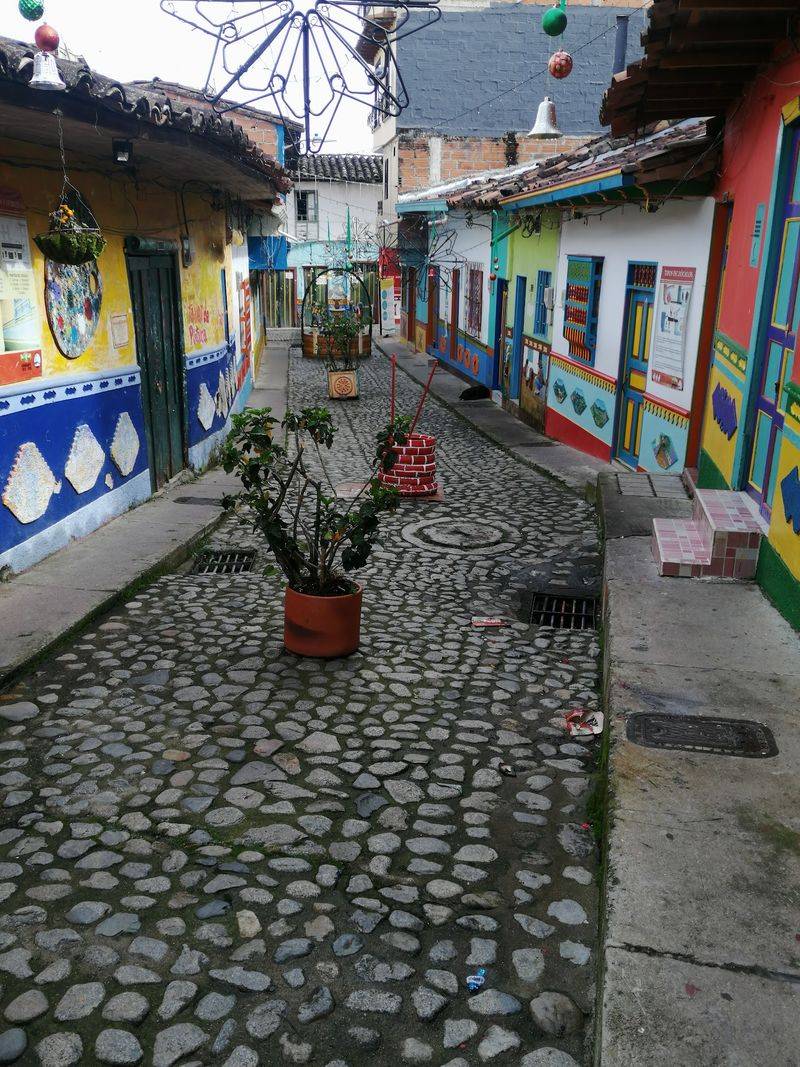
Some streets are built for photos, and others are built for remembering. Calle del Recuerdo, the Street of Memory, is the second kind.
It honors the land and neighborhoods that changed when the reservoir arrived.
The cobblestone lane is lined with bright facades, flowerpots, and wooden details. Zócalos along the walls show scenes from Antioquian history and settlement.
Tourism officials say the street pays tribute to steep roads and areas affected by flooding.
One visitor might call it charming, while another might find it moving. Both reactions make sense.
The street shows how the town uses design to keep the past close.
Walk slowly and read the walls like short chapters. Notice how the old Guatapé peeks through the modern streetscape.
It is a quieter spot than some other lanes, so you can actually hear your own footsteps on the stones. Bring curiosity, and maybe a small notebook for ideas.
Peñol–Guatapé Reservoir
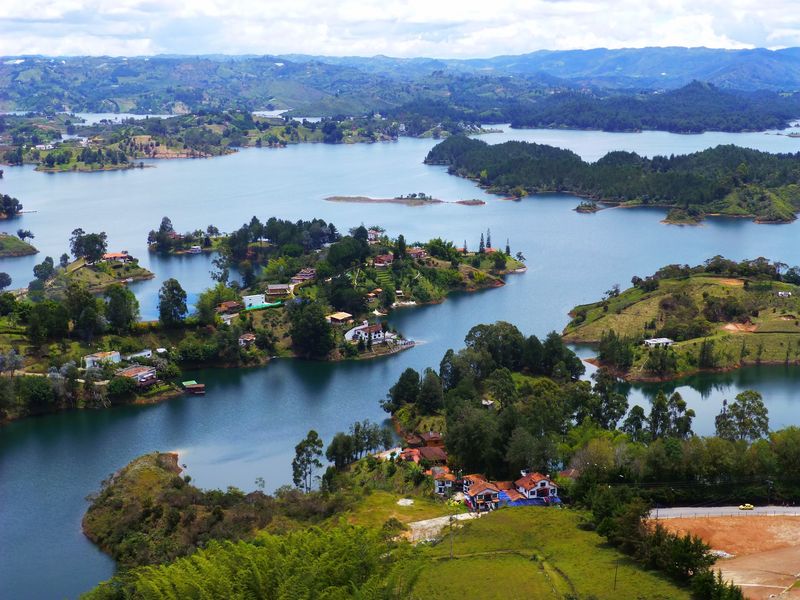
Plot twist: the gorgeous lake is not a lake at all. The Nare River was dammed to make electricity, and the water filled the valley.
The reservoir now covers roughly 65 square kilometers.
Before the project, there were no islands like the ones you see today. Many of those green bumps are old hilltops that the rising water cut off.
They look like natural gems, but they began as mountaintops.
The reservoir changed how people travel, work, and earn money here. It still helps power the country, so it works while it looks pretty.
Tourism grew around it, and boats became part of daily life.
From high up, the water splits into branching arms and thin peninsulas. That odd shape is what many people picture when they think of Guatapé.
If you can, look at it from the rock, a boat, and a viewpoint. Each angle tells a slightly different story.
A Boat Trip Across the Reservoir
Nothing explains the reservoir like riding across it. Boats leave from the Guatapé waterfront and weave between islands, wooded peninsulas, and vacation homes.
Along the way you get views back toward El Peñón.
Local tourism officials suggest going early. The water is usually calmer, and there is less boat traffic.
Calm water also means fewer wobbly stomachs.
Not into a regular tour? You can try kayaking or paddleboarding for a slower pace.
Wakeboarding and other motorized fun are on offer too. Pick the speed that suits your mood.
The trip is more than pretty scenery. Out on the water, you can spot signs of the flooded landscape below.
It becomes clear how much the hydroelectric project changed what was once a dry farming valley. Bring sunscreen, sunglasses, and a light jacket, because the breeze can surprise you.
And keep your phone strapped safely, since the lake keeps what it gets.
Malecón San Juan del Puerto
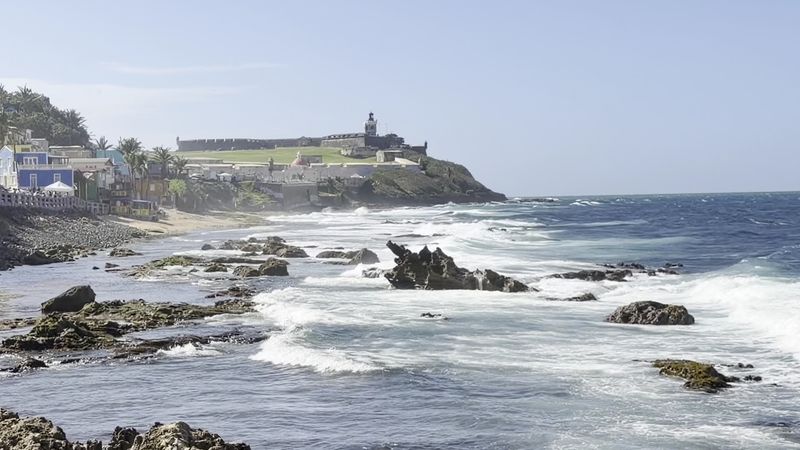
About 900 meters of waterfront make a great place to slow down. The Malecón San Juan del Puerto links the painted town to the reservoir.
Boats, sailboats, and rafts set off from its docks.
Restaurants line the edge and face the water. Grab a table, order something warm, and let the lake do the entertaining.
The local guide calls this area the starting point for much of the reservoir experience.
It also works as a rest stop after exploring the compact town center. Your feet will thank you.
The views keep changing as boats glide by and cloud shadows drift across the mountains.
If you stay overnight, you get a bonus. Once the big Medellín day-tour groups leave, the promenade turns calm and relaxed.
Evening strolls here feel like a secret the day visitors never learn. Watch the lights come on over the water and enjoy the quiet.
Iglesia de Nuestra Señora del Carmen
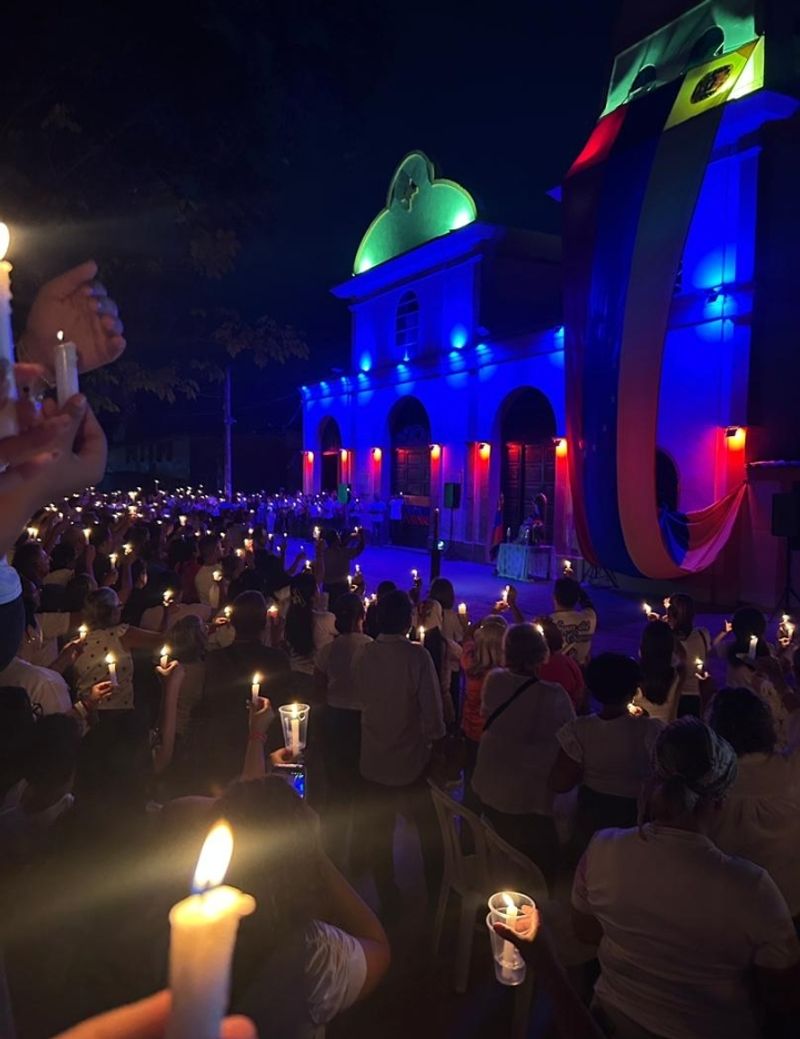
Even the church wears zócalos. Nuestra Señora del Carmen faces the main square and anchors the town’s religious life.
A chapel stood here in 1818, and the current church dates to 1865.
Look at the outside walls and you will see the same decorative style found around town. Panels show the fleur-de-lis and the four Evangelists.
It is a nice touch that ties the sacred space to everyday Guatapé.
Step inside to find a carved wooden altarpiece. The tourism authority also notes elements in a Byzantine style.
Take a moment to look up and around before snapping photos.
The church is not just a museum piece. During the yearly Virgen del Carmen festivities, people gather for religious events and a pilgrimage linked to the reservoir.
If your visit lands in July, you may catch the energy. Even on quiet days, it is a calm place to cool off and rest.
The Main Square and Traditional Town Center
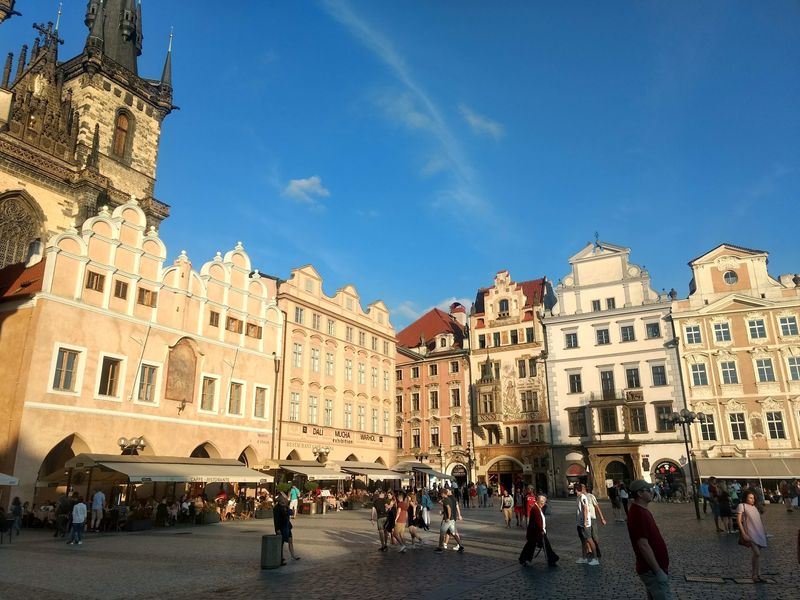
Leave the bus map behind, because Guatapé is made for walking. Colombia’s tourism authority says a basic stroll takes two or three hours.
Add stops for cafés and shops, and it stretches easily.
The center mixes bright two-story buildings, wooden balconies, and cobblestones. Relief-covered facades turn every corner into a surprise.
Keep your eyes moving, because the best details hide at ankle level.
The main square is not a stage set. Locals use it for festivals, religious celebrations, and community events.
You may see kids racing around while adults chat on benches.
If you can, stay the night. When the buses roll out, the town changes pace.
Residents take back the squares and streets in the evening, and the mood feels warm and unhurried. A slow dinner and an evening walk will show you a side of Guatapé that day trips simply miss.
The Story of Old El Peñol Beneath the Water
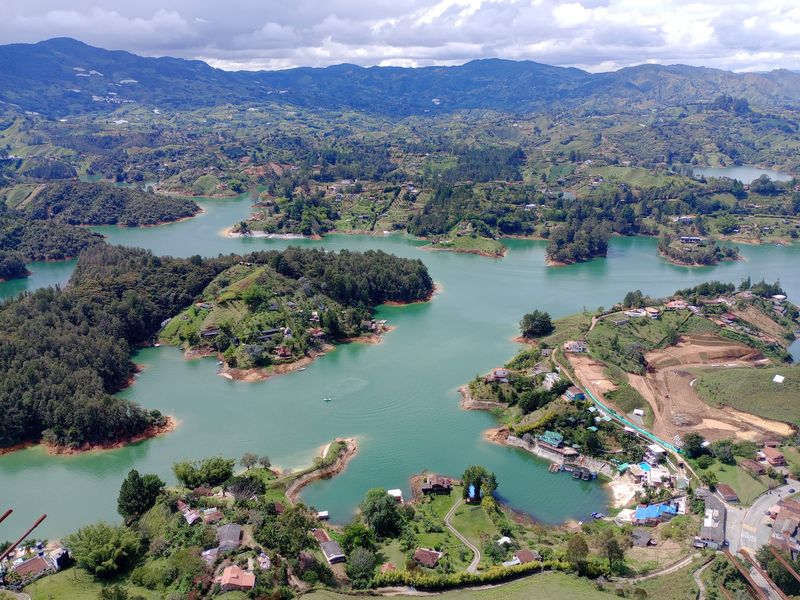
Under all that blue water lies a whole town. In the 1970s, the rising reservoir covered old El Peñol.
Residents had to move to a newly built settlement.
Guatapé lost part of its land too. Houses, a school, a church, and roads vanished beneath the surface.
The municipal tourism authority says these were places tied to generations of local life.
A cross marks the spot linked with the former church. It can become easier to see when water levels shift.
Seeing it can make the whole landscape feel different.
This history changes the meaning of the famous view. The reservoir is a tourist draw and an energy project.
It is also a landscape created through loss. Listening to local guides or reading the memorials gives the scenery a deeper, more thoughtful layer, and that is a good thing to carry home.
Mirador San José
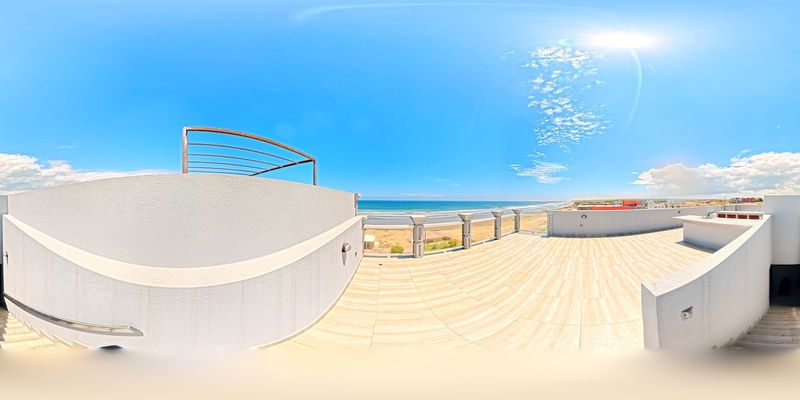
Hundreds of stairs are optional at this viewpoint. Mirador San José gives a wide look at the town, reservoir, mountains, and El Peñón, all in one frame.
Your knees can relax.
The official guide points out why this matters. Guatapé’s beauty comes from how these four elements fit together, not from one single landmark.
Here you can see the whole teamwork at once.
It is a smart pick for anyone who cannot comfortably climb the big rock. It is also good for people who want a second angle after they did climb it.
Two views beat one.
Try going in the late afternoon. The softer light makes hills and water curves easier to tell apart.
Bring a camera, a snack, and a little patience for the best shot. Then simply sit for a while, because a good view deserves more than a quick look.
Calle de las Sombrillas
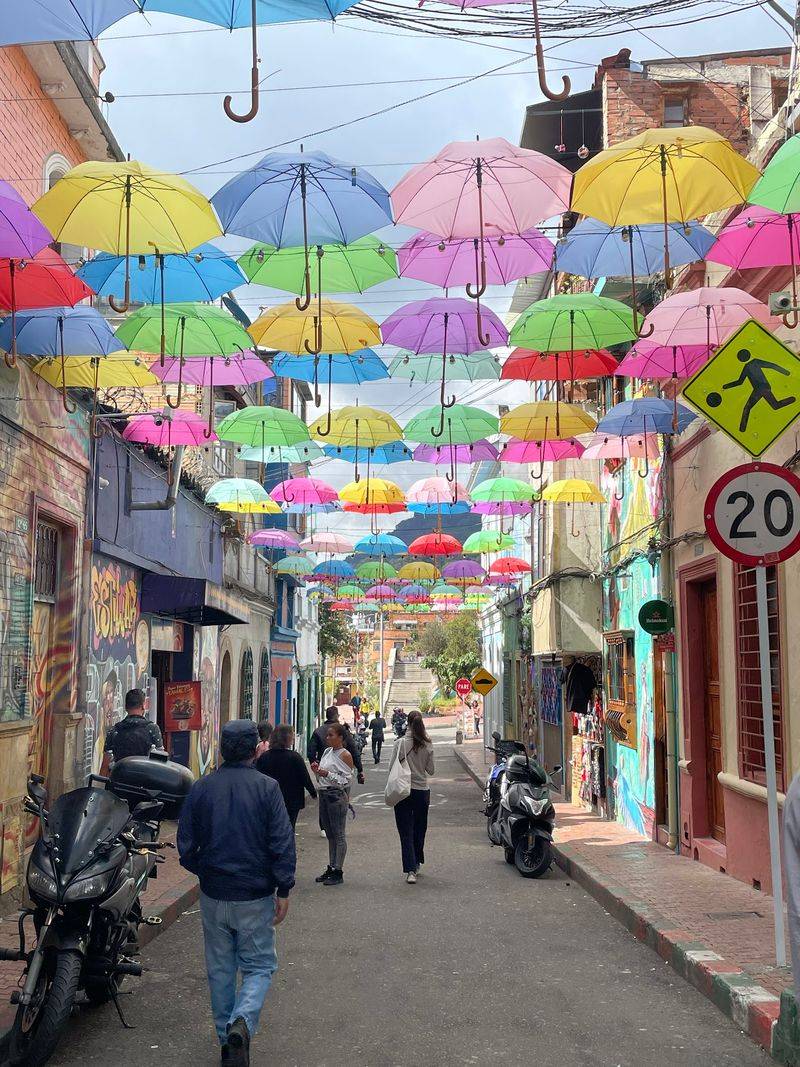
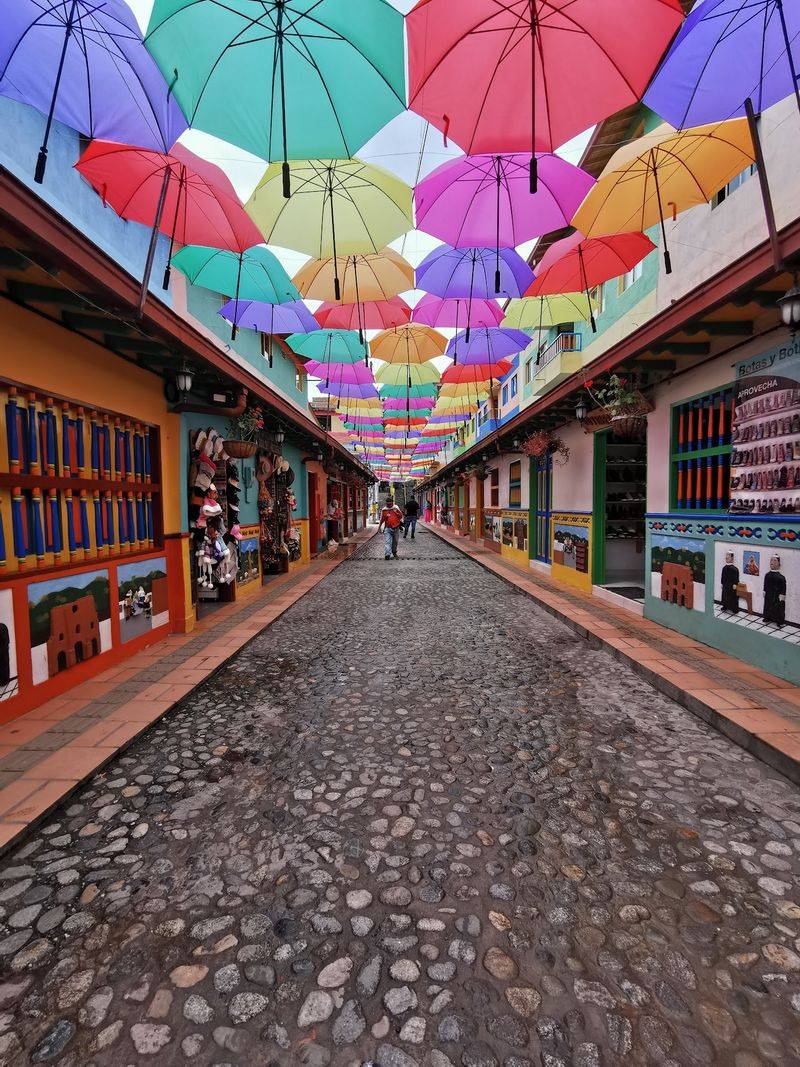
Rain or shine, this street keeps a canopy of umbrellas overhead. Calle de las Sombrillas is a narrow cobbled lane draped in bright colors.
It is one of the town’s newest and most photographed spots.
The municipal guide lists it among the core sights. It suggests about half an hour for the lane and nearby details.
That is plenty of time for photos and a snack.
Be honest about what it is. The umbrellas are not historic like the original zócalo tradition.
They do show how Guatapé keeps adding to its colorful look as tourism grows.
The street works best as part of a bigger walk. Pair it with the older lanes and you get a fun contrast between past and present.
Look up for the best pictures, but watch your step on the cobblestones. Nobody wants a selfie that ends with a stumble.
Anticuario Pasaje del Recuerdo
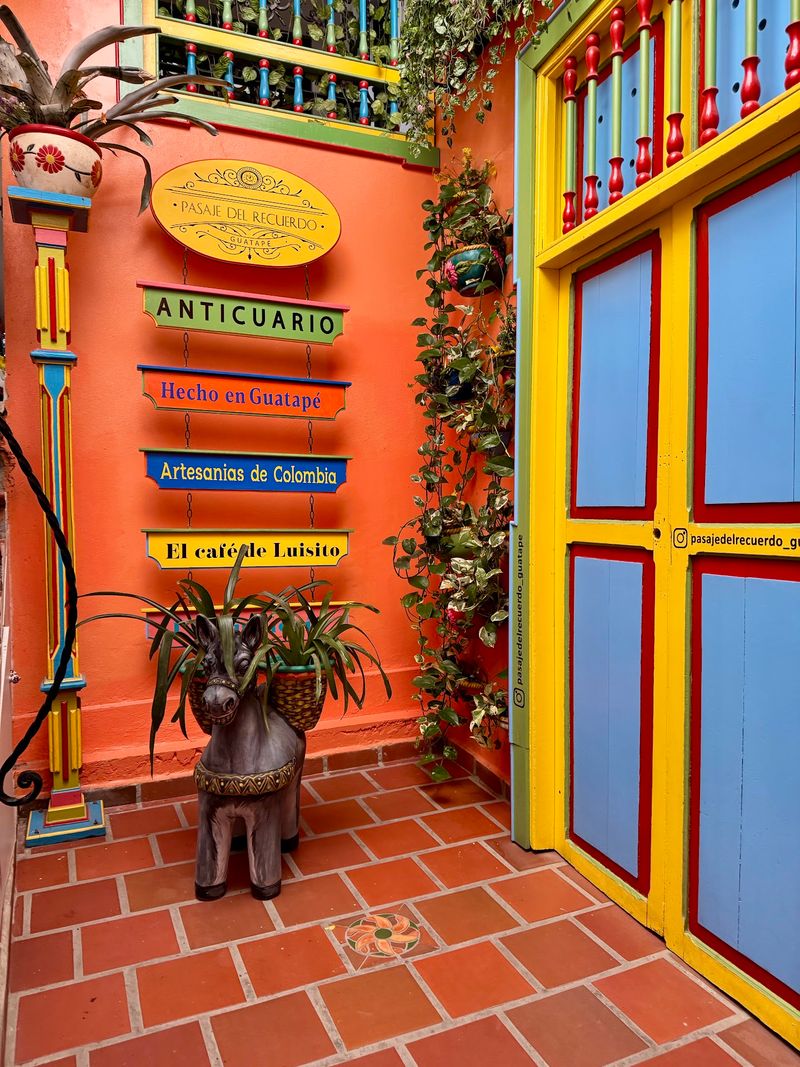
Every colorful wall has a family behind it. The Anticuario Pasaje del Recuerdo gives a peek at those everyday lives.
The local tourism authority describes it as a collection of objects, photographs, and keepsakes.
It pairs nicely with Calle del Recuerdo and the reservoir story. Big engineering changes and wide views are easy to notice.
Small items like old photos and household things show the human side.
Take your time with the tiny details. A worn tool or a faded picture can say more than a long sign.
Ask questions if someone is around to help.
Guatapé’s transformation happened within living memory. Collections like this show what the town felt like before tourism, boats, and the reservoir shaped its image.
It is a quiet stop, and a thoughtful one, that makes the bright streets outside mean even more.
The Unfinished Letters on El Peñón
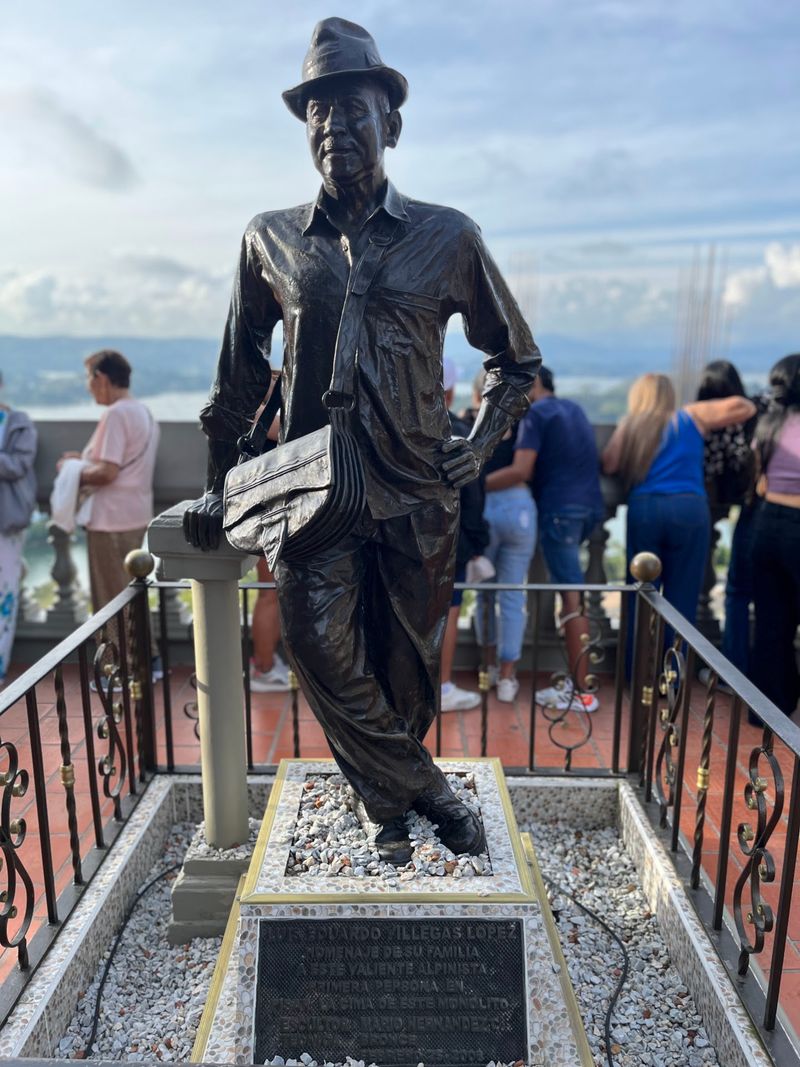
Spot the giant white G on the rock, and then wonder where the rest went. Look closely at El Peñón and you will see a big letter and part of a second one.
The unfinished look has become an attraction of its own.
In the 1980s, local residents began painting the town’s name across the rock. The rock sits near the line between Guatapé and neighboring El Peñol.
That set off a dispute.
Work stopped after only the first letter and part of the next were done. The abandoned sign is still there today.
It is a quirky reminder that even a rock can cause a neighborly argument.
Look for the letters from the staircase and from the water. The angle changes how big they seem.
Tell your friends the story, and enjoy the fact that a half-written name makes for a better tale than a full one.
Guatapé’s Festivals and Living Traditions
Come at the right time and the whole town throws a party. Guatapé’s calendar includes religious, artistic, literary, food, and music events.
They keep changing the look of the center.
The biggest is the Fiestas de los Zócalos, el Turismo y el Embalse. In 2026 it runs from late September into early October.
It brings together the painted-wall tradition, tourism, and reservoir culture.
July has its own celebrations focused on flowers and zócalos. The Virgen del Carmen festivities happen then too.
Later in the year you will find a book fair, a film festival, and an alternative-music festival.
Christmas gatherings and a New Year carnival finish things off. Check dates before booking, since hotels fill up fast.
Events like these prove Guatapé is a living community, not just a colorful backdrop. Join in, try the local food, and you might leave with new friends.
Share this story