Neuschwanstein gets all the postcards, but Germany is packed with castles that can steal the spotlight. Some sit on wild cliffs, some float on lakes, and some have belonged to the same family for centuries.
Each one has its own story, style, and surprise. Ready to meet fifteen royal beauties that deserve a spot on your travel list?
Hohenzollern Castle
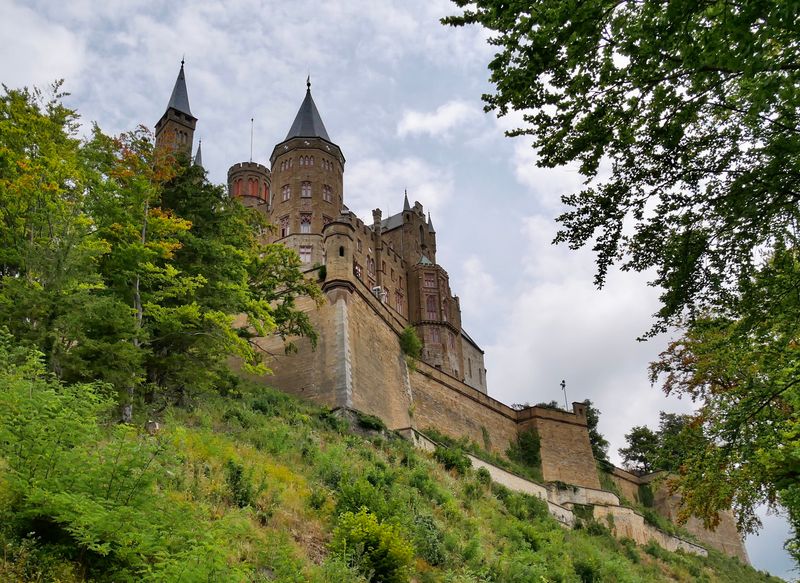
Picture a castle so dramatic that it seems to wear the whole mountain like a crown. Burg Hohenzollern sits on the Zollerberg in Baden-Württemberg and can be seen from far across the countryside.
Fog often curls around its base, which makes the towers look even bolder.
The castle you see today is the third one on this hill. It was rebuilt between 1850 and 1867 for King Friedrich Wilhelm IV of Prussia.
Architect Friedrich August Stüler planned it as an idealized medieval stronghold, complete with bastions, towers, and a winding ramp that climbs to the gate.
Inside, about 140 rooms hold royal treasures. Look for the Blue Salon, the royal bedrooms, and a library with painted walls.
The family collections add real history to all that stage-set glamour.
Visitor tip: wear comfy shoes, because the approach involves a good uphill walk. You can also take a shuttle if your legs vote no. Come early on a clear morning for the best views and fewer crowds.
Eltz Castle
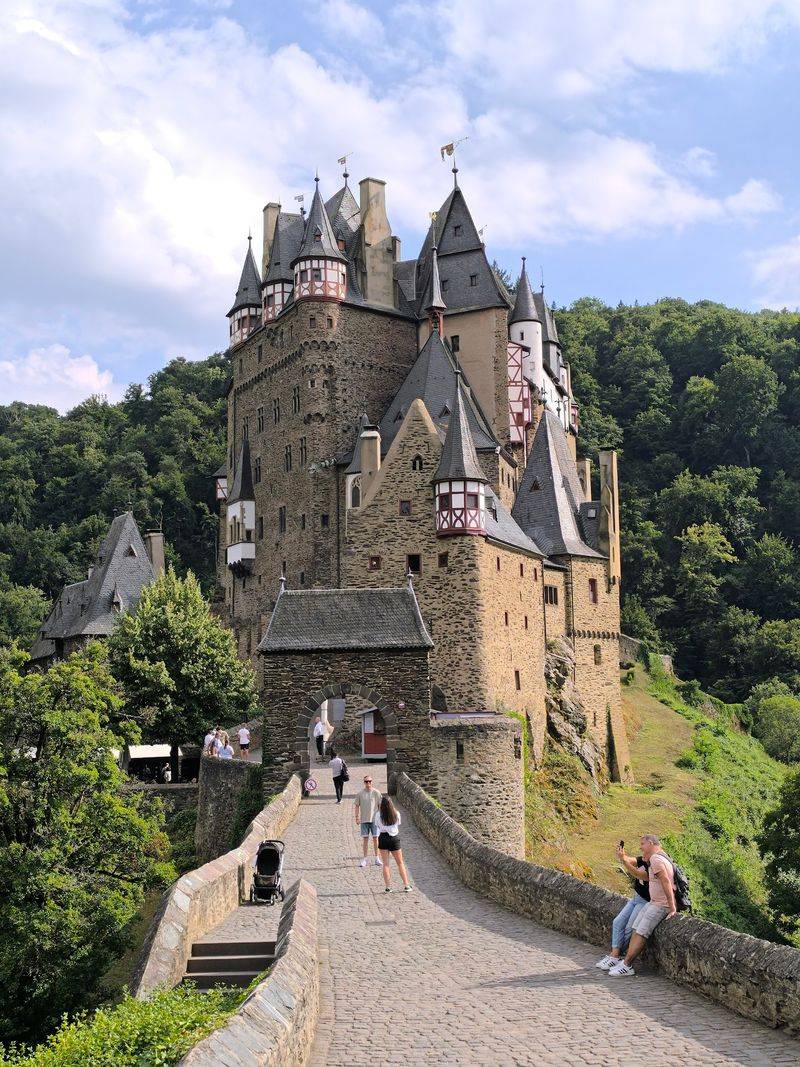
Here is a quirky fact: Burg Eltz has been in the hands of one family for almost 900 years. The Eltz family was linked to the site by 1157, and their descendants still own it.
Few castles anywhere can top that kind of loyalty.
The castle sits on a rocky spot above the Eltzbach, and space was tight. So the builders went up instead of out.
The result is a tall cluster of towers, timber-framed upper floors, slate roofs, and homes squeezed together like neighbors at a crowded party.
Because construction went on for centuries, no two parts look quite alike. That gives Eltz its charming, lopsided personality.
It is also authentically medieval and was never destroyed, something Neuschwanstein cannot claim.
Plan your trip with the forest in mind. Many visitors walk in through the trees, and the first glimpse of the castle is a jaw dropper.
Spring and autumn bring soft colors that make photos look almost painted.
Wartburg Castle
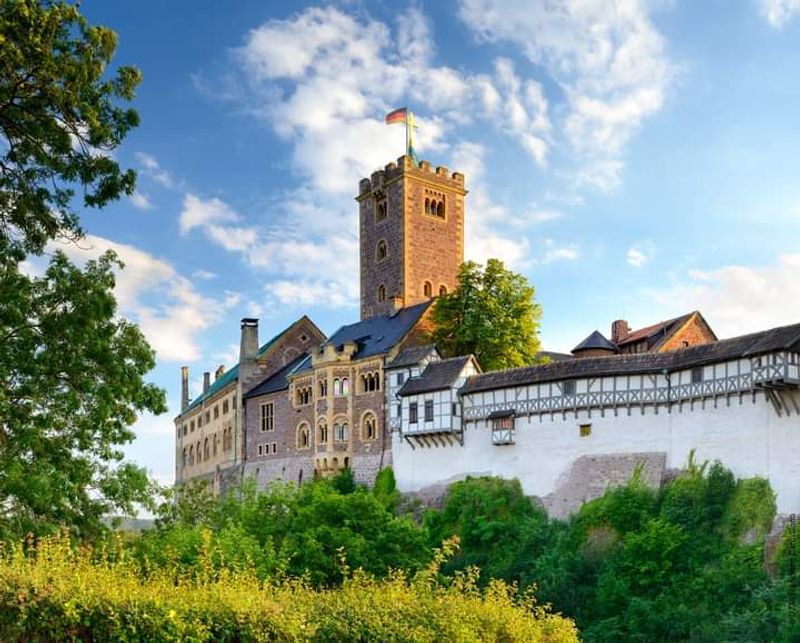
Some castles just look pretty. Wartburg changed the language of a whole nation.
Martin Luther hid here under a false identity and translated the New Testament into German, which shaped how people read and wrote for centuries.
The fortress stands about 400 meters above the countryside near Eisenach, wrapped in thick forest. UNESCO calls it an outstanding monument of Central European feudal architecture.
Its 12th-century palace is among the best-preserved secular buildings of that age in Germany.
Here is a fun link to our topic: Wartburg inspired later Romantic architecture, including Neuschwanstein itself. So in a way, the famous castle is a cousin of this older stronghold.
Parts were heavily restored in the 19th century, yet the result still shows a medieval prince’s fortress at its proudest.
Visit the small room where Luther worked and the grand halls with glowing paintings. Pack a jacket, since the hilltop breeze can be sharp even in summer.
Give yourself half a day to explore.
Heidelberg Castle
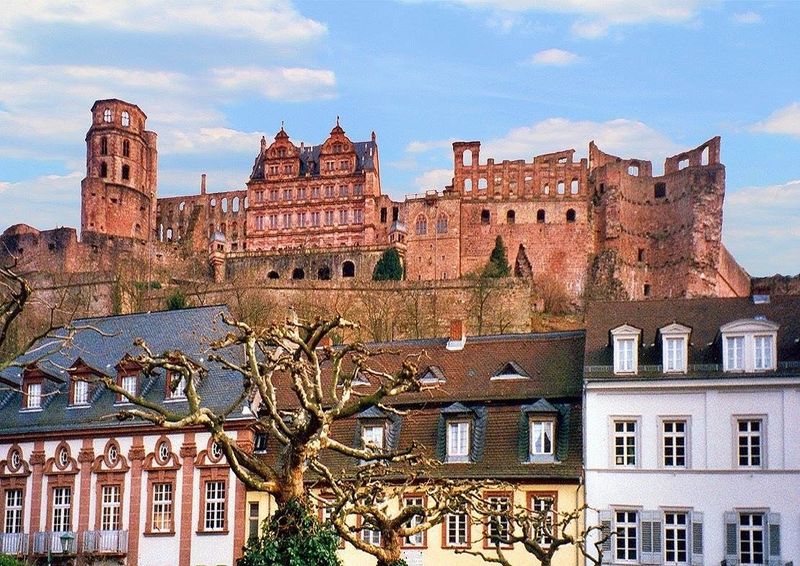
Nobody ever said a castle needs a roof to be gorgeous. Heidelberg Castle wears its red sandstone ruins like a badge of honor.
From the old town below, it glows warm in the late afternoon sun.
The residence was first mentioned in 1225. Over time it grew into a major Renaissance palace for the prince-electors of the Palatinate.
Then came war in the late 17th century, followed by lightning strikes in 1764, and the famous ruin was born.
Later caretakers made a bold choice. Instead of rebuilding everything, they kept much of it broken and moody.
That decision helped make Heidelberg a star of 19th-century Romanticism, loved by poets and painters.
Walk the terrace for a sweeping view over the rooftops and the river. Take the funicular if you want to save energy for the courtyards.
Evening visits are lovely, when the stone seems to blush and the crowds thin out.
Lichtenstein Castle
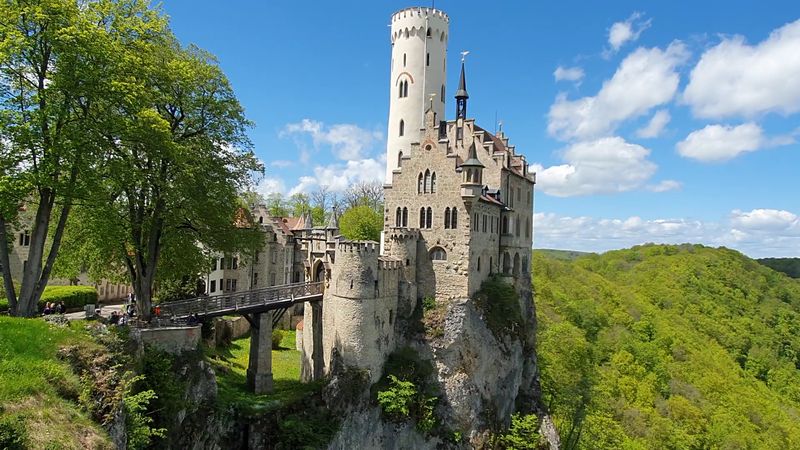
A novel can build a castle, and Lichtenstein proves it. Count Wilhelm of Württemberg read Wilhelm Hauff’s 1826 book Lichtenstein and fell so hard for the story that he built the setting for real.
Architect Carl Alexander Heideloff rebuilt the complex between 1840 and 1842. He worked in pieces of an older fortress and shaped a very picturesque Neo-Gothic home.
Like Neuschwanstein, it is a 19th-century dream of the Middle Ages rather than an untouched medieval keep.
The castle perches on a narrow rock spur above the Echaz Valley. Towers, battlements, courtyards, and richly painted rooms are packed into a surprisingly small footprint.
It is smaller than its Bavarian cousin, yet the cliff-edge setting feels even more daring.
For the best photo, stop at the viewpoints along the approach road. Guided tours show the interiors, so check times before you go.
Bring a camera with plenty of battery, because every angle begs for a picture.
Schwerin Castle
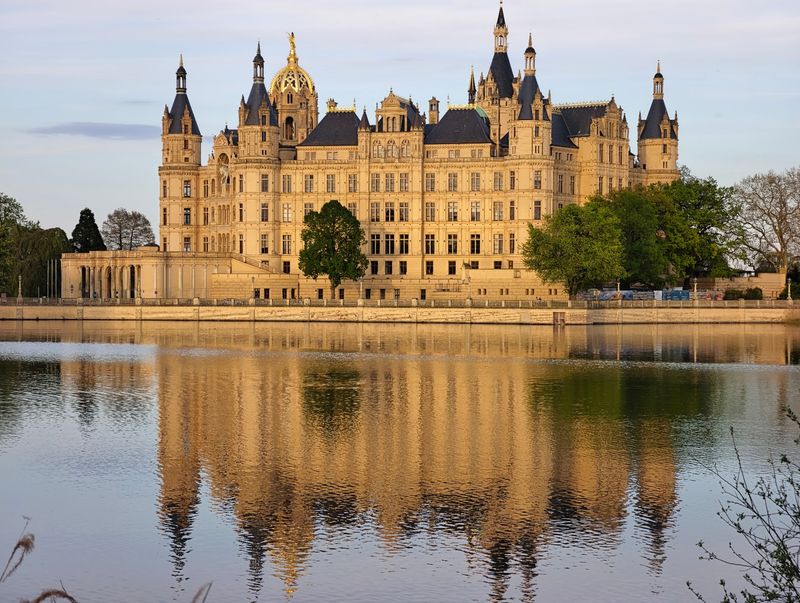
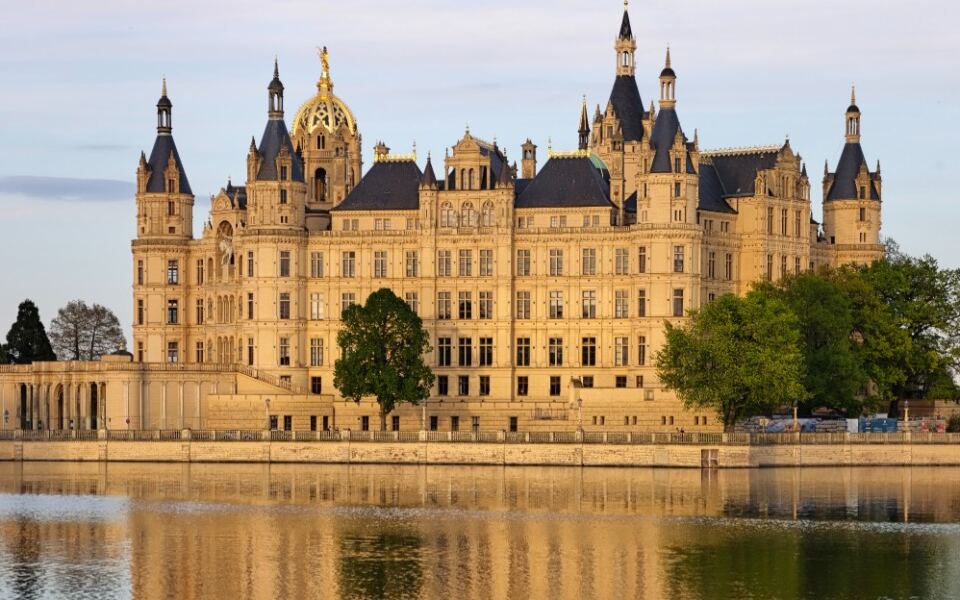
Look once and you may wonder if the castle forgot to touch the ground. Schwerin Castle sits on an island in Lake Schwerin and seems to drift on the water.
Reflections double every tower.
It is the heart of the Schwerin Residence Ensemble, which joined UNESCO’s World Heritage List in 2024. Most of the present palace was rebuilt between 1843 and 1857 as the home of the grand dukes of Mecklenburg-Schwerin.
Its style is a lively mix of Neo-Renaissance, Neo-Baroque, Neo-Classical, and Neo-Gothic touches.
UNESCO praises how the buildings, gardens, canals, lakes, and planned views all work together. Nothing feels random.
Even the paths seem to guide your eyes toward the next beautiful scene.
Stroll across the bridge to the island, then circle the lake for new angles. Sunset is a favorite hour, when the golden details catch the light.
Add the palace garden to your plan and you have a whole day of storybook scenery.
Wernigerode Castle
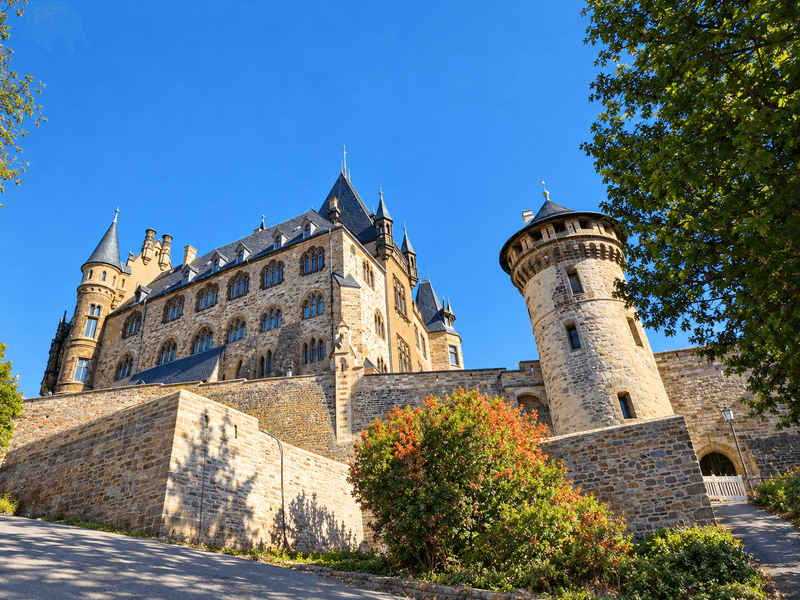
Walk around Wernigerode Castle and watch its shape change like a magic trick. From one side you see a tall tower, from another a cluster of steep roofs.
That was no accident.
The first fortress rose in the early 12th century above the town. Later builders added Gothic, Renaissance, and Baroque pieces.
The big makeover came between 1862 and 1885, when architect Carl Frühling rebuilt it for Count Otto zu Stolberg-Wernigerode.
The result is a showpiece of North German historicism, with towers, decorative timberwork, courtyards, and richly detailed rooms. Nearly 50 interior rooms are open along the museum routes, so there is plenty to see without feeling rushed.
The town below is full of half-timbered houses, which makes the hike up a bonus sightseeing walk. If you are tired, a little tourist train helps with the climb.
Visit on a clear day to enjoy the views across the Harz foothills.
Reichsburg Cochem
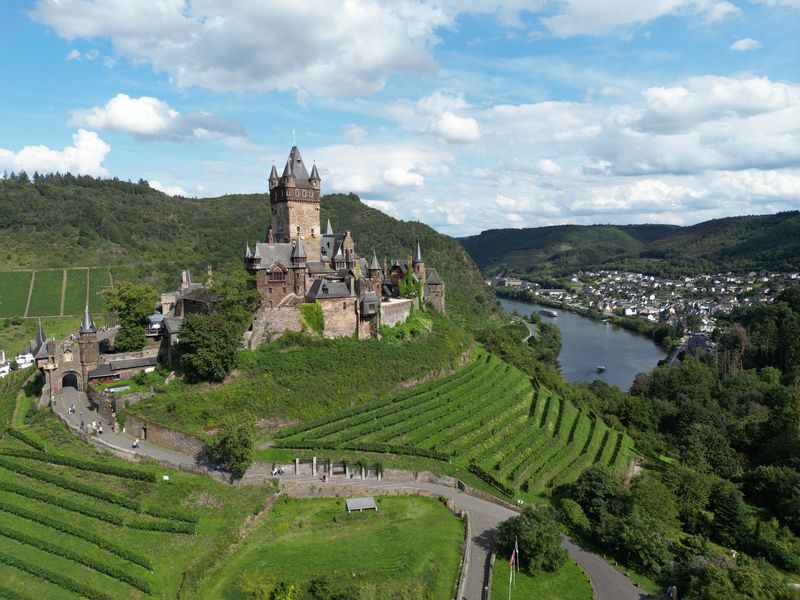
Vineyards climb the slopes, the Moselle curls below, and a fairy-tale castle crowns the scene. Cochem Castle looks like it was ordered from a storybook catalog.
The fortress probably began around the year 1000 and was documented by 1051. It later became an imperial castle under the Hohenstaufen dynasty.
Wars in the late 17th century left it destroyed.
Much of what you see now is a later reconstruction, much like several castles along the Romantic Rhine and Moselle. Even so, the turrets, steep roofs, and fortified walls form exactly the silhouette people imagine when they hear the words German castle.
The approach is half the fun. Wander up through the wine country and stop for views of the river bends.
Tours bring the rooms to life, and the town below has cozy spots for a glass of local Riesling. Go in autumn when the vineyards turn gold.
Marksburg Castle
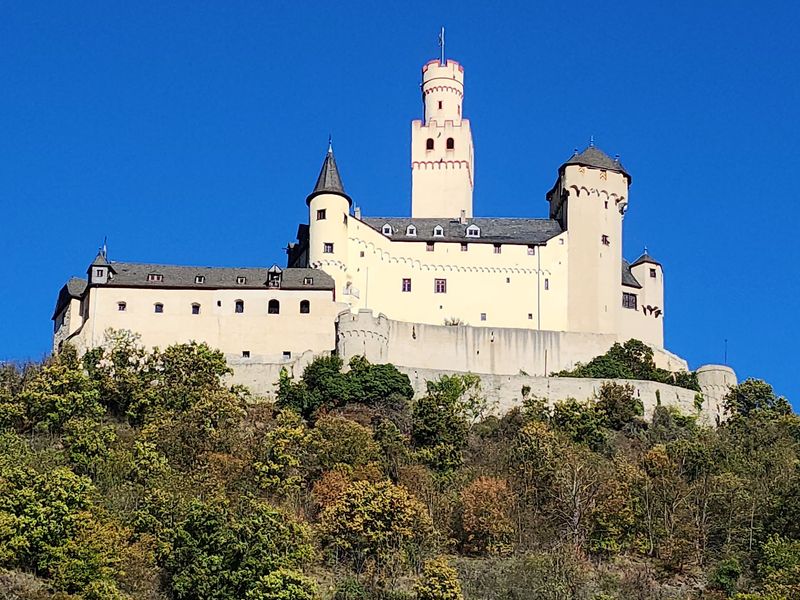
Survivor status is rare on the Rhine, and Marksburg has it. The German Castles Association calls it the only medieval hilltop stronghold in the Middle Rhine region that was never destroyed.
Instead of being rebuilt from ruins during the Romantic era, it kept changing as defense needs changed. Builders added walls, gates, towers, and fortifications over the centuries.
That makes it a fine classroom for anyone curious about how a real medieval fortress worked.
The castle perches on a steep rocky hill above Braubach. It belongs to the UNESCO-listed Upper Middle Rhine Valley, where castles, vineyards, river bends, and old towns sit close together in one of Germany’s richest cultural landscapes.
Guided tours are the way to go here, because the guides explain the armor, the kitchens, and the defensive tricks. Bring sturdy shoes for the steep paths.
Pair your visit with a Rhine cruise for a double dose of scenery.
Moritzburg Castle
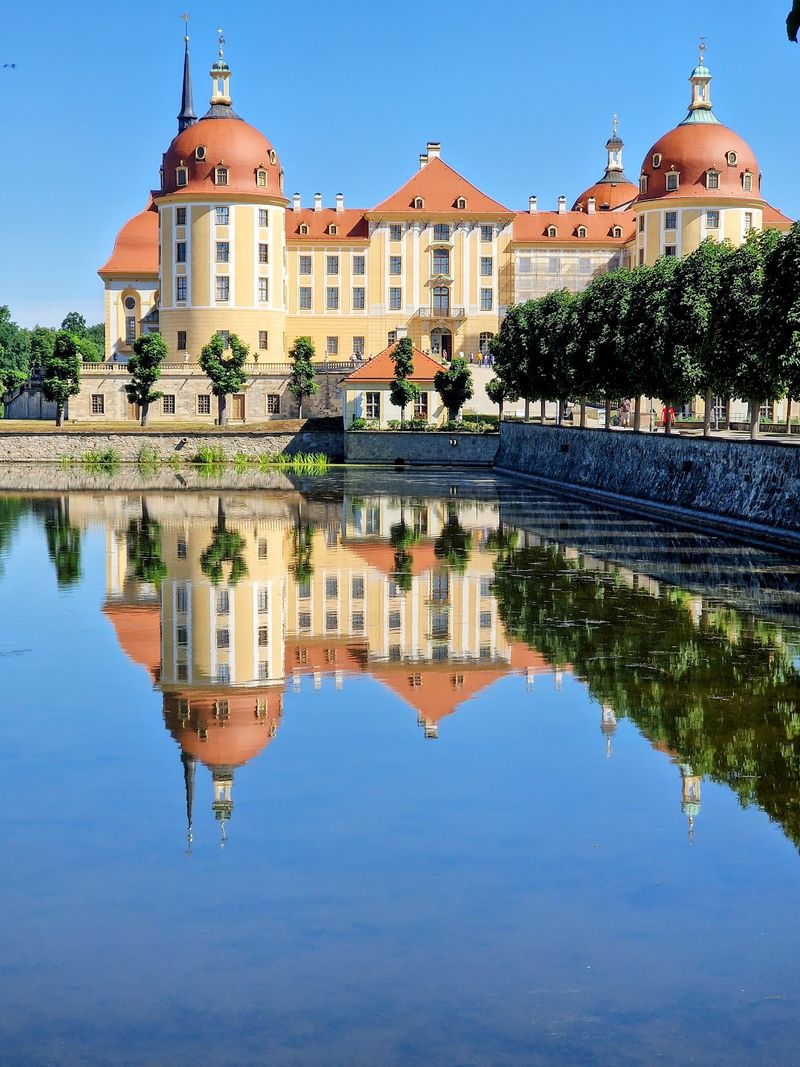
Mirror, mirror on the water: Moritzburg might be the most reflective castle in Germany. This symmetrical Baroque palace stands on an artificial island near Dresden, and the lake doubles its charm from every side.
Elector Moritz first set up a hunting lodge here. In the 18th century, Augustus the Strong teamed up with architect Matthäus Daniel Pöppelmann to turn it into a grand stage for hunts and festivities.
Inside, the party mood lingers. You will find hunting trophies, gold-leather wall coverings, ceremonial rooms, and a lovely collection of Meissen porcelain.
The antlers alone could fill a small forest.
Film fans may spot familiar scenes, because the castle starred in the holiday favorite Three Wishes for Cinderella. Visit in winter for a snowy, movie-like look.
Walk the causeway slowly, since the reflections change with every step.
Herrenchiemsee New Palace
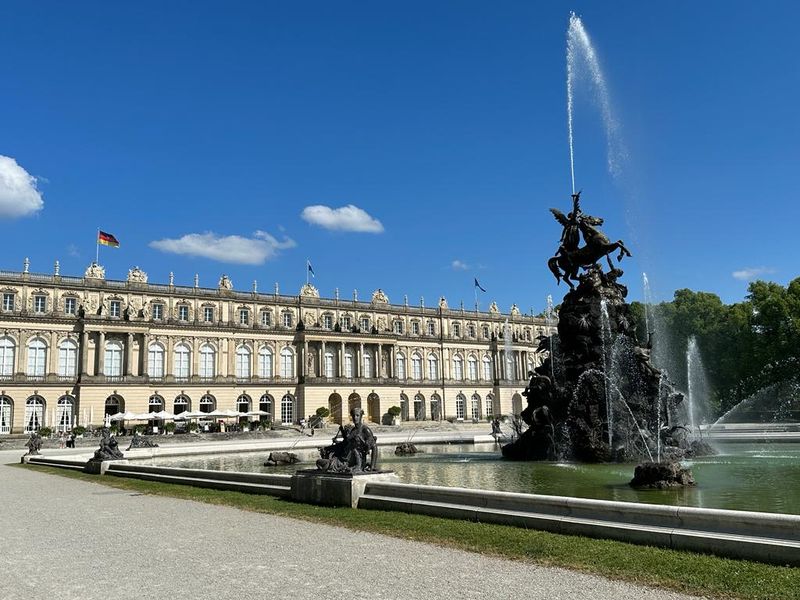
King Ludwig II never did anything halfway, and Herrenchiemsee proves it. He bought Herreninsel in Lake Chiemsee in 1873 and planned a palace inspired by Versailles, a tribute to Louis XIV of France.
Construction began in 1878. The Great Hall of Mirrors, the State Bedroom, a monumental staircase, fountains, and formal gardens all sparkle with royal ambition.
It feels nothing like Neuschwanstein’s medieval fantasy, yet the same dreamer stands behind both.
Ludwig died in 1886 before the palace was finished, and parts of the unfinished structure were later torn down. In 2025, UNESCO listed Herrenchiemsee along with Neuschwanstein, Linderhof, and Schachen as Ludwig II’s palaces.
Getting there is part of the adventure. Take a boat across the lake, then walk or ride a horse-drawn carriage to the palace.
Time your visit for the fountain shows if you can. They are a splashy finale to the tour.
Sanssouci Palace
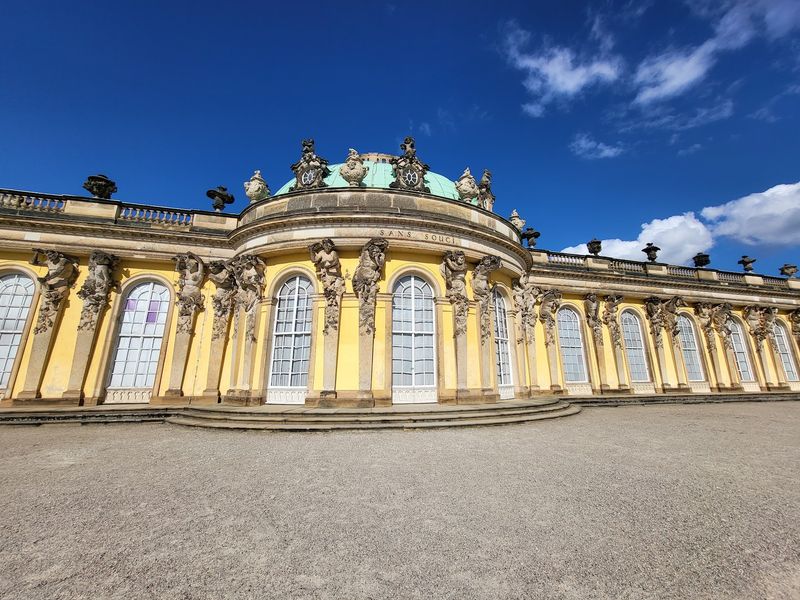
The name means without worry, and Frederick the Great chose it on purpose. He built this Rococo retreat in Potsdam in the 18th century as a place to escape stiff court life.
Do not expect towers or battlements. Sanssouci wins hearts with refined interiors and a low, golden-yellow charm.
Its terraces step down toward the gardens in a way that makes you want to linger.
The palace is the centerpiece of a huge designed landscape full of gardens, extra palaces, temples, and sculptures. UNESCO considers the Palaces and Parks of Potsdam and Berlin an exceptional blend of architecture and landscape design, shaped by leading architects and gardeners.
Give yourself a full day, because the park is big. Rent a bike if your feet complain.
Book a timed ticket for the palace interior in advance, especially in summer, when visitors line up fast.
Schloss Drachenburg
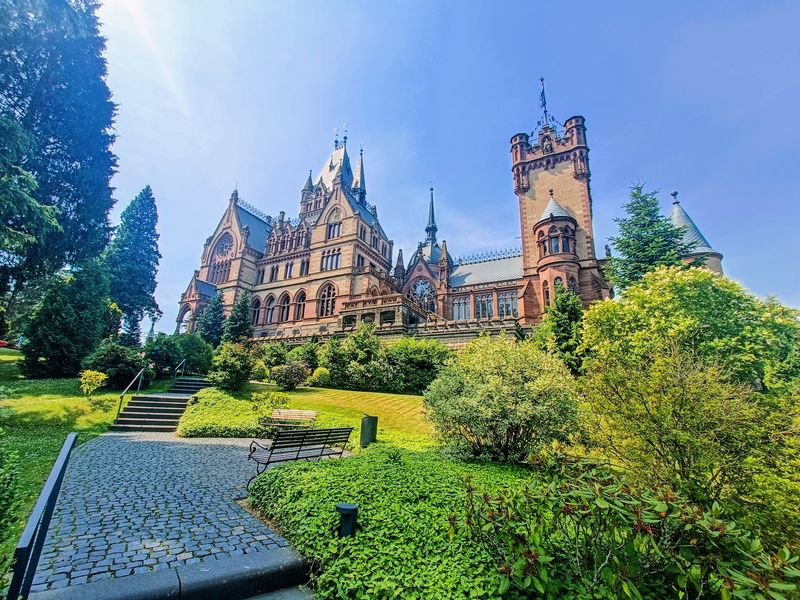
Looks can fool you. Schloss Drachenburg seems centuries old, yet it was built in only two years, between 1882 and 1884.
It rises above the Rhine near Königswinter, with turrets, decorative towers, and lavish rooms. The Siebengebirge hills form a green backdrop.
Its official management calls it one of Germany’s most important castle buildings of the late 19th century and an icon of Rhine Romanticism.
This was never a fortress. Drachenburg was planned as an extravagant private home, using castle looks to show off wealth and imagination.
It is basically a very fancy house in a very good costume.
A landscaped park wraps around the building, and the views toward the Rhine are superb. You can ride a cogwheel train up the Drachenfels hill and walk down through the park.
Bring a camera for the terrace, where the river bends like a ribbon below.
Burghausen Castle
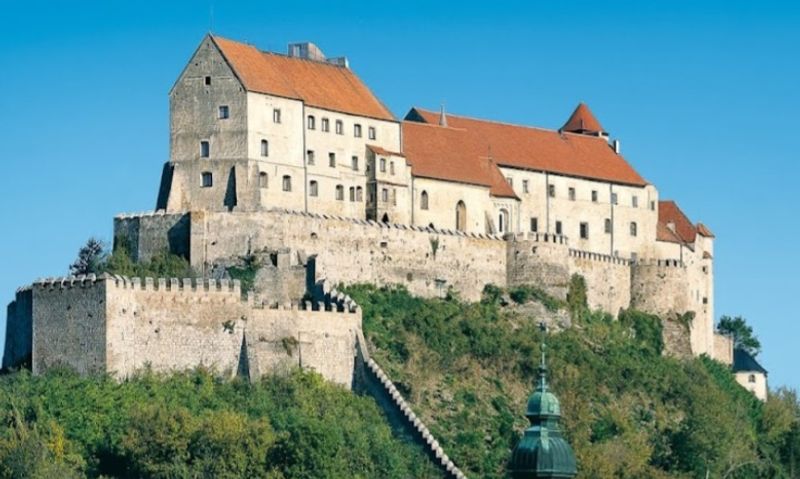
Bring your walking shoes, because this castle stretches for 1,051 meters. Local tourism records name Burghausen the longest castle complex in the world.
Instead of a single compact palace, you get a chain of courtyards, gates, towers, defensive walls, residential buildings, and museums, all strung along a narrow ridge above the old town. Each section opens to the next, like chapters in a long book.
From the heights, views reach toward the Salzach River and neighboring Austria. About 600,000 people visit each year, according to the city of Burghausen, so it is a popular stop even if it hides in plain sight.
Here the experience is the opposite of Neuschwanstein. Rather than admiring one royal palace, you walk through an entire fortified world.
Allow a few hours to wander, and bring water for the stroll. Finish in the old town below with a coffee and a pretzel.
Mespelbrunn Castle
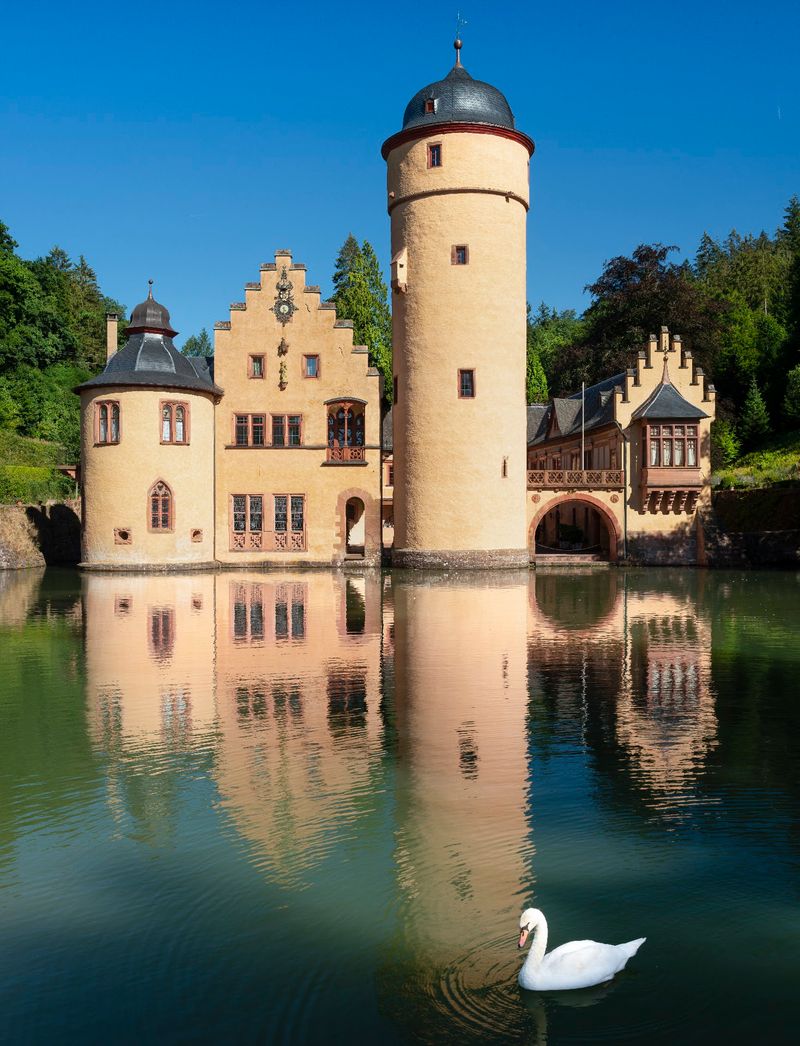
Deep in the Spessart forest, a small castle sits quietly in its own reflection. Mespelbrunn does not shout.
It whispers, and that is exactly why people fall for it.
The story starts in 1412, when knight Hamann Echter received the property. Around 1427, his son fortified the family’s pond-side house with walls and towers, because the surrounding forest was still unsafe.
Later generations gradually shaped it into the picturesque castle you see now.
Still water, a compact courtyard, and a forest backdrop give it a secluded feel, even though getting there is easy. It is a real historic home rather than a stage set, tucked almost invisibly into a wooded valley.
Visit on a calm morning, when the pond is like glass and the reflection looks perfect. Walk slowly around the water for a few different views.
It is a gentle, peaceful stop after bigger and busier castle days.
Share this story