Airports used to be places you rushed through with a sigh and a suitcase. Now some of them have waterfalls, museums, breweries, and even saunas.
These travel hubs prove that a layover can be a highlight of the trip instead of a chore. Here are thirteen airports that make waiting around feel like part of the adventure.
Incheon International Airport, South Korea
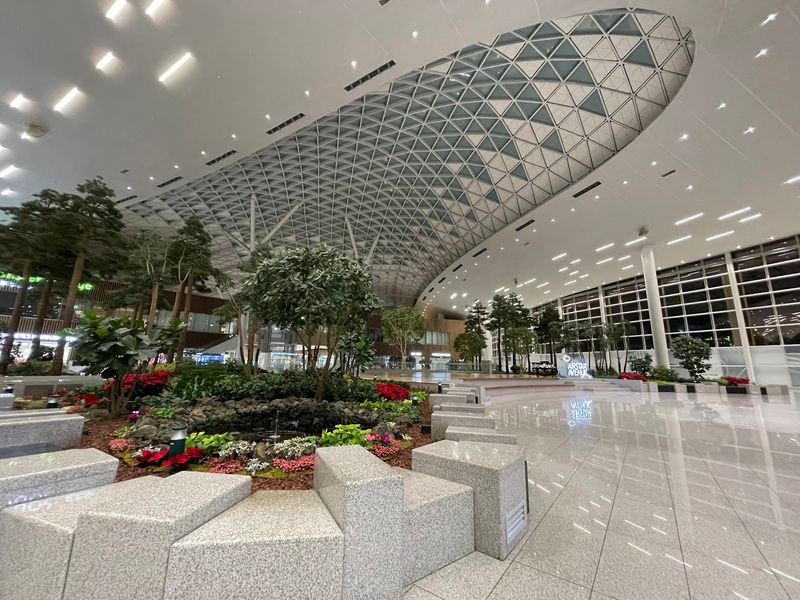
Ice skating before a flight to somewhere warm sounds like a joke, yet Incheon makes it real. A rink sits inside the transit area of Terminal 1.
Travelers lace up rental skates between gates, which beats scrolling on a phone.
Culture is a big part of the plan here. The Museum of Korean Culture displays traditional clothing, royal crafts, and everyday objects from the country’s long history.
Entry is free, so nothing stops you from popping in.
Live performances add more color. Traditional music and dance shows appear on a regular schedule, and hands-on craft corners let visitors try things like making small keepsakes.
Many people leave with a souvenir they made themselves.
Tired travelers have options as well. Spa on Air offers saunas, baths, and relaxing rooms, and quiet lounges make napping easy.
Showers are also available for those who just need to freshen up.
A handy tip is to check the event calendar online before you land. Shows and activities change often, and a little planning means you will catch the best ones.
Hamad International Airport, Qatar
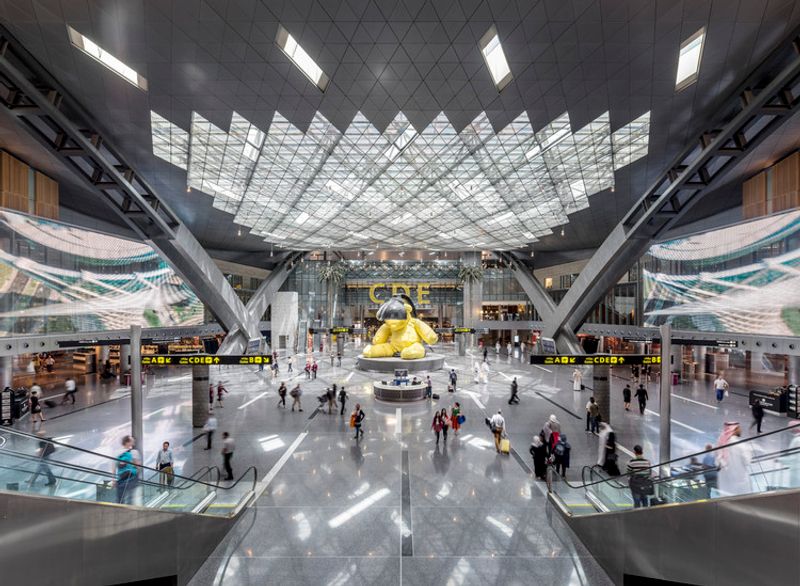
Meet a giant yellow teddy bear with a lamp on his head. The Lamp Bear stands about seven meters tall in the Doha terminal.
Travelers take selfies with it all day long.
He is just the start of a very artistic airport. Sculptures and installations from famous international artists are placed along the halls.
Walking to your gate feels more like strolling through a gallery.
Greenery gets its moment too. The Orchard is an indoor garden with real trees and plants under a glass roof.
The air feels fresher, and the benches are a lovely spot to rest.
Water, light, and space shape the whole design. Ceilings are high, floors gleam, and walkways are wide enough that crowds rarely feel crushing.
Shopping and dining areas are plentiful when hunger strikes.
One helpful tip is to leave extra time to browse the art on the way to your gate. Doha is a busy hub, so connections can be long, and the art makes the waiting far more fun.
Amsterdam Airport Schiphol, Netherlands
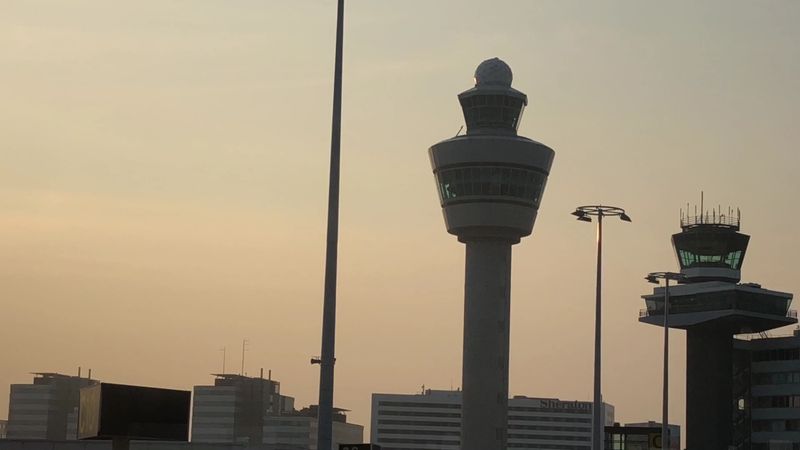
Fancy a Rembrandt before boarding? Schiphol has its own small branch of the Rijksmuseum, tucked between the piers past passport control.
The exhibit is free and shows genuine masterpieces from Dutch history. Few airports let you see real art with a coffee in hand.
The display changes from time to time, so each visit can feel fresh. Paintings, objects, and short stories give a quick taste of the Netherlands.
It is small enough to see in less than half an hour.
Next door, a quiet library stocks books by Dutch authors, translated into many languages. You can sit down and flip through pages without buying anything.
It is a peaceful break from the noise of departures.
The airport also keeps things practical. Signs are clear, trains to Amsterdam leave right beneath the terminal, and there are plenty of places for stroopwafels and cheese.
The whole place feels organized in a very Dutch way.
A smart tip is to find the museum early in your layover. Opening hours can vary, and you do not want to miss it.
Singapore Changi Airport, Singapore
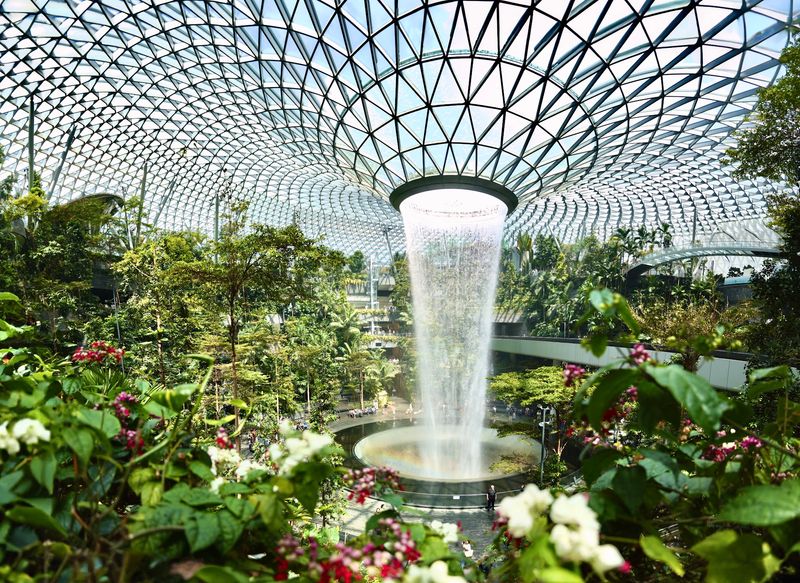
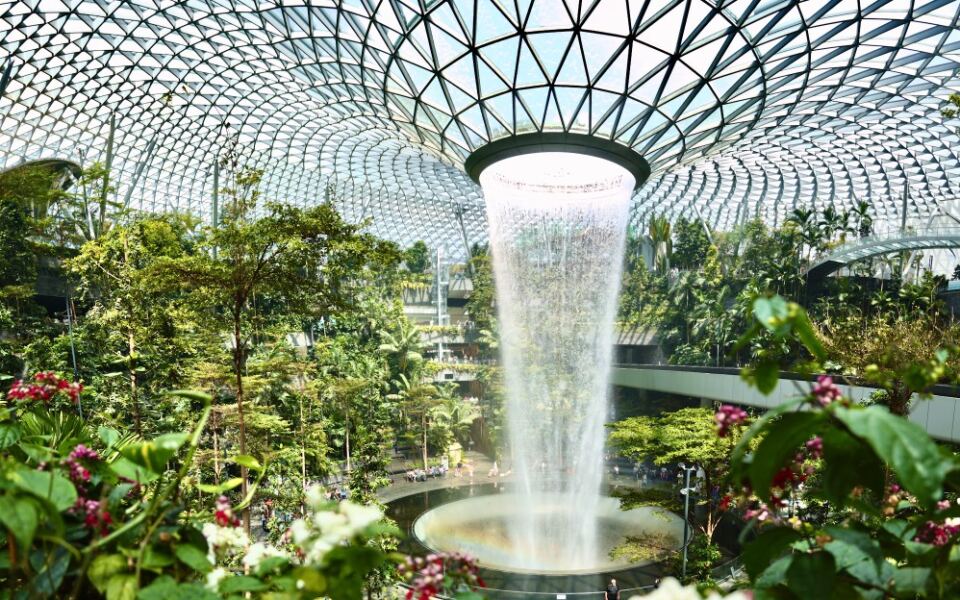
Rain that never soaks your shirt? That is the trick at Jewel Changi, where a 40-meter waterfall pours through the middle of a glass dome.
The Rain Vortex is one of the tallest indoor waterfalls anywhere. At night it glows with a light and sound show.
Around the water sits a leafy forest packed with thousands of trees and shrubs. Walking trails wind between the branches, so you can stretch your legs after a long flight.
Spotting the waterfall from different levels is half the fun.
Up top, Canopy Park adds a hedge maze, mirror maze, and bouncy nets that hang above the ground. Kids tend to sprint straight for them.
Grown-ups usually follow, pretending they only came to supervise.
The terminals have their own surprises too. Terminal 3 has a butterfly garden, and sunflower and orchid displays pop up in the transit halls.
Free movie corners and cozy rest areas handle the sleepy stretch of a long layover.
A smart tip is to plan at least three hours if you want to see Jewel properly. Pack comfortable shoes, because the garden paths are longer than they look.
Tokyo Haneda Airport, Japan
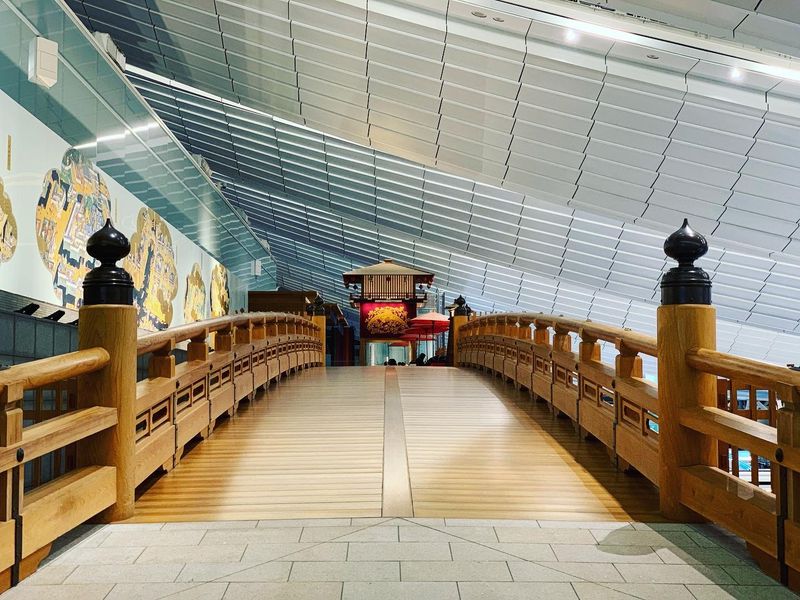
Walk through the international terminal at Haneda and you may feel like you have stepped into old Tokyo. A wooden bridge and shops built in an Edo-period style set the mood.
Lanterns and traditional touches make the shopping area look like a festival street.
Observation decks give plane lovers plenty to enjoy. You can watch aircraft take off and land against a wide sky.
On clear days, the view is hard to beat.
Art fans are covered too. Galleries and artwork by Japanese artists appear throughout the halls, along with aviation displays that celebrate flight.
Everything feels thoughtful rather than random.
Instead of generic luxury shops, Haneda uses architecture to tell you exactly where you are. Wood, patterns, and local details give the building a strong sense of place.
You know you have landed in Japan the moment you arrive.
Food gets plenty of attention as well, with ramen, sushi, and sweet treats close to the gates. Prices are fair and lines move fast.
A good tip is to eat before security if you want more choices.
Vancouver International Airport, British Columbia, Canada
Ever watched a wolf eel on your way to a gate? At Vancouver, the international terminal has an aquarium with 114,000 liters of water and more than 5,000 marine animals.
Sea urchins and wolf eels share the tank. Kids press their noses to the glass and forget about the wait.
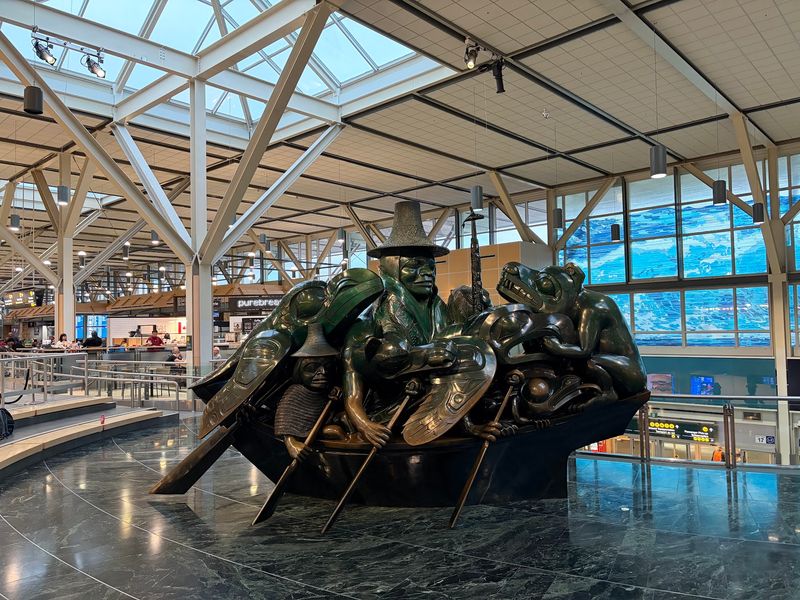
Art here tells the story of the land. YVR shows hundreds of original works, including a special collection by Musqueam and other Northwest Coast Indigenous artists.
The pieces are large, bold, and hard to miss.
The airport also teaches visitors about whose territory it stands on. Dedicated displays explain the history and traditions of the Musqueam people.
In 2026 those displays were expanded, so there is even more to read and learn.
Wood, glass, and water features fill the halls. Together they remind you that you are arriving in coastal British Columbia and not in some interchangeable terminal.
The mood is calm and easy.
A good tip is to arrive early and walk the art route slowly. You will notice details that most rushed passengers miss.
San Francisco International Airport, California, USA
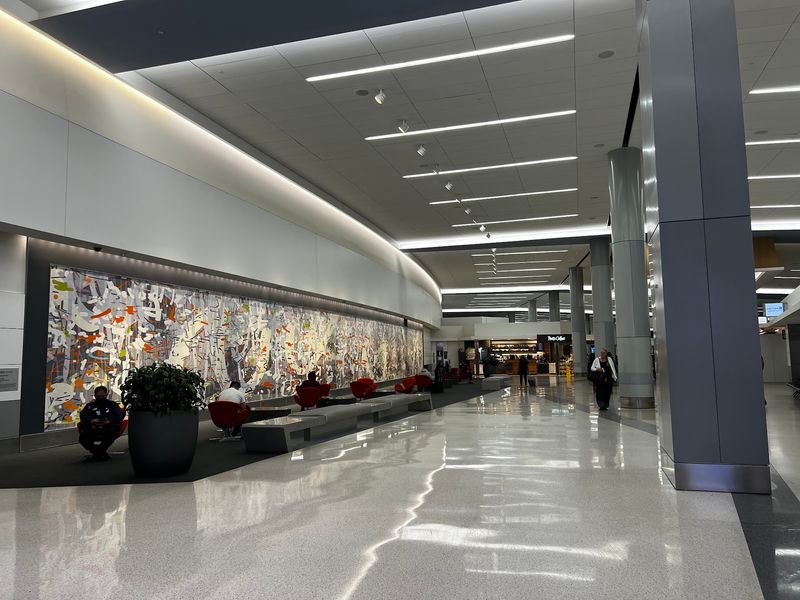
Missed your connection? At least you are stuck in a museum.
SFO has turned parts of its terminals into galleries, with exhibits on aviation, design, photography, science, history, and global art. The displays rotate, so a return visit rarely looks the same.
Here is a nerdy gem of a fact. In 1999, SFO Museum became the first museum inside an airport to be accredited by the American Alliance of Museums.
As of 2026 it was still the only airport museum program with that honor.
Permanent artworks sit throughout the terminals too, placed by the San Francisco Arts Commission. Sculptures and installations pop up in unexpected corners.
Keep your eyes open as you walk.
The International Terminal also holds an aviation museum and library. Its design echoes the airport’s passenger lobby from the 1930s.
History buffs can lose track of time there.
That means a layover at SFO can double as a free afternoon of culture. A smart tip is to check the museum’s website before your trip.
You can see what is on display and plan your route.
Hong Kong International Airport, Hong Kong
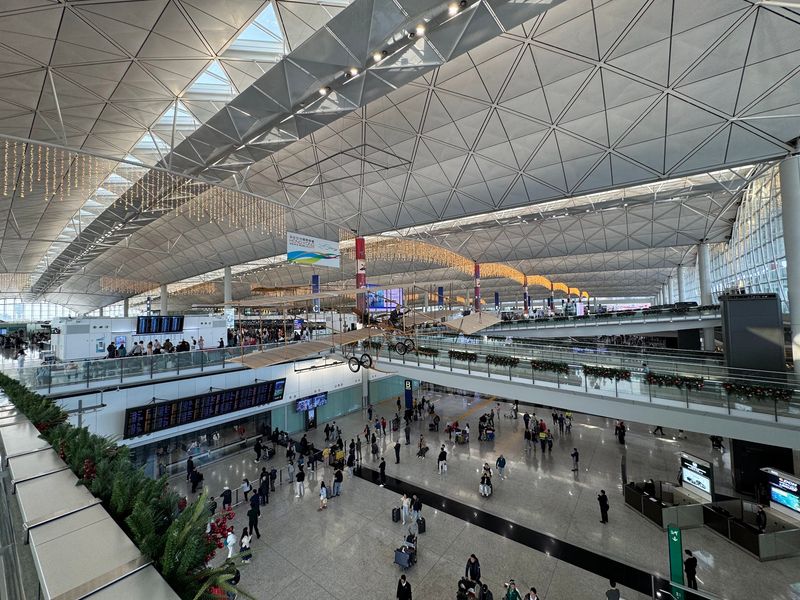
Look down and you may spot a jumbo jet rolling beneath your sneakers. That is the thrill of the Sky Bridge at Hong Kong International.
It links Terminal 1 with the satellite concourse and stretches roughly 200 meters.
The bridge rises about 28 meters above the ground. Engineers built it high enough for the largest passenger aircraft to pass under it.
A glazed section of floor lets you watch planes taxi straight below you.
Glass walls on both sides open up wide views of the airfield. You can see planes lined up at the gates and the hills in the distance.
Photographers love the light in the late afternoon.
Moving walkways keep things practical, so tired legs get a break. Even so, many travelers slow down on purpose to enjoy the scene.
It is hard to hurry on a bridge like this.
What would normally be a boring transfer corridor becomes a small viewing experience that few airports can match. A helpful tip is to walk the bridge early, before the crowds build up.
Munich Airport, Germany
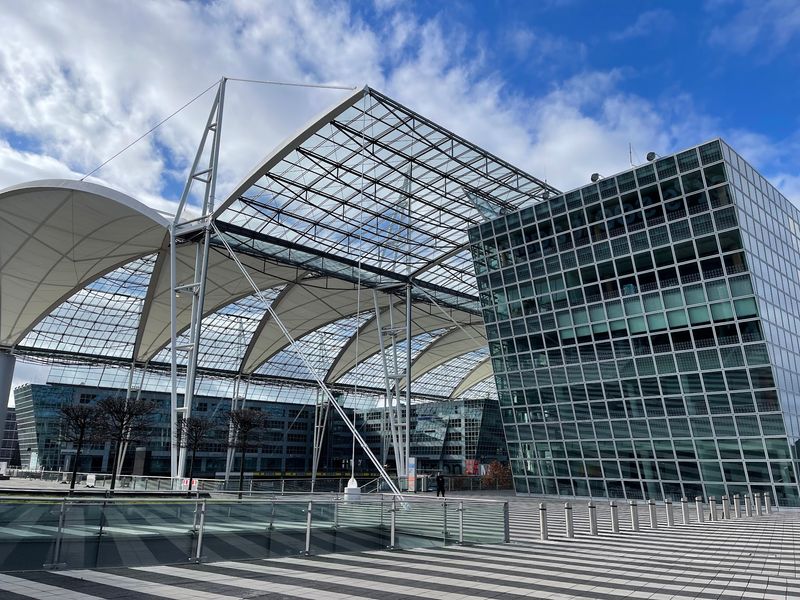
Fresh beer between flights? In Munich, that is just a normal Tuesday.
Airbräu opened in 1999 and calls itself the world’s first airport brewery. The beer is brewed right on site under the Bavarian Purity Law.
It is served with regional food in a traditional-style restaurant and beer garden. Pretzels, sausages, and hearty plates arrive fast.
The cozy wooden setting makes you forget you are at an airport.
Plane lovers have their own spot at the Visitors Park. A 28-meter viewing hill looks out over the runways, and an interactive exhibition explains how the airport works.
It is a great stop for curious kids.
Historic aircraft are also part of the park’s collection. Their interiors have sometimes closed for renovation, so check ahead if you hope to climb aboard.
The outside views are still impressive.
Munich is one of the rare hubs where people who are not flying have reasons to visit too. A good tip is to book a table early at busy times.
Locals come here on purpose.
Zurich Airport, Switzerland
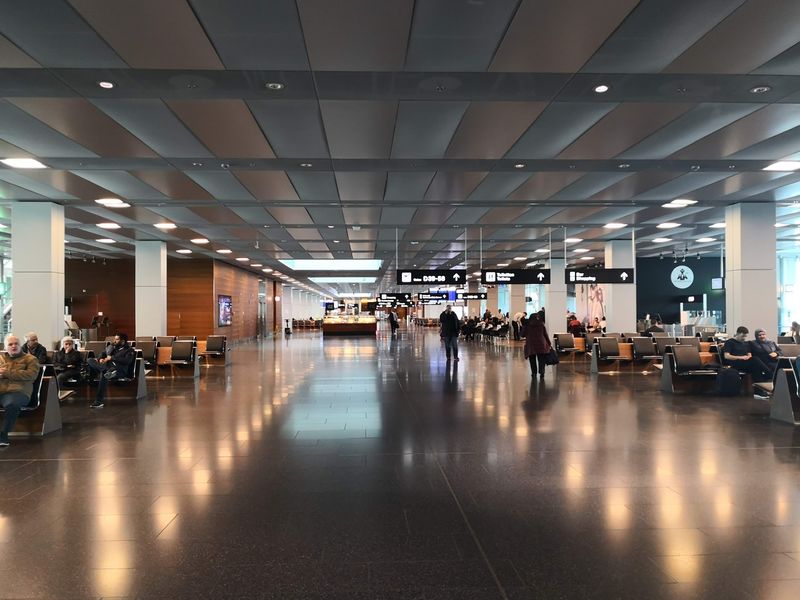
Zurich Airport thinks like a small city. Right beside the terminals stands The Circle, a huge complex packed with hotels, restaurants, shops, offices, wellness services, conference rooms, and entertainment spaces.
Japanese architect Riken Yamamoto designed it.
The building is striking, but the park next to it is the real surprise. Passengers and local residents can walk onto green lawns just steps from a major European airport.
It feels odd and wonderful to hear birds near jet engines.
Runners and walkers have a route to enjoy as well. A path of roughly 17 kilometers circles the airport area.
Bring sneakers if you have a long break.
Plane fans are not forgotten. Observation decks give dedicated views of aircraft, and benches make them easy to enjoy.
The mood is calm and very Swiss.
The result is a place that blurs the line between transport hub, business district, recreation space, and neighborhood. Travelers can sleep, work, eat, and relax without going far.
A smart tip is to book a hotel there for an early flight.
Istanbul Airport, Türkiye
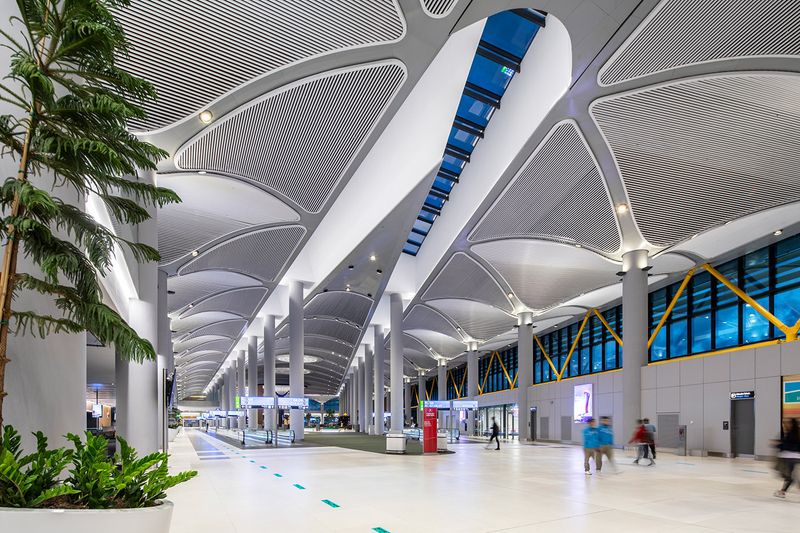
Thousands of years of history are waiting beside the duty-free aisles. The Istanbul Airport Museum opened in 2020 and covers about 1,000 square meters.
It introduces travelers to the civilizations of Anatolia without a trip into the city.
The first exhibition gathered more than 300 objects from museums across Türkiye. It traced the story from prehistoric societies through the Hittites, Phrygians, Romans, Byzantines, Seljuks, and Ottomans.
It ended with the modern republic.
The museum is not meant to stay frozen. Plans call for changing exhibition ideas rather than one fixed collection.
That gives repeat travelers a reason to come back.
You will find it beyond passport control in the international area. Qualifying passengers can use their layover for something far more meaningful than shopping.
Entry is easy and the displays are clearly labeled.
Here is a simple tip. Check the opening hours and any entry rules before your trip.
Then enjoy a quiet slice of Turkish history before you board.
Denver International Airport, Colorado, USA
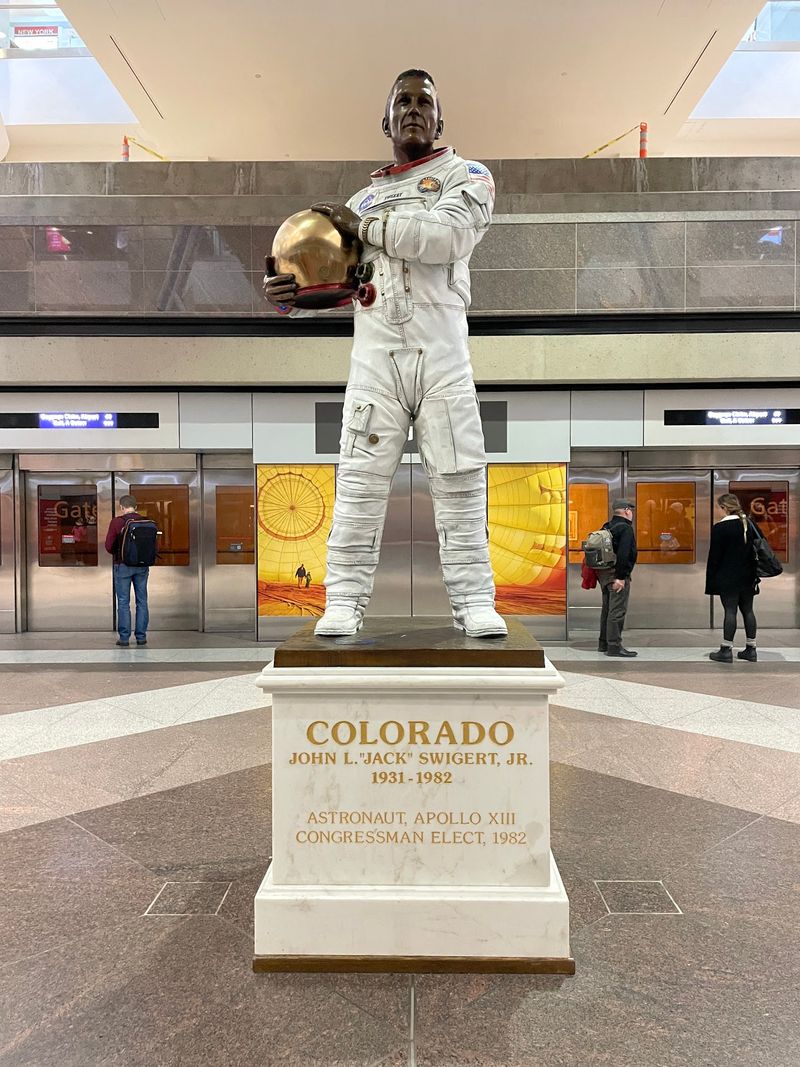
A blue horse with glowing red eyes greets you outside Denver International Airport. Luis Jiménez created the huge sculpture, and it has sparked a lot of talk over the years.
Some people love it. Others find it spooky.
Inside, art keeps coming. Large sculptures, murals, multimedia works, and rotating Colorado-focused exhibitions spread through the terminal and concourses.
Some pieces show regional landscapes, while others reference Native American history.
DEN describes its collection as one of the largest airport public-art programs in the world. You can make a game of it by hunting for your favorite piece.
Maps and information help you find the most interesting ones.
The art has become so tied to the airport that the building has its own cultural personality. Decades of folklore and conspiracy theories surround some of its stranger images.
Locals love telling the tales to newcomers.
A good tip is to allow time to walk between concourses and look around. Even if you do not believe the legends, the stories make the stroll more fun.
Helsinki Airport, Finland
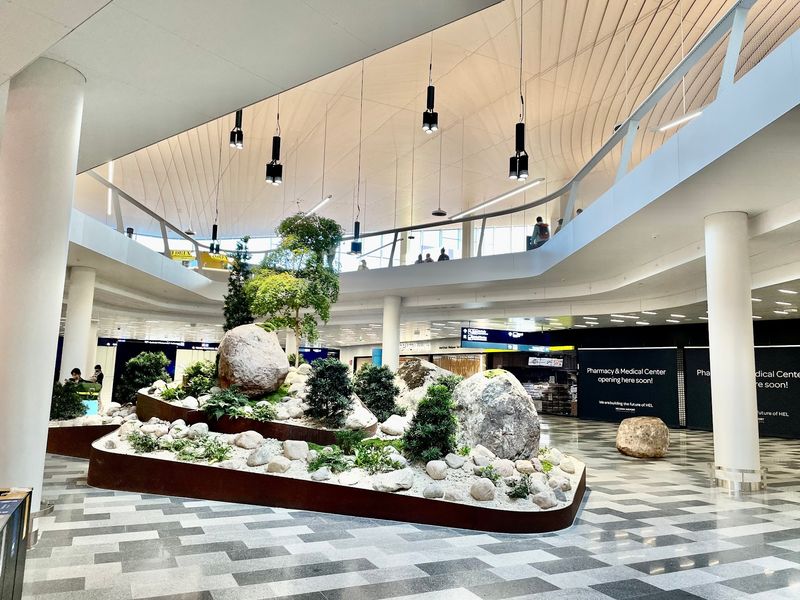
Quiet confidence is Helsinki’s style. The airport does not shout for attention with giant fountains or flashy displays.
Instead it turns Finnish design values into everyday comfort for passengers.
Renovated areas use natural materials such as light wood. Clear signs make it easy to find your gate, and security zones are spacious.
The overall look is calm and Nordic.
Then comes the sauna surprise. In 2025, operator Finavia created what it called the world’s first runway sauna beside the airfield.
It was part of a promotional project that celebrated Finland’s love of the tradition.
Regular passengers cannot sit on the runway, but they can still find sauna-related services. Selected airport lounges and hotels offer them.
Finavia keeps promoting Finnish wellness as part of the airport’s identity.
The result is a distinctly local take on what an international hub can feel like. It is practical, peaceful, and a little bit quirky.
A good tip is to pick a lounge with wellness options if you have a long layover and want to unwind.
Share this story