Carved into a red cliff where three rivers crash together, the Leshan Giant Buddha has watched over Sichuan for more than 1,200 years. A narrow trail zigzags right beside the statue, letting you walk from its head down to its toes.
Some people call it the best stairway in China, and others call it a leg workout with a view. Here are ten stops and tips to help you enjoy every step.
A Monk With a Mighty Promise
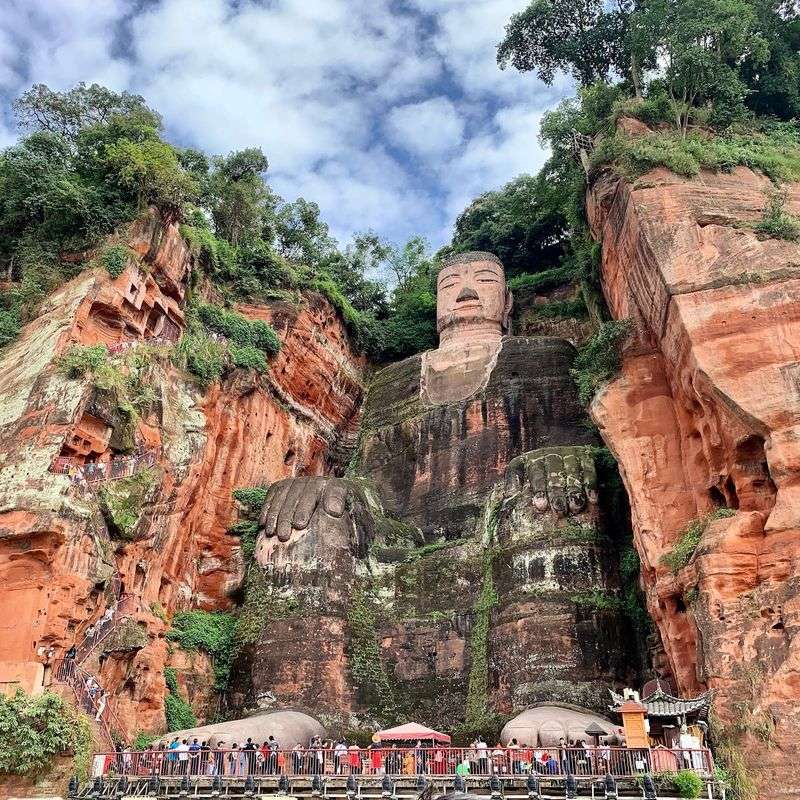
Haitong was a monk with a big dream and a stubborn streak. In 713 AD he began collecting donations to carve a Buddha that would calm the wild rivers below Leshan.
Boats sank often there, and he wanted to protect them.
Legend says local officials tried to grab the money. Haitong said he would rather lose his eyes than give it up.
To prove it, he gouged out his own eyes, and the shocked officials backed away.
He passed away before the work was done. His students kept carving, and the Buddha was finished about 90 years later.
That means three generations of workers chipped away at one cliff.
Knowing this story changes how you see the statue. Its calm face is not just art.
It is the result of one man’s promise and decades of teamwork. Read a little about Haitong before you go, and you will look at every stone step with more respect.
Many visitors say the history is what made the trip unforgettable, so it is worth the few minutes of reading.
Seventy-One Meters of Sandstone
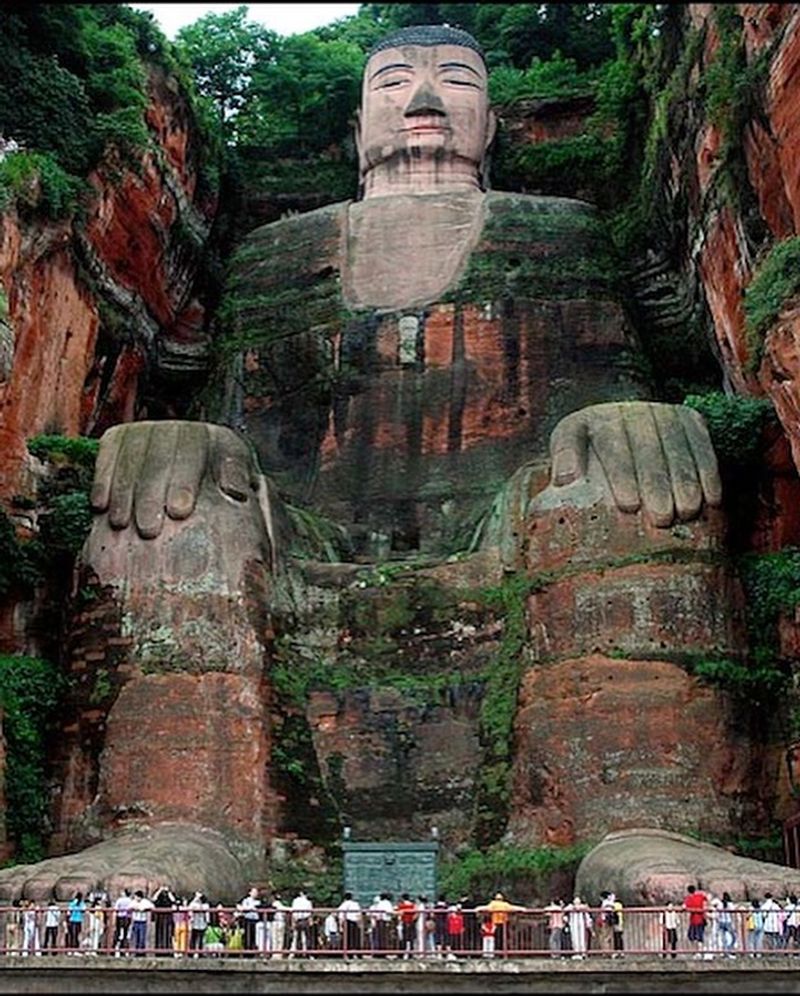
Picture a stone face taller than a two-story house, and then keep going. The Leshan Giant Buddha rises 71 meters, or about 233 feet, making it the largest stone Buddha in the world.
Each ear alone is around seven meters long.
Reviewers keep saying the same thing: photos do not prepare you. One visitor said it was even more magnificent in person, and another said it left them breathless.
The calm expression adds to the effect, since the giant looks relaxed while you huff and puff below.
The statue was carved straight out of a red sandstone cliff during the Tang Dynasty. It is a UNESCO World Heritage site, and the care shows in the paths and viewpoints around it.
Bring a camera with a wide lens, or just use your phone in panorama mode. You will want to capture the whole figure, and that takes some creativity.
Step back whenever you can for the best shot.
The Nine Bend Plank Road
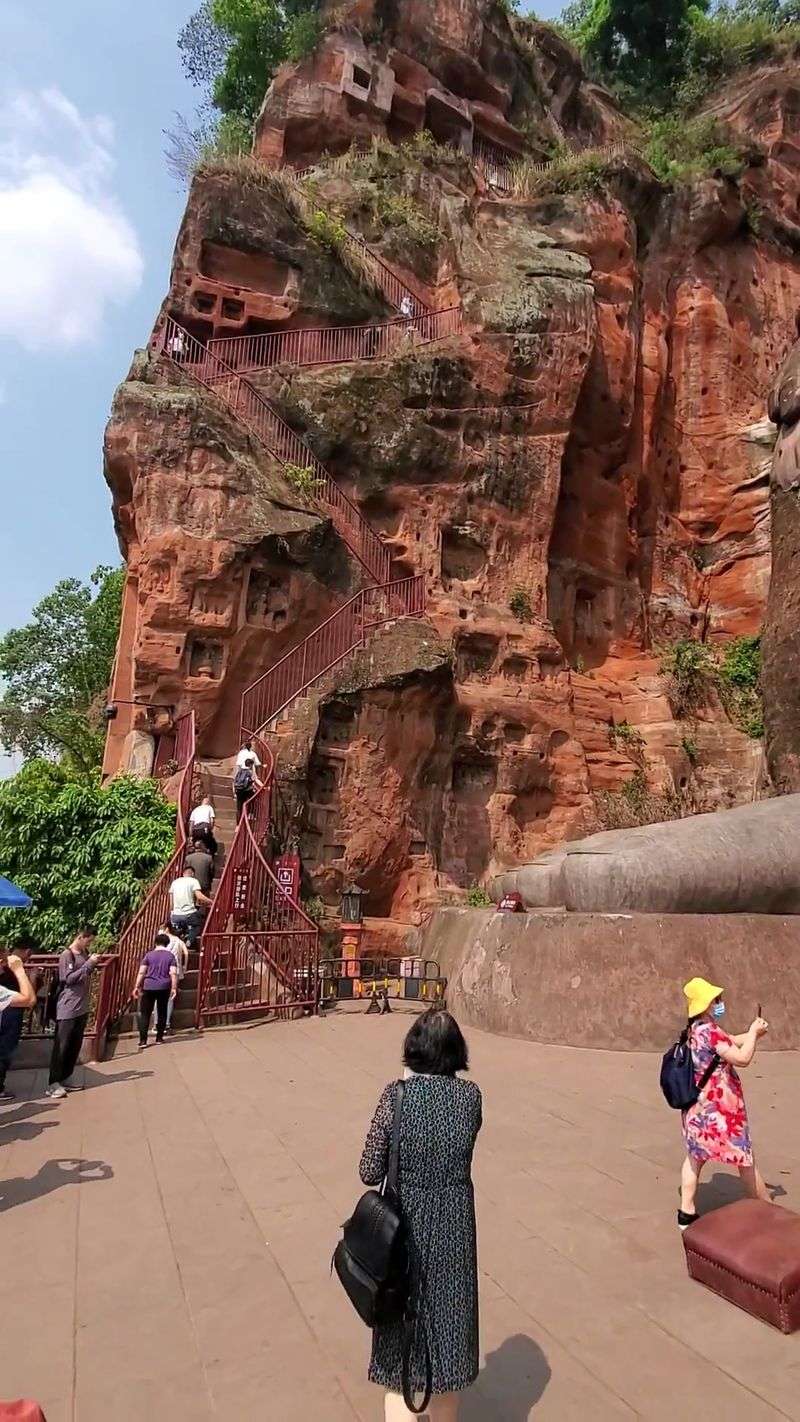
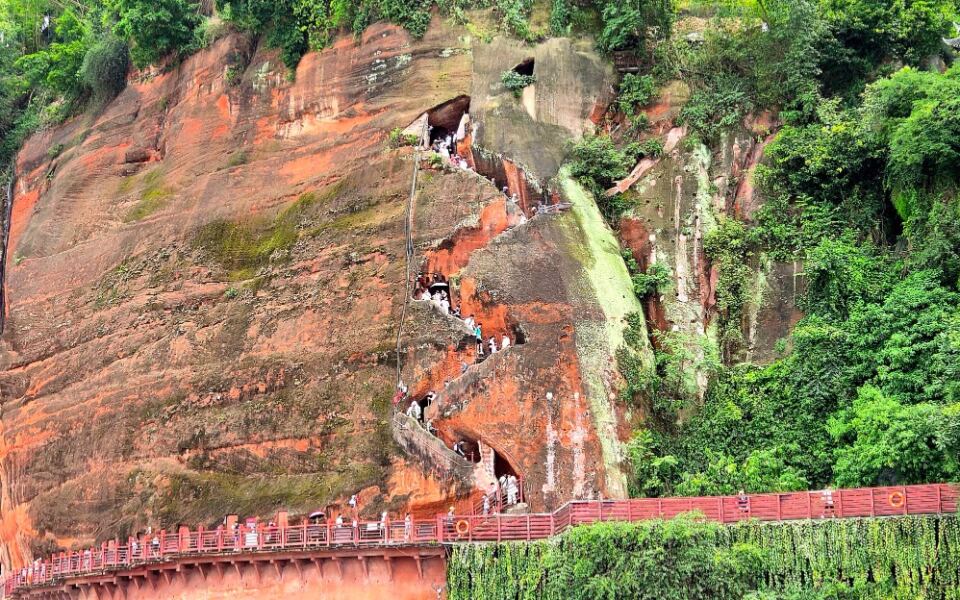
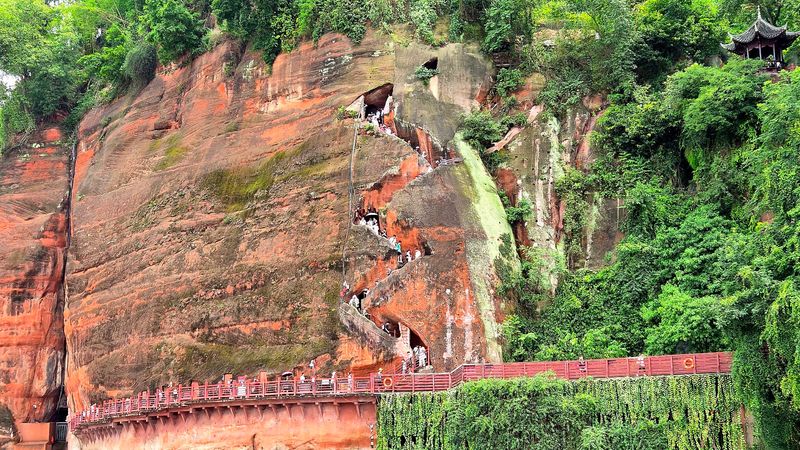
Hold the railing, because the stairs are about to get serious. The Nine Bend Plank Road is the narrow cliffside path that winds down beside the Buddha, passing his shoulders and chest on the way to his feet.
The route is steep and tight, and it can feel like a slow parade on busy days. One reviewer noted that the descent takes around 15 minutes, with roughly 270 steps.
Another warned that it is not ideal if you are not fit for the climb back.
The reward is a view you cannot get anywhere else. Squeezed against the cliff, you pass carved curls of hair and giant toes up close.
Every bend reveals a new angle.
Wear shoes with good grip and carry water. Take breaks at the turns, and let faster walkers pass.
If you go on a weekday morning, you will share the trail with fewer people and enjoy it far more.
Meeting the Head Up Close
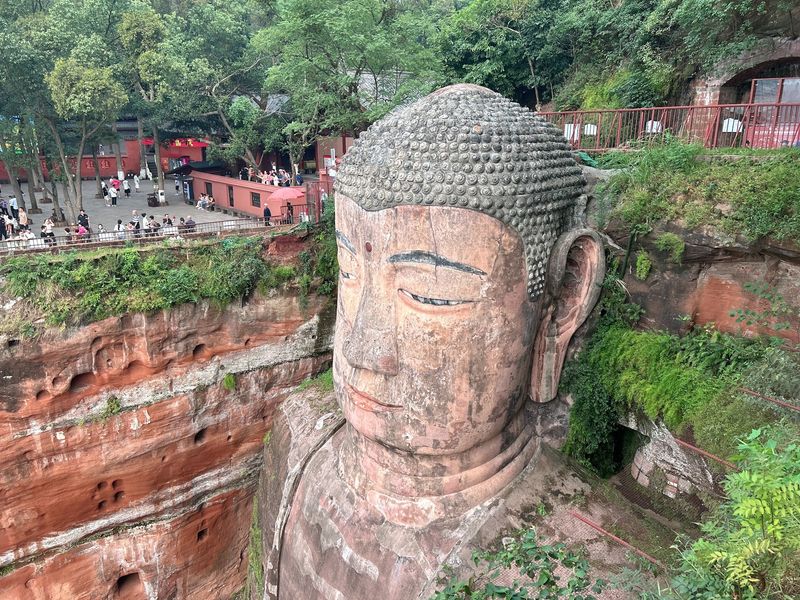
Most trails begin at the top, and the first thing you meet is the Buddha’s head. Walking from the main entrance to this spot takes around 15 to 20 minutes.
From here, the statue looks like a huge neighbor sitting quietly next to you.
Look closely at the hair. The carved curls number 1,021, and each one is a neat little knot of stone.
It is hard to believe workers shaped them more than a thousand years ago.
The view from above is wide and lovely. You can see the rivers, the green hills, and the city of Leshan stretching in the distance.
It is a great spot to catch your breath before heading down.
One visitor suggested starting your route from the top, and it makes sense. You begin with the easier walk, enjoy the scenery, and then decide if you want to tackle the long stairs to the feet.
Toe-Level Views
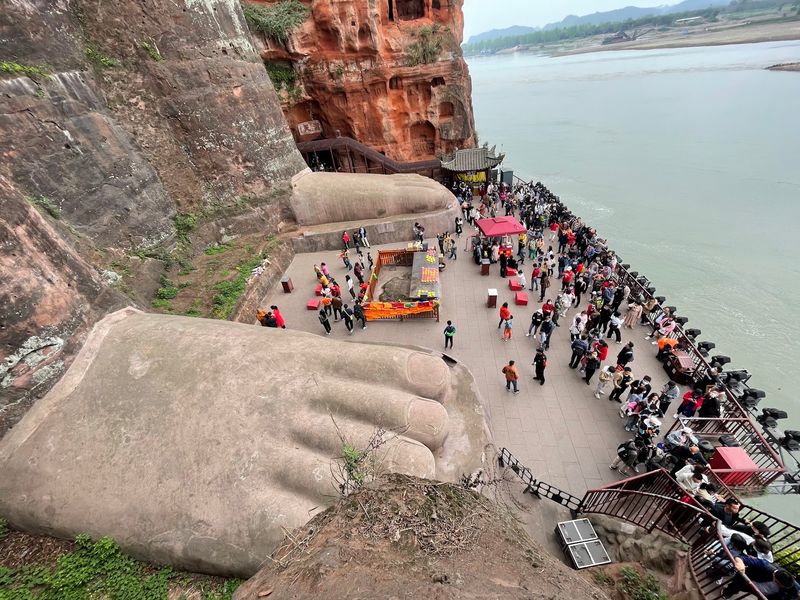
Down at the bottom, you suddenly feel tiny. The small platform by the Buddha’s feet puts the entire statue above you, and your neck will get a workout from all the looking up.
Fair warning: the space is small and often packed. One reviewer said the feet area can be overcrowded, and another mentioned a long queue to reach it.
Patience is your best travel buddy here.
Still, standing beside toes bigger than a person is a memory that sticks. Locals sometimes joke that a family could picnic on one.
You will want a photo with someone beside the foot to show the scale.
Go early in the day or late in the afternoon when the crowds thin out. Keep your belongings close, since the platform is cozy.
After your visit, the climb back up takes around 45 minutes to an hour, so save some energy for it.
Floating Past the Giant by Boat
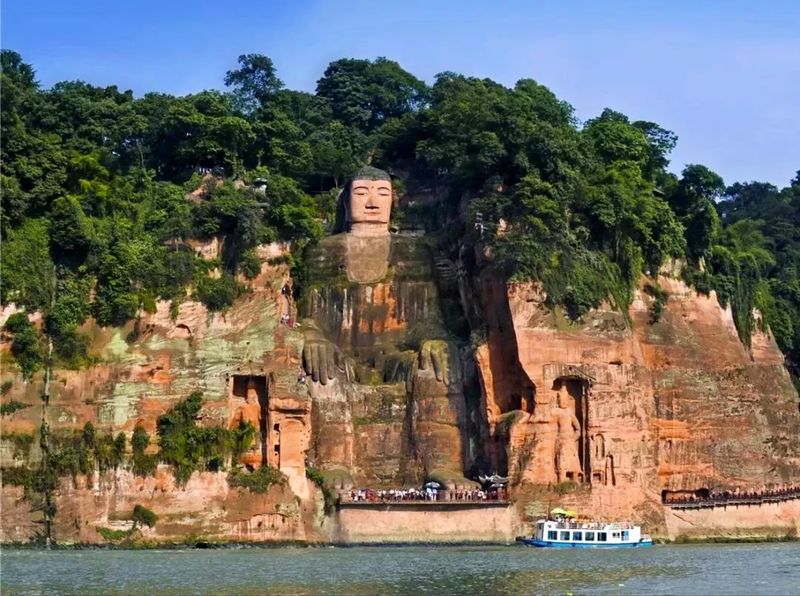
Here is the lazy traveler’s trick: let the river do the work. A boat ride gives you the full-body view of the Buddha without a single step of climbing.
Boat trips came up more than any other topic in visitor reviews.
The boats drift close to the statue and pause so everyone can snap photos. Some even have a photographer who helps for free.
Reviewers recommend sitting on the right side and heading to the upper deck right away.
The catch is the waiting. One guest said the line took longer than the ride itself, while another walked straight on during a quiet weekday.
Buy tickets ahead of time and you can skip some of the hassle.
The ride lasts about 30 to 40 minutes, and the pier is a long walk from the entrance. Pack water and comfy shoes.
This option is also perfect for families or anyone with sore knees.
Where Three Rivers Collide
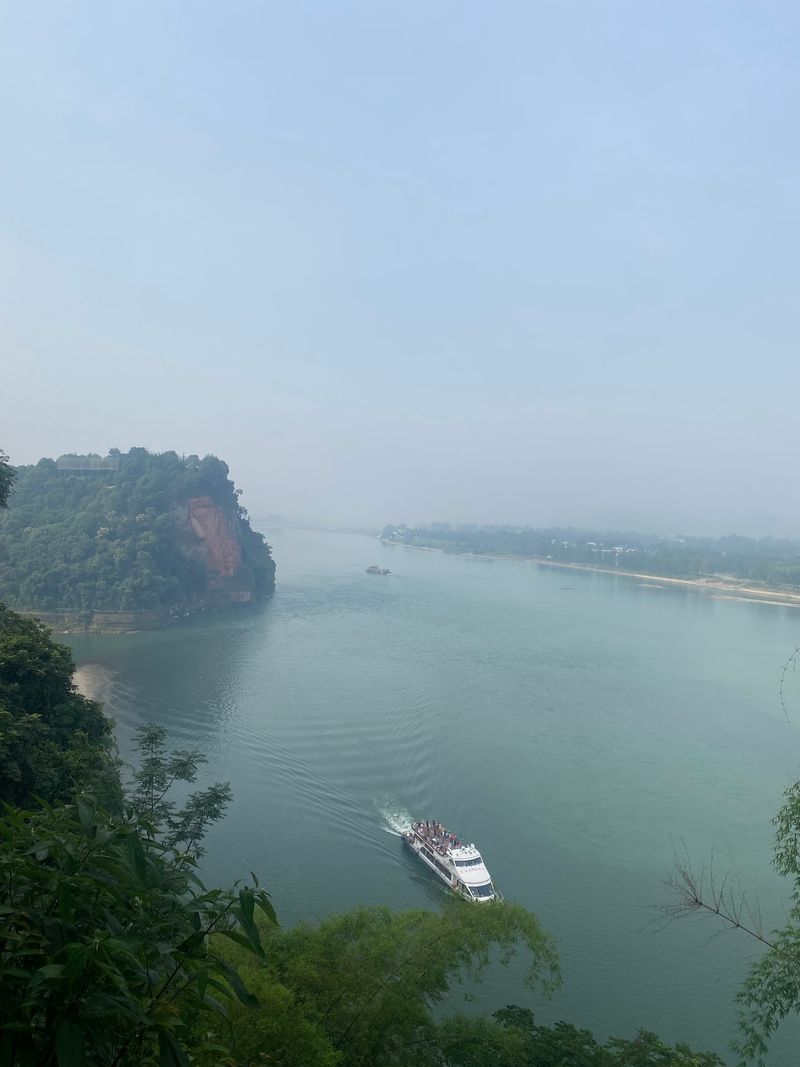
The water here has a wild past. The Min, Dadu, and Qingyi Rivers meet right below the Buddha, and in ancient times their crashing currents wrecked many boats.
That is exactly why Haitong wanted the statue built. He hoped the Buddha would calm the waters and keep sailors safe.
Modern studies suggest the carving and the rock that fell during construction did help soften the current.
Stand at a viewing platform and watch the colors blend. The rivers meet in a swirl that looks peaceful today, though you can still sense the power.
The meeting point is one reason the whole scene feels so dramatic.
One note for planning: water levels change. A visitor once found no boats running because the river was too low.
Check ahead if the boat ride is a must for you, and keep a backup plan for the walking trail.
The Underground Holy City
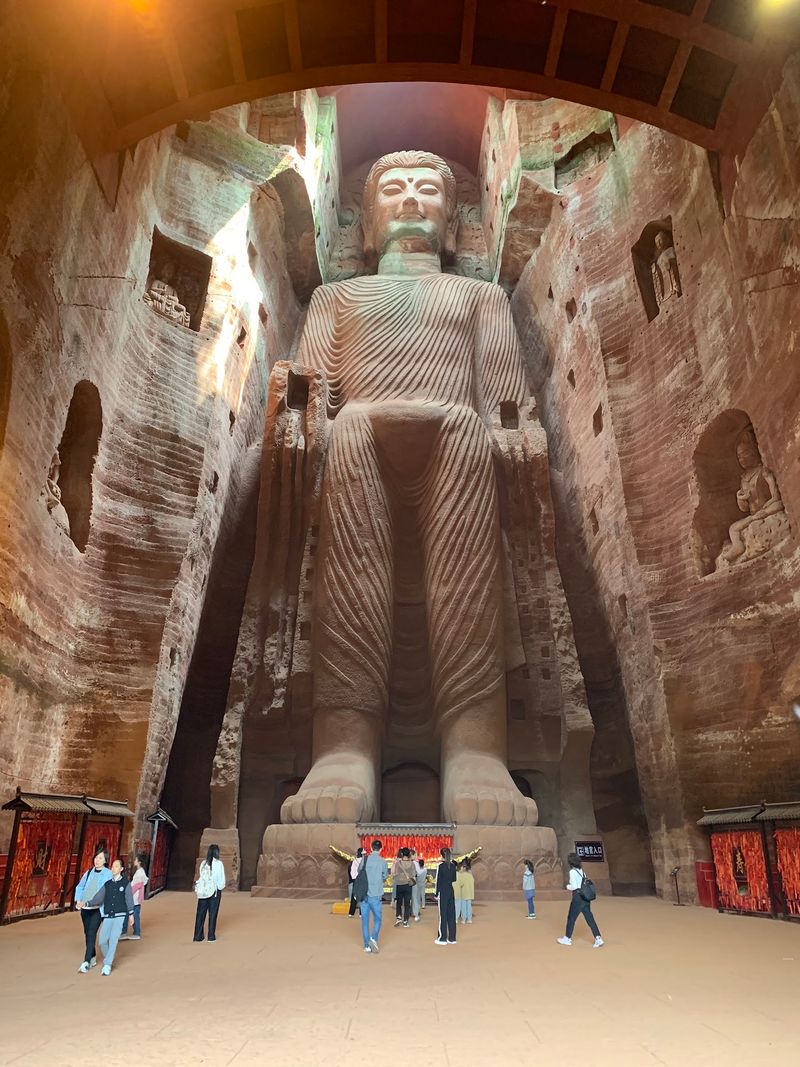
Behind the giant is a secret hiding inside the mountain. The Underground Holy City is a maze of corridors, big halls, shrines, and huge Buddha statues carved into the cliff.
One reviewer spent about an hour wandering it and called the craftsmanship amazing. Another loved seeing how different countries picture the Buddha at various stages of life.
A medicine Buddha stands about 51 meters tall nearby, which is a surprise after the main giant.
You reach it by shuttle cart on the northern side, opposite the Buddha’s back. Then you walk through a green forest before entering the cliff.
When you exit, you are on a path that leads toward the Buddha’s head.
It is easy to skip, but visitors say that would be a mistake. The cool air inside is a nice break from the summer heat.
An all-inclusive ticket often covers it, so check the options at the visitor center.
Lingyun Temple and the Oriental Buddha Capital
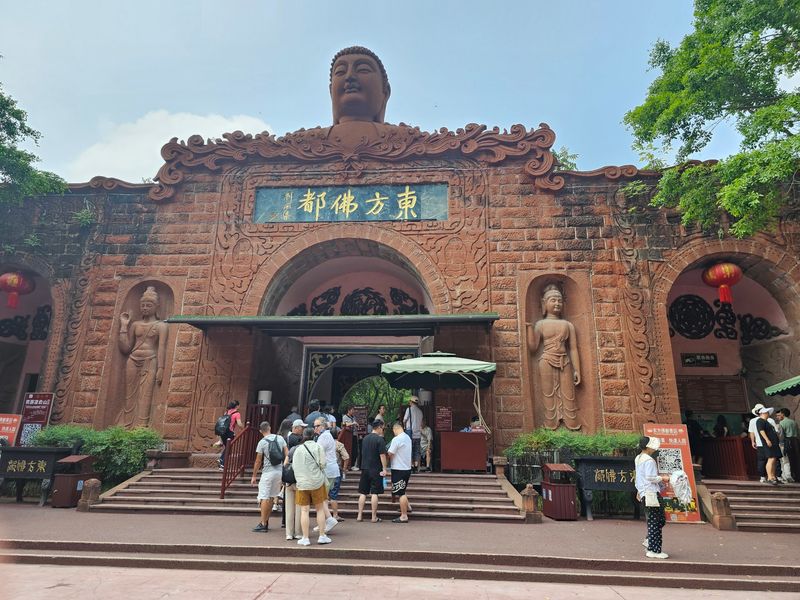
Incense smoke curls through the air, and suddenly the trip feels like more than sightseeing. Lingyun Temple sits near the Buddha’s head, and the area is known as the Oriental Buddha Capital.
Many visitors come to pray and make offerings. One traveler hired a guide who helped them understand the history and join in the prayers.
Others simply enjoy the quiet corners and old stone details.
Not everyone found it peaceful. A reviewer pointed out that crowds can be heavy and the mood is lively rather than still.
Expect bowing worshippers, chatting tour groups, and the occasional souvenir shop.
Show respect by keeping your voice low and not blocking the doorways. If you want to buy a keepsake, do it inside the complex, because one visitor warned that options disappear once you leave.
A small gift from here makes a sweet reminder of the day.
Smart Planning for a Smooth Day
Bring your passport. Reviewers say it is needed at every entrance, so leave it in your daypack rather than at the hotel.
Leshan is about an hour from Chengdu by fast train. From the station, a taxi or ride app takes 30 to 45 minutes to the visitor center.
Some people also hired a driver, which took around two and a half hours from Chengdu.
Plan for a full day. One traveler suggested at least seven hours if you want the boat, the Holy City, and the climb.
Arrive early, buy tickets online, and expect long walks between areas.
Watch out for sellers pushing extra tickets you may not need. Compare options at the official counter first.
Stalls along the trail sell water and snacks, and rest areas have toilets.
Finally, pace yourself. Start from the top, take photos at every bend, and treat the stairs like a friendly challenge rather than a race.
Share this story