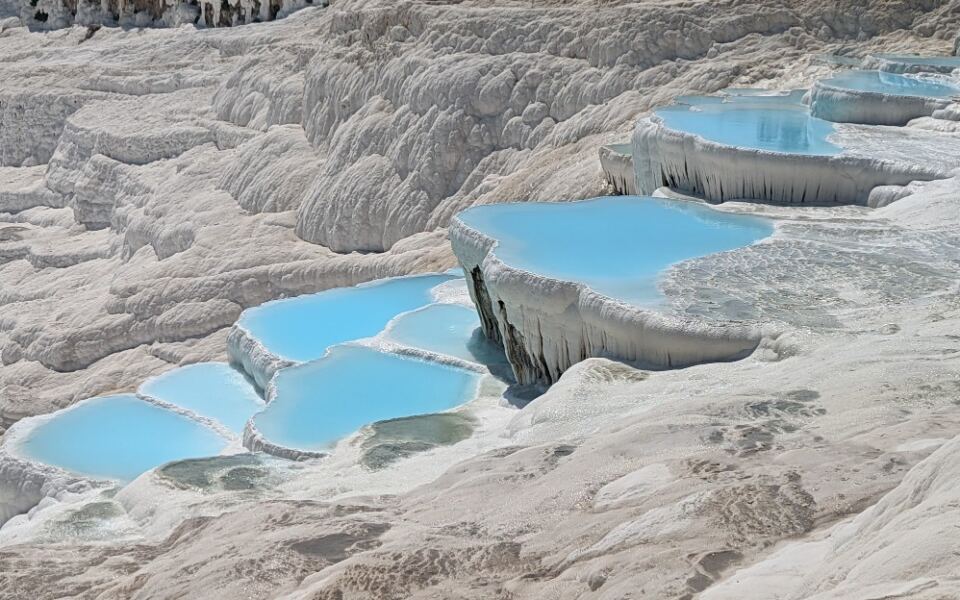
Imagine a hillside that looks like frozen waterfalls, yet the water running over it is warm. That is Pamukkale in western Turkey, where mineral-rich springs have built bright white terraces over thousands of years.
Right next door sits an ancient Roman spa city with theaters, tombs, and a pool full of fallen columns. Here are ten ways to enjoy this wonder of stone, water, and history.
The Snow-White Travertine Terraces
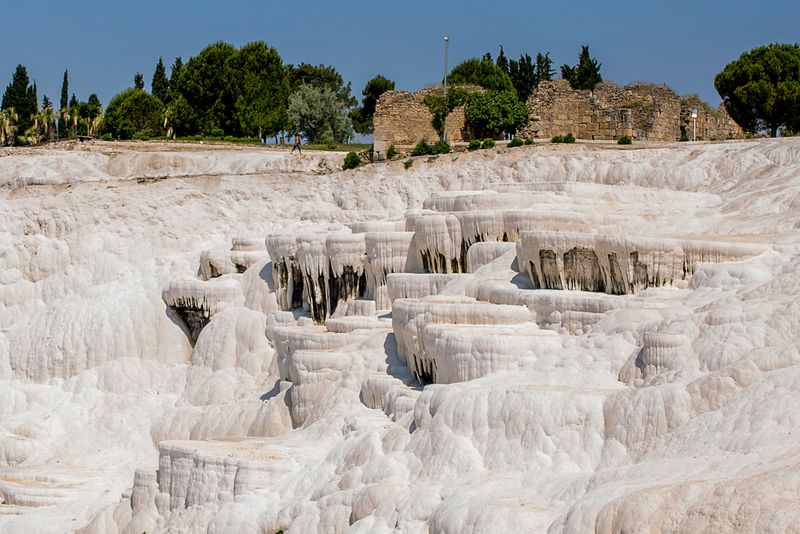
Here is the star of the show: a whole hillside draped in brilliant white stone. The terraces form when hot spring water, loaded with calcium, flows downhill and leaves mineral deposits behind.
Over time, those deposits stack into curved ledges and shallow bowls.
The Turkish name Pamukkale means cotton castle, and one look explains why. The slope glows so brightly that sunglasses are not optional.
On a clear day the white stone looks almost like fresh snow, even when the air is hot.
Walking on the terraces is allowed only in certain marked areas, and you must go barefoot. That protects the delicate surface from dirt and shoe damage.
The stone can feel rough in some spots and slick in others, so step carefully.
Bring a small bag for your shoes and keep your phone secure. The best photos happen when you crouch low and catch the sky reflecting in the pools.
Plan extra time, because it is very easy to stop every few steps for another picture.
Visit early in the morning or near sunset for softer light and smaller crowds. Midday sun makes the white surface glare fiercely.
Barefoot Walking in Warm Shallow Water
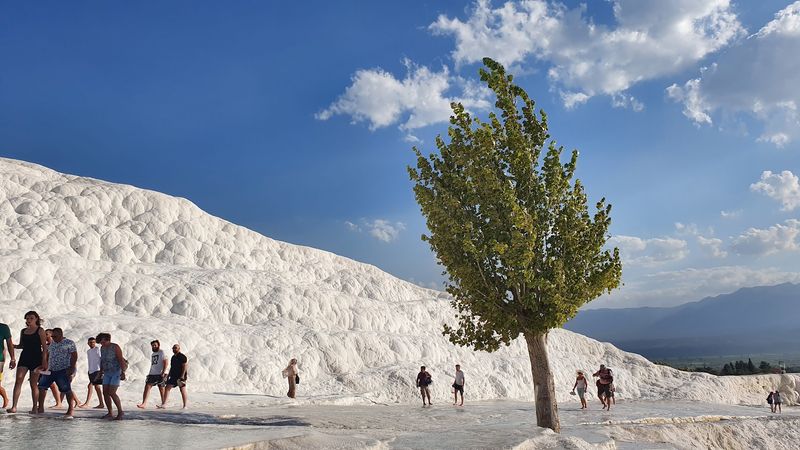
Ever heard of a footpath that doubles as a foot spa? Here the path is a gentle stream of mineral water, warm enough to soothe tired feet.
It feels a bit like walking through a giant bathtub that someone forgot to drain.
Shoes come off at the entrance to the terraces, and nearly everyone carries them. The water is usually only ankle deep, so rolling up your pants is enough.
Shorts are even better on hot days.
Watch your footing, because the mineral coating can be slippery in places. Walk slowly and let the kids hold your hand.
Rough patches of stone give better grip than the smooth glossy ones.
Some visitors say the surface feels like firm, bumpy clay under the soles. Others love the contrast of cool air and warm water.
Either way, it is a surprisingly relaxing way to climb a hill.
Bring a towel or a small cloth to dry your feet at the top. A bottle of drinking water helps, since the stroll can last longer than you expect.
The Antique Pool and Its Sunken Columns
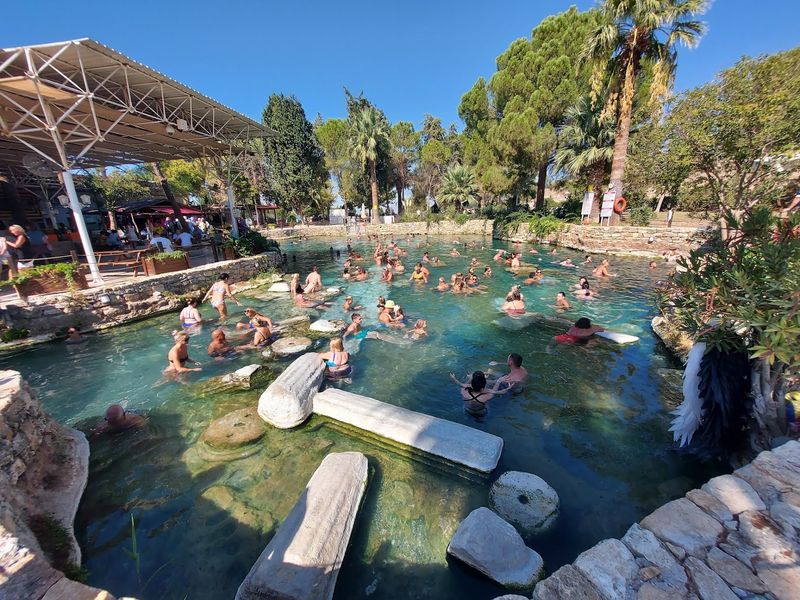
Swimming above ancient columns sounds like a movie scene, but it is a real thing here. The Antique Pool holds pieces of Roman marble that tumbled into the water after an earthquake.
Today they rest on the bottom like toppled giants.
The water stays pleasantly warm and gently fizzy with minerals. Floating over the broken columns feels playful and a little mysterious.
You can reach out and touch smooth old stone while your feet drift above it.
The pool is part of the Hierapolis site, and it comes with an extra entry fee. Lockers and changing rooms are on hand, so pack a swimsuit and a towel.
Cafes nearby make it easy to stay for a snack.
Be careful where you step underwater. Some fragments have sharp edges and the bottom is uneven.
Water shoes are a smart idea.
Go early to avoid tour groups, since the pool can fill up quickly by late morning. Waterproof phone pouches are handy for underwater photos.
Hierapolis, the Ancient Roman Spa City
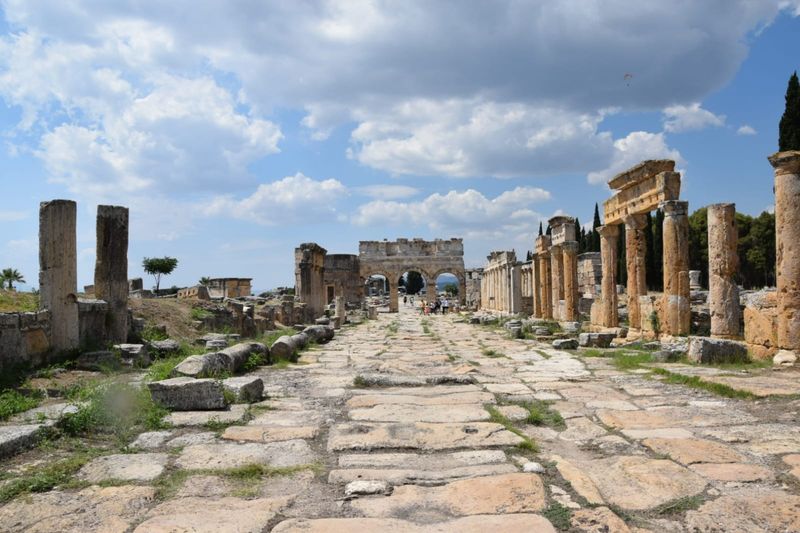
Founded around 190 B.C., Hierapolis was the place where ancient people went to feel better. They came for the hot springs and stayed for the shopping and entertainment.
Today its ruins spread across the hilltop just above the terraces.
Wander along the old main road and you will spot columns, arches, and weathered gateways. Wildflowers pop up between the stones in spring.
Lizards sunbathe on warm blocks and ignore everybody.
The site is large, so comfortable shoes matter. Shade is limited, which means a hat and sunscreen are worth packing.
Refill your water bottle whenever you pass a fountain.
A good plan is to walk through the ruins first, then finish at the terraces. That way you save the dazzling white view for the end.
It also keeps the heavy hiking in the cooler part of the day.
Reading the signs along the way adds plenty of fun facts. Allow at least two or three hours to see the main highlights without rushing.
The Well-Preserved Roman Theater
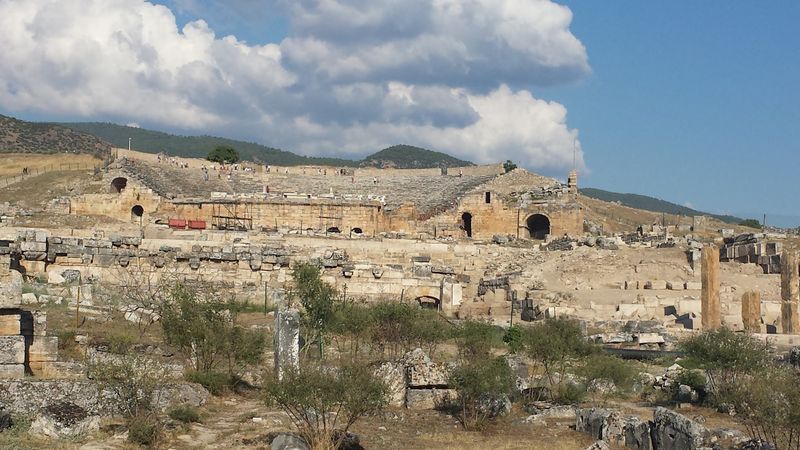
Sit on a seat that is nearly two thousand years old and look out over the valley. The theater at Hierapolis is one of the best preserved in the region.
Its rows of stone seating climb the hillside in a neat curve.
The stage building still shows carved reliefs of gods and mythic scenes. Look closely and you can spot tiny details in the marble.
Many visitors are surprised how much has survived.
Climb to the upper rows for the best view. From there you can see the town below and the hazy hills beyond.
The climb is steep, so take it slow and rest when needed.
Test the acoustics by clapping once from the center of the stage. The sound bounces back crisp and clear.
Kids love this trick.
Afternoon light turns the stone golden, which makes it a lovely time for photos. Bring water, because the stone seats hold heat and there is little shade.
The Necropolis and Its Sarcophagi
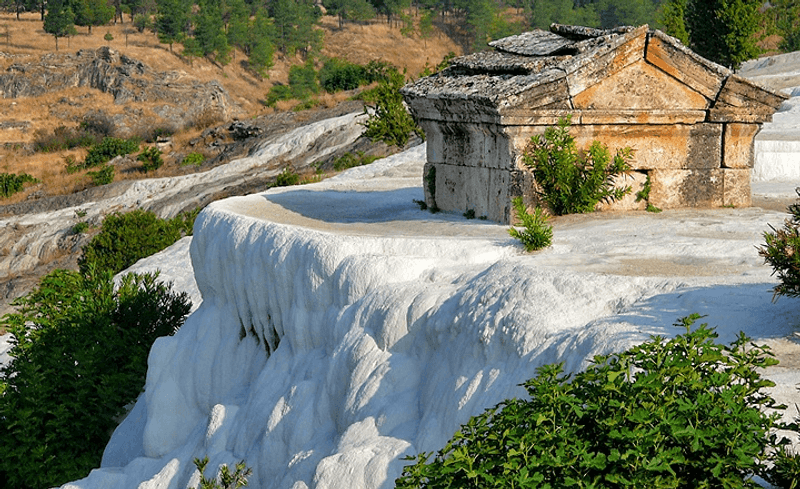
Two kilometers of tombs make this one of the largest ancient cemeteries in Turkey. The necropolis at Hierapolis is packed with sarcophagi, house-shaped tombs, and burial mounds.
Some lids have slipped aside, and some boxes lean at odd angles.
Why so many graves? People traveled here seeking healing waters, and many never went home.
The city grew into a final resting place for visitors from far away.
Walking among the tombs is quiet and a little eerie in a thoughtful way. Carved inscriptions still mark some of the stones.
Look for decorations like wreaths and family symbols.
Earthquakes have shifted many of the monuments over the centuries. That gives the area a rugged, windswept look that photographers enjoy.
Stay on marked paths to protect the fragile stones.
Early morning is a peaceful time to wander here. Wear sturdy shoes, since the ground can be rocky and uneven.
Sunset Over the Terraces
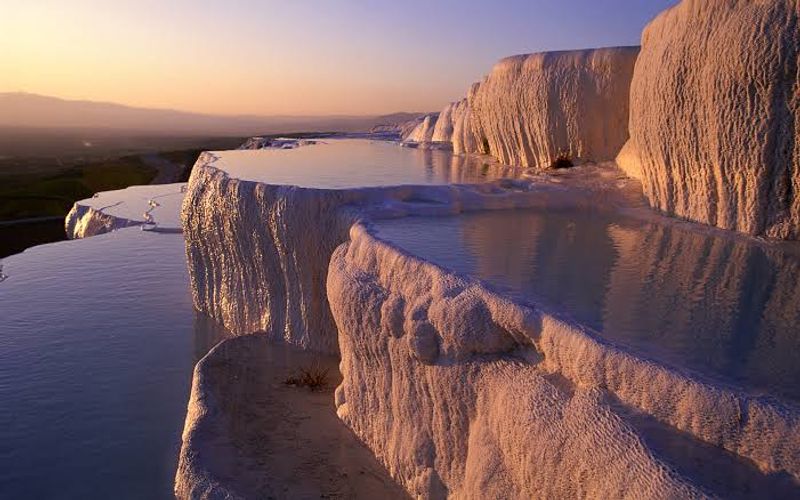
When the sun drops low, the whole hillside blushes pink and orange. White stone acts like a giant canvas for the changing sky.
The pools reflect every shade, and the scene shifts minute by minute.
Plenty of visitors plan their day around this moment. Arrive about an hour before sunset to find a good spot and get your bearings.
The crowds thin out as the light softens.
Temperatures drop in the evening, so a light jacket is smart. The warm water feels even nicer once the air cools.
Bring your shoes in a bag and keep a small flashlight for the walk down.
For photos, try placing a pool in the foreground and let the sky fill the top. Patience pays off, because the best colors often show up just after the sun disappears.
Keep your camera ready until the glow fades completely.
Check the closing hours before you go, as they can change with the season.
Hot Air Balloons Over the Cotton Castle
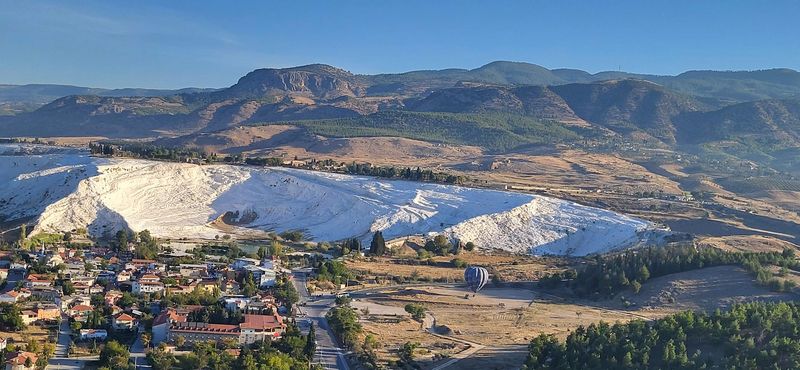
Dawn here comes with a bonus: dozens of colorful balloons rising into a pastel sky. Floating above Pamukkale gives you a full view of the white slope and the ruins beyond.
From up high, the terraces look like a pale staircase tucked into the green valley.
Flights usually start before sunrise, so expect an early alarm. Pickup from your hotel is common, and the ride lasts around an hour.
Wear layers, as it is chilly on the ground and warms up quickly in the air.
Weather decides everything. Strong wind can cancel a flight, so keep a spare day in your plans if you can.
Companies will usually reschedule if conditions are poor.
Even if you stay on the ground, watching the balloons drift by is a treat. Find a rooftop terrace or a hillside spot with open views.
Bring a warm drink and enjoy the show.
Book ahead in busy months, since seats fill up fast.
Soaking in the Thermal Waters
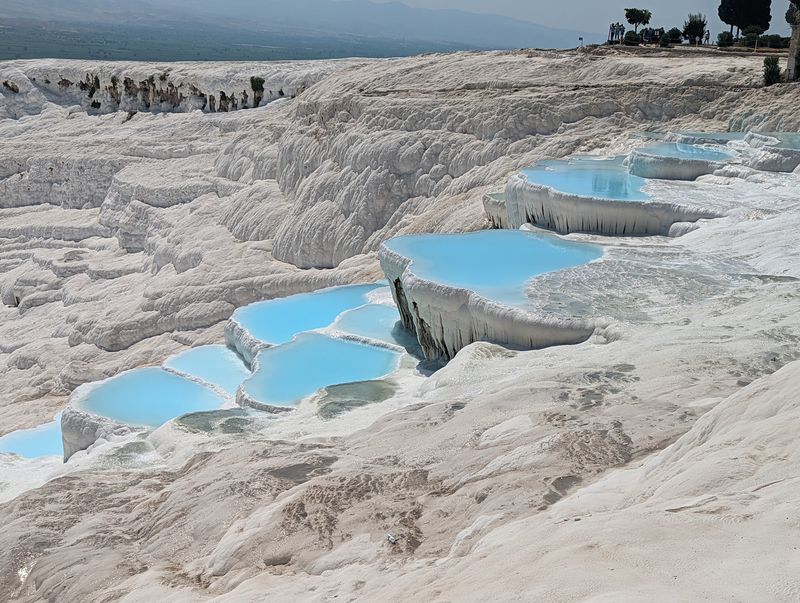
Hot springs have been the main attraction here for over two thousand years. The water bubbles up warm and rich in minerals like calcium and bicarbonate.
Many people say a soak leaves their muscles loose and their mood light.
Several pools and resorts around the area welcome swimmers. Some sit near the terraces, while others are inside the Hierapolis site.
Check ahead to see which ones suit your budget and your schedule.
Pack a swimsuit, a towel, and flip-flops. Showers and changing rooms are usually available.
Rinse off afterward, since the minerals can leave skin feeling a bit chalky.
Stay hydrated, because warm water can make you tired faster than you think. Limit your soak to about twenty or thirty minutes at a time.
Anyone with health concerns should ask a doctor first.
A late afternoon dip after a long day of walking is hard to beat. Your tired feet will thank you.
Smart Tips for Visiting Pamukkale
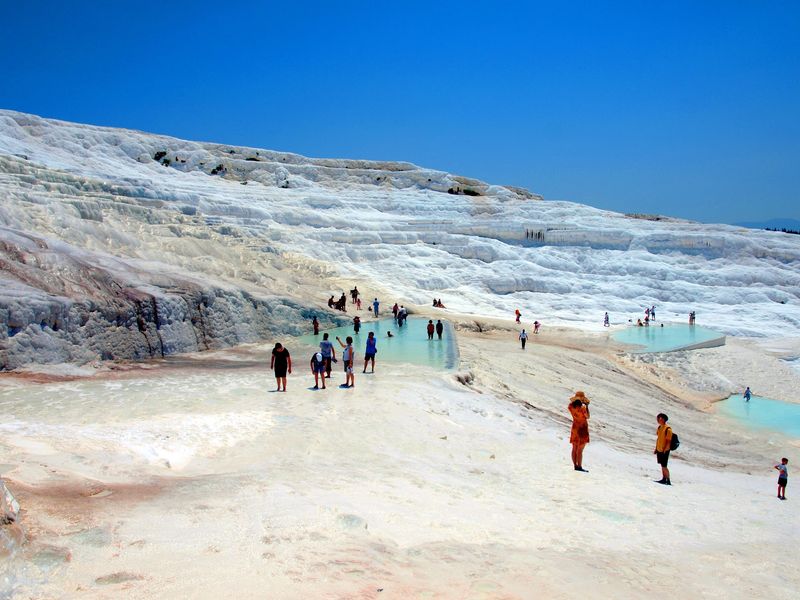
A little planning turns a good trip into a great one. Spring and autumn bring comfortable weather, while summer can be blazing hot.
Winter is quieter, though the water can feel chilly in the air.
Arrive early to beat both heat and crowds. There are entrances at the south and north ends, and many people walk up one and down the other.
Taxis and minibuses can help with the return.
Pack sunglasses, sunscreen, a hat, and plenty of water. The white stone reflects light, so the glare is strong.
Bring a bag for your shoes and a towel for drying off.
Many travelers stay overnight in the town to see the terraces in both morning and evening light. Local restaurants serve hearty Turkish dishes that taste great after a day of walking.
Try gozleme, a thin flatbread filled with cheese or spinach.
Respect the rules and stay in the permitted areas. That keeps the terraces gleaming for the next visitors.
Share this story