Vienna has a chocolate cake that sparked a legal battle, an imperial pancake with an unusual origin story, and apple strudel made from recipes passed down for generations.
The city’s historic coffeehouses have been serving traditional desserts for well over a century. Some were once associated with the imperial court, while others became favorites in family kitchens and neighborhood cafés.
From the famous Sachertorte at Café Sacher to fresh Buchteln at Café Hawelka, these 12 desserts offer a delicious introduction to Vienna’s baking traditions. Here’s what makes each one special and where to try it.
1. Sachertorte at Café Sacher, Vienna, Austria
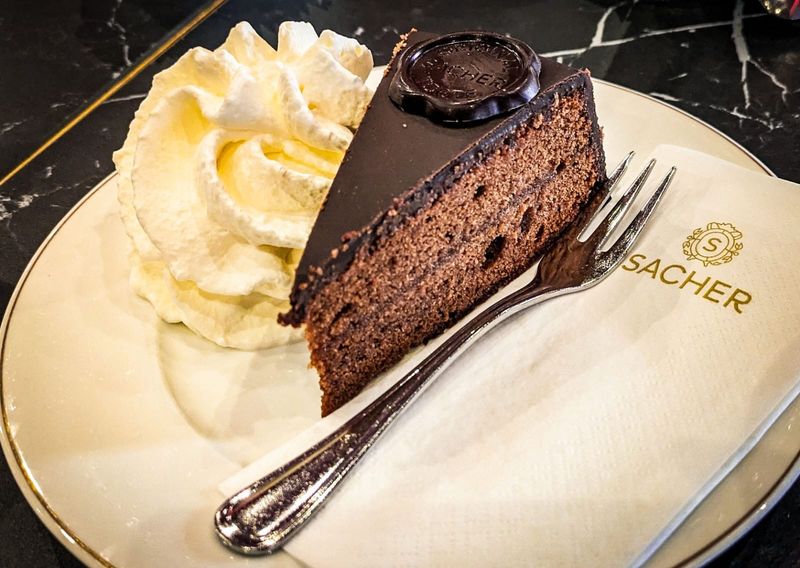
Few cakes can claim they survived a courtroom battle, but this one did.
In 1832, a 16-year-old kitchen apprentice named Franz Sacher created a chocolate cake for Prince Metternich. His son Eduard later opened Hotel Sacher in 1876, and the cake became its signature item.
Decades later, a legal fight known as the Cake War broke out over who could sell the ‘original’ version. Courts settled it in favor of the Sacher side, which is why only Café Sacher sells the Original Sacher-Torte.
Each slice has chocolate sponge, a thin layer of apricot jam, and a dark chocolate glaze. It comes with unsweetened whipped cream on the side, and locals insist you use it.
The café sits right behind the Vienna State Opera, with red velvet seats and crystal chandeliers. Lines can get long by midday, so arrive close to opening time.
Nearly 1,000 cakes are made daily, and the shop next door sells them in wooden gift boxes. Grab one if you want a souvenir that will not collect dust.
2. Kaiserschmarrn at Demel, Vienna, Austria
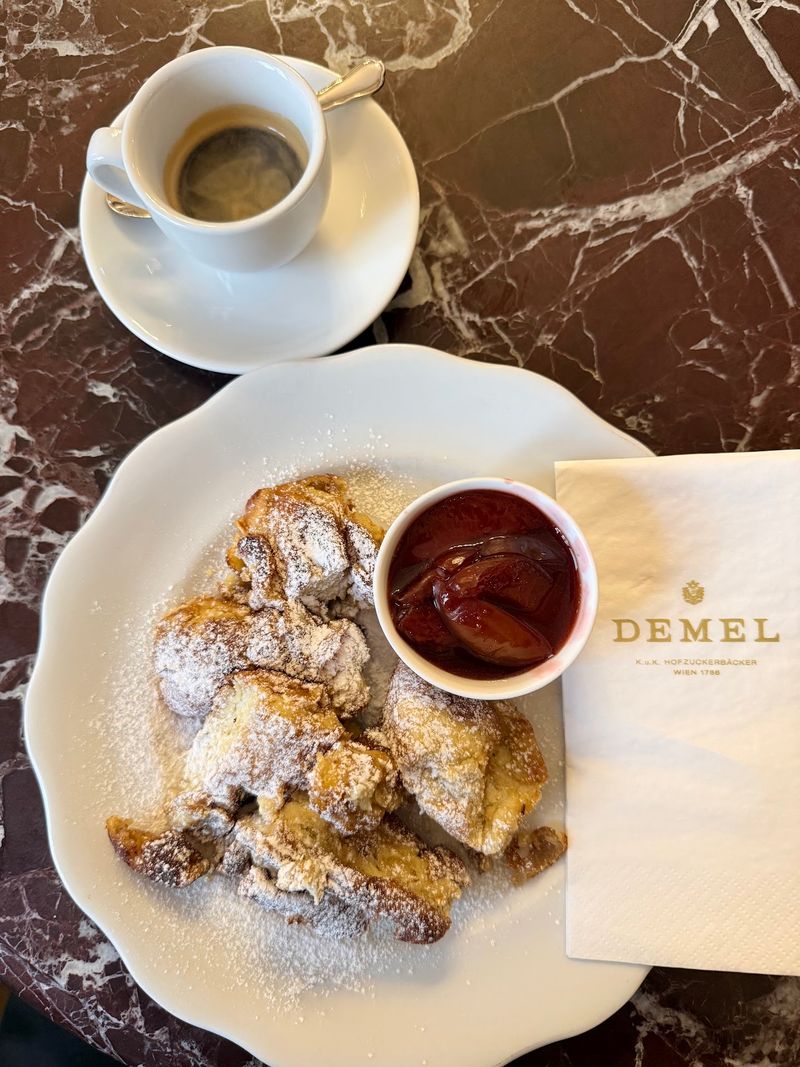
Emperor’s Mess is the literal translation, and nobody in Vienna seems bothered by that.
Legend says a court chef made this pancake for Empress Elisabeth, who wanted something light. She turned it down, so Emperor Franz Joseph happily ate the whole thing himself.
The batter uses flour, eggs, milk, and sugar, with whipped egg whites folded in. Cooks fry it in butter, tear it into chunky pieces, then caramelize it lightly in the pan.
Demel has held the title of imperial court confectioner since the 1700s and sits on Kohlmarkt, steps from the Hofburg Palace. Inside, neo-baroque rooms are lined with cases of candy and cakes.
The servers, known as Demelinerinnen, wear traditional uniforms and use old-fashioned polite forms of address.
Here is the smart move. A takeaway window near the entrance sells Kaiserschmarrn to go, so you can skip the wait for a table.
Ask for plum compote, called Zwetschgenröster, on the side. Its tart flavor balances all that powdered sugar, and it is the classic pairing.
3. Apfelstrudel at Gerstner at Schönbrunn Palace, Vienna, Austria
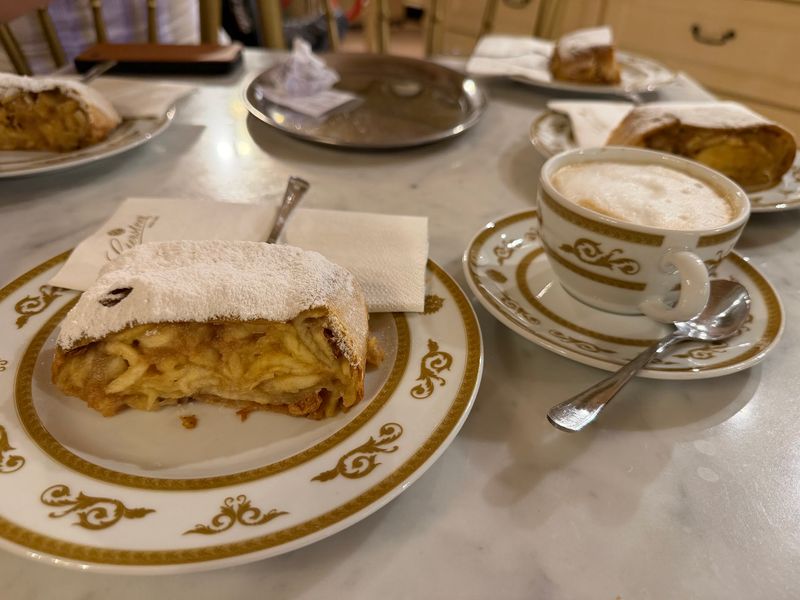
A handwritten strudel recipe from 1697 sits in Vienna’s city library, which shows how long locals have loved this dessert.
Apple strudel likely traces back to baklava, traveling through Turkish and Hungarian kitchens before reaching the Habsburg court. Empress Maria Theresa was reportedly a fan.
The tricky part is the dough. An old saying claims it should be stretched by hand until you could read a love letter through it.
At Schönbrunn Palace, Gerstner runs a strudel show several times a day inside the historic palace bakery. A pastry chef stretches the dough, adds spiced apples, raisins, and buttered breadcrumbs, then rolls everything up in front of the crowd.
The breadcrumbs have a job, too. They soak up apple juice so the bottom does not turn soggy.
Tickets usually include a slice and a drink, plus a copy of the recipe to take home. Book ahead in summer, since tour groups fill the shows quickly.
Pair it with a palace tour and your whole morning is planned.
4. Buchteln at Café Hawelka, Vienna, Austria
Picture a café where the decor has barely changed since the 1950s, and that is exactly the point.
Leopold and Josefine Hawelka opened their coffeehouse on Dorotheergasse in 1939. After reopening in 1945, it became a meeting spot for artists, writers, and poets, some of whom reportedly paid with paintings.
Some of that artwork still hangs on the walls, next to old exhibition posters.
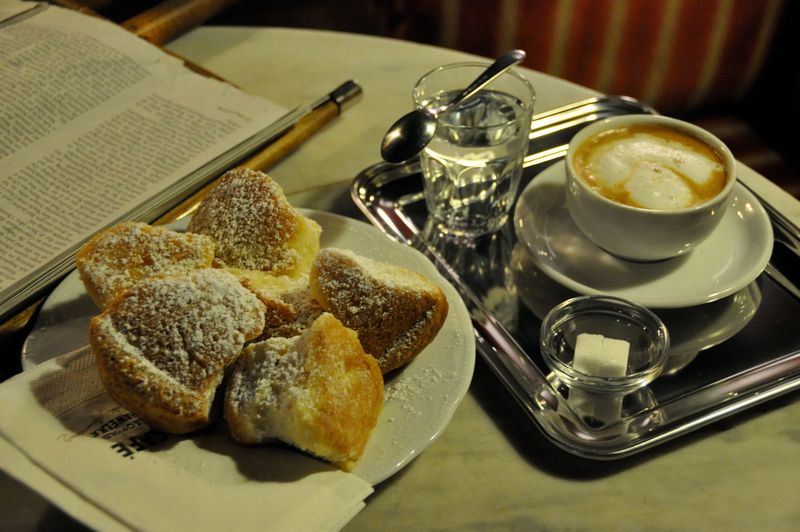
Josefine made Buchteln her signature. These sweet yeast buns are filled with plum jam, called Powidl, or apricot jam, then baked packed tightly together in a pan.
Since they bake side by side, each bun has pale, soft edges and a golden top. They arrive dusted with powdered sugar.
She baked them herself for decades, and her son Günther kept using her exact recipe.
Traditionally, the buns came out of the oven late in the evening, so night owls had an advantage. Bring cash, since Hawelka has long been known as a cash-only spot.
Seating is tight, and sharing a table with strangers is part of the deal.
5. Kardinalschnitte at L. Heiner, Vienna, Austria
Church history and cake rarely mix, yet one Viennese pastry manages both.
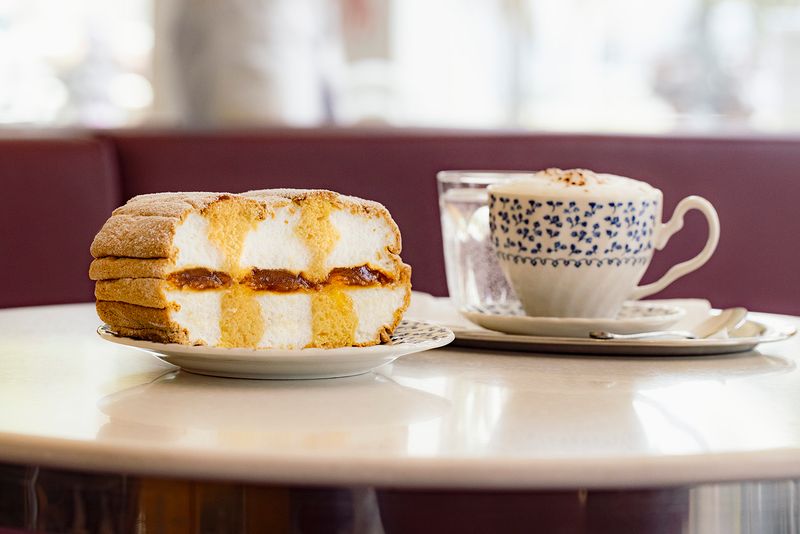
Kardinalschnitte was created in 1933 by Ludwig Heiner to honor Cardinal Theodor Innitzer. Its white and yellow stripes are said to reflect the colors of the Catholic Church.
Bakers pipe alternating rows of meringue and sponge batter onto a sheet, bake it, then sandwich the layers with cream. The most common filling is coffee cream, though some versions use fruit.
L. Heiner dates back to around 1840 and earned the title of imperial court confectioner under Emperor Franz Joseph.
The family business is now in its sixth generation and runs several branches.
The Wollzeile shop has vaulted ceilings, mirrors, and wood fittings in a Biedermeier style. Coffee often arrives on a silver tray with patterned cups, a small touch that sets it apart.
Kardinalschnitte is light, so it works well after a big lunch. Order it with a Melange, the Viennese take on milky coffee.
Look for it near the front of the long display counter.
6. Punschkrapfen at Kurkonditorei Oberlaa, Vienna, Austria
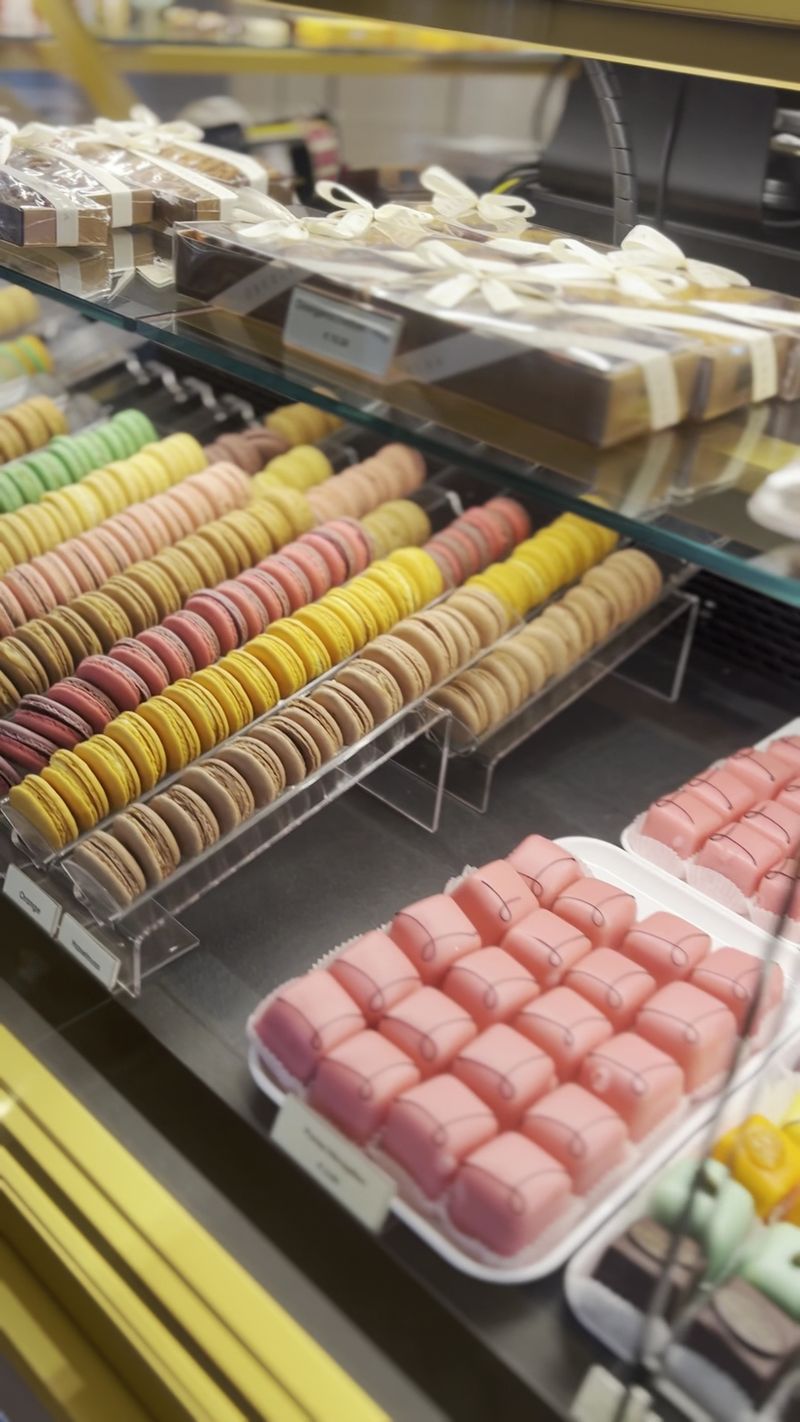
Bright pink frosting makes this tiny cake the easiest item to spot in any Viennese pastry case.
Punschkrapfen is a small square cake covered in shiny pink fondant. Inside, thin layers of vanilla sponge surround a dense filling made from cake crumbs and apricot jam, sometimes mixed with chocolate or nougat.
Bakers originally used leftover sponge for that filling, so the cake started out as a clever way to avoid waste.
Nobody agrees on where it came from. Theories point to medieval visitors, Ottoman armies, or a creative court confectioner.
Kurkonditorei Oberlaa opened its first shop in 1974, which makes it young by Vienna standards. Still, it has built a strong reputation for careful baking and quality ingredients, many sourced from the region.
The Neuer Markt location has two floors and windows on three sides, so you get a view of the square while you eat.
Counters are packed with colorful cakes and macarons. Take a Punschkrapfen to go if you are short on time, since it travels well in a small box.
7. Sperl Torte at Café Sperl, Vienna, Austria
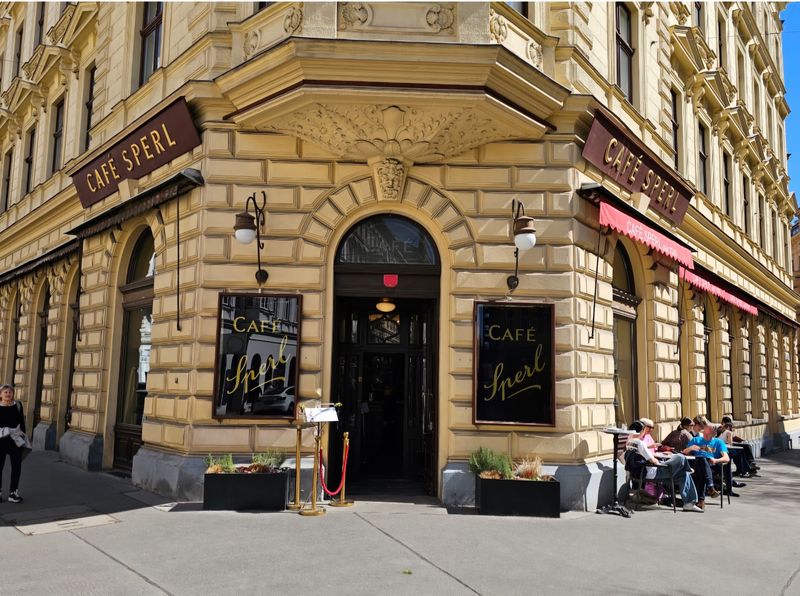
Billiard tables in a coffeehouse might seem odd, but at Café Sperl they have been part of the scenery since 1880.
The café on Gumpendorfer Strasse kept its original interior, including high ceilings, marble-topped tables, and bentwood chairs. Newspapers hang on wooden holders, and nobody rushes you out.
Here is a fun bit of history. Artists from the Siebener Club and the Hagen Society met here, and their talks helped launch the Vienna Secession art movement in 1897.
The house specialty is the Sperl Torte, a cake built on almonds, milk chocolate, vanilla, and a hint of cinnamon. It is lighter and less sweet than many Viennese cakes.
The exact recipe stays private, so you will only find this version here.
Families get attention too, with a kids’ corner and high chairs that match the classic seating.
Plan to stay a while. Order a slice, a coffee, and enjoy the glass of water that traditionally comes with coffee in Viennese cafés.
Play a round of billiards afterward if a table is open.
8. Esterházytorte at Gerstner K. u. K. Hofzuckerbäcker, Vienna, Austria
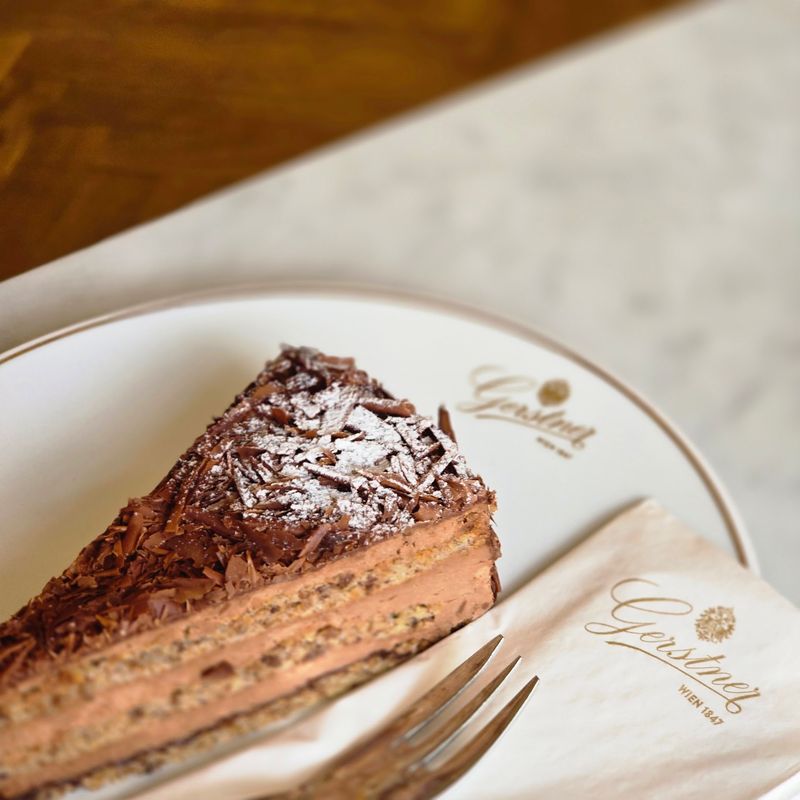
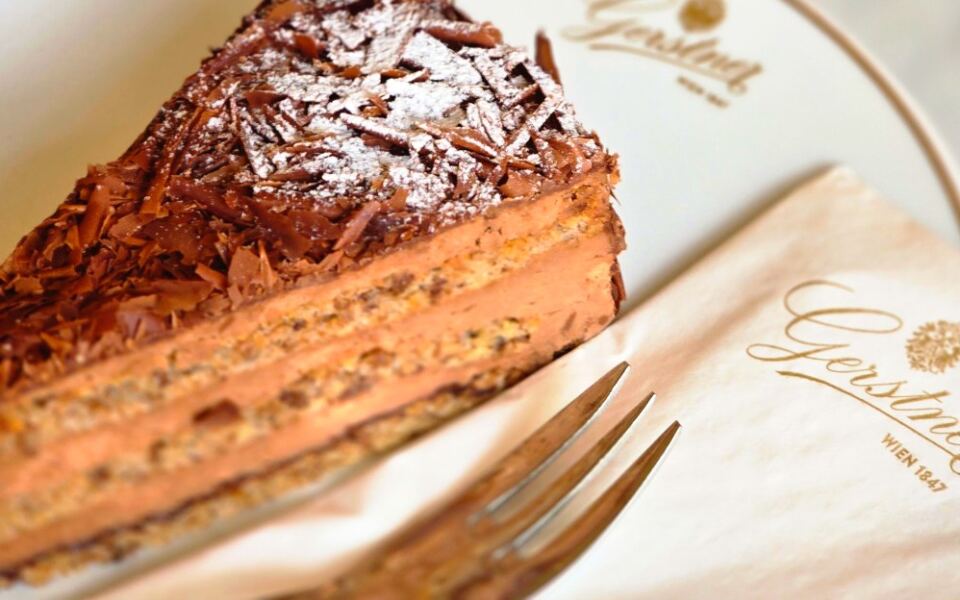
A chocolate spiderweb on white icing is the signature look of this Hungarian-born cake.
Esterházytorte is named after Prince Paul III Anton Esterházy, a Hungarian diplomat. It first appeared in Budapest in the 1800s and quickly spread to Vienna, which was then part of the same empire.
The cake has about five thin layers of nut meringue stacked with buttercream. Most bakers use hazelnuts or almonds, and the sides get pressed with toasted nuts.
Gerstner has been a confectioner since 1847 and earned the imperial court title in 1873. Its main location fills Palais Todesco, a Ringstrasse palace right across from the Vienna State Opera.
Each floor has a different purpose. The ground floor is a shop, the first floor is a café bar with opera views, and the top floor is a restaurant in former reception rooms with painted ceilings and gold details.
Reserve a table upstairs for the full experience. Then claim a window seat and watch concertgoers gather across the street.
Few desserts in town look this tidy on top.
9. Topfenstrudel at Café Diglas, Vienna, Austria
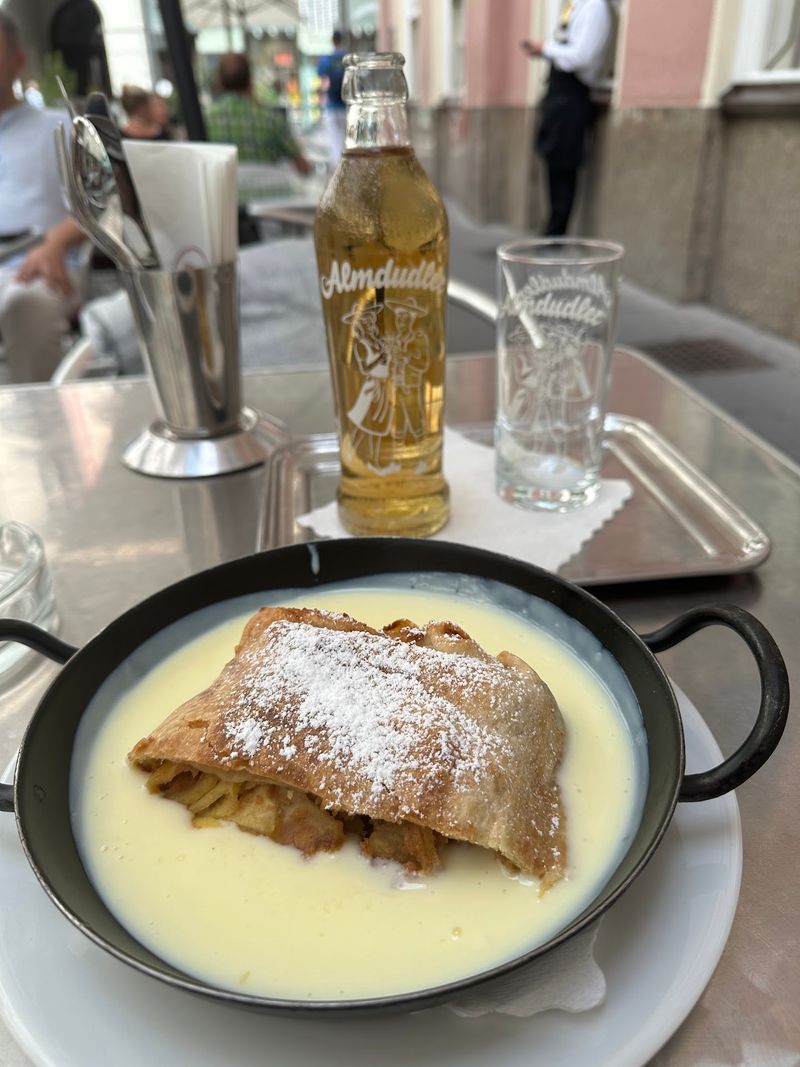
Apple gets the fame, but plenty of Viennese grandmothers will tell you the cheese version is better.
Topfenstrudel uses the same paper-thin dough as apple strudel. The filling is Topfen, a fresh Austrian curd cheese, mixed with eggs, sugar, vanilla, lemon zest, and sometimes raisins.
Many cafés serve it with warm vanilla sauce poured on top or on the side. Say yes to the sauce.
Café Diglas is a family business now in its sixth generation, with roots going back to 1875. The Wollzeile location has served guests since 1923 and sits a short walk from St. Stephen’s Cathedral.
Inside, you will find vaulted rooms, wood paneling, marble tables, and burgundy seats. Quirky touches stand out, including lampshades shaped like ballerina skirts and modern black and white photos.
Cakes and strudels are baked in-house using family recipes. Slices are generous, so sharing is a reasonable plan.
Visit in the evening if you can, since live piano music often plays. It turns a quick dessert stop into a relaxed night out.
10. Topfenpalatschinken at Café Landtmann, Vienna, Austria
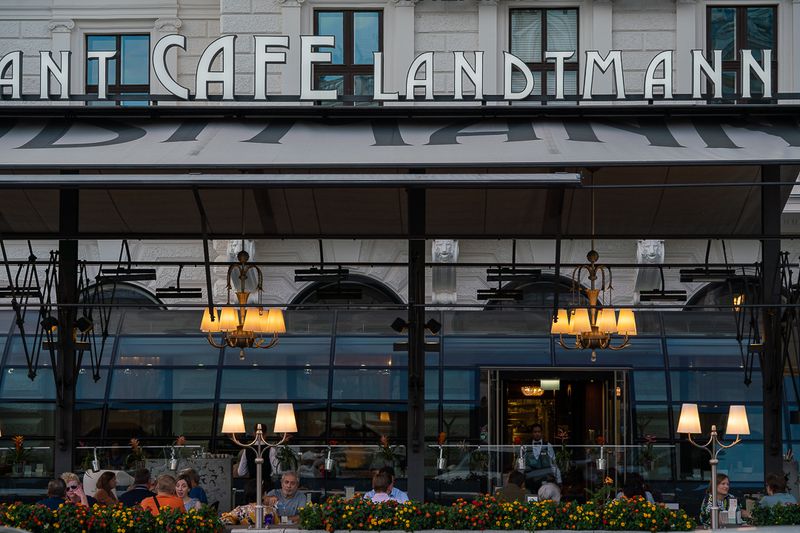
Sigmund Freud was a regular here, so you are in famous company before you even order.
Café Landtmann opened in 1873 on the Universitätsring, directly across from the Burgtheater. Franz Landtmann wanted it to be the most elegant café in Vienna.
Its interior dates to a 1929 redesign and is now protected as a historic landmark. Polished wood, mirrors, and cozy booth niches fill the main rooms.
The Querfeld family took over in 1976 and added a glass winter garden while keeping the classic style.
Topfenpalatschinken are thin pancakes rolled around sweet curd cheese, often with raisins and lemon zest. Some kitchens bake them in a dish with a light egg custard, which turns them into a warm, filling dessert.
Locals sometimes eat them as a sweet main course instead of lunch. Nobody will judge you for doing the same.
Waiters in black and white move quickly between tables. Politicians and journalists often meet here, since Parliament is close by.
Try a weekday afternoon for an easier time getting a table.
11. Marmorgugelhupf at Café Schwarzenberg, Vienna, Austria
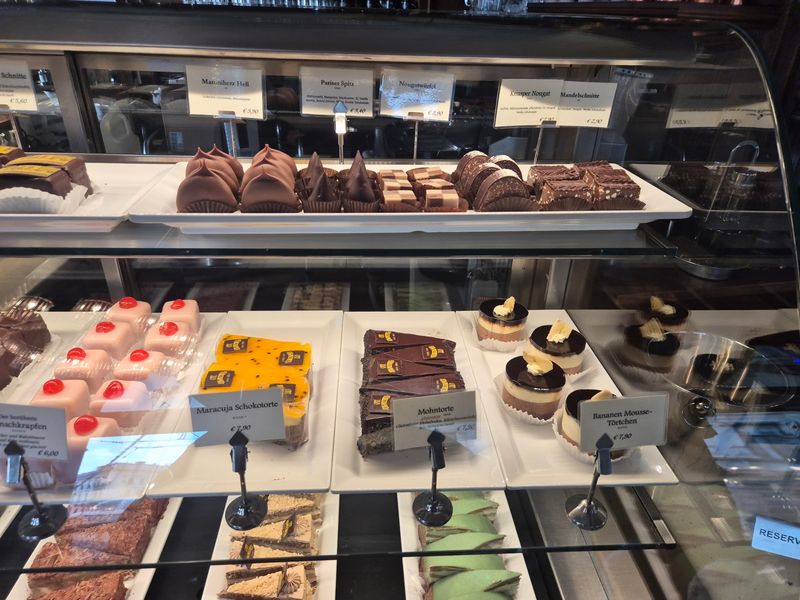
Emperor Franz Joseph reportedly liked Gugelhupf for breakfast, which is a strong argument for eating cake before noon.
Marmorgugelhupf is a tall ring cake baked in a fluted mold. Bakers swirl vanilla and chocolate batter together, so each slice shows a marbled pattern.
The name has old roots. Gugel may come from a word for hood, matching the shape, and hupf hints at the way the dough rises.
Austrian families bake it for birthdays, holidays, and Sunday coffee. A slice usually comes with a dusting of powdered sugar and little else.
Café Schwarzenberg opened in 1861 and is the oldest café on the Ringstrasse. Much of its original character remains, with wood paneling, chandeliers, marble walls, and brass tables.
Historically, business owners and bankers met here rather than artists. Architect Josef Hoffmann was a notable exception.
The café sits on Kärntner Ring near Schwarzenbergplatz. In warm months, grab an outdoor table and watch the trams roll past.
Some evenings feature live café music, so check the schedule before you go.
12. Traditional Homemade Torte at Vollpension, Vienna, Austria
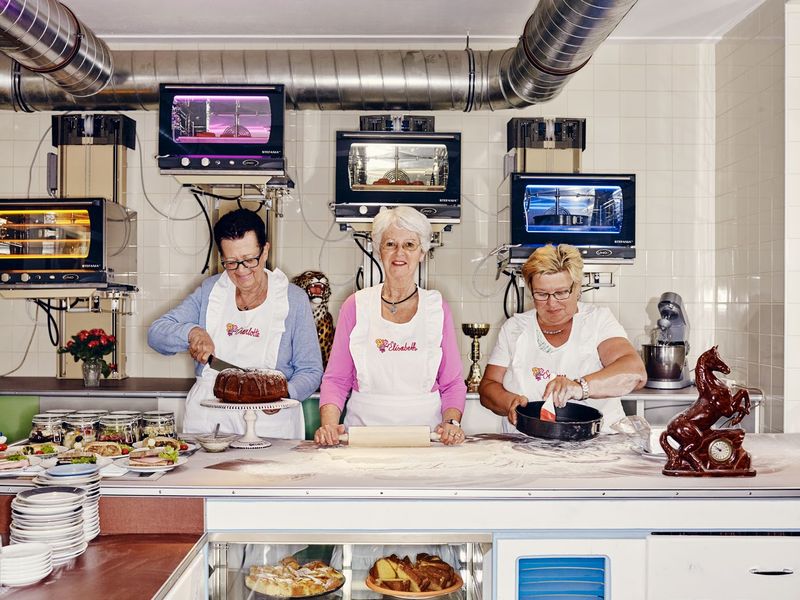
Grandma knows best, and one Viennese café built its entire business around that idea.
Vollpension started in 2012 as a social enterprise that hires older adults as bakers and hosts. The goal is simple, giving seniors extra income, company, and a reason to share their recipes.
The menu changes daily, depending on which Omas and Opas are working. You might find poppy seed cake, cheesecake, Linzer torte, or a seasonal fruit tart.
Decor matches the theme. Expect mismatched second-hand furniture, lace doilies, small vases, and framed photos that look borrowed from a family hallway.
An open kitchen lets guests watch the bakers at work. Many of them happily chat about where their recipes came from.
Pick your slice straight from the display case, and look for vegan options too.
The location near Naschmarkt is easy to combine with a market stroll. Weekends get busy with families and groups, so weekday mornings tend to be calmer.
Leaving without asking for a recipe tip would be a missed opportunity. It is the sweetest way to end this list.
Share this story