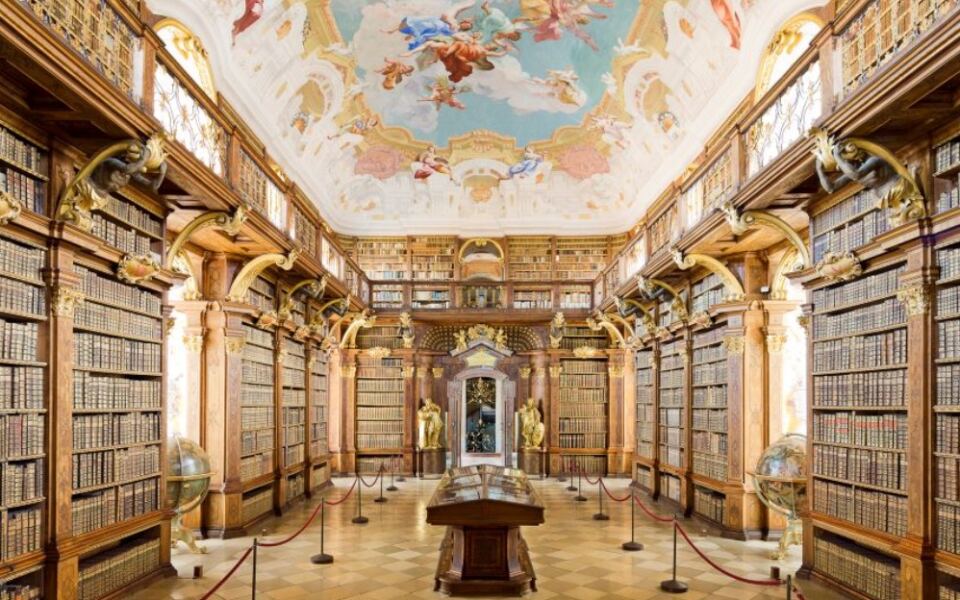
Some libraries in Europe were built to impress kings, emperors, and scholars alike. They have painted ceilings, gold trim, marble statues, and shelves that stretch higher than most houses.
Many still hold books that are hundreds of years old. Get ready to tour 15 reading rooms that look fit for a crown.
Admont Abbey Library, Austria
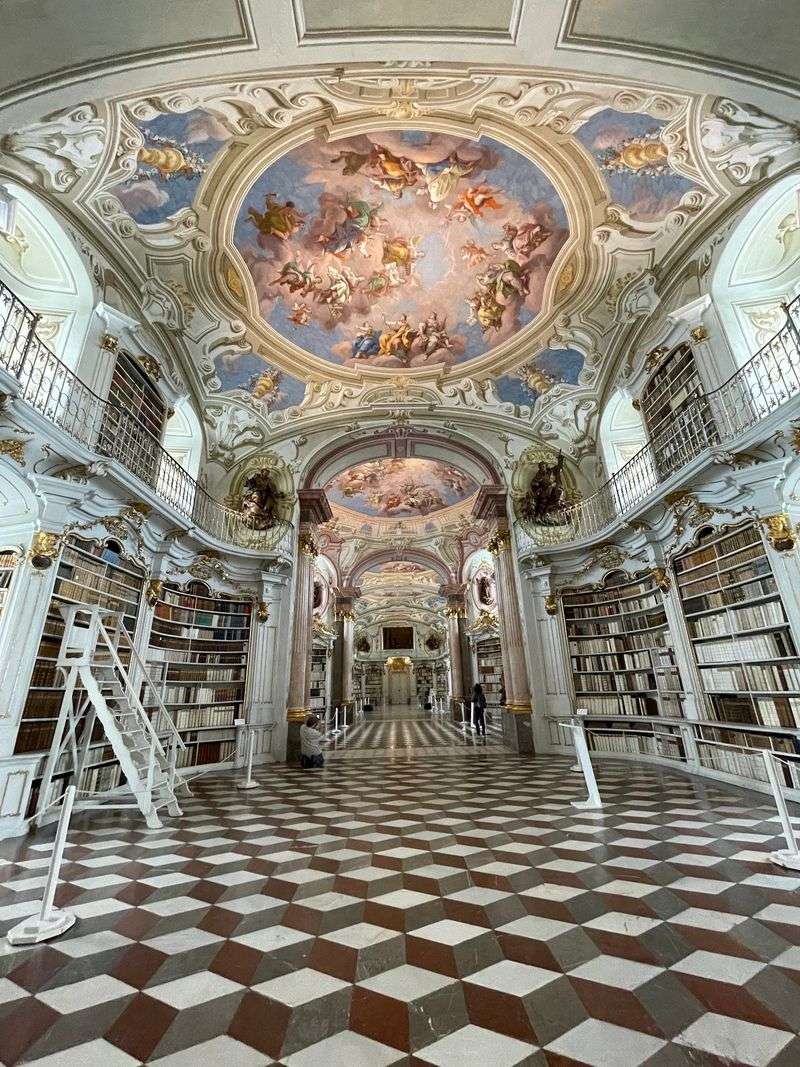
Picture a ballroom that decided to collect books. Admont Abbey holds the largest monastic library hall in the world, and it shows off its size with pride.
Finished in 1776, the late-Baroque hall stretches about 70 meters. Forty-eight windows pour light across white bookcases and gilded decoration, so the whole space glows instead of feeling gloomy.
Seven ceiling frescoes by Bartolomeo Altomonte look down on visitors with calm, painted authority.
About 60,000 volumes sit on display in the hall. The abbey owns roughly 200,000 works in total, which means plenty more are tucked away out of sight.
The builders treated the room as one big artwork. Architecture, painting, sculpture, and learning were planned together, so nothing feels random.
Even a quick visit leaves you with the sense that someone cared deeply about every corner.
Bring a camera, but also give your eyes a moment without a screen. The brightness and the gold details look best in person, especially when sunlight sweeps across the shelves.
Few libraries make a first impression this strong.
Austrian National Library State Hall, Vienna
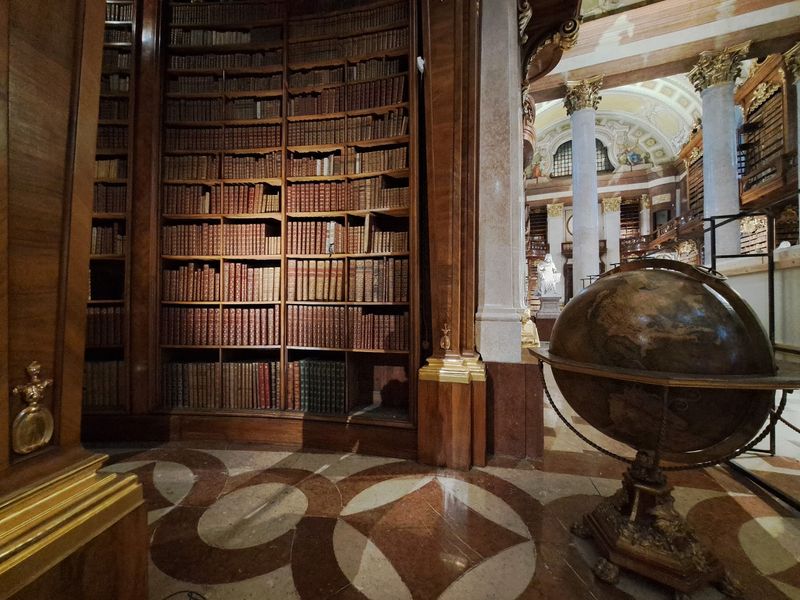
Look up first, because the dome steals the show. Rising almost 30 meters, the oval dome of Vienna’s State Hall carries a huge fresco by Daniel Gran that celebrates Emperor Charles VI.
Charles commissioned this former Court Library in the 18th century as part of the Hofburg complex. That imperial pedigree explains the marble statues, dark walnut bookcases, and glittering gilded touches.
Enormous Venetian globes stand in the hall like silent guests.
Around 200,000 historic books fill the shelves. Among them are about 15,000 volumes that once belonged to Prince Eugene of Savoy, a famous military leader and book lover.
Vienna’s tourism authority calls it Europe’s largest Baroque library. Standing inside, that claim is easy to believe.
Plan your visit for a quiet moment if you can. The hall rewards slow walking, and every few steps a new angle appears.
You will probably end up craning your neck more than you expected, so wear comfortable shoes and take your time.
Biblioteca Joanina, Coimbra
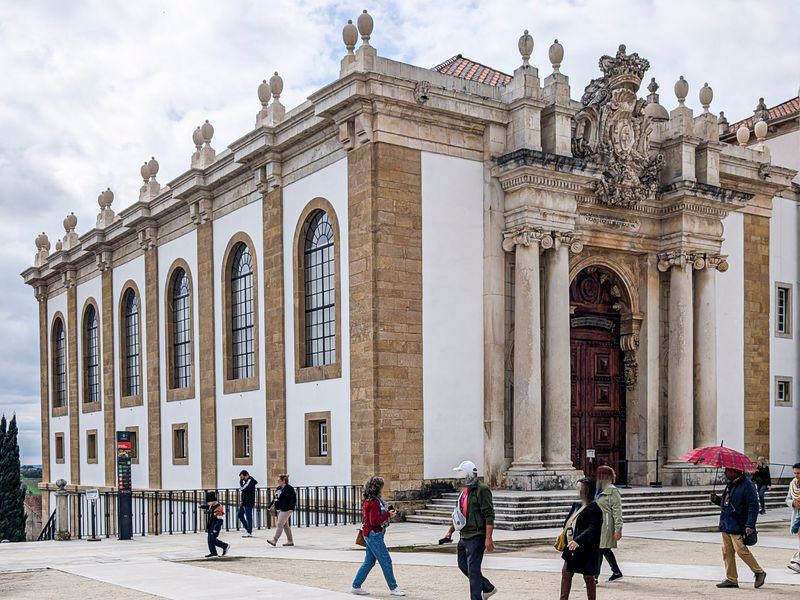
Gold leaf covers nearly everything here, and nobody is apologizing. Biblioteca Joanina was built between 1717 and 1728 under King João V, and it feels like a royal chamber that happens to hold books.
Three connected rooms are lined with shelves painted in black, green, and red. Gilded carvings swirl across them, catching the light at every turn.
At the far end, a portrait of the king watches over the room, while the royal coat of arms sits above the entrance.
The wider collection includes more than 300,000 volumes printed before 1800. That is a lot of old paper to keep safe.
Visit Portugal considers it one of Europe’s richest Baroque libraries. After one look at the glowing woodwork, you will likely agree.
The library sits inside the historic University of Coimbra, so you can pair it with a stroll around the old campus. Book your ticket ahead, since entry is often limited to protect the interior.
Library of the National Palace of Mafra, Portugal
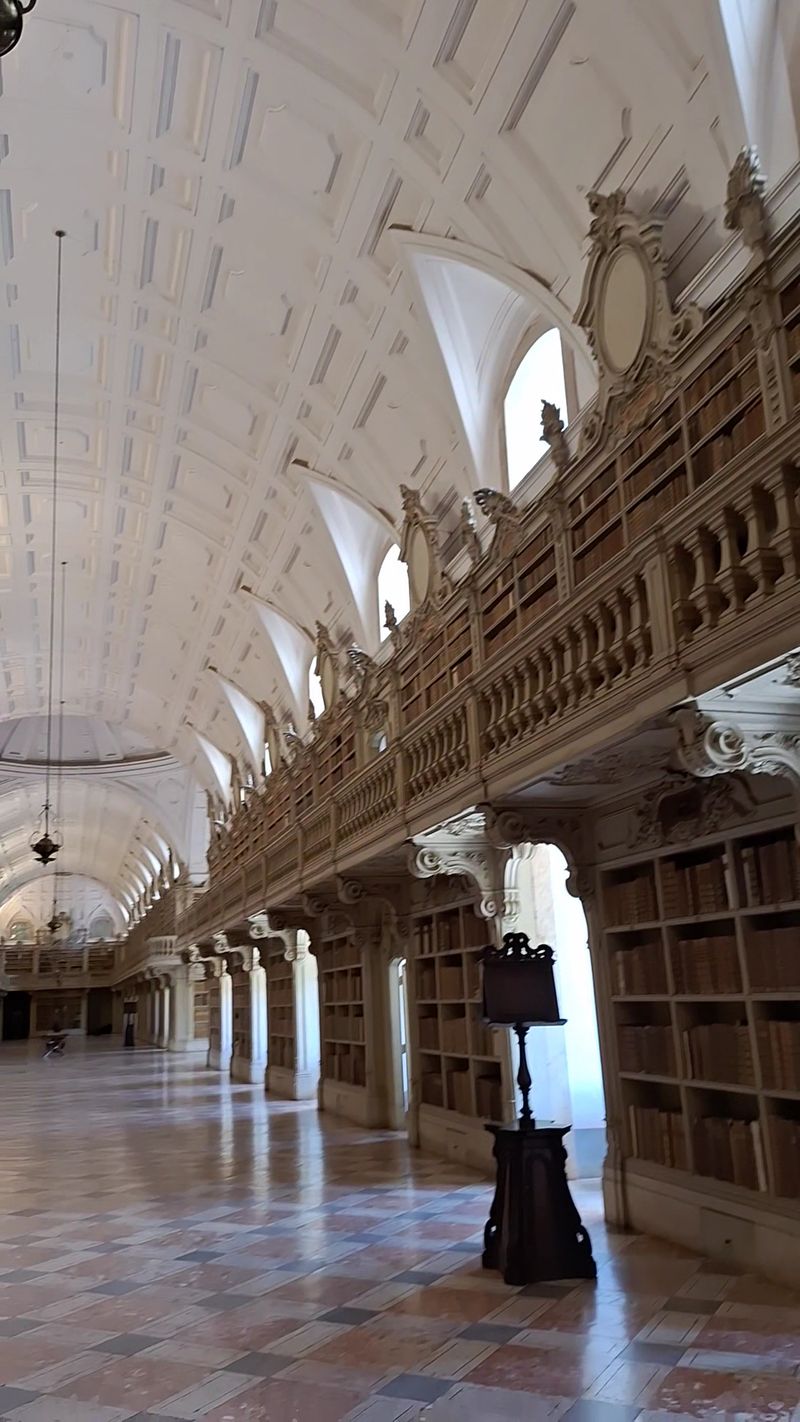
Walk in and the room seems to keep going forever. At roughly 83 meters long, the Mafra library stretches down the palace like a very scholarly runway.
The library belongs to a huge complex that also holds a royal palace, a basilica, and a monastery. With neighbors like that, a grand library was only natural.
João V ordered it built, and the Rococo hall shows off marble floors, elegant arches, and endless rows of bookcases.
Tens of thousands of volumes live here, including rare early printed books and old maps. Portugal’s tourism authority calls it the country’s most important royal-monastic library from the 18th century.
Money from Brazil helped pay for the palace. Gold and riches from across the ocean ended up turning into stone, marble, and paper.
Stand at one end and look down the hall to see the perspective at its best. If you visit the palace, give yourself enough time to see the whole complex, because the library is only one highlight.
Klementinum Baroque Library, Prague
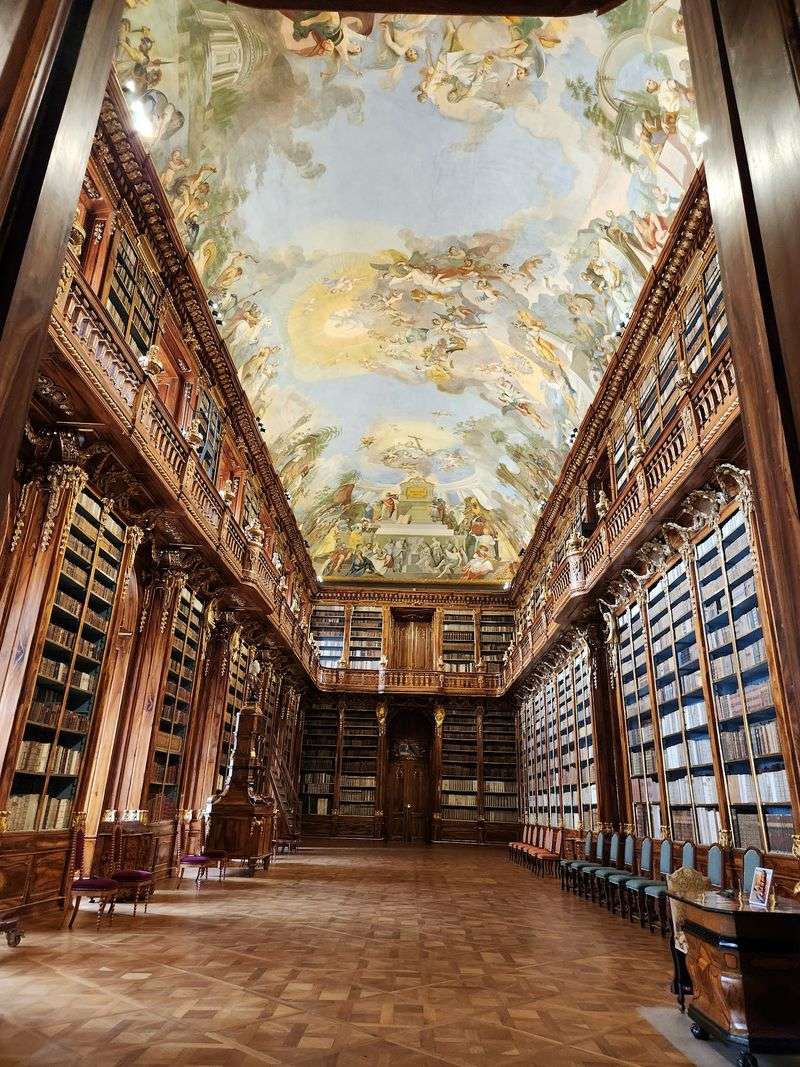
Prague hides a showstopper behind a college wall. The Klementinum began as a Jesuit college in the 16th century, and its Baroque library was completed in 1722.
Jan Hiebl painted the ceiling with illusionistic frescoes about knowledge, science, and the Temple of Wisdom. The painted scenes seem to pull the ceiling higher than it really is.
Below them, dark wooden bookcases hold about 27,000 historic volumes, and antique globes add a dash of old-world charm.
The complex grew into a major center of scholarship and science. You can feel that serious past in the quiet, polished atmosphere.
Here is a useful tip. On the current guided route, visitors view the library from the entrance, so you cannot wander freely among the shelves.
That keeps the room safe and the books in good shape.
Join a guided tour and listen for stories about the Jesuits and the scholars who worked here. A good spot at the doorway means better photos, so arrive a little early.
Strahov Library, Prague
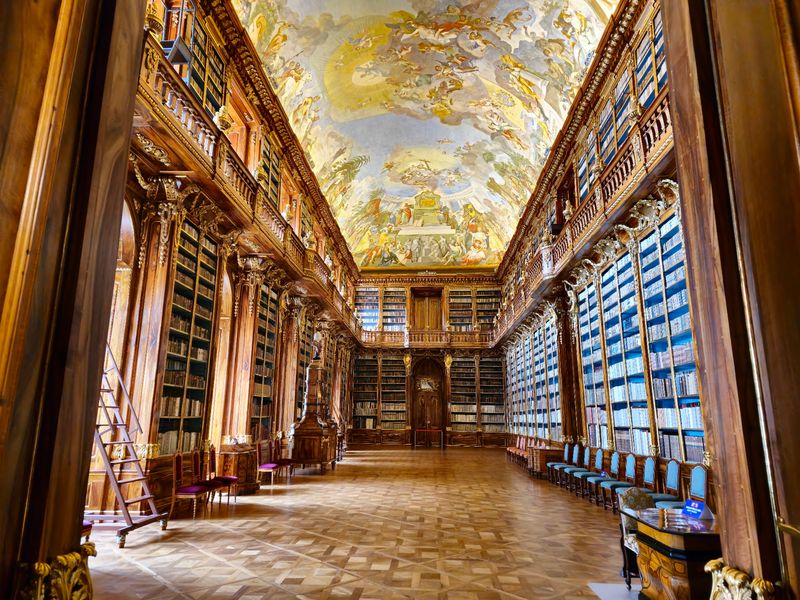
Two halls, two moods, one monastery. The Strahov Library holds around 200,000 volumes spread across several historic spaces, just a short walk from the Klementinum.
The Theological Hall dates from 1671 to 1674 and feels dignified and rich. The Philosophical Hall came later, in the late 18th century, and it rises over two stories of towering shelves.
Painted ceilings, including frescoes by Siard Nosecky and Anton Maulbertsch, add color overhead.
In the Philosophical Hall, the giant rows of books and grand proportions make it look like a gallery for a prince. It is the sort of room where you whisper without being told to.
Regular visitors admire the halls from the entrances instead of walking between the shelves. This protects the old books and floors from thousands of passing feet.
Go early in the day if you want fewer crowds at the doorway. Take a moment to compare the two halls, because the differences in style tell a neat story about how tastes changed over a century.
Wiblingen Monastery Library, Ulm
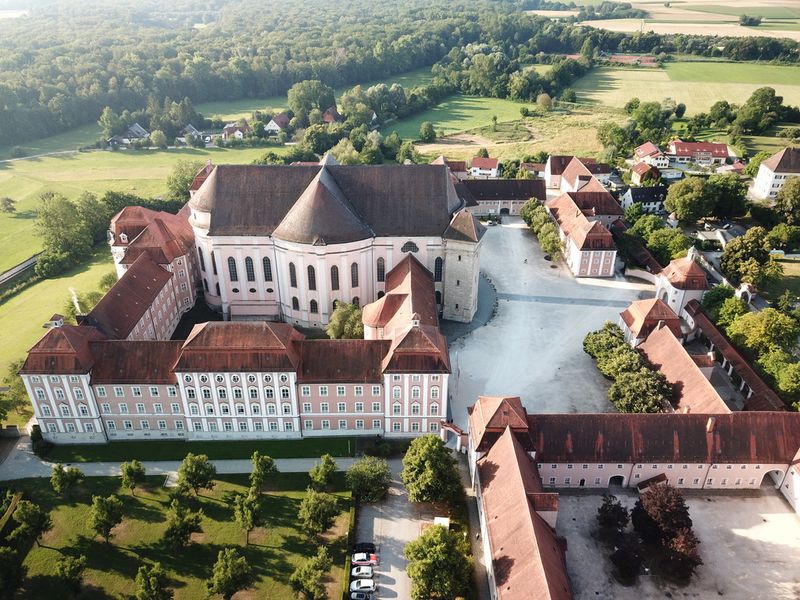
Soft pinks, creamy whites, and playful curves make this room feel almost like a party. Wiblingen’s library in southern Germany was finished in 1744 and is one of the finest Rococo interiors anywhere.
A sweeping gallery circles the upper level, held up by delicate columns. Sculptures, swirling stucco, and huge ceiling paintings fill the space between.
Natural light brightens every detail, so the room feels airy instead of heavy.
It seems more like a festival hall for a royal court than part of a Benedictine monastery. That surprise is a big part of its charm.
The official heritage site calls it one of the best examples of Rococo architecture. Ulm tourism describes the interior as a unified artwork that blends architecture, painting, and sculpture.
If you are visiting Ulm, make a short trip to Wiblingen. Look at the details on the gallery railings and the faces carved into the sculptures.
Small touches like these reward people who slow down.
Melk Abbey Library, Austria
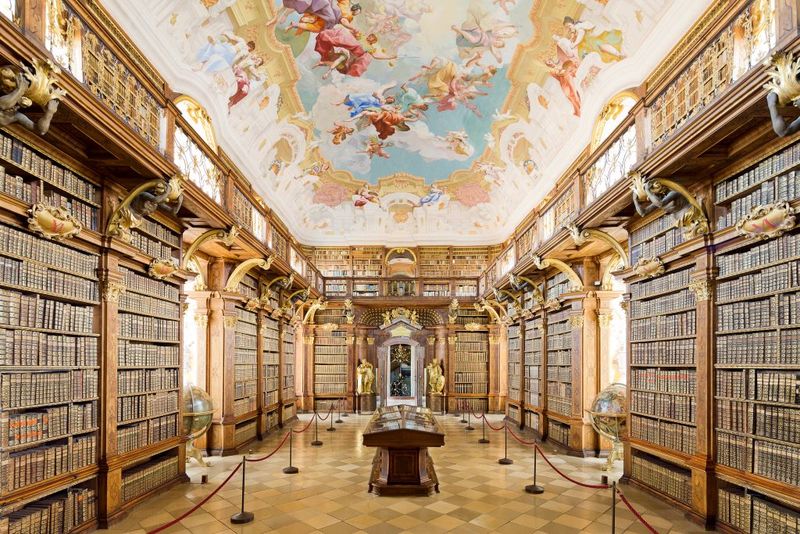
High above the Danube, Melk Abbey shines in yellow and gold, and its library is a quiet treasure inside. Tall wooden bookcases line the ceremonial hall under a ceiling fresco by Paul Troger.
The abbey holds around 100,000 volumes and more than 1,800 manuscripts. Some of them include fragments linked to the Nibelungenlied tradition, a legendary medieval tale of heroes and dragons.
The library is part of the grand 18th-century rebuilding of the abbey. Monks turned the monastery into one of Austria’s most striking Baroque landmarks, and every room helps tell that story.
Austria’s national tourism authority lists the library among the country’s most impressive historic collections. Its ceremonial feel is part of the appeal.
Since the abbey sits on a hill, plan for some walking and good views. Pair your library visit with the abbey church and gardens for a full day.
A river cruise nearby makes a nice bonus if the weather is kind.
St. Florian Monastery Library, Austria
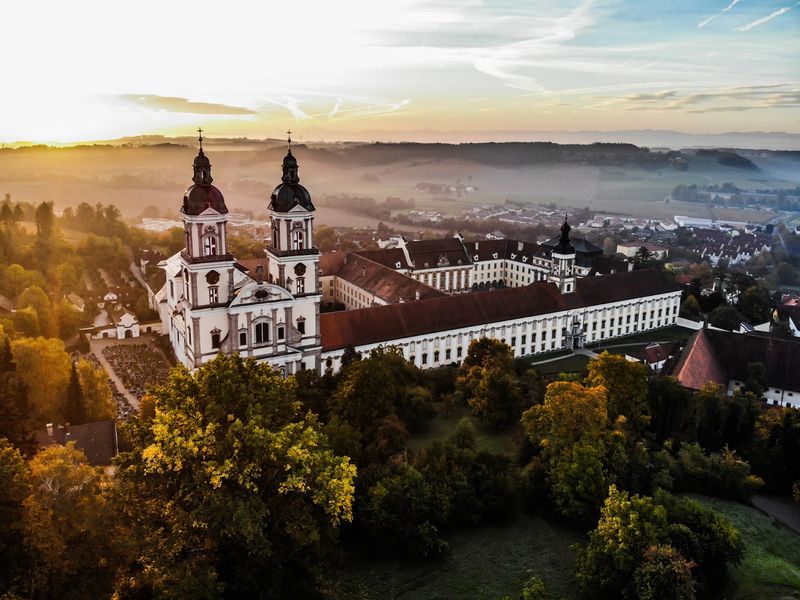
Imagine an emperor’s private study, only bigger. That is the feeling inside St. Florian, even though the library belongs to an Augustinian monastery.
Monumental shelves climb toward painted ceilings, with grand architectural touches all around. The collection includes about 800 manuscripts and roughly 1,000 incunabula, which are books printed in the earliest years of printing.
The famous Giant Bible, created around 1140, is one of its prize pieces.
Austria’s tourism authority also notes the monastery owns one of the country’s important collections of Arabic literature. That adds a surprising international twist to the story.
Scholarly treasures and dramatic Baroque style come together here in one very imposing room. It ranks among the most impressive interiors in Upper Austria.
Still, St. Florian is less famous than Admont or Vienna, which can be good news for you. Fewer crowds often mean a calmer visit.
Check opening times and guided tour options before you go, since access to historic libraries can change.
Library of El Escorial, Spain
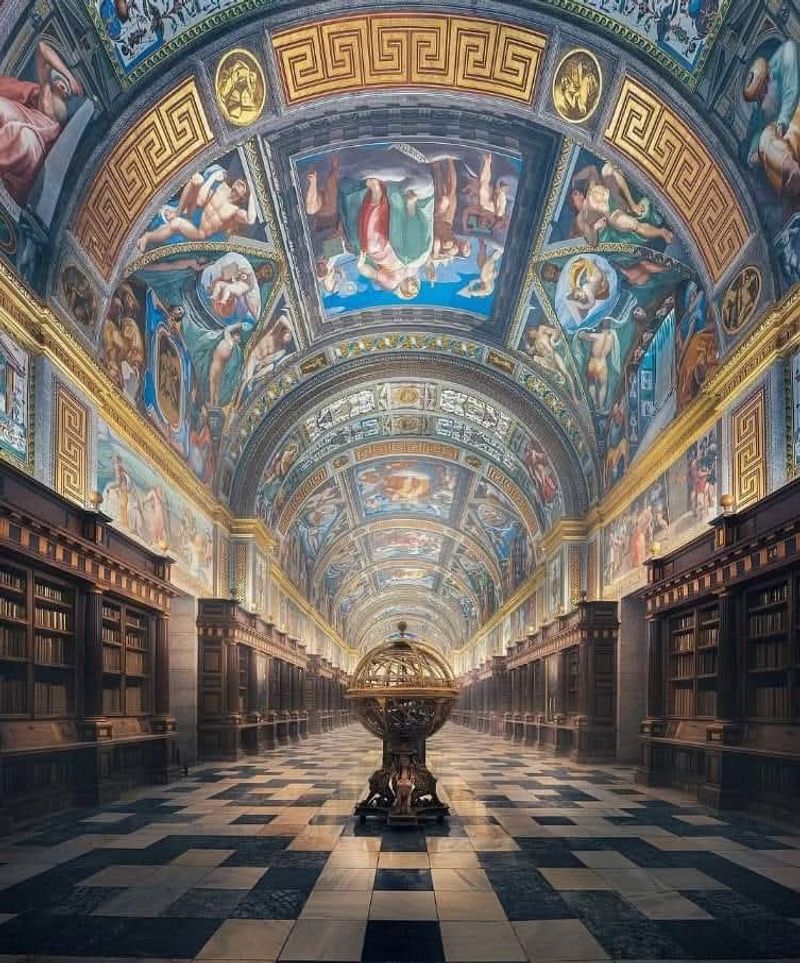
Few kings planned a building as ambitiously as Philip II. His giant royal monastery at El Escorial brought together monarchy, religion, and learning, and the library speaks for all three.
The complex sits outside Madrid and is a UNESCO World Heritage site. Inside the library, elaborate frescoes arch overhead while long bookcases run down the hall.
Spain’s tourism authority says the collection holds close to 45,000 documents, mostly from the 15th and 16th centuries.
The building also served as a royal residence, a monastery, and a dynastic pantheon. Because of this, entering the library feels like stepping into another ceremonial room of the Spanish court.
It does not feel like a separate academic institution at all. Everything about the place carries royal weight.
If you visit, take the train from Madrid for an easy day trip. Allow time to explore the whole complex, since the library is only one stop among many remarkable rooms and courtyards.
Biblioteca Casanatense, Rome
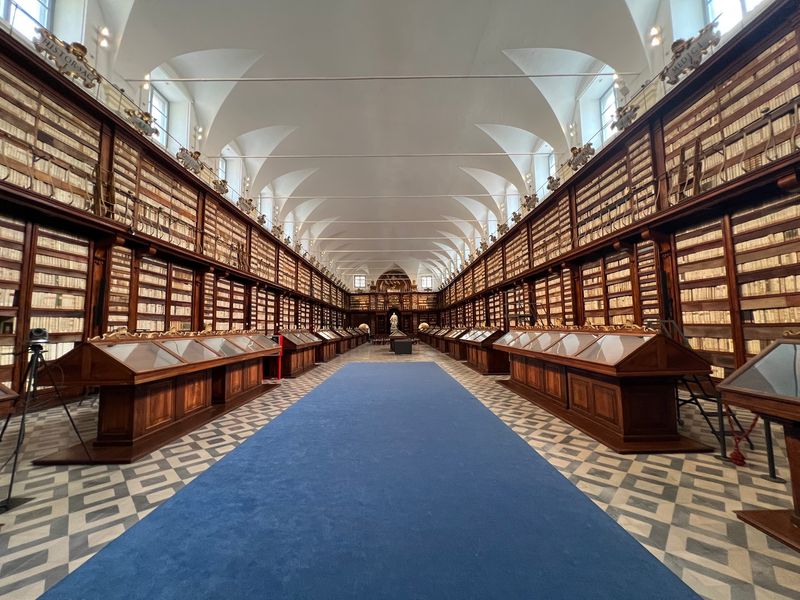
Rome has churches and ruins on every corner, yet this library still manages to turn heads. The Biblioteca Casanatense opened in 1701, built from the collection of Cardinal Girolamo Casanate.
It became an important center of learning for the Dominican order. The Monumental Hall was designed to show knowledge on a theatrical scale, with towering bookcases around a huge central space.
Today the library holds about 400,000 volumes. That includes more than 120,000 antique printed works and over 6,000 manuscripts.
Around 60,000 volumes stay in the historic hall itself.
The original collection was deliberately wide-ranging. Baroque thinkers loved the idea of a library that could hold every field of knowledge, from science to theology.
Visiting is a nice break from busier Roman sights. Check the opening hours before you go, because small historic libraries often keep limited schedules.
Bring curiosity and enjoy a room that was made to make learning feel dramatic.
Long Room at Trinity College Dublin, Ireland
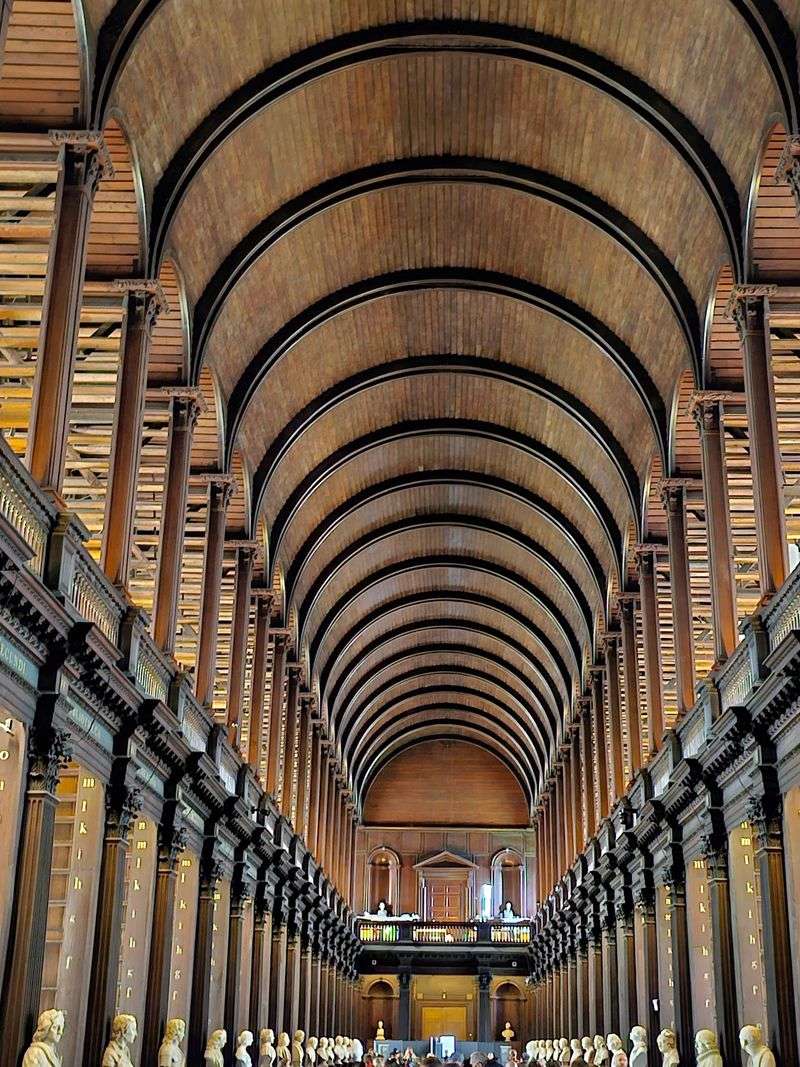
Sixty-five meters is a long walk for a book. The Long Room at Trinity College Dublin is among Europe’s most recognizable library interiors, and photos barely do it justice.
The Old Library was built between 1712 and 1732. The barrel-vaulted ceiling and upper galleries came later, in the 19th century, when the collection grew too big for the original space.
Marble busts line the hall beneath soaring dark-wood bookcases, giving the room a stately and ceremonial air. Traditionally, about 200,000 of Trinity’s oldest books filled these shelves.
A major conservation project has temporarily removed those volumes for cleaning and preservation. The Long Room itself still stands as one of the university’s architectural highlights.
Book tickets online to skip long lines, since this is one of Dublin’s most popular attractions. Go early if you want a quieter look.
Check current exhibition details before you visit so you know what to expect during the conservation work.
Duke Humfrey’s Library, Oxford
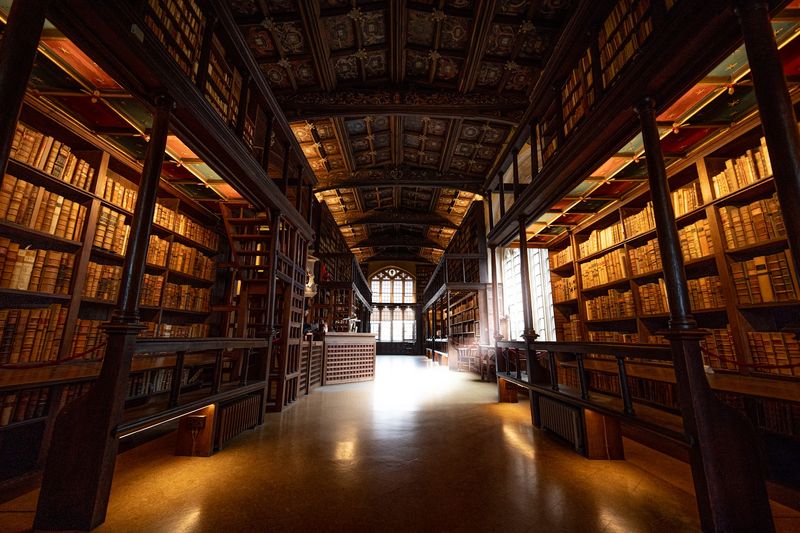
Chains on books sound like a prank, but they were serious business here. Books in Duke Humfrey’s Library were once chained to the shelves to keep them from wandering off.
This is the oldest reading room in Oxford’s Bodleian Library, part of one of Europe’s oldest library institutions. It is smaller and darker than the big Baroque halls, yet its medieval mood has its own kind of magnificence.
Timber bookcases line the room. Painted ceiling panels carry university heraldry, and a special reading booth was created for King Charles I.
The earlier library was built in the 15th century to house books donated by Humfrey, Duke of Gloucester. The Bodleian officially opened to scholars in 1602.
Visitors can often see the room on guided tours, and the wooden ceiling is a highlight. Look closely at the carved details and the narrow stalls.
They show how readers once worked in candlelit quiet, far from modern comforts.
Oval Room, Bibliothèque Nationale de France, Paris
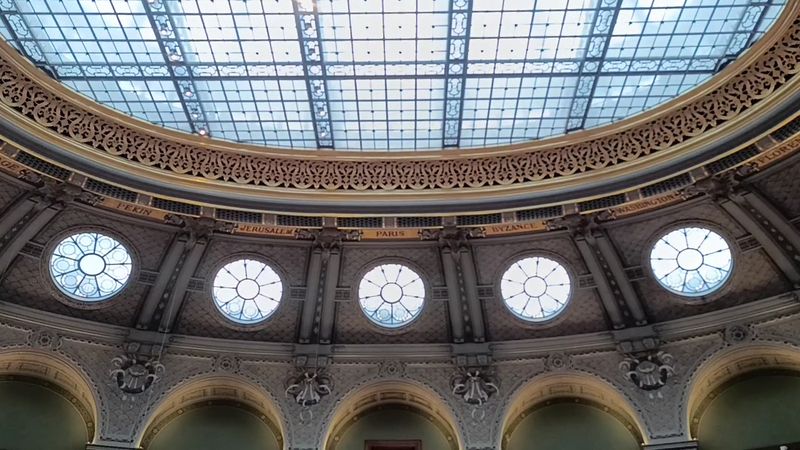
Paris loves a grand entrance, and this reading room delivers one. The Richelieu library complex began inside Cardinal Mazarin’s former palace, so a royal feel was baked in from the start.
Construction began in the late 19th century, and the huge reading room was finished in the 20th. It measures more than 43 meters long and nearly 33 meters wide, under an 18-meter ceiling.
A giant skylight pours light over gilded acanthus decoration, mosaics, cast-iron columns, and several levels of galleries. It is one of Europe’s most dramatic public reading spaces.
After a major restoration, the Oval Room reopened in 2022. Anyone can now walk in for free, and about 20,000 books are available for browsing.
That open-door policy makes it easy to enjoy. Bring a notebook or a favorite novel and settle in at a table.
It is one of the few places where you can read among palace-level splendor without buying a ticket.
Royal Library, Turin, Italy
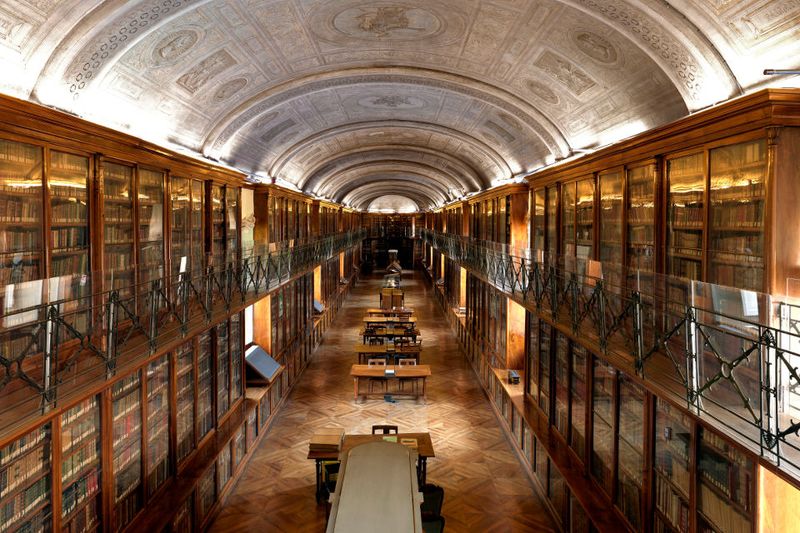
Some libraries look like palaces. This one actually is part of one.
Turin’s Royal Library belongs to the Royal Museums, beside the former home of the House of Savoy.
The complex includes the Royal Palace, the Armoury, gardens, and the Chapel of the Holy Shroud. The palace grew into a major ceremonial center for the Savoy dynasty, whose rulers filled the rooms with art, tapestries, and royal collections.
The library was set up in that same courtly world. Its architecture and setting blend smoothly with the surrounding royal residence, so nothing feels added on.
That means you can wander from palace apartments to collections of books without ever leaving one of Italy’s most important dynastic complexes. A single ticket opens a lot of history.
Plan a full day in Turin’s Royal Museums and check which areas are open before you arrive. Wear comfortable shoes, because the rooms are many and the corridors are long.
The library is a lovely reminder that kings loved their books too.
Share this story