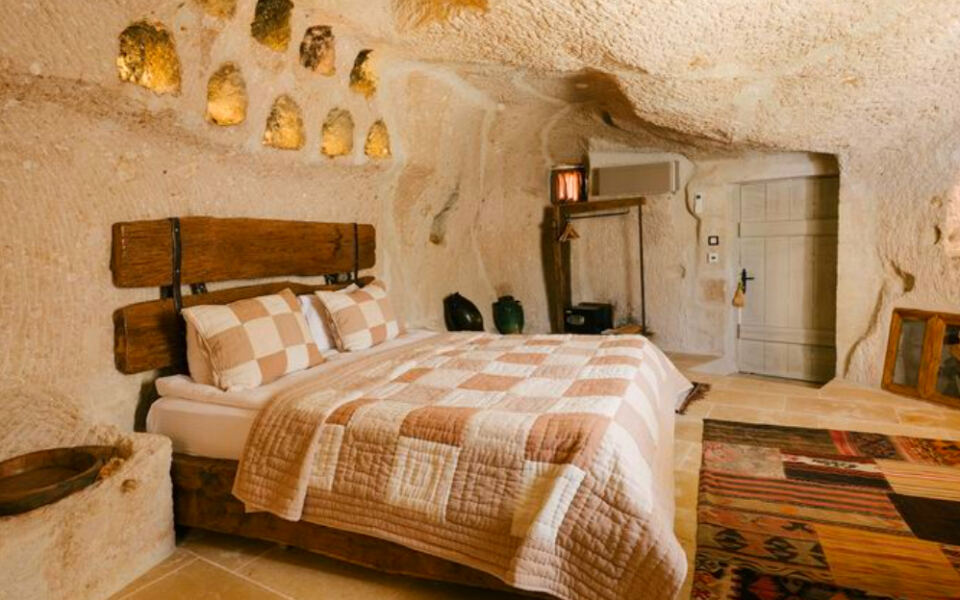
Most hotels try to give you a great view of the landscape. These places go a step further by putting you directly inside it.
Bedrooms disappear into volcanic cliffs, centuries-old stone dwellings become suites, and underground rooms make the surrounding rock part of the architecture. From Cappadocia’s sculpted valleys to the ancient Sassi of Matera and the opal country of the Australian Outback, cave hotels offer one of travel’s most unusual overnight experiences.
Sleeping inside a hillside sounds like something out of a fantasy novel, but these 16 properties are real, operating, and ready to book. Some are carved from rock formed millions of years ago.
Others are restored ancient dwellings where people actually lived for centuries. All of them turn the surrounding landscape into something you do not just look at but actually sleep inside.
If you have ever wanted your hotel room to double as a geology lesson, keep reading.
1. Sextantio Le Grotte Della Civita, Matera, Basilicata, Italy
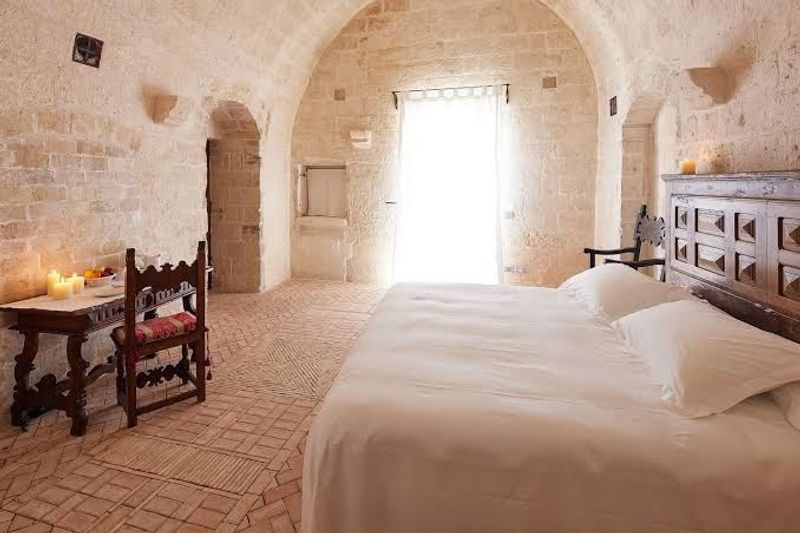
Eighteen caves in Matera’s ancient Sassi were carefully restored to create Sextantio Le Grotte Della Civita, with some accommodations stretching to around 160 square meters beneath dramatic rock vaults. Even the reception occupies a cave associated with a former Benedictine monastic complex, immediately establishing that this is far removed from an ordinary luxury hotel.
Rooms preserve rough stone walls and irregular shapes while adding handmade furniture, stone basins, underfloor heating, and other comforts that make the ancient spaces surprisingly inviting. Some of the largest suites include working fireplaces.
What makes the property especially memorable is how little the restoration tries to disguise its past. The caves remain the main architectural feature, allowing guests to experience Matera’s extraordinary history from inside the rock itself.
2. Perivolas Hotel, Oia, Santorini, Greece
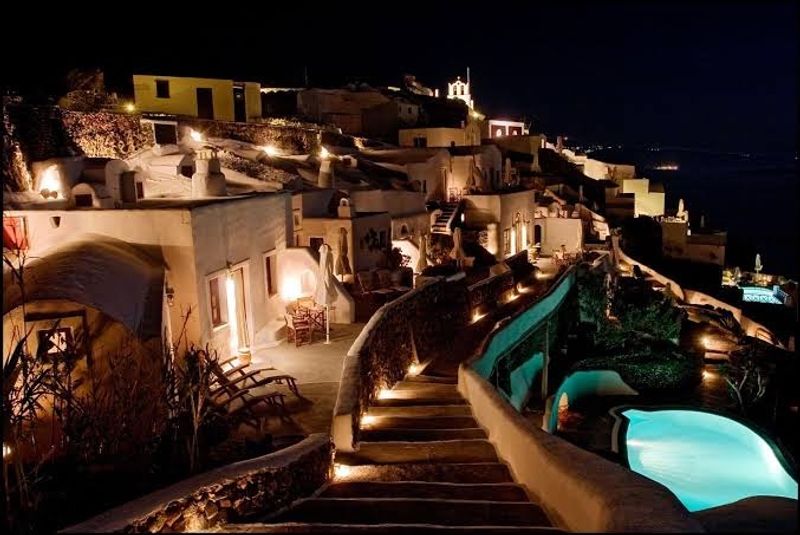
Perivolas began with a collection of roughly 300-year-old cave dwellings once used by local fishermen and farmers on the cliffs outside Oia. The Psychas family gradually restored the structures into an intimate luxury hotel overlooking Santorini’s famous caldera, preserving the flowing shapes that make the island’s traditional architecture so distinctive.
Its suites feature hand-shaped alcoves, vaulted ceilings, whitewashed walls, and built-in furnishings that follow the curves of the original spaces. Several higher-category suites add private pools overlooking the Aegean.
The setting is what really separates Perivolas from a conventional resort. Rooms seem to disappear into the hillside, while terraces open suddenly toward the sea, making the volcanic landscape feel like part of the architecture rather than scenery viewed through a window.
3. Kayakapi Premium Caves Cappadocia, Ürgüp, Nevşehir, Türkiye
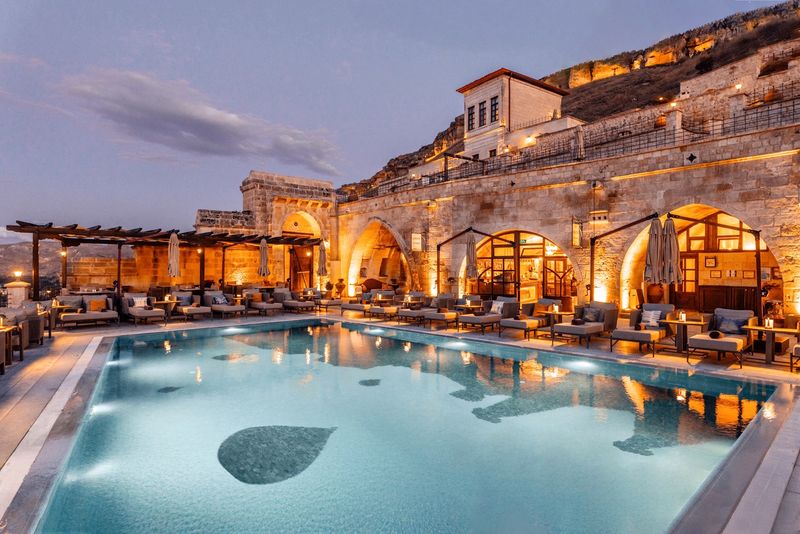
Kayakapi feels less like a single cave hotel and more like an abandoned hillside neighborhood brought carefully back to life. The restored historical settlement rises above Ürgüp and incorporates cave houses and other structures connected to the area’s long religious and residential history.
Guest accommodations follow the contours of the rock, combining exposed stone with wooden furniture, patterned textiles, underfloor heating, and modern bathrooms. Some of the larger suites include fireplaces, private terraces, or stone tubs, while views stretch across Ürgüp and the surrounding Cappadocian landscape.
The pleasure here comes partly from exploring the property itself. Paths and stairways weave between restored buildings instead of leading through standardized hotel corridors, giving guests a sense of staying within an old Cappadocian community rather than simply visiting one.
4. Aquatio Cave Luxury Hotel & Spa, Matera, Basilicata, Italy
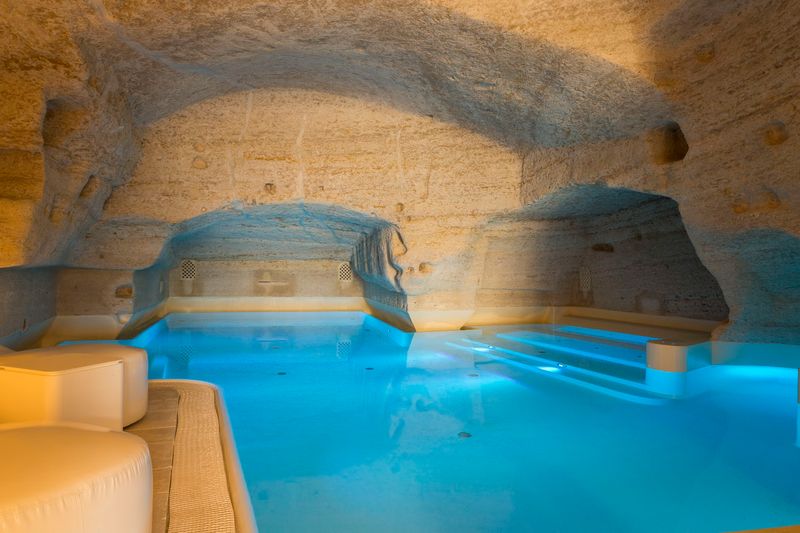
Aquatio makes particularly dramatic use of Matera’s rock underground. Its atmospheric spa occupies excavated spaces beneath the Sasso Caveoso district, with a swimming pool surrounded by pale stone walls that make the wellness area feel like a natural extension of the ancient city.
The hotel has 35 rooms and suites, but not every accommodation offers exactly the same cave experience. Some rooms are excavated directly into the rock, while others occupy historic masonry structures, so travelers determined to sleep within a true cave should pay attention to the room category when reserving.
Throughout the property, contemporary furnishings contrast with rough stone surfaces and centuries-old spaces. That balance allows Aquatio to feel unmistakably connected to Matera without sacrificing the comforts expected from a modern luxury hotel and spa.
5. Sultan Cave Suites, Göreme, Nevşehir, Türkiye
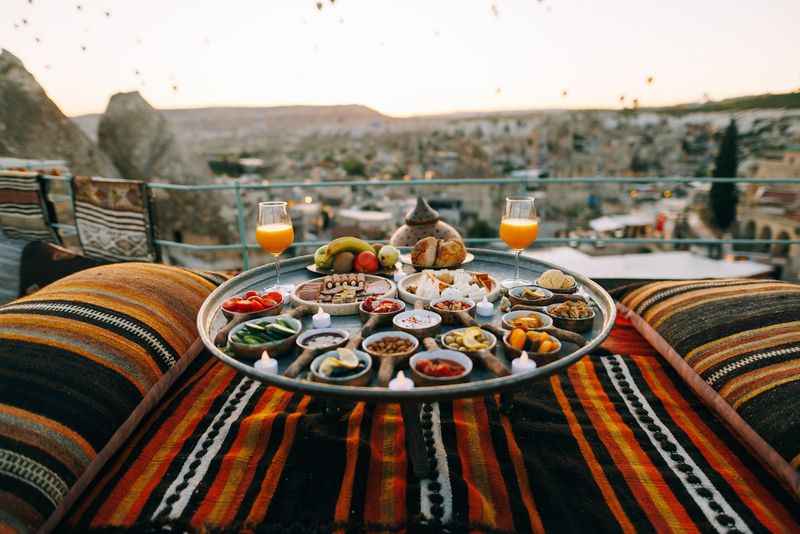
Perched on Aydinli Hill above Göreme, Sultan Cave Suites is probably best known for its rooftop terrace, which has become one of Cappadocia’s most photographed sunrise spots. Access is now restricted to hotel guests only.
The terrace is decorated with traditional Turkish rugs and cushions, and on clear mornings, hot-air balloons rise above the valley in every direction. Cave rooms below follow the ancient rock formations that surround the town.
6. Desert Cave Hotel, Coober Pedy, South Australia, Australia
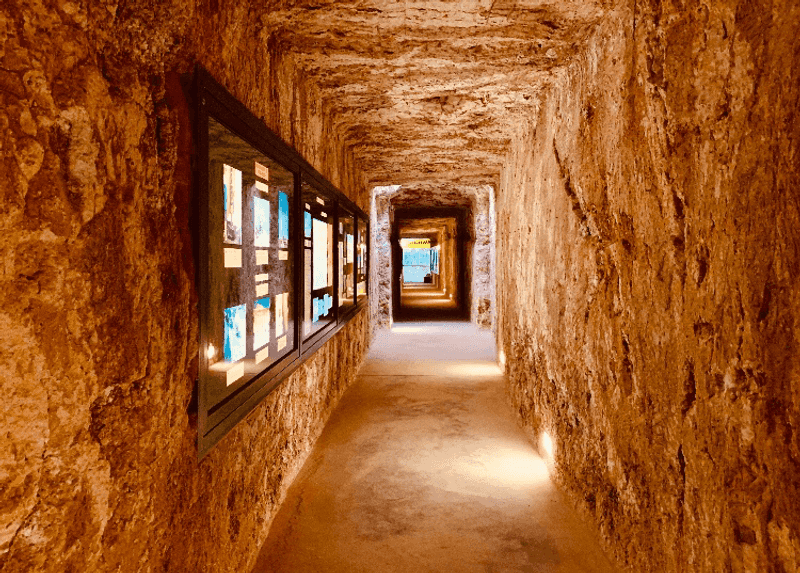
Recognized as the world’s only international underground hotel, Desert Cave opened in 1988 in Coober Pedy, an opal-mining town where extreme heat pushed many residents to build their homes below the surface.
Underground rooms come with TVs, refrigerators, and modern conveniences alongside naturally insulated sandstone walls. The hotel also features underground shops and an opal display area, making the experience feel genuinely connected to the town’s unique culture.
7. Museum Hotel, Uçhisar, Nevşehir, Türkiye
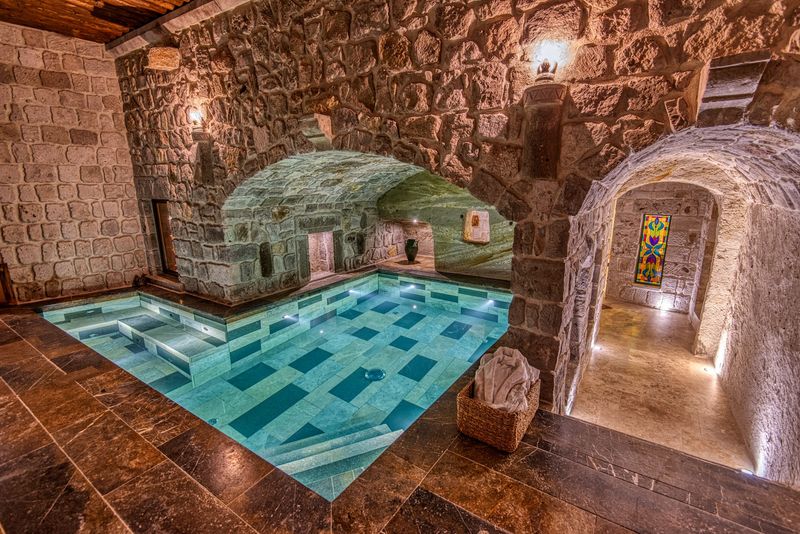
A Relais and Chateaux property that doubles as an actual museum, this Uçhisar landmark displays hundreds of Hittite, Roman, Seljuk, and Ottoman artifacts throughout its cave tunnels and rooms.
Four years of excavations transformed ancient volcanic rock into 34 distinct accommodations, some with private pools or natural waterfalls flowing into the bathroom. Hot-air balloons drift past at sunrise, visible from terraces built directly into the hillside.
8. Yunak Evleri, Ürgüp, Nevşehir, Türkiye
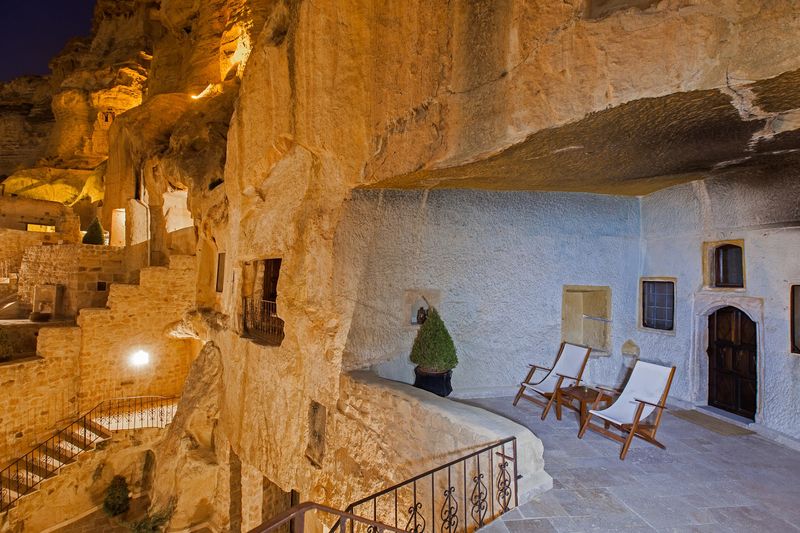
Six cave houses and 30 rooms carved into the cliff face make up Yunak Evleri, and some of those dwellings date back to the 5th and 6th centuries. That kind of age is not something most hotels can put on their brochure.
Narrow passages and terraces follow Cappadocia’s natural contours rather than imposing a grid on them. Each room is individually decorated, mixing traditional Turkish design with modern amenities without erasing the historical character.
9. Sant’Angelo Luxury Resort, Matera, Basilicata, Italy
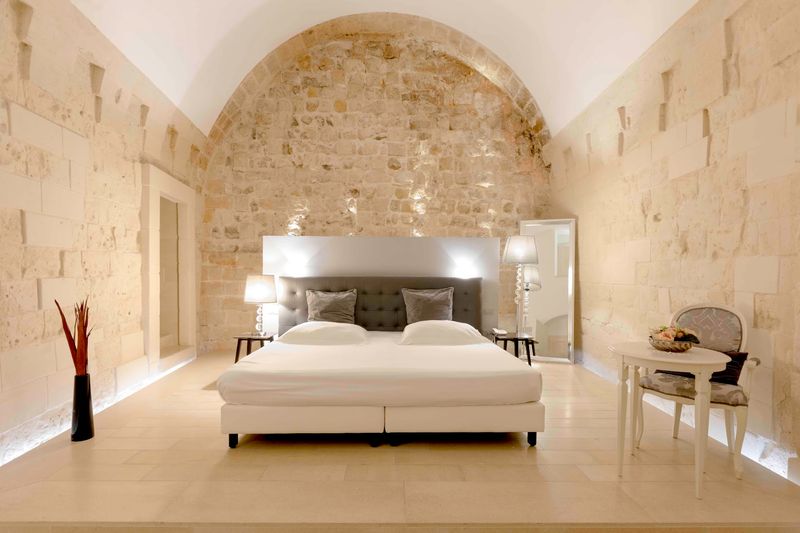
Thirty-three historic residences spread across caves, courtyards, stairways, and narrow lanes around Piazza San Pietro Caveoso make up this resort, meaning the walk back to your room is genuinely part of the experience.
The layout preserves the ancient urban fabric of the Sassi rather than isolating guests inside a single building. Each room or suite is adapted from existing rock formations or historical structures, so no two spaces look the same.
10. Demeure de la Vignole, Turquant, Pays de la Loire, France
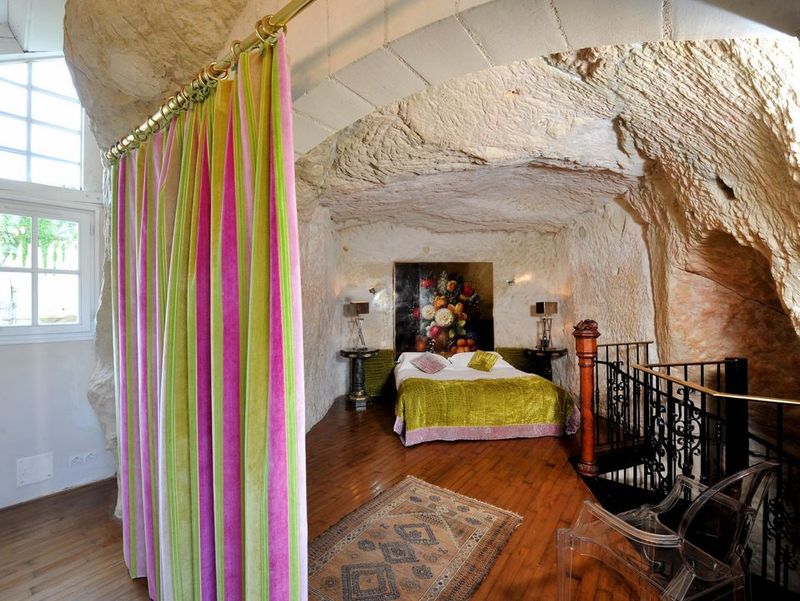
France’s Loire Valley has its own centuries-old tradition of living inside rock, and this 17th-century property near Saumur makes it easy to try. Four of its 11 rooms are carved directly into local tuffeau stone.
A heated cave swimming pool stays at 28 degrees Celsius year-round, and a spacious cave apartment within a former private troglodyte village includes a fireplace, a bread oven, and two cave bedrooms for groups or families.
11. Kelebek Cave Hotel, Göreme, Nevşehir, Türkiye
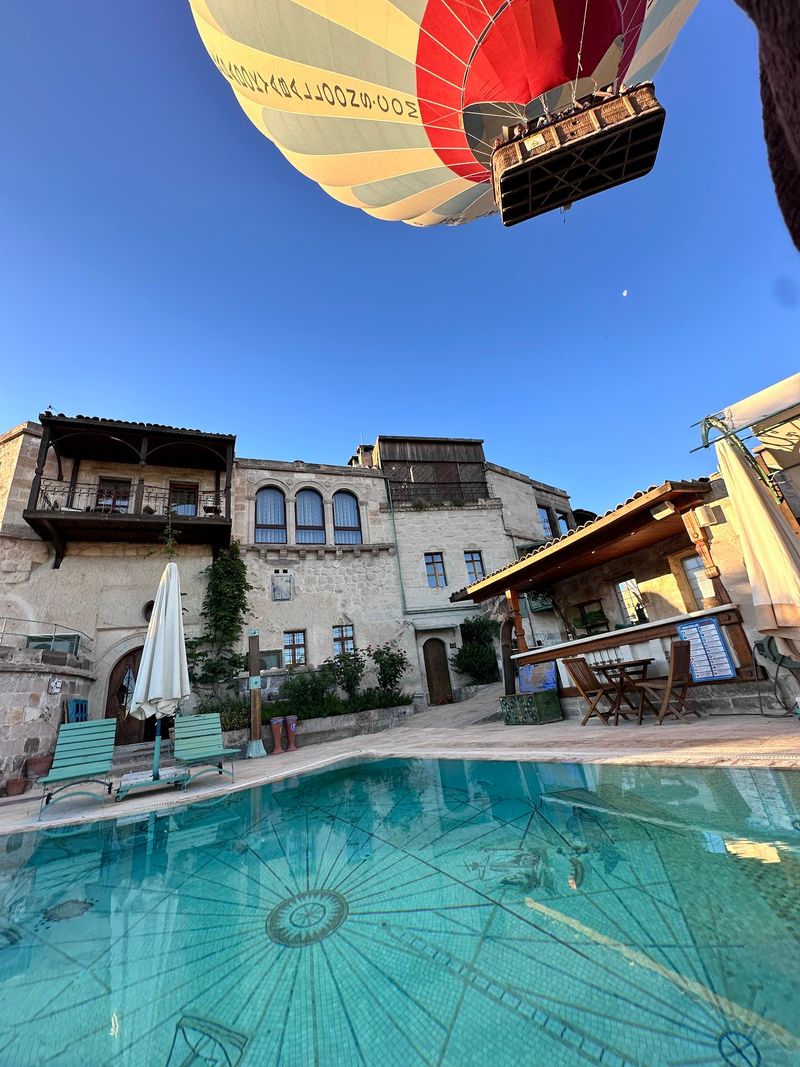
Owner Ali Yavuz started Kelebek in 1993 with just four rooms and personally oversaw its expansion into a 37-room property by combining neighboring cave houses and restoring them himself. Many of the fairy chimney cave rooms are thousands of years old.
A traditional Turkish bath and outdoor swimming pool sit alongside the cave accommodations. Guests can also access the rooftop of sister hotel Sultan Cave Suites for balloon watching on clear mornings.
12. Cuevas Pedro Antonio de Alarcón, Guadix, Andalusia, Spain
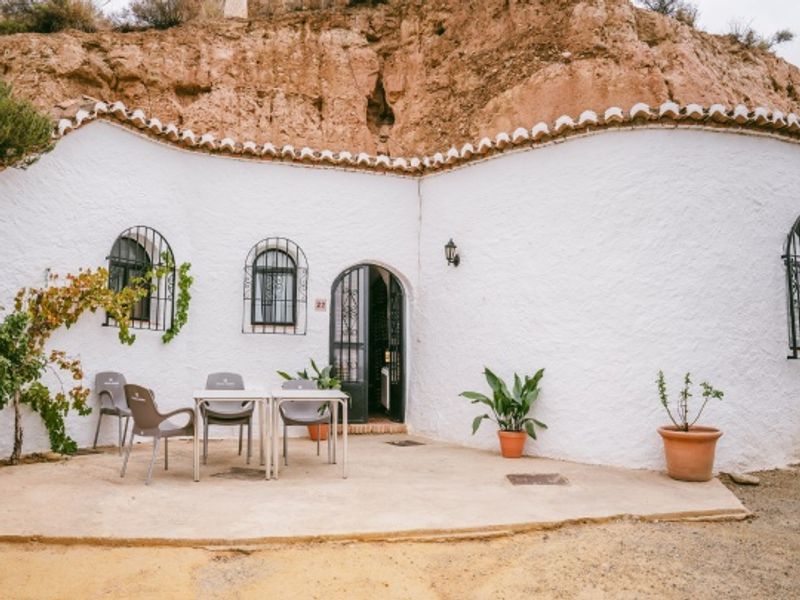
Guadix is an Andalusian city where cave living is not a tourist novelty but a local tradition stretching back centuries, with entire neighborhoods excavated into the surrounding hills. This property lets visitors stay overnight in that tradition.
From outside, whitewashed entrances and chimneys poking out of the earth create a visual that is hard to forget. Inside, thick walls keep temperatures naturally stable across seasons without any need for heavy climate systems.
13. Lookout Cave Underground Motel, Coober Pedy, South Australia, Australia
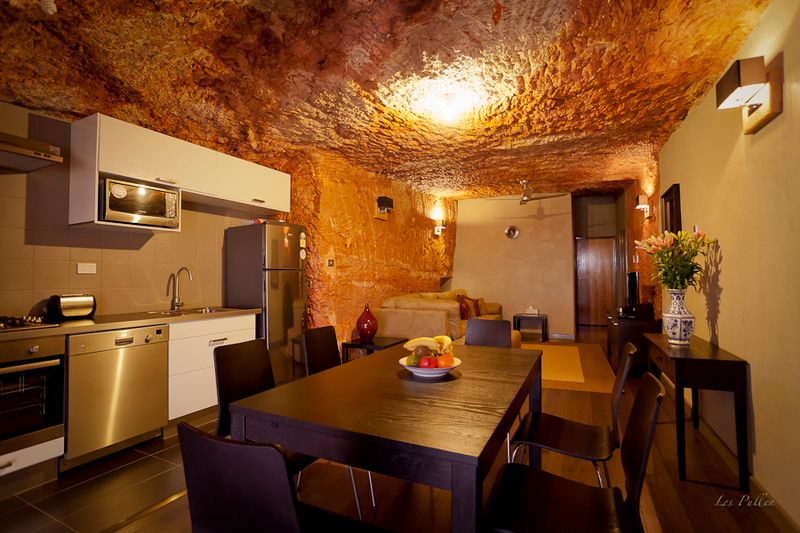
Rooms here extend up to 25 meters below the Outback surface, carved into sandstone in Coober Pedy, the self-proclaimed opal capital of the world. The underground temperature holds steady at 23 to 25 degrees Celsius regardless of what the desert is doing above.
Both motel rooms and self-contained dugout apartments are available, including genuine old miners’ dugouts. Above ground, a lookout point delivers panoramic views across town and wide open Outback skies for stargazing after dark.
14. Cappadocia Cave Suites, Göreme, Nevşehir, Türkiye
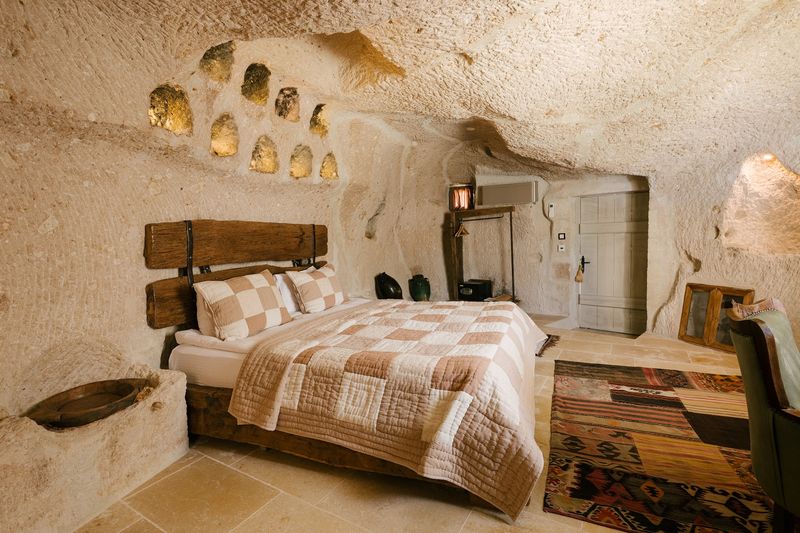
Cappadocia Cave Suites occupies centuries-old cave dwellings in the heart of Göreme, where rooms have been adapted around the natural stone rather than forcing the landscape into a conventional hotel layout. The property was among the earlier cave hotels developed in the region, and its accommodations range from relatively simple cave rooms to large suites surrounded by Cappadocia’s distinctive rock architecture.
The rooftop terrace adds another layer to the experience. From here, guests can look across Göreme’s fairy chimneys and valleys as hot-air balloons rise in the early morning, while the Göreme Open-Air Museum and several hiking areas are nearby.
Inside, natural stone walls and irregular rock surfaces make it obvious that this is not simply a hotel decorated to look like a cave. The rooms are built into the landscape that made Cappadocia famous in the first place.
15. La Dimora di Metello, Matera, Basilicata, Italy
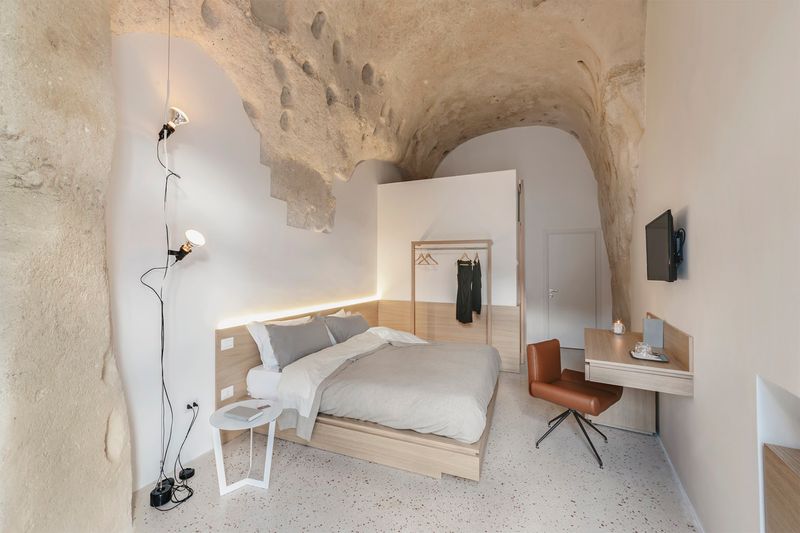
With only four rooms, La Dimora di Metello offers a much more intimate version of Matera’s cave-hotel experience. The property sits in Sasso Barisano, one of the historic districts forming the city’s famous Sassi, and incorporates original spaces excavated directly into the rock.
Restoration work preserved the character of the former cave houses while introducing contemporary interiors, creating rooms where rough stone surfaces sit alongside minimalist furnishings and modern bathrooms. The four accommodations have individual names, including the larger Metella suite.
A shared terrace looks across Sasso Barisano, so the surrounding cave city remains part of the experience even after guests step outside their rooms. It is an especially good choice for travelers who want to sleep within Matera’s ancient landscape without staying in a sprawling resort.
16. Gamirasu Cave Luxury Hotel Cappadocia, Ayvalı, Nevşehir, Türkiye
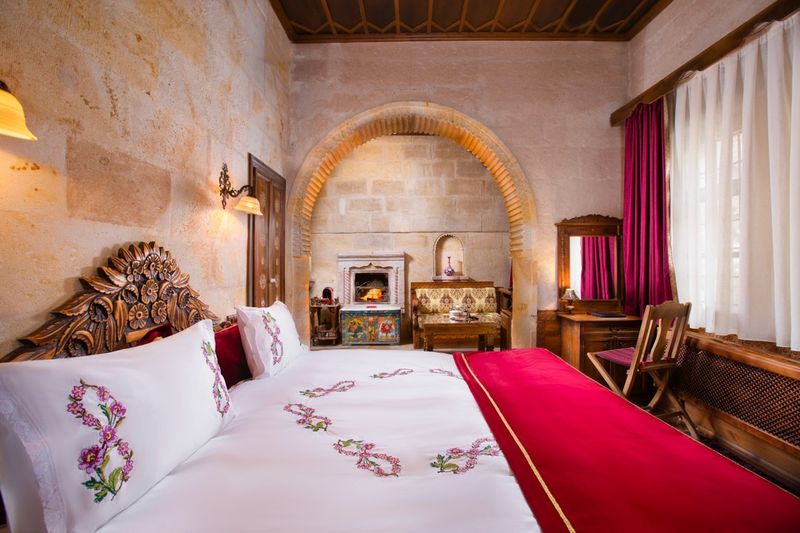
Gamirasu offers a different Cappadocia experience from the properties clustered around busy Göreme. Located in the village of Ayvalı near Ürgüp, the hotel spreads through restored traditional structures and cave spaces in a quieter rural setting surrounded by the region’s extraordinary volcanic landscape.
Rooms make extensive use of exposed stone, vaulted spaces, and rock-cut interiors, with accommodations ranging from atmospheric cave rooms to larger suites. Rather than treating the caves as a novelty, the property incorporates them into the same architectural traditions that shaped homes and settlements across Cappadocia for generations.
Its village location is one of its strongest features. Instead of stepping outside into one of Cappadocia’s busiest tourism centers, guests find themselves in a smaller settlement surrounded by valleys and unusual rock formations.
It makes the hotel feel less like an attraction built around caves and more like an extension of the landscape itself.
Share this story