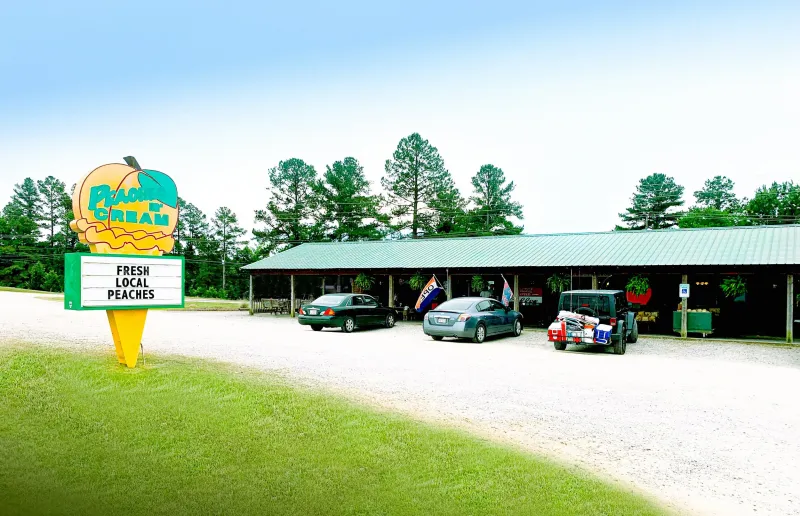
Somewhere along a two-lane road outside Wadesboro, North Carolina, a hand-painted sign points toward some of the freshest peaches in the state. The Phillips family has grown peaches in Anson County for five generations, and their roadside outlet, Peaches n’ Cream, draws locals every summer for fruit, homemade ice cream, and peach cobbler.
Stories about fried peach hand pies at this kind of stand have a way of spreading faster than the facts, so this article separates what the sources confirm from what remains unverified, and helps you plan a visit worth every mile.
The verified story begins with a five-generation peach farm
Peach farming in Anson County runs deep enough that the Phillips family counts five generations of it. That kind of agricultural continuity is genuinely rare, and it gives the family’s roadside presence a legitimacy that no amount of marketing could manufacture.
Understanding what those five generations actually represent, though, matters before any visit.
The five-generation figure describes the Phillips family’s history of growing peaches near Wadesboro, not the operating history of a retail stand that has been open for five generations. The Anson County Local Foods Directory records that Peaches n’ Cream began in 2004 as a retail outlet for Phillips Farms.
That makes the stand roughly two decades old as a public-facing business, which is still a meaningful run for a roadside operation, but it is a different claim from five generations of standing behind a counter.
The distinction matters because the original headline circulating about this stand implies a multigenerational tradition of frying peach hand pies every summer. Visit NC’s guide to must-try North Carolina food points visitors toward Peaches n’ Cream for homemade peach cobbler and ice cream, and does not mention fried hand pies.
The family’s farming history is the real story here, and it is compelling on its own terms without requiring embellishment.
Peaches n’ Cream’s own website presents the business as a produce stand connected to the Phillips family farm and other local farms. Correcting the premise does not diminish the stand’s local significance.
A fifth-generation peach farm with a two-decade retail track record in a small Piedmont county is exactly the kind of place worth knowing about.
What Peaches n’ Cream actually offers
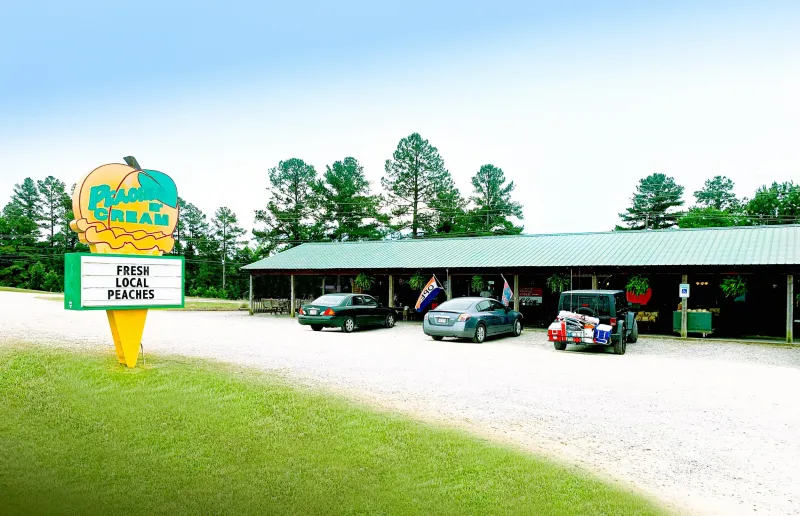
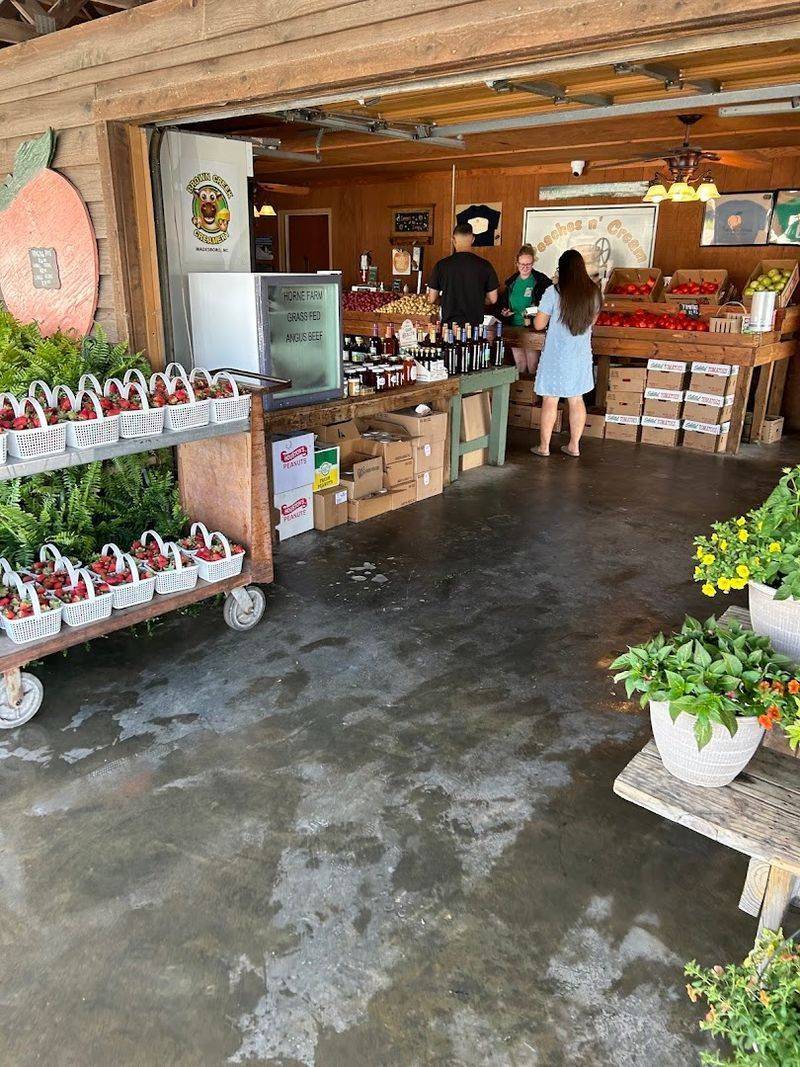
When you pull off the road at Peaches n’ Cream, what you are most likely to find is a well-stocked produce stand anchored by the season’s peaches. The stand’s own website describes a business built around fresh fruit from the Phillips family farm and other local farms in the area.
That farm-direct sourcing is a genuine selling point in a region where grocery-store peaches often travel hundreds of miles before reaching a bin.
Beyond fresh fruit, the stand’s documented attractions include homemade ice cream and peach cobbler. Those two items appear consistently across authoritative descriptions of the business.
Peach cobbler and homemade ice cream eaten roadside in July, with just-picked fruit nearby, is a strong case for making the drive on its own.
What the available first-party and authoritative sources do not mention is fried peach hand pies. Visit NC’s statewide food guide spotlights the cobbler and ice cream specifically.
Neither that source nor the stand’s own published materials identify fried hand pies as a menu item, a seasonal specialty, or a generations-old tradition at this location. That absence does not prove the pies have never appeared on the menu, but it does mean readers should not drive to Wadesboro expecting them without calling ahead first.
The responsible approach is to treat fresh peaches, homemade ice cream, and peach cobbler as the confirmed reasons to visit, and to verify directly with the stand whether anything else is available on a given day. The cobbler alone has earned its regional reputation.
Fried peach pies are a related tradition, not a verified stand specialty
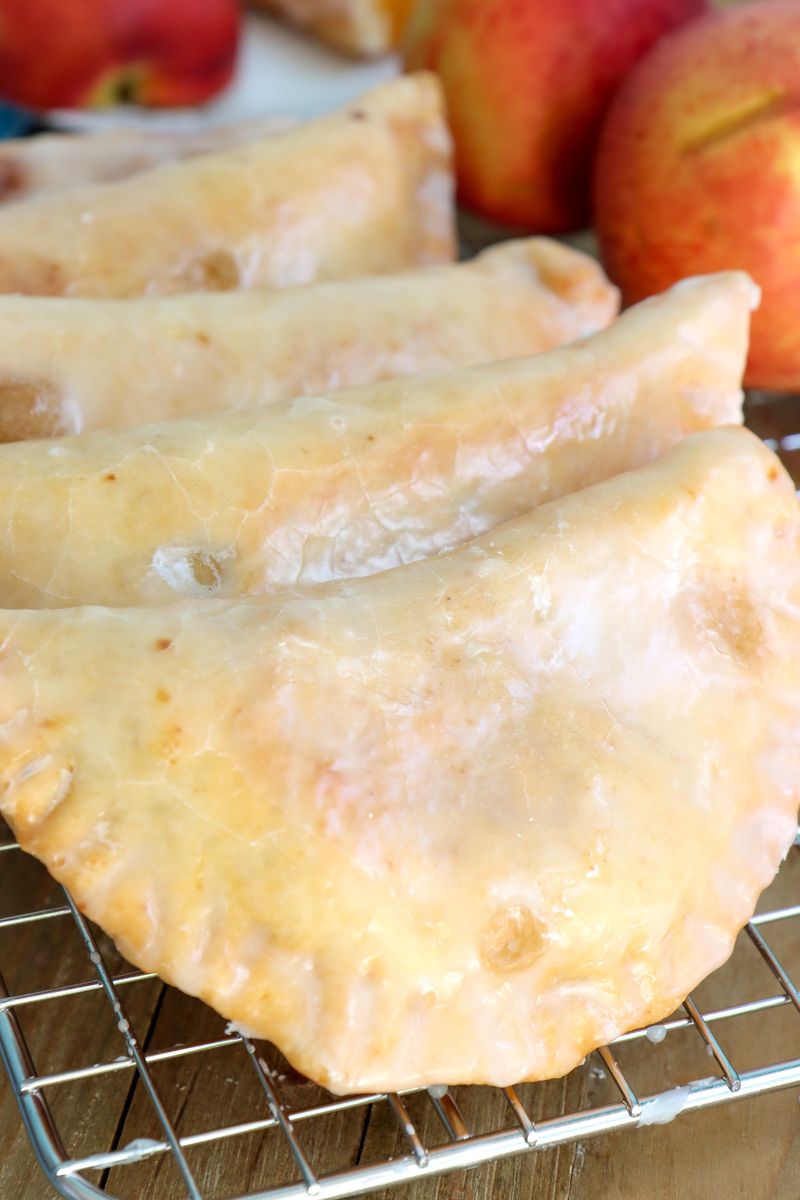
Fried peach pies occupy a proud corner of Southern food history, and they deserve to be understood on their own terms rather than conflated with cobbler, baked pie, or anything else. The confusion between these preparations is easy to make but worth clearing up before you order or cook.
Peach cobbler is a baked dish, typically featuring fruit topped with a biscuit or cake-like batter. A standard peach pie is a baked pastry with a top and bottom crust.
A fried peach hand pie, sometimes called a peach jack in older Appalachian and Piedmont cooking traditions, is something different: a small, folded pastry crimped shut and cooked in hot fat. One account of the peach jack tradition describes the filling as cooked dried peaches rather than fresh fruit, paired with a biscuit-like dough and fried in lard or oil.
Recipes across the South vary considerably in dough style, fat type, and whether the peaches are dried, canned, or fresh, so that single description should be understood as one regional example rather than a universal standard.
North Carolina does have a documented commercial example of the handmade fried fruit pie. The North Carolina Folklife Institute has documented B&G Handmade Peach Pies as an old-fashioned fried hand pie made in Winston-Salem, with a company history dating to 1949.
B&G Pies is a Winston-Salem pie company whose products have been sold through convenience stores. It is not a farm stand, and its documented history has no connection to Peaches n’ Cream or the Phillips family operation in Wadesboro.
Knowing these distinctions helps readers evaluate any claim about what a particular stand makes. A business that sells peach cobbler and a business that fries peach hand pies are doing related but genuinely different things, and the available sources do not place Peaches n’ Cream in the second category.
North Carolina’s peach season changes with the harvest
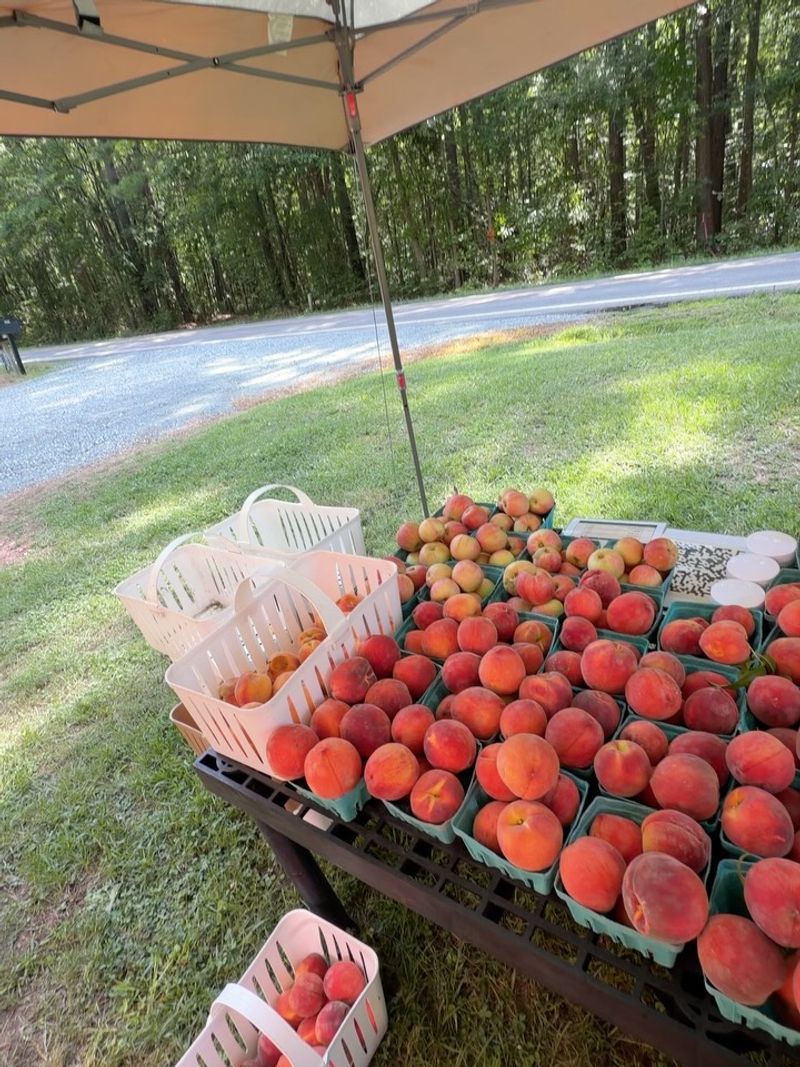
North Carolina’s peach industry is concentrated most heavily in the Sandhills region, a band of sandy-soiled counties that runs through the south-central part of the state and includes Anson County, where the Phillips farm operates. According to the North Carolina Department of Agriculture and Consumer Services, the state counted 356 peach farms on 1,273 acres in the 2022 Census of Agriculture.
That is a modest but meaningful footprint, and much of the fruit reaches consumers through exactly the kind of roadside stand that makes the Wadesboro area worth visiting.
The usual North Carolina peach season runs from June through August, with July often the strongest month for variety and volume. The NCDA&CS Peach Day at the State Farmers Market falls in July and reflects that seasonal peak.
But the calendar is not a guarantee. In 2025, North Carolina’s peach season arrived ahead of schedule, pushing peak availability earlier than most visitors expected.
A late frost, a dry stretch, or an unusually warm spring can shift the whole window by weeks in either direction.
Cultivar matters too. Early-season varieties ripen in June, mid-season varieties peak through July, and late varieties can carry a farm’s harvest into August or even September in favorable years.
NC State Extension’s postharvest handling guidance notes that growers may pick peaches two to four days before full ripeness depending on supply and demand, which means the fruit you find at a stand in early July may taste quite different from what arrives in mid-August.
For anyone planning a day trip to Wadesboro or another Sandhills farm stand, treating late summer as an approximate window rather than a fixed promise will save disappointment. The peaches will be there, but the exact timing shifts with every growing season.
Choose peaches for when you plan to use them
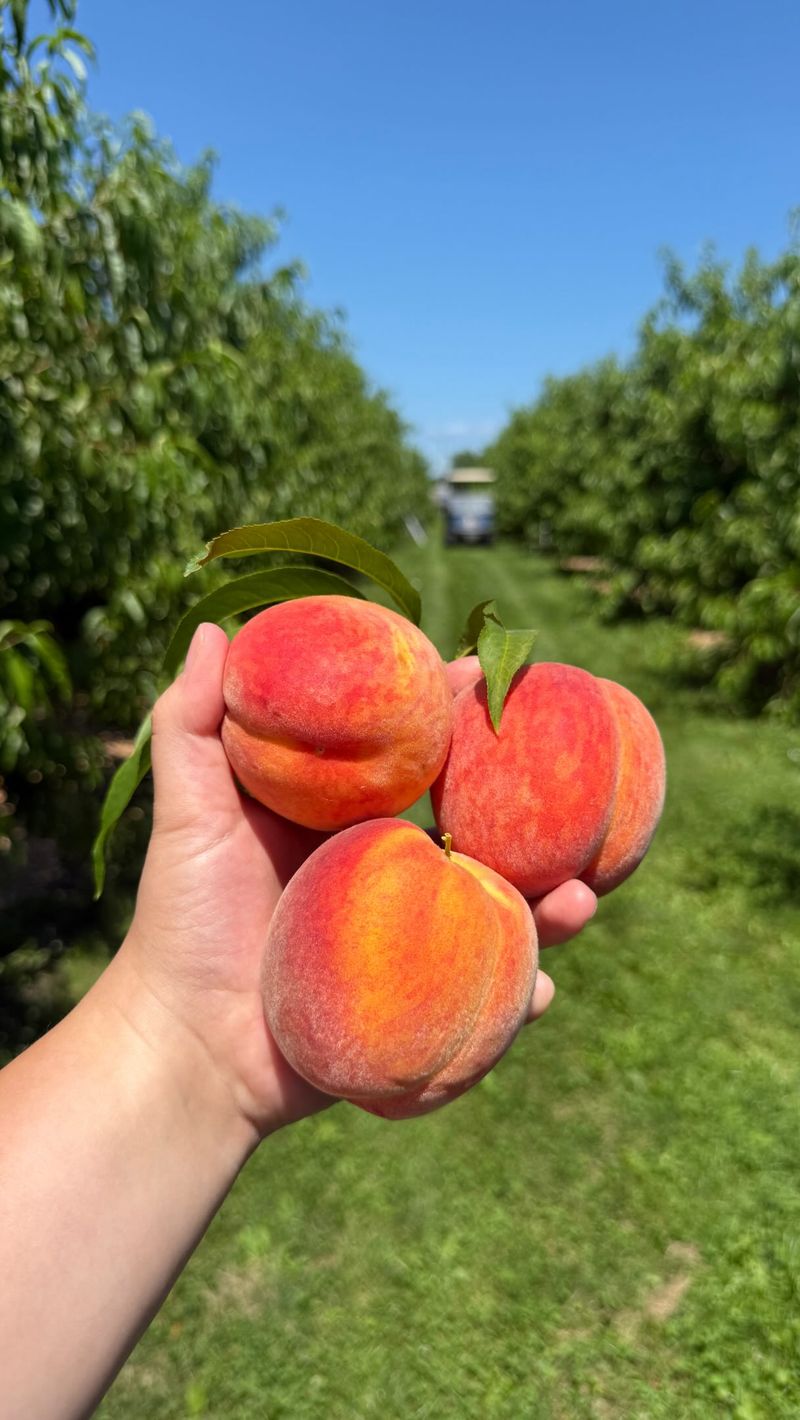
Buying peaches at a roadside stand is one of summer’s better decisions, but the fruit you pick should match what you plan to do with it. Not all peaches behave the same way in a bowl, a baking dish, or a freezer bag, and knowing a little about variety types before you shop makes the whole experience more satisfying.
The NC Peach Growers’ Society distinguishes between clingstone and freestone varieties. In a clingstone peach, the flesh holds tightly to the pit, making it harder to slice cleanly.
In a freestone peach, the flesh separates from the pit with relatively little effort. Freestone varieties are generally easier to work with for baking, canning, or freezing because you can halve and pit them quickly.
Clingstone peaches are often excellent for eating out of hand and tend to appear earlier in the season. Neither type is inherently better; they are suited to different uses.
NC State Extension advises buying peaches according to when you plan to use them, because peaches continue ripening after harvest. If you are eating them that evening, look for fruit that gives slightly under gentle pressure.
If you are driving two hours home and baking later in the week, slightly firmer fruit will serve you better. Growers may harvest two to four days before full ripeness depending on current supply and demand, so what looks pale at the stand may be perfect by Thursday.
When selecting fruit, pass over any peach with large soft spots, broken skin, or signs of mold. Minor surface blemishes from handling are generally cosmetic.
Once you are home, FoodSafety.gov recommends washing whole peaches under running water before cutting or eating, without soap or disinfectant. Cut fruit should go into the refrigerator promptly rather than sitting on a counter.
Verify the day’s offerings before making the drive
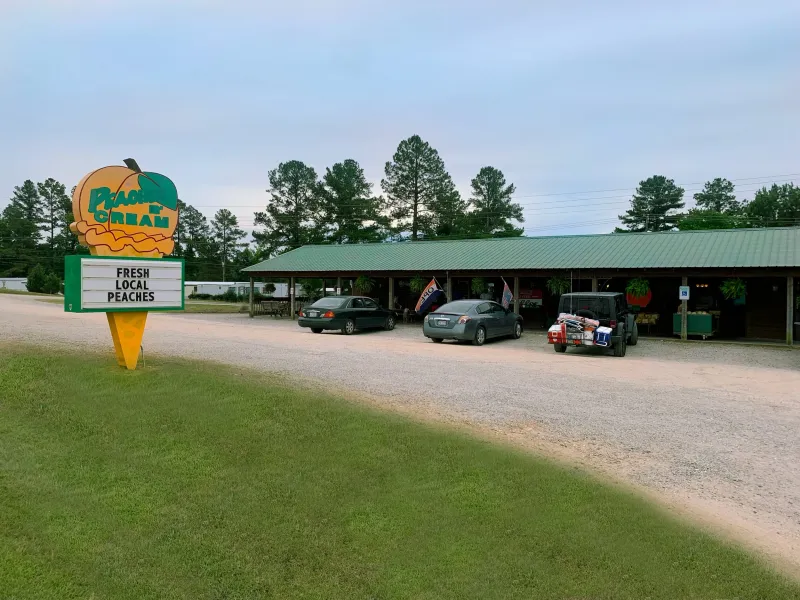
One of the most practical things this article can offer is a reminder that a roadside farm stand is not a restaurant with a fixed menu and guaranteed hours. Availability at a place like Peaches n’ Cream depends on what the orchard produced that week, how quickly it sold, what staff showed up, and what the weather did to the harvest.
No published source can tell you what will be on the counter the afternoon you arrive.
Peaches n’ Cream’s website is the right starting point for contact information and any posted updates, but a farm stand’s website does not always reflect daily inventory, current hours, or whether a particular item like cobbler or ice cream is available that day. A quick phone call or a check of the stand’s social media, if it maintains one, will give you more current information than any article can.
Season timing adds another layer of uncertainty. As noted earlier, the 2025 North Carolina peach season arrived ahead of schedule, and the 2024 season extended longer than usual despite dry conditions.
A stand that was fully stocked in late July one year may be winding down or still ramping up at the same date the next year. If fried hand pies are the specific item you are hoping to find, that is especially important to confirm directly, since no current published source documents them as a regular Peaches n’ Cream offering.
The same applies to hours, pricing, and whether the stand is open on a particular day of the week. A short call before you leave the house is worth more than any assumption built on last summer’s visit or a story shared online.
Handle prepared pies according to their filling and the seller’s instructions
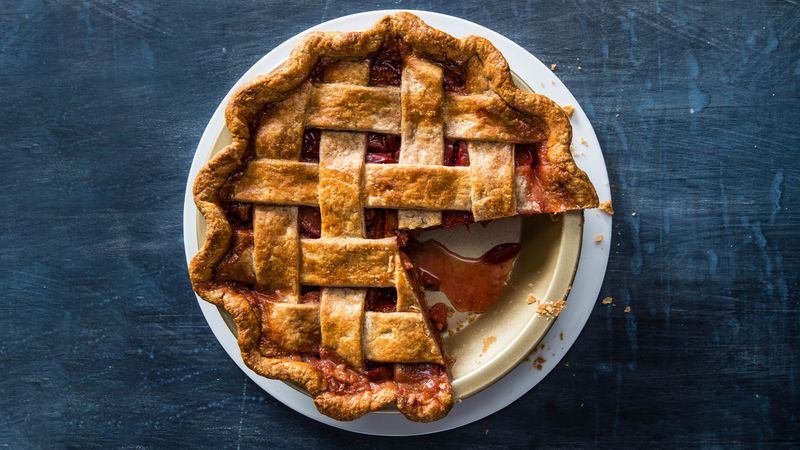
Buying a prepared peach dessert at a roadside stand is one of summer’s small pleasures, but how you handle it after purchase matters more than most people think. The filling inside a pastry determines its storage needs, and frying alone does not make any pie automatically safe to leave in a hot car or on an outdoor table for hours.
Fruit-only fillings, such as a simple sweetened peach filling without dairy, eggs, or cream, are generally more forgiving than custard- or cream-based fillings. Even so, FoodSafety.gov’s perishable food guidance makes clear that heat accelerates spoilage for a wide range of prepared foods.
If a pie contains cream cheese, whipped cream, custard, or eggs alongside the peach filling, it should be treated as perishable and kept cool.
The seller’s instructions are your best guide. A vendor who handles food daily knows their recipe and how long their product holds safely.
Ask when you buy, and follow whatever they tell you. FoodSafety.gov notes that certain groups, including young children, older adults, pregnant people, and those with weakened immune systems, face higher risks from foodborne illness, so extra caution with uncertain fillings is especially warranted for those travelers.
A general rule drawn from FoodSafety.gov’s produce guidance: refrigerate perishable leftovers within two hours of purchase, or within one hour if the outdoor temperature exceeds 90 degrees Fahrenheit. On a July afternoon in the North Carolina Sandhills, that one-hour window can arrive faster than expected.
A small insulated bag in the back seat is an easy fix for a long drive home.
The enduring find is North Carolina’s peach culture
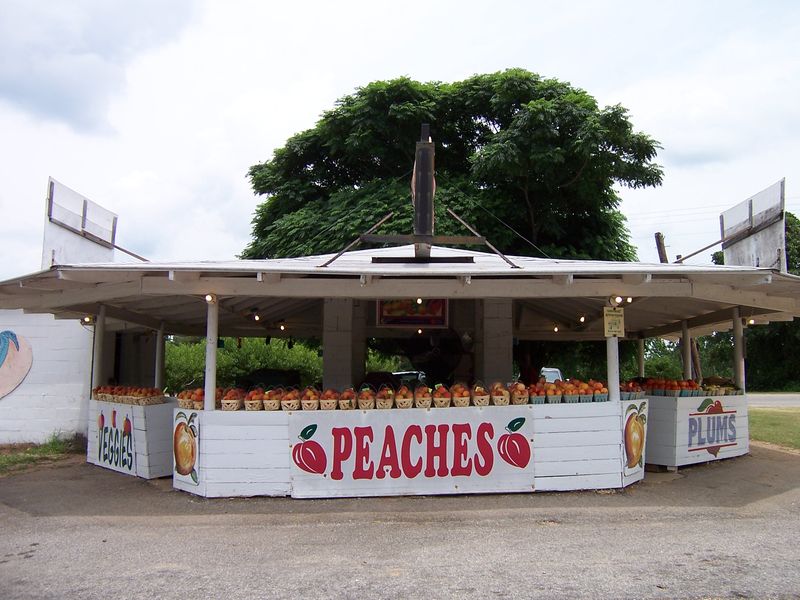
North Carolina’s roadside peach tradition does not need a legend about generations of fried hand pies to earn its reputation. The Phillips family’s five-generation farming history near Wadesboro is a genuine story, and Peaches n’ Cream is a real, locally rooted business with documented offerings worth making the drive for.
Fresh peaches, homemade ice cream, and peach cobbler are confirmed; fried hand pies are not, at least not by any published source available at the time of this writing.
Visit NC’s food guide and the Anson County Local Foods Directory both point to the same core experience: a family-connected farm stand where the peaches are fresh, the cobbler is homemade, and the connection to the land is real. That is more than enough reason to go.
Before you leave home, confirm current hours and offerings directly with the stand, pack a small cooler for the drive back, and wash your fruit under running water before eating. FoodSafety.gov’s produce guidance is a quick read that covers the basics.
The Phillips family spent five generations getting the peaches right; a little planning on your end makes sure you enjoy them at their best.
Share this story