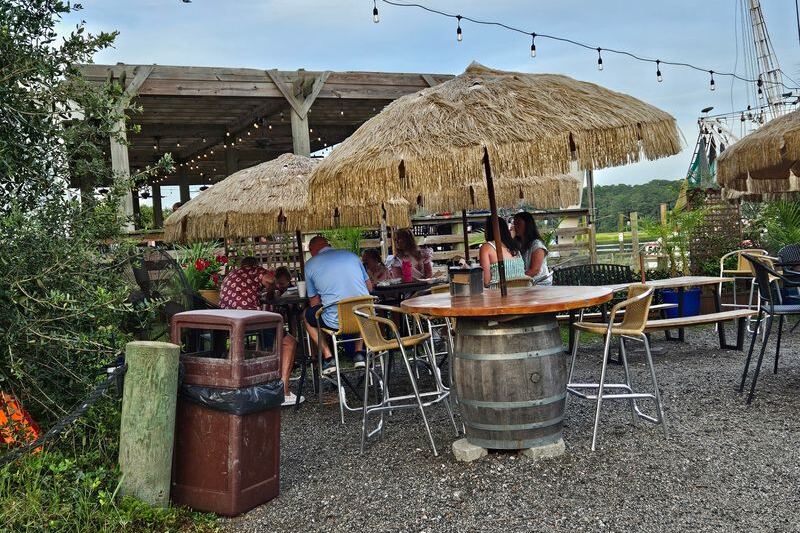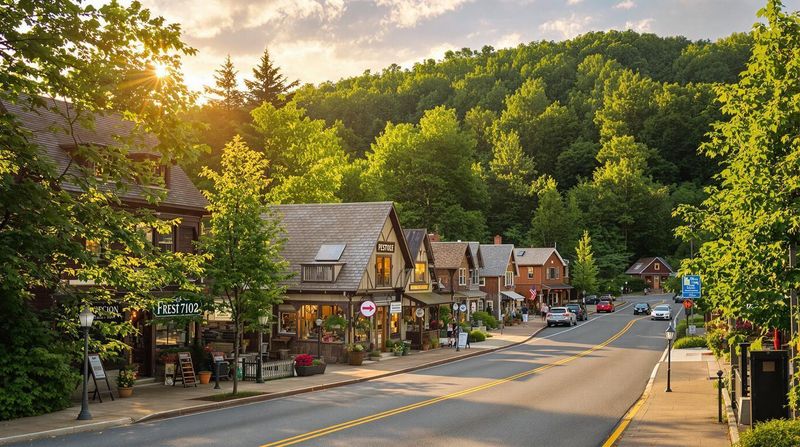
Something feels different about a North Carolina mountain town when the parking lot is full by 10 a.m. and the sidewalks look more like a theme park queue than a small-town stroll. Some residents and planners in Blowing Rock have raised concerns about seasonal crowding, particularly downtown and around popular scenic spots, but that frustration is not a unanimous verdict from every local.
The town’s own planning documents tell a more complicated story, one that involves real capacity pressure alongside real economic benefits, and it’s worth reading carefully before assuming everyone wants visitors to stay home.
Blowing Rock Offers a Documented Case—Not Proof That Every Local Agrees
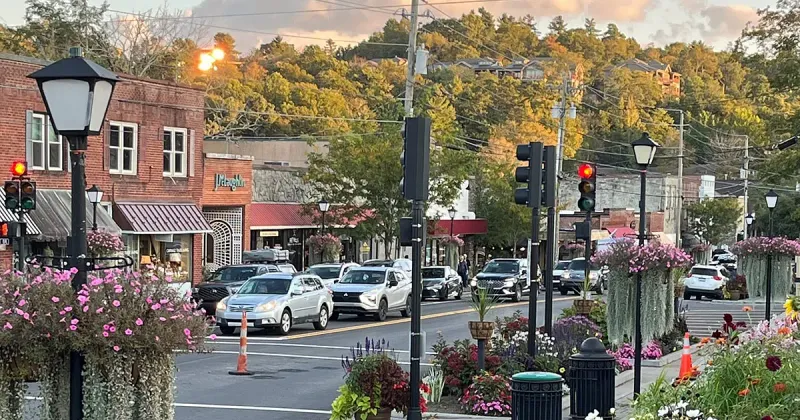
Spend a Saturday afternoon on Main Street in Blowing Rock during peak summer and you will notice something: the sidewalks fill up fast, parking spots disappear before noon, and the foot traffic feels less like a small mountain town and more like a popular resort corridor. That observation is not just a visitor impression.
The town’s own official planning materials document seasonal and day-trip crowding, particularly around downtown and popular scenic attractions, and acknowledge that growing visitor numbers are straining parking, pedestrian flow, and the town’s overall capacity to absorb demand.
What those documents do not do is speak for every resident. Blowing Rock’s adopted comprehensive plan raises concerns about parking deficits, traffic pressure, and the management of year-round tourism growth, but it does not conclude that most locals want fewer visitors or that the town has crossed a universally agreed-upon line into overtourism.
Resident opinion on tourism is genuinely mixed, and the economic stakes are high enough that many people in the community have strong reasons to welcome visitors even when the parking situation is maddening.
The town’s tourism authority has also acknowledged, in its own planning materials, that better management of visitor flow, event timing, and mobility infrastructure is a priority. That framing, improve and manage rather than reduce and restrict, is a meaningful distinction.
Blowing Rock is a well-documented candidate for a town experiencing noticeable seasonal capacity pressure. Whether it matches your personal experience, or whether a different mountain town fits the description even better, is exactly the kind of question worth asking in the comments below.
What the Town’s 600-Space Estimate Actually Measures
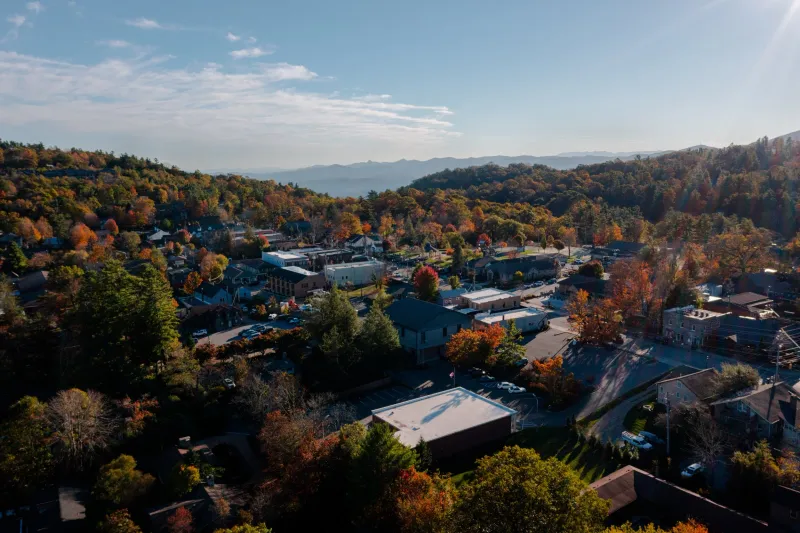
The number that shows up in Blowing Rock’s planning conversations is roughly 600 parking spaces, and it is easy to misread what that figure actually represents. A shortfall of 600 spaces sounds like 600 frustrated tourists circling the block with nowhere to go, but the official math is more layered than that.
According to the town’s comprehensive plan, downtown Blowing Rock has approximately 428 public parking spaces. The plan also estimates that employees of downtown shops, restaurants, and real estate offices alone need roughly 413 spaces just to get themselves to work.
Before a single customer, visitor, delivery driver, or anyone else tries to find a spot, employee demand has already consumed nearly all of the available public supply. The broader estimated shortage of about 600 spaces reflects unmet demand across all of those user categories combined, not a direct count of excess tourists turned away at some imaginary gate.
That distinction matters for a few reasons. First, it means the parking problem is structural, rooted in how downtown was built and how many people work there, not simply a consequence of too many out-of-towners arriving on a Saturday.
Second, it means solutions cannot focus solely on discouraging visitors. Employee parking, delivery logistics, and pedestrian infrastructure all factor into the equation.
Third, it tells you something practical: even on a weekday when tourist traffic is lighter, the parking supply is already stretched thin by the people who run the businesses you came to enjoy. Arriving early is not just a polite suggestion; based on how tight the numbers already are before visitors are counted, it is genuinely the difference between finding a legal spot and spending twenty minutes looking for one.
Day Trips Can Fill Downtown Without Full Hotels
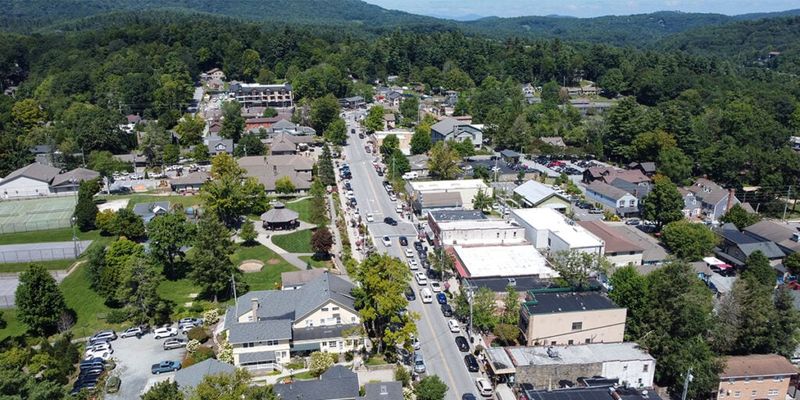
One of the more counterintuitive details in Blowing Rock’s planning data is that the town can feel genuinely packed even when its hotels are not sold out. Peak-season weekday lodging occupancy in Blowing Rock was recorded below 81 percent, according to the comprehensive plan, which means a meaningful share of rooms sit empty even during busy months.
Yet anyone who has tried to find a parking spot on a summer Saturday afternoon knows that downtown does not feel like a place with room to spare.
The explanation sits in who is actually showing up. The comprehensive plan specifically flags day-trippers and visitors staying outside town as significant contributors to downtown congestion.
Someone driving up from the Piedmont for a few hours of shopping and a lunch stop does not need a hotel room, but they do need a parking space, a spot on the sidewalk, and a table at the restaurant. Multiply that pattern by the number of households within a two-hour drive of Blowing Rock and you get a visitor-flow problem that has very little to do with local lodging capacity.
Year-round tourism growth compounds the pressure. Blowing Rock is not a summer-only destination anymore, and the plan acknowledges that visitor demand has extended well beyond the traditional peak months.
That means the crowding window is wider than it used to be, and the assumption that an off-season visit will automatically feel uncrowded deserves some skepticism. Crowding in Blowing Rock is genuinely uneven, varying by time of day, day of week, event schedule, and specific location, but the day-trip dynamic is a real driver that does not show up in hotel occupancy numbers.
Tourism Brings Regional Benefits and Local Strain
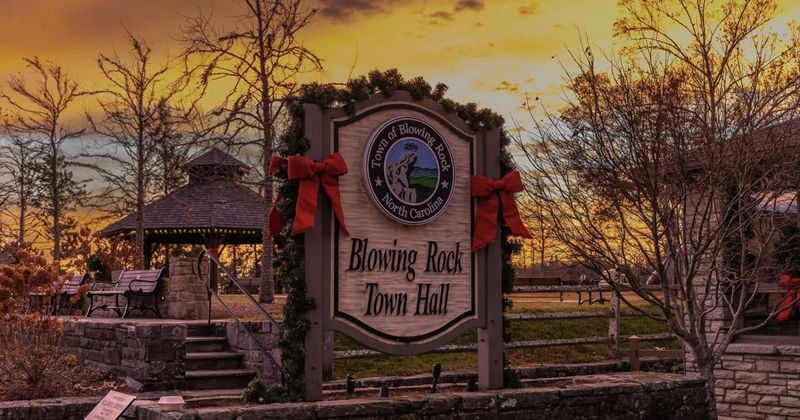
Any honest accounting of tourism in Blowing Rock has to start with the economics, because the numbers are large enough that dismissing visitors as a burden misses most of the story. The Blowing Rock Tourism Development Authority reports that visitor spending generated approximately $517 million and supported more than 3,000 jobs across Watauga County in 2023.
Those are county-level figures, not totals specific to the town of Blowing Rock alone, but they reflect a regional economic engine that touches a wide range of businesses, families, and public services.
The TDA’s role reflects that dual reality. The Tourism Development Authority is explicitly tasked with increasing overnight stays and visitor spending, which is a straightforward economic mandate.
At the same time, it funds projects designed to reduce the strain that tourism can place on the community, including sidewalk improvements, public parking infrastructure, visitor-flow management, and responsible-travel programs. That combination is not contradictory; it is a recognition that tourism at scale requires active management to stay beneficial rather than becoming a source of frustration for the people who live there year-round.
The TDA’s annual reporting reinforces the same point: the goal is not to cap tourism but to channel it more effectively. Event timing, parking supply, pedestrian infrastructure, and lodging distribution all factor into whether a busy tourism season feels manageable or overwhelming for residents.
Framing this as locals versus tourists misses the fact that many of the people most invested in Blowing Rock’s success, shop owners, restaurant workers, property managers, and service providers, depend on those visitor dollars to keep their businesses and livelihoods intact. The tension is real, but it is a capacity-management challenge, not a community divided against itself.
Crowding Depends on the Place and the Moment
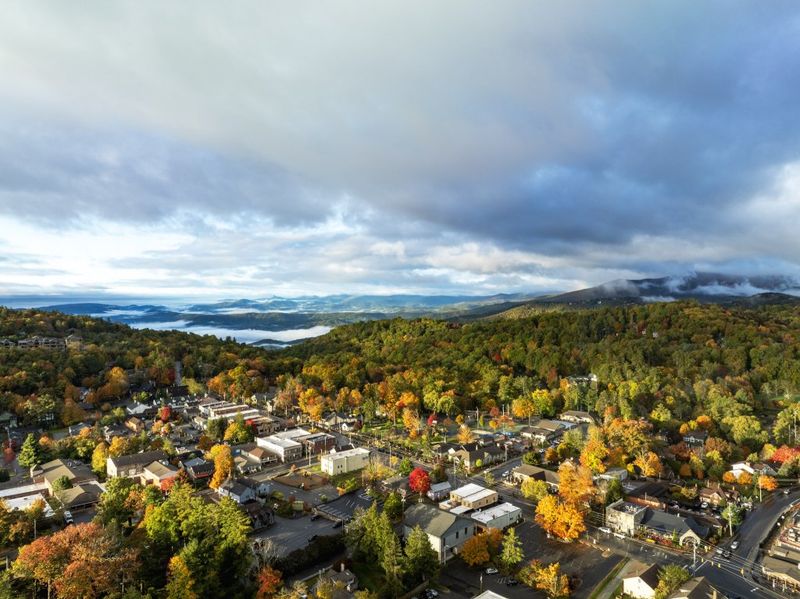
Blowing Rock is not uniformly crowded in the way that a single headline might suggest. Downtown, particularly along the main commercial corridor, bears the brunt of visitor concentration on busy weekends and during major events.
Scenic overlooks and popular trailheads near the Blue Ridge Parkway can feel similarly overwhelmed during peak hours. But residential streets a few blocks off the main drag, quieter parks, and less-promoted corners of the community often remain calm while the parking lot at the center of town is a slow-motion standoff.
Event weekends shift the picture considerably. A major annual festival or a holiday weekend can turn a town that feels manageable on a regular Saturday into something that tests everyone’s patience, locals and visitors alike.
Day-trip windows, typically late morning through mid-afternoon, concentrate foot traffic in ways that early arrivals and late-afternoon visitors rarely experience. The town’s planning documents treat crowding as a function of timing, location, and attraction type, not a fixed condition that applies equally across the whole community.
Brevard offers a useful comparison. Brevard’s comprehensive land-use plan documents summer overcrowding at nearby Pisgah National Forest recreation sites and traffic-safety concerns around specific intersections, a pattern driven by trailhead access and forest recreation rather than downtown retail.
The crowding problem in Brevard looks different from the one in Blowing Rock because the attractions are different. That variation is worth keeping in mind before treating any single mountain town as the definitive example of how tourism pressure works across western North Carolina.
Improve Your Odds of a Quieter Visit
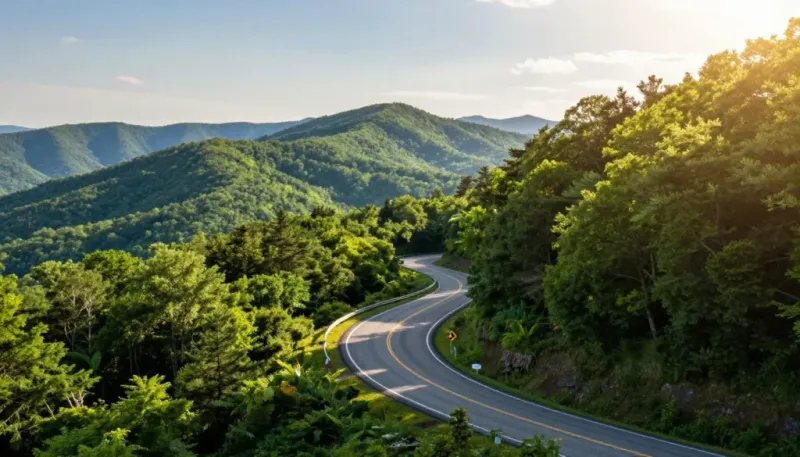
No one can promise you an empty Blowing Rock weekend, and any article that does is selling something that the data cannot back up. What the town’s documented day-trip patterns and parking pressures do suggest is that timing and logistics can meaningfully shift the experience.
These are reasonable inferences from the planning evidence, not official guarantees, but they are grounded in how the crowding actually works.
Weekdays are the clearest opportunity. The day-trip surge that overwhelms downtown on Saturdays drops off substantially during the week, and the comprehensive plan’s lodging data shows that even peak-season weekday occupancy runs below 81 percent, meaning the town is absorbing fewer total visitors on those days.
If a weekday trip is not possible, arriving early on a weekend morning, before 9 or 10 a.m., puts you ahead of the day-trip wave that typically builds through mid-morning.
Checking the town’s event calendar before you book is also worth the five minutes it takes. Major festivals and holiday weekends are when parking and pedestrian pressure peaks most sharply, and the TDA’s event planning materials reflect how much those concentrated periods affect visitor flow.
Avoiding those specific weekends does not mean avoiding the town; it means choosing a window when the infrastructure is not already at its limit.
Lodging outside the central commercial area is another practical option. Staying a few miles from downtown reduces your dependence on the most contested parking supply and lets you drive in during off-peak hours rather than competing for a spot at the height of the afternoon rush.
None of these strategies guarantee a serene visit, but each one improves the odds in ways that are consistent with how the crowding actually distributes across time and location.
Check Current Road Conditions and Park by the Rules
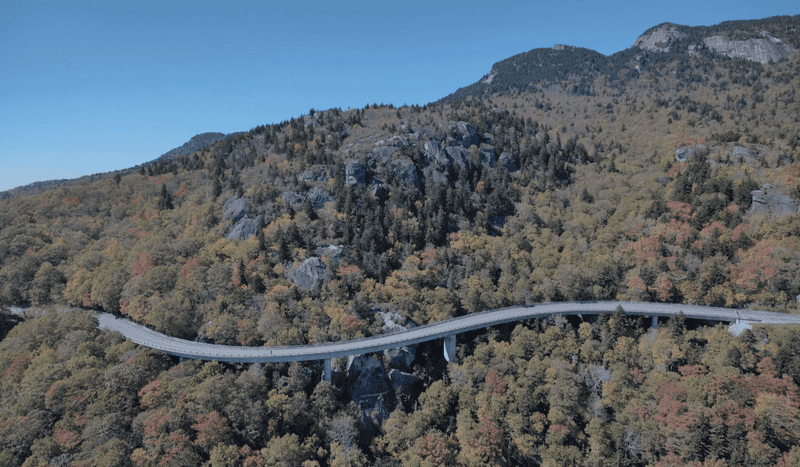
Road conditions on and around the Blue Ridge Parkway near Blowing Rock can change quickly, and the consequences of getting that wrong range from a wasted drive to a genuine safety problem. Construction projects and damage from Hurricane Helene have left multiple sections of the Parkway closed or partially closed, and those conditions have shifted repeatedly as repair work progresses.
Before you travel, check the National Park Service’s live Blue Ridge Parkway road-status page for current closures, not a cached article or a social media post from last month. Status that was accurate in one season may be completely wrong by the time you read it.
The NPS is clear that recreation is prohibited in certain closed sections, including portions affected by Helene-related damage. Entering a closed Parkway section or using a prohibited recreation area is not a gray area; it creates safety risks for you and for the crews working on repairs.
If a section near your planned overlook or trailhead shows as closed, treat that as a hard stop and look for an alternative that the NPS has confirmed as open. A scenic drive that ends at a barrier and requires a U-turn on a narrow mountain road is not a shortcut to a quieter experience.
Parking rules inside Blowing Rock itself are equally straightforward. Most on-street spaces in the downtown area carry either 15-minute or two-hour time limits, according to the town’s posted rules and services information.
Using a residential street to avoid the downtown crunch shifts the problem onto neighbors who did not sign up for overflow parking in front of their homes. Blocking roads, using private property, or ignoring posted limits adds to the friction that residents describe when they talk about crowding feeling out of hand.
Using designated spaces and respecting time limits is a small thing that makes a real difference to the people who live there.
The Evidence Leaves Room for a Different Town
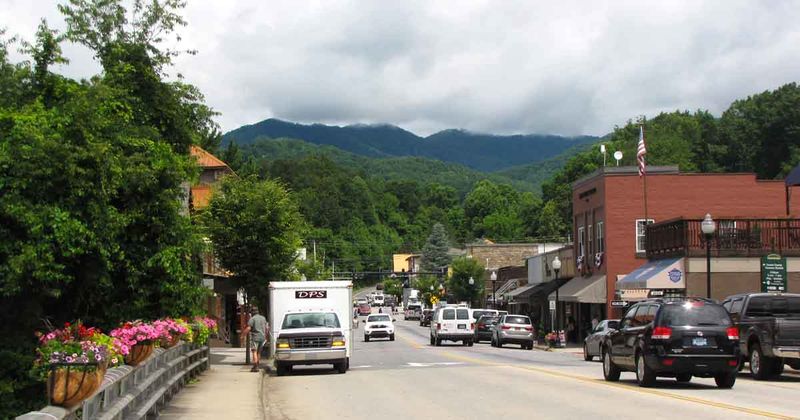
Blowing Rock has something that most candidates for this kind of article do not: official documentation. Its comprehensive plan puts real numbers on the parking pressure, names day-trippers and year-round tourism growth as drivers, and frames capacity management as an active planning priority.
That makes it a well-documented example of a mountain town navigating the tension between visitor demand and small-town livability.
What the evidence does not establish is that every resident wants tourism dialed back, that Blowing Rock is the worst-off mountain town in the state, or that the crowding is constant and universal rather than seasonal, location-specific, and tied to particular events and time windows. The town’s own tourism authority frames the challenge as one of management and sustainability, not retreat.
Many people who call Blowing Rock home have a direct stake in tourism remaining healthy.
So here is the question worth putting to readers who know these mountains better than any planning document does: does Blowing Rock match what you have seen firsthand, or is there another North Carolina mountain town whose crowding pattern deserves a closer look? Name it in the comments.
The best evidence for this kind of story usually comes from the people who were already there before the parking lot filled up.
Share this story