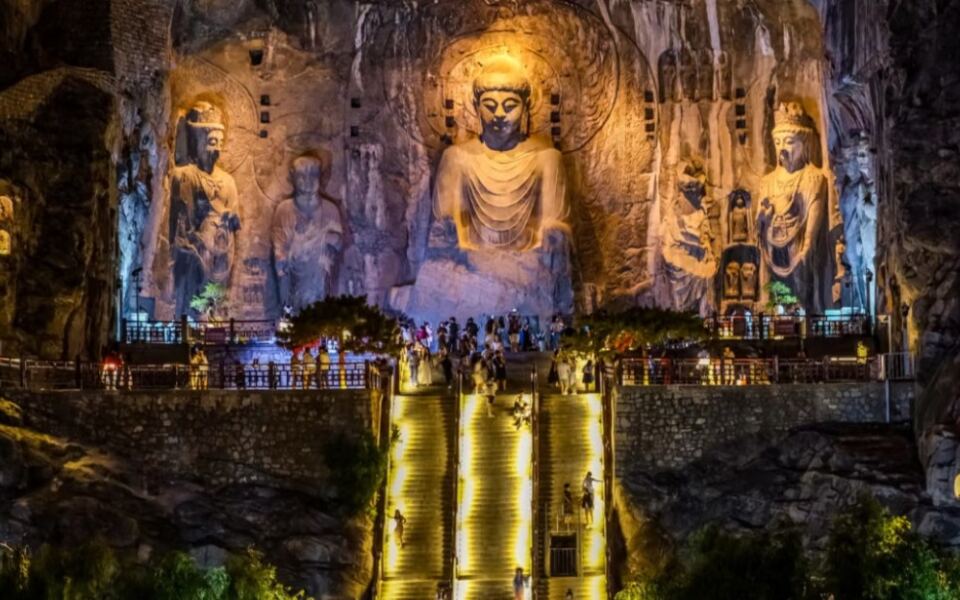
Along the Yi River in Luoyang, a long limestone cliff holds around 110,000 Buddhist statues. Artists spent about a thousand years carving them, from tiny figures to giants taller than a house.
Today the Longmen Grottoes is a UNESCO World Heritage site that millions of people visit. Here are ten things that make this stone gallery so special.
The Giant Vairocana Buddha
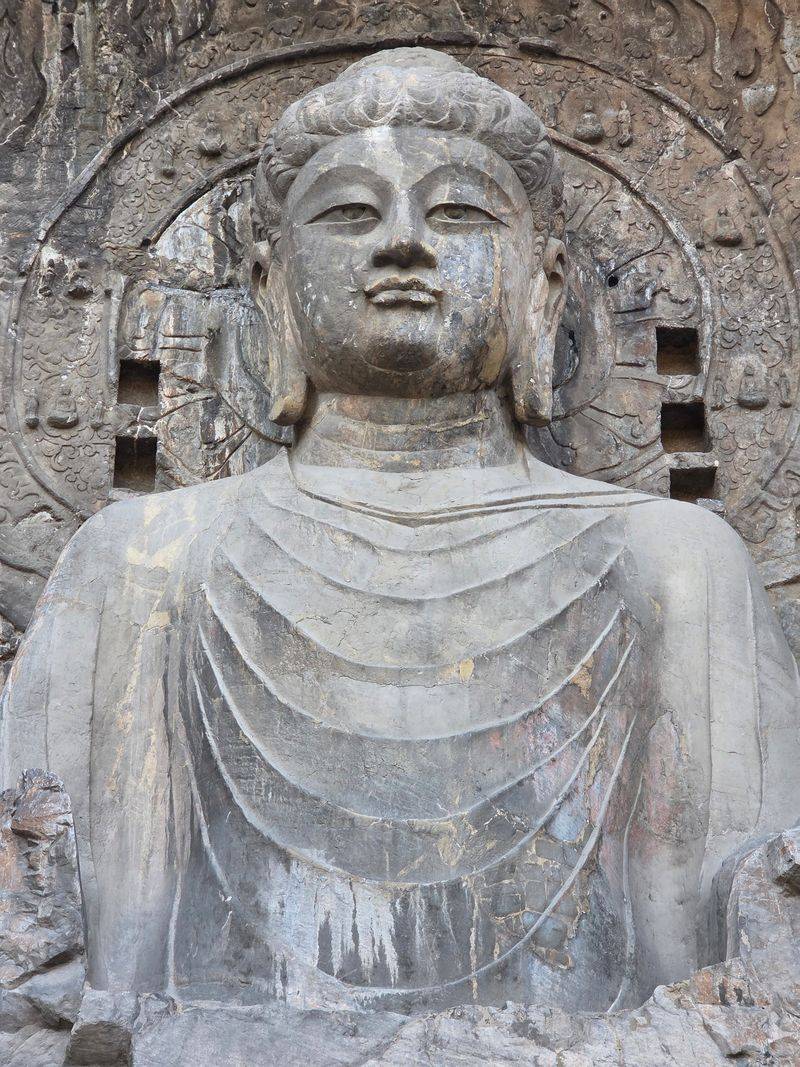
Seventeen meters of calm stone greet you at Fengxian Temple, and your phone suddenly feels too small. Vairocana is the star of Longmen, and one reviewer said seeing him in person beats any photo.
His face looks peaceful and wise at once.
Carvers finished this giant in the Tang Dynasty, and many people call him the Mona Lisa of the East. Guardians, bodhisattvas, and heavenly kings stand beside him.
Each one has a different expression and carefully carved robes.
Plan your photo time with care. Early morning visitors say the crowds are thin and the light is soft on his face.
One traveler arrived at 7 AM and got clear shots without elbows in the frame.
Stand still for a minute before you take pictures. Look at the folds of his robe, his gentle eyes, and the tiny details around his head.
The statue feels bigger when you slow down and let it sink in.
Bring a zoom lens if you have one, because the best details are high up.
Wanfo Cave and Its Tiny Buddhas
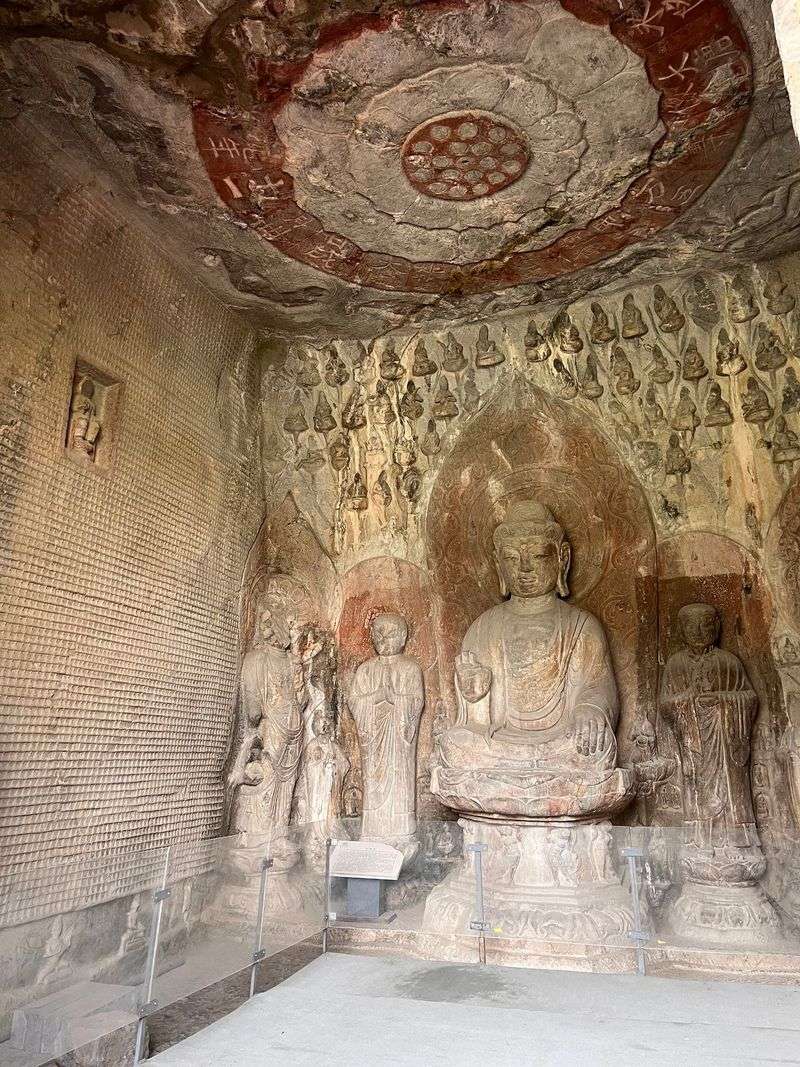
Count them if you dare: about 15,000 little Buddhas fill the walls of Wanfo Cave. Some are only a few centimeters tall.
Visitors often call this the Cave of Ten Thousand Buddhas.
The rows march across the stone in tidy lines. Every figure has its own pose and tiny hands.
It is hard to believe a person carved them with simple tools.
Tang Dynasty workers finished the cave in the late 600s. It shows how Longmen was not only about giants.
The small work is just as impressive as the big work.
Walk slowly here and look from a few angles. Light changes how the figures look, and the carving seems to shift as you move.
Reviewers said the level of detail was incredible.
Stairs lead up to many of these spots, so wear shoes with good grip. Take breaks on the way if your legs need a rest.
The view at the top is worth the climb.
A Thousand Years of Carving
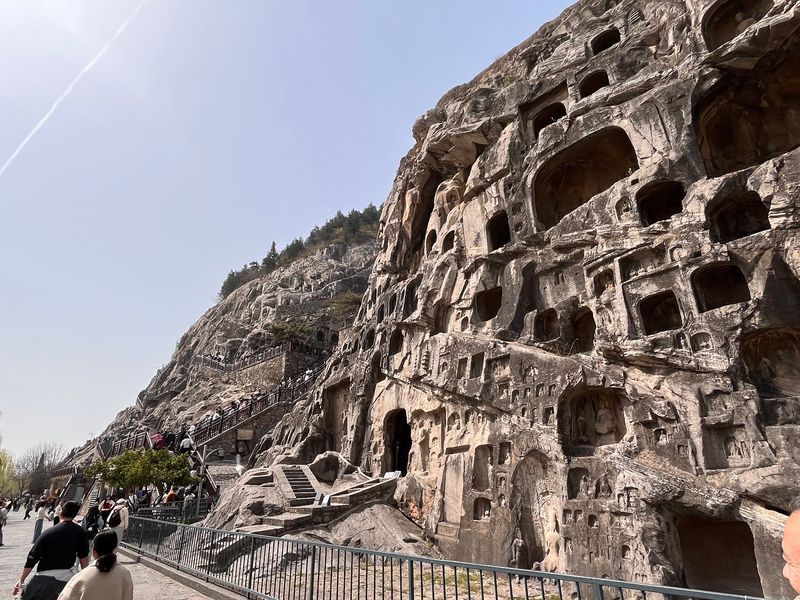
Few art projects last longer than a thousand years, yet Longmen did. Work began in the late 5th century under the Northern Wei Dynasty.
It grew strong in the Tang Dynasty and slowed by the 12th century.
Early figures look slim and long, with calm, serious faces. Tang figures are fuller and rounder, with more detail in their clothes.
You can see the changing taste of the times as you walk along the cliff.
Emperors, nobles, generals, and ordinary believers paid for the carvings. They hoped to earn spiritual merit.
Many left names and prayers on the stone.
The numbers are huge. There are over 2,300 caves and niches, more than 60 stupas, and over 2,800 inscribed steles.
The cliff stretches for about a kilometer.
Try to spot the difference between the old and later styles. It turns the walk into a fun game of art detective.
Even a quick look teaches you a lot.
Walking the Yi River
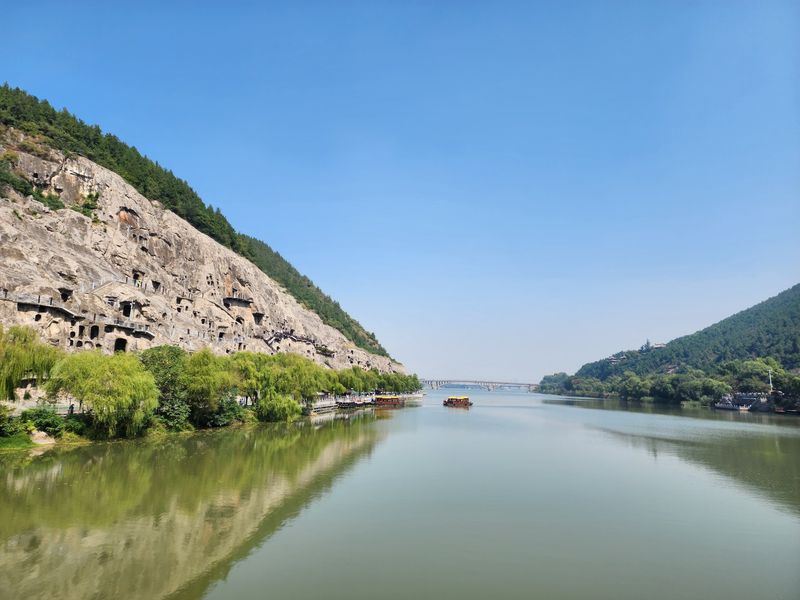
Bring your walking legs, because Longmen is a stroll as much as a museum visit. The path follows the Yi River, with green trees and calm water beside you.
Reviewers said the views along the way were lovely.
Plan for about two hours or more. One visitor even suggested four hours to see the site by day and at night.
Stops for snacks and photos slow things down in a good way.
Wear comfortable sports shoes. Many statues sit up stairs, and you will climb more than you expect.
Small backpacks are easier than heavy bags.
Shops along the route sell drinks, snacks, and souvenirs, so you do not need to carry much. A tip from one traveler: wait until the last shop before the bridge to buy gifts.
That way you are not hauling them the whole way.
Take your time and enjoy the breeze. The walk is part of the fun.
The View From East Hill
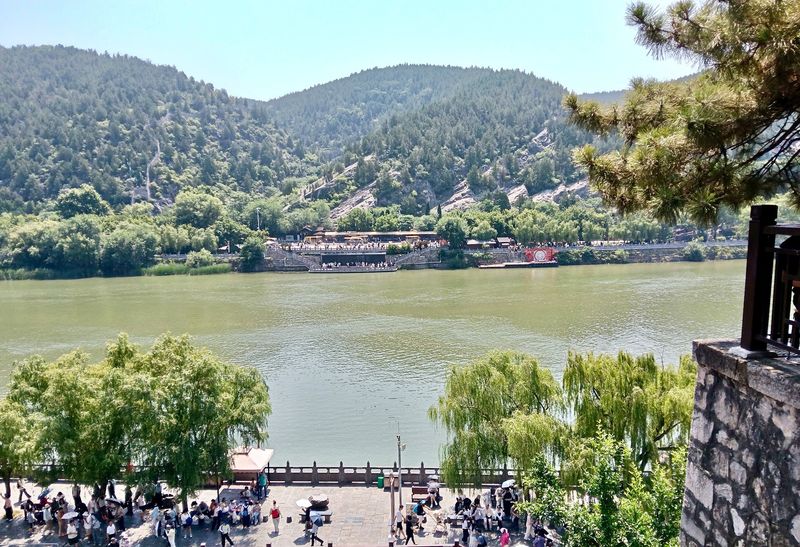
Cross the bridge and the whole cliff suddenly fits in one frame. East Hill gives the best panorama of the West Hill carvings.
Visitors say it is also the calmer side.
From here you can see caves dotting the rock like windows in a stone apartment block. The river flows quietly below.
It is a great place to rest tired feet.
Photographers love it in late afternoon, when warm light touches the cliff. One reviewer said the effort was well worth it for these panoramic views.
Bring a camera with a steady hand.
This side also has fewer people in some seasons. Crowds can pack the main walkways across the river, so this spot offers breathing room.
It is a good place to sit and just look.
Take a moment to see how the cliff curves along the water. It helps you understand just how big this gallery really is.
Beating the Crowds
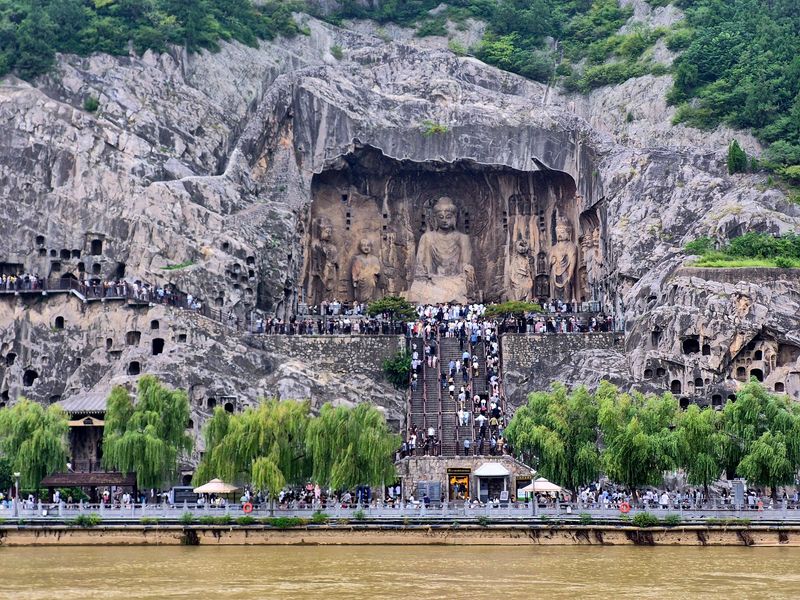
Shoulder to shoulder is no way to meet a Buddha. Longmen gets packed on weekends, holidays, and warm summer days.
Reviewers described long lines and crowded walkways.
Arrive when the gates open at 8 AM, or even earlier for the first shuttle. One August visitor left at midday and saw huge crowds in 40 degree heat.
Early birds had space and cooler air.
Late afternoon works too. After 4 PM, the heat drops and the crowds thin out.
Some visitors stay for the evening lights.
Book tickets ahead of time if you can. Skip Chinese holidays and rainy days, since wet stairs can be unsafe.
Weekdays are your friend.
The site closes at 5:30 PM, so check the schedule before you go. A little planning makes the day smoother.
Your photos will thank you too.
Night Lights on the Cliff
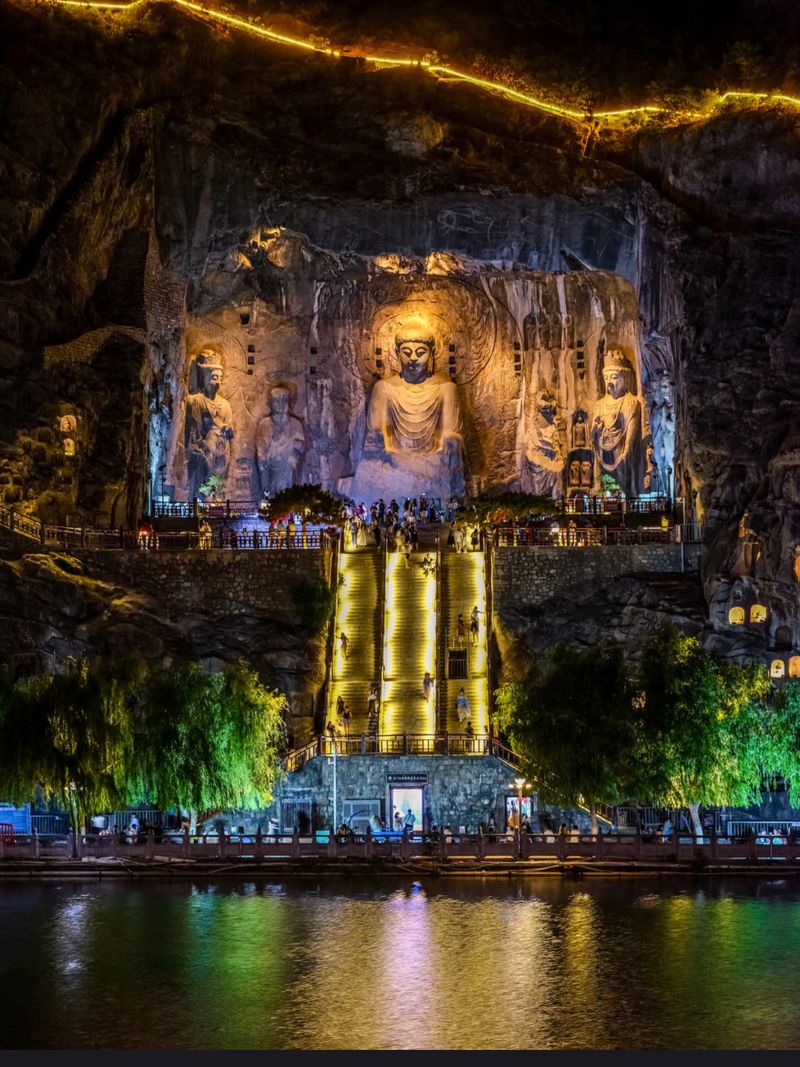
When the sun sets, the cliff takes on a new glow. Lights bring out the carved faces and shadows.
One reviewer called it a truly sacred-feeling moment.
Timing matters. A visitor started at 4:30 PM and got bored waiting for the lights.
Another suggested arriving around 5:30 PM so the walk ends just as the glow begins.
Someone else spent two hours before sunset and two after. That gave them the full experience of both day and night.
It sounds like a good plan for slow explorers.
Bring a light jacket. The wind off the river can feel colder than you expect, especially in cool months.
A warm layer keeps you comfortable while you wait.
Check the current evening hours before you plan your trip. Opening times can change with the season.
A quick look saves disappointment.
Shuttles, Boats, and Easy Rides
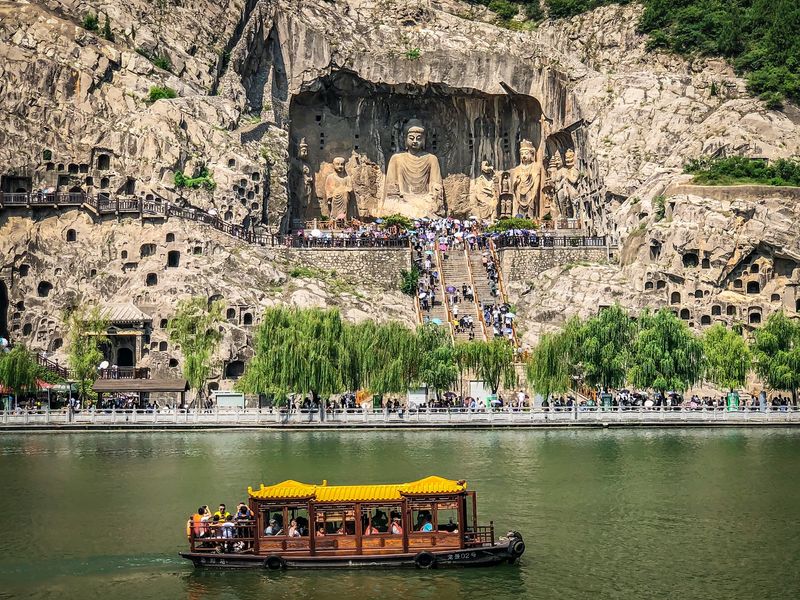
Save your energy, because the entrance is far from the carvings. A shuttle or tram covers roughly 3 km to the start of the cliffs.
Reviewers urged buying that ticket.
Some visitors take the shuttle back as well once they reach the far end. It spares tired legs after all those stairs.
Do check the schedule when you buy.
A boat ride on the Yi River is another option. One traveler paid 40 yuan per person.
Routes differ, so ask which spots each boat passes.
Boats give you a new angle on the cliffs and lovely photos. You can also cross the river on foot via the bridges.
Choose whichever suits your mood.
When you leave, skip pushy touts offering rides. Book your own Didi ride for clearer prices.
It is a safer and calmer way to head home.
Getting There From Luoyang and Xi’an
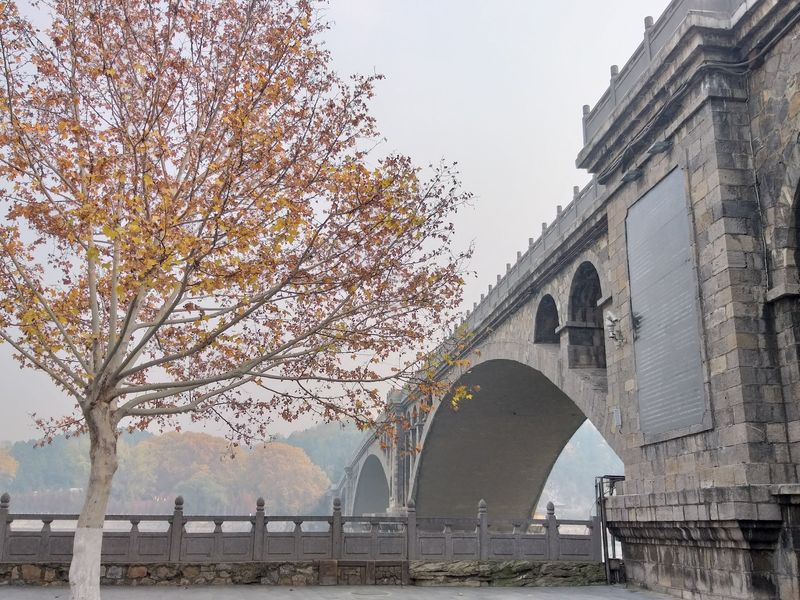
Longmen is closer than you might guess. From central Luoyang, it takes about 20 to 30 minutes by car.
A metro line also works, according to one reviewer.
Coming from Xi’an? A high-speed train from Xi’an North takes around an hour.
A round trip costs about 350 RMB, which makes a neat day trip.
Pair the grottoes with Guanlin Temple, which honors Guan Yu. Together they make a full day of culture.
Start early to fit both in.
Once inside, remember the site is big. Allow at least a few hours.
Walking from the main gate to the carvings can take 20 to 30 minutes without a shuttle.
Use the washroom before you start, since a visitor did not see many along the route. Bring a bit of water too.
Small prep makes a big difference.
Stories in Stone and Words
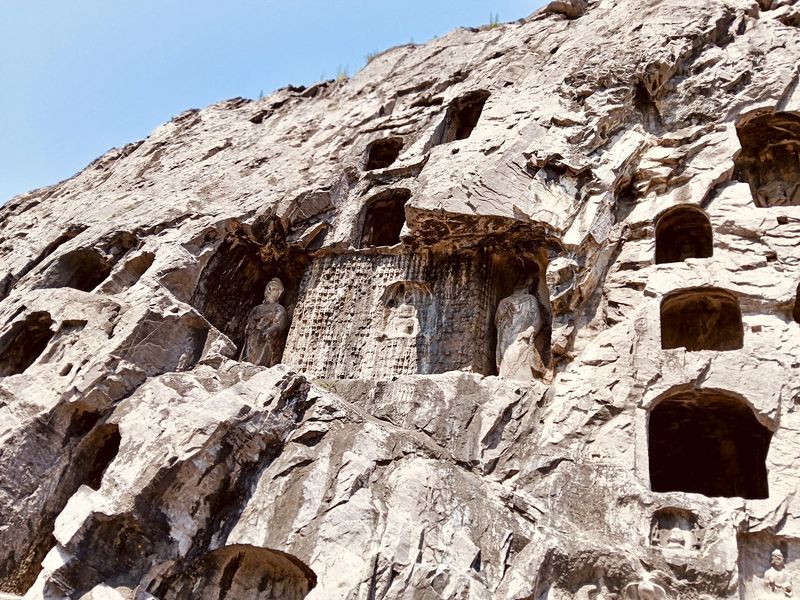
Look closely and the walls start talking. Thousands of inscribed steles cover Longmen, and visitors can still spot old Chinese characters on cave walls.
Some carry prayers, names, and even medical texts.
These words tell us who paid for each carving and why. Emperors, generals, and everyday believers all left marks.
It is a record of faith and daily life.
Longmen is also a UNESCO World Heritage site. It sits in Luoyang, a capital for thirteen dynasties.
That history adds weight to every step.
Know that some caves are closed for renovation, so you may only see the outside. A reviewer with a guide said not to expect to go inside.
The cliffs still impress from the path.
If you love history, read a little before you go. A few facts make the carvings come alive.
You will notice details that most people miss.
Share this story