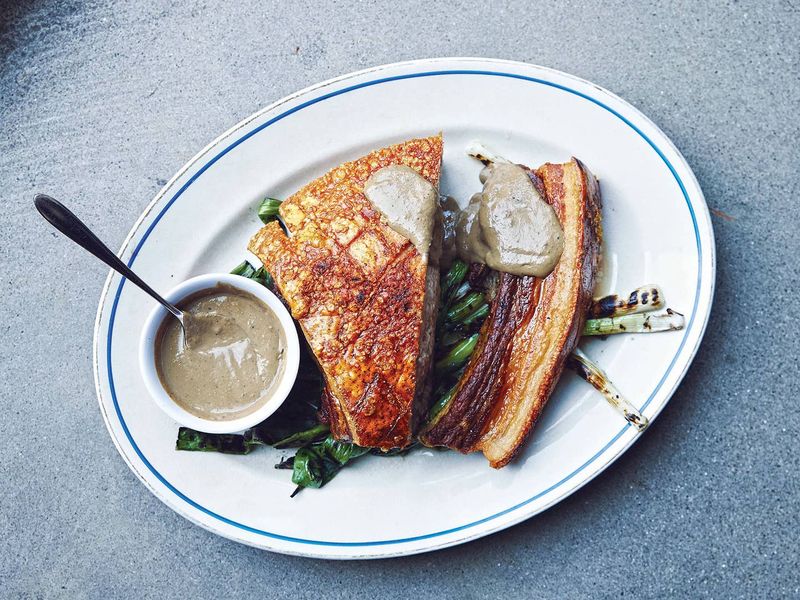
Somewhere along North Carolina Highway 12 in Rodanthe, sandwiched between salt air and a Liberty gas station, a barbecue trailer is doing something nobody expected on the Outer Banks. Hoy Lechon – Asian Inspired BBQ brings Filipino and Asian-inspired flavors to one of the coast’s most familiar vacation corridors, and the dish drawing the most attention is a pork-belly Cebuchon with a crackling exterior that calls to mind the roasted pork celebrations Cebu, Philippines is famous for.
For travelers and locals who assumed this stretch of Hatteras Island was strictly pulled-pork-and-slaw territory, the trailer is worth a serious detour.
A Filipino barbecue trailer appears on the Rodanthe roadside
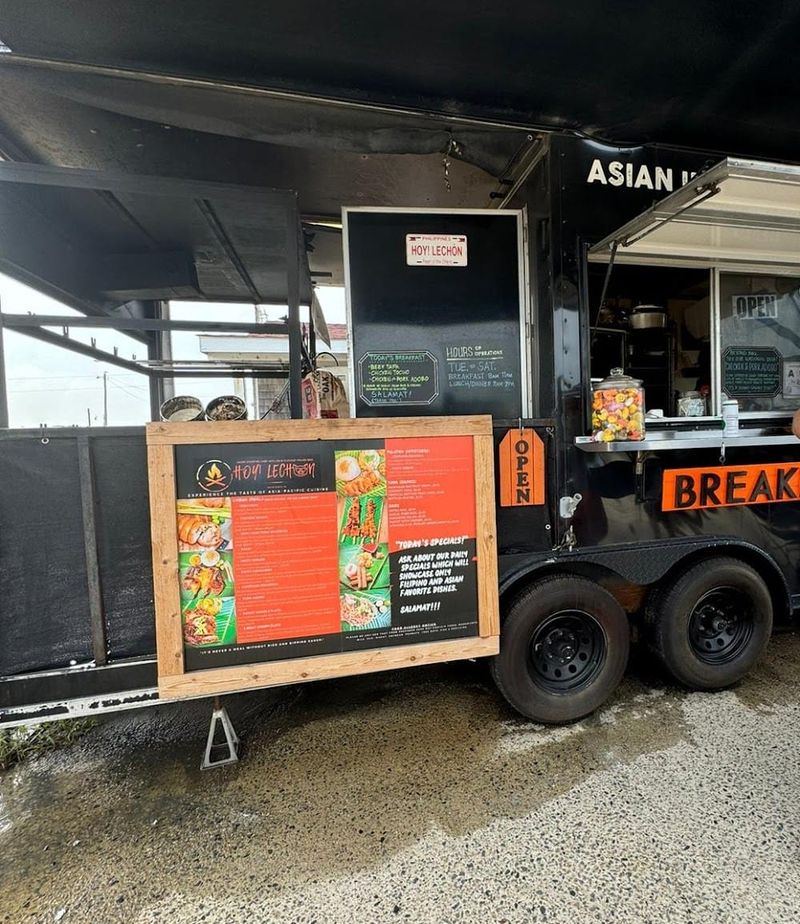
Pull off North Carolina Highway 12 near the foot of the Jug Handle Bridge in Rodanthe and you will find Hoy Lechon – Asian Inspired BBQ at 23532 NC-12, a trailer-style operation set up near a Liberty gas station. The format is simple and roadside: no sprawling dining room, no valet stand, just a compact setup where Filipino and Asian-inspired barbecue is served to anyone willing to stop.
Outer Banks Guides identifies it as a food truck run by Filipino and Chinese operators, making it a genuinely unexpected find along a stretch of coast better known for seafood shacks and classic Carolina barbecue.
Rodanthe itself is a small, census-designated community on Hatteras Island. The 2024 American Community Survey estimates the population at around 781 people, though summer swells that number considerably as the Outer Banks draws vacationers from across the region.
Rodanthe is part of the Tri-Villages area, a well-established vacation corridor that most visitors pass through on their way to Cape Hatteras. It is not an undiscovered inland outpost; it is a familiar beach-road community where a Filipino barbecue trailer simply was not part of the expected landscape.
That contrast is exactly what makes Hoy Lechon worth noting. The business has been covered by Outer Banks guides and regional food publications, so it is not a secret, but it still catches most passersby off guard.
The dish that gives first-time visitors the clearest reason to stop and order is the Cebuchon, a pork-belly preparation described by local guides as the trailer’s standout item. One look at the name on the signage and the smell from the grill is usually enough to make drivers reconsider their plans for lunch.
Cebu gives the lechon story its celebratory charge
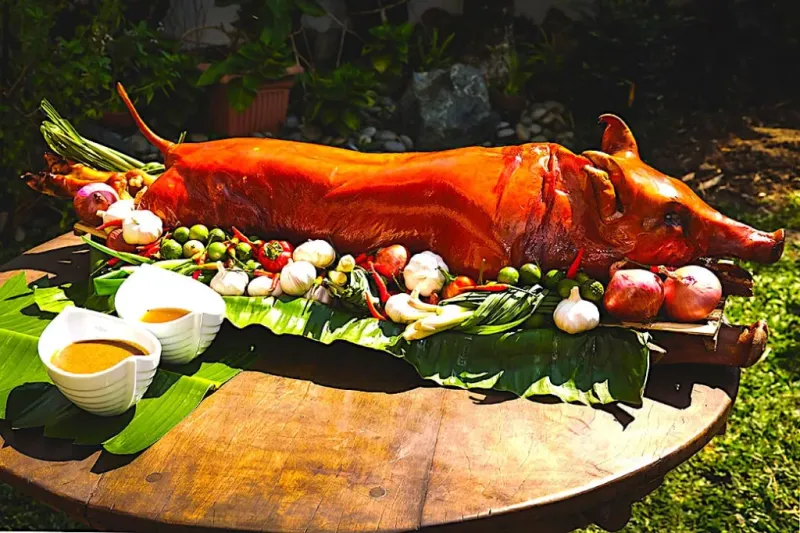
The word “Cebu” in the trailer’s name and menu is not decorative. Cebu is a province and island in the central Philippines with a food culture that has made its roasted pig one of the most recognized dishes in the country.
The official Cebu provincial website identifies lechon as a signature part of the region’s heritage, connected to celebrations, fiestas, and gatherings where a whole roasted pig – seasoned with herbs and spices, cooked until the skin is deeply crisp and the meat is moist and flavorful – serves as the centerpiece of the feast.
When Hoy Lechon uses “Cebuchon” as a menu name, it is invoking that tradition of flavor and festivity. The crisp skin, the aromatic seasoning, the sense that this is food built for sharing and celebration – those are the qualities the name is meant to evoke.
Describing the experience as feeling like “a fiesta in Cebu” is sensory language, a way of capturing the mood that a well-executed piece of roasted pork can produce, not a claim that the trailer recreates a specific Cebuano festival or follows a single standardized traditional recipe.
Cebu’s lechon tradition is associated with whole roasted pig, but the broader Filipino use of the word covers a range of pork preparations. The cultural weight behind the Cebuchon name is real and worth understanding before you order.
Knowing where that flavor tradition comes from makes the first bite taste like more than just crispy pork – it tastes like a specific place and a specific way of celebrating.
Cebuchon is the crisp, tender centerpiece
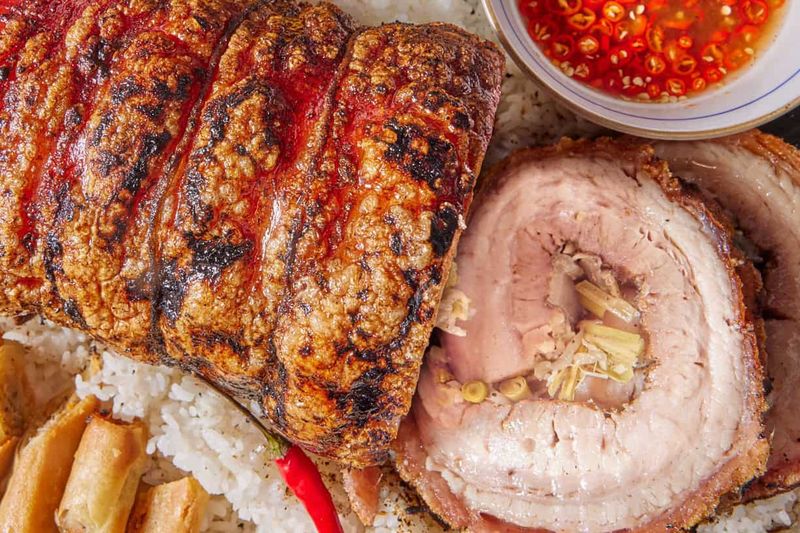
Order the Cebuchon and you are ordering the dish that regional guides and customer reviews single out most consistently. A review aggregation on Postcard describes the pork belly as a recurring highlight, with customers noting its crisp exterior and tender interior as the combination that sets it apart from what you would expect at a typical roadside barbecue stop.
The portion size also comes up repeatedly in customer accounts, suggesting that the serving is generous enough to feel like a proper meal rather than a snack.
Cebuchon, as Hoy Lechon uses the term, refers to a pork-belly preparation inspired by the Cebu lechon tradition. It is not a whole roasted pig.
In the Philippines, the broader term “lechon” covers a range of roasted pork, while “lechon de leche” specifically refers to a suckling pig roasted whole. Outer Banks Guides describes the preparation as grilled suckling pig, though the available evidence and customer descriptions point to pork belly as the cut being served.
Without direct confirmation from the owners about the exact cut, seasoning, and cooking method, the safest description is a Cebu-style or Cebu-inspired pork preparation, not a whole-animal roast.
What the sources do support is that the skin is notably crisp and the meat is tender – qualities that are harder to achieve than they sound, especially from a trailer kitchen. The Infatuation specifically calls out the pork-belly Cebuchon as the dish to order, which is about as focused a recommendation as a regional food guide can give.
Whether you call it Cebu-inspired, Filipino-style, or simply the best reason to slow down on Highway 12, the Cebuchon is the dish that earns the trailer its reputation.
The menu extends well beyond one pork dish
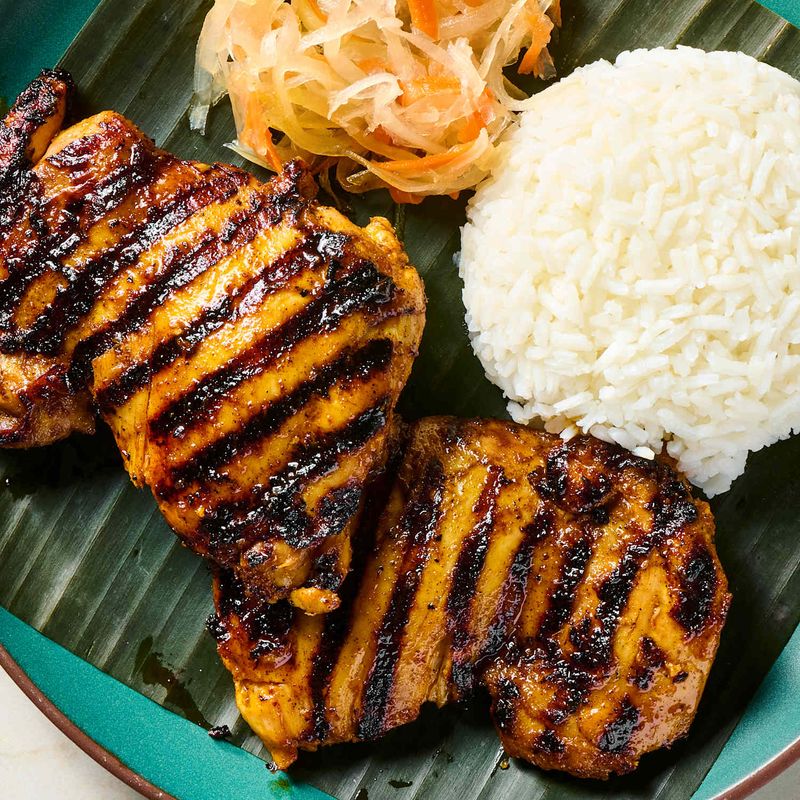
Cebuchon may be the headline, but the menu at Hoy Lechon reads like a broader tour of Filipino and Asian-inspired barbecue. Outer Banks Guides lists items including Filipino barbecue chicken, chicken inasal, pork ribs, lumpia or spring rolls, adobo fried rice, garlic rice, and pancit noodles among the offerings.
That range means the trailer serves a genuine cross-section of Filipino comfort food, not just a single-dish novelty built around one crispy pork preparation.
Chicken inasal – a vinegar-and-citrus-marinated grilled chicken associated with the Visayas region of the Philippines – and Filipino-style barbecue chicken both offer a different entry point for anyone who wants to explore the menu without starting with pork. The lumpia, fried spring rolls filled with seasoned meat and vegetables, work well as a side or a starter.
Rice dishes, whether garlic rice or adobo fried rice, round out the meal in the way Filipino food typically does: rice is not an afterthought here, it is part of the structure.
The Infatuation notes that pancit can sell out, which is worth keeping in mind if noodles are part of your plan. That is a reported, changeable condition rather than a guaranteed outcome on any given visit, but it is a practical signal that popular items move quickly.
The best-supported starting order remains Cebuchon or pork belly paired with rice, with pancit as an addition if it is still available when you arrive.
Why this stop feels different from ordinary Outer Banks barbecue
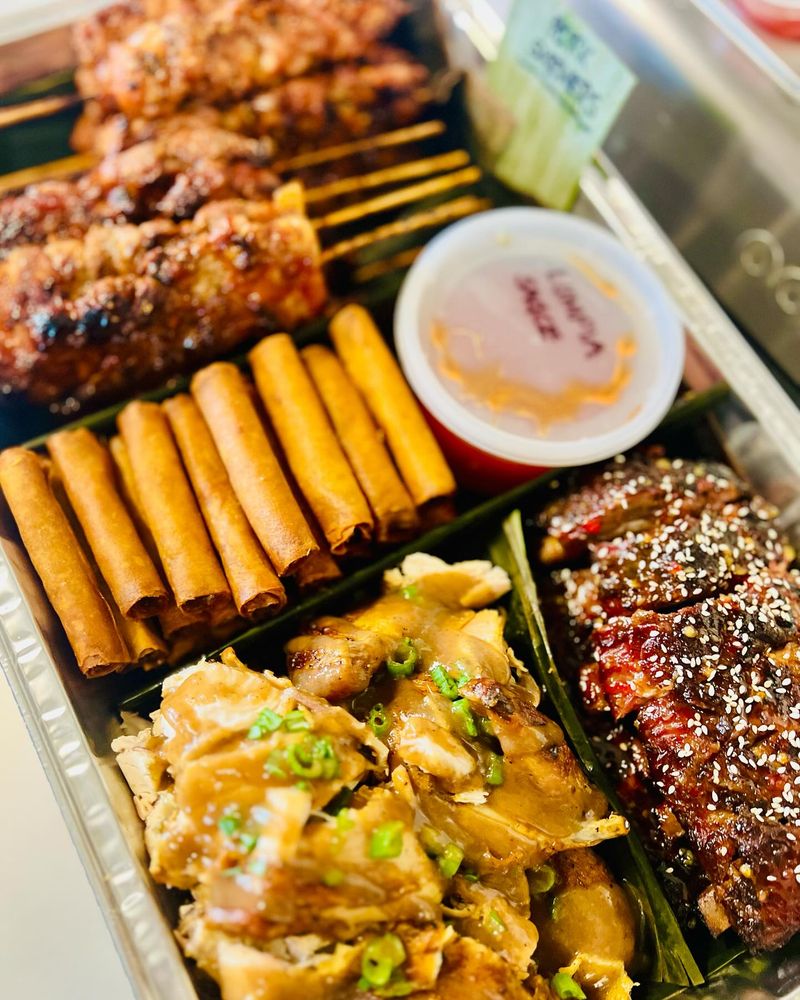
Most people driving Highway 12 through Rodanthe have a mental map of what roadside food looks like on the Outer Banks: fresh seafood, fried shrimp, fish tacos, and the pulled pork or smoked ribs that define eastern North Carolina barbecue. The Outer Banks Visitors Bureau describes the Tri-Villages area, which includes Rodanthe, as an established part of the Hatteras Island vacation corridor – a place with its own food traditions and seasonal rhythms.
Hoy Lechon does not fit neatly into any of those categories, and that gap is precisely what makes the stop feel like a discovery even if the business is not new.
The contrast is culinary rather than geographic. Filipino barbecue techniques, Cebu-inspired pork preparations, lumpia, pancit, and chicken inasal are not flavors that typically appear along this particular stretch of coastal highway.
The trailer’s Filipino and Chinese operators have built a menu that draws on multiple food traditions, combining Filipino home-cooking staples with the kind of grilled and roasted proteins that travel well from a trailer window. That combination is not a gimmick – it is a coherent food identity that happens to be planted somewhere most diners would not have thought to look for it.
Cebu’s lechon tradition carries centuries of culinary practice behind it, and encountering an echo of that tradition on a North Carolina highway creates a small but genuine jolt of culinary surprise. The Outer Banks has no shortage of good food, but Filipino barbecue served from a trailer near a gas station is a different kind of good – specific, personal, and harder to replicate at the next stop down the road.
Check the truck before making the drive
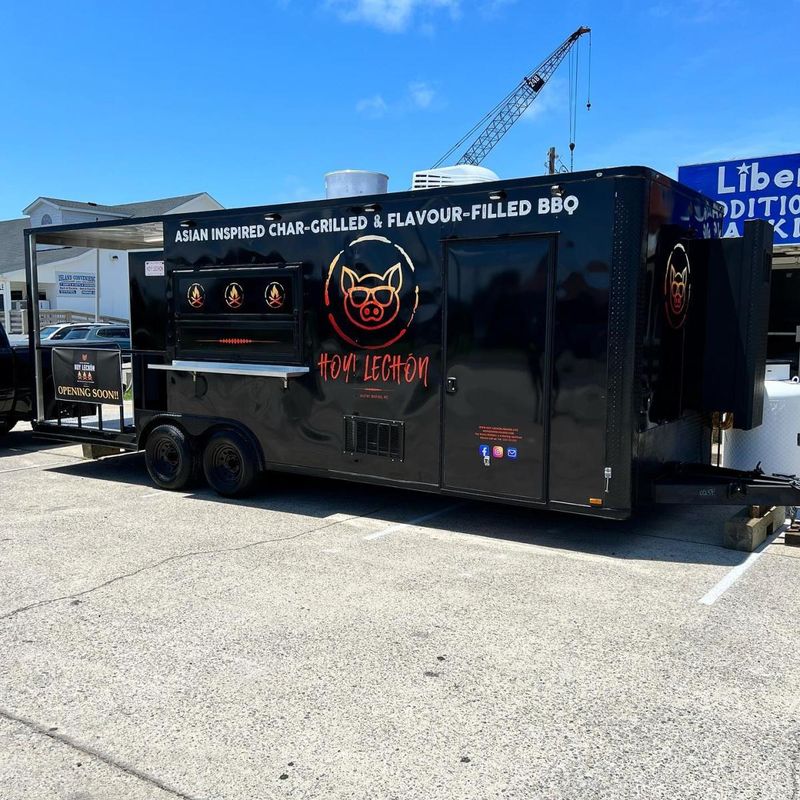
Hoy Lechon operates as a trailer-style food stop, not a full-service restaurant with guaranteed indoor seating, fixed hours, and a permanent dining room. That distinction matters when you are planning a trip specifically around eating there.
The official Hoy Lechon Square site is the most reliable place to check current hours and see what is on the menu before you make the drive down Highway 12. Directory listings can lag behind real-world changes, especially for small operations that adjust their schedule seasonally.
Restaurant Guru and similar listing sites show hours that do not always match one another, which is a common issue for food trucks and trailers that shift their schedule between busy and slow seasons. Outer Banks Guides lists a phone number of 252-564-4124 if you want to call ahead and confirm.
That extra step is worth taking if you are driving from a distance or have your heart set on a specific item like pancit, which has been reported to sell out on busier days.
At least one listing notes that restroom access is not guaranteed at the trailer location, while another suggests customers may be able to use facilities in the adjacent convenience store. Confirm that detail directly with the business rather than assuming.
The address is 23532 North Carolina Highway 12, Rodanthe, NC 27968, near the foot of the Jug Handle Bridge and the Liberty gas station – easy to spot from the road, but only worth the trip if the trailer is actually open and serving when you arrive.
The roadside surprise is the point
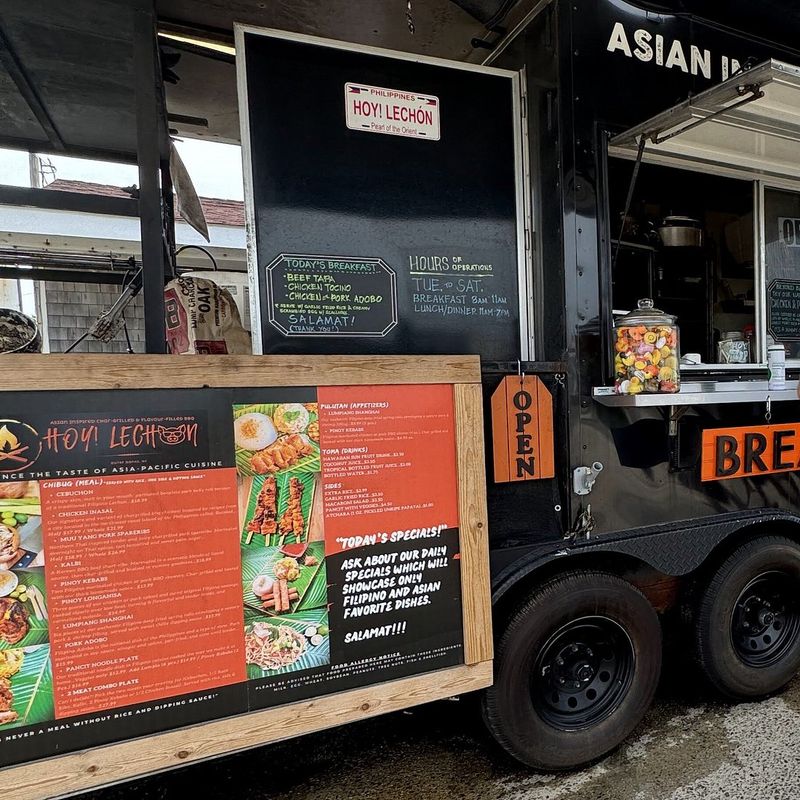
Hoy Lechon gives Rodanthe something the Outer Banks did not have before: a place to seek out Filipino barbecue on a stretch of highway built for seafood and smoked pork. Customer reviews collected on Postcard consistently return to the Cebuchon as the reason to visit, and The Infatuation’s recommendation of the pork-belly Cebuchon reinforces that the dish earns its reputation rather than just riding novelty.
The Cebuchon is Cebu-inspired and described as crisp and tender by multiple sources, but it is a pork-belly preparation at a Filipino and Asian-inspired barbecue trailer, not a certified recreation of a whole-animal Cebuano feast. That distinction does not diminish it.
A well-executed piece of pork belly with crackling skin, served roadside in a small coastal community, is its own kind of achievement.
Before making the trip, check the official Square site for current hours and availability. The trailer is worth finding – but only when it is actually open and ready to serve.
Sometimes the best roadside food is the kind that makes you pull over without a plan, and sometimes it is the kind you plan your whole drive around.
Share this story