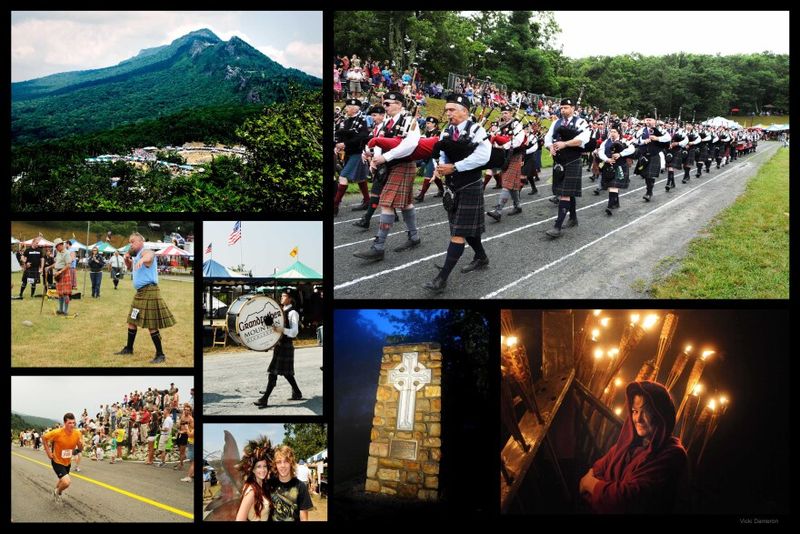
Every July, a corner of North Carolina’s High Country transforms into something you rarely see anywhere else in the United States: a full-scale Scottish clan gathering set against the backdrop of the Blue Ridge. The Grandfather Mountain Highland Games, held at MacRae Meadows near Linville, brings together massed pipe bands, Highland dancers, organized athletic competitors, and hundreds of clan families for a long weekend of heritage and spectacle.
Whether you have Scottish roots or just want to watch athletes hurl a large tapered log end over end in the mountain air, this festival delivers a genuinely one-of-a-kind summer experience.
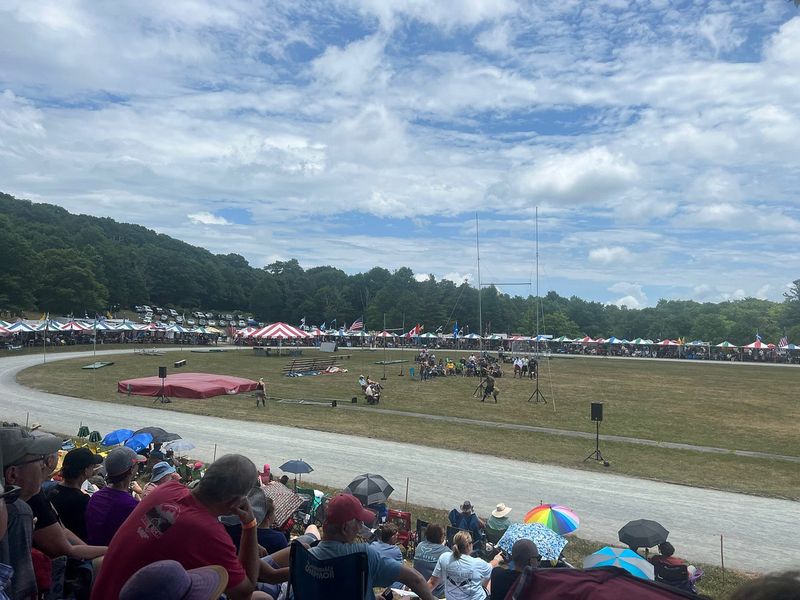
A July Highland gathering takes over MacRae Meadows
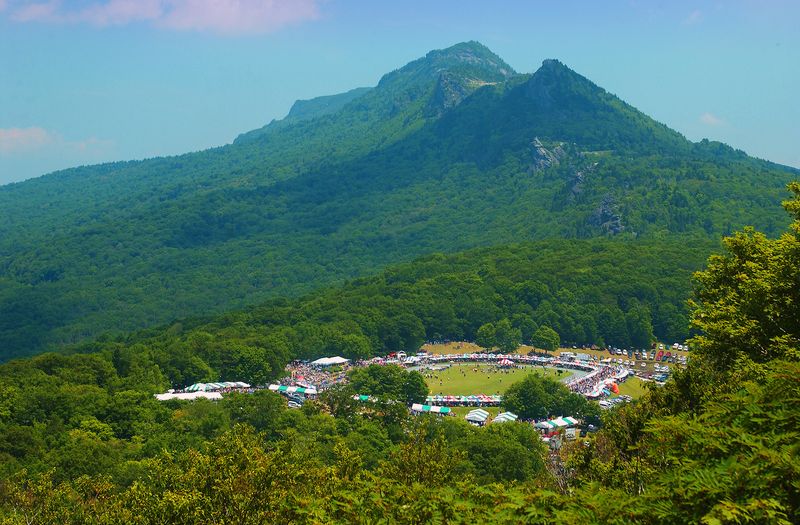
MacRae Meadows sits about two miles north of Linville, tucked just off U.S. Highway 221 and roughly one mile south of the Blue Ridge Parkway at Milepost 305.
On most summer days, it is a quiet, grassy expanse framed by the ridgelines of North Carolina’s High Country. On the second full weekend of July, though, that meadow becomes the gathering ground for the Grandfather Mountain Highland Games, one of the most substantial Scottish clan events in the country.
The festival was founded in 1956 by Agnes MacRae Morton and Charlotte News reporter Donald MacDonald, and the 2026 edition was billed as the 70th annual games. That kind of longevity is not accidental.
The official media information for Grandfather Mountain Highland Games describes an event built around Scottish clan gatherings, piping and drumming competitions, Highland dancing, cultural demonstrations, and organized heavy athletics, all concentrated in a meadow setting that gives the weekend an open, communal feel.
The High Country location adds its own character. Elevations in this part of western North Carolina keep July temperatures noticeably cooler than the Piedmont, and the surrounding ridges create a natural amphitheater effect that carries the sound of pipes and drums across the grounds in a way that flat-land venues simply cannot replicate.
Visitors who arrive expecting a modest local fair tend to leave surprised by the scale.
The official general information page confirms the second-full-weekend-of-July schedule and provides current logistics. The 2026 press release marked the milestone 70th gathering, underscoring that this is a deeply rooted event rather than a recent tourism invention.
For travelers within a few hours of the High Country, the festival offers a rare combination of mountain scenery, living heritage, and organized spectacle in a single long weekend.
The clan tents turn the meadow into a cultural map
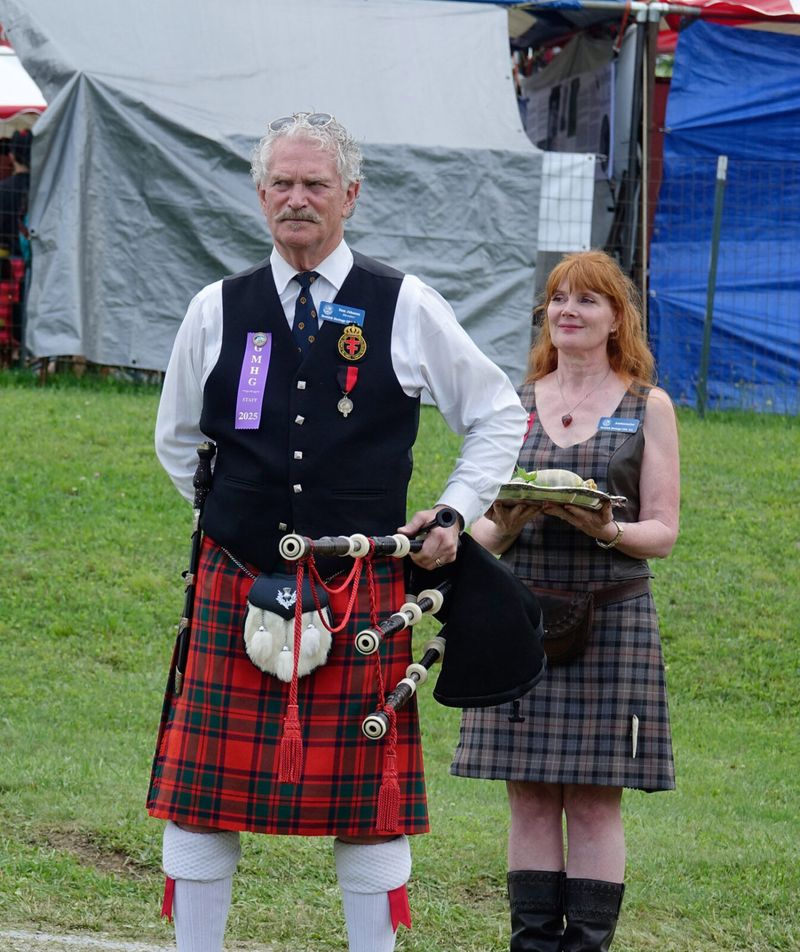
Walk the grounds at MacRae Meadows during the festival and the first thing that strikes you is not the athletics or the music but the sheer number of names. Clan banners hang from tent poles across the field, each one marking a family or society that has traveled here to connect with people who share the same Scottish surname, region, or ancestral history.
According to the organizers’ media information, the festival draws more than 100 Scottish clans and societies and sets up approximately 150 clan tents. That density turns the meadow into something closer to a living family tree than a typical festival vendor row.
Visitors can stop at a MacLeod tent, a Campbell tent, a MacDonald tent, or dozens of others, ask questions about their own family history, and often walk away with a surname booklet, a clan pin, or simply a conversation they were not expecting.
The presentations inside those tents vary. Some clans focus on genealogy and will help visitors trace connections to Scottish regions.
Others display tartans, historical artifacts, or photographs. A few host demonstrations of traditional crafts or storytelling.
These are modern heritage presentations organized by volunteers and enthusiasts, not unchanged ancient ceremonies, but they carry genuine knowledge and personal investment.
Visit North Carolina describes the event as the largest gathering of Scottish clans in the United States, a claim worth noting with that attribution in mind. Whether or not that superlative holds up against every other American Scottish event, the concrete numbers of 100-plus clans and roughly 150 tents make a clear case that this is a major U.S. gathering by any reasonable measure.
For visitors with Scottish heritage, the clan tent section alone can fill an entire afternoon.
Massed bands create the festival’s unmistakable soundtrack
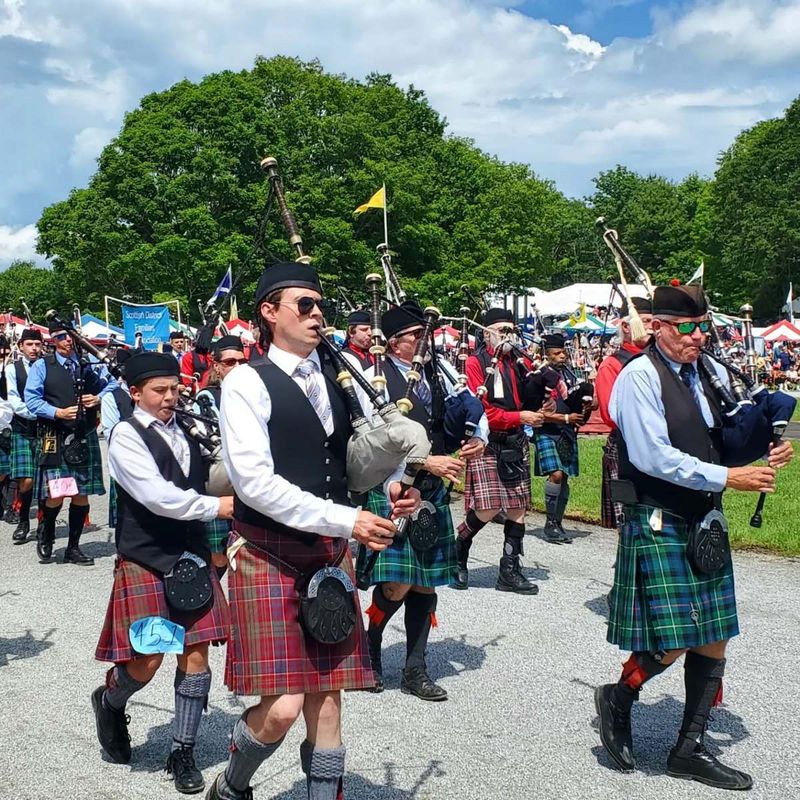
Piping and drumming run through the entire weekend at Grandfather Mountain, but two moments define the festival’s sonic identity above all others: the opening ceremony and the Parade of Tartans. Both feature massed-band performances, where multiple competing bands take the field together and play as one collective force.
The result is a wall of sound that travels across the meadow and up into the surrounding ridgelines in a way that individual bands simply cannot produce.
Throughout the rest of the weekend, piping and drumming competitions run on a separate schedule, sanctioned by the Eastern United States Pipe Band Association. Solo pipers, small ensembles, and full bands compete in categories judged on technique, tone, and ensemble precision.
These competitions give the festival a serious musical backbone beyond the ceremonial performances, and they attract competitors from well outside North Carolina.
The Parade of Tartans is a visual and musical centerpiece, with clan members marching behind their banners while the massed bands provide the processional music. Watching dozens of tartans move across the meadow to that collective sound is one of those experiences that photographs do not fully capture.
Organizers recommend that visitors attending the piping performances bring blankets and chairs, a practical note that also hints at how long and immersive those performances tend to run.
The official schedule lists when the massed-band performances and competitions occur each day, so visitors who want to time their arrival around the music have a reliable reference point. The precise number of pipers on the field during massed performances is not published by the organizers, but the collective sound of several full bands playing together is one of the festival’s defining sensory moments, and no precise count is needed to appreciate it.
What the caber toss actually tests
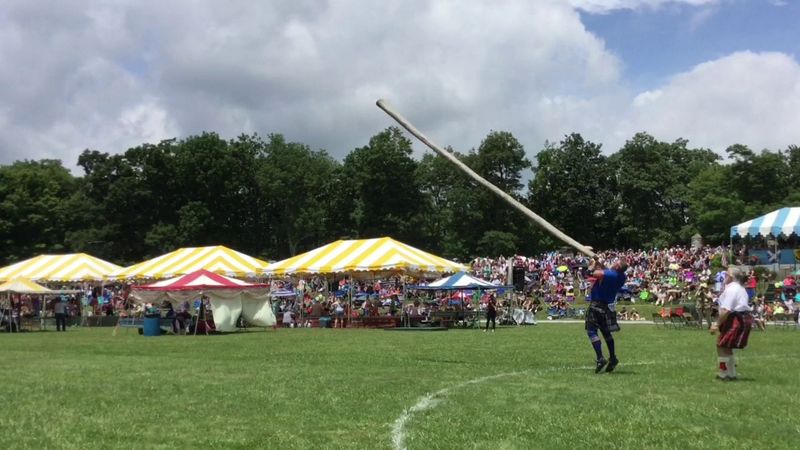
Most first-time spectators assume the caber toss is a distance competition. Watch a few attempts and the confusion is understandable: a large, heavy, tapered tree trunk is being thrown by a very strong person.
Distance seems like the obvious measure. The actual scoring system, though, rewards something more precise and harder to achieve.
The competitor cradles the caber vertically, thick end up, and runs forward before driving it skyward. The goal is to flip the caber end over end so that the thick end hits the ground first and the tapered end falls directly away from the thrower.
A perfect result, called a 12 o’clock, means the caber lands pointing straight away from the athlete as judged from above. Judges use a clock-face system: a caber that falls slightly to the right might score 1 o’clock, one that falls short of vertical might score 11 o’clock.
The Foundation for Scottish Athletics explains that competitors typically receive three attempts, and judges evaluate each partial turn by degrees when a full end-over-end flip is not achieved.
Safety and structure govern the competition from start to finish. A judge has the authority to order an athlete to drop the caber at any point if a safety concern arises.
The competition area is controlled, spectators stay behind designated boundaries, and the athletes are organized competitors who train specifically for these events, not casual participants who wandered in from the clan tents.
The caber itself is a tapered tree trunk selected for the competition. General Scottish heavy-event guidance describes amateur cabers as roughly 4 to 5 meters long with a thick end approximately 25 to 35 centimeters in diameter, though those figures reflect general amateur-event parameters rather than exact specifications for every caber used at Grandfather Mountain’s professional competition.
The visual impression of a grown adult lifting and flipping a log that size is striking on its own terms, without any exaggeration needed.
The heavy field is only one part of the weekend
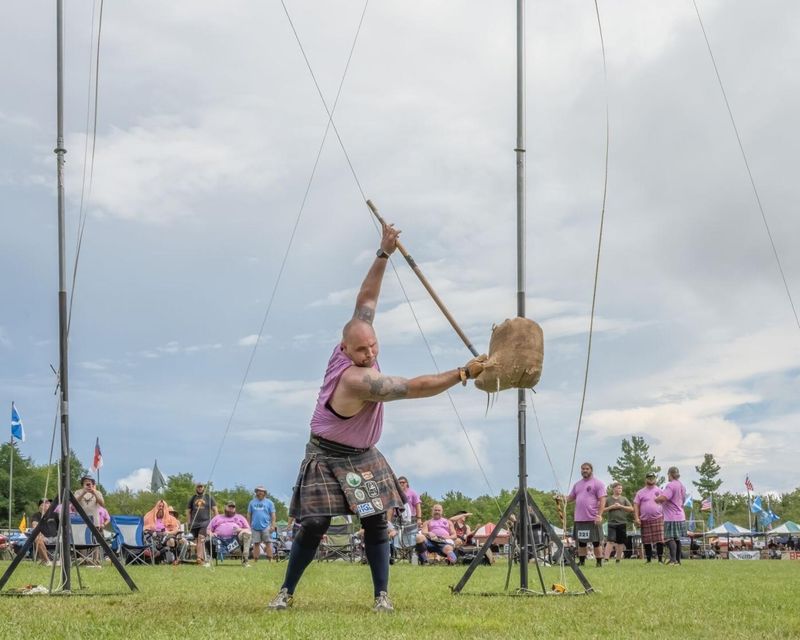
Beyond the caber toss, the athletic program at Grandfather Mountain covers a wide range of events. Professional and amateur heavy athletics include the stone put, hammer throw, weight for height, and weight for distance, each with its own technique and scoring.
Highland wrestling adds a grappling discipline to the mix, and track-and-field events round out the competitive athletics schedule. Children’s athletic activities give younger visitors a structured way to participate in the spirit of the games without approaching the professional competition area.
Highland dancing brings a separate performance tradition to the weekend. Dancers in full regalia compete in reels, strathspeys, and traditional sword dances on dedicated stages, with competitions running across multiple age groups and skill levels.
The footwork, posture, and precision required are significant, and the competitions draw serious dancers from across the region. For visitors who have never watched Highland dancing up close, the combination of athletic control and formal presentation tends to be more impressive than expected.
Cultural demonstrations and educational programming fill out the schedule alongside the competitive events. The official schedule provides day-by-day timing for all of these activities, which is worth reviewing before arrival since some events overlap and others are concentrated on specific days.
The festival also includes musical performances beyond the pipe bands, with concerts and stage programming adding variety for attendees who want to pace themselves across a long weekend.
According to the organizers’ media materials, the programming is designed to serve a wide range of interests. A visitor focused entirely on heritage and clan history can spend the full weekend in the tent area and at cultural presentations without attending a single athletic event.
Another visitor can structure the entire trip around the heavy athletics schedule and barely visit the clan tents. Most people end up doing something in between, which is part of what makes the festival work as a multi-day event.
Plan a mountain day around the schedule
The festival runs on the second full weekend of July each year. The 2026 edition took place July 9 through 12, and the official Grandfather Mountain Highland Games website currently lists July 8 through 11, 2027, as the next edition.
Those dates are subject to confirmation, so checking the site before making travel plans is a practical first step rather than an optional one.
MacRae Meadows is located on U.S. Highway 221, about two miles north of Linville and one mile south of the Blue Ridge Parkway at Milepost 305.
Shuttle buses operate during the festival, which matters because parking in a mountain meadow has real limits. The general information page confirms the shuttle service and also lists what visitors cannot bring: pets, private golf carts, and bicycles are all prohibited on the grounds.
Knowing that before loading up the car saves a frustrating conversation at the entrance.
Admission for 2026 ranged from $30 to $40 for adults depending on the day, with lower prices for children. Current ticket prices for 2027 have not been finalized at the time of writing, and costs may change.
Multi-day passes and family pricing options are worth checking when planning a longer visit. The event is family-friendly by design, with children’s activities, accessible grounds, and programming spread across all four days.
Packing for the weather takes a little thought. MacRae Meadows sits at elevation, and July mornings in the High Country can be cool even when afternoons warm up.
The piping and drumming information page specifically advises visitors attending performances to bring blankets and chairs, which signals that these are extended, outdoor, sit-down experiences rather than quick walk-by moments. Comfortable footwear for uneven grass is another practical consideration, especially for visitors planning to cover the full grounds across multiple days.
Confirming the current schedule, admission prices, and any updated policies directly with the organizers before traveling is the most reliable way to avoid surprises.
A distinctive High Country meeting of heritage and spectacle
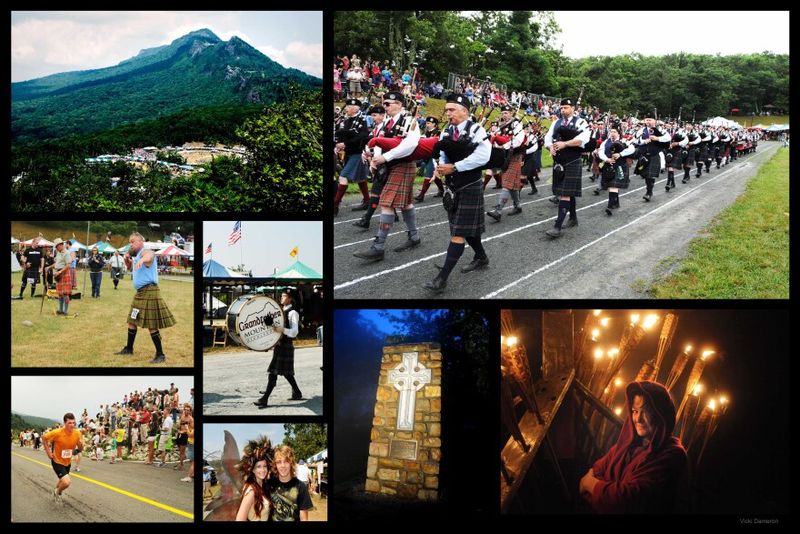
Grandfather Mountain Highland Games brings together Blue Ridge geography, Scottish clan heritage, massed pipe band music, and supervised athletic competition in one concentrated July gathering at MacRae Meadows. Each element reinforces the others: the mountain setting amplifies the sound, the clan tents give the athletics personal stakes, and the piping gives the whole weekend a ceremonial weight that a standard sports event lacks.
The image of tossed telephone-pole-sized objects that the festival’s reputation conjures is really visual shorthand for a caber competition involving tapered tree trunks, formal rules, trained athletes, and judges with the authority to stop any unsafe attempt. The spectacle is real; the casual impression of locals heaving utility poles is not quite accurate.
Understanding the difference makes the actual competition more impressive, not less.
For travelers within a reasonable drive of the High Country, this festival is a strong candidate for a July weekend trip. Confirm dates, prices, and policies at the official general information page before booking lodging.
Few summer events in North Carolina put this much heritage, music, and organized spectacle in one mountain meadow.
Share this story