Picture a city center where you could pray, shop, bathe, learn, and even mint coins, all within a short stroll. Ganjali Khan in Kerman, Iran, was built around 400 years ago to do exactly that.
Today you can still walk its brick arches and tiled courtyards. Here are ten parts of this Safavid treasure that bring old Kerman back to life.
The Man Behind the Marvel
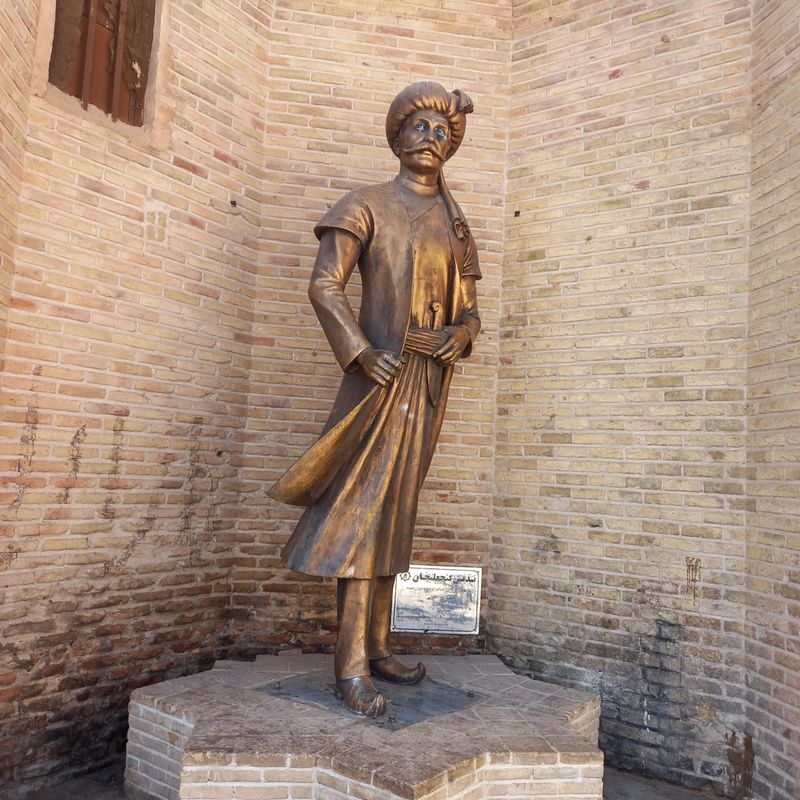
Some governors collect taxes. Ganjali Khan collected buildings, and what buildings they were.
He ruled Kerman for Shah Abbas I in the late 1500s and early 1600s, and he wanted his region to thrive.
Visitors often say he settled and boosted the area through big public projects. Besides the complex in the city center, he is linked to a caravanserai on the Yazd-Kerman road, a reservoir on the Kerman-Mashhad road, and several underground water channels called qanats.
Not everything survived. Reviews mention that some of his works were badly damaged during the military campaigns of Agha Mohammad Khan, long after his time.
Still, the main complex remains as his big signature. Part of the income from the complex and the water channels was even given to the shrine of Astan Quds Razavi.
That tells you he planned for the long run, not just for show.
Think of him as an early city planner with a very large budget and a taste for fine tilework. His name still sits proudly on the square today.
A Square Inspired by Isfahan
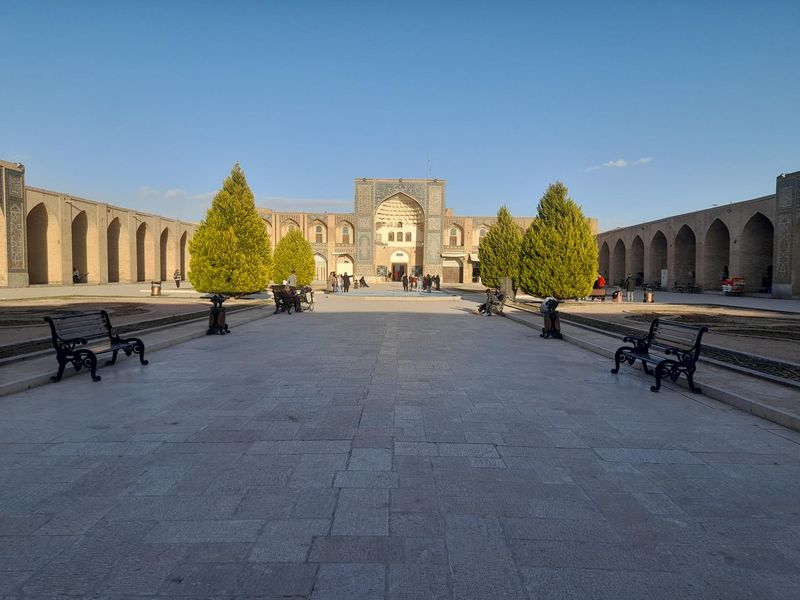
Step into the square and your eyes will not know where to land first. Brick arches line the edges, water ponds shimmer, and green patches soften the view.
The square dates to about 1005 AH, and reviewers compare it to Naqsh-e Jahan Square in Isfahan and Mirchakhmaq in Yazd. Like those, it gathers key city buildings around one open space.
The whole complex covers about 11,000 square meters. That is a lot of room for traders, travelers, and townspeople to meet.
Here is a tip from visitors: come in the evening. When the lights turn on, the square becomes lively and lovely, and it is a nice place for a slow walk.
Bring a camera. Several guests say this is a spot for amazing photos of Iranian history, and the symmetry of the arcades makes every shot look planned.
The Famous Bathhouse
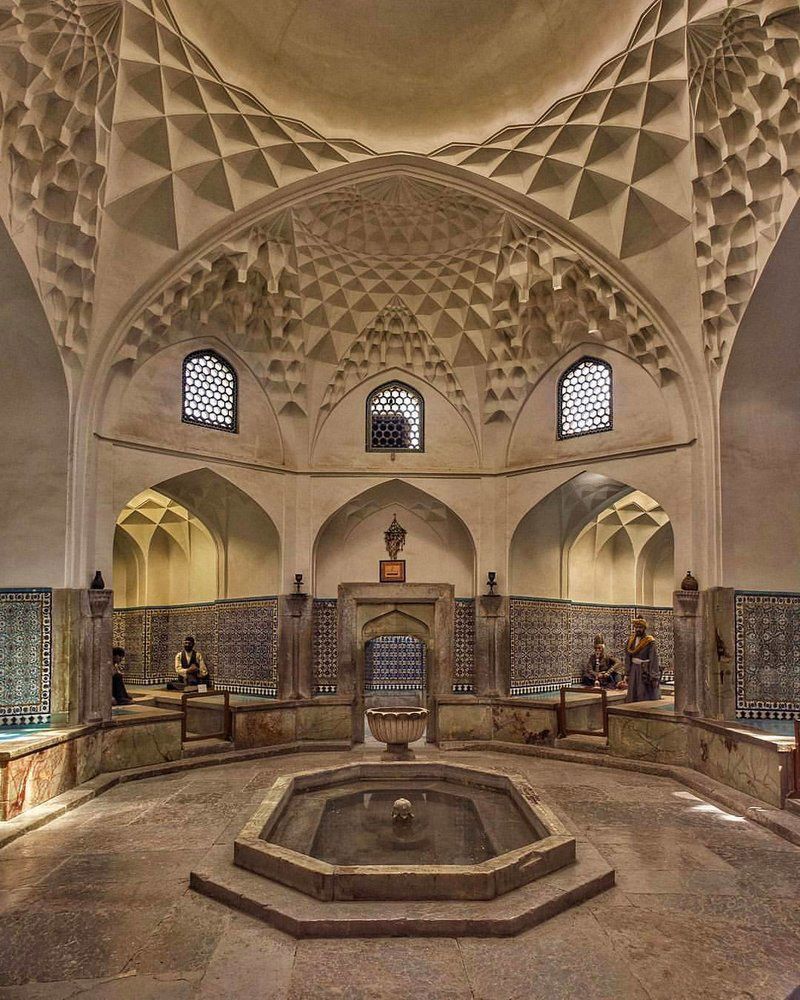
Steam, gossip, and fresh paint: that was once a day at the hammam. The Ganjali Khan bathhouse, built around 1020 AH on the south side of the square, is celebrated for its detailed wall paintings.
Inside, the layout is elegant and calm. Domed ceilings and carved plaster show how much care went into a place meant for washing up.
Bathhouses were social hubs in Safavid cities. People came to relax, meet friends, and swap news after a long day of trading.
Many visitors call it the highlight of the complex. Look up as you walk through, since the ceilings reward curious necks.
Move slowly and check the quiet corners too. Small decorative touches often hide in places most people hurry past.
The Caravanserai
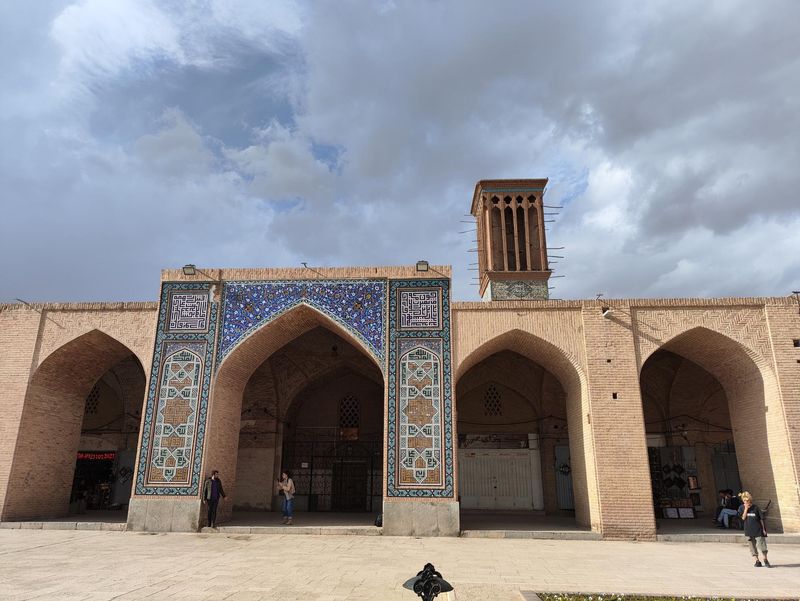
Weary travelers once rolled in here after days on dusty roads. The caravanserai sits on the east side of the square and was built around 1021 AH.
Its portal carries a foundation inscription from 1598 by the calligrapher Alireza Abbasi. The plan follows the four-iwan style, with two-story halls and tall arched iwans around an open courtyard.
An octagonal fountain with chamfered corners sits at the center. In one corner you will find a small domed mosque, about five and a half by five meters.
Here is a handy detail from a past visitor: a tourist information office operates inside this caravanserai. It is a smart first stop for maps and local tips.
Architects and history fans love it, because the layout shows exactly how rest stops on trade routes were organized.
The Mosque Like a Jewel Box
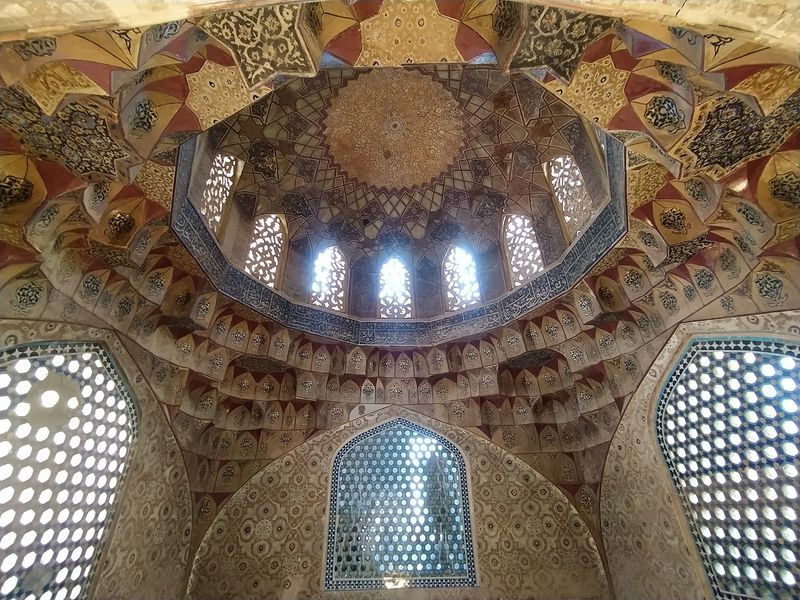
One reviewer put it plainly: this mosque is a definite must see. Its patterns and tilework back that up.
Four mosques once stood on the four sides of the square, and three remain. The most elegant one sits on the eastern side beside the caravanserai, and it has been called a museum of decorative arts.
The style follows the Isfahani tradition, with fine tile and brick details. Some visitors describe it as a small mosque once used privately by the rulers of Kerman.
Accounts differ on its exact role. Some say it was the ruler’s own place of worship, while others link it closely with the neighboring school.
Either way, the atmosphere is peaceful. Take a moment to sit, look at the patterns, and let the noise of the bazaar fade.
The School of Learning
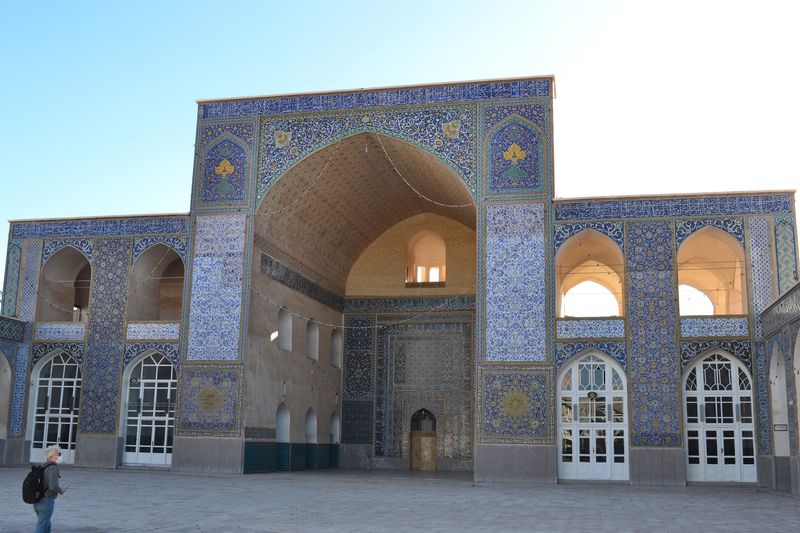
Books and brickwork shared the same neighborhood here. The school, built around 1007 AH on the eastern side of the square, gave students religious and scholarly training.
It stands next to the mosque on the northeast side, which is why the two are so often mentioned together. Together they show that the complex served the mind and the spirit, not only the wallet.
Walk the courtyard and imagine students hurrying between lessons. The arches and calm spaces still feel like a place made for focus.
Not every facility is open or explained, though. One visitor wished for more details on site, so reading up beforehand helps.
A short stop here adds balance to a visit packed with shopping and sightseeing.
The Old Mint
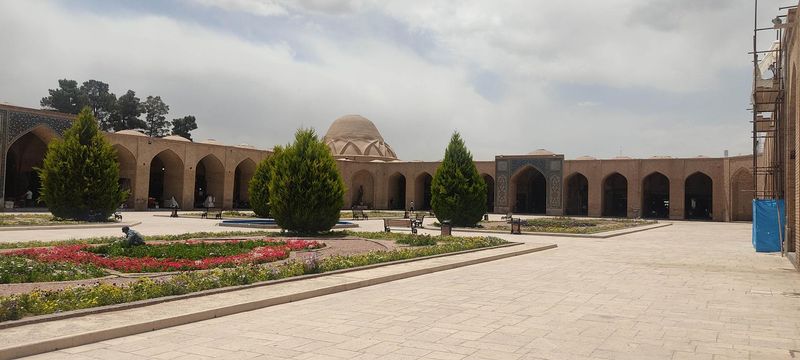
Money was literally made right here. The mint, located on the north side of the square, produced coins and shows how the complex fed the local economy.
Having a mint next to a bazaar made sense. Traders needed coins, and the governor wanted tight control of them.
Some sources call it the Zarrabkhane, the Persian word for a place where coins are struck. It is a fun word to learn and drop into travel chats.
Check the brickwork and doorways as you pass. They show that even a practical workshop was built with Safavid polish.
It is a small stop, but a telling one. It reminds you that this complex was part marketplace, part money factory, and fully organized.
The Water Reservoir
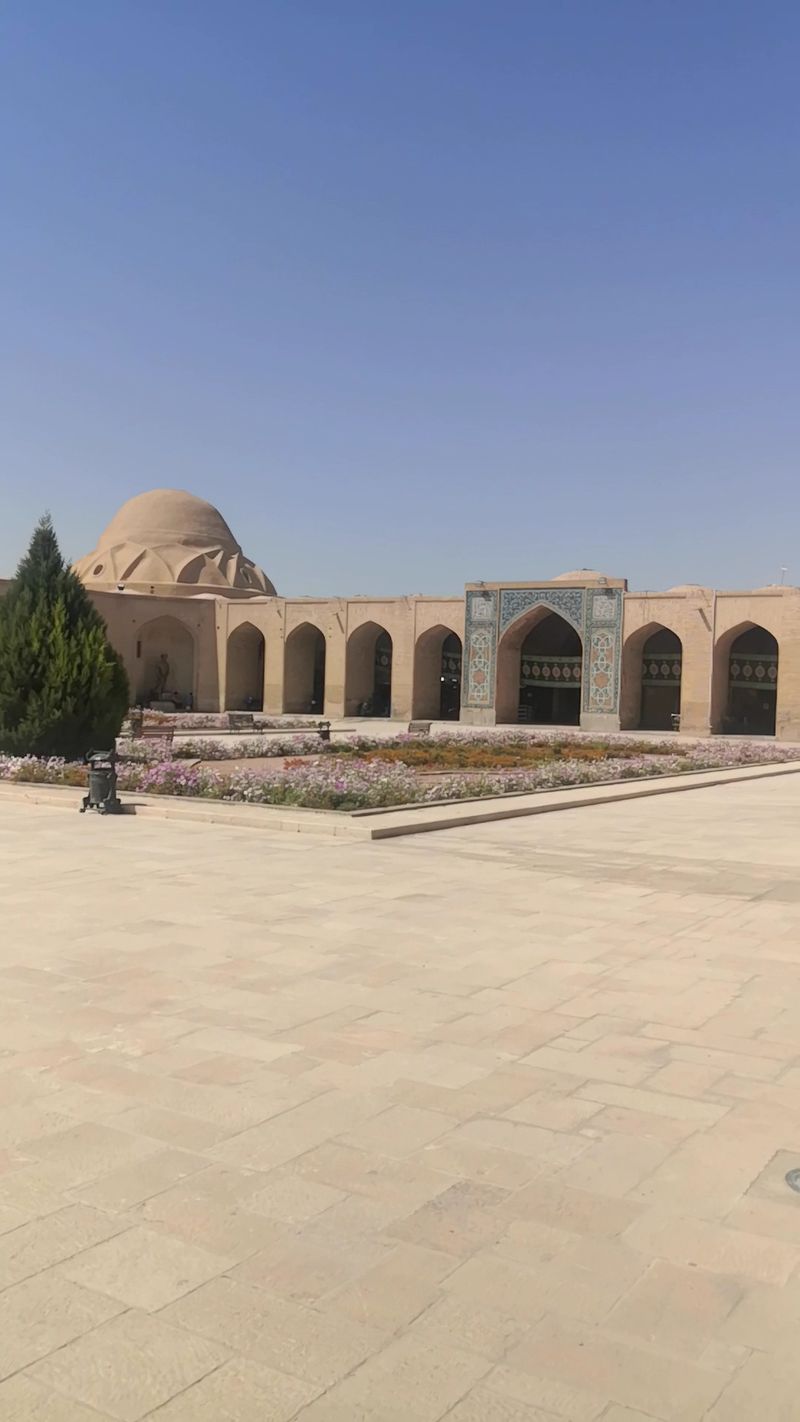
In a dry region, water is wealth. The Ab Anbar, or cistern, on the west side of the square dates to about 1021 AH.
It stored water for the people who lived, traded, and washed in the complex. Cisterns like this were usually covered by domes to keep the water cool.
Ganjali Khan also built qanats around Kerman, which are underground channels that carry water long distances. The cistern fits neatly into that bigger plan.
When you see ponds and green spaces in the square today, you get a hint of how important water was here. It was never just decoration.
Look for the dome and ask yourself how they kept things running without pipes or pumps. The answer is smart design and good planning.
The Bazaar Next Door
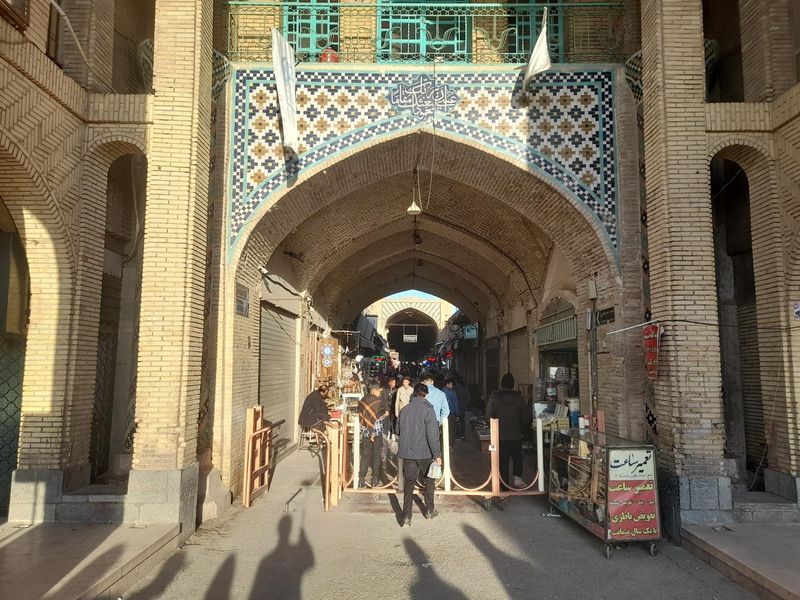
Follow your nose and you will find the spices. The bazaar stretches along the square and links straight into the Grand Bazaar of Kerman.
It was built around 1005 AH, and markets sit on three sides of the square. The coppersmith market forms a big part of the main street.
Once, it was a thriving trade hub connecting Kerman with routes across Iran and Central Asia. Today you can still browse local crafts, spices, and copper pieces.
Visitors love a stroll here. It feels lively but not rushed, and the vaulted ceilings keep the heat down.
Bring a little cash and a bit of patience. Bargaining is part of the fun, and a friendly chat often gets you a better price.
The Architect and the Style
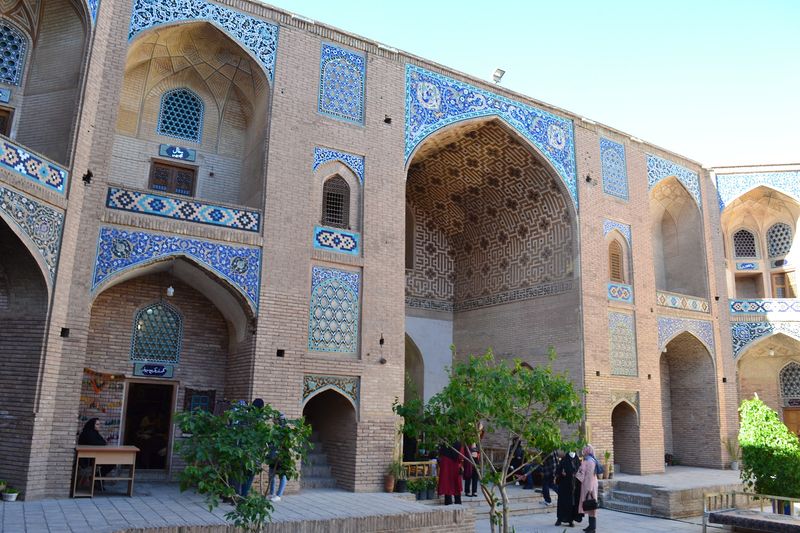
Architects, take notes. One reviewer says architects must see this place, and the design shows why.
The architect is named as Master Soltan Mohammad from Yazd. His Isfahani style blends tilework, frescoes, stucco carvings, and vaulted ceilings in a balanced layout.
Inscriptions inside the complex give the exact dates when each part was built. That makes it easy to follow the story from one building to the next.
Today, it works like an open-air museum. The site is open every day from 7 am to 8 pm, so you have plenty of time to explore.
Go early for quiet light or late for the glow of evening. Either way, you leave with a clear picture of a Persian city center from 400 years ago.
Share this story