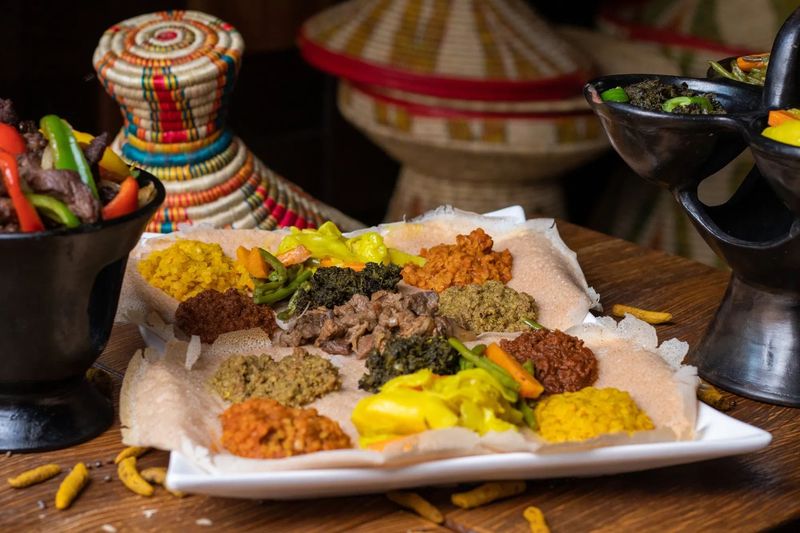
Asheville, North Carolina is better known for its craft breweries and mountain views than for Ethiopian food, but one downtown restaurant is quietly serving a meal that deserves far more attention. Addissae Ethiopian Restaurant on Commerce Street offers traditional Ethiopian dishes presented family-style on fermented injera flatbread, the kind of communal spread that turns dinner into an event.
Before you go, a few things in the original buzz around this place need a quick correction, and knowing the real story will help you order smarter and enjoy every bite.
The documented restaurant is in Asheville, not a hidden small town
North Carolina has a richer Ethiopian food scene than most people realize, and it spreads across several cities rather than hiding in one unassuming small town. Documented sources point to Ethiopian restaurants and food businesses in Asheville, Charlotte, Durham, Raleigh, and Cary.
The idea that a single secret spot holds the state’s only real Ethiopian kitchen is a story the evidence simply does not support.
The restaurant at the center of this article is Addissae Ethiopian Restaurant, listed in the Michelin Guide at 48 Commerce Street in downtown Asheville. Asheville is a city, not a small town, and calling it otherwise would shortchange both the place and the people who live there.
What Addissae offers is a well-documented example of the family-style, injera-centered dining experience that makes Ethiopian food so memorable.
The Visit NC Michelin Guide resource highlights Addissae among North Carolina’s notable dining destinations, which is part of why it earns the focus here. That recognition does not make it the definitive or only worthy Ethiopian restaurant in the state.
It makes it a specific, documented choice with enough source material to guide a first visit responsibly.
Addissae’s own about page describes traditional Ethiopian dishes served family-style on gluten-free injera, which aligns directly with the communal, injera-centered meal this article will walk you through. Treat it as one excellent Asheville option rather than a statewide gold standard, and you will arrive with the right expectations.
Fermented injera anchors the meal
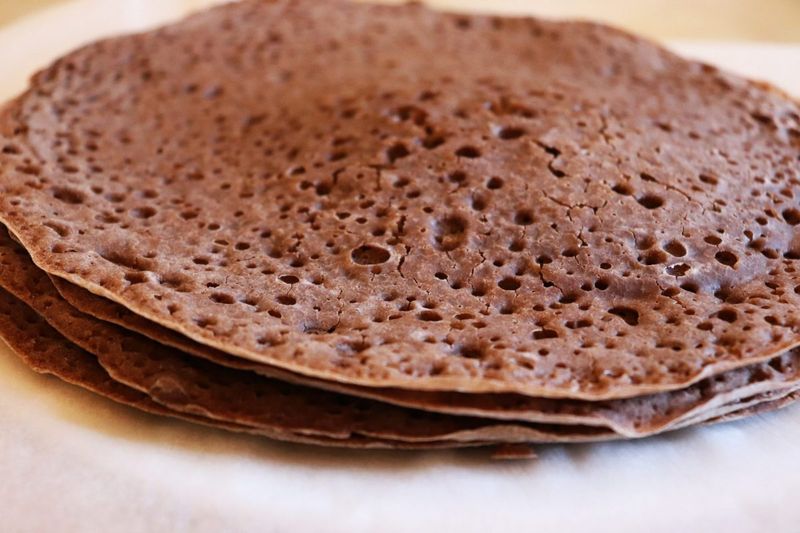
Injera is not slow-cooked, and clearing that up matters before you sit down. The flatbread is fermented, meaning the batter, traditionally made from teff grain, is left to ferment for a period that scientific reviews describe as roughly 24 to 96 hours depending on temperature and process.
After fermentation, the batter is poured onto a large, flat griddle and cooked into a wide, spongy round. That is a completely different process from the simmering and stewing used to make the wot and other dishes that go on top of it.
The fermentation step is what gives injera its signature tangy flavor and its characteristic spongy, porous texture. A 2024 study on teff injera preparation found that fermentation time and baking conditions materially changed the bread’s acidity, texture, moisture content, and overall sensory quality.
In practical terms, that means the injera you encounter can taste noticeably different from one kitchen to the next, even when both are made carefully.
Teff is the grain most closely associated with traditional Ethiopian injera, but a review of injera fermentation factors confirms that sorghum, barley, wheat, corn, and grain blends are also used depending on region, availability, and preference. Ethiopian cuisine is not uniform across the country, and injera traditions vary alongside the stews, spices, and fasting practices that surround them.
Presenting any single restaurant’s version as the definitive injera would miss the full picture.
What stays consistent is injera’s role at the table: it is the base, the utensil, and often the most talked-about part of the meal. The stews and vegetable dishes arrive on top of it, and you use torn pieces to scoop everything up.
Understanding that the bread itself is fermented and griddle-cooked, while the accompanying dishes are what get simmered or stewed, gives you a much clearer sense of what you are about to eat.
Communal service turns dinner into a shared experience
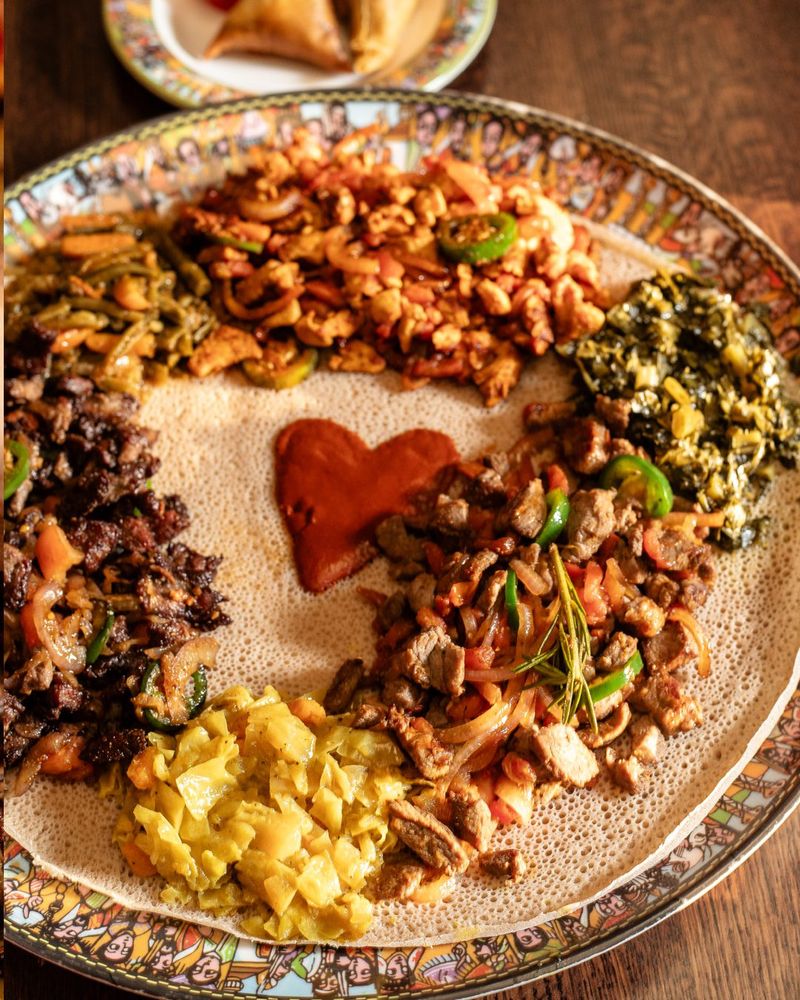
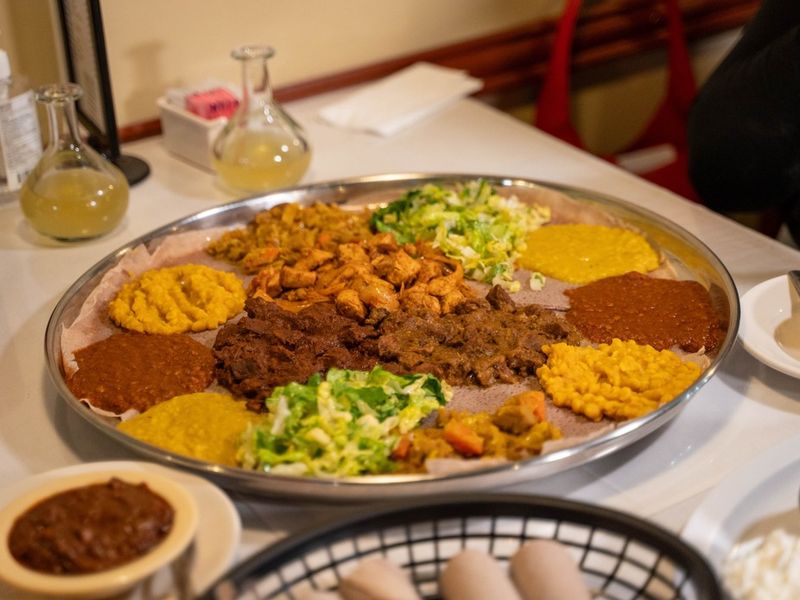
Eating Ethiopian food with a group is a fundamentally different experience from a meal where each person gets their own plate. Addissae describes its service as family-style, which means dishes arrive together on a large shared platter lined with injera.
Everyone at the table reaches in, tears a piece of bread, and scoops up whatever looks good. The meal is built for conversation and for slowing down.
That communal format reflects a broader Ethiopian dining tradition. A PBS North Carolina feature on Nile Ethiopian Restaurant explains that injera functions as both the staple food and the eating utensil, which is a detail that surprises a lot of first-timers.
You will not need a fork unless you ask for one, and most regulars prefer the hands-on approach because it keeps you engaged with what you are tasting.
At Goorsha in Durham, the menu explains the practice of goorsha: feeding another person a bite of food by hand as a gesture of warmth and friendship. Whether or not a restaurant you visit makes goorsha part of the evening, knowing what it means adds a layer of context to the meal.
It signals that Ethiopian dining is designed around connection, not just food.
A shared platter creates a genuine family-style atmosphere, but it does not, on its own, prove that the food replicates a meal in Addis Ababa or anywhere else in Ethiopia. Family-style presentation is a serving format.
The quality of the cooking, the sourcing of ingredients, and the care of the kitchen are separate questions worth exploring on your visit. What the communal setup reliably delivers is a table where everyone eats together, tries more dishes, and usually has a better time than they would have ordered separately.
Build a first plate around variety
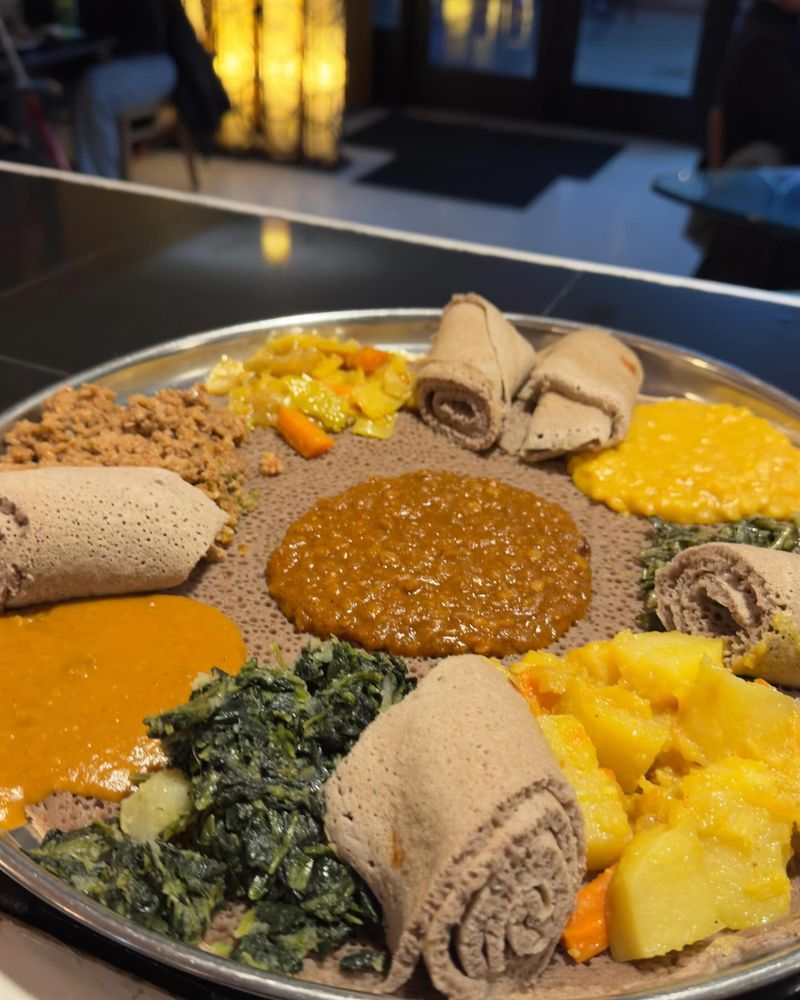
A combination platter or vegetarian sampler is the most practical way to start if you have never eaten Ethiopian food before. Rather than committing to one dish, you get a spread of stews, legumes, and vegetables that shows you the range of flavors the kitchen can produce.
Confirm with your server that a combination option is currently available, since menus do change.
Addissae’s menu includes traditional Ethiopian dishes that typically anchor a communal platter. Doro wat is one of the most recognized: chicken stewed in berbere spice paste with onions, garlic, ginger, and cardamom.
The Goorsha menu in Durham describes it that way specifically, and the description gives you a useful sense of what to expect flavor-wise even at a different restaurant. Berbere is warm, layered, and carries a gentle heat that builds rather than hits all at once.
Shiro is a smooth, spiced chickpea or bean flour stew that tends to be milder and earthy. Miser wat uses red lentils simmered in berbere, making it one of the most popular vegetarian options on any Ethiopian menu.
Both are excellent for scooping with injera and hold up well on a shared platter where dishes sit together for a while.
Tibs are worth ordering if you want something that contrasts with the stews. They are sauteed, not simmered, so the meat or vegetables come out with a different texture and a quicker, brighter flavor.
That distinction between a slow-simmered wot and a sauteed tibs is one of the more useful things to understand before you order.
For raw or rare meat dishes, Nafkot’s menu in Raleigh explicitly lists kitfo as available raw, rare, or well done, and gored gored as raw beef. If you want to try either dish but prefer to avoid undercooked meat, ask your server for the fully cooked version.
That is a simple request most kitchens can accommodate, and it is worth making before the plate arrives.
Ask about ingredients, preparation, and reservations
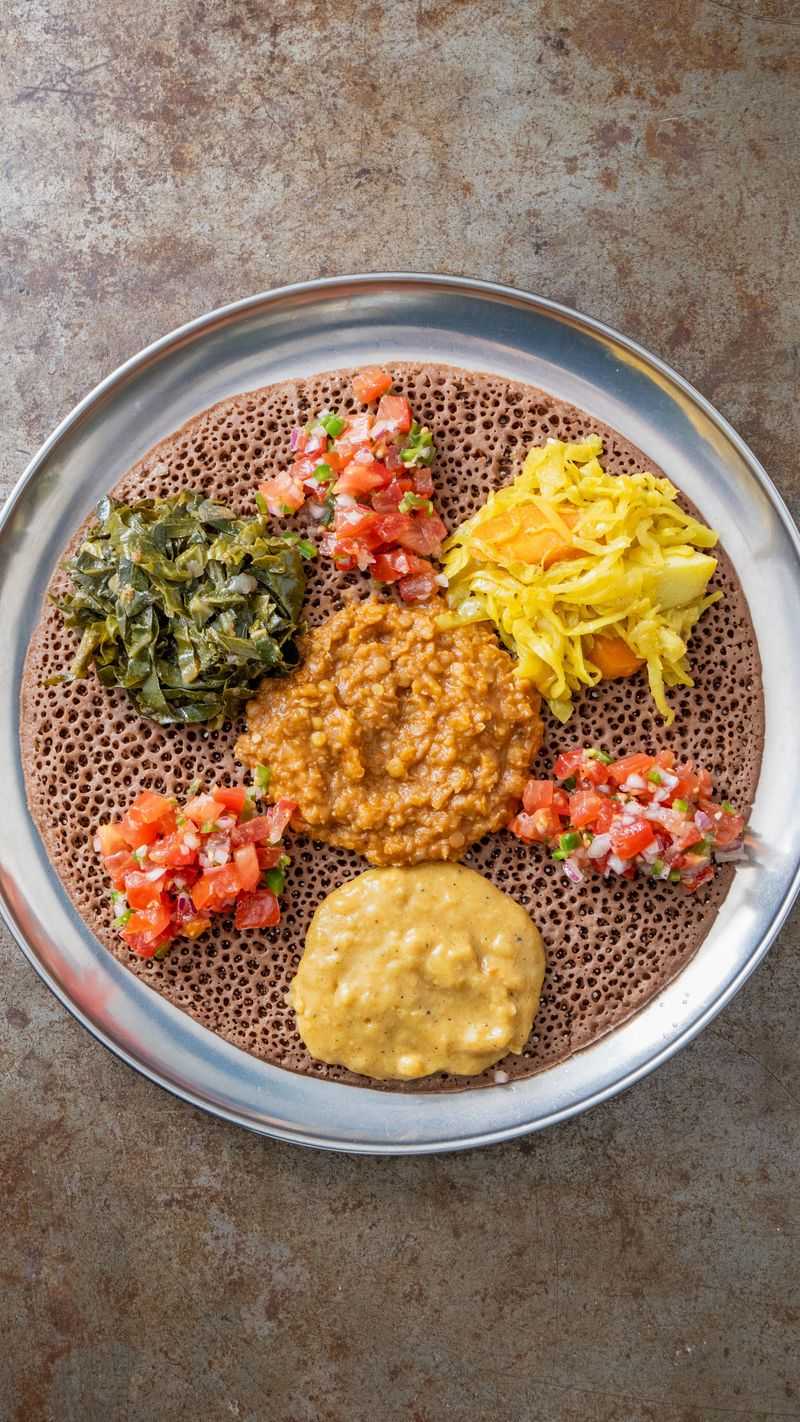
Teff is naturally gluten-free, but that fact alone is not enough reassurance for someone with celiac disease or a serious gluten sensitivity. Research on injera fermentation confirms that injera can be made from sorghum, barley, wheat, corn, or grain blends in addition to teff.
A restaurant may describe its injera as gluten-free based on the grain used, but shared cooking surfaces, utensils, and kitchen cross-contact are separate considerations that only the staff can clarify. Ask specifically, and do not rely solely on the word injera to make that call for you.
Addissae describes its injera as gluten-free, while Nafkot in Raleigh advertises injera made from 100 percent teff. Those are restaurant-attributed claims, and it is reasonable to ask each kitchen directly about their current ingredients and preparation practices before ordering.
Raw and undercooked meat is another area where a quick question saves trouble. Nafkot’s menu is unusually transparent about this, listing kitfo as raw, rare, or well done and gored gored as raw beef.
Not every menu spells it out that clearly. If you see either dish and are unsure how it is prepared, ask before you order, and request a fully cooked version if that is your preference.
Hours, menus, and special experiences change more often than most diners expect. A PBS North Carolina segment on Nile Ethiopian Restaurant notes that their traditional coffee ceremony requires advance notice and a minimum of four people.
If a coffee ceremony or other special dining experience is part of why you want to visit Addissae or any other Ethiopian restaurant, call ahead and confirm the requirements, availability, and any reservation policy. Showing up without checking can mean missing the experience you were most excited about.
Practical planning takes about five minutes and prevents most disappointments. Confirm current hours, whether reservations are accepted or recommended, and whether the specific dishes you want are on that day’s menu.
Ethiopian restaurants, like most independent businesses, can adjust their offerings seasonally or based on staffing, so a quick call or check of their current social media is always worth the effort.
North Carolina has more than one Ethiopian food destination
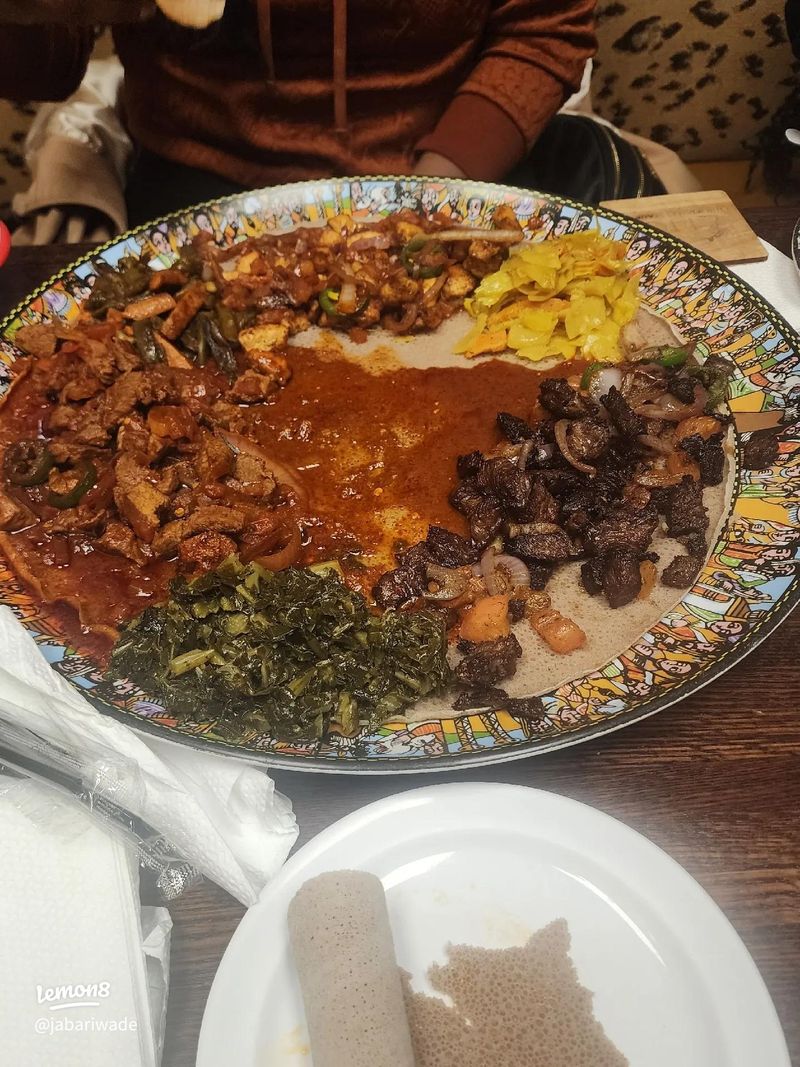
The original premise behind this article suggests one hidden spot holds something no other North Carolina restaurant can offer. The documented evidence tells a different story.
Ethiopian food is available across the state, in cities and through mobile businesses, and the scene has enough variety that most North Carolina residents are closer to a good Ethiopian meal than they might think.
Visit NC’s Michelin Guide resource points to Addissae in Asheville as one notable option, but the broader landscape includes several other well-documented businesses. Goorsha in Durham at 910 West Main Street brings a communal dining focus to the Triangle, including its namesake goorsha tradition.
Nafkot Ethiopian Restaurant at 2109 Avent Ferry Road in Raleigh offers a wide menu with transparent ingredient labeling and a 100 percent teff injera option.
Charlotte has at least two documented Ethiopian options. Enat Ethiopian Restaurant operates at 4450 The Plaza and inside Optimist Hall.
Nile Ethiopian Restaurant and Grocery at 3113 North Sharon Amity Road was featured on PBS North Carolina and combines a full restaurant with a grocery component. Merkato Cafe operates as an Ethiopian food truck in North Carolina, though its route and schedule do not establish a single permanent small-town location.
Food-truck routes shift, menus evolve, and hours change with seasons and staffing. Before making a trip to any of these businesses, check their current operating information directly.
The point is not that every option is equivalent, but that North Carolina diners have real choices, and the state’s Ethiopian food community is broader than a single restaurant headline can capture.
Approach Addissae as one Ethiopian expression in Asheville
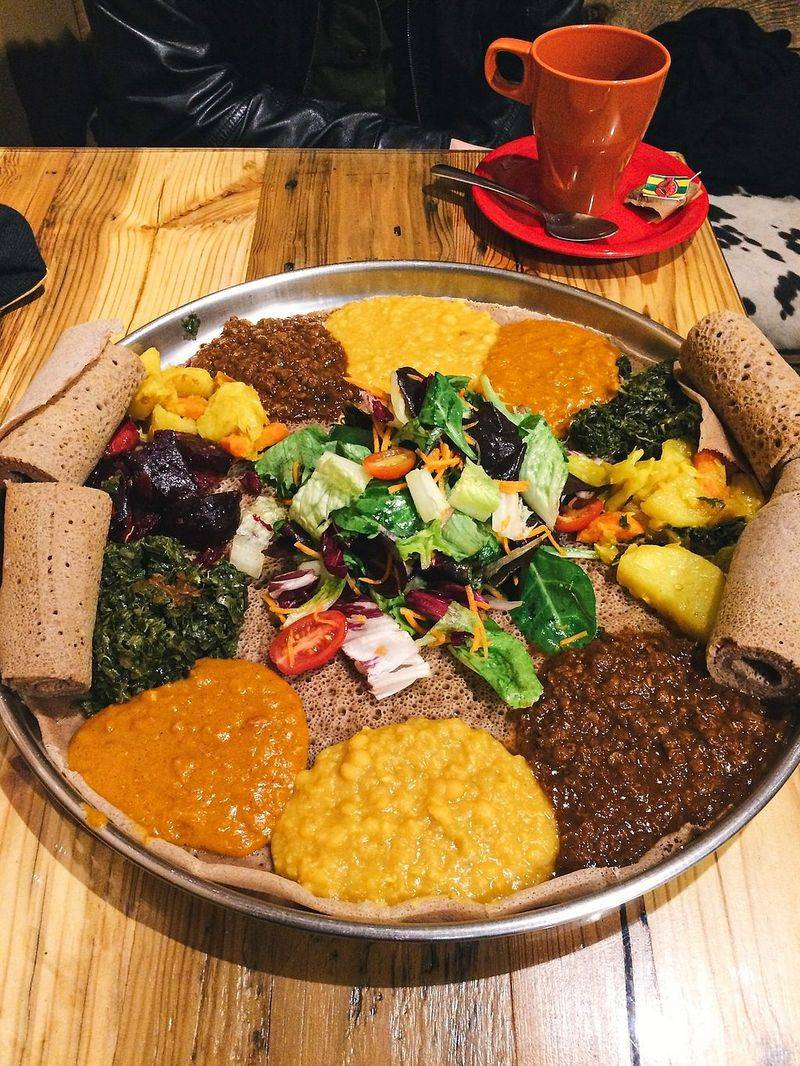
Addissae Ethiopian Restaurant in Asheville is a well-documented choice for anyone wanting to experience traditional Ethiopian dishes, family-style service, and injera-centered communal eating in North Carolina. The Michelin Guide’s listing for Addissae and the restaurant’s own description together confirm a menu that includes doro wat, tibs, shiro, and gluten-free injera served in the shared-platter format that makes Ethiopian dining feel like a gathering rather than just a meal.
What the sources do not confirm is a comparison to a family feast in Addis Ababa, a claim that would require firsthand reporting from someone with meaningful experience in both places. Addissae represents one North Carolina expression of a diverse Ethiopian culinary tradition, not a definitive or exclusive destination.
Treat it that way and you will enjoy it more honestly.
Verify hours, reservations, and current menu items before you go, since details at any independent restaurant can change. Asheville’s food scene rewards curious visitors, and an evening built around fermented injera and shared stews is one worth planning carefully.
The best meals at a table like this tend to be the ones where everyone arrives ready to share.
Share this story