Ancient people carved images into cliffs, boulders, monuments, and even entire landscapes. Thousands of years later, many of those creations remain visible, but the ideas behind them are considerably harder to recover.
Archaeologists can identify animals, weapons, boats, people, and geometric patterns in many of these works. What they cannot always determine is why the images were created, what particular symbols meant, or why certain locations were chosen. From enormous desert drawings to mysterious spirals cut into stone, these 12 ancient creations continue to leave important questions unanswered.
1. The Rock Carvings of Val Camonica, Italy
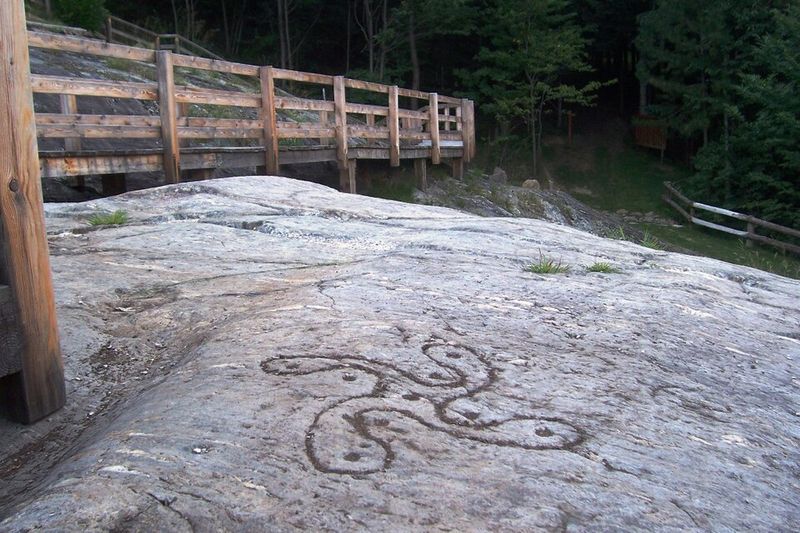
The valleys of northern Italy contain one of the world’s greatest collections of rock art. Val Camonica has hundreds of thousands of recorded figures carved into exposed rock, with images created over an immense period stretching from prehistory into later historical eras.
Hunters, warriors, deer, buildings, weapons, agricultural scenes, and geometric symbols appear across the landscape. Some images seem relatively straightforward, while others are much harder to interpret. One famous figure known as the “Camunian rose” consists of an elaborate arrangement of lines surrounding cup marks, but its original significance remains uncertain. Because people continued adding carvings for generations, researchers are essentially dealing with a visual language that changed repeatedly over thousands of years.
The carvings survived, but the shared visual language needed to fully understand symbols such as the Camunian rose has long since disappeared.
2. The Tanum Rock Carvings, Sweden
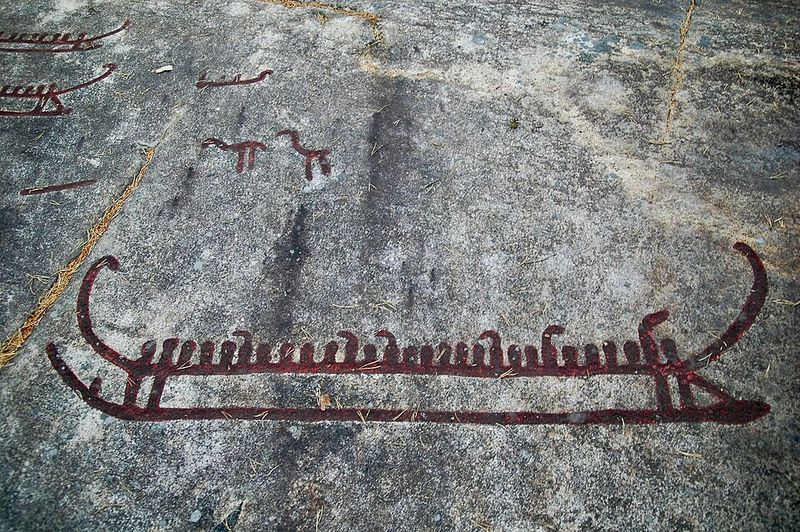
Across the granite landscape of Bohuslän in western Sweden, the Tanum area contains more than 600 known rock-carving sites filled with thousands of images. Most were created during the Bronze Age and the beginning of the Iron Age, roughly between 1700 and 300 BCE. The carvings depict ships, people, animals, weapons, wagons, footprints, and mysterious cup-shaped marks, sometimes arranged into surprisingly complex scenes.
Ships are among the most recognizable images, appearing again and again across the rocks. Some may reflect the importance of maritime travel and long-distance connections in Bronze Age Scandinavia, but researchers believe the carvings were not simply pictures of everyday activities. Many appear connected with power, ritual, warfare, and religious beliefs. Ships themselves may also have carried symbolic meanings, possibly relating to journeys, death, or the movement between different worlds.
That leaves archaeologists with a difficult puzzle. They can usually identify what the carvings depict, but explaining why those particular images were carved is much harder. Some panels appear deliberately composed to communicate stories or ideas, suggesting that Bronze Age viewers may once have understood meanings that are now lost.
3. The Petroglyphs of Twyfelfontein, Namibia
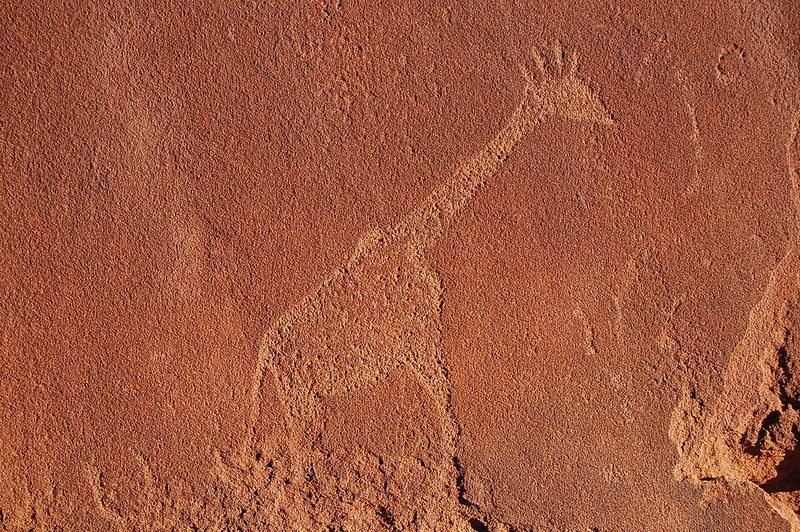
In the dry landscape of northwestern Namibia, Twyfelfontein preserves thousands of rock engravings created by hunter-gatherer communities. The carvings include rhinoceroses, elephants, giraffes, ostriches, antelope, animal tracks, and unusual geometric designs.
Some researchers believe certain engravings were connected with rituals and shamanic traditions, while others may have helped communicate knowledge about animals, hunting, and water sources. One especially famous image depicts a lion with an unusually long tail ending in a handlike or footprint-like form. Whether such unusual features represented mythology, spiritual transformation, or something else remains uncertain. The extraordinary concentration of imagery suggests that Twyfelfontein was far more than a place where people casually recorded the animals they saw.
Exactly what messages, beliefs, or rituals these images were meant to preserve remains one of Twyfelfontein’s enduring mysteries.
4. The Uffington White Horse, England
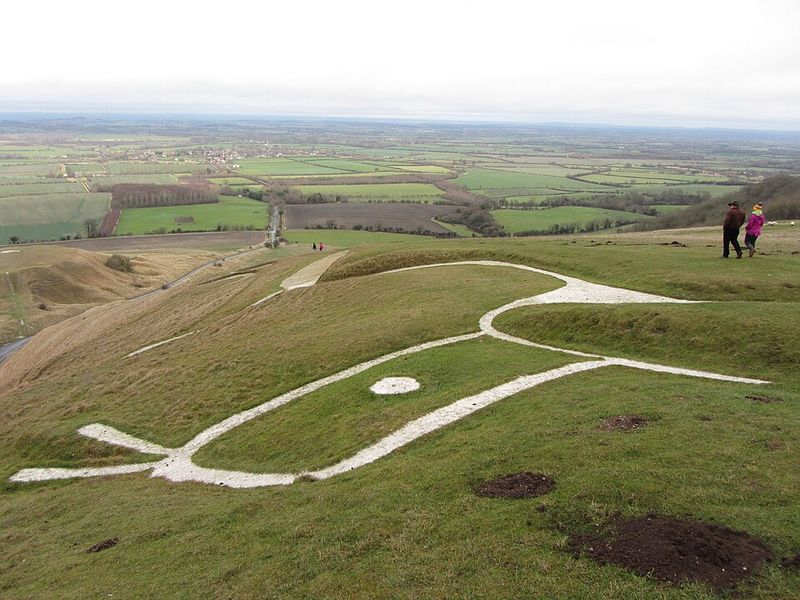
High on a hillside in Oxfordshire is a gigantic stylized horse created by cutting trenches into the ground and filling them with white chalk. Dating to the late Bronze Age or early Iron Age, the Uffington White Horse is around 3,000 years old and is generally considered Britain’s oldest surviving chalk hill figure.
Its distinctive shape resembles horses appearing on some ancient British objects, but nobody knows precisely why the figure was created. It may have represented a community, ruler, deity, or territorial identity. Another mystery is the effort required to preserve it. Without regular maintenance, vegetation would eventually have covered the chalk, meaning generations of people apparently considered the horse important enough to keep it visible.
Whatever the horse represented, its importance was clearly strong enough to endure for generations, even as the original meaning behind the figure faded from memory.
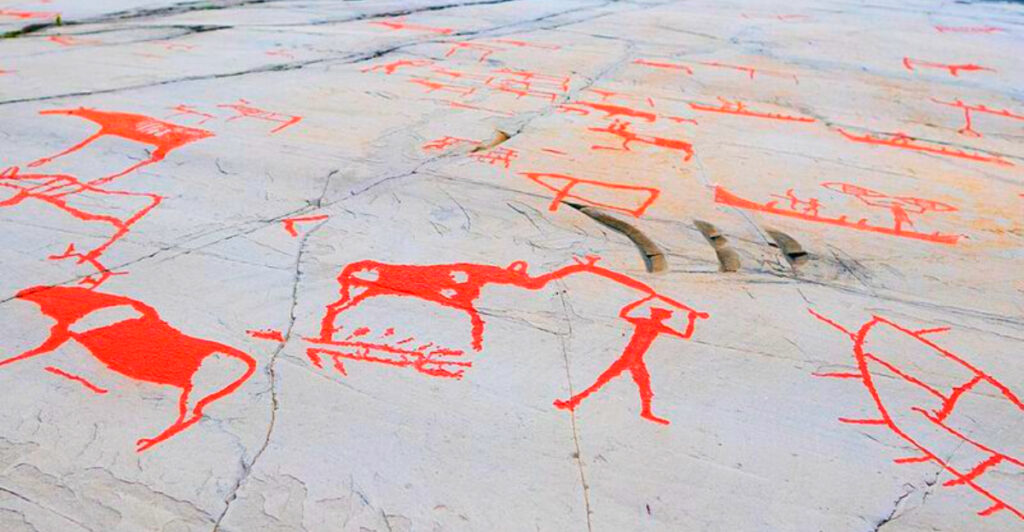
5. The Rock Carvings of Alta, Norway
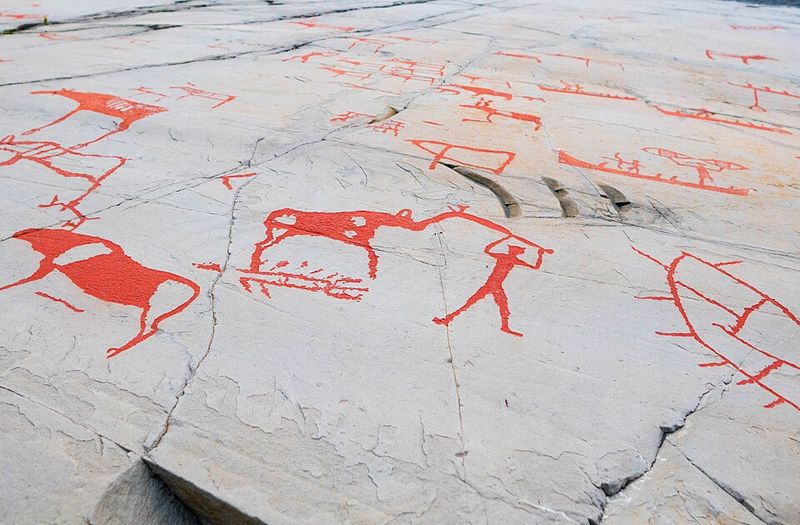
Thousands of prehistoric carvings survive around Alta in northern Norway, offering remarkable glimpses of life near the Arctic Circle. Reindeer, elk, bears, boats, fishing scenes, hunters, and human figures appear repeatedly, sometimes interacting in surprisingly complex compositions.
The carvings clearly reflect activities that mattered to the people who created them, but researchers aren’t convinced they were simply illustrations of everyday life. Hunting scenes may have carried ceremonial or spiritual significance, while certain animals could have represented beliefs rather than just food sources. Their relationship with the ancient shoreline is another intriguing clue. As the land rose following the Ice Age, new carvings appeared at changing elevations, suggesting that proximity to water may have been an important part of their meaning.
Yet exactly how the animals, hunting scenes, and changing shoreline fit into the beliefs of their creators remains open to interpretation.
6. The Nazca Lines, Peru
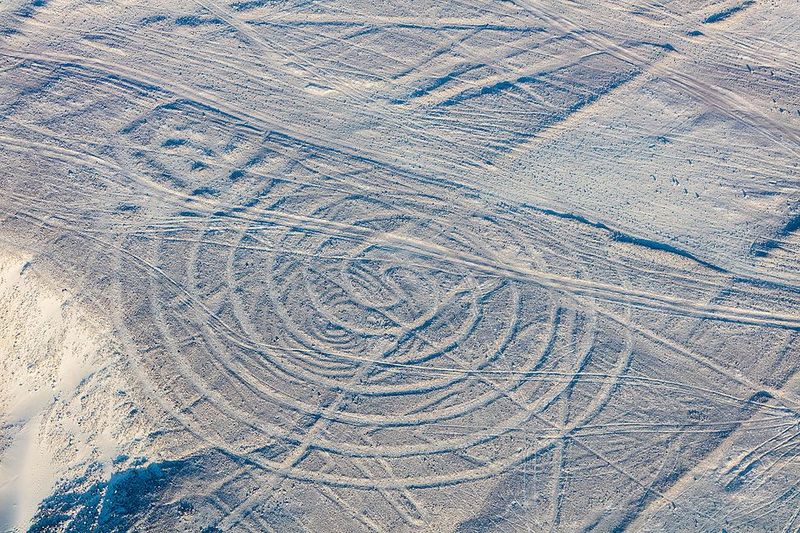
Spread across the desert of southern Peru, the Nazca Lines include hundreds of enormous geometric designs and figures of animals and plants. Among the best known are a hummingbird, spider, monkey, condor, and whale. The designs were created by removing reddish surface stones and exposing the lighter soil underneath, allowing them to survive for centuries in the region’s extremely dry climate.
Most of the famous figures were created by the Nazca culture roughly 2,000 years ago, although some geoglyphs in the region are older. Their purpose remains debated. Researchers have proposed connections with water, fertility, religious ceremonies, pilgrimage routes, and astronomical observations. Some lines may even have served different purposes at different times.
What seems increasingly clear is that there probably isn’t one simple explanation for the entire landscape.
7. The Gobustan Rock Art, Azerbaijan
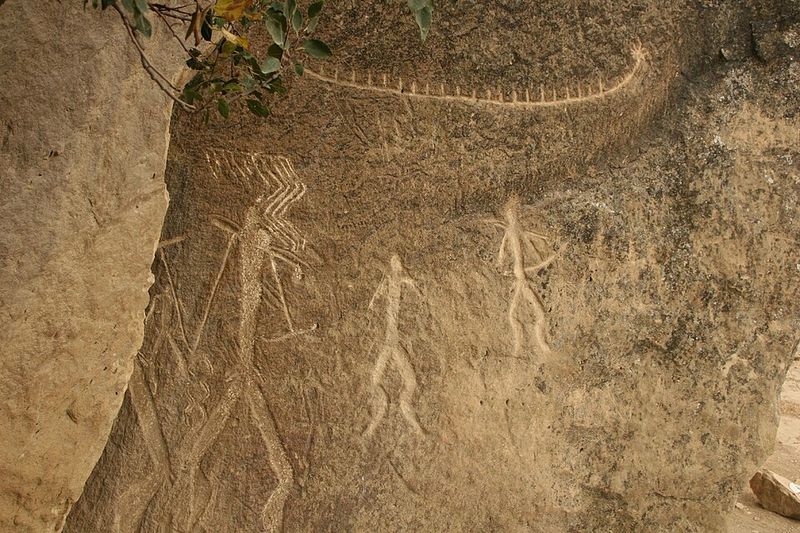
Across the rocky, semi-desert landscape of Gobustan in Azerbaijan are more than 6,000 rock engravings representing an astonishing span of human history. UNESCO says the collection bears witness to around 40,000 years of rock art, with nearby caves, settlements, and burials showing that people used this landscape from the Upper Paleolithic through the Middle Ages.
The carvings depict hunters, animals, fishing, groups of people, and boats, offering snapshots of life during periods when this part of Azerbaijan was considerably wetter and greener than it is today. Some of the most intriguing images show groups apparently engaged in dances or rituals. Others depict long, crescent-shaped boats carrying numerous people, raising questions about the importance of water travel to the communities that lived near the ancient Caspian shoreline.
Researchers can recognize much of what the artists carved, but understanding what the scenes actually meant is considerably harder. Were the boats simply records of real vessels, or did they have a symbolic meaning? Were the dancing figures documenting celebrations, religious ceremonies, or rituals connected with hunting? Even the official Gobustan research material notes that the precise meaning of some of these images remains difficult to determine.
The carvings give us an extraordinary view of ancient life, but the beliefs and stories behind many of them remain beyond our reach.
8. The Tamgaly Petroglyphs, Kazakhstan
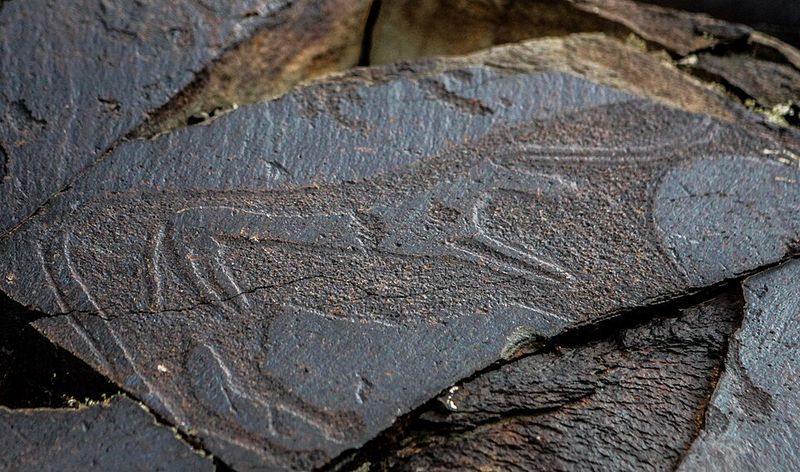
Hidden among the rocky hills northwest of Almaty, the Tamgaly archaeological landscape contains roughly 5,000 petroglyphs created across many centuries. The most important groups include thousands of images carved into the gorge, with some of the earliest and most remarkable examples dating to the Bronze Age. Animals, warriors, chariots, hunters, ritual scenes, and human figures appear throughout the site, which became a UNESCO World Heritage Site in 2004.
The most mysterious carvings are the famous “sun-headed” figures, humanlike beings surrounded by elaborate circles and radiating lines. Around 30 such figures have been identified at Tamgaly, and one extraordinary panel places several of them above smaller figures that appear to be dancing, praying, or participating in ceremonies. Their prominent position and unusually large size suggest they held special importance to the people who created them.
Exactly what they represented is still debated. They have traditionally been interpreted as solar deities, but other researchers have explored connections with ritual specialists, masks, or shamanistic imagery. With no surviving written explanation of the beliefs behind the Bronze Age carvings, their precise meaning remains uncertain. Whatever these strange figures represented, Tamgaly appears to have been much more than an ancient art gallery.
Its concentration of carvings, altars, burial sites, and other archaeological remains suggests that parts of the landscape served an important ceremonial or sacred purpose.
9. The Petroglyphs of Lake Onega, Russia
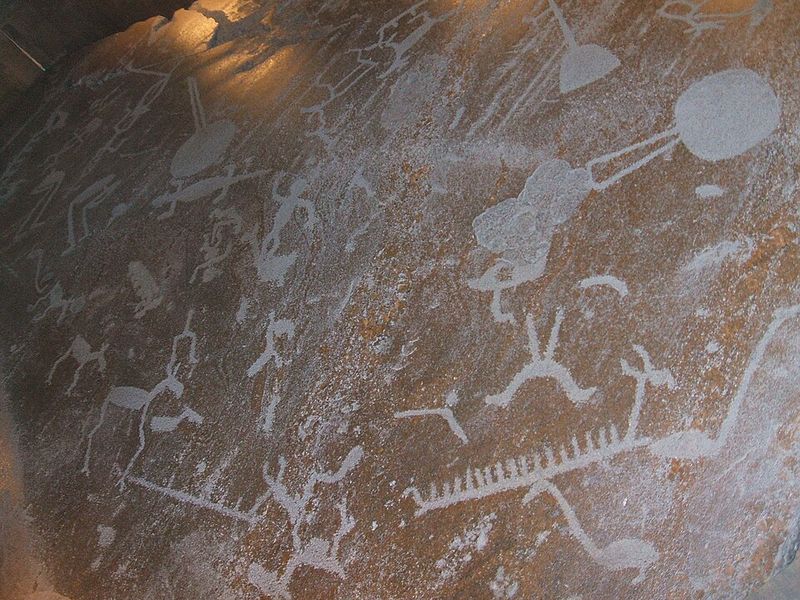
Along the shores of Lake Onega in northwestern Russia are thousands of prehistoric rock carvings depicting birds, animals, boats, people, and unusual geometric forms. Many were positioned directly beside the water, making the surrounding landscape an important part of the archaeological puzzle.
Some carvings have traditionally been interpreted as representations of the sun or moon, while others appear much more abstract. Certain figures even earned supernatural interpretations from later communities because their original meanings had already been forgotten. Researchers have explored whether the designs relate to hunting rituals, mythology, astronomical observations, or seasonal events. No theory has succeeded in explaining the entire collection, and the choice of waterside locations remains particularly intriguing.
10. The Megalithic Carvings of Newgrange, Ireland
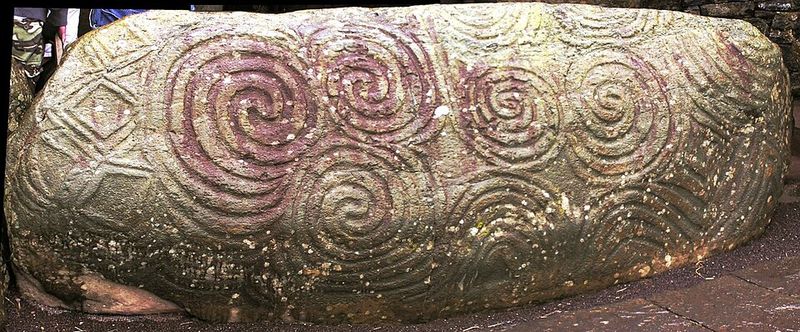
Newgrange is best known for the remarkable alignment that allows sunlight to enter its passage around the winter solstice. Yet the roughly 5,000-year-old monument also contains some of Europe’s most recognizable prehistoric carvings.
Spirals, circles, zigzags, diamonds, arcs, and other geometric designs appear across its massive stones. The famous triple spiral is particularly associated with the monument, but its original meaning is unknown. The patterns may have represented natural cycles, astronomical ideas, religious concepts, journeys into the afterlife, or something entirely different. Newgrange’s solar alignment demonstrates that its builders possessed sophisticated knowledge, making it tempting to search for coded meaning in the carvings, but archaeologists remain cautious about interpretations that cannot be proven.
11. The Carved Stones of Knowth, Ireland
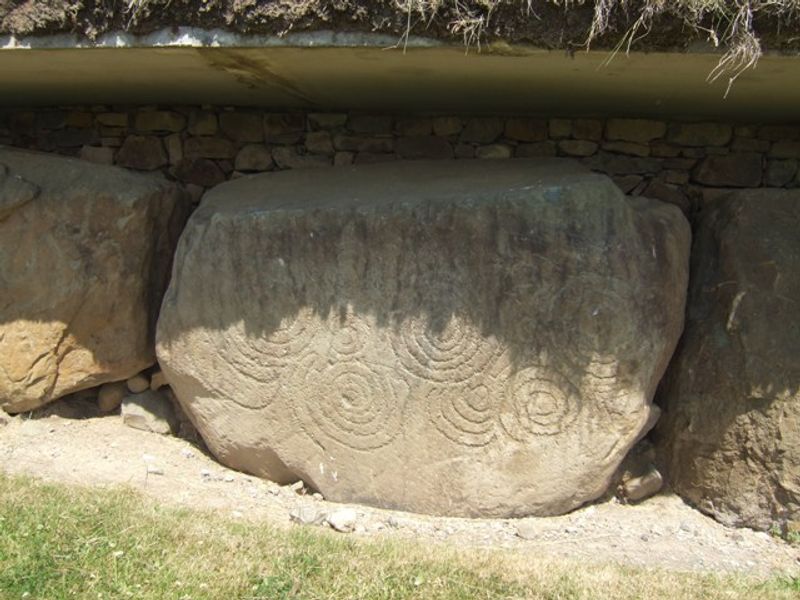
Located near Newgrange, Knowth contains an extraordinary concentration of Neolithic stone carving. Its decorated stones feature spirals, crescents, circles, wavy lines, diamonds, and other geometric forms created more than 5,000 years ago.
Some researchers have attempted to connect the imagery with observations of the moon, sun, or seasonal cycles. Others argue that the carvings may have expressed religious or cosmological concepts that cannot be reconstructed from archaeology alone. Adding to the puzzle, individual stones contain combinations of symbols rather than simple repeated decoration. Whatever those combinations communicated to Neolithic viewers, the key needed to confidently read them disappeared thousands of years ago.
12. The Newspaper Rock Petroglyphs, Utah
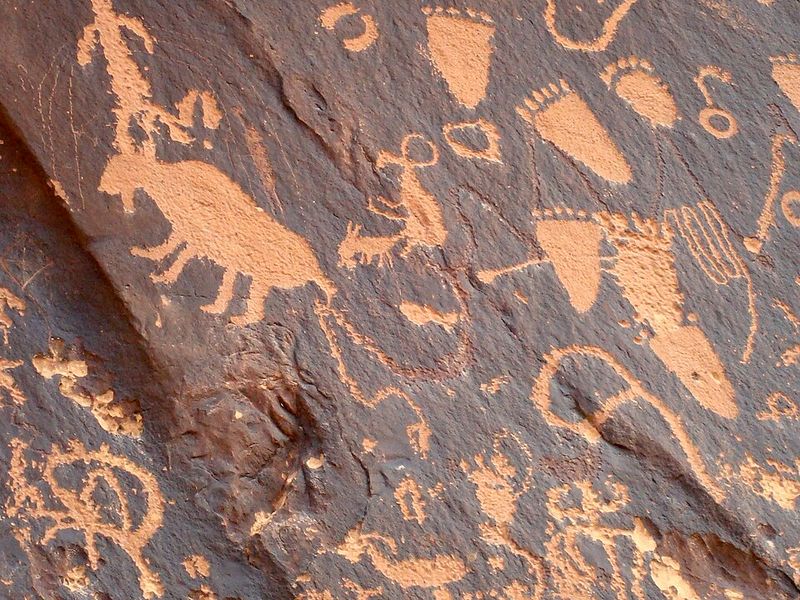
A sandstone panel in southeastern Utah known as Newspaper Rock contains hundreds of petroglyphs created by Indigenous peoples over a long period. Animals, human figures, footprints, hunting imagery, geometric shapes, and other symbols crowd together across its dark surface.
The modern name can be misleading because the panel was not a “newspaper” in the modern sense, and there is no evidence that all of its images were intended to tell one continuous story. Different communities added carvings at different times, meaning individual symbols may have served very different purposes. Some can be interpreted with help from archaeological evidence and Indigenous cultural knowledge, while others remain uncertain. The result is a remarkable record of generations of human activity that cannot simply be translated line by line.
Share this story