
Some phrases feel so natural in everyday conversation that it seems impossible they could be more than a few decades old. Yet many of the expressions people toss around casually in texts, meetings, and arguments were already old when the Roman Empire was still standing.
Ancient Greek philosophers, biblical authors, and storytellers working centuries before the printing press invented observations about human behavior that turned out to be permanent. The situations behind these phrases, including deception, ambition, temptation, and the frustration of wanting something just out of reach, kept repeating across generations until the words describing them became fixtures of the language.
What follows is a look at twelve familiar expressions and the surprisingly ancient worlds that produced them.
1. Leave No Stone Unturned
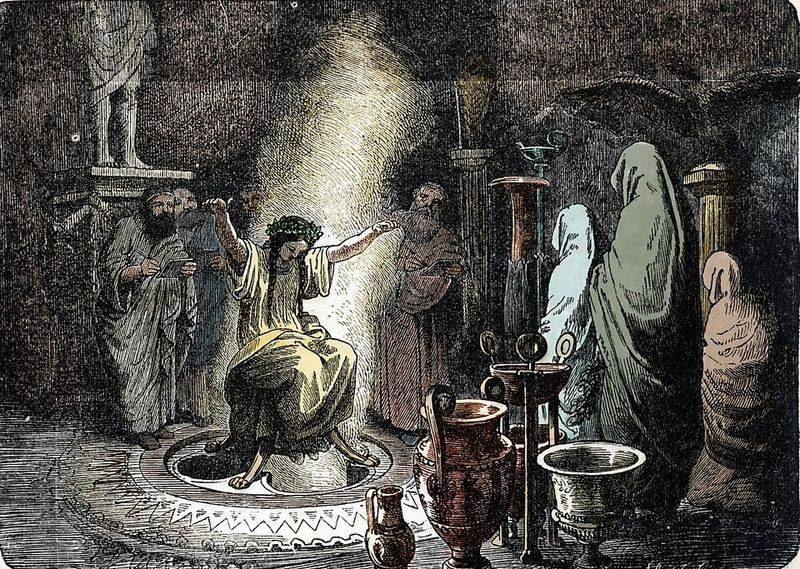
Few phrases capture the spirit of a thorough search better than this one, and its backstory involves buried treasure, a battlefield, and the most famous oracle in the ancient world.
According to the Greek writer Plutarch, a man searching for treasure supposedly left behind by the Persian general Mardonius after the Battle of Plataea in 479 BC consulted the Oracle of Delphi for guidance. The oracle’s advice was essentially to move every stone in the area.
Whether that treasure hunt ever happened precisely as described is difficult to confirm at this distance. What matters more is that the image stuck.
Physically overturning stones became a natural stand-in for leaving absolutely no possibility unexplored.
Centuries later, the phrase traveled into English and settled comfortably into everyday speech. Detectives use it, athletes use it, and job applicants use it.
The treasure Mardonius supposedly buried has never been found. The advice his legend inspired has proven considerably more durable.
2. A Wolf in Sheep’s Clothing
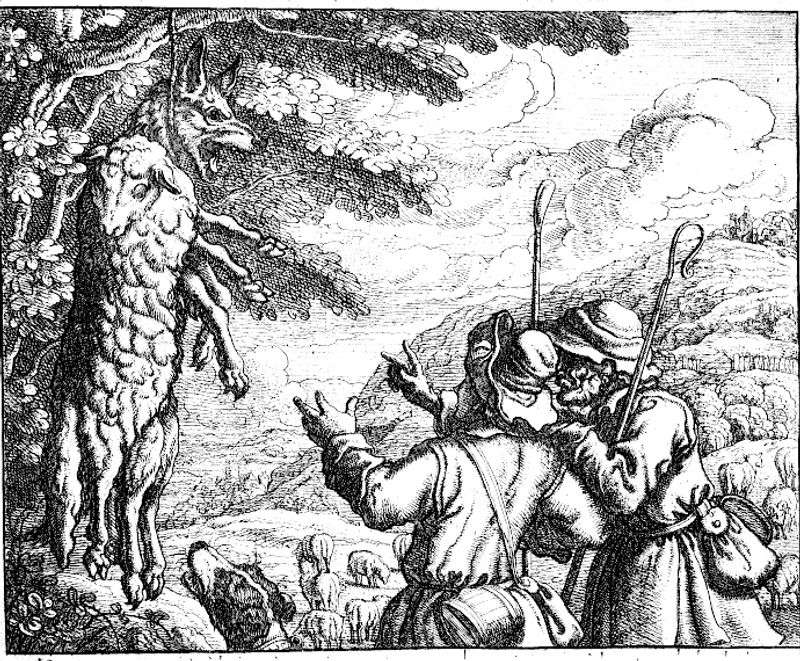
Warnings about dangerous things hiding behind harmless appearances go back further than most people realize, and this particular warning has two ancient sources reinforcing the same idea.
The Gospel of Matthew cautions readers about false prophets who arrive dressed in sheep’s clothing while concealing far more threatening intentions underneath. Around the same time, fable traditions linked to Aesop featured a wolf literally wearing a sheepskin to move undetected among a flock.
Having two independent ancient traditions point toward the same image says something important about how recognizable the behavior was even then. People in the ancient world clearly understood that the most effective deceptions often arrive looking completely harmless.
The phrase eventually settled into English as a general-purpose warning applicable to people, organizations, policies, and products. The sheep represents innocence.
The wolf represents what is actually present underneath. Modern speakers rarely pause to consider how old that particular warning is, but it was already well-established long before the Middle Ages began.
3. Sour Grapes

Pretending not to want something you cannot have is one of the oldest coping strategies in human history, and Aesop apparently noticed it long before modern psychology gave it a name.
The fable known as The Fox and the Grapes features a fox who spots a bunch of grapes hanging just above his reach. He tries repeatedly to jump for them.
After enough failed attempts, he walks away with a confident declaration that the grapes were probably sour anyway and not worth the effort.
Nothing about the story needs translating. The behavior it describes is instantly recognizable because people still do it constantly.
A job rejection becomes a role that was not actually appealing. An unaffordable house had too many issues to begin with.
A missed invitation was to an event that would have been tedious.
The English phrase came along well after Aesop, but the psychological observation underneath it was already ancient by then. Aesop simply had the fox say out loud what most people prefer to keep internal.
4. Crocodile Tears
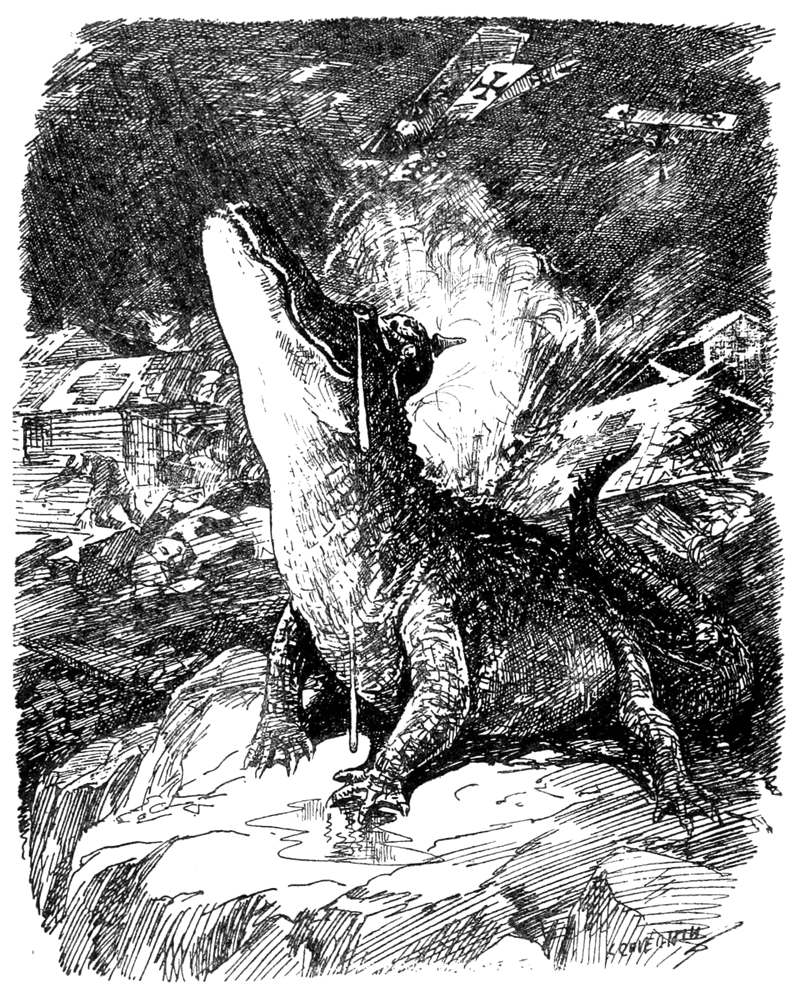
Accusing someone of crying crocodile tears is accusing them of performing grief they do not actually feel. The phrase has an unusual history because it is built on a misunderstanding that turned out to be far more memorable than the actual biology.
Ancient and medieval writers circulated stories claiming that crocodiles would weep while consuming their prey, supposedly displaying remorse for what they were doing. The image of a predator crying over its victim became a powerful shorthand for theatrical, insincere emotion.
The actual science is far less dramatic. Crocodiles do produce tears, but the function is purely physical.
Moisture helps protect and lubricate their eyes, and it can become more visible when they are out of water or actively feeding. There is no evidence of emotional experience involved.
The biological correction arrived too late to displace the phrase. By the time English speakers were regularly using it, the crocodile had already been established as the definitive symbol of performed sadness.
The misunderstanding outlasted the people who started it by several centuries.
5. The Blind Leading the Blind
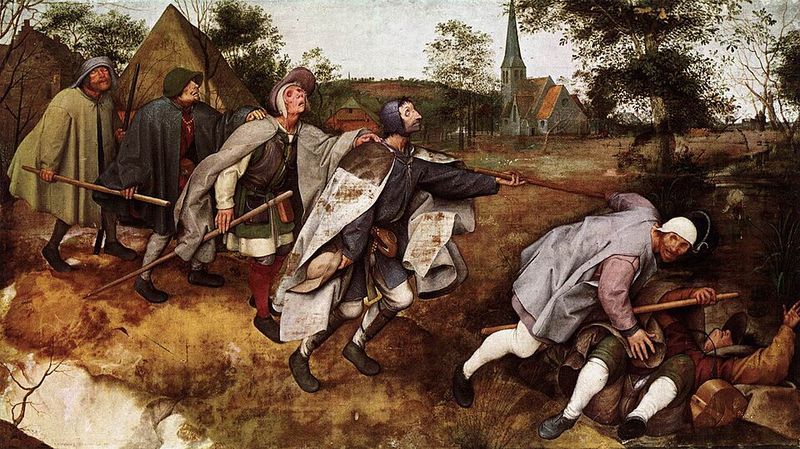
There is a particular kind of organizational disaster that happens when the person in charge knows roughly as little as the people following them. Ancient writers identified it clearly enough to give it a lasting name.
A version of the expression appears in the Gospel of Matthew, where the question is posed directly: if one blind person leads another, do they not both fall into a pit? The answer is obviously yes, and the rhetorical point lands without any additional explanation needed.
Similar imagery appeared in other ancient traditions, which suggests the observation was widespread rather than unique to a single source. Inexperienced leadership producing predictable failure was apparently a common enough problem to generate multiple independent warnings about it.
Today the phrase covers a wide range of situations. A team of new employees left without guidance, a group of tourists following someone who has never visited the destination, or a committee making decisions outside its expertise can all qualify.
The specific circumstances change. The underlying dynamic, confident ignorance leading confused followers, has stayed remarkably consistent across roughly two thousand years.
6. Rise From the Ashes
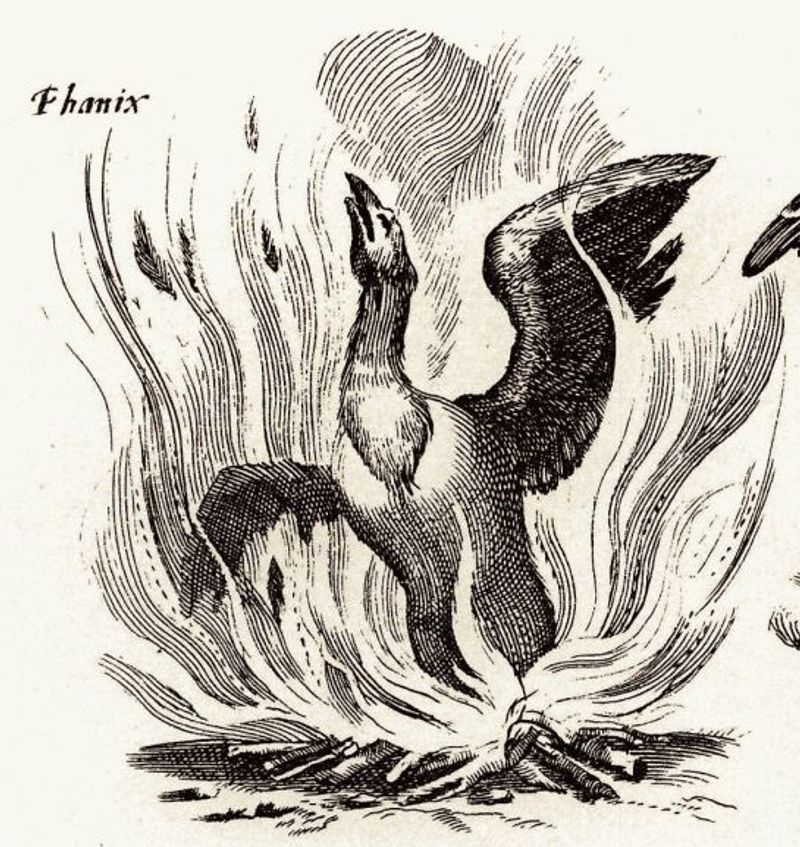
Recovery after a serious setback needed a metaphor, and ancient Mediterranean cultures supplied one in the form of a legendary bird that could not be permanently destroyed.
The phoenix appeared in Greek and Roman writing as a creature associated with Egypt and cycles of renewal. Herodotus mentioned it in the fifth century BC, describing a bird that appeared in Egypt only rarely.
Later writers expanded the mythology considerably, adding details about the bird burning and emerging renewed from what remained.
The accounts varied from one author to another, which means the phoenix was less a single fixed story and more a tradition that different writers shaped over time. What stayed consistent was the central idea: destruction followed by genuine renewal, not just survival.
That idea proved too useful to stay inside mythology. Cities use the phrase after rebuilding.
Athletes use it after career interruptions. Businesses use it after near-collapse.
Ancient mythology contributed far more than monsters and creation stories to modern language. In this case, it contributed a vocabulary for returning after something goes seriously wrong.
7. Achilles’ Heel
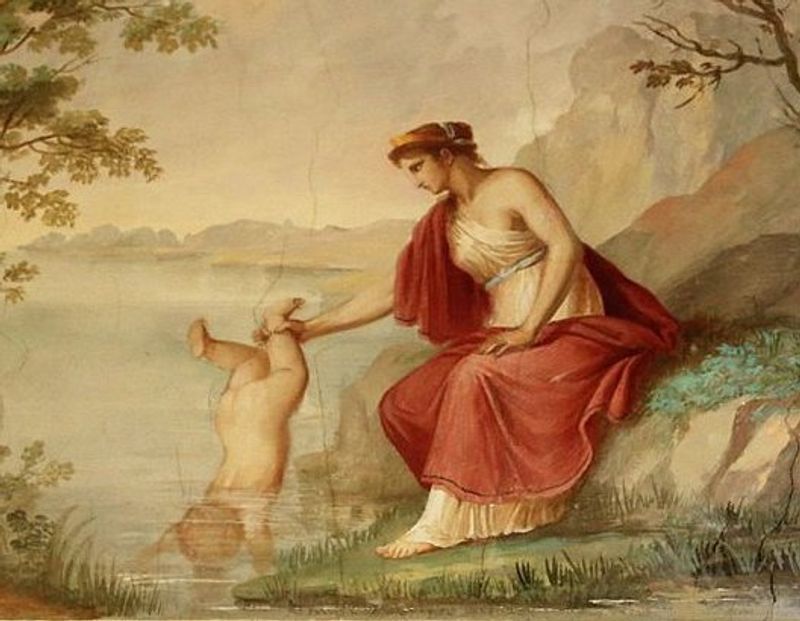
One of the most recognized expressions in the English language came from a warrior whose story was already ancient when the Roman Empire was young.
Achilles was the greatest fighter on the Greek side during the Trojan War, as depicted in Homer’s Iliad. The familiar story of his mother dipping him in the River Styx while holding him by the heel, leaving that one spot unprotected, does not actually appear in Homer.
It developed in later literary traditions that built on the original mythology.
What did appear consistently was the idea of an extraordinary warrior with one critical vulnerability. Later accounts pinpointed that vulnerability in the heel, and the story became so embedded in Western culture that anatomy eventually borrowed the name.
The Achilles tendon, connecting the calf muscles to the heel bone, carries the warrior’s name to this day.
The phrase now applies universally. A dominant sports team has an Achilles’ heel.
So does a successful technology company, a seemingly secure government system, or an otherwise talented individual. One ancient warrior’s story became the standard template for describing any single point of critical weakness.
8. Between Scylla and Charybdis
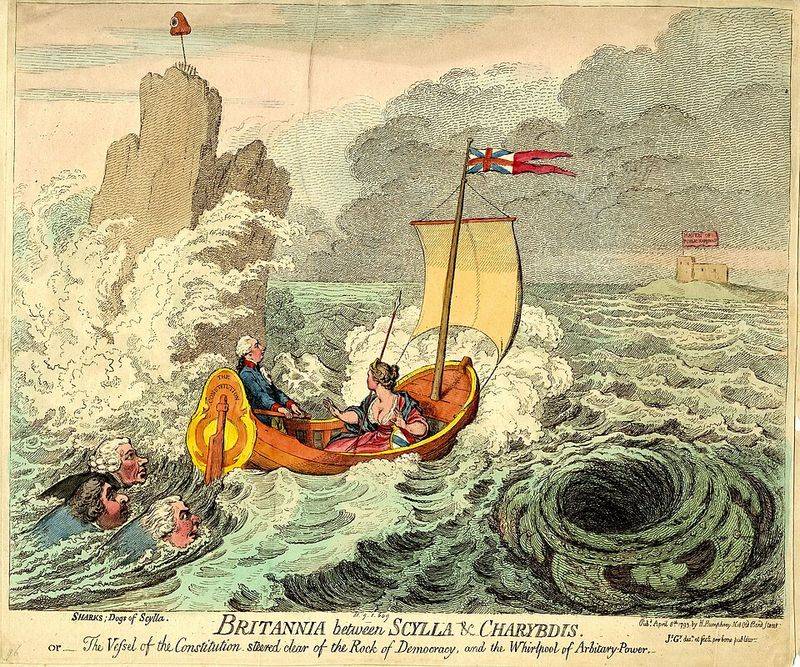
Not every ancient expression made it into casual everyday conversation, but this one gave English a concept it still needs: the experience of being trapped between two options where avoiding one means moving dangerously closer to the other.
Homer’s Odyssey placed Odysseus in exactly that situation. Scylla was a six-headed monster positioned on one side of a narrow strait, capable of snatching sailors directly off passing ships.
Charybdis was a massive whirlpool on the other side, capable of consuming an entire vessel. Odysseus had to choose which risk to accept, knowing he could not avoid both.
The phrase eventually produced a Latin proverb and influenced centuries of European literature and philosophy. English later developed its own version of the same idea with the phrase between a rock and a hard place, which is now far more common in everyday speech.
Scylla and Charybdis arrived at the concept first, however, by roughly two and a half thousand years. Ancient navigation was genuinely dangerous, and Homer gave that danger a shape that language has been borrowing ever since.
9. The Writing on the Wall
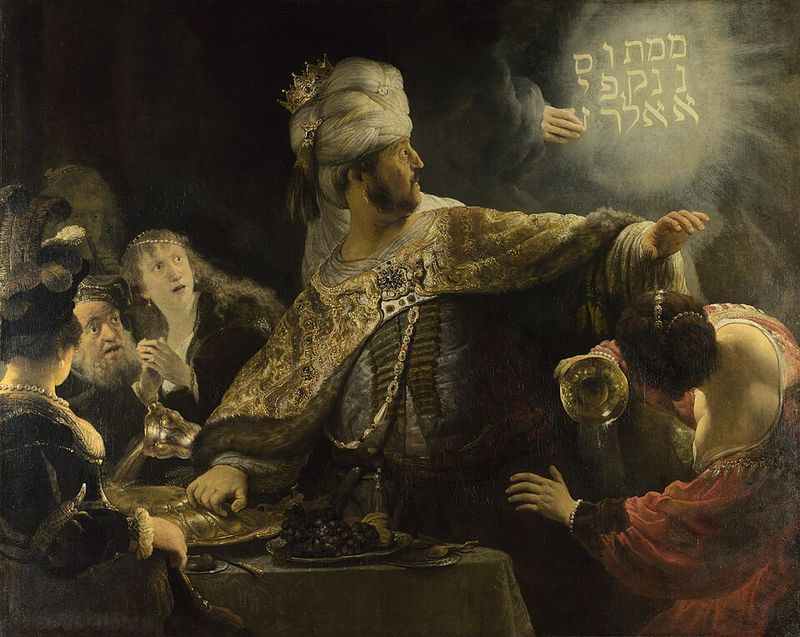
Most people use this phrase to describe a situation where the outcome is already obvious, even if nobody has officially announced it yet. The original scene, however, was considerably more dramatic than a slow corporate restructuring.
The Book of Daniel places the expression at a royal feast hosted by Babylonian king Belshazzar. A disembodied hand appeared and wrote four words on the wall.
The king, understandably alarmed, demanded an interpretation. Daniel provided one: the kingdom had been evaluated and found lacking, and its days were finished.
According to the biblical account, Belshazzar did not survive the night. The Medes and Persians took the city before morning.
That specific scene gave English one of its most durable metaphors for impending consequences. Today the phrase applies to struggling companies, losing sports seasons, and political careers heading in the wrong direction.
No supernatural handwriting is required. The point is simply that the outcome has become readable to anyone paying attention.
10. Forbidden Fruit
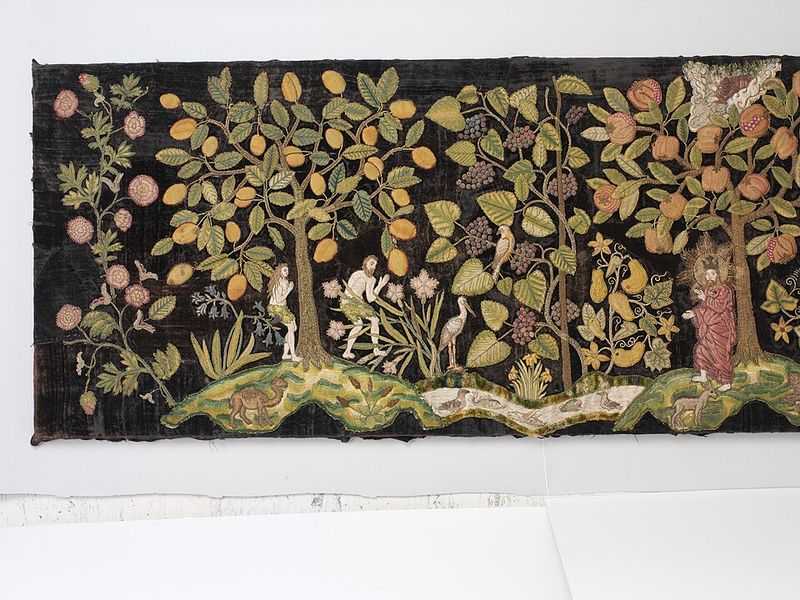
Human psychology has a well-documented tendency to find prohibited things more appealing precisely because they are prohibited. The expression that captures this tendency has its roots in one of the oldest narratives in Western literature.
The Book of Genesis describes God forbidding Adam from eating fruit from the tree of the knowledge of good and evil. Eve eats it anyway, shares it with Adam, and the consequences become foundational to the entire biblical account of human history.
One frequently repeated detail is worth clarifying: Genesis does not identify the fruit as an apple. That specific association developed through later Western art and translation traditions, particularly through Latin versions of the text where a word meaning evil happened to be similar to a word for apple.
The phrase eventually separated from its strictly religious context and became a general description for anything made more attractive by being off-limits. A restricted area, a confidential document, or a clearly labeled do-not-touch exhibit in a museum can all qualify.
The psychology the expression describes has apparently not changed much since the story was first written down.
11. A Drop in the Bucket

Some metaphors work because they are complicated and layered. Others work because they are so straightforward that no explanation is required.
This one belongs firmly in the second category.
The expression traces back to the Book of Isaiah, where the prophet describes nations as being like a drop from a bucket when measured against divine scale. The point was to establish an extreme contrast between human significance and something vastly larger.
The image required no technical knowledge to grasp in antiquity, and it still does not.
Picture a full bucket of water. Add one drop.
The bucket does not change in any meaningful way. The ratio of that one drop to the total is so small as to be essentially irrelevant.
Modern speakers use the phrase most often when discussing money, resources, or effort relative to a much larger problem. A charitable donation measured against a national budget, a single hour of work measured against a years-long project, or a light rain measured against a prolonged dry period can all be a drop in the bucket.
Isaiah’s image proved remarkably portable across very different contexts.
12. Nothing New Under the Sun
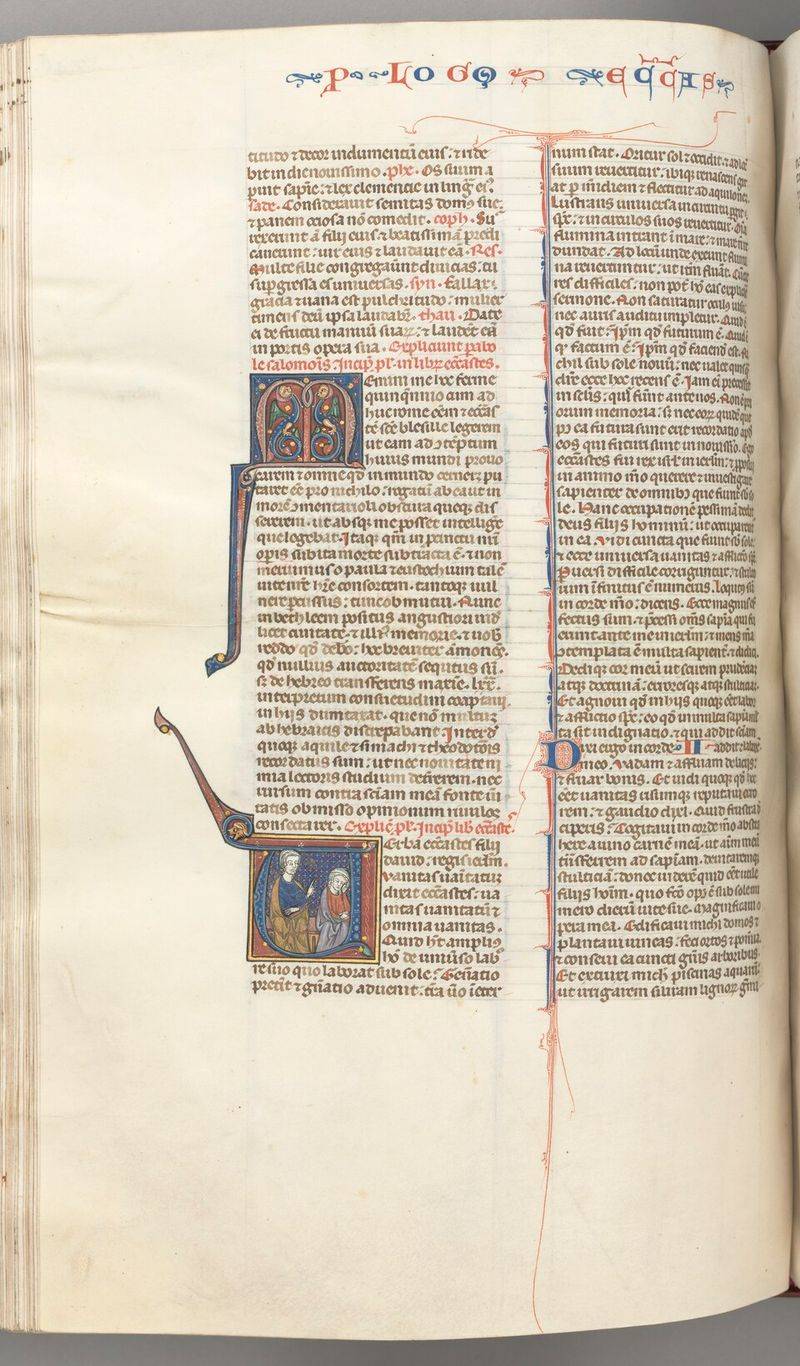
Every few years, a new technology or trend arrives with the claim that it has changed everything permanently and that nothing before it is quite relevant anymore. Ecclesiastes was already skeptical of that argument roughly two thousand years ago.
The line comes from a biblical text traditionally associated with Solomon, though modern scholars generally date its composition to a later period. Its original context was philosophical, reflecting on the apparent repetition built into human experience.
Generations come and go. Rivers run to the sea and then return through the cycle of evaporation.
Nothing is genuinely unprecedented when viewed across enough time.
The phrase eventually became a useful all-purpose response to claims of complete novelty. Whenever a supposedly new argument turns out to be a recycled old one, or a fresh trend reveals itself as something previous generations already tried, the expression applies cleanly.
What makes it particularly durable is that it does not require agreement with its original philosophical framework to be useful. The observation that human patterns repeat across generations has proven accurate enough that even people unfamiliar with Ecclesiastes reach for this phrase instinctively.
Share this story