History has a well-known habit of favoring whoever ends up in charge. The people who win wars, consolidate power, or outlast their rivals tend to control the monuments, the schoolbooks, the official ceremonies, and the chroniclers whose accounts get preserved for future generations.
Defeated sides have fewer tools to keep their version of events alive, and inconvenient details can quietly disappear behind a tidier national story. This pattern shows up across thousands of years of recorded history, from ancient Egypt to 19th-century America.
Sometimes the rewriting is deliberate and calculated. Other times it happens gradually, as certain stories get repeated and others fade.
What makes these cases genuinely fascinating is that the original, messier picture rarely disappears entirely. Archaeology, rival records, oral histories, and modern scholarship keep pulling back the curtain.
The 13 cases explored here cover some of history’s most familiar events, and each one looks considerably more complicated once the missing perspectives are restored.
1. The Battle of Kadesh, 1274 BC
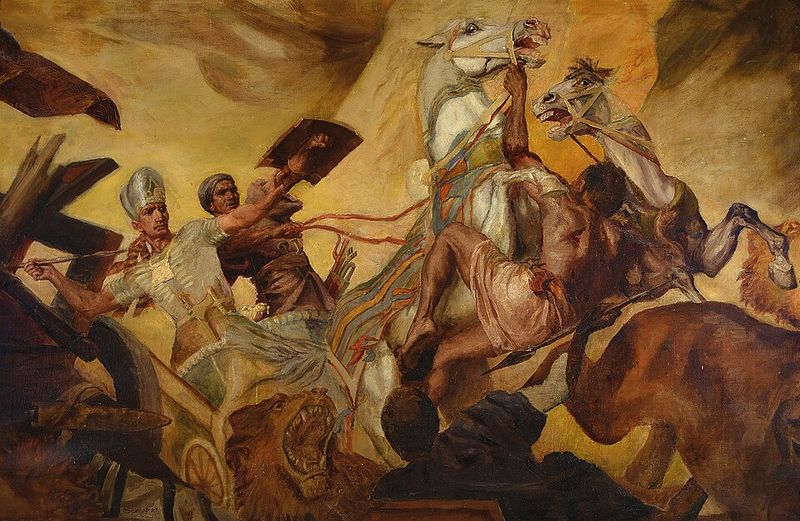
Pharaoh Ramesses II understood something that modern spin doctors would recognize immediately: control the monument, control the memory. Egyptian inscriptions carved onto temple walls at Abydos, Luxor, Karnak, and Abu Simbel described the Battle of Kadesh as a stunning personal triumph.
Ramesses was depicted fighting almost alone after his forces were caught off guard, rallying against overwhelming Hittite numbers through sheer courage and divine favor.
For centuries, that heroic version was largely accepted as literal truth. Modern historians now widely consider Kadesh to have ended in a stalemate.
Hittite records suggest Ramesses was compelled to withdraw rather than claim any decisive ground.
The Hittites retained influence in the contested region, and roughly fifteen years after the battle, both empires signed the famous Eternal Treaty, one of the ancient world’s earliest surviving peace agreements. Ramesses did not need a clean victory.
He just needed better stone carvers than his opponents.
2. The Persian Wars, 5th Century BC
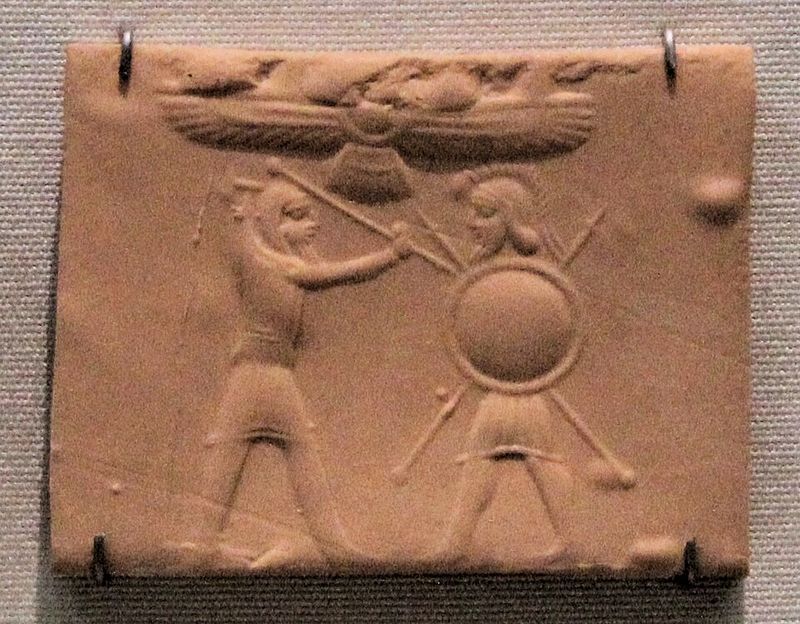
Most of what the modern world knows about the Persian invasions of Greece arrives filtered through Greek literary traditions. Herodotus, the primary source for these events, was a brilliant observer, but he was also a Greek writing for Greek audiences.
His accounts shaped how the wars were remembered across centuries of Western education.
The familiar version presents a heroic struggle between free city-states and a faceless Persian tyranny. Battles at Marathon, Thermopylae, Salamis, and Plataea became cornerstones of that story.
What gets less attention is how fractured the Greek world actually was. Many Greek communities cooperated with Persia.
Others stayed neutral. Even Athens, celebrated as democracy’s birthplace, depended on enslaved labor and exercised increasingly coercive authority over allied city-states.
The Persian Empire itself was considerably more organized and culturally sophisticated than Greek sources suggested. The Greeks genuinely repelled the invasions.
But their accounts also ensured that Europe inherited a distinctly Greek interpretation of what that resistance meant.
3. Alexander the Great’s Conquests, 4th Century BC
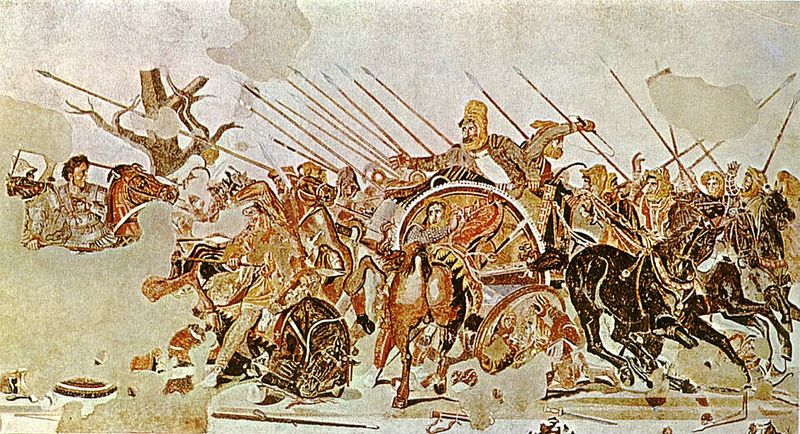
The title “the Great” was not assigned by a neutral committee. It reflects a tradition of Greek and Roman sources that celebrated Alexander’s military genius, his vision of a Hellenistic world, and his seemingly impossible string of victories.
Beginning with Macedonia’s invasion of the Persian Empire, he defeated larger forces, overthrew the Achaemenid monarchy, and pushed as far as northwestern India.
That record of achievement is genuine. The tactical brilliance displayed at Gaugamela in 331 BC, where Alexander defeated a vastly superior Persian force, remains studied by military historians today.
But the experience of the people in his path looked considerably different from the triumphant narrative.
The siege of Tyre in 332 BC lasted seven months and ended in mass killings and enslavement after the city refused to surrender. Alexander could also be ruthless and increasingly autocratic, traits that even sympathetic ancient sources acknowledged.
His victories determined that later generations would frame the story around his journey rather than the communities he destroyed along the way.
4. Rome’s Destruction of Carthage, 146 BC
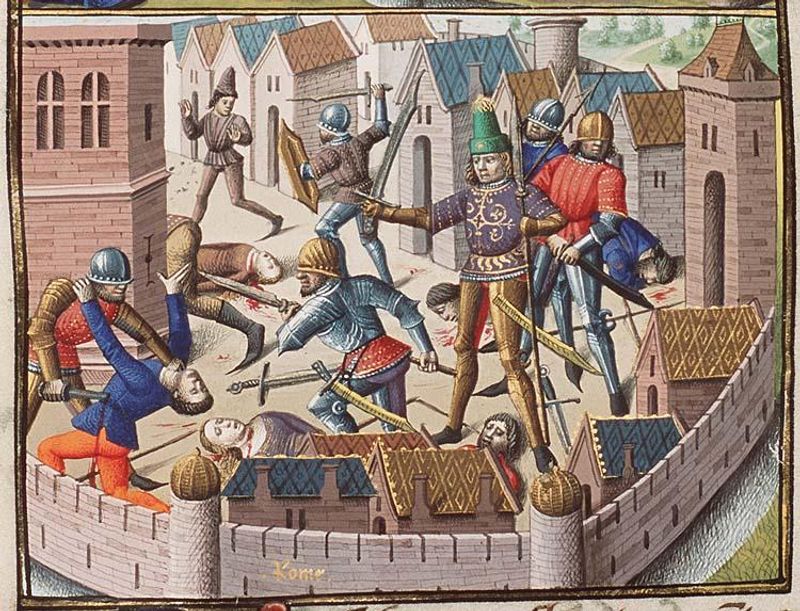
Rome and Carthage spent over a century fighting three separate wars for supremacy in the western Mediterranean. Rome eventually won so decisively that Carthage ceased to exist as a city.
After the Third Punic War, Roman forces demolished much of the city in 146 BC and enslaved the surviving population. The independent Carthaginian state was finished.
What followed was a near-total Roman and Greco-Roman monopoly on how Carthage was remembered. Carthaginians appeared in surviving literature as deceitful, cruel, and religiously disturbing.
The Latin word “Punicus” eventually became associated with treachery in the Roman tradition. That inherited reputation stuck for a very long time.
Modern archaeology has substantially revised that picture. Carthage operated as a sophisticated commercial power with an extensive Mediterranean trade network, complex political institutions, and a rich culture.
One famous story deserves correction: Rome almost certainly did not sow Carthage’s fields with salt. That detail originated centuries later and has no support in ancient sources.
Rome destroyed its rival physically and then shaped how the world remembered it.
5. The Norman Conquest of England, 1066
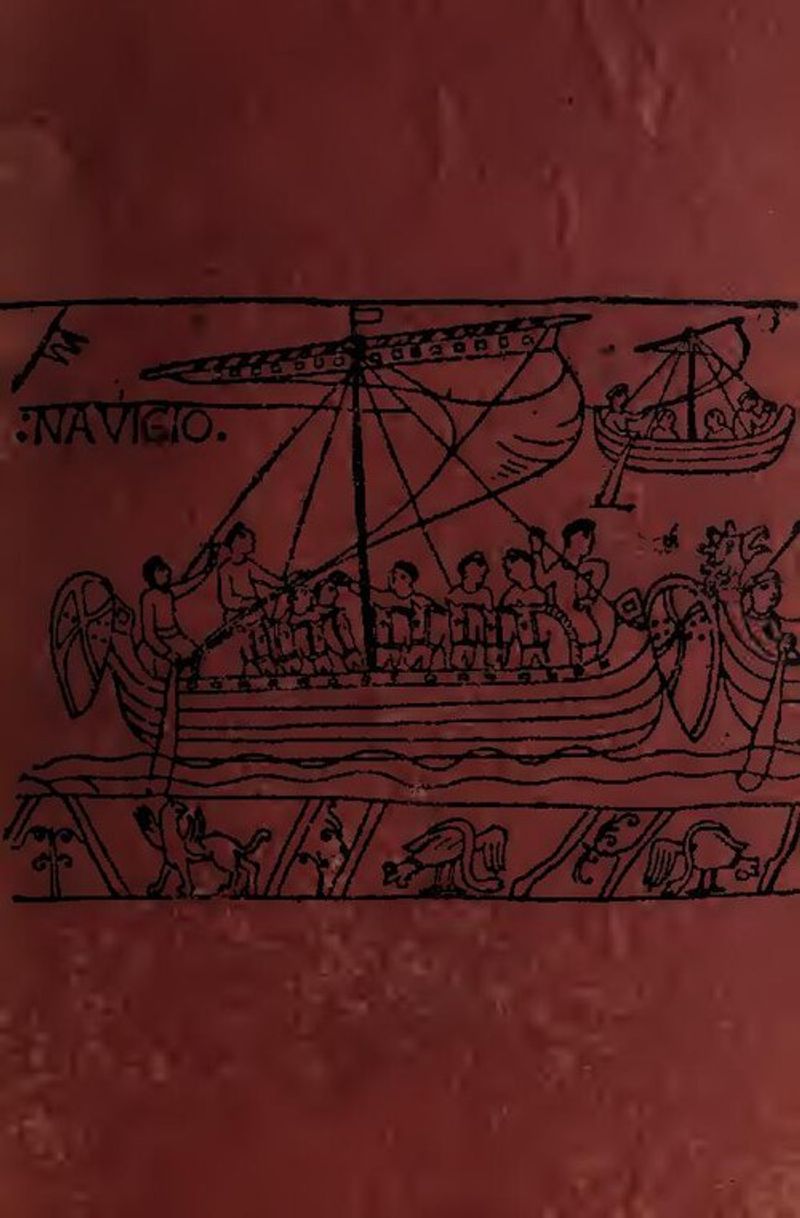
William of Normandy’s version of 1066 had a clear political purpose from the start. He needed his invasion to appear legitimate rather than simply opportunistic.
So the official story emphasized Edward the Confessor’s alleged promise of the throne to William, Harold Godwinson’s supposed oath of support, and Harold’s subsequent betrayal. In that framing, William was not a conqueror but a rightful claimant restoring what was owed to him.
The succession dispute was genuinely complicated, and competing claims remain debated by historians today. But William’s victory gave his regime enormous influence over which version of events survived.
Norman-sponsored chroniclers like William of Poitiers presented the conquest as divinely sanctioned. The Domesday Book, commissioned in 1086, systematically documented land ownership in a way that consolidated and formalized Norman authority.
The Harrying of the North in 1069 and 1070 demonstrated how that authority was enforced. Crops were destroyed, communities were devastated, and famine followed.
Once William controlled the institutions of the state, he had powerful tools for explaining why he had always deserved to be king.
6. The Albigensian Crusade, 1209 to 1229
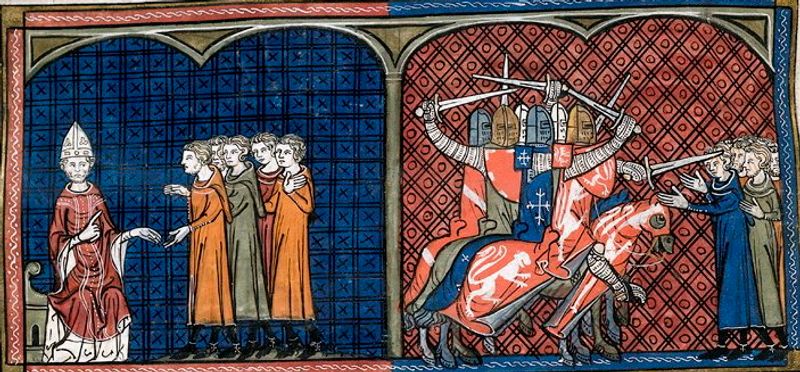
What gets called a religious campaign in most medieval sources was also a political conquest dressed in theological language. Beginning in 1209, the Albigensian Crusade targeted Cathar communities in Languedoc, a region of southern France with its own political culture and considerable autonomy.
The papacy authorized the crusade, but French noble interests and royal expansion were never far from the surface.
From the perspective of church authorities, suppression was a defense of doctrinal unity. From the perspective of communities in Languedoc, it meant siege warfare, dispossession, and killing.
The massacre at Beziers in 1209 became the crusade’s most notorious episode. A later tradition attached the phrase “Kill them all; God will know his own” to the papal legate Arnaud Amalric.
A near-contemporary source recorded a version of the statement, though historians cannot confirm it as a direct quote.
Large numbers of people were killed at Beziers, including Catholics caught in the assault. The Cathars were largely destroyed as a movement.
The French crown’s power expanded significantly into Languedoc. The victorious religious and political order left far more records than the communities it dismantled.
7. The Spanish Conquest of the Aztec Empire, 1519 to 1521
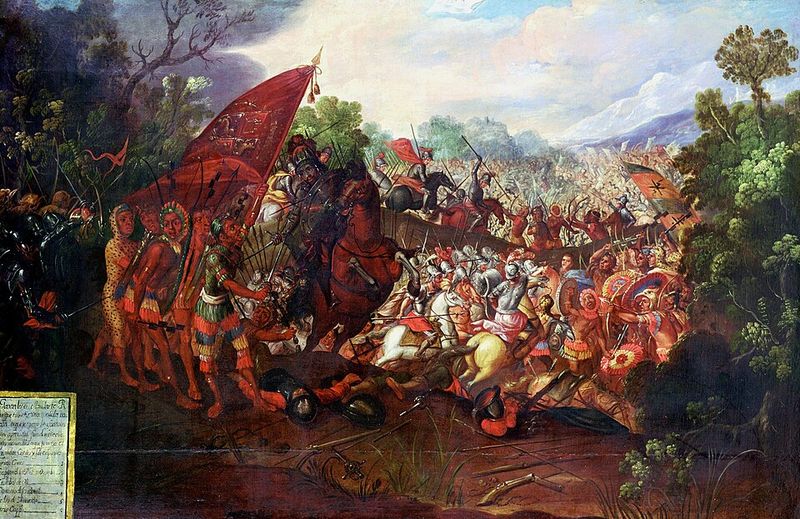
Generations of schoolbooks reduced one of history’s most complicated military campaigns to a simple formula: a small band of Spaniards defeated a mighty empire. That version omits some of the most consequential participants.
Thousands of Indigenous warriors, particularly Tlaxcalans with deep grievances against Mexica domination, fought alongside Cortes. Without those alliances, the campaign would have looked entirely different.
Disease reshaped the conflict in ways no military strategy could replicate. Smallpox spread through Tenochtitlan during the siege, dramatically weakening the city’s defenders.
The fall of the Aztec capital in August 1521 resulted from a combination of Spanish arms, Indigenous political rivalries, and epidemic catastrophe, not European military superiority alone.
Spanish accounts also generated persistent myths. The idea that the Aztec ruler Moctezuma believed Cortes was the returning god Quetzalcoatl is now treated with considerable skepticism by scholars.
That story likely developed after the conquest and was amplified by Spanish chroniclers seeking a tidy explanation for how a small expedition succeeded. The real story involved far more players and far more complexity than the simplified version ever admitted.
8. The Defeat of the Spanish Armada, 1588
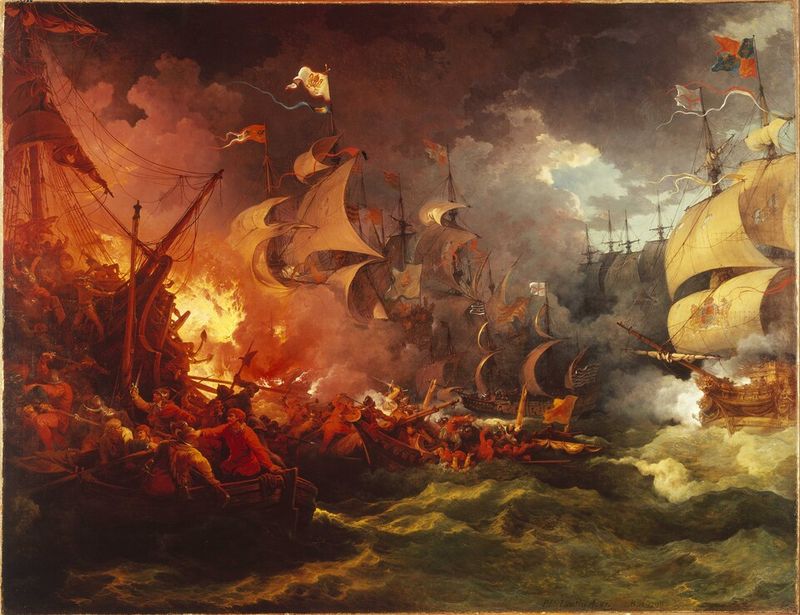
English national memory turned 1588 into one of its most celebrated stories. The Spanish Armada arrived, English sailors outmaneuvered it, fireships disrupted the Spanish formation at Calais, and the Battle of Gravelines inflicted serious damage.
Protestant England was saved. The story became a cornerstone of British identity, repeated across centuries of literature, painting, and popular culture.
The fuller picture is more complicated. After the fighting in the Channel, the Spanish fleet attempted to return home by sailing north around Scotland and Ireland.
Navigation problems, severe weather, and supply shortages caused additional devastating losses. The Armada was badly hurt, but it was not destroyed in a single glorious engagement.
England then launched its own large expedition the following year. The English Armada of 1589, led by Francis Drake and John Norris, involved over 100 ships and roughly 20,000 men.
It ended in disaster, failing all its major objectives and suffering catastrophic losses to disease and Spanish resistance. That episode never earned anything close to the same place in popular British memory.
The contrast reveals exactly how selective national storytelling can be.
9. Cromwell’s Conquest of Ireland, 1649 to 1653
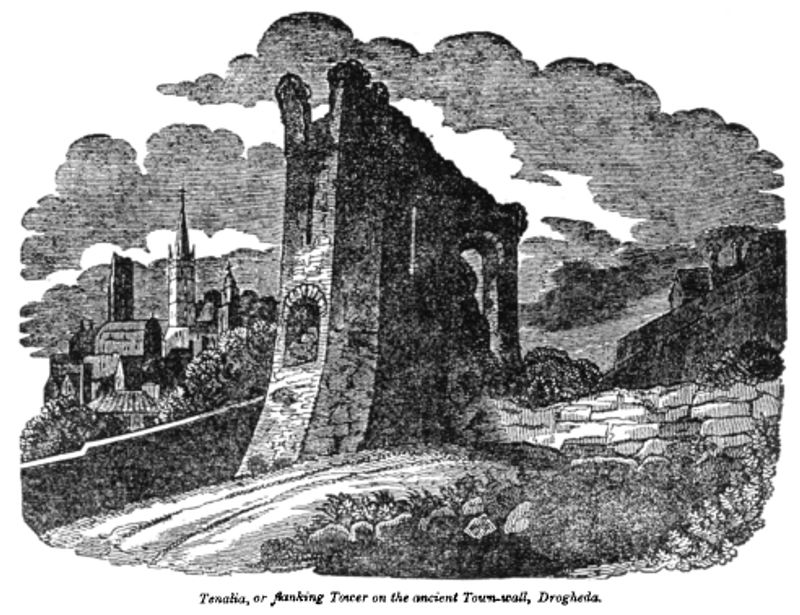
Oliver Cromwell’s campaign in Ireland produced two almost entirely different historical memories, shaped by which side of the conflict a community stood on. In older English and Protestant narratives, the campaign could be framed as the military consolidation of the Commonwealth following the English Civil Wars, a necessary restoration of order against Royalist resistance and rebellion.
Irish memory preserved a far darker account. Cromwell landed in 1649 and his forces captured Drogheda and Wexford.
At both towns, killings during and after the assaults became enduring symbols of the campaign’s brutality. At Drogheda, most of the garrison and significant numbers of civilians were killed.
Wexford saw similar violence after the town fell.
The wider conquest brought land confiscation on an enormous scale. Catholic landowners were displaced, vast estates transferred to Protestant settlers and soldiers, and communities across the country were disrupted by warfare, disease, and famine.
Historians debate specific figures and particular episodes, but the scale of upheaval is not seriously contested. A victorious government had language for what happened.
The communities it displaced had memory instead.
10. The Battle of the Little Bighorn, 1876
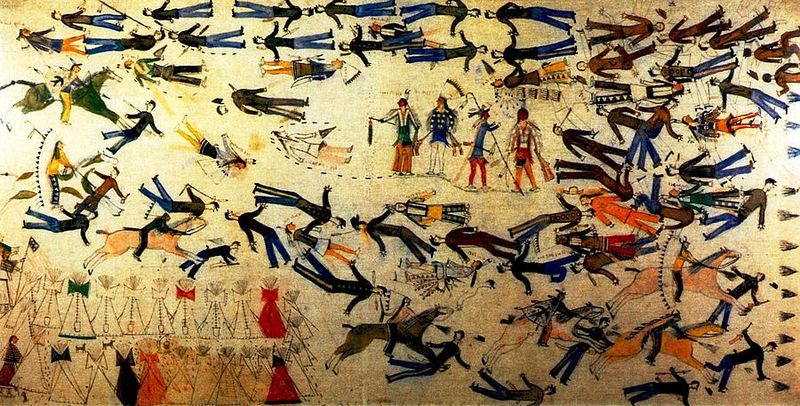
Few cases illustrate the gap between military outcome and cultural memory as clearly as Little Bighorn. The Lakota, Northern Cheyenne, and Arapaho coalition won the battle decisively.
Lieutenant Colonel George Armstrong Custer and five companies of the 7th Cavalry were destroyed in June 1876 after attacking a large encampment along the Little Bighorn River in Montana. The Native forces outnumbered them significantly.
American popular culture then performed a remarkable transformation. Paintings, Wild West shows, advertisements, novels, and eventually films centered Custer and his soldiers, frequently framing the battle as a doomed heroic stand rather than a military defeat.
Indigenous participants were often reduced to anonymous attackers surrounding a tragic American figure.
Native oral histories recorded something considerably richer: the strategies of specific leaders, the protection of families and the camp, the movements of individual warriors, and the experience of people defending their homes. The U.S. military eventually intensified pressure on Native communities in the region, overwhelming resistance within years.
The nation that lost the famous battle retained disproportionate authority over how that battle was subsequently told.
11. The American West and the “Empty Frontier”
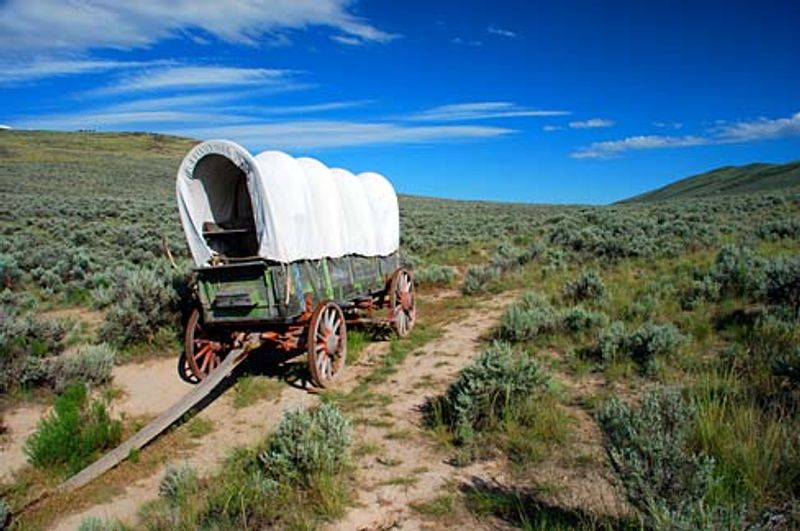
One of America’s most durable national stories described westward expansion as pioneers moving into an open, largely uninhabited wilderness ready to be claimed and cultivated. The imagery was powerful: covered wagons crossing plains, homesteaders building cabins, railroads stitching the continent together.
These images became central to how Americans understood their national character and history.
The land was not empty. Indigenous nations had occupied those territories for generations, maintaining trade networks, agricultural systems, political structures, and sacred relationships with specific landscapes.
Expansion brought settlers into direct conflict with those societies, and the results were rarely ambiguous. Treaties were negotiated and then broken.
Communities were displaced onto reservations. Military campaigns accompanied settlement across the Great Plains and beyond.
The systematic destruction of the great bison herds, a central resource for Plains communities, compounded the disruption. Popular culture absorbed the expansion story as adventure and progress, editing out the displacement and conflict that made it possible.
The result was not a single fabricated event but an enormous historical process reshaped into a national founding myth, with the people already living there moved to the margins of the frame.
12. The “Lost Cause” Version of the American Civil War

This case complicates the headline because the people who rewrote the story were not the military winners. After the Confederacy’s defeat in 1865, former Confederates and sympathetic organizations constructed what historians now call the Lost Cause interpretation.
It portrayed the Confederate cause as noble and constitutionally principled, centered on states’ rights rather than the preservation of slavery.
The historical record does not support that framing. Confederate secession documents, including Georgia’s declaration of causes, explicitly identified slavery and its protection as the central motivation.
Leading Confederate political figures made similar statements at the time. Yet the Lost Cause version became remarkably influential in the decades after the war.
Organizations like the United Daughters of the Confederacy promoted this narrative through monument campaigns, textbook advocacy, and public commemorations. By the early 20th century, Lost Cause assumptions had spread well beyond the former Confederate states.
The case demonstrates something important about how historical memory actually functions: military defeat does not automatically mean losing control of the story. A determined cultural campaign, sustained over decades, can reshape what later generations believe about a conflict they never witnessed.
13. The Fall of the Aztec Capital as the “Birth” of a New Nation
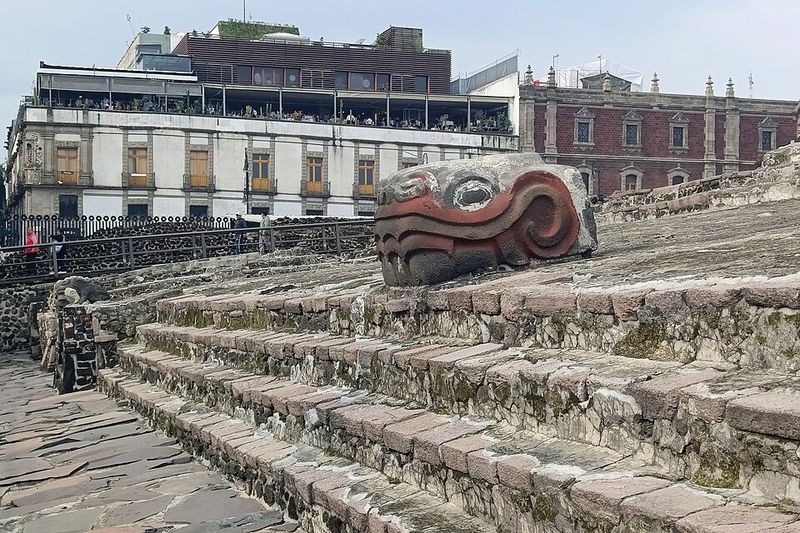
When Tenochtitlan fell in August 1521, the event did not instantly produce a clean cultural divide between an old world and a new one. Colonial Spanish histories centered the conquest as the beginning of a rightful political and religious order, emphasizing Spanish leadership and the spread of Catholicism.
Indigenous agency in those accounts was often reduced to either resistance or conversion.
Later Mexican national histories approached the same event differently, incorporating Indigenous resistance into the ancestry of modern Mexico and recognizing a mestizo identity that acknowledged both Spanish and Indigenous roots. Both frameworks compress what was actually an extraordinarily tangled transformation involving Spaniards, Mexica, Tlaxcalans, Texcocans, and many other groups with competing goals.
The people fighting Cortes did not think of themselves as representatives of a future unified Mexican nation. His Indigenous allies did not see themselves as supporting a Spanish national project either.
Their motivations were rooted in their own political landscapes and rivalries. Later generations assigned meanings to the conquest that served their own identities and political needs.
That pattern of reinterpretation, applied again and again across centuries, may be the clearest lesson running through all thirteen stories collected here.
Share this story