American history books have a habit of leaving out the people who shaped it most. Native Americans built nations, led movements, wrote books, won gold medals, and fought for rights long before many of those rights were ever recognized.
Their stories are not footnotes. From the Great Lakes to the Pacific Northwest, from the 1700s to the 20th century, Indigenous leaders, thinkers, and activists changed the course of history in ways that most classrooms barely touch.
This list brings together 13 Native Americans whose contributions ran deeper than most textbooks admit, covering diplomacy, resistance, writing, sports, science, and law. Some names you might recognize.
Others might be completely new to you. Either way, every person on this list earned a much bigger place in the American story than they usually get.
Pontiac – The Odawa Leader Who Challenged British Power
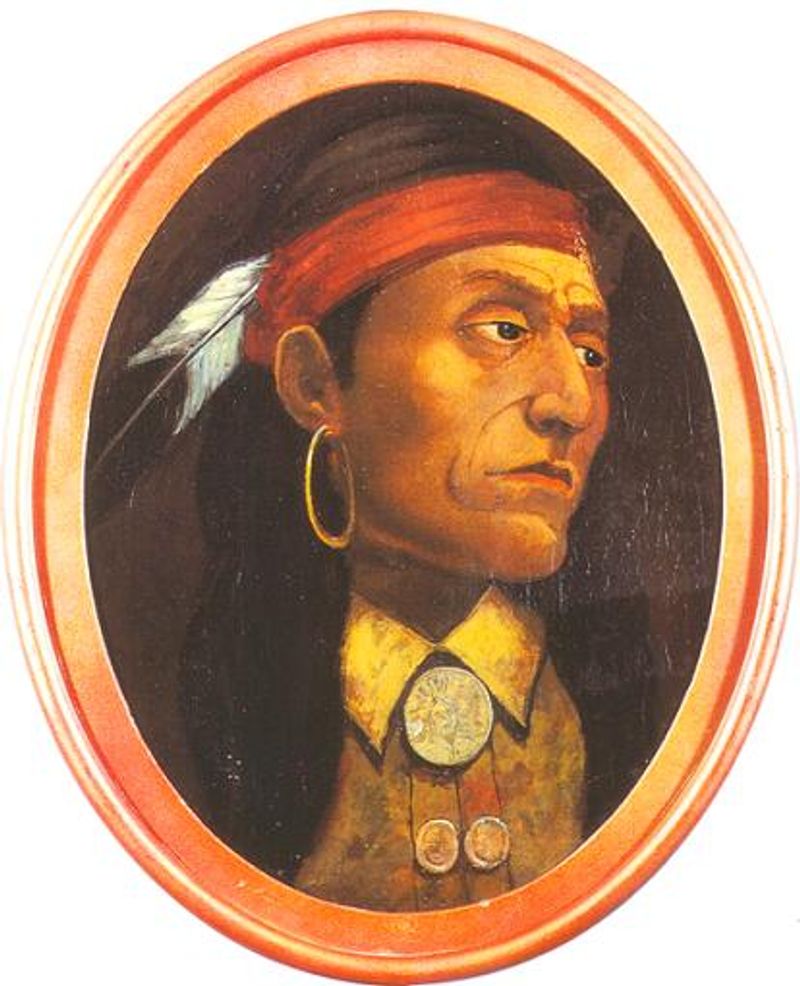
Before the United States even existed, one Odawa leader was already forcing European powers to take Native nations seriously. Pontiac helped organize one of the most coordinated Indigenous resistance movements of the 18th century, pushing back hard against British control after France lost power in North America following the French and Indian War.
British policies after that war were deeply harmful to Native communities. Trade rules changed, land protections disappeared, and British commanders treated Native nations with open contempt.
Pontiac recognized that these changes threatened not just one tribe but many, and he worked to bring different Native groups together around the Great Lakes region to resist.
The 1763 resistance, often called Pontiac’s War, captured multiple British forts and alarmed colonial officials enough to issue the Proclamation of 1763, which temporarily restricted westward settlement. That was a real political outcome.
Pontiac did not just fight. He changed British policy through sheer organized pressure.
Nancy Ward – The Cherokee Beloved Woman Who Used Diplomacy as Power
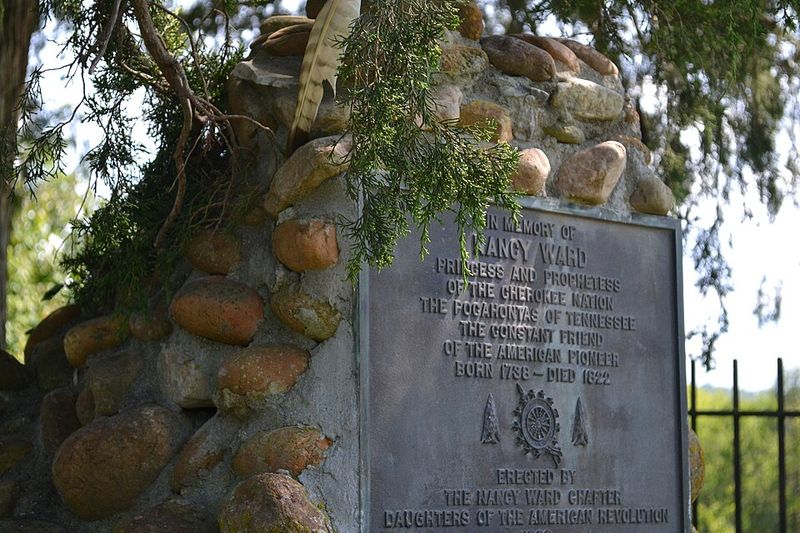
Nancy Ward, known in Cherokee as Nanyehi, held a title that carried real weight: Beloved Woman. In Cherokee society, that was not an honorary label.
It came with a seat on the Council of Chiefs and leadership of the Women’s Council, giving her a direct role in decisions that shaped war, peace, and the future of her people.
She lived during one of the most dangerous eras in Cherokee history, as settler populations expanded and conflicts became harder to avoid. Ward consistently used her position to pursue diplomacy, working to protect Cherokee communities through negotiation rather than letting tensions spiral without any Native voice at the table.
What makes her legacy remarkable is that she operated with real authority at a time when most people outside Cherokee society did not recognize women as political leaders at all. Her career challenges the idea that Indigenous women were absent from leadership.
She was central to it.
Tecumseh – The Shawnee Visionary Who Tried to Unite Native Nations
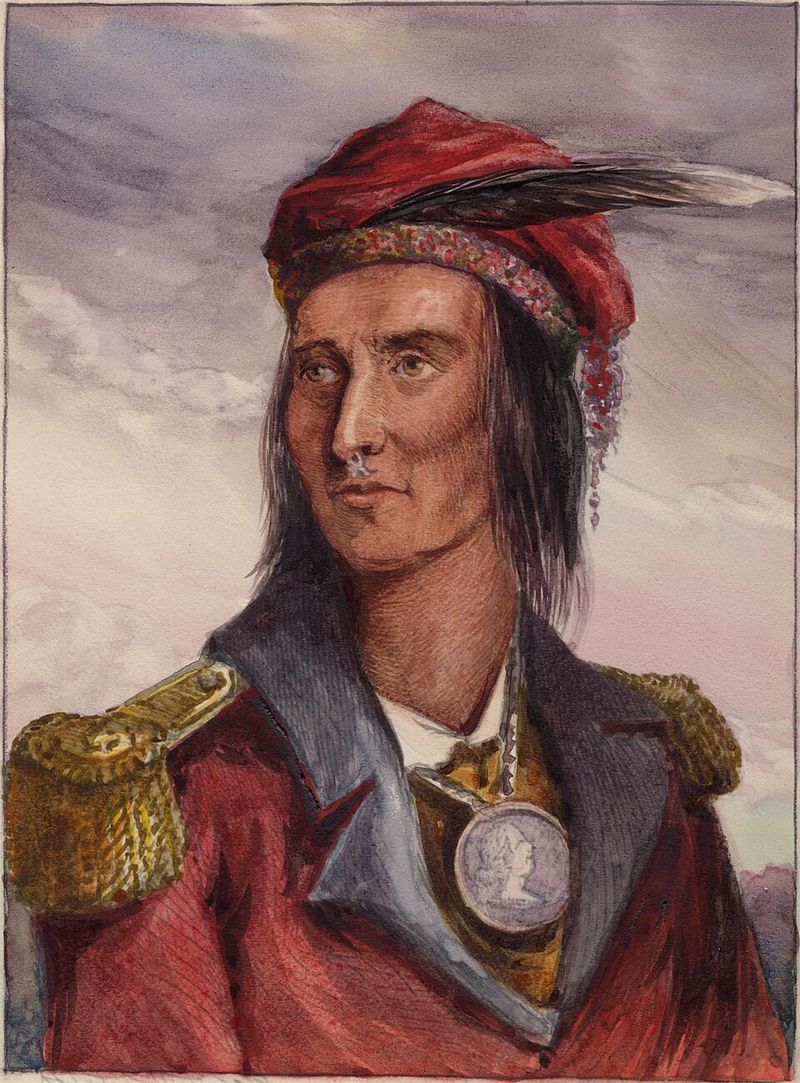
Tecumseh had an idea that was genuinely ahead of its time: Native nations could only protect their lands and sovereignty if they stood together. He spent years traveling across a vast region, from the Great Lakes to the Gulf Coast, making the case for a broad Indigenous confederacy that could match the political and military pressure of U.S. expansion.
His vision required convincing nations with different languages, traditions, and histories to see themselves as part of a shared cause. That alone was an extraordinary political achievement.
He built real alliances and brought his confederacy into the War of 1812 alongside British forces, believing that partnership offered the best chance of stopping American expansion.
Tecumseh was killed at the Battle of the Thames in 1813, and the confederacy did not survive his loss. But the idea he championed, that Indigenous nations had collective rights worth defending together, remained a powerful concept long after his lifetime ended.
Sacagawea – The Lemhi Shoshone Woman Whose Knowledge Helped an Expedition Survive
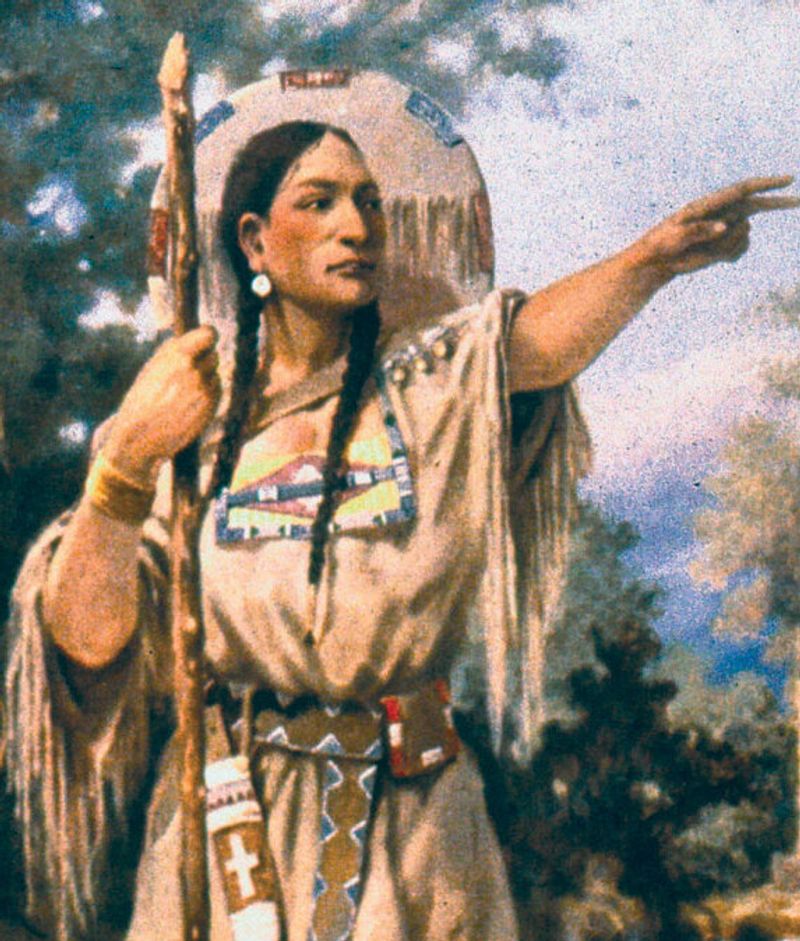
Sacagawea is one of the most recognized Native American names in U.S. history, but the way she is usually described sells her short. She was not simply a guide who pointed the Lewis and Clark expedition in the right direction.
She was a translator, a cultural bridge, and a living signal to Native communities along the route that the expedition was not a military threat.
William Clark himself noted that her presence helped reassure Native peoples they encountered. That kind of diplomatic function was not incidental.
It was essential. Without positive early contacts with Native nations along the route, the expedition could have collapsed entirely.
She was a Lemhi Shoshone woman who had been taken from her homeland as a child and was living among the Mandan and Hidatsa when Lewis and Clark arrived. Her knowledge of languages, terrain, and people turned out to be exactly what the expedition needed to survive the journey west and return home.
Chief Seattle – The Suquamish and Duwamish Leader Whose Name Lives On
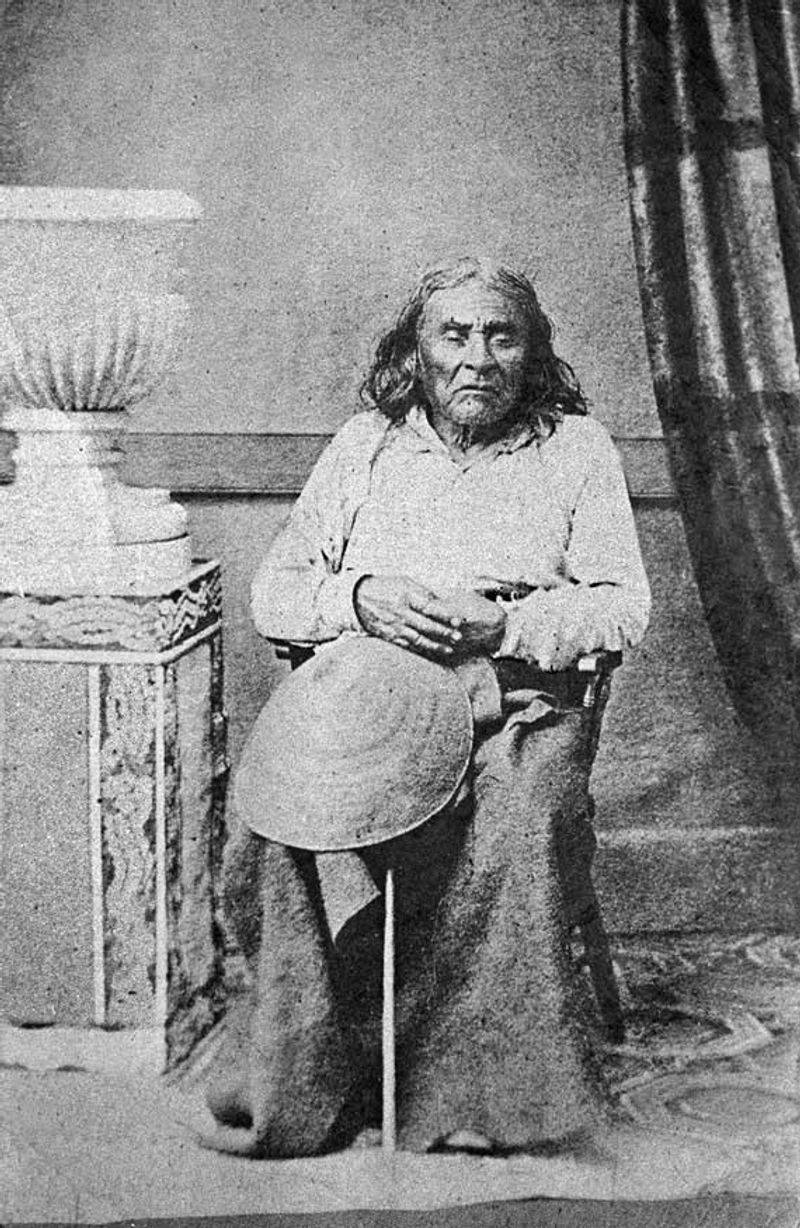
Most people know the name Seattle without knowing the man behind it. Chief Si’ahl was a leader of the Duwamish and Suquamish peoples in the Pacific Northwest, and the city that bears his name was named in his honor, though that honor came alongside enormous disruption to his people’s way of life.
He signed the Treaty of Point Elliott in 1855, a moment that reflected the impossible choices Indigenous leaders faced during the mid-1800s. Settler populations were arriving faster than any resistance could slow, and treaties, even flawed ones, sometimes offered the only path to preserving any portion of what Native communities had built over generations.
Chief Si’ahl lived through a period when the entire landscape of the Puget Sound region transformed around him. His legacy is not just a city name on a map.
It represents the weight of leadership during a time when Native nations were being reshaped by forces far larger than any single leader could stop alone.
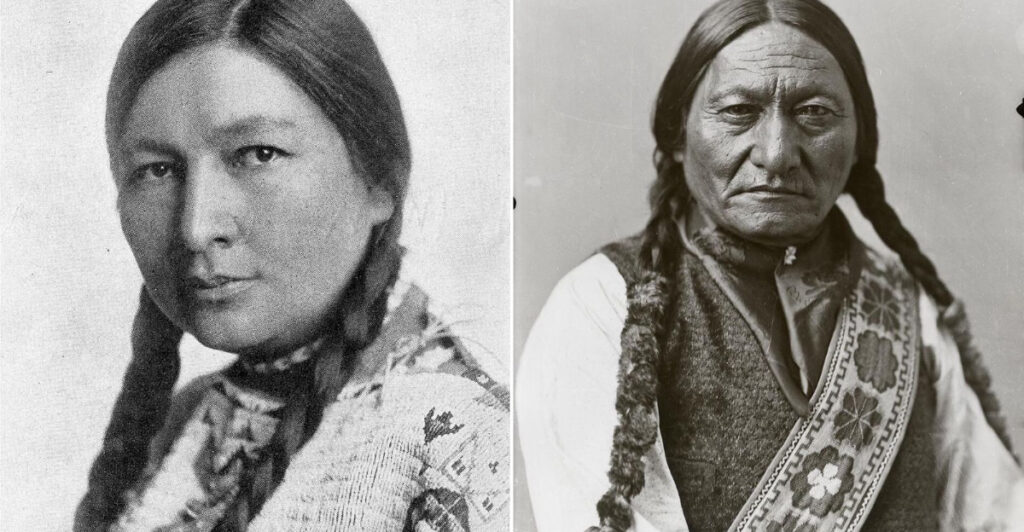
Sitting Bull – The Hunkpapa Lakota Leader Who Became a Symbol of Resistance
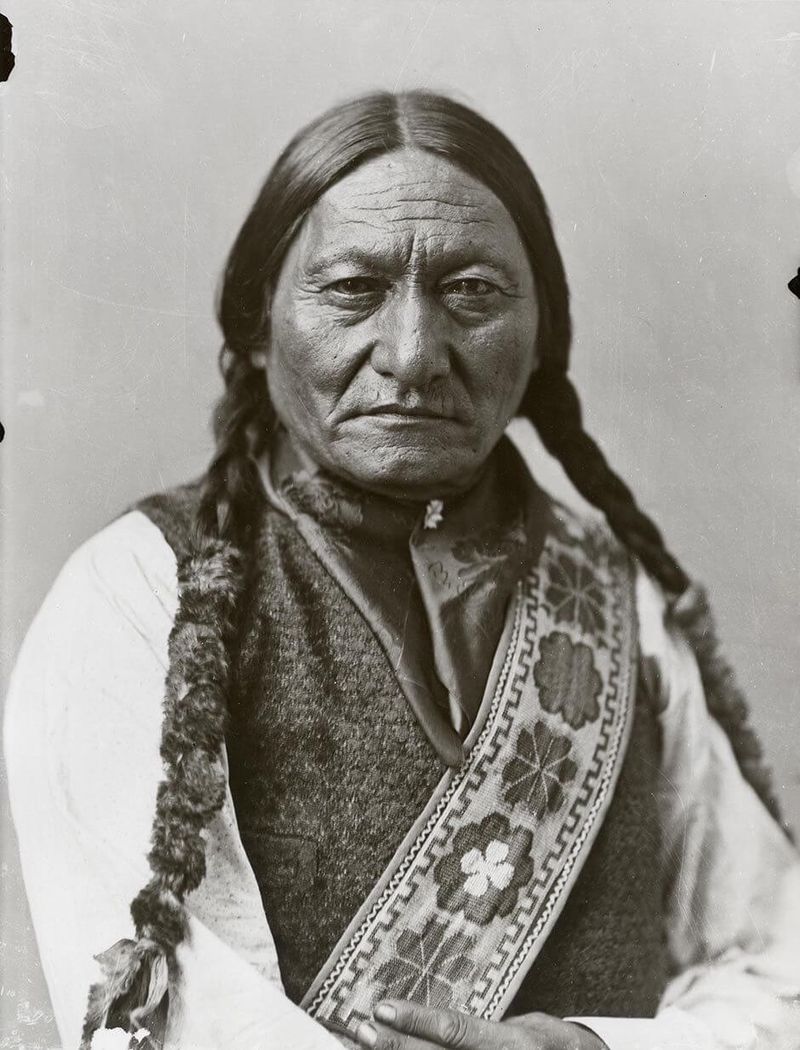
Sitting Bull is one of the most recognizable figures in Native American history, but his full story is often reduced to a single battle. The Battle of the Little Bighorn in 1876 was a significant moment, but Sitting Bull’s influence went far beyond one military engagement.
He was a spiritual leader, a political thinker, and a unifying force for Lakota people during a period of extreme pressure.
Born into a prominent Hunkpapa Lakota family sometime between 1831 and 1837, according to the National Park Service, he earned respect early in life through both courage and wisdom. His leadership was rooted in ceremony and community as much as in strategy and conflict.
After the Little Bighorn, he led his people into Canada to avoid U.S. forces, eventually returning and living under increasingly difficult conditions on the Standing Rock reservation. His name became a symbol of Indigenous sovereignty and the refusal to accept erasure quietly or without a fight.
Chief Joseph – The Nez Perce Leader Remembered for Courage Under Pressure
Chief Joseph became widely known during the Nez Perce War of 1877, but the conflict itself started because of a broken promise. The U.S. government had already reduced Nez Perce territory once, and when officials tried to push the remaining bands onto an even smaller reservation, it sparked a confrontation that neither side wanted to become a war.
What followed was one of the longest and most difficult retreats in American military history. Chief Joseph helped lead his people, including families with children and elders, on a journey of roughly 1,200 miles as they tried to reach safety in Canada.
U.S. forces pursued them relentlessly.
They were stopped just short of the border. The surrender speech associated with Chief Joseph, ending with words about fighting no more forever, is often quoted without the full context of exhaustion, loss, and the desperate hope that surrendering would spare his people further harm.
His later years were spent advocating for the right to return home.
Sarah Winnemucca – The Northern Paiute Writer Who Spoke Truth to Power
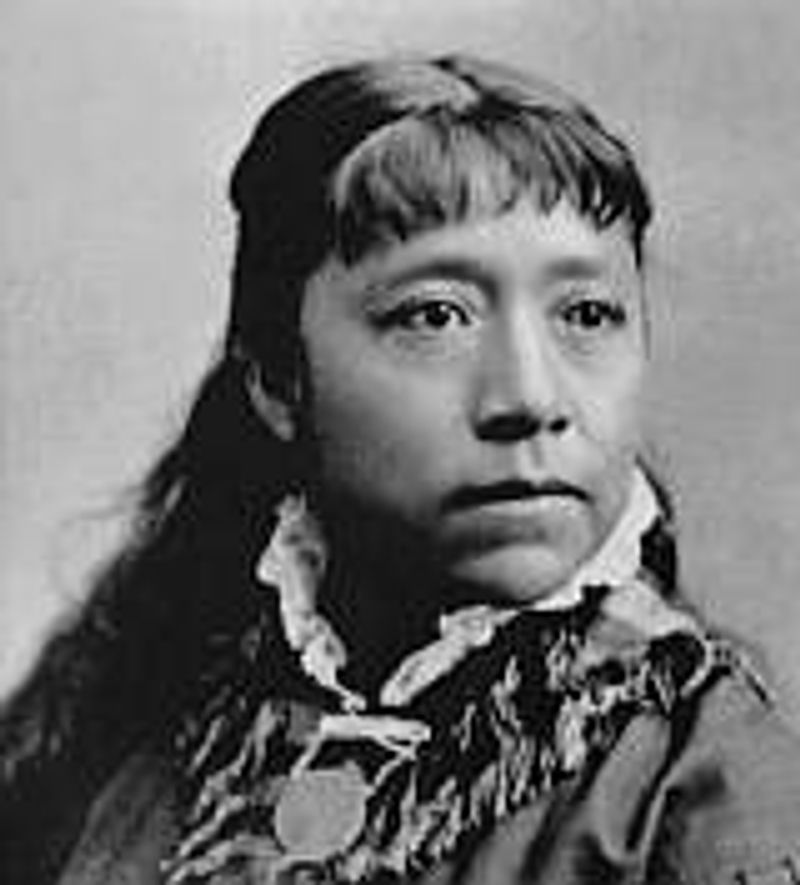
Sarah Winnemucca did something that very few Native women were able to do in the 19th century: she put her own account of westward expansion into print and made sure people read it. Her book, Life Among the Piutes, published in 1883, gave readers a firsthand Northern Paiute perspective on displacement, broken promises, and survival that no government report or newspaper editorial could replicate.
Born Thocmetony, she also lectured publicly in the eastern United States, bringing her message directly to audiences who had only heard one side of the story. The National Park Service notes that she challenged the violence and hypocrisy of federal Indian policy with both her writing and her public speaking.
Her work was groundbreaking not just because it was written by a Native woman, but because it demanded that readers reconsider what they thought they knew. She gave the Northern Paiute people a voice in a national conversation that had been happening entirely without them.
Charles Eastman – The Dakota Physician and Writer Who Bridged Two Worlds
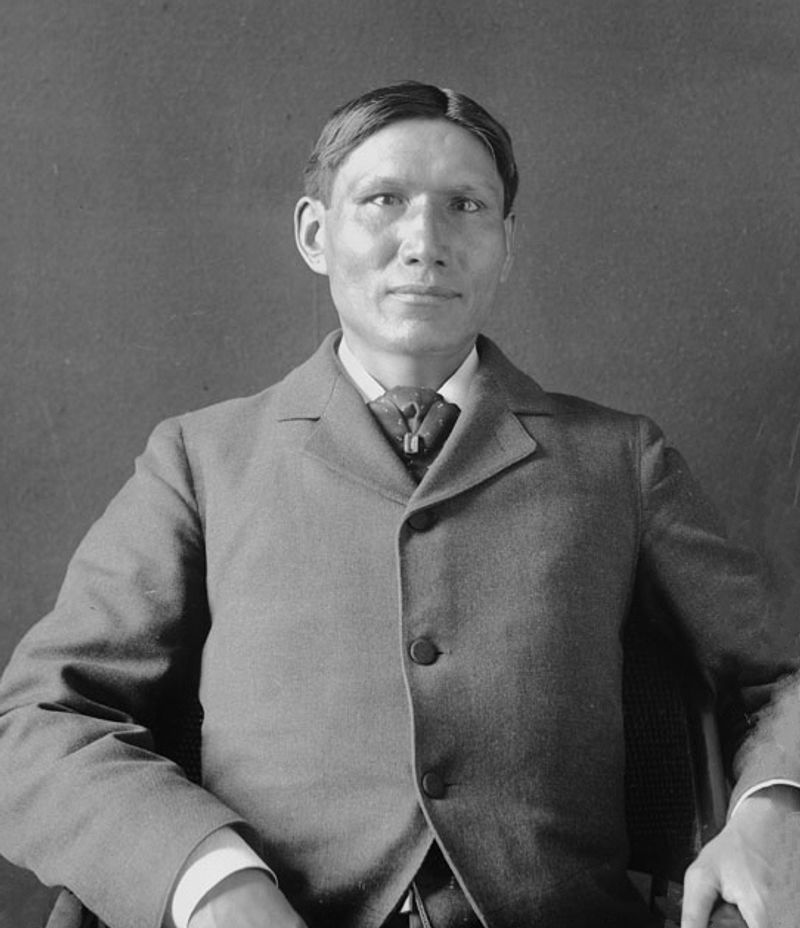
Charles Eastman, known by his Dakota name Ohiyesa, grew up learning traditional Dakota ways before eventually entering Euro-American schools and becoming a physician. That path was not simple, and it came with real cultural costs that he wrote about honestly throughout his career.
He worked as a doctor at Pine Ridge and was present in the aftermath of the Wounded Knee Massacre in 1890, an experience that shaped his understanding of the gap between American ideals and American actions toward Native people. His writing drew on both worlds without pretending the tension between them did not exist.
Eastman wrote more than ten books over his lifetime, covering Dakota spirituality, childhood, history, and identity. The Minnesota Historical Society recognizes him as a significant figure in both Indigenous and American literary history.
His work reached a wide non-Native audience and challenged the assumption that traditional Native life and modern knowledge could not exist within the same person.
Zitkala-Sa – The Yankton Dakota Writer, Musician, and Activist
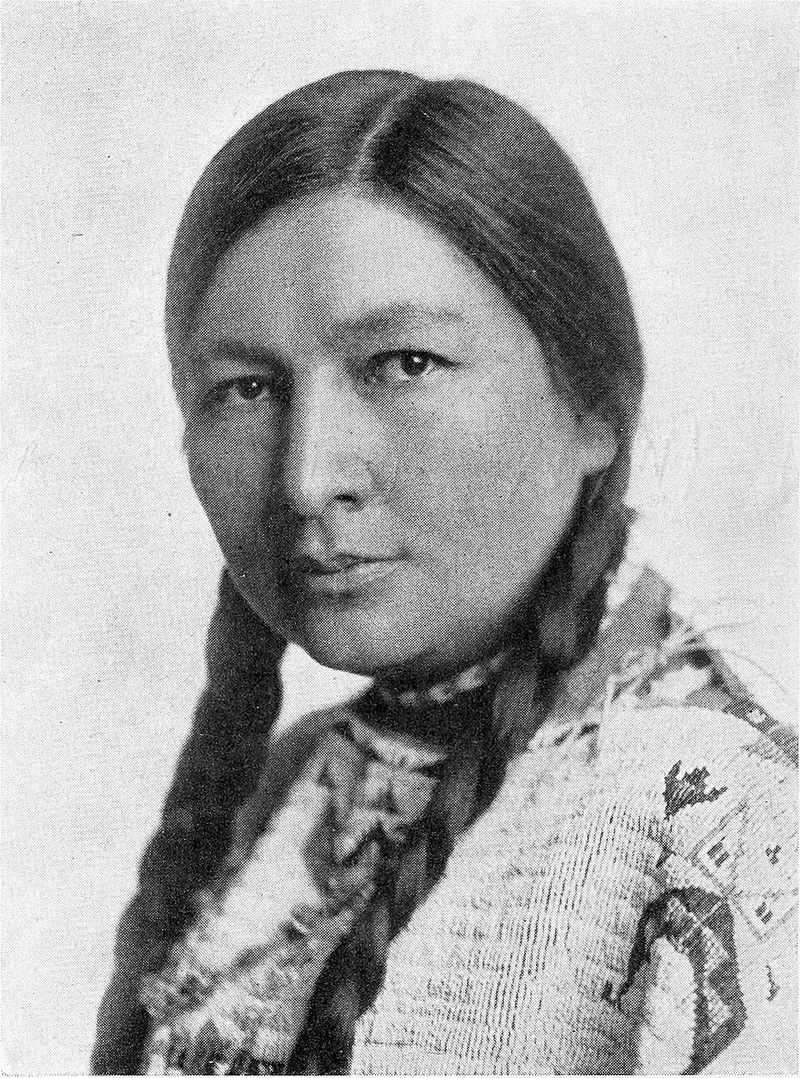
Zitkala-Sa, whose English name was Gertrude Simmons Bonnin, was a Yankton Dakota woman who refused to be quiet when she had something important to say. She used essays, short stories, music, and public speeches to challenge the boarding school system that had separated thousands of Native children from their families, languages, and cultures.
Her early essays, published in the Atlantic Monthly around 1900, described the trauma of forced assimilation in clear, personal language that shocked many non-Native readers. She was not writing theory.
She was writing from experience, and that made her work impossible to dismiss easily.
Beyond writing, she co-wrote the first Native American opera, The Sun Dance Opera, and co-founded the National Council of American Indians in 1926. The National Park Service recognizes her advocacy for citizenship rights, voting rights, and cultural self-determination.
Zitkala-Sa showed that art and political organizing were not separate efforts. For her, they were the same fight.
Jim Thorpe – The Sac and Fox Athlete Who Changed Sports History
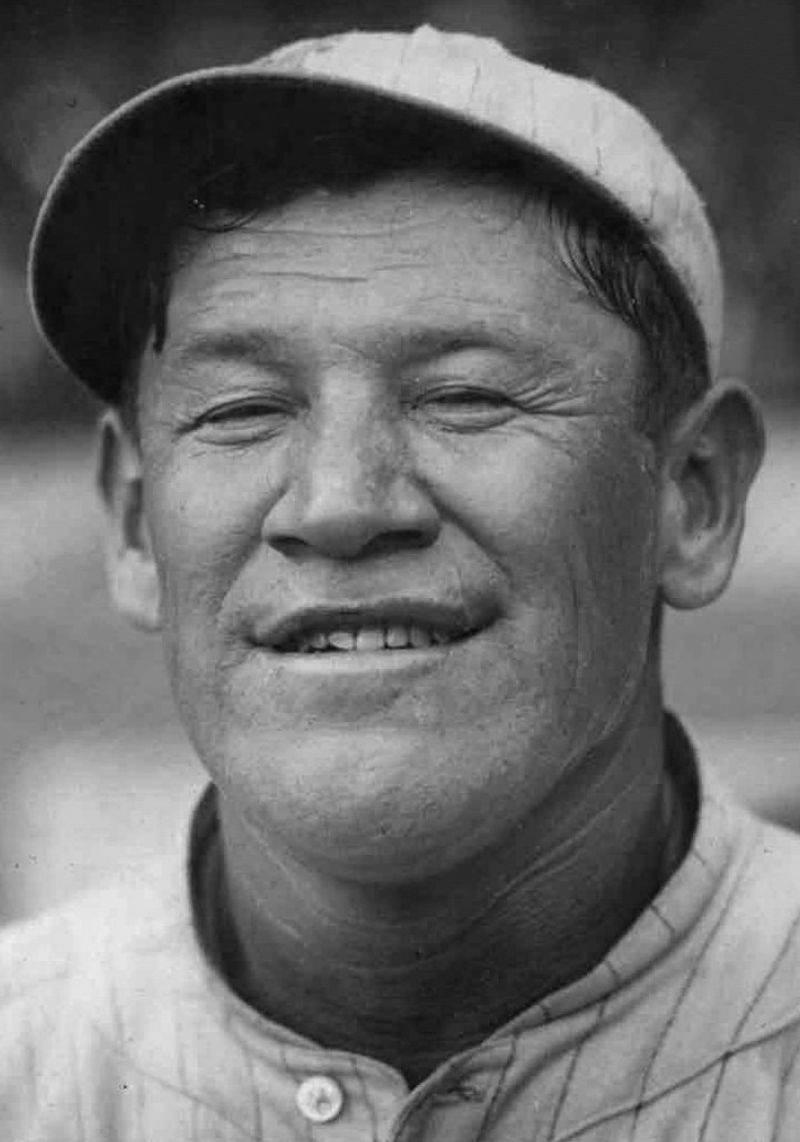
Jim Thorpe is widely considered one of the greatest athletes in American history, and that reputation is backed by results that still hold up more than a century later. At the 1912 Stockholm Olympics, he won gold medals in both the pentathlon and the decathlon, events that test speed, strength, endurance, and skill across multiple disciplines.
His titles were stripped shortly after because he had briefly played semi-professional baseball before the Games, which violated strict amateurism rules of the era. That decision was deeply unfair, and it took until 2022 for the International Olympic Committee to officially restore him as the sole gold medalist in both events.
Thorpe also played professional football and baseball after the Olympics, excelling in both sports at the highest levels. He was a member of the Sac and Fox Nation and attended the Carlisle Indian Industrial School in Pennsylvania.
His athletic career challenged every assumption about what Native Americans could achieve when given access to the same stage.
Wilma Mankiller – The Cherokee Leader Who Changed Tribal Government
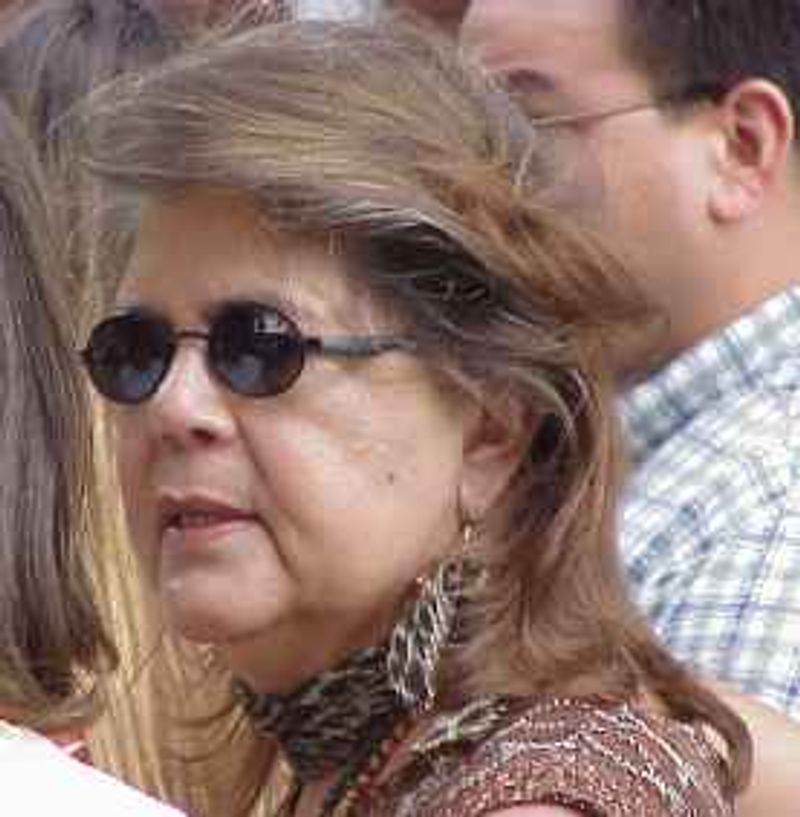
Wilma Mankiller became the first woman Principal Chief of the Cherokee Nation in 1985, and she handled the role with a focus on practical results rather than symbolic firsts. Her administration prioritized community development, rural water systems, healthcare access, and educational programs that directly improved daily life for Cherokee citizens.
She had not always been in a leadership position. Her political awareness grew through activism in the 1960s and 1970s, including involvement in the occupation of Alcatraz Island.
By the time she took office as Deputy Chief and then Principal Chief, she had developed a clear sense of what tribal self-governance could actually accomplish.
Mankiller served until 1995 and received the Presidential Medal of Freedom in 1998. The Smithsonian recognizes her as a transformative figure in both Native American leadership and women’s political history.
Her legacy is not about being the first woman in the role. It is about what she built while she held it.
Billy Frank Jr. – The Nisqually Activist Who Helped Defend Treaty Fishing Rights
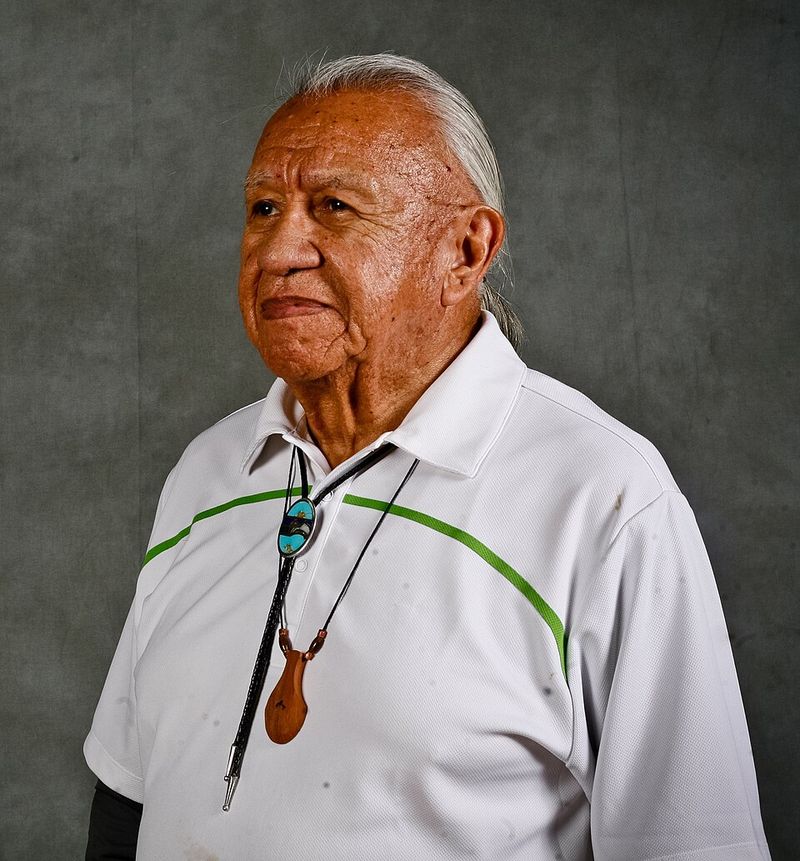
Billy Frank Jr. started getting arrested as a teenager in the 1940s for fishing in places his Nisqually ancestors had always fished. Under the Medicine Creek Treaty of 1854, his people had reserved the right to fish at their usual and accustomed places.
State officials ignored that, and Frank spent decades refusing to let them get away with it.
His activism was central to what became known as the Fish Wars, a sustained campaign by Pacific Northwest tribes to reclaim treaty-protected fishing rights. That movement helped lead to the Boldt Decision in 1974, a federal ruling that affirmed tribes were entitled to half the harvestable salmon and steelhead catch in Washington State.
The Billy Frank Jr. Nisqually National Wildlife Refuge was renamed in his honor in 2016, recognized by the U.S. Fish and Wildlife Service as a tribute to his environmental and treaty rights work.
His legacy connects Indigenous sovereignty directly to the health of rivers, fish, and the land itself.
Share this story