Some places on Earth look so strange that photos seem edited, even when they are not. Striped mountains, glowing caves, and giant mirrors made of salt are all real.
Wind, water, fire, and time carved these landscapes over millions of years. Get ready to meet 14 spots that prove nature is the best artist around.
Salar de Uyuni, Bolivia
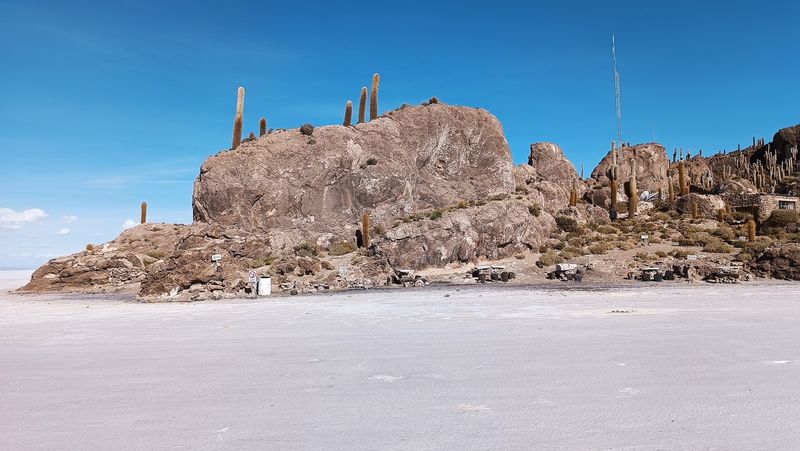
Stand here after a rain and you may forget which way is up. Salar de Uyuni is a huge high-altitude salt flat in Bolivia, and its surface can turn into a giant natural mirror.
Clouds, mountains, and sky reflect so well that the horizon nearly vanishes.
In the dry season, the ground looks completely different. The salt dries into a white plain covered in neat geometric cracks that stretch as far as you can see.
It feels like walking across a gigantic cracked dinner plate.
Out in the middle of all that white, islands covered with tall cacti pop up without warning. They make the scene feel even stranger, since cacti and salt are not an everyday pair.
Travelers love taking silly photos here, because the lack of landmarks lets people look tiny or float in space.
Plan your trip around the season you want to see. The mirror effect needs a thin layer of water, while the dry season is easier for getting around.
Bring sunglasses, sunscreen, and a warm jacket, because the sun is fierce and the altitude can make evenings chilly.
Landmannalaugar, Iceland
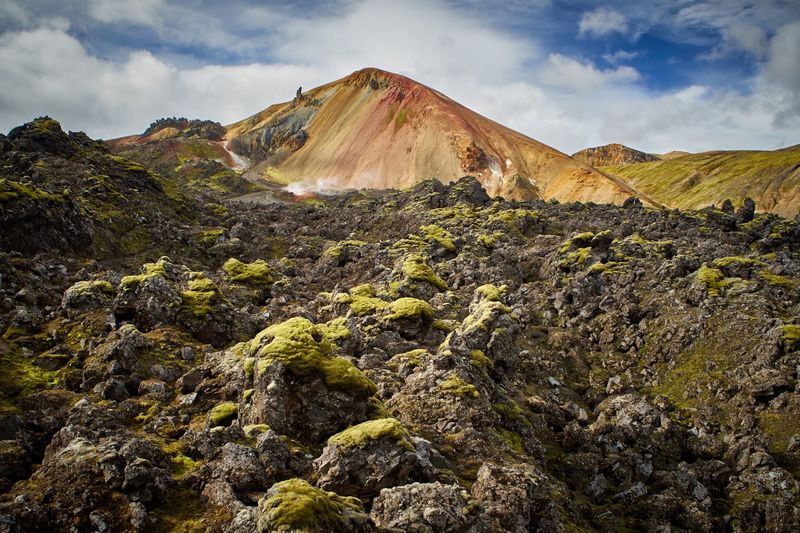
Somebody in Iceland clearly spilled the whole paint box. Landmannalaugar is famous for rhyolite mountains in rust, yellow, green, gray, and blue.
Below them, black lava fields and bright moss fill the valleys.
The ground here is alive with heat. Steam drifts from vents, and naturally warm water flows nearby, so the area feels like a wild outdoor spa.
Hikers often finish a long walk by soaking tired feet in a warm stream.
Landmannalaugar sits deep in Iceland’s remote highlands. Mountain roads usually open only in the warmer months, so summer is the main season to visit.
A regular car may not make it, so many visitors choose a tour bus or a sturdy four-wheel-drive vehicle.
Pack for four seasons in a single day. Sun, wind, and rain can swap places in an hour.
Waterproof layers and good boots make the colorful trails much more fun, and your camera will thank you for the rainbow hills.
Pamukkale, Türkiye
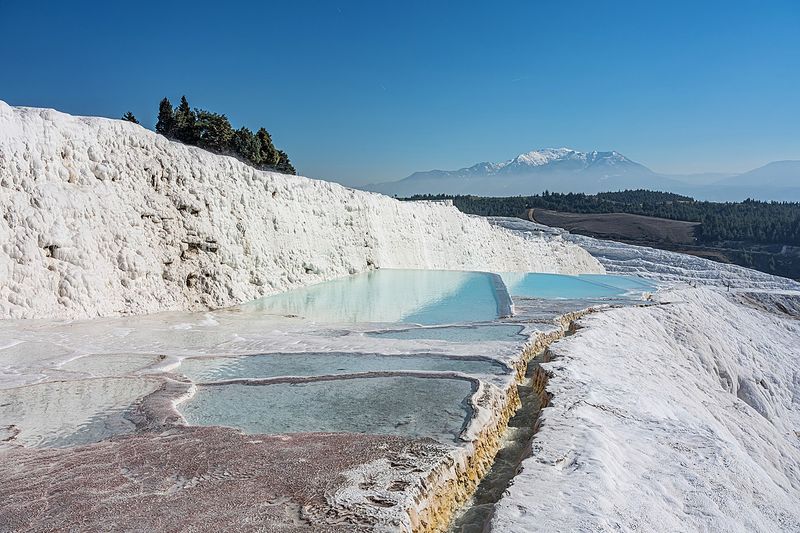
Picture a waterfall that froze in the middle of summer. That is how Pamukkale looks to most first-time visitors.
Warm springs rich in calcium have poured down a cliff nearly 200 meters high, leaving bright white terraces filled with blue water.
UNESCO calls the result an unreal landscape of mineral formations and petrified waterfalls. Those words fit perfectly.
The pools step down the hillside like a giant staircase made for water.
At the top, you can wander through the ruins of Hierapolis, an ancient Greco-Roman spa city built around the same springs. Imagine soaking in the same sort of warm water people enjoyed thousands of years ago.
Few places mix natural wonder and old history so neatly.
Pamukkale has been a World Heritage Site since 1988. To protect the fragile white surface, visitors walk barefoot on marked paths.
Go early or late in the day for softer light and smaller crowds, and bring a bag for your shoes.
Zhangye Colorful Hills, China
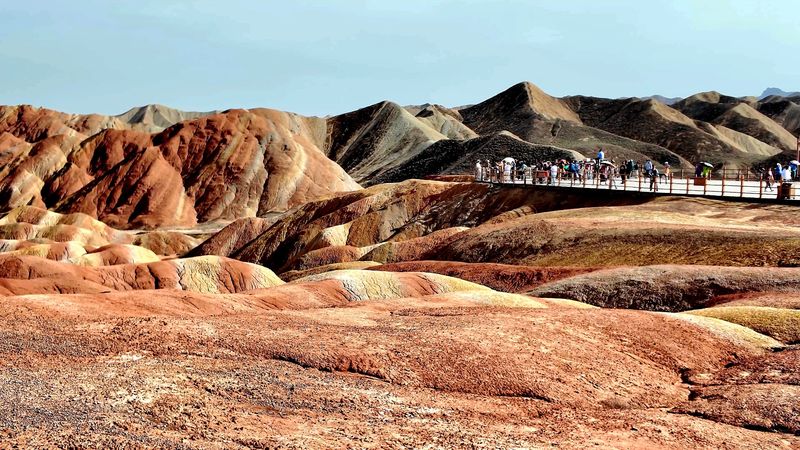
Here is a fun test: show a photo of Zhangye to a friend and ask if it is real. Most people guess it was painted.
The hills in China’s Gansu Province are striped in red, orange, yellow, white, and gray, and every ridge seems to wear its own pattern.
The colors come from layers of sedimentary rock. Over millions of years, tectonic movement pushed those layers upward and folded them, and erosion carved them into sharp ridges.
Each stripe records a different chapter of Earth’s long story.
Light changes everything here. In the low glow of morning or evening, the colors become much richer and almost seem to burn.
At midday they can look a little washed out, so timing matters.
China added the Zhangye Colorful Hills to its UNESCO World Heritage tentative list in 2025. Elevated viewing platforms give the best views of the striped terrain.
Wear comfortable shoes, since you will do plenty of walking and climbing between lookout points.
Wadi Rum, Jordan
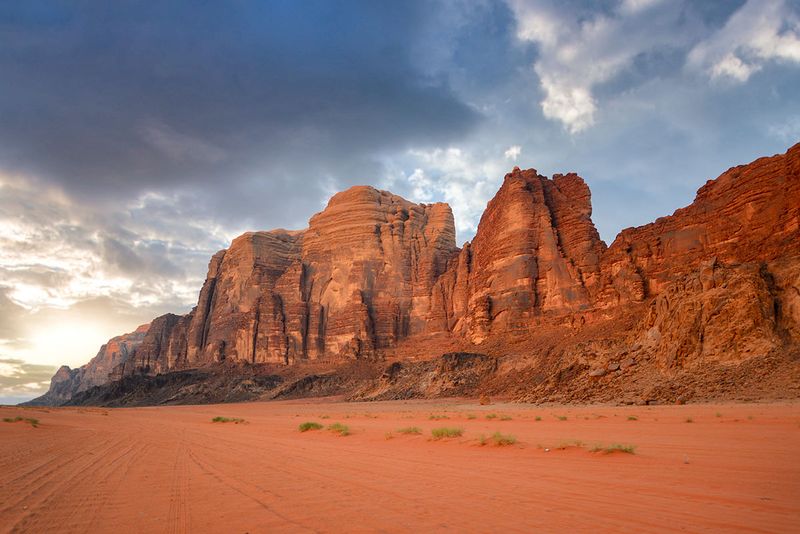
Filmmakers keep sending Mars to Jordan, and Wadi Rum is the reason. Giant sandstone mountains shoot straight up from wide valleys of red and orange sand.
The whole scene looks like a movie set that nobody had to build.
The protected area covers about 74,000 hectares. Inside it, you will find natural arches, narrow canyons, tall cliffs, and rocks weathered into odd shapes.
Every turn offers a new angle on the same dramatic desert.
People have lived here for a very long time. UNESCO documents 25,000 rock carvings and 20,000 inscriptions that show around 12,000 years of human presence.
Spotting these ancient drawings feels like finding old notes left on the rocks.
Sunset is the star moment. The stone slides from gold to crimson to purple as the light fades.
Consider a jeep tour or a camel ride, and stay overnight in a desert camp to enjoy a sky packed with stars.
Cappadocia, Türkiye
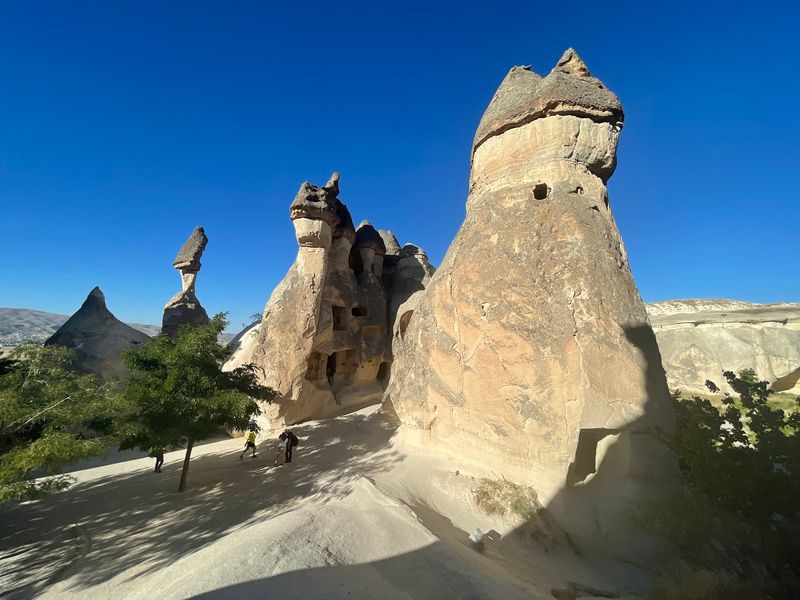
Hot-air balloons drift over the valleys at sunrise, and the stone towers below look like something from a storybook. Those towers are called fairy chimneys.
Erosion carved them out of volcanic material over a very long time.
People did not just admire the rocks, they moved in. Locals carved homes, churches, monasteries, and even underground towns straight into the soft stone.
Imagine having a living room with walls that were once part of a hill.
UNESCO notes that the Göreme region keeps rock-cut sanctuaries, cave villages, and underground settlements that are many centuries old. Walking through them feels like exploring a giant stone maze.
Some even include old painted chapels tucked deep inside.
If you want the famous balloon view, book a flight well ahead and be ready for a very early wake-up. Weather can cancel flights, so leave a spare day.
You can also watch the sky from a rooftop terrace, with a warm drink in hand.
Socotra, Yemen
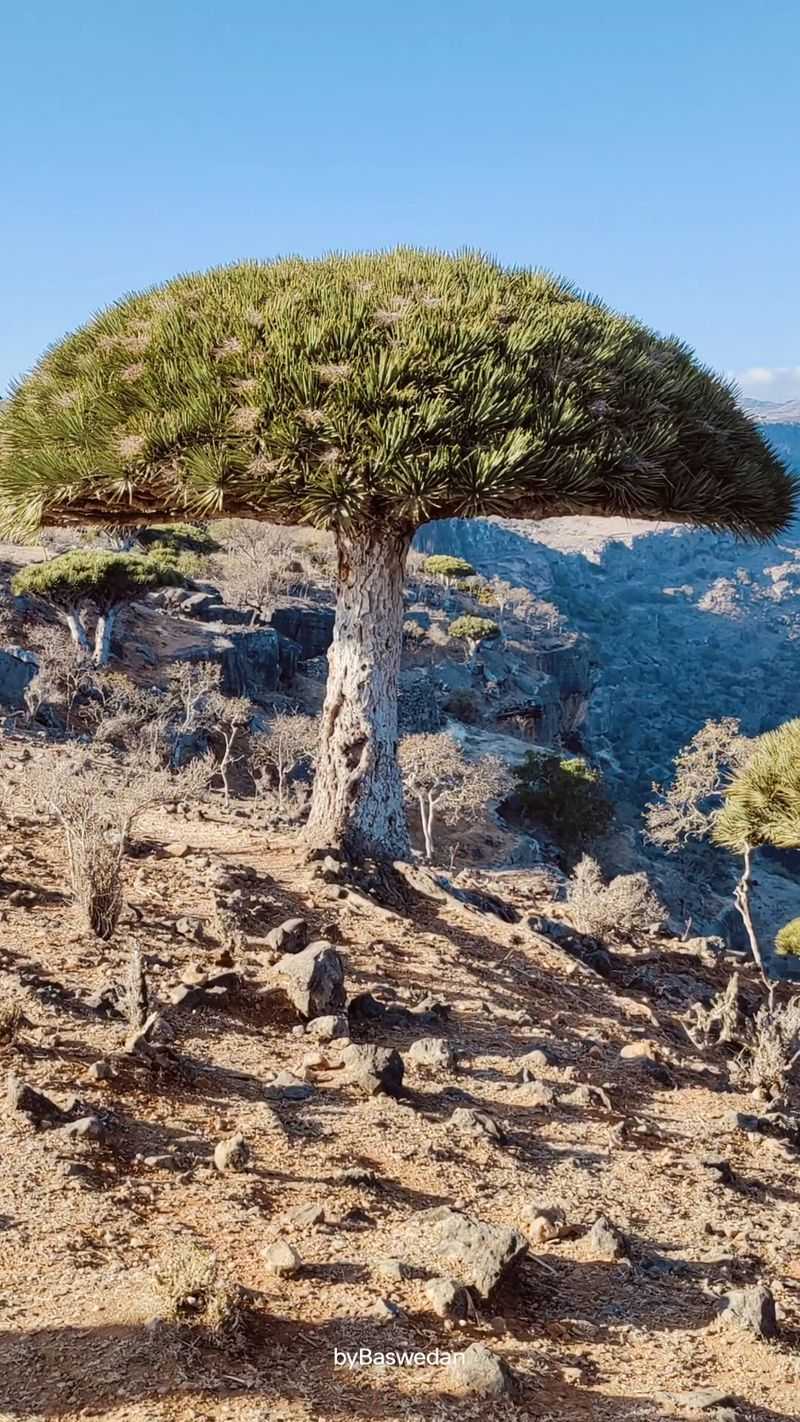
Plants here look like they came out of a science fiction writer’s sketchbook. The star is the dragon’s blood tree, with a wide, umbrella-shaped crown sitting on a thick trunk.
Yet it is only one of many oddities on this Indian Ocean island.
UNESCO reports that 37% of Socotra’s 825 plant species grow nowhere else on Earth. The numbers climb even higher for animals, with roughly 90% of reptiles and 95% of land snails found only here.
Few places on the planet are so unique.
The scenery keeps changing. White dunes, rugged mountains, caves, and turquoise coastal lagoons all share the island.
One day trip can feel like visiting several countries.
There is an important catch. Yemen’s security situation can be unstable, so check current government travel advice before even thinking about a trip.
For now, many people enjoy Socotra through documentaries, photos, and the work of scientists who study its rare life.
Lençóis Maranhenses National Park, Brazil
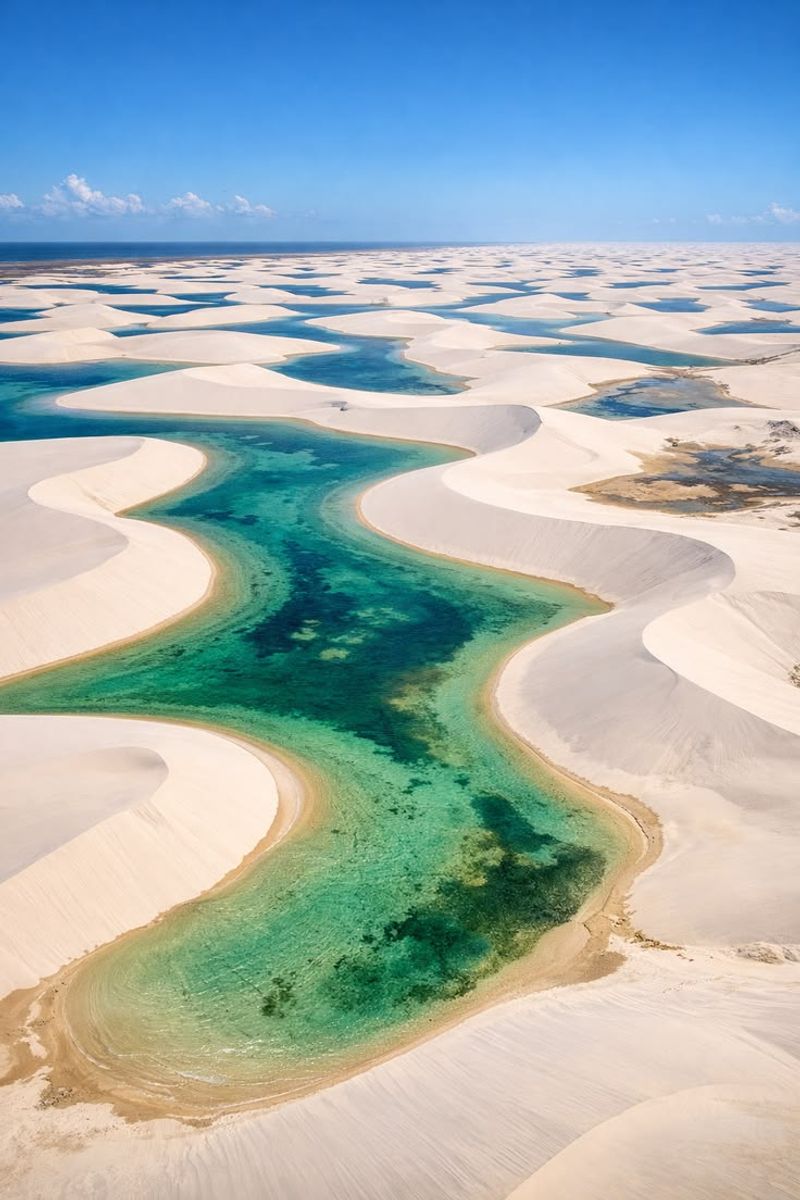
Blue pools scattered across white sand sound like a mirage, but this one is real. From above, Lençóis Maranhenses looks like a huge white desert dotted with thousands of blue and green lagoons.
On the ground, it is even more surprising.
Wind shapes the coastal sand into long, sweeping dune chains. Seasonal rains then collect between the dunes and form temporary freshwater lagoons.
Some pools stay all year, while others vanish as the dry season returns.
UNESCO notes that more than half of the protected area is white coastal dunes with temporary and permanent lagoons. The scenery is at its most spectacular when the pools are full.
The park became a UNESCO World Heritage Site in 2024.
Walking from dune to dune and dipping into a deep, cool lagoon is a one-of-a-kind experience. Plan your visit for the months after the rains, when the water is highest.
Bring a hat, plenty of water, and a swimsuit, because shade is hard to find.
Waitomo Glowworm Caves, New Zealand
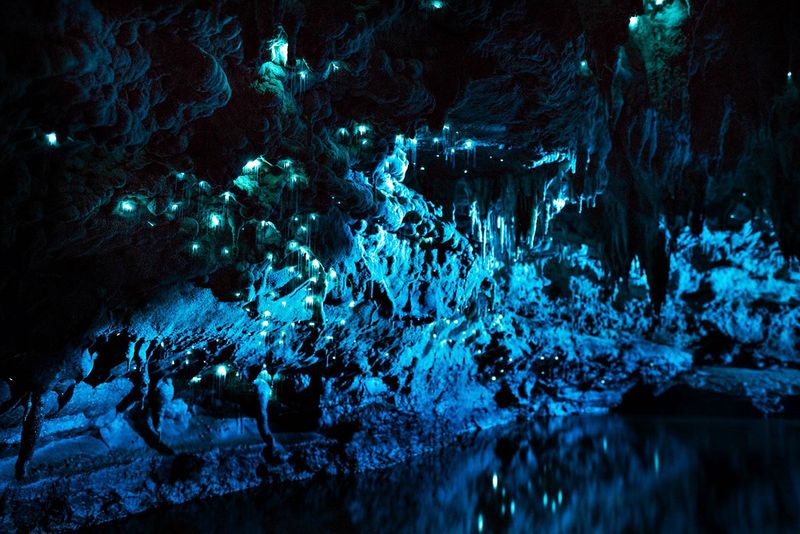
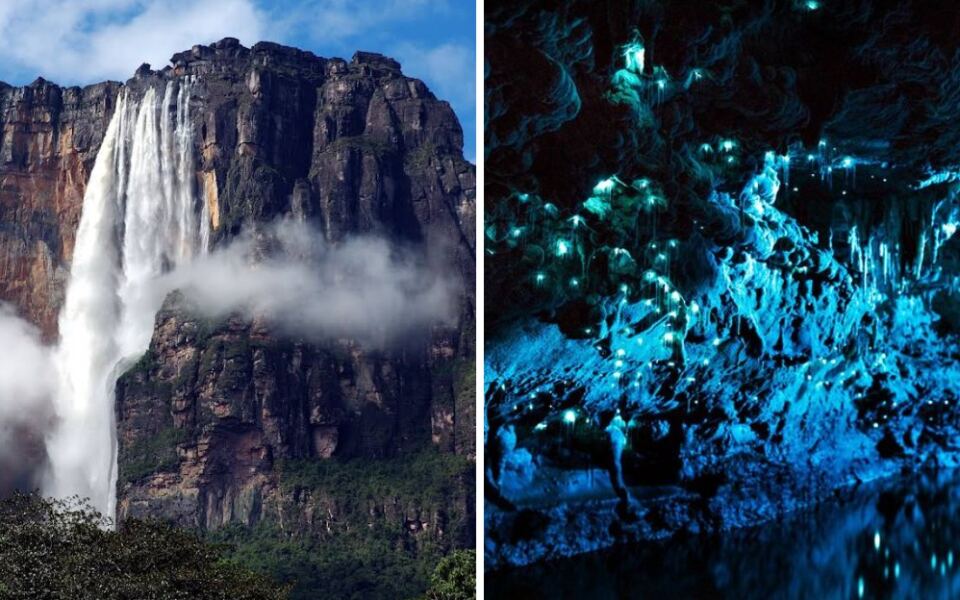
Total darkness, a quiet boat, and a ceiling full of tiny blue-green stars. That is the Waitomo experience.
The twist is that the stars are glowworms, and you are deep underground.
From above, Waitomo looks like calm farmland. Underneath, more than 300 limestone caves are hidden across the district.
Underground water shaped them over thousands of years.
Inside some caverns, glowworms light up the ceilings and create the look of a night sky beneath the earth. The species is Arachnocampa luminosa, a bioluminescent creature found in New Zealand and Australia.
New Zealand’s official tourism organization names Waitomo as one of the country’s premier places to see it.
The boat ride through the darkest sections is the highlight, as the glowing ceiling seems almost close enough to touch. Remember to stay silent and skip flash photography, since noise and light can dim the show.
Book tours early in busy seasons, and bring a light jacket, because caves stay cool.
Lofoten Islands, Norway
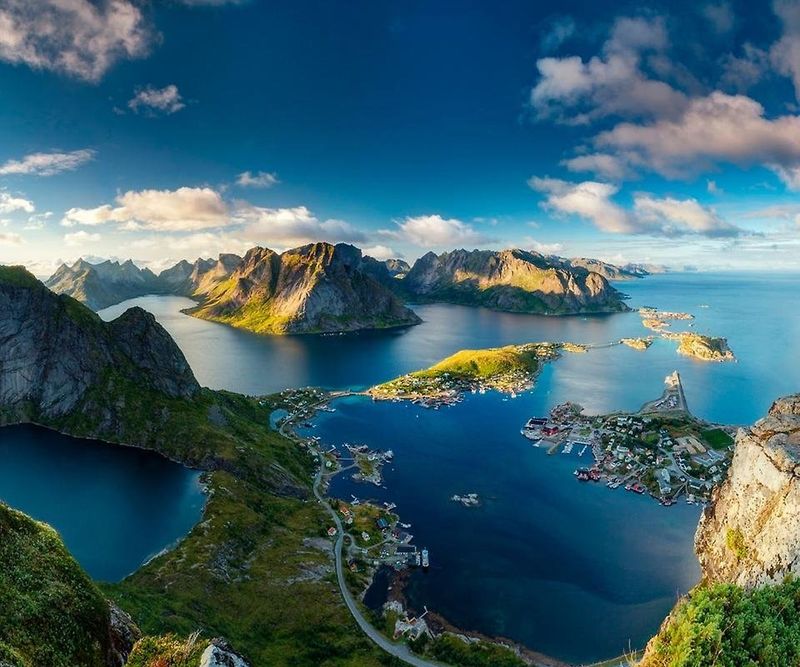
Arctic mountains and tropical-looking beaches are not supposed to be neighbors. In Lofoten, they are.
Jagged peaks rise straight from deep blue fjords, while white sand and turquoise water tuck in between the hills.
Fishing villages add splashes of red and yellow to the scene. Their small wooden cabins sit right at the water’s edge.
Visit Norway describes Reine as one of the archipelago’s most spectacular places, and it is easy to see why.
The seasons bring very different shows. In summer, the midnight sun can light the landscape all night long.
Winter covers the mountains in snow and gives you a chance to see the northern lights.
Islands here are surrounded by beaches, bird cliffs, and active fishing communities. Mountains, ocean, and tiny settlements meet so suddenly that everything looks perfectly arranged.
Pack warm layers even in summer, since the weather loves surprises, and rent a car to chase the views at your own pace.
Hitachi Seaside Park, Japan
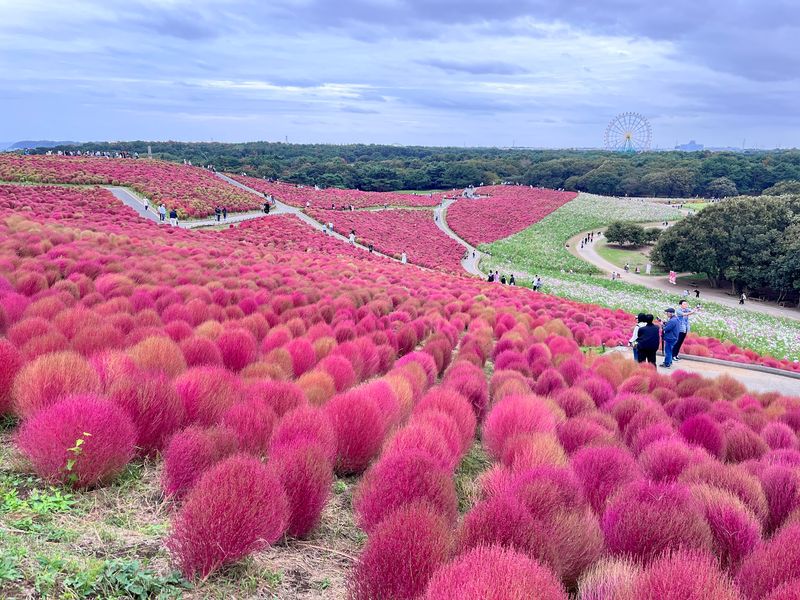
Millions of tiny blue flowers can make a hill look like it fell out of the sky. In spring, about 4.2 hectares of Miharashi Hill at Hitachi Seaside Park are covered in pale-blue nemophila.
The land seems to melt into the horizon.
Autumn brings a totally new show. Tens of thousands of kochia bushes turn from green to deep crimson, and the hill glows like a giant red cushion.
Same place, different mood.
Japan’s national tourism organization also points out large displays of narcissus, tulips, and roses through the year. There is almost always something blooming.
That makes the park a great pick for any season.
Unlike most entries on this list, people helped design this view. Still, the scale of the flowering hills is so huge that photos can look digitally made.
Visit on a weekday morning to avoid the biggest crowds, and wear comfy shoes, because the paths are long and the views are worth every step.
Valle de la Luna, Chile
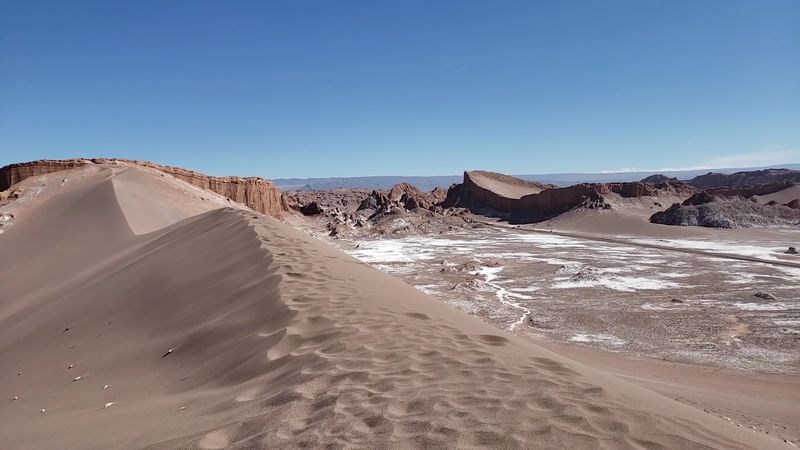
The name means Valley of the Moon, and the landscape lives up to it. Near San Pedro de Atacama, Chile’s Valle de la Luna is packed with dunes, salt formations, sharp ridges, and deeply eroded rock.
Wind and extreme dryness did the carving.
Chile’s official tourism organization calls it an out-of-this-world place where visitors can feel like they are walking on another planet. Standing on a ridge with nothing but rock and sand around you, that description feels very fair.
The silence adds to the effect.
Sunset is when the valley really shines. Surrounding mountains shift through red, violet, and gold, and the shadows stretch across the dunes.
Many visitors arrive early to claim a good viewing spot.
The valley belongs to the wider Atacama region. High-altitude lagoons, volcanoes, and some of the clearest skies on Earth add even more surreal scenery.
Bring water, a hat, and a jacket, since the desert gets cold fast after dark.
Giant’s Causeway, Northern Ireland
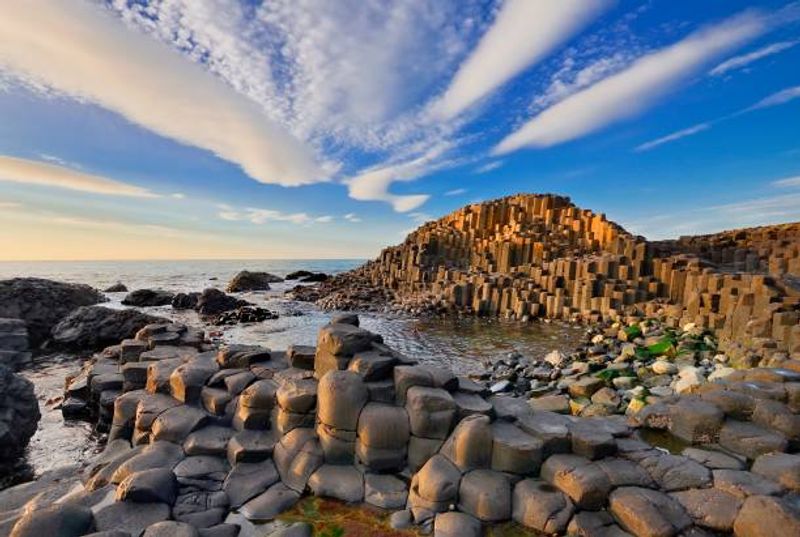
Legend says a giant built this road to fight a rival in Scotland. Science gives a different answer, but both stories are pretty great.
At Giant’s Causeway, thousands of tightly packed stone columns step down toward the Atlantic.
Around 40,000 basalt columns form this coastal pavement. Many have neat polygonal shapes, and some are almost perfect hexagons.
They look like they were cut and stacked by builders.
UNESCO explains that volcanic activity around 50 to 60 million years ago created them. The odd geometry inspired the tale of the Irish giant Finn McCool, who supposedly laid the causeway across the sea.
Locals still love telling that story.
Standing on the hexagonal stones while waves crash around you makes the science feel as amazing as the legend. Wear shoes with good grip, since the rocks can be slippery when wet.
Check the weather before you go, and bring a rain jacket, because Atlantic showers arrive quickly.
Canaima National Park, Venezuela
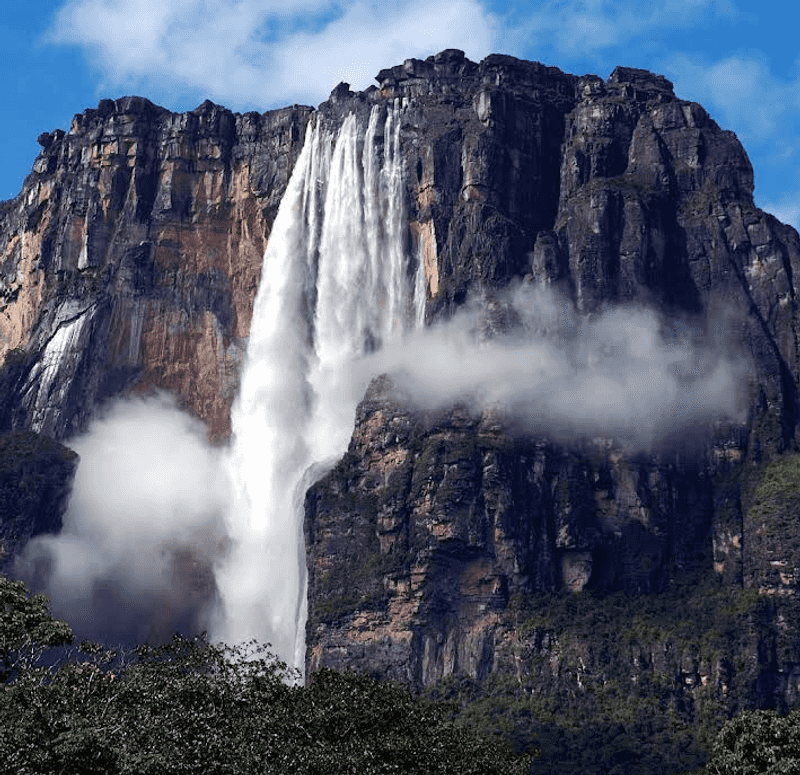
Imagine mountains that stand alone like giant stone islands above a green sea of forest. Those are the tepuis of Canaima National Park, enormous flat-topped peaks with sheer walls.
They make the whole landscape look like a lost world.
According to UNESCO, about 65% of the three-million-hectare park is covered by these formations. That is a huge share of the land.
Few parks on Earth are so dominated by one kind of landform.
The cliffs feed spectacular waterfalls, including Angel Falls. It drops close to one kilometer from the summit of Auyán-tepui.
Clouds often wrap around the vertical walls, so waterfalls seem to spill out of nowhere.
Because the tepuis are so isolated, special ecosystems developed on their summits. The area is as unusual biologically as it is visually.
Getting there takes planning, usually with local guides and small planes or river boats, so book ahead and bring rain gear.
Share this story