Snow has a way of turning already beautiful places into something that feels almost unreal. Across Europe, certain towns, mountains, and regions go through a complete transformation once winter arrives, and the results are worth planning a trip around.
From medieval cobblestone streets dusted in white to Arctic villages lit up under the northern lights, the continent offers a remarkable range of snowy experiences. Whether you prefer the grandeur of the Swiss Alps, the fairy-tale charm of a Czech river town, or the wild silence of a Swedish national park, this list covers fourteen places that genuinely earn their reputation during the colder months.
Each one has something specific and real to offer winter travelers, not just a pretty postcard view. Keep reading to find the destinations that might just make you rethink your next cold-weather trip.
Santa Claus Village, Rovaniemi, Finland
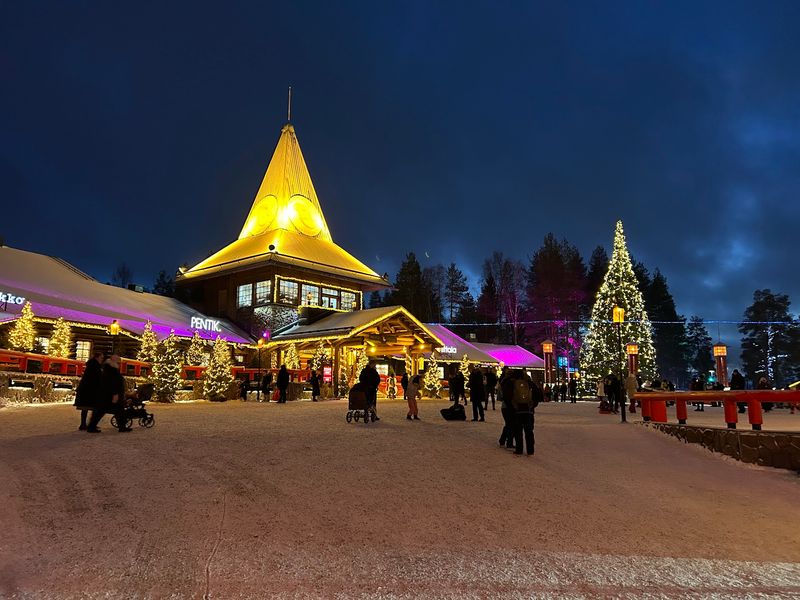
Rovaniemi sits directly on the Arctic Circle, and Santa Claus Village is the kind of place that makes that geographic fact feel genuinely exciting rather than just a map curiosity. The village operates year-round, but winter is when everything comes together.
Snow blankets the buildings, the trees are strung with lights, and the long Lapland nights create a deep blue twilight that lingers for hours.
Visitors can meet Santa throughout the season, and reindeer experiences are widely available from multiple operators in the area. The Santa Claus Office has confirmed daily winter opening hours for the 2026 to 2027 season, so planning ahead is straightforward.
Activities extend well beyond the village itself, with dog sledding, snowmobile tours, and northern lights excursions all operating during the winter months.
For families especially, Rovaniemi in winter delivers something that is genuinely hard to replicate anywhere else in Europe. The setting does most of the work on its own.
Zermatt Village, Zermatt, Switzerland
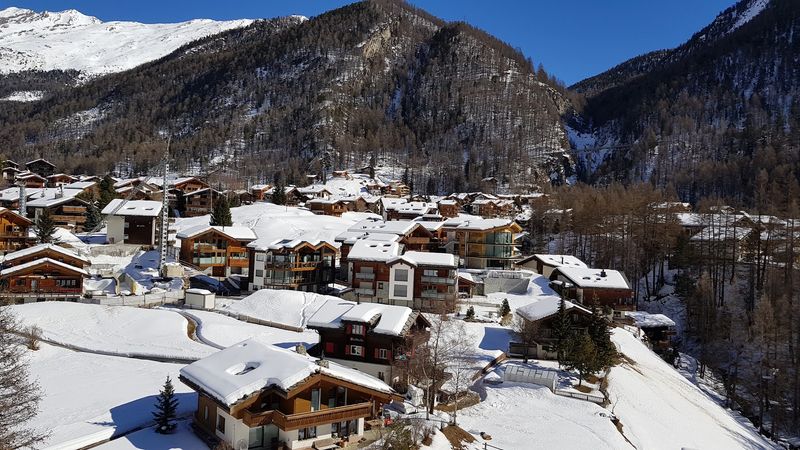
The Matterhorn is one of the most recognizable mountain shapes on Earth, and Zermatt sits directly beneath it. When snow arrives, the contrast between the pyramid-shaped peak and the timber chalet rooftops below creates the kind of Alpine scenery that gets printed on calendars and travel posters for good reason.
The village itself is car-free, which keeps the streets quieter and the air noticeably cleaner than most resort towns.
Beyond the famous view, Zermatt offers access to some of Europe’s highest ski terrain, including slopes that stay open well into spring due to the altitude. The village infrastructure is well-developed, with mountain railways, cable cars, and a compact town center that is easy to navigate on foot.
Traditional Swiss architecture lines the main streets, and the combination of old wooden buildings and snowy surroundings gives the town a character that feels rooted rather than manufactured. Zermatt earns its winter reputation through the landscape alone.
Chamonix-Mont-Blanc Valley, Chamonix, France
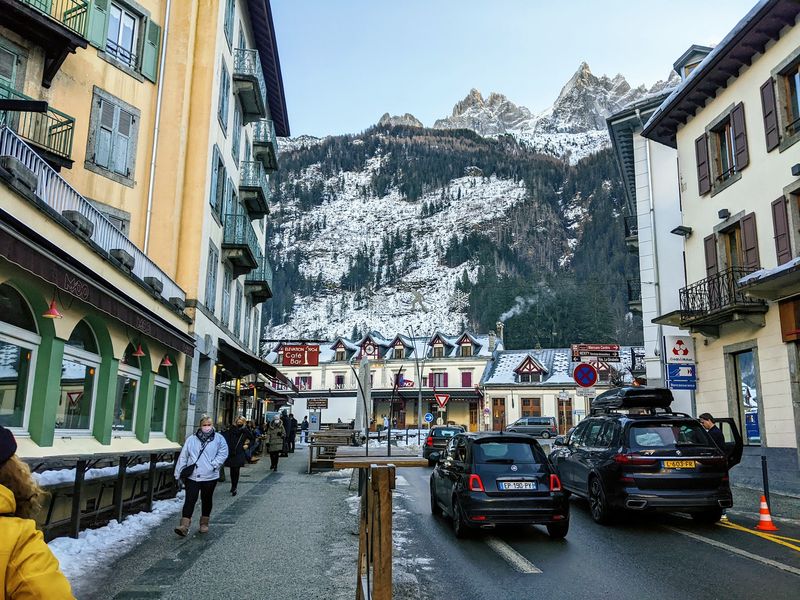
Chamonix sits at the base of Mont Blanc, the highest peak in the Alps, and the surrounding landscape in winter is nothing short of extraordinary. Snow-covered peaks dominate nearly every view from the valley floor, and the town itself has a long history as one of Europe’s great mountaineering and ski destinations.
The infrastructure here is built around winter, with well-maintained lifts, Nordic trails, and snowshoe routes all operating throughout the season.
The official tourism office has already published information for the 2026 to 2027 ski season, confirming that Chamonix remains fully active during the winter months. Beyond skiing, the valley promotes snowshoeing, winter hiking, and high-altitude excursions for visitors who prefer to experience the mountains without skis.
The town itself has a genuine alpine character, with a mix of historic buildings and mountain-focused shops lining the main street. Chamonix rewards visitors who take time to explore the valley rather than focusing only on the slopes.
Tallinn Old Town, Tallinn, Estonia
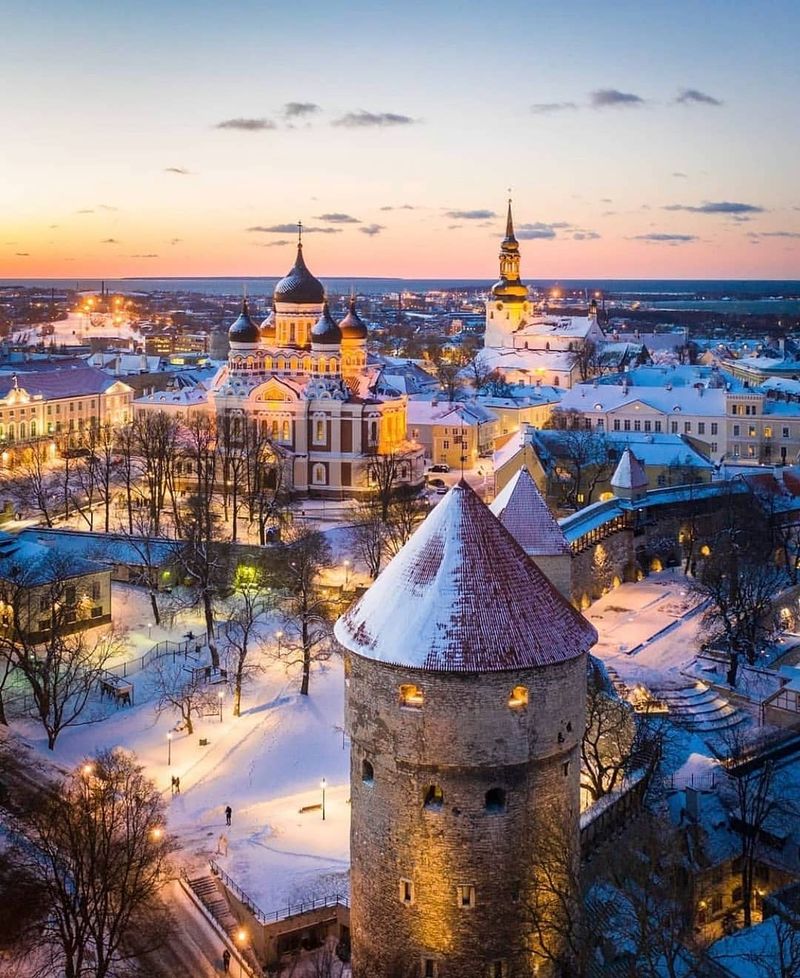
Medieval architecture and snow are a combination that works almost everywhere in Europe, but Tallinn pulls it off with particular style. The Old Town’s defensive towers, thick stone walls, and Gothic church steeples were built in the 13th and 14th centuries, and they look like they have been waiting for a proper snowfall ever since.
The cobblestone streets narrow between centuries-old buildings in a way that makes the whole district feel like a preserved piece of history.
Tallinn’s tourism authority specifically highlights the Old Town’s winter character as one of the city’s seasonal draws, and the 2026 Christmas Market is scheduled from November 20, 2026 through January 6, 2027. The market sets up in Town Hall Square, which is already one of the most photographed spots in the Baltic region.
Winter temperatures in Tallinn can drop significantly, so packing warm layers is practical advice. The upside is that the Old Town is far less crowded in winter than during the summer peak season.
Lake Bled, Bled, Slovenia
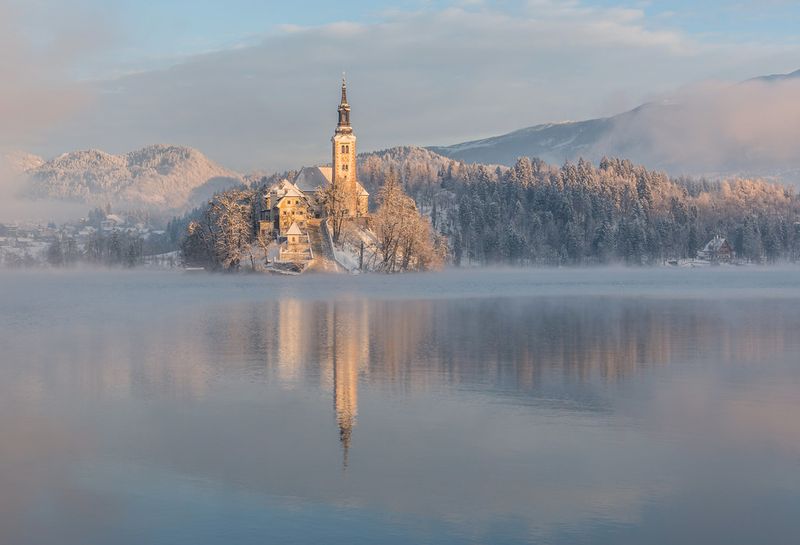
Lake Bled is already one of Slovenia’s most photographed places during summer, but winter changes the scene in ways that summer visitors never get to see. When the Julian Alps surrounding the lake turn white and the hilltop castle rises above a snowy shoreline, the composition becomes something that is genuinely difficult to find elsewhere in Central Europe.
The island church in the center of the lake remains one of the most striking natural placements of any building on the continent.
Bled Castle stays open every day of the year, with dedicated November through March opening hours for winter visitors. The castle sits on a 130-meter cliff above the lake and offers sweeping views across the snowy valley and surrounding peaks.
Walking the lakefront path in winter is a quiet and unhurried experience compared to the summer crowds.
The town of Bled itself has restaurants, cafes, and accommodation options operating through the winter months, making it a practical base for exploring the wider Triglav National Park region.
Hallstatt Old Town, Hallstatt, Austria
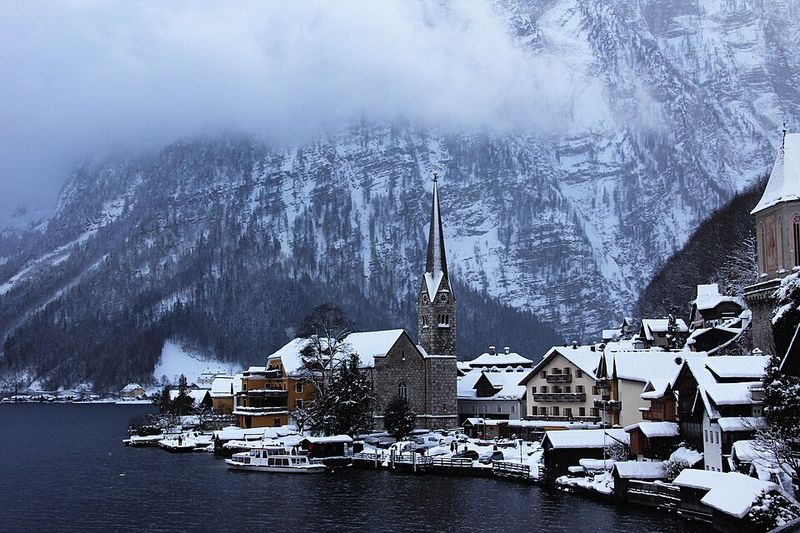
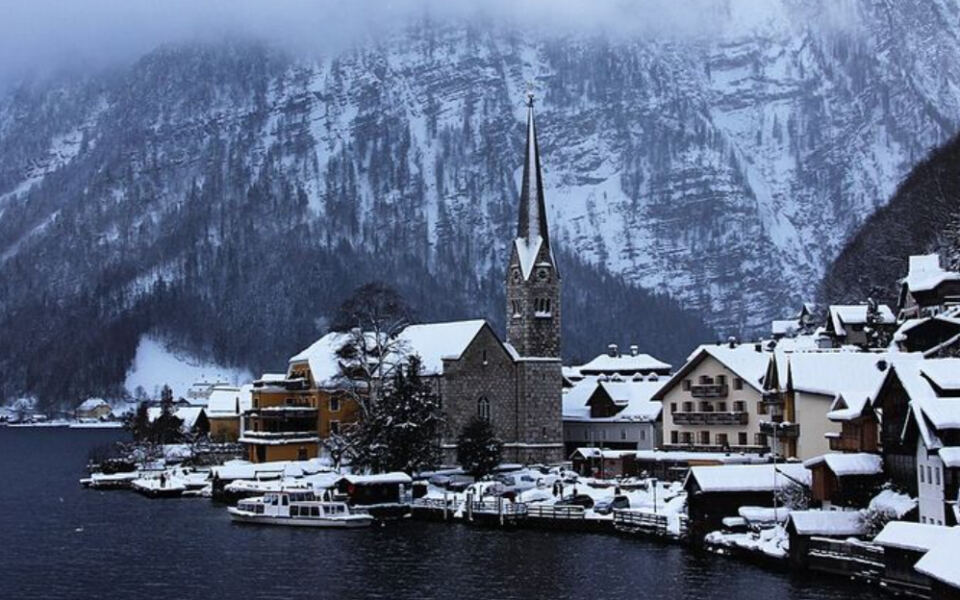
Perched along the edge of a mountain lake with steep Alpine peaks rising behind it, Hallstatt looks like it was designed specifically for winter. Snow settles across the sharp-angled rooftops, church steeples, and narrow lanes in a way that makes the village feel genuinely otherworldly.
The historic center is walkable throughout the colder months, and the surrounding scenery only gets more dramatic once the mountain slopes turn white.
The Hallstatt Salt Mine, one of the oldest in the world, and the Skywalk viewpoint both reopened on August 29, 2026, with operations continuing into the winter season. That gives visitors more than just a scenic stroll to look forward to.
The Skywalk in particular offers elevated views across the snow-covered valley and frozen lake below.
Winter crowds here tend to be lighter than summer, which means you can actually explore the village at a relaxed pace. That alone makes a cold-weather visit worth considering.
Alpine Village, Kranjska Gora, Slovenia
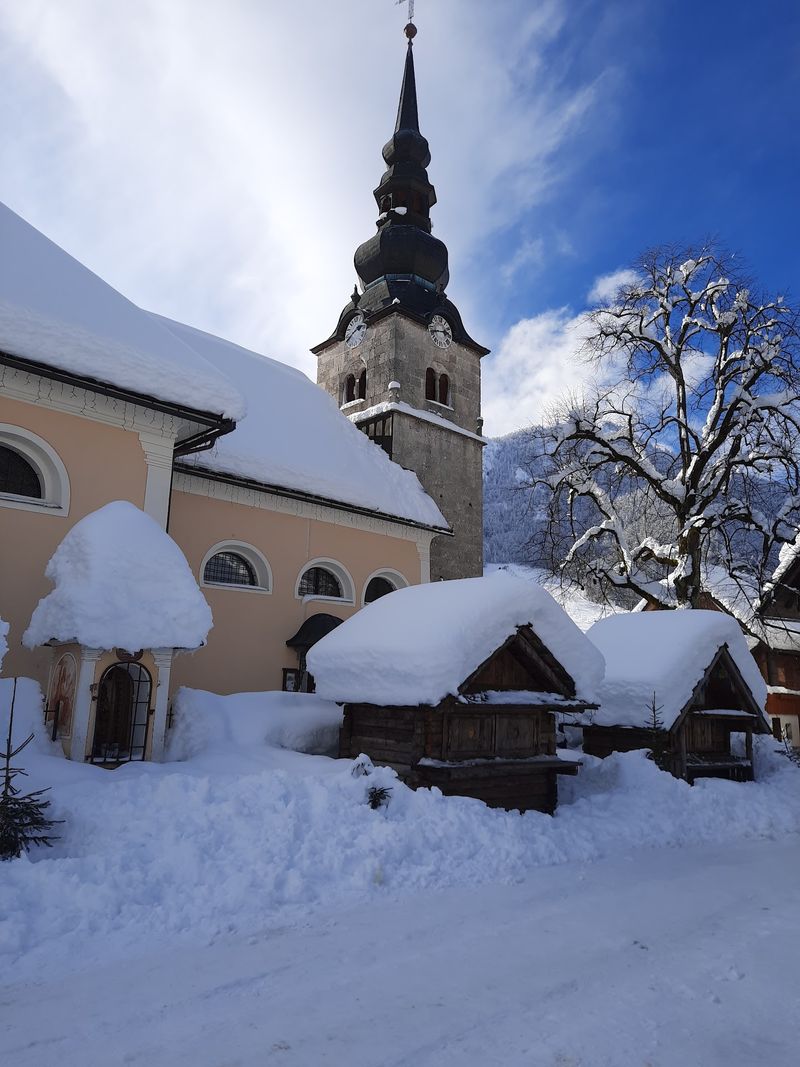
Kranjska Gora sits in the far northwest corner of Slovenia, tucked into a valley where the Julian Alps, Karavanke, and Carnic Alps all converge. That geography means the village gets reliable snowfall and dramatic mountain scenery from multiple directions.
Slovenia’s tourism authority describes the resort as becoming magical under snow, and the phrasing is accurate rather than promotional.
Winter activities here cover a wide range, including alpine skiing, cross-country skiing, sledding, snowshoeing, and ice skating. The village itself has a compact, walkable character with traditional Alpine architecture that photographs well against the surrounding peaks.
The nearby Planica Nordic Centre, one of the most famous ski jumping venues in the world, adds an interesting landmark to any visit.
Kranjska Gora tends to attract visitors who want a genuine mountain winter experience without the price tag or crowds of better-known Swiss or Austrian resorts. The combination of accessible terrain and authentic village character makes it a strong option for winter travelers on a practical budget.
Nordkette, Innsbruck, Austria
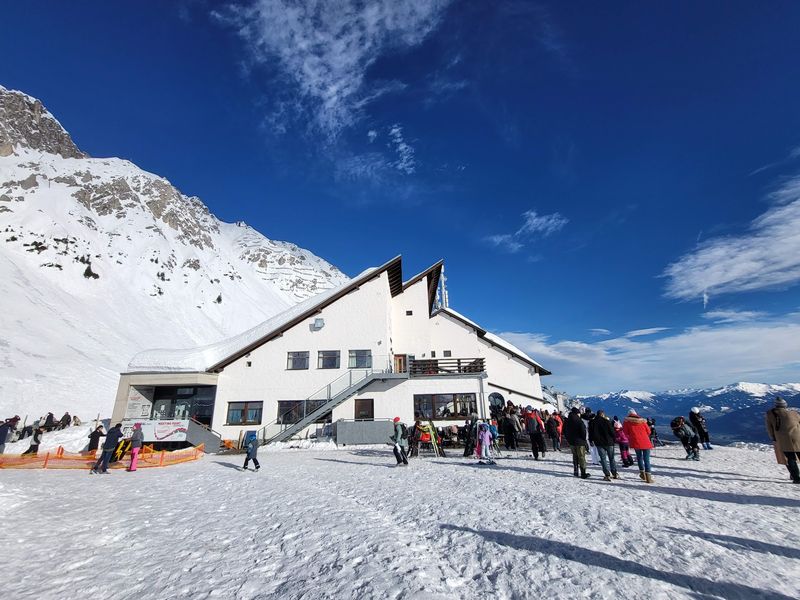
Innsbruck has one of the more unusual urban situations in the Alps. The city center sits in a valley floor surrounded by high mountain terrain, and the Nordkette range rises almost directly above the historic buildings and baroque facades of the old town.
In winter, that contrast between the ornate city streets below and the snow-covered peaks above becomes one of the most striking visual combinations in Austria.
The Nordkette cable cars depart from central Innsbruck and reach ski terrain around 1,900 meters above sea level, with the journey taking roughly 20 minutes from the city center. That means a visitor can walk through the Golden Roof historic district in the morning and be on a snowy mountain slope by midday without a car or long transfer.
Winter operations on the Nordkette include skiing and snowboarding at the upper stations, as well as panoramic viewpoints accessible to non-skiers. Innsbruck itself hosted the Winter Olympics twice, which gives the city genuine winter sport credentials beyond just the scenery.
Fjellheisen, Tromsø, Norway
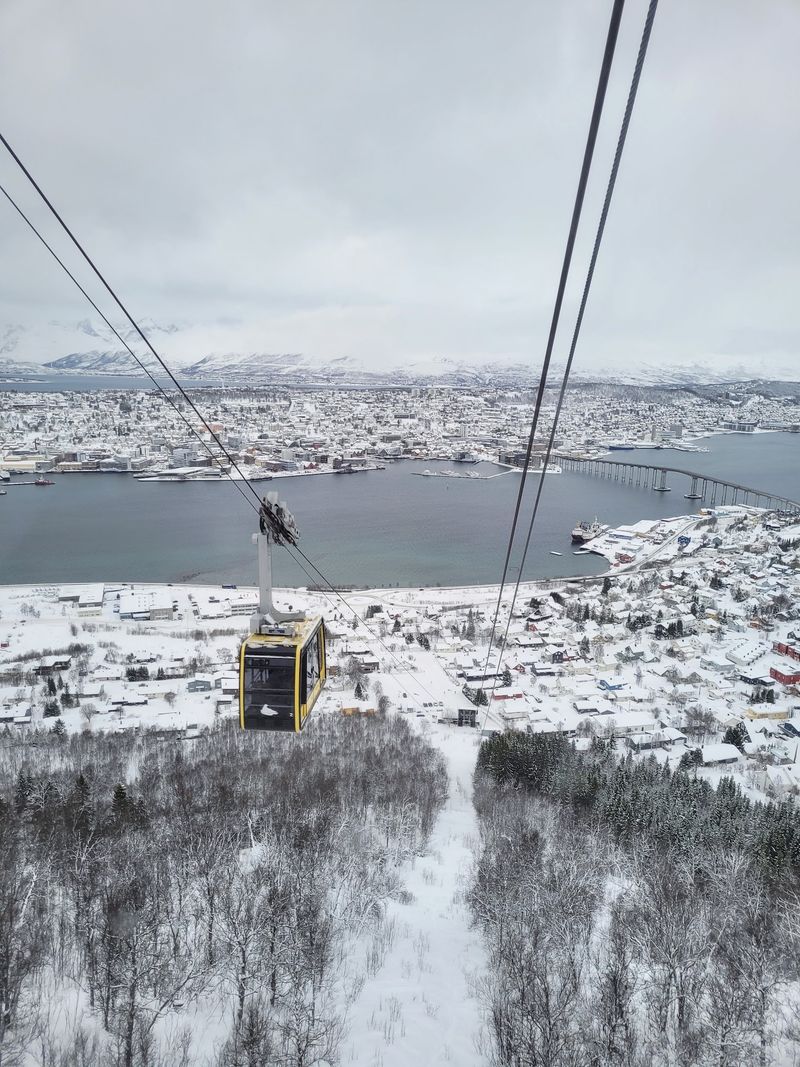
Tromsø sits well above the Arctic Circle, and its winter season runs long, dark, and full of activity. Fjellheisen is the cable car that rises from the edge of the city to a viewpoint above the urban area, and the panorama from the top is one of the more impressive urban overlooks in northern Europe.
Snow covers the city, the surrounding islands, the fjords, and the mountain ridges in every direction.
The winter season in Tromsø is genuinely one of its peak tourism periods, with northern lights excursions, dog sledding, and reindeer experiences all operating from the city as a base. Fjellheisen also promotes snowshoe hikes from the upper mountain area, which gives visitors a way to explore the terrain above the cable car station on foot.
The northern lights visibility from the Tromsø region is among the most reliable in Europe during the winter months, making Fjellheisen a practical starting point for anyone hoping to see the aurora from an elevated and unobstructed position.
Abisko National Park, Abisko, Sweden
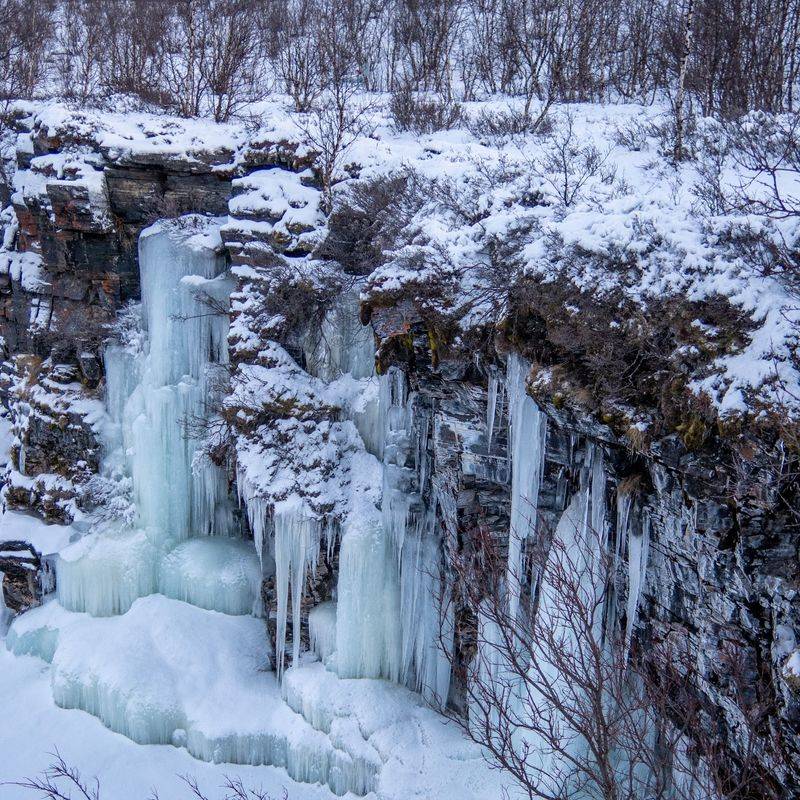
Abisko occupies a stretch of northern Sweden just inside the Arctic Circle, and the landscape it offers in winter is completely different from anything you find in decorated town squares or ski resort villages. Frozen valleys, birch woodland under heavy snow, and Arctic mountain ridges define the scenery here.
The region receives relatively low precipitation compared to nearby areas, which keeps the sky clearer and makes it one of the better locations in Europe for viewing the northern lights.
The Aurora Sky Station at Abisko operates specifically for northern lights viewing during the winter season, using the park’s naturally low cloud cover to its advantage. Visitors can reach the station via a chairlift that runs in winter, with guided and self-guided aurora viewing available depending on conditions.
For travelers who want wilderness rather than resort amenities, Abisko delivers a version of snowy Europe that feels genuinely remote. The silence and scale of the landscape here are qualities that crowded mountain towns simply cannot replicate.
St. Moritz, St. Moritz, Switzerland
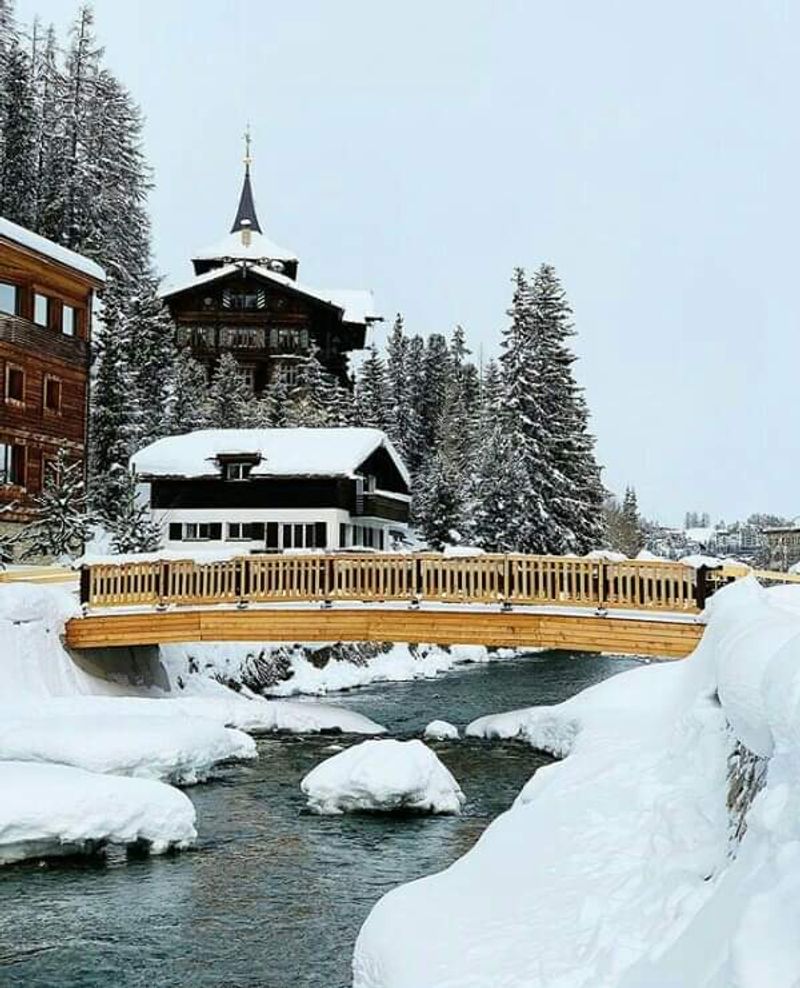
St. Moritz has been drawing winter travelers since the 1860s, when the first guests arrived from Britain and sparked what eventually became modern Alpine tourism. That history gives the resort a depth that newer mountain destinations simply do not have.
The Engadin valley surrounding St. Moritz transforms under snow into a landscape of white peaks, frozen lakes, and ski slopes that have hosted two Winter Olympics, in 1928 and 1948.
The local tourism office has published its winter 2026 to 2027 operating period from November 30 through March 15, giving visitors a clear planning window. Beyond skiing, the frozen Lake St. Moritz hosts traditional events including horse racing on ice, which has taken place there since 1907.
The resort is known for its upscale character, but the mountain scenery is available to everyone who makes the trip. The combination of reliable snow, dramatic Alpine terrain, and a well-developed winter infrastructure makes St. Moritz one of the most complete winter destinations in Europe.
Kasprowy Wierch, Zakopane, Poland
Zakopane sits at the base of the Tatra Mountains in southern Poland, and it has served as the country’s primary highland resort for well over a century. The town is known for its distinctive wooden architecture, including carved guesthouses and chapels built in the regional Zakopane style that developed in the late 19th century.
Snow covers the rooftops and surrounding valleys in a way that makes the traditional buildings look exactly as they were designed to appear.
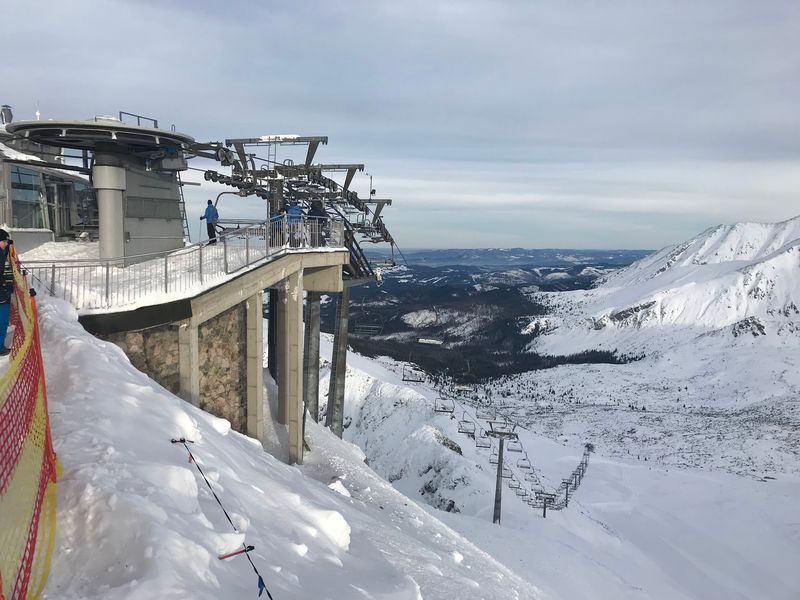
Kasprowy Wierch rises above the town via a cable car and gives visitors access to one of Poland’s most dramatic high-altitude winter landscapes. The summit sits near the Slovak border, with views extending across the Tatra range in both directions.
Ski runs descend from the peak on the Polish side, and the terrain above the tree line offers an exposed, windswept mountain experience that is genuinely different from the forested valleys below.
Zakopane is also a practical base for snowshoeing and winter hiking in the Tatra National Park, which surrounds the town on multiple sides.
Cesky Krumlov Old Town, Cesky Krumlov, Czechia
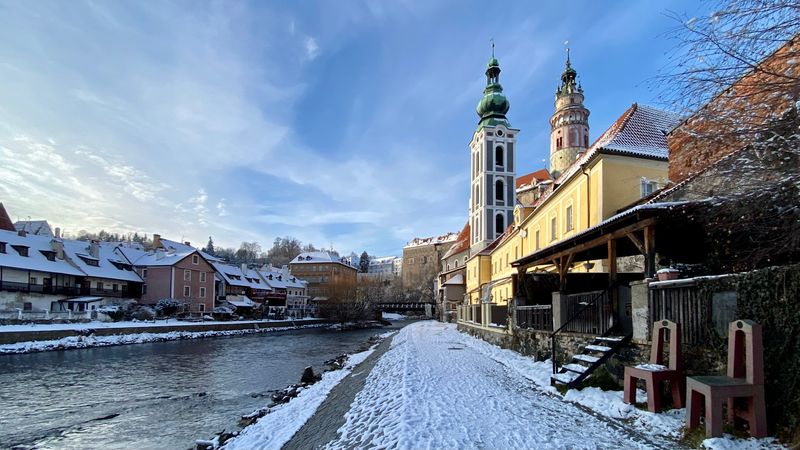
The Vltava River makes a horseshoe curve around Cesky Krumlov, and that geography has protected the historic core of the town for centuries. The result is an unusually intact medieval and baroque town center, with a castle complex that ranks among the largest in Central Europe.
Snow softens the colorful facades of the historic houses and settles on the castle tower in a way that makes the whole scene look genuinely cinematic without any effort.
The town’s official tourism site actively promotes winter visits, pointing visitors toward the Castle Museum, monastery attractions, galleries, and walks through the snowy surrounding landscape. The castle grounds are accessible year-round, though some interior areas follow seasonal schedules.
Winter crowds in Cesky Krumlov are noticeably smaller than summer, when the town can feel overwhelmed by visitors. That makes the colder months a genuinely better time to experience the architecture and atmosphere at an unhurried pace.
The riverside walks are particularly striking when the surrounding hills are covered in snow.
Bansko Ski Area, Bansko, Bulgaria
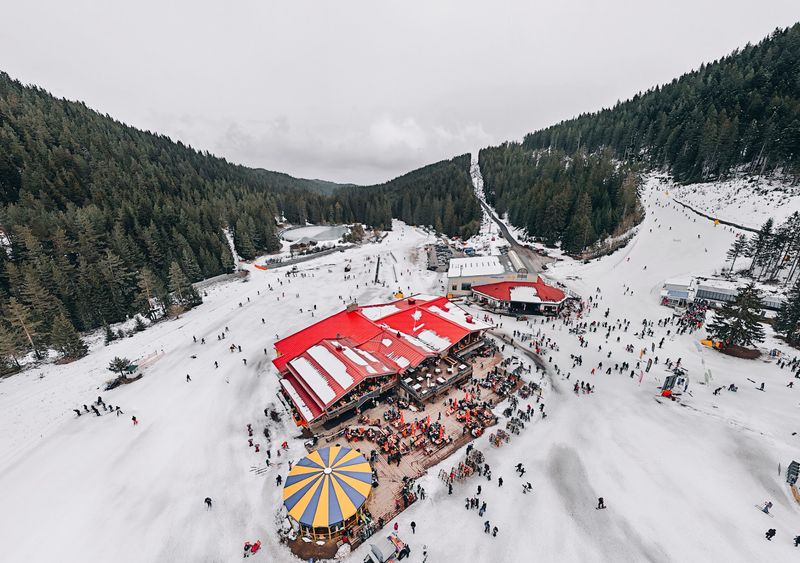
Bansko sits at the foot of the Pirin Mountains in southwestern Bulgaria, and it combines two distinct experiences within a short walking distance of each other. The old quarter of town has preserved stone-built houses, cobblestone lanes, and 19th-century Bulgarian National Revival architecture that looks particularly striking under a layer of snow.
The ski area above town is a separate world entirely, with a gondola and lift system serving slopes that reach well above the tree line.
The resort operated through April 12 during the 2025 to 2026 winter season, and its gondola and ski-lift infrastructure remains active. That extended season reflects the reliable snowfall and altitude of the Pirin range, which gives Bansko one of the longer operating windows among Balkan ski resorts.
For travelers who want a winter mountain destination with genuine historical character and lower costs than Western European alternatives, Bansko offers a combination that is difficult to match elsewhere on the continent. The old town streets deserve as much attention as the slopes above.
Share this story