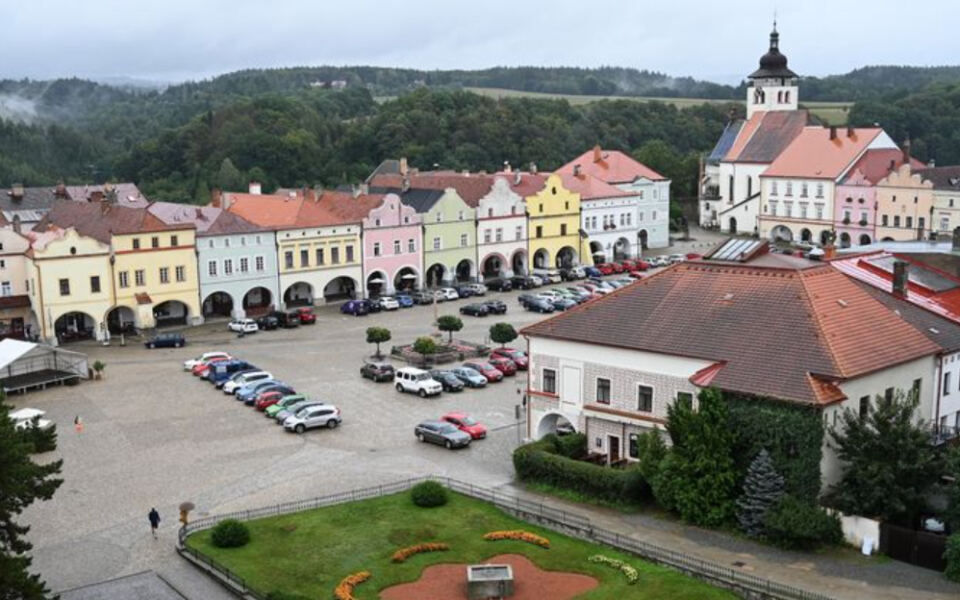
Some of the most beautiful public spaces in Europe were not accidents. They were carefully designed during the Renaissance, a period when architects, rulers, and city planners believed that a well-ordered square could reflect an ideal society.
From the sculpted hilltop piazzas of Tuscany to the colorful arcaded marketplaces of Central Europe, these squares became the civic hearts of their towns. Many of them still function that way today, hosting markets, festivals, and daily life just as they did five centuries ago.
This list covers 14 European towns where a single magnificent Renaissance square still defines the entire character of the place, giving visitors a rare chance to stand inside history that has barely changed.
Piazza Pio II, Pienza, Italy
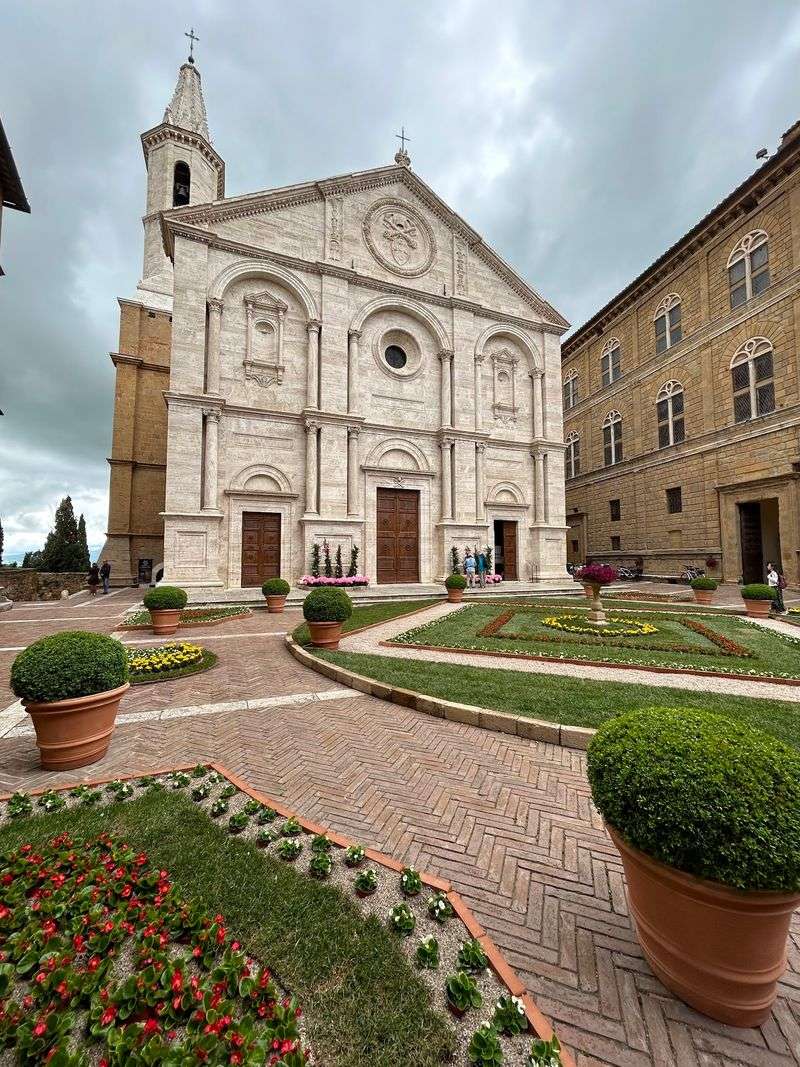
Pope Pius II had a vision, and Pienza is the physical result of it. During the 15th century, he hired architect Bernardo Rossellino to reshape his Tuscan birthplace into a model Renaissance city.
The project was ambitious and deliberate, rooted in Humanist ideas about order, proportion, and civic beauty.
Piazza Pio II sits at the center of that vision. Its trapezoidal shape is surrounded by the cathedral, Palazzo Piccolomini, Palazzo Borgia, and the town hall, each building positioned to create a balanced, harmonious composition.
UNESCO recognizes the ensemble as an outstanding example of Renaissance Humanist design.
What makes Pienza especially compelling is that the square was never significantly altered. The proportions Rossellino calculated in the 1460s are still visible today.
Visitors walking through the square are essentially experiencing one of Europe’s earliest attempts to translate Renaissance philosophy directly into urban form.
Piazza Ducale, Vigevano, Italy
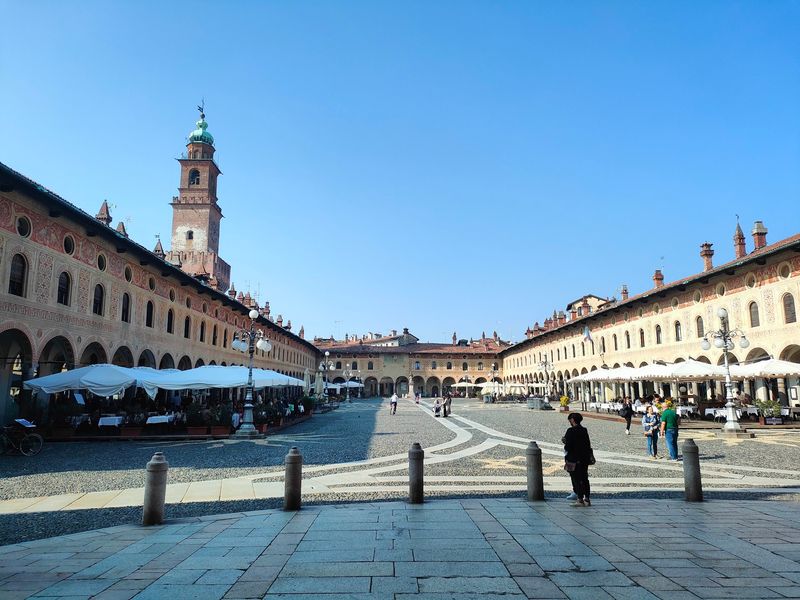
Vigevano’s Piazza Ducale has a theatrical quality that is hard to ignore. Ludovico Sforza, known as Ludovico il Moro, commissioned the square between 1492 and 1494 as part of a sweeping transformation of the town.
The goal was prestige, and the result still communicates that ambition clearly.
Long arcades run along both sides of the rectangular space, while painted facades in warm tones give the square a unified, almost stage-set appearance. The carefully balanced proportions create a sense of enclosure that feels deliberate rather than accidental.
The Municipality of Vigevano officially recognizes it as a Renaissance masterpiece.
Unlike some historic squares that now feel like outdoor museums, Piazza Ducale remains freely accessible and active. Locals use it for daily routines, and the surrounding cafes and shops keep the space lively.
The square works as both a living public space and a remarkable piece of 15th-century design thinking.
Piazza del Popolo, Ascoli Piceno, Italy
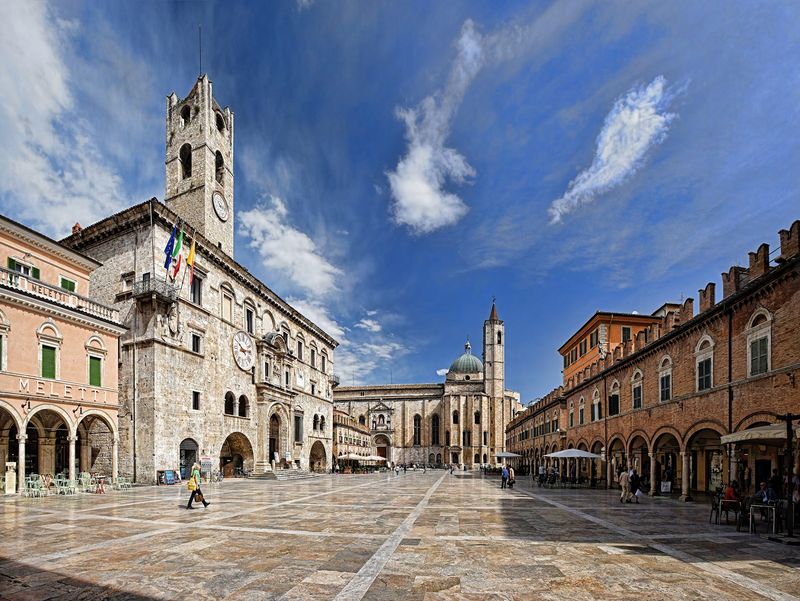
Ascoli Piceno is built almost entirely from local travertine stone, which gives the entire city a pale, luminous appearance that sets it apart from other Italian historic centers. Piazza del Popolo is the showcase of that material, with arcaded buildings lining its rectangular perimeter in a composition that feels remarkably unified.
The Palazzo dei Capitani del Popolo anchors one side of the square with its imposing facade, while the Church of San Francesco borders another. The remaining sides are formed by Renaissance palazzi featuring porticoes and loggias that create shaded walkways around the space.
Medieval roots run beneath the Renaissance surface here. The square evolved over several centuries before acquiring its current coherent appearance through systematic remodeling.
What visitors see today is the result of generations of civic investment in a single public space. Central Italy has many beautiful piazzas, but few match Ascoli Piceno for architectural consistency and visual impact.
Piazza Ducale, Sabbioneta, Italy
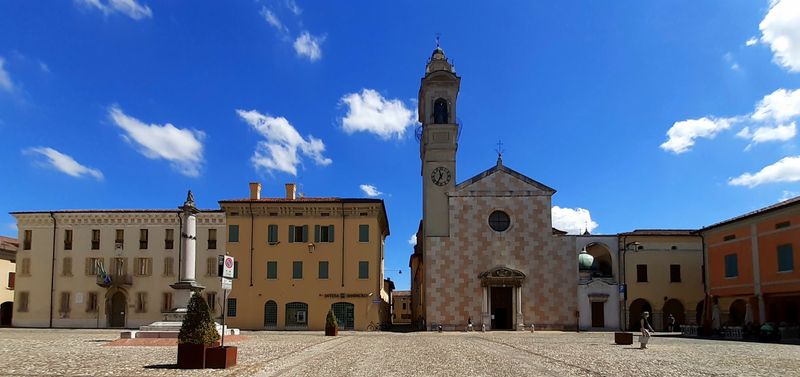
Sabbioneta is not a town that grew organically over centuries. Vespasiano Gonzaga designed it from scratch during the second half of the 16th century, applying Renaissance theories about the ideal city to an actual settlement with streets, walls, and public spaces all planned together.
Piazza Ducale served as one of the principal civic centers of this planned community. Buildings connected to the Gonzaga court surround the square, and the entire ensemble reflects the controlled, ordered thinking that Renaissance planners believed would produce a better urban life.
UNESCO considers Sabbioneta one of Europe’s outstanding surviving examples of this kind of ideal-city planning.
Visiting Sabbioneta today feels genuinely different from visiting other historic Italian towns. Because the whole settlement was created as a single project, the relationship between the streets, the square, and the surrounding buildings still communicates its original logic.
The scale is modest, but the ambition behind it was enormous.
Piazza dei Signori, Vicenza, Italy
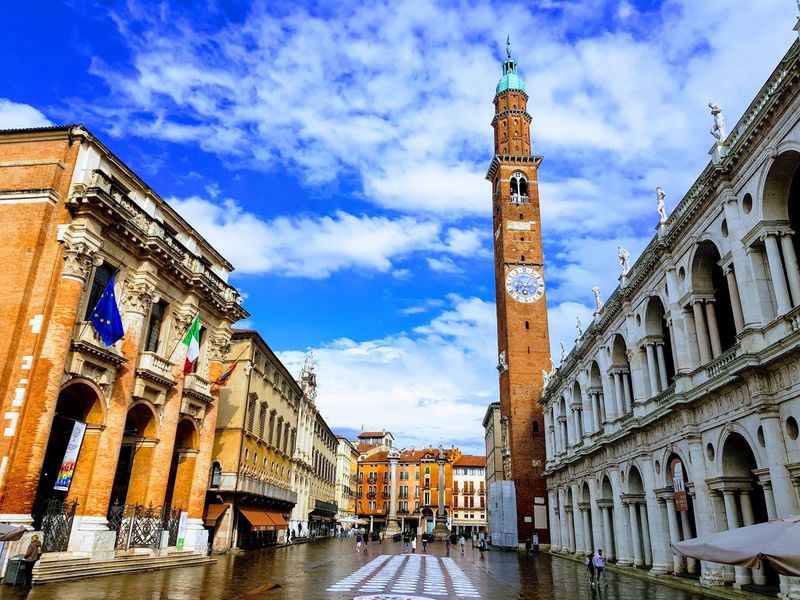
Andrea Palladio’s influence on Western architecture is difficult to overstate. His ideas about proportion, symmetry, and classical forms spread from Vicenza to Britain, colonial America, and well beyond.
Piazza dei Signori is where that influence is most immediately visible, with the Basilica Palladiana rising along one side of the square in a double-tiered Renaissance arcade.
The Basilica was not a church but a public building where civic and commercial business took place. Palladio’s redesign of its exterior, completed over several decades during the 16th century, became one of his most celebrated achievements.
UNESCO recognizes Vicenza for the extraordinary concentration and lasting influence of his work throughout the city.
The square itself functions as a natural gathering point for residents and visitors. Other historic structures surround it, reinforcing the sense that Vicenza’s entire historic center was shaped by Renaissance thinking.
For anyone interested in architectural history, Piazza dei Signori is one of Europe’s most important outdoor classrooms.
Great Market Square, Zamosc, Poland
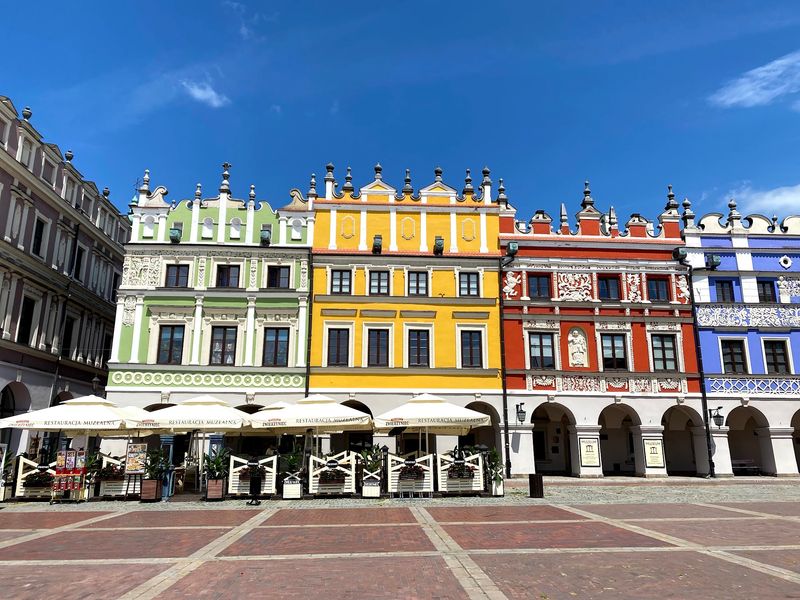
Zamosc was not a medieval town that added Renaissance buildings over time. It was conceived, planned, and built as a Renaissance city from the beginning, which makes it genuinely rare in Central Europe.
Polish nobleman Jan Zamoyski worked with Italian architect Bernardo Morando in the late 16th century to create an urban center based on Renaissance theories of the ideal city.
The Great Market Square sits at the intersection of the town’s principal streets. Arcaded merchants’ houses surround the space in colorful rows, while the Town Hall serves as the square’s architectural anchor, its tall tower visible from throughout the city.
UNESCO notes that Zamosc still retains its original Renaissance street plan and a remarkably coherent architectural composition.
The square has hosted markets and public gatherings for more than four centuries, and it continues to function as the social center of the city. The architectural consistency across its facades gives the space a visual unity that feels almost cinematic.
Zacharias of Hradec Square, Telc, Czechia
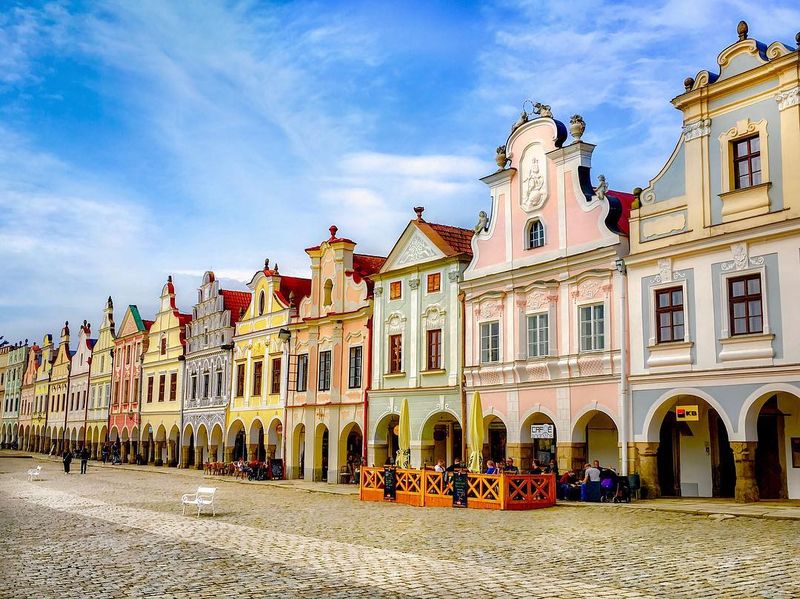
Telc’s main square has one of the most distinctive visual identities of any town square in Central Europe. Rows of narrow houses line the elongated marketplace, each one slightly different in color and decorative detail, but united by continuous arcades at street level and Renaissance facade treatments above.
The square takes its name from Zacharias of Hradec, the nobleman who oversaw the town’s transformation during the 16th century. Italian craftsmen were brought in to help reshape what had been a Gothic settlement into something that reflected Renaissance tastes.
UNESCO specifically highlights the square for its harmony and exceptional preservation.
A Renaissance chateau sits at one end of the town, reinforcing the Italian influence that defined Telc’s most prosperous era. The combination of the chateau, the arcaded square, and the surrounding ponds creates a setting unlike any other in the Czech Republic.
The whole ensemble is compact enough to explore comfortably on foot in a single afternoon.
Horni Square, Slavonice, Czechia
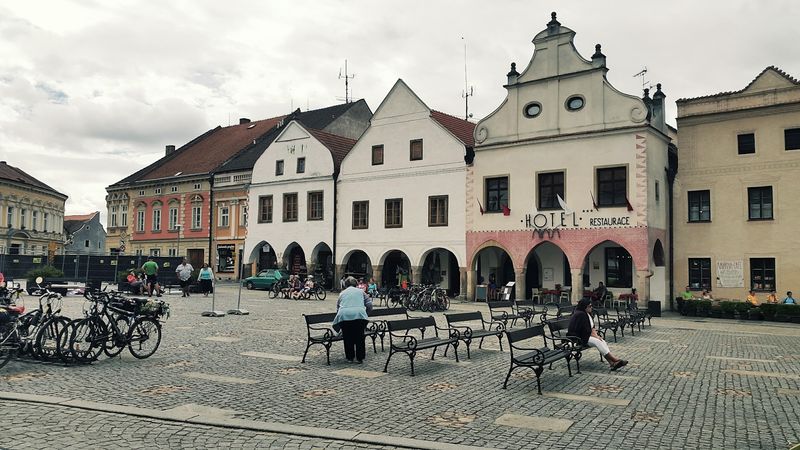
Slavonice sits close to the Austrian border in southern Bohemia, and its relative isolation may be part of why so much of its Renaissance architecture survived intact. The town prospered during the 16th century, and wealthy residents chose to express that prosperity in a very visible way: by covering their townhouses in elaborate sgraffito decorations.
Horni Square contains some of the finest examples. Several facades feature intricate sgraffito patterns depicting biblical scenes, geometric designs, and ornamental borders.
The technique involves scratching through layers of plaster to reveal contrasting colors beneath, and the results on Slavonice’s buildings are among the most detailed surviving examples in the Czech Republic.
CzechTourism describes the town as having remarkably preserved Renaissance facades that retain much of their historic character. The square itself is quiet and unhurried, which makes it easier to actually study the buildings without crowds.
For anyone interested in Renaissance decorative arts, Slavonice is genuinely worth a detour.
Town Hall Square, Bardejov, Slovakia
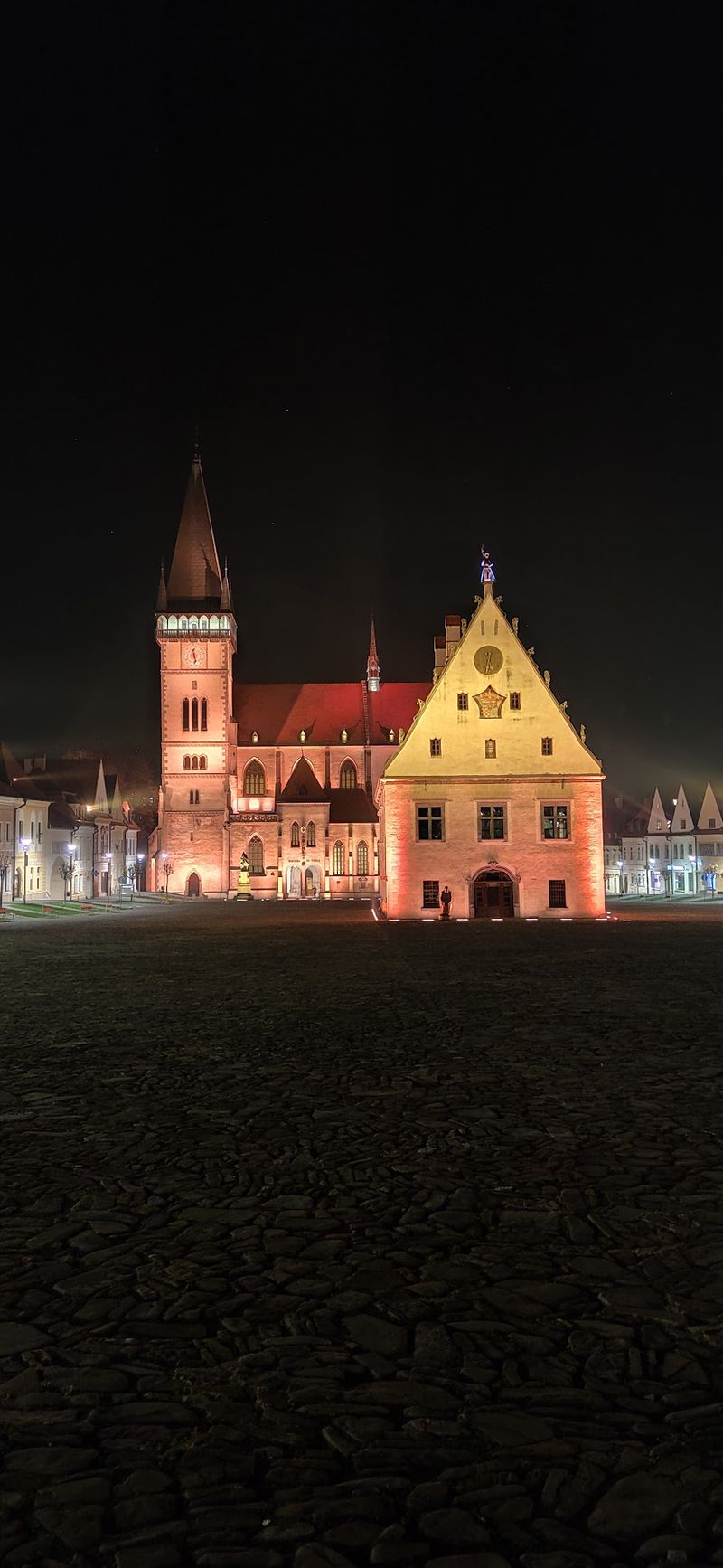
Bardejov’s central square started as a medieval marketplace, but Renaissance prosperity gave it a second architectural identity. As the town grew wealthy through trade, residents and merchants invested in upgrading their properties, adding ornate facades that layered Renaissance decoration onto older structures.
The rectangular square is lined with dozens of historic burgher houses, many of which gained richly detailed Renaissance fronts during the 16th and 17th centuries. The Town Hall stands among them as a particularly notable example of secular architecture from this period.
The entire urban ensemble forms part of Bardejov’s UNESCO-listed historic center.
What UNESCO recognized here was not a single monument but the survival of an entire Central European trading town with its historic fabric largely intact. The square still functions as the center of local life, with the surrounding streets preserving their original layout.
Bardejov is less visited than some Slovak cities, which means the experience of walking its square remains genuinely unhurried.
Namestie Majstra Pavla, Levoca, Slovakia
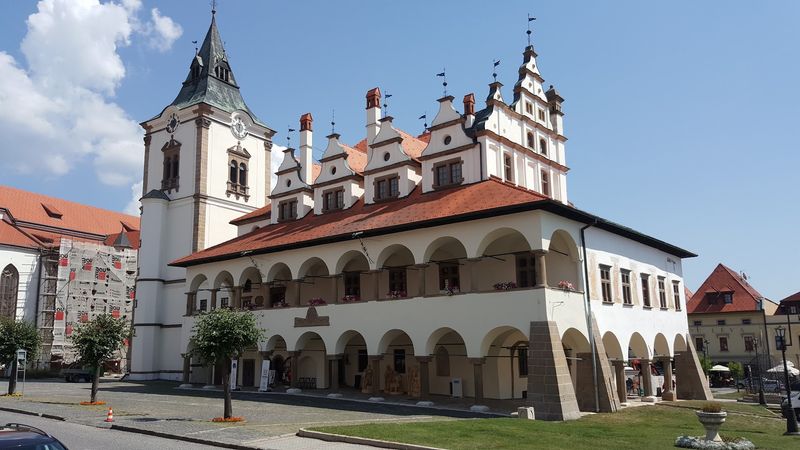
Levoca accumulated considerable wealth during the medieval and early modern periods through its position on major Central European trade routes. After a devastating fire in 1550, large portions of the town were rebuilt, and the Renaissance left a clear mark on the central square.
The arcaded Town Hall became one of Slovakia’s outstanding examples of secular Renaissance architecture. More than 50 historic burgher and patrician houses surround the enormous square, creating one of the most complete historic townscapes in the country.
A Renaissance bell tower and other 16th-century structures contribute to the overall setting.
The square is named after Master Pavol of Levoca, the master craftsman responsible for the famous carved wooden altarpiece inside the Church of St. James, which stands within the square. The combination of the altarpiece, the Town Hall, and the surrounding historic houses makes Levoca’s central space one of Slovakia’s most rewarding historic destinations.
UNESCO inscription reinforces that recognition.
Namesti, Mikulov, Czechia
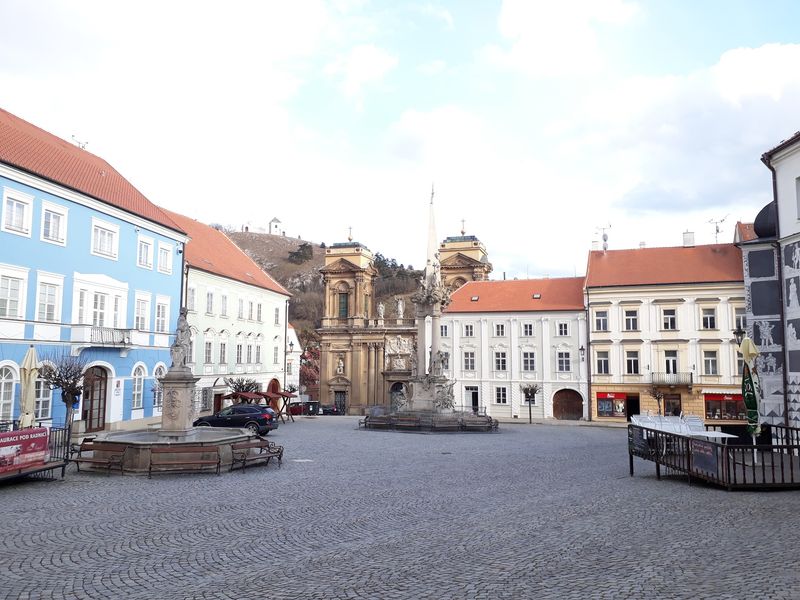
A major fire in 1584 reshaped Mikulov’s central square more thoroughly than any planned renovation could have. When the town rebuilt, property owners incorporated Renaissance design principles into the new structures, adding arcades and decorative facades that gave the square a more unified appearance than it had before.
Among the standout buildings is the Knights’ House, constructed during the second half of the 16th century and decorated with elaborate sgraffito depicting biblical and classical subjects. The detail and ambition of the decoration reflect the prosperity Mikulov enjoyed as an important town in the region of Moravia.
Later Baroque monuments were added to the square in subsequent centuries, layering additional architectural history over the Renaissance core. The Mikulov chateau rises dramatically on a rocky hill above the town, visible from the square and adding to the overall character of the place.
The combination of Renaissance groundwork and later additions gives Mikulov’s center a richly textured historic atmosphere.
Mestni Trg, Skofja Loka, Slovenia
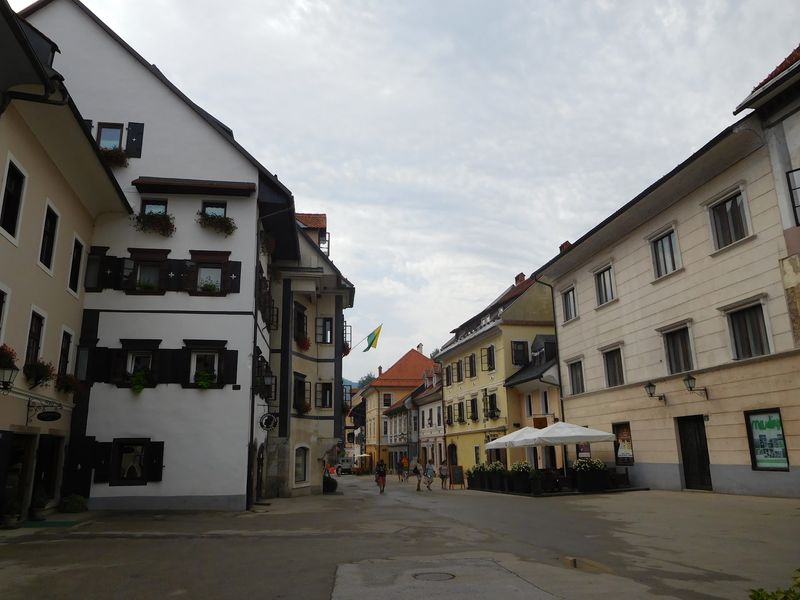
Skofja Loka is consistently recognized as one of Slovenia’s finest preserved historic towns, and Mestni Trg has been its civic heart for centuries. The square anchors a compact old town that sits beneath a hilltop castle, giving the entire setting a layered, storybook quality that photographs rarely do justice.
Many of the buildings around the square preserve architectural features created during 16th-century rebuilding. The Old Town Hall includes a Renaissance arcaded courtyard that is one of the square’s most architecturally significant elements.
Nearby, the Homan House combines Gothic structural elements with Renaissance decorative additions, illustrating the way different periods of building often overlapped in Central European towns.
Mestni Trg remains an active public space rather than a preserved relic. Residents use it daily, and the surrounding streets support a mix of shops and services.
For visitors, the square offers a starting point for exploring a historic town that has retained its character without being heavily commercialized.
Velke Namesti, Prachatice, Czechia
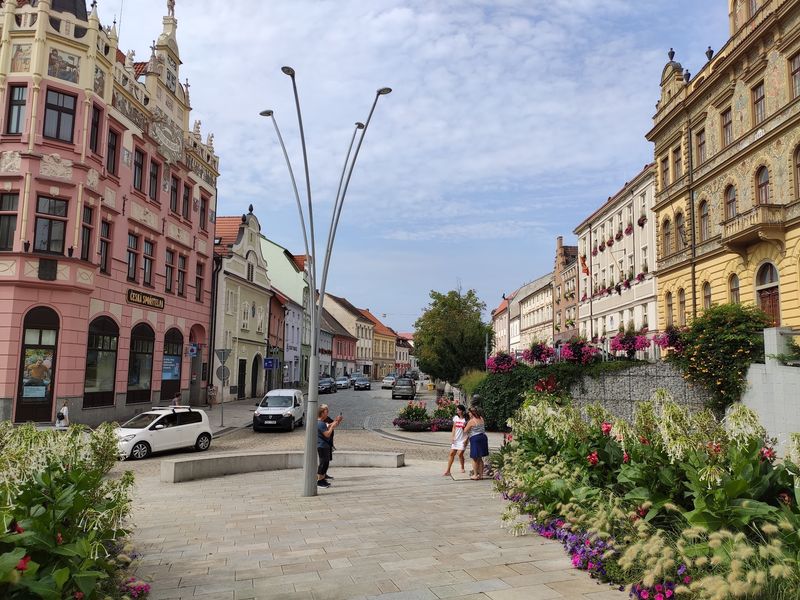
Prachatice owes its historic character to salt. The town sat along the Golden Trail, a historic trading route connecting Bohemia with Bavaria, and for centuries the salt trade generated enough wealth to fund ambitious construction.
That prosperity peaked during the Renaissance, when merchants transformed the town center with decorated houses and richly detailed facades.
Velke namesti is surrounded by buildings that reflect this prosperous era. Elaborately decorated Renaissance houses line the square, several featuring sgraffito ornamentation that has survived in remarkably good condition.
CzechTourism describes Prachatice as one of the country’s best-preserved urban complexes, with surviving town walls and a center that still communicates its trading-era character.
The scale of the decoration across multiple buildings in a single square is what makes Prachatice stand out. Sgraffito facades are found in other Czech towns, but few concentrations match what Prachatice offers around Velke namesti.
The town walls that still partially enclose the historic center add to the sense of stepping into a well-preserved Renaissance trading community.
Husovo Namesti, Nove Mesto nad Metuji, Czechia
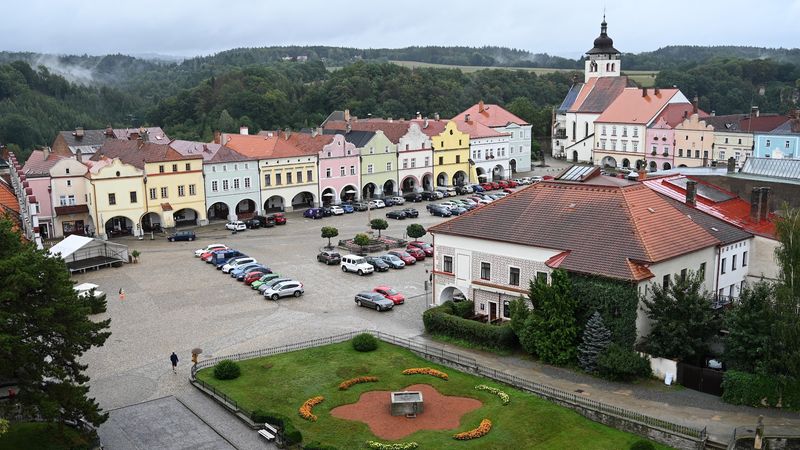
Nove Mesto nad Metuji offers one of Czechia’s most coherent Renaissance town centers, and it receives far fewer visitors than its quality deserves. The main square is lined with colorful houses connected by continuous arcades, creating the enclosed, walkable atmosphere that Central European Renaissance planners considered ideal for civic and commercial life.
The town was founded at the beginning of the 16th century and later transformed with Renaissance architecture that gave the square its current unified character. A chateau sits at the edge of the square, reinforcing the connection between aristocratic patronage and the town’s architectural development.
CzechTourism describes the center as remarkably preserved, with Renaissance facades surrounding the main square in a composition that has remained largely intact.
The arcades that join the houses at street level are particularly characteristic of the square’s design. They create shaded walkways that make the space comfortable in any weather.
For travelers exploring northeastern Bohemia, Nove Mesto nad Metuji is a genuinely rewarding stop that rarely appears on mainstream itineraries.
Share this story