Germany is well known for its castles, Christmas markets, and historic cities, but the country holds a much stranger side that most travel guides never mention. From a walkable roller coaster that nobody rides to a tropical beach hiding inside a former airship hangar, the country has quietly built up a collection of genuinely odd and fascinating places.
Some of these spots are free to visit, some require a short hike, and a few will genuinely make you question what you are looking at. If you are the kind of traveler who gets more excited by the unexpected than the predictable, this list was made for you.
Tiger & Turtle Magic Mountain, Duisburg
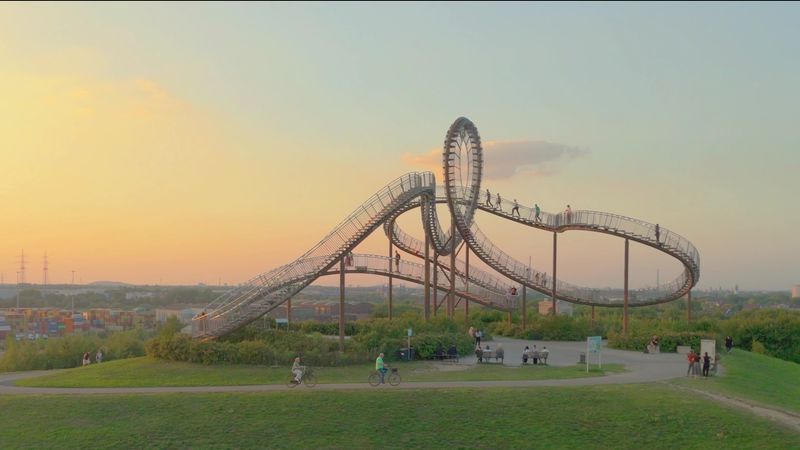
Standing on a former slag heap in Duisburg, Tiger and Turtle is one of those places that genuinely takes a moment to process. The steel structure looks exactly like a full-size roller coaster, complete with loops and curves, but there are no trains and no riders flying through the air.
Artists Heike Mutter and Ulrich Genth created the sculpture, which opened in 2011. Visitors walk the entire structure on foot, climbing stairs through the twisting framework until reaching the loop section, which cannot be crossed for safety reasons.
After dark, hundreds of LEDs light up the outline, making the already surreal structure look even more otherworldly against the Duisburg skyline. Admission is free and the landmark is accessible day and night, though severe weather can cause temporary closures.
It sits at the top of a hill, so comfortable shoes are a smart call before heading up.
Teufelsberg Listening Station, Berlin
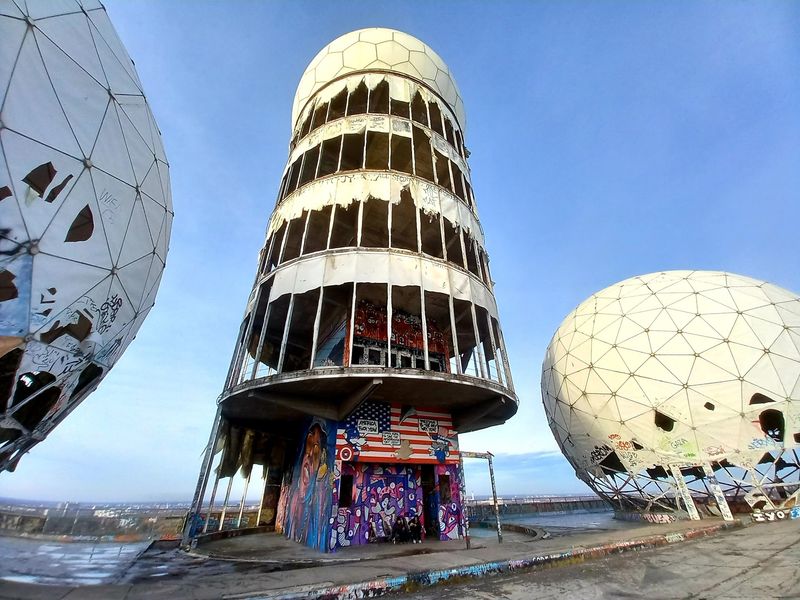
From the wooded hills on Berlin’s western edge, a cluster of weathered white radar domes rises above the trees like something out of a Cold War thriller. That is essentially what Teufelsberg was.
American intelligence used the hilltop complex to monitor communications across East Germany and beyond during the Cold War era.
After operations ended, the site was largely abandoned, and Berlin’s street art community moved in. Today the buildings are layered in murals, tags, and large-scale graffiti pieces that have made the complex an outdoor gallery unlike any formal museum.
The radar towers can be seen up close, and the elevated position offers wide views across Berlin. The attraction opens daily, generally from 11 a.m. until sunset.
Entry requires a fee, so checking current ticket prices before visiting is a good idea. The combination of Cold War history and raw urban art makes this one of Berlin’s most distinctive stops.
Ferropolis, Gräfenhainichen
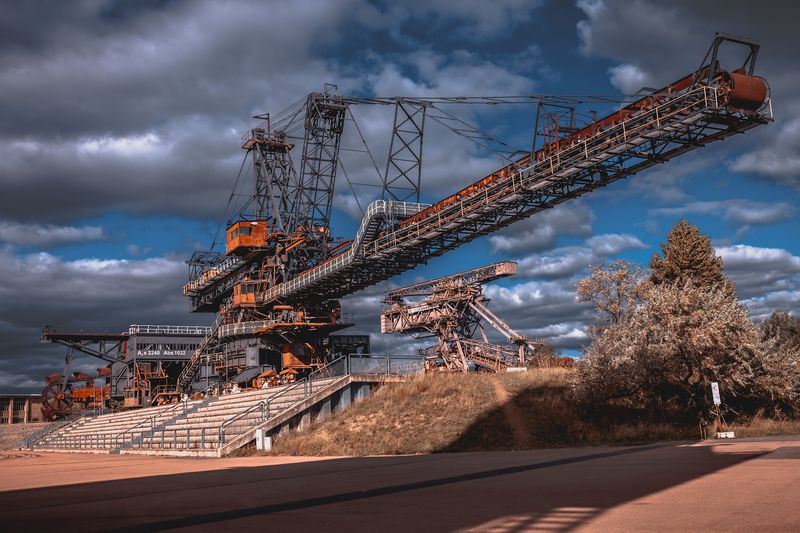
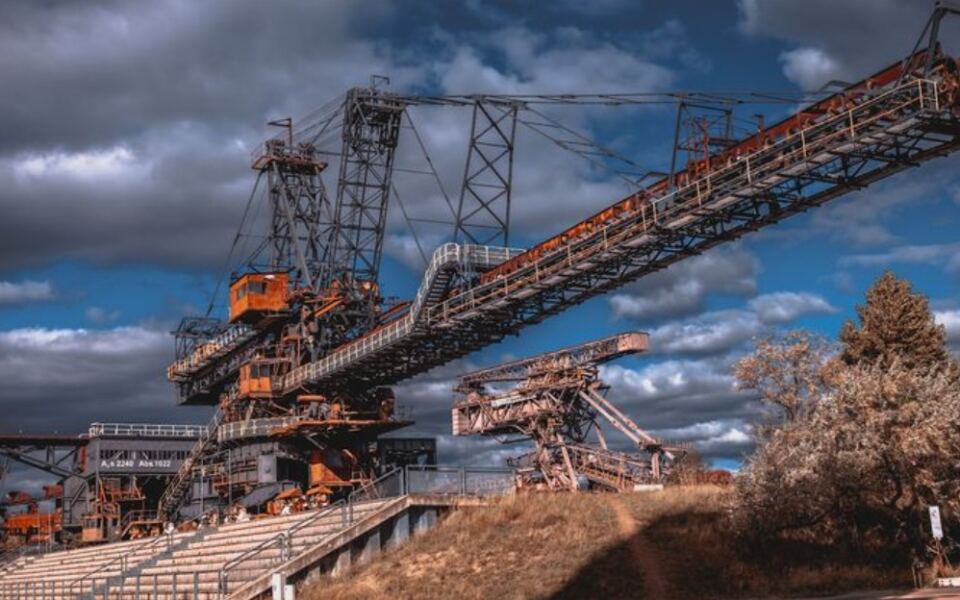
Ferropolis earns its nickname, the City of Iron, the moment those enormous machines come into view. Five massive pieces of former lignite-mining equipment dominate the grounds, each one large enough to make a person standing nearby look completely insignificant by comparison.
The scale is genuinely hard to prepare for. These are not small exhibits behind glass cases.
They are full-size industrial machines that once tore through the earth, now standing in an open landscape beside a lake in Saxony-Anhalt.
Guided tours allow visitors to explore the site and, on certain tours, climb sections of the machinery for a closer look at the mechanical details. Ferropolis also functions as a live event venue, hosting concerts and festivals throughout the year.
Regular museum opening hours operate throughout the week. For anyone who finds industrial history compelling, or who just wants to feel genuinely small standing next to a machine, this is a hard place to skip.
Tropical Islands, Krausnick
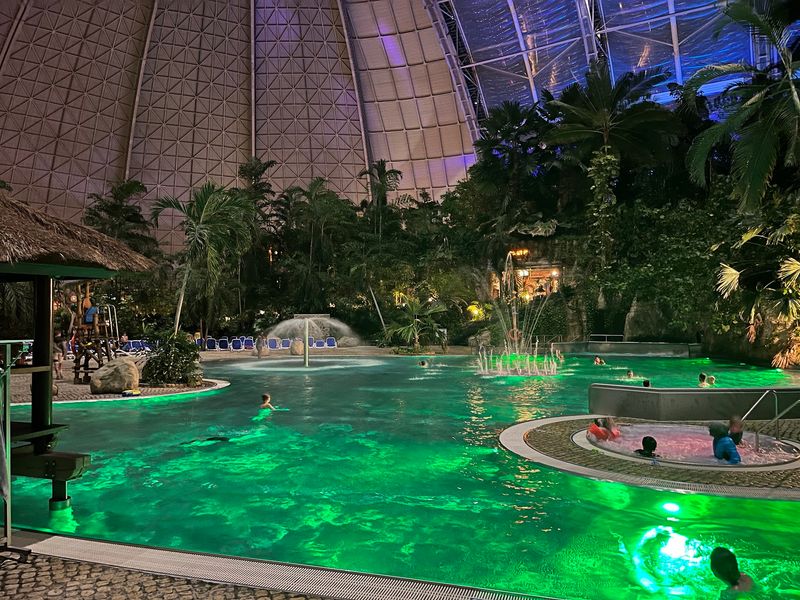
Brandenburg is not a region that typically brings tropical beaches to mind, which is exactly what makes Tropical Islands so disorienting in the best possible way. The entire resort sits inside a former airship hangar originally constructed for a company called CargoLifter, which never completed its intended mission.
Inside the hangar, the scale is staggering. Palm trees, swimming areas, waterslides, restaurants, and a full indoor rainforest containing hundreds of plant species fill the space.
The building is large enough to contain its own weather patterns under certain conditions.
Stepping outside into the flat Brandenburg countryside after a few hours of tropical humidity makes the contrast almost comical. Tropical Islands operates year-round, open 365 days a year, with specific attraction hours varying by season.
Overnight stays are also available for visitors who want to extend the experience. For a genuinely strange German day trip, few places deliver more reliably unusual scenery than this one.
Miniatur Wunderland, Hamburg
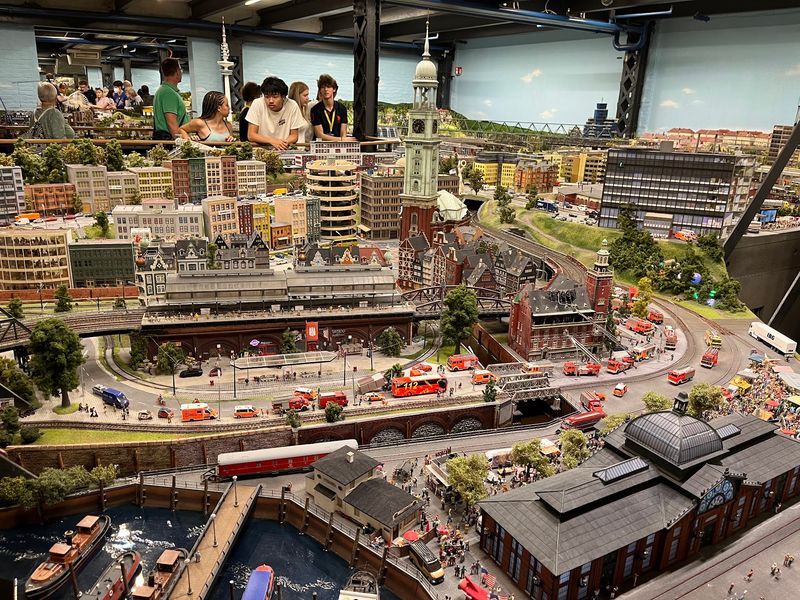
Model railways usually bring to mind a modest loop of track around a small village display. Miniatur Wunderland operates on an entirely different level, which becomes clear almost immediately after entering the attraction in Hamburg’s historic Speicherstadt warehouse district.
The system recreates entire countries, mountain ranges, airports, seaports, and cities in extraordinary detail. Trains move through the layouts while miniature aircraft appear to take off and land on functioning runways.
Lighting systems cycle through day and night across the entire display.
Hamburg tourism recognizes it as the world’s largest model railway system, and visitor numbers back that up. It consistently ranks among Germany’s most visited attractions.
Daily opening hours can extend late into the evening during peak periods, so checking the current schedule before arriving is worth the effort. Tickets often sell out, and advance booking is strongly recommended.
Whether or not trains are your usual interest, the level of craftsmanship here tends to hold attention for longer than most people expect.
Wuppertal Suspension Railway, Wuppertal
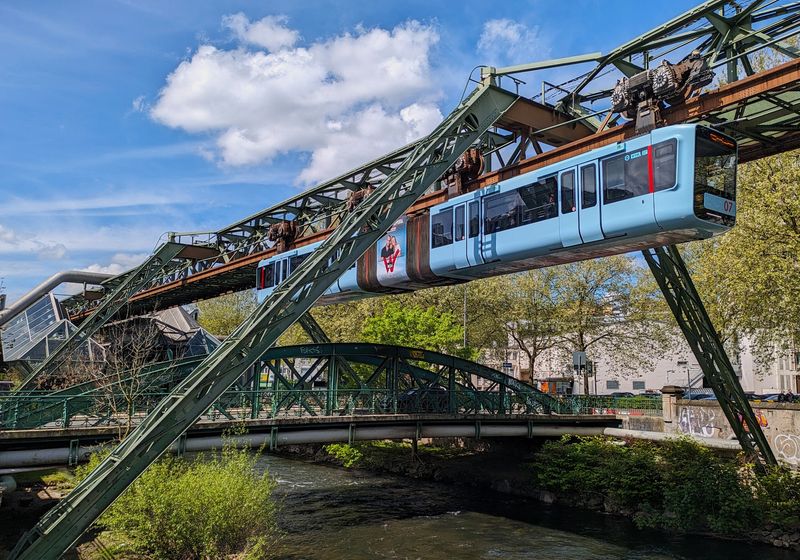
Most cities hang their power lines above the street and run their trains below. Wuppertal reversed the logic and built a railway that hangs beneath its track, swaying gently above the River Wupper as it moves through the city.
The Wuppertal Schwebebahn has been running since 1901, making it one of the oldest electric elevated railways still in regular operation anywhere in the world. Its roughly 13-kilometer route follows the river for much of the journey, giving passengers an elevated view of the city from an angle that no bus or tram can match.
What makes this especially worth noting is that it is not a tourist novelty or a preserved heritage ride. The Schwebebahn is part of Wuppertal’s active public transportation network, carrying tens of thousands of passengers each day.
Visitors can simply buy a regular transit ticket and ride alongside commuters. That combination of genuine daily utility and genuinely unusual engineering makes it one of Germany’s most interesting infrastructure stories.
Rakotzbrücke, Kromlau
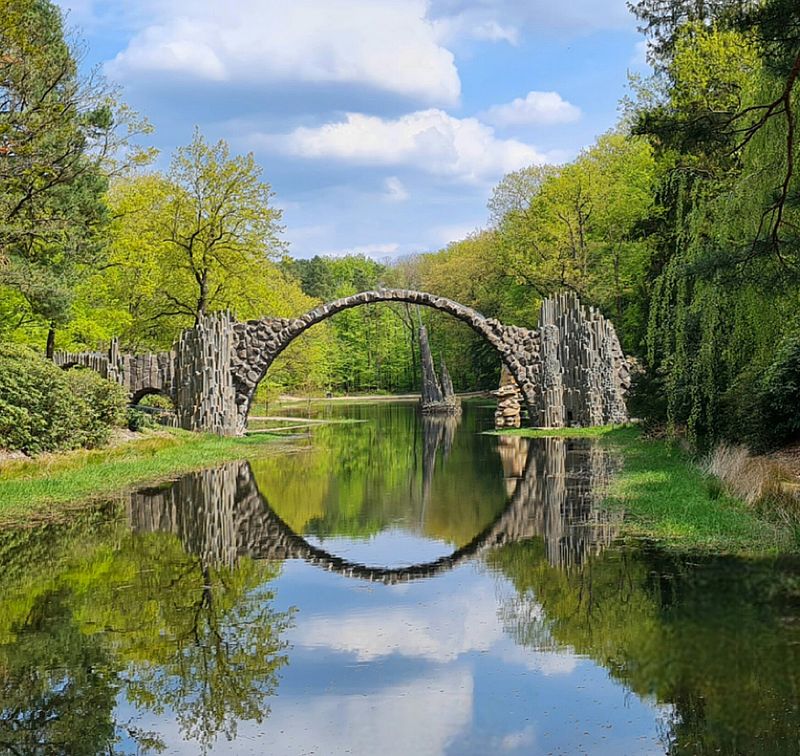
There are bridges, and then there is Rakotzbrücke. Built during the 19th century in the landscaped Rhododendron Park at Kromlau in Saxony, the slender stone arch was constructed with a specific optical effect in mind.
From the right viewpoint, the bridge and its reflection in the water below form an almost perfect circle.
The structure is commonly called the Devil’s Bridge, a name tied to old European legends suggesting that bridges of such improbable delicacy could only have been built with supernatural assistance. The legend adds a layer of atmosphere that the setting already delivers on its own.
Visitors cannot walk across the bridge itself, as it is protected to preserve the structure. The surrounding park is open for walking, and the best reflections appear during calm conditions when the water surface is undisturbed.
Spring brings rhododendron blooms that add color to the scene. Entry to the park carries a small fee.
The site is in Saxony, making it a reasonable stop when traveling through eastern Germany.
Externsteine, Horn-Bad Meinberg
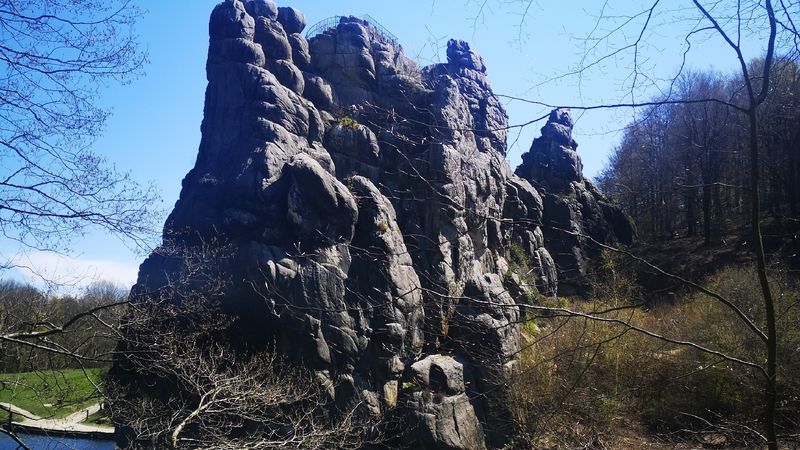
Coming across a cluster of tall sandstone pillars rising sharply from a forest floor is not something most people expect in northwestern Germany. The Externsteine in the Teutoburg Forest near Horn-Bad Meinberg have that effect on first-time visitors.
The formations look like they belong in a different landscape entirely.
Humans have been modifying these rocks for centuries. Stairs, chambers, carved reliefs, and elevated platforms have been cut into the stone over time, adding layers of history to an already dramatic natural formation.
The combination of unusual geology and long human presence has generated a steady stream of legends and alternative theories about the site’s original purpose.
Visitors can explore the surrounding area freely, while climbing the rocks requires a ticket during operating hours. The visitor center and climbing access remain open throughout the 2026 season, weather permitting.
The forested setting and the reflective pond at the base of the rocks make the visit worthwhile even before anyone starts climbing.
Kuchlbauer Tower, Abensberg
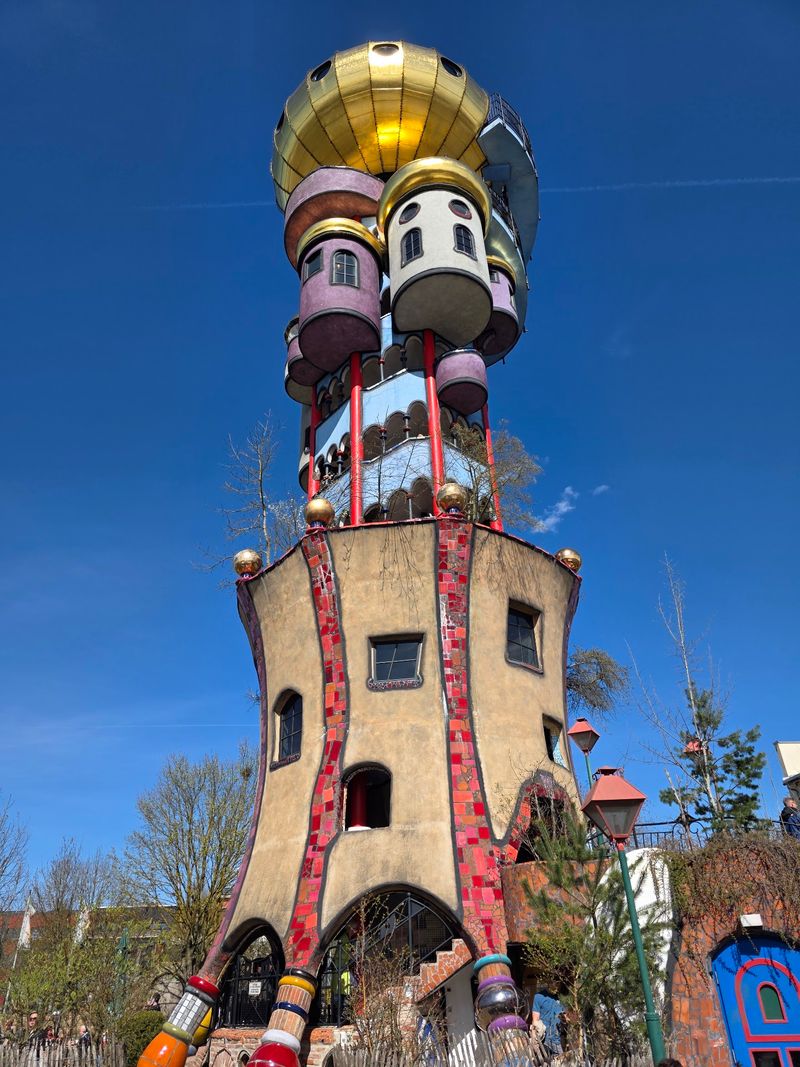
Bavarian architecture has a strong visual identity, and then there is Kuchlbauer Tower, which cheerfully ignores most of those conventions. Designed from plans by the Austrian artist and architect Friedensreich Hundertwasser and completed after his passing in 2000, the tower is an exercise in deliberate visual chaos that somehow holds together beautifully.
Rounded organic shapes, irregular windows, bright colors, ceramic tile details, and a large golden sphere at the top make the structure instantly recognizable. No two sections look quite alike, which was very much the point for Hundertwasser, who rejected straight lines and uniformity as design principles throughout his career.
The tower is part of the Kuchlbauer brewery complex in Abensberg, and guided tours including the tower operate on scheduled days throughout 2026. Abensberg is in Lower Bavaria, making the tower a natural addition to any road trip through that part of the state.
The surrounding area is pleasant, and the tower itself is genuinely unlike anything else standing in Bavaria.
Baum & Zeit Treetop Walk, Beelitz-Heilstätten
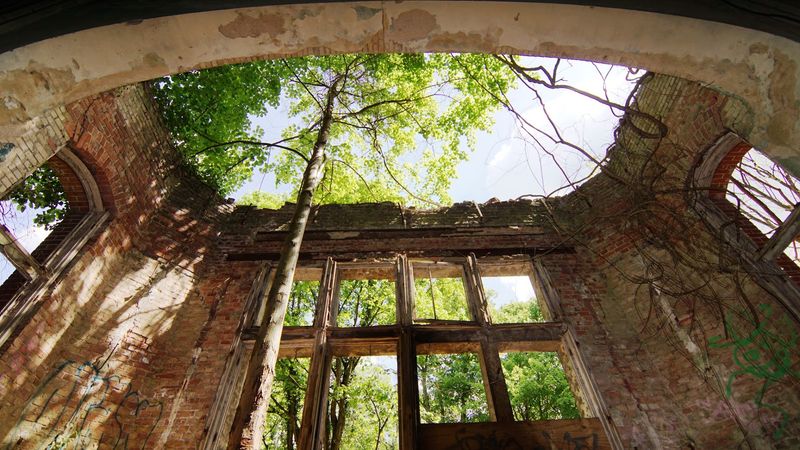
Beelitz-Heilstätten was once a large sanatorium complex outside Berlin, used over the decades for various medical purposes before eventually falling into disuse. Nature has been quietly reclaiming the grounds ever since, wrapping the aging buildings in vines and vegetation in a way that feels both eerie and strangely beautiful.
Baum and Zeit takes that already unusual setting and adds an elevated treetop walkway that runs above the rooftops. From the path, visitors look down over the crumbling structures and the trees growing up around them, getting a perspective that ground-level walking simply cannot provide.
Guided tours also enter selected historic buildings, adding interior views of the abandoned spaces to the experience. The attraction remains active in 2026, with daily summer opening hours and scheduled tours running throughout the season.
For anyone drawn to historic buildings, forgotten spaces, or the visual tension between nature and architecture, Beelitz-Heilstätten offers a version of that interest that few other places in Germany can match.
Kunsthofpassage, Dresden
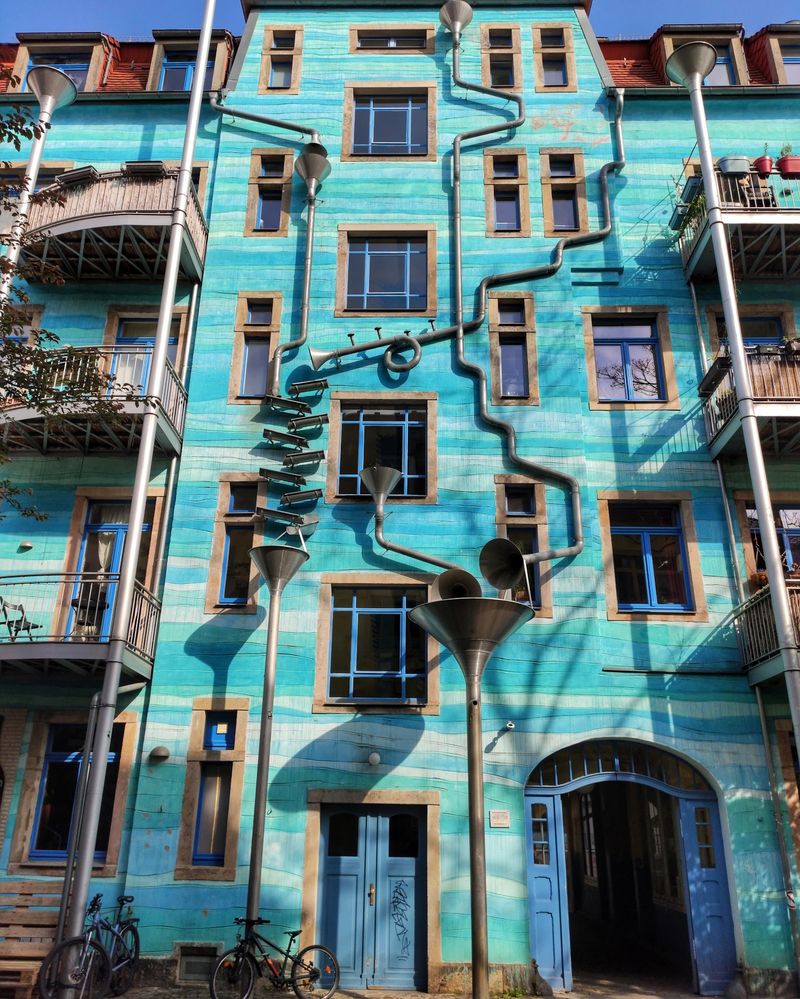
Dresden’s Neustadt district has a reputation for independent shops, art spaces, and a generally creative atmosphere, and the Kunsthofpassage fits right into that character. The complex is a series of interconnected courtyards tucked behind ordinary-looking street facades, each one designed around a different artistic concept.
The most talked-about is the Courtyard of Elements, where an elaborate network of funnels, pipes, and channels covers an entire building facade painted in deep blue. When it rains, water moves through the installation and produces sounds as it travels along the pipes.
The effect is genuinely different from anything a typical courtyard offers.
Other courtyards feature fantastical animal sculptures, colorful geometric patterns, and changing surface materials. Galleries, small shops, and cafes occupy the ground floors, making the passage a functional commercial space as well as an art installation.
Entry is free and the courtyards are publicly accessible. It is the kind of place that rewards slow walking and looking up.
Blautopf, Blaubeuren
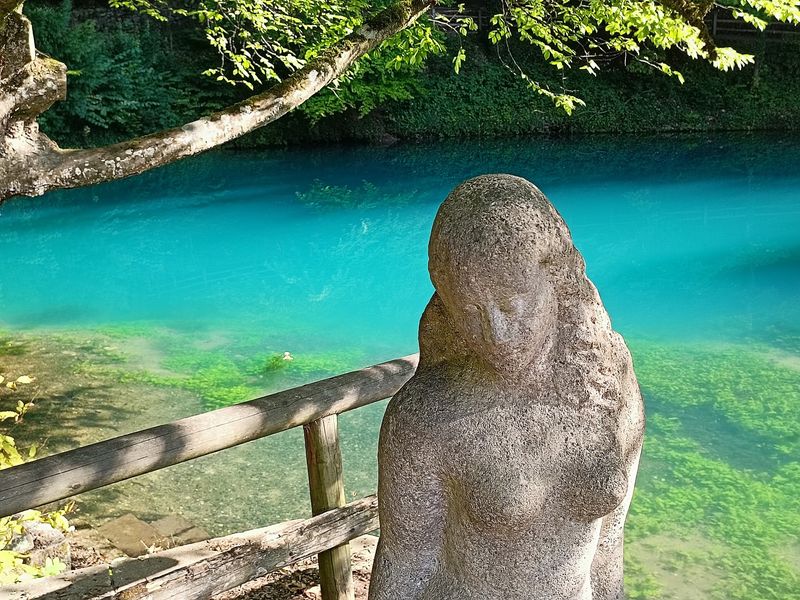
Color is the first thing that stops people at the Blautopf. The spring sits beside the historic center of Blaubeuren in Baden-Württemberg, and its water is an almost impossibly saturated shade of blue.
The intensity shifts depending on light conditions and the time of year, sometimes looking more turquoise, sometimes a deeper cobalt.
The pool is not just visually striking. It is also the entrance to an extensive underwater cave system that extends deep beneath the Swabian Alb.
Cave divers have explored sections of it, but much of the system remains unmapped. The depth of the spring contributes to the color effect that makes it look almost artificial to first-time visitors.
Renovation work previously restricted access to the immediate area, but direct public access was restored in January 2025 using temporary bridges while work continued. The site remains accessible to visitors.
Blaubeuren itself is a pleasant small town, and the Blautopf sits close enough to the town center to combine easily with a short walk through the historic streets.
Devil’s Table, Hinterweidenthal
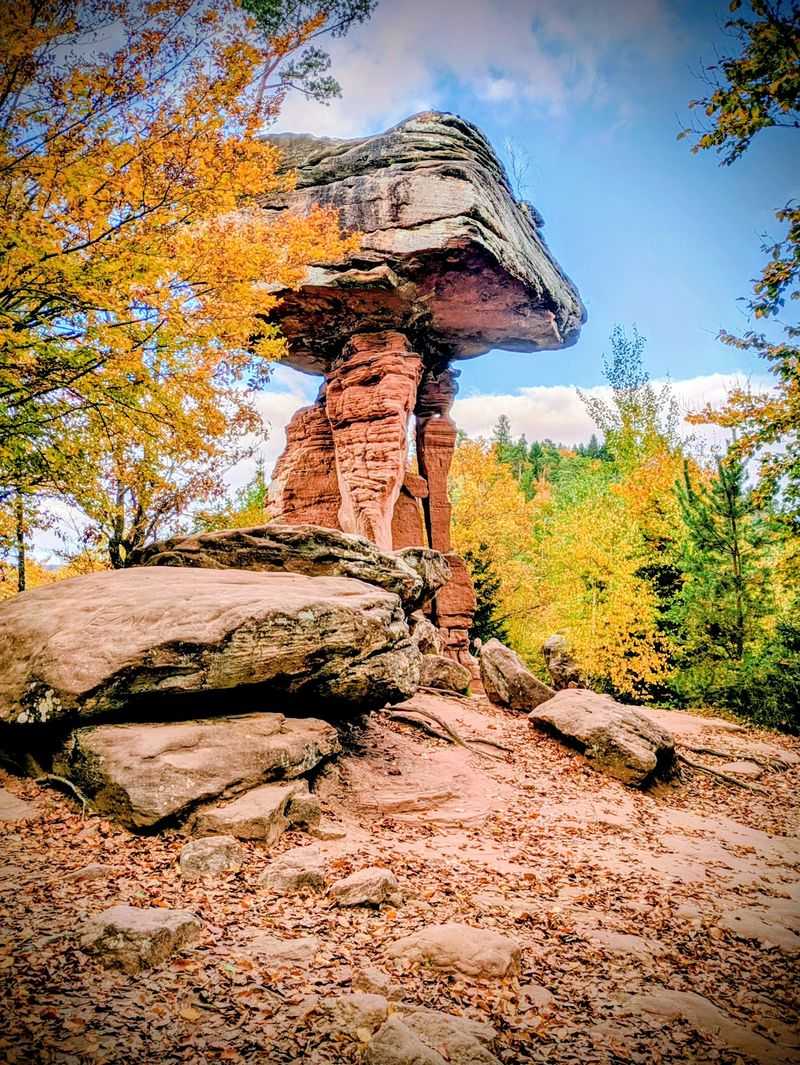
The Palatinate Forest in Rhineland-Palatinate is full of sandstone formations shaped by centuries of erosion, but the Teufelstisch near Hinterweidenthal is in a category of its own. Standing approximately 14 meters high, the formation has a wide, flat top balanced on a dramatically narrowed lower section, giving it the unmistakable profile of an enormous table.
Teufelstisch translates to Devil’s Table, a name that reflects the old local tradition of explaining improbable natural shapes through supernatural stories. The erosion process that created the mushroom-like form is entirely geological, but the result is striking enough to understand why legends formed around it.
The formation is a popular hiking destination within the forest, and the trails leading to it are well-marked and accessible for most fitness levels. A family-oriented adventure park sits near the base of the rock, making it a practical stop for visitors traveling with children.
The surrounding forest setting adds to the overall appeal of the hike.
Völklingen Ironworks, Völklingen
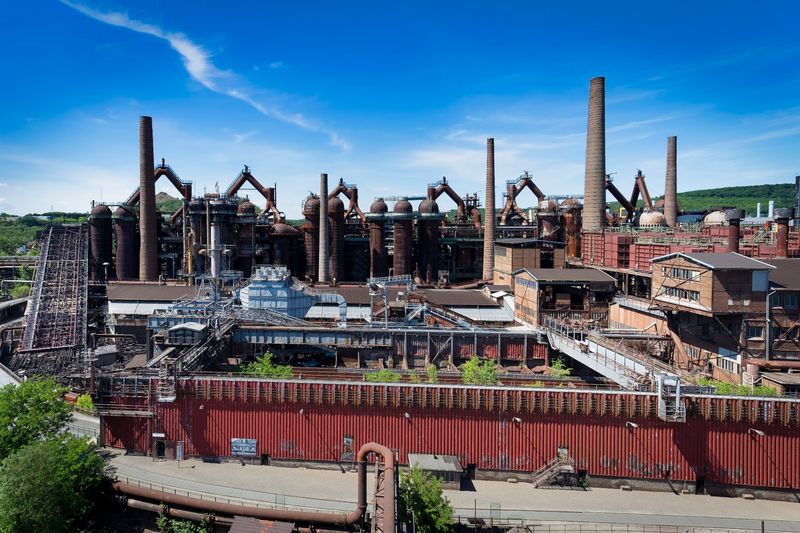
Walking through Völklingen Ironworks is not quite like visiting any other industrial museum in Europe. The scale of the preserved complex in Saarland is simply too large and too complete to feel like a tidy exhibition.
Blast furnaces, pipes, production structures, and machinery stretch across the site in a way that communicates the full weight of what industrial ironworking actually looked like at its peak.
The ironworks operated from 1873 until 1986. After closing, the complex was preserved rather than demolished, and UNESCO designated it a World Heritage Site in 1994, recognizing it as one of the best-preserved examples of 19th and early 20th century iron production in the world.
Visitors can follow elevated routes through sections of the former plant, gaining views across the industrial structures from above. The site also hosts exhibitions, art installations, and cultural events throughout the year.
It remains highly active, opening 362 days per year. For a place that once produced steel, it now generates a surprisingly large amount of genuine wonder.
Share this story