Picture the year 1970. Phones hang on kitchen walls, photos come from rolls of film, and a computer fills an entire room.
Now think about the device in your pocket today. Many ideas we use every day were once dreams in labs, magazines, and movies.
Some were tested decades ago, stumbled, and came back stronger. Others were only early sparks that took years to grow.
This list looks at 14 things that sounded wildly futuristic back then, what the first versions looked like, and how they show up in daily life now. Some of the stories behind them might surprise you.
Mobile Phones
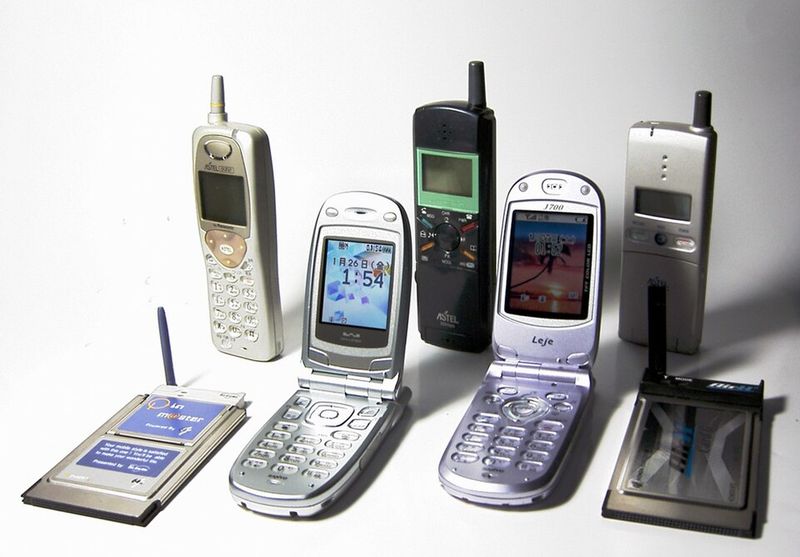
Carrying a telephone in your pocket would have sounded extraordinarily futuristic to most people at the start of the 1970s. Yet engineers were already working toward exactly that future, one test call at a time.
Motorola demonstrated handheld cellular technology during the decade. That work laid the groundwork for portable phones that could operate without being connected to a building or vehicle.
The company’s DynaTAC later became the first commercially available portable handheld cell phone, after more than ten years of development.
Smartphones now do far more than make calls. They combine cameras, maps, entertainment, messaging, banking, shopping, and internet access in a device small enough to slip into a pocket.
What once seemed like science fiction has become something billions of people carry everywhere. The idea started as a bold engineering goal, and today it is simply part of the morning routine for a huge share of the world.
Video Calls
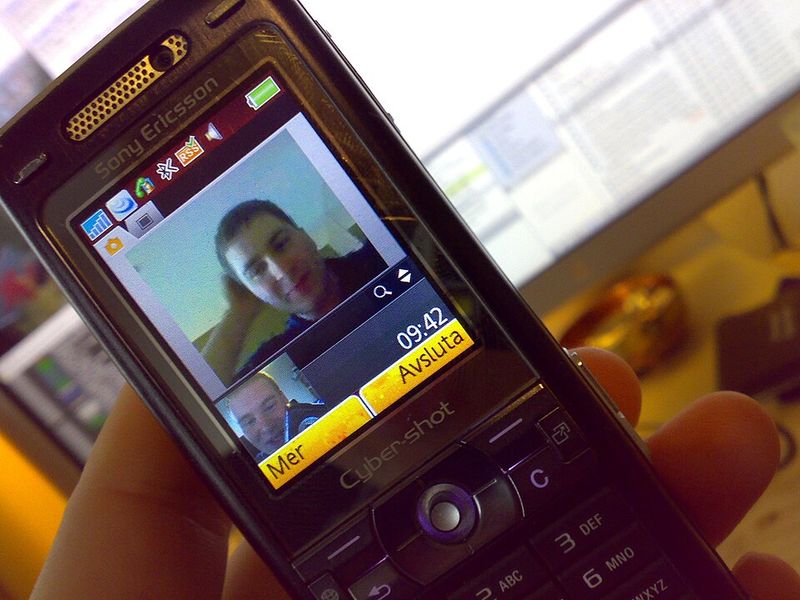
Long before Zoom meetings and FaceTime calls became routine, people were already experimenting with conversations where both callers could hear and see each other.
AT&T introduced commercial Picturephone service in Pittsburgh in 1970. The company was so optimistic that executives reportedly predicted as many as one million Picturephone sets could be operating by 1980.
The service ultimately failed because it was expensive, bulky, and limited.
The underlying idea, however, was remarkably accurate. People did want to see the faces on the other end of the line, they just needed better and cheaper tools.
Today, smartphones and computers allow inexpensive video calls from almost anywhere. Grandparents wave at grandkids across oceans, and coworkers meet from their living rooms.
What required specialized equipment in 1970 eventually became an everyday feature of modern communication.
Home Computers
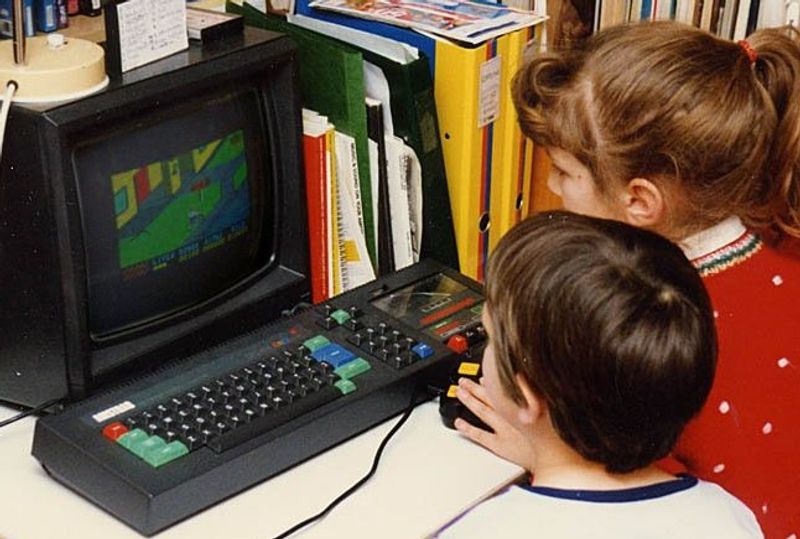
Once upon a time, computers were enormous machines tied to universities, governments, and large corporations. During the 1970s, that started to change as computing moved toward individual users.
One landmark was the Altair 8800. Introduced in 1975, it became the first microcomputer to sell in large numbers and helped ignite enthusiasm for personal computing.
By 1977, numerous companies were producing microcomputers for a growing consumer market.
Computers eventually became standard household equipment. Families use them for schoolwork, entertainment, banking, and working from home.
The clunky machines available to hobbyists in the 1970s looked nothing like modern laptops. Still, they helped establish a big idea: computing power could belong in ordinary homes, not just in locked rooms full of specialists.
That shift quietly set the stage for the digital world people live in now.
Online Shopping

Ordering groceries or clothing from a computer would have sounded bizarre during most of the 1970s. By the end of the decade, though, someone had already shown how it could work.
In 1979, British inventor Michael Aldrich connected a modified television to a transaction-processing computer using a telephone line. The system became an early form of what would later be called online shopping.
Commercial systems followed during the 1980s.
The internet eventually transformed the concept on a scale few consumers of the 1970s could have pictured.
Now people can compare prices, buy groceries, order dinner, purchase furniture, and arrange same-day deliveries without leaving home. A few taps can fill a cart in minutes.
That futuristic notion of shopping through a screen turned out to be remarkably close to reality.
Digital Photography
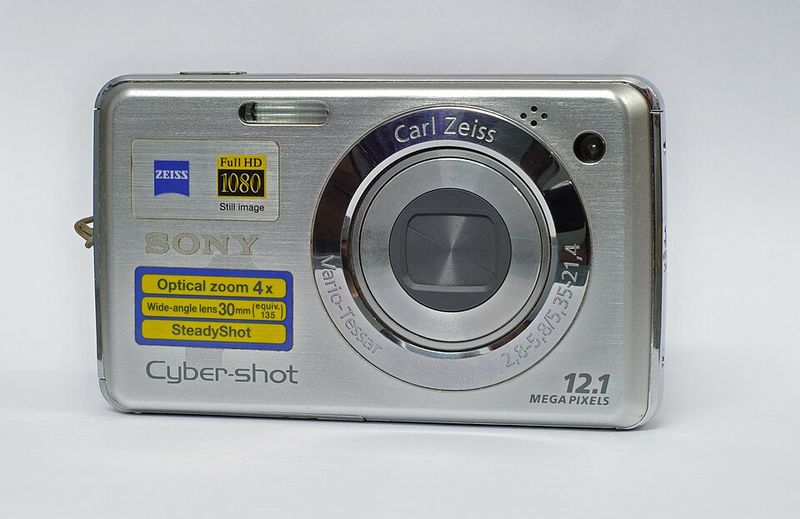
In an era of film rolls and photo-processing labs, having a camera that needed no film at all, sounded like pure fantasy.
Yet Kodak engineer Steven Sasson and his colleagues built the company’s first digital-camera prototype in 1975. Kodak says the experimental device was roughly the size of a toaster and recorded black-and-white images at a resolution of just 0.01 megapixels.
The technology needed years of development before digital cameras became mainstream.
Eventually, digital photography transformed the industry. Dedicated digital cameras became common before increasingly capable smartphone cameras put photography into nearly everyone’s pocket.
Today, taking hundreds of photos without buying film or waiting for processing seems completely normal. In 1975, it was revolutionary, and it started with a bulky gadget that few people ever saw.
Wearable Technology
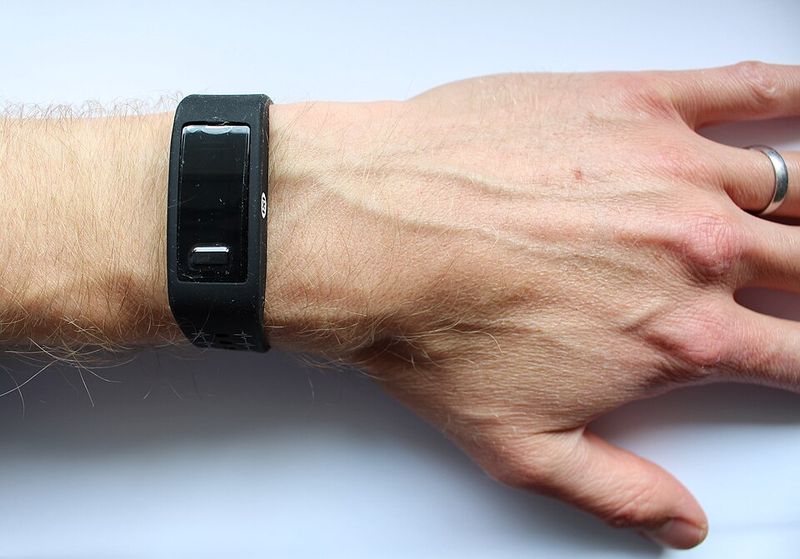
Smartwatches may seem thoroughly modern, but people were strapping surprisingly sophisticated electronics to their wrists in the 1970s.
Pulsar introduced a calculator watch during the decade. Hewlett-Packard released its HP-01 calculator wristwatch in 1977, combining timekeeping, an alarm, a stopwatch, a calendar, a calculator, and memory functions in something the company called a wrist instrument.
Those devices were primitive compared with today’s wearables. Still, the core concept was already in place: put useful computing technology directly on the body.
Modern smartwatches can display messages, provide navigation, track workouts, monitor health measurements, play music, and even handle phone calls.
The tiny wrist computers of the 1970s were an early glimpse of that future, and they proved people were curious about carrying technology in a very personal way.
Electric Cars
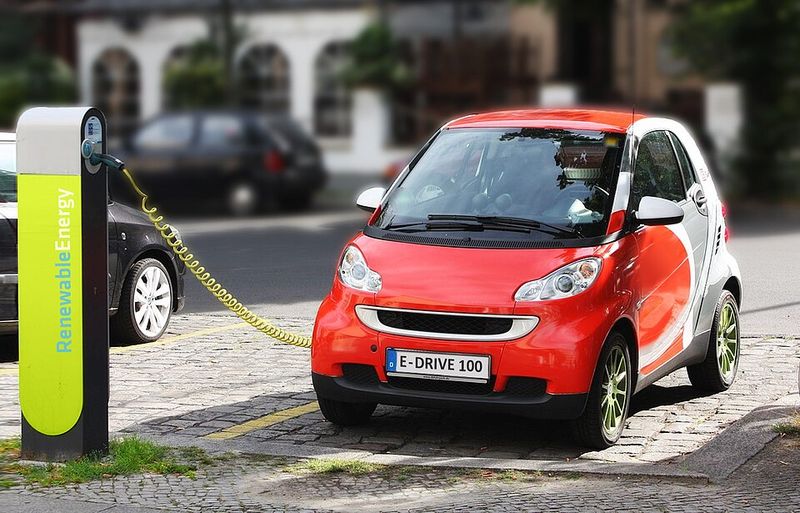
Electric automobiles were actually invented long before the 1970s. The decade, though, brought fresh predictions that electricity could replace gasoline for at least some vehicles.
The 1973 oil crisis helped revive interest in alternatives to petroleum. General Motors displayed an urban electric-car prototype in 1973, while Sebring-Vanguard produced more than 2,000 CitiCars between 1974 and 1977.
Congress also passed legislation in 1976 supporting research into electric and hybrid vehicles.
Those early EVs suffered from limited range and performance, and enthusiasm faded near the end of the decade.
Today, electric vehicles have returned on a far larger scale. Major automakers offer everything from electric sedans and SUVs to pickup trucks.
The 1970s EV boom arrived early, but its basic vision survived and is now parked in driveways and charging stations across the country.
Artificial Intelligence
Artificial intelligence was not invented in the 1970s. Researchers had discussed machine intelligence for decades, and the term itself dates to the 1950s.
But the 1970s were important in moving AI from an abstract idea toward practical applications. Stanford researchers developed early expert systems, and the decade brought AI programs designed for fields including medicine, biology, engineering, and the military.
Stanford’s AI history places a major wave of expert-system development between 1970 and 1980.
Today’s AI systems are vastly more sophisticated. They can generate text and images, recognize speech, analyze enormous datasets, assist with programming, and power countless digital services.
The dream of useful intelligent machines was clearly present decades before today’s AI boom. Those early programs were narrow and limited, yet they showed that computers could help experts solve real problems.
Touchscreen Technology

Swiping and tapping a glass screen feels completely natural today. In the early 1970s, it was anything but ordinary.
CERN engineer Bent Stumpe developed a capacitive touchscreen design for the organization’s Super Proton Synchrotron control system. A proposal was presented in 1972, and the technology was documented in a CERN report in 1973.
The screens remained in use at CERN for decades.
At the time, widespread adoption was limited partly because the computer power required was expensive. That eventually changed.
Touchscreens now appear in smartphones, tablets, automobiles, ticket machines, restaurant kiosks, ATMs, airport displays, and countless other devices.
A control-room solution created more than half a century ago became one of the world’s most familiar ways of interacting with technology.
Biometric Security
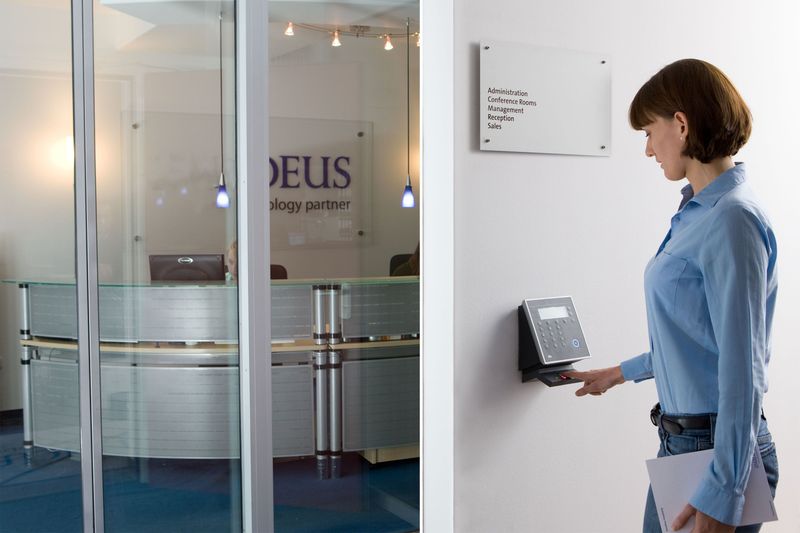
Using part of your body instead of a key or password sounds like a distinctly 21st-century security system. Yet automated biometric identification was already attracting serious research in the 1970s.
The U.S. National Bureau of Standards, now known as the National Institute of Standards and Technology, published work on automated fingerprint identification in 1970.
It followed with further research on automated fingerprint registration in 1972.
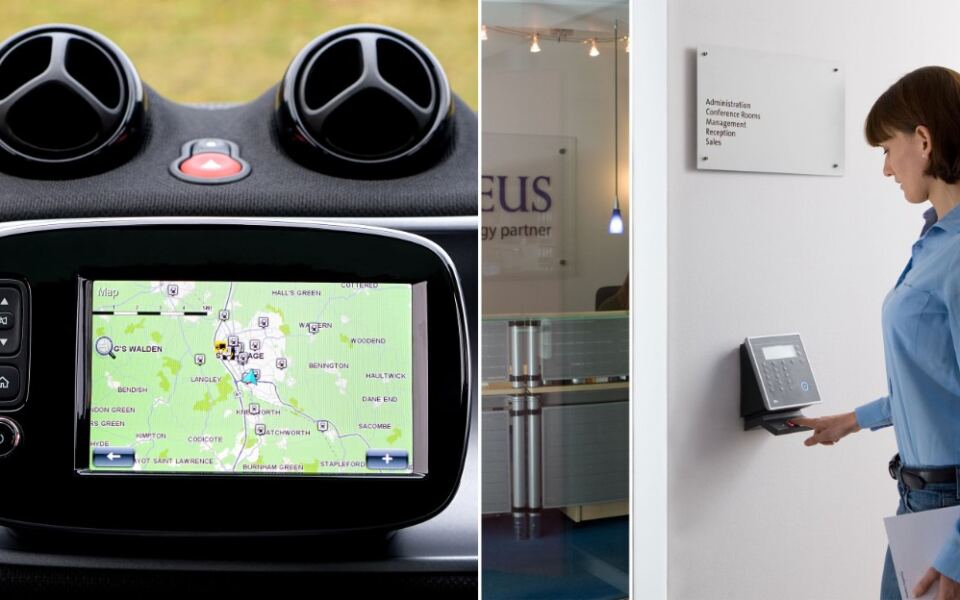
Today, biometrics are built into everyday technology. Phones can unlock with fingerprints or faces.
Airports increasingly use facial-recognition systems, and fingerprints and other biometric identifiers are widely used in security and identity systems.
The technology is far more advanced than what researchers of the 1970s had available. Even so, the idea of machines recognizing people through unique physical characteristics clearly survived and now opens phones in a split second.
GPS Navigation
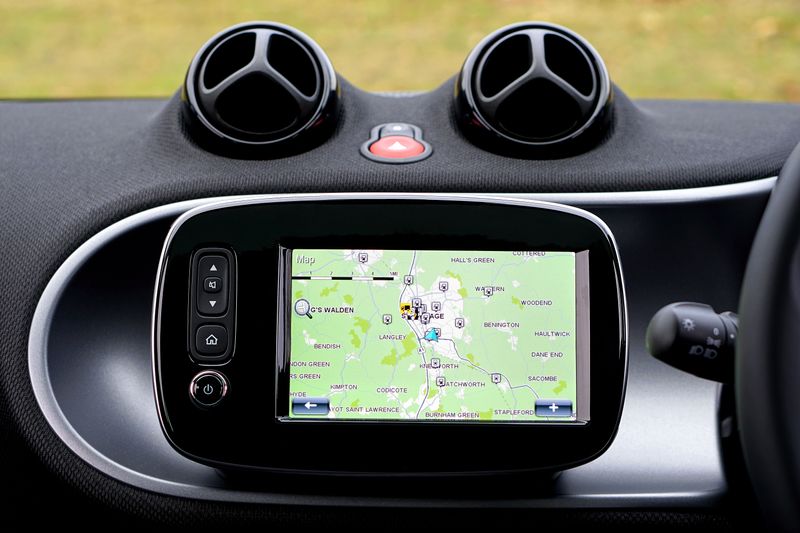
Few modern conveniences feel more indispensable than opening a phone and instantly getting turn-by-turn directions. The foundation for that technology was being built in the 1970s.
The U.S. Department of Defense developed what became the Global Positioning System after earlier satellite-navigation experiments.
NASA notes that the first NAVSTAR GPS satellite launched in 1978. The full constellation became operational years later, and civilian use then expanded dramatically.
GPS now does far more than help drivers find restaurants or avoid traffic. It supports aviation, shipping, agriculture, surveying, emergency response, scientific research, smartphones, fitness devices, and countless other applications.
A military satellite-navigation project from the 1970s eventually became technology ordinary people consult several times a day, usually without giving the satellites overhead a second thought.
Streaming Services

Netflix and other modern streaming platforms did not exist in the 1970s, but the decade held some intriguing experiments with interactive and on-demand entertainment.
One notable example was QUBE, an interactive cable television service launched by Warner Communications in Columbus, Ohio, in 1977. Subscribers could interact with programming through special controllers, take part in polls, and make selections through their televisions.
QUBE was ultimately unsuccessful as a business. Still, it showed how television could become something more interactive than passive broadcasting.
Modern streaming took that idea far further. Viewers can now choose movies, television shows, music, and live programming whenever they want, rather than organizing their evenings around a broadcaster’s schedule.
The technology is different, but the shift toward viewer-controlled entertainment was already becoming visible.
Space Tourism
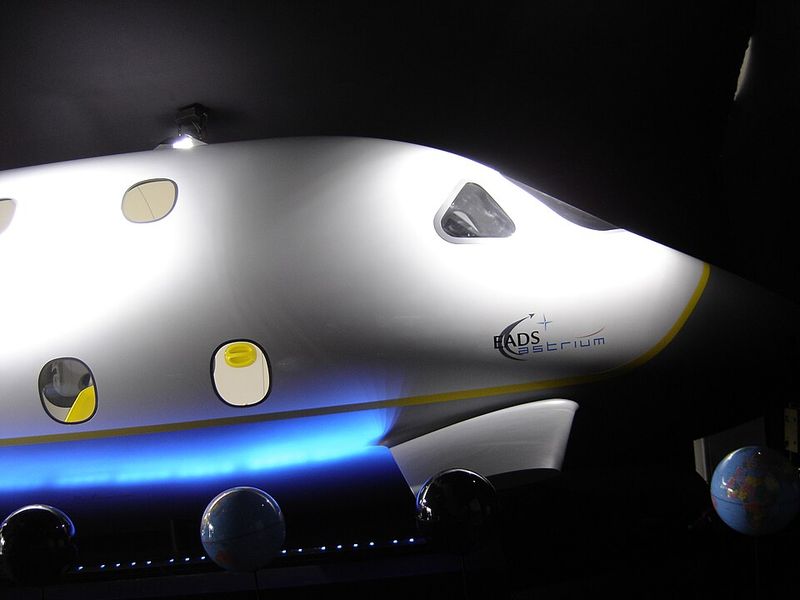
Ordinary people traveling beyond Earth became a popular dream during the space-age optimism of the 1960s and 1970s.
The decade produced ambitious visions of reusable spacecraft and even permanent human settlements beyond Earth. NASA’s Space Shuttle program was formally approved in the early 1970s with the goal of creating reusable space transportation.
Physicist Gerard O’Neill also became influential for his proposals for large human settlements in space.
Commercial tourism arrived much later, but private passengers have now traveled to space.
Blue Origin reported in January 2026 that its New Shepard program had carried 98 humans into space, while companies continue developing additional commercial human-spaceflight programs.
Space tourism is still extremely expensive and far from ordinary, but it is no longer purely science fiction.
Robotics in Medicine
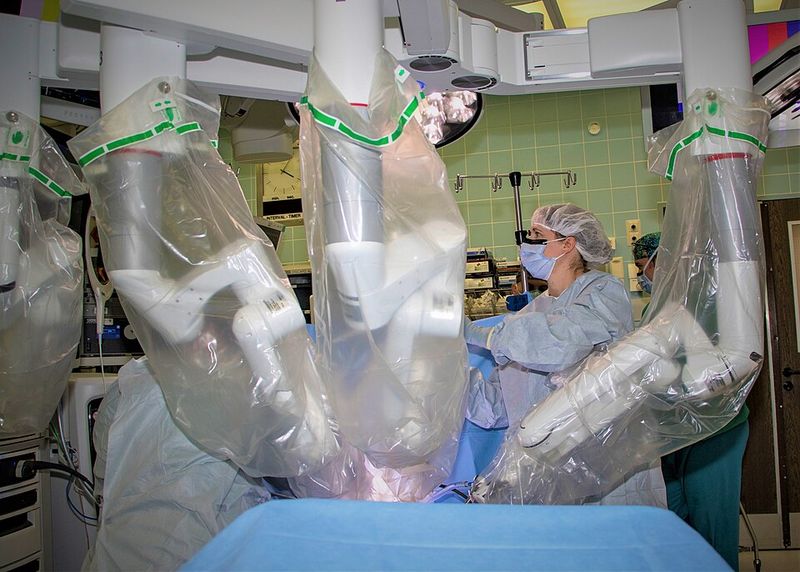
Robots assisting doctors during medical procedures sounded highly futuristic during the 1970s.
Research into the concept began to take shape around that period, although practical robotic surgery arrived later. Historical reviews trace ideas involving remotely operated surgery to work connected with NASA and U.S. defense research in the 1970s.
The first robotic platform used on a human patient for surgery came in 1985, when a PUMA robot assisted with neurosurgical biopsies.
Since then, robotic-assisted surgery has expanded dramatically. By the end of 2025, more than 20 million patients worldwide had undergone procedures involving Intuitive’s da Vinci surgical systems alone.
The surgeon remains in control, but robotic systems can provide highly precise instruments and minimally invasive approaches that would have seemed extraordinary half a century ago.
Share this story