Africa holds some of the oldest and most remarkable history on the planet, and much of it is written in stone, carved into rock, and buried beneath centuries of soil. From the towering pyramids of Egypt to the coral-stone ruins along the East African coast, the continent is home to civilizations that shaped the ancient world in ways that are still being studied today.
Whether you are a history enthusiast, a curious traveler, or someone who simply wants to understand where human civilization began, Africa’s ancient sites offer something genuinely awe-inspiring. This list covers fifteen destinations across the continent where the past is not just preserved in museums but is standing right in front of you, waiting to be explored.
Giza Plateau, Egypt
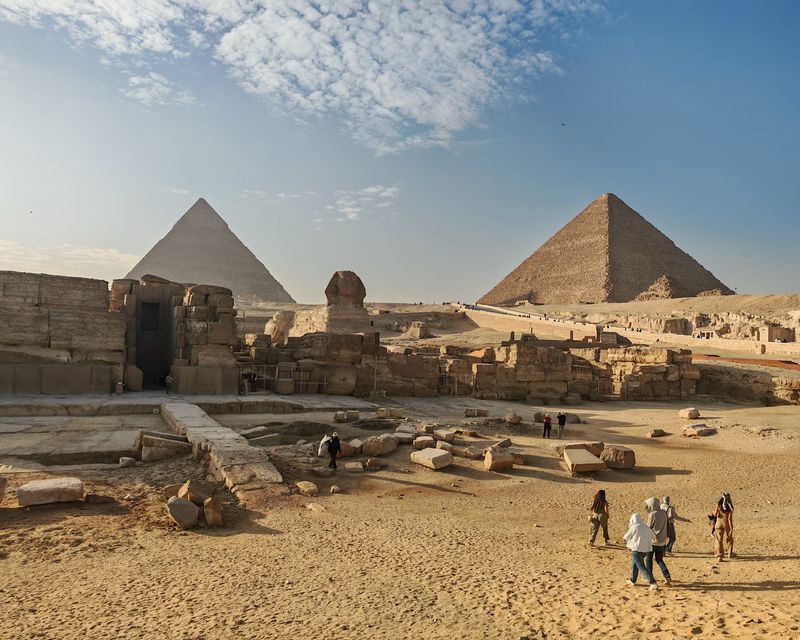
No photograph fully prepares you for the moment the pyramids of Giza come into view. The three royal tombs built for Khufu, Khafre, and Menkaure during Egypt’s Fourth Dynasty are among the most recognized structures in human history, yet their sheer scale remains genuinely shocking in person.
The Great Pyramid of Khufu, constructed around the 26th century B.C., originally rose to roughly 146.5 meters and is the only surviving monument from the traditional Seven Wonders of the Ancient World. That fact alone sets Giza apart from nearly every other archaeological site on earth.
Beyond the pyramids, the plateau contains workers’ settlements, tombs, temples, cemeteries, and the Great Sphinx. Archaeologists and historians continue to study how ancient Egyptian builders organized the labor and engineering required to create these structures.
Ticketing is available for the archaeological zone and individual monuments separately.
Luxor and Ancient Thebes, Egypt
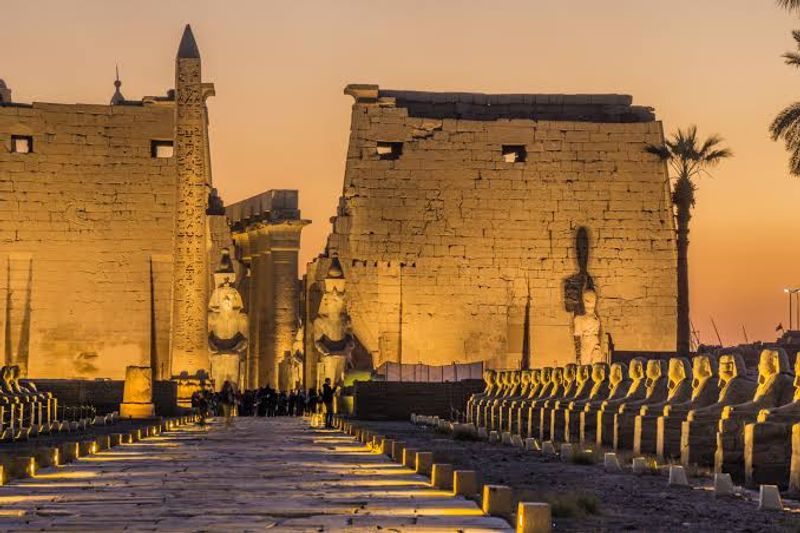
Known to the ancient Egyptians as Waset and later to the Greeks as Thebes, Luxor served as one of Egypt’s most powerful political and religious centers during the height of pharaonic civilization. The city’s monuments are spread across both banks of the Nile, making it feel less like a single site and more like an open-air museum without walls.
On the east bank, the Karnak temple complex developed over centuries into one of the most important religious centers in ancient Egypt, particularly associated with the god Amun. Luxor Temple, also on the east bank, contains structures dating to the New Kingdom, and the restored Avenue of Sphinxes once connected the two temples ceremonially.
Across the Nile lie the famous royal and elite burial grounds of ancient Thebes. Few destinations anywhere in Africa concentrate this much monumental pharaonic history into a single region, which is why Luxor consistently draws travelers from around the world.
Abu Simbel, Egypt
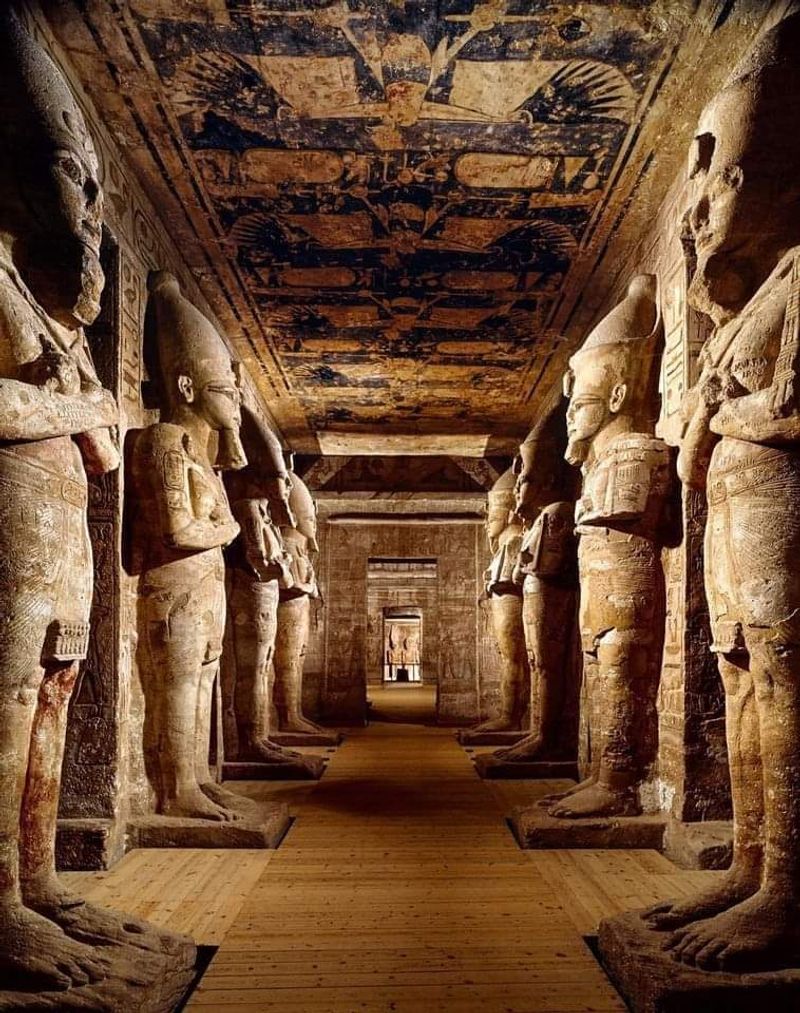
Four enormous rock-carved statues of Ramesses II dominate the entrance to Abu Simbel’s Great Temple, and they have been doing so since approximately 1264 B.C. Carved directly into the sandstone cliffs during the reign of Ramesses II, the temples at Abu Simbel represent one of ancient Egypt’s most ambitious construction projects.
A smaller temple beside the Great Temple honors Queen Nefertari and the goddess Hathor. What makes Abu Simbel especially interesting is its modern history as well.
When the construction of the Aswan High Dam threatened to flood the temples during the 20th century, an international UNESCO-led campaign dismantled and relocated both structures to higher ground, saving them from permanent submersion.
Visitors still travel to Abu Simbel today, and the site is particularly famous for the twice-yearly solar phenomenon in which sunlight penetrates deep into the Great Temple’s inner sanctuary. It is a long journey from Cairo, but the remoteness only adds to the experience.
Carthage, Tunisia
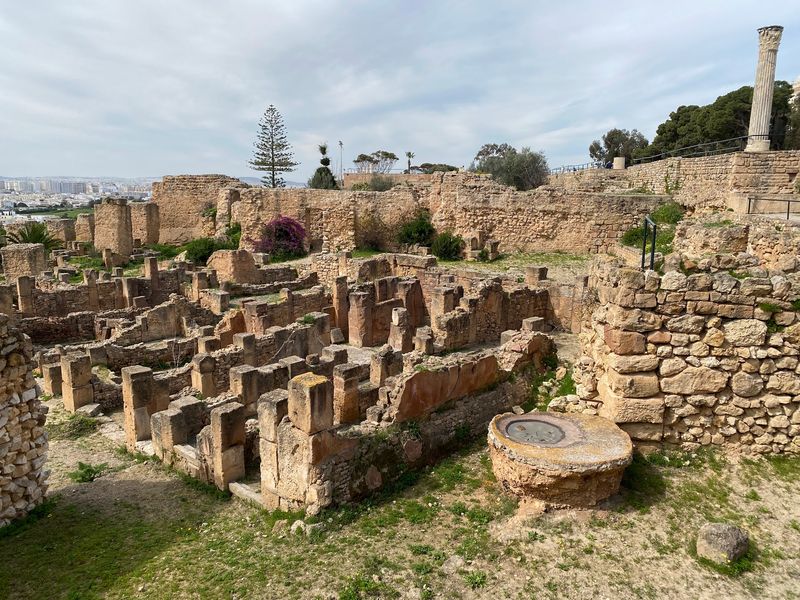
The peaceful coastal setting of modern Carthage gives almost no indication that this hillside suburb of Tunis was once the heart of a Mediterranean empire that challenged Rome for dominance of the ancient world. Phoenician settlers established Carthage during the first millennium B.C., and it grew into a prosperous commercial power with influence stretching across the western Mediterranean.
Its most famous military figure, Hannibal, led one of antiquity’s most daring campaigns against Rome during the Second Punic War. Rome ultimately destroyed Punic Carthage in 146 B.C., but the location was too strategically valuable to abandon.
The Romans rebuilt it as an important city of their own empire, which is why today’s archaeological landscape layers Punic and Roman remains.
Visitors can explore areas associated with temples, bathhouses, residential districts, ports, and burial grounds. Tunisia’s tourism authority actively promotes Carthage as a major heritage attraction, and its combination of civilizations makes it more historically layered than most ancient sites.
El Jem Amphitheatre, Tunisia
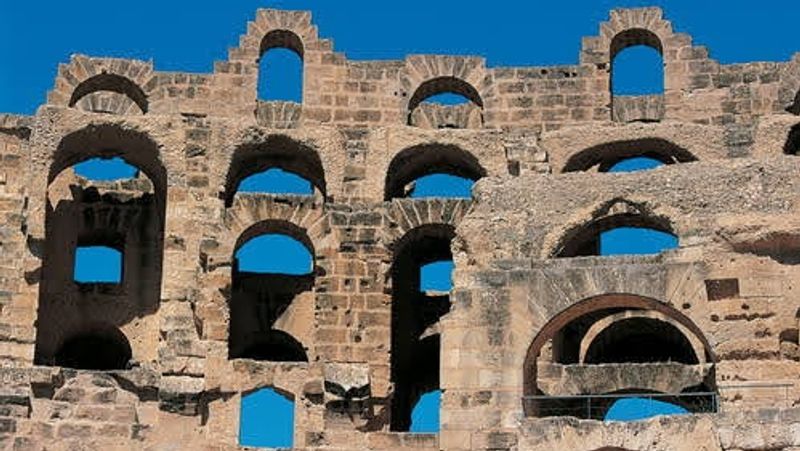
Standing in the middle of a small Tunisian town, the amphitheatre at El Jem is the kind of structure that stops you in your tracks. Built during the Roman period in the ancient city of Thysdrus, this massive arena rivals the Colosseum in Rome for scale and is widely considered one of the best-preserved Roman amphitheatres anywhere in the world.
Its surviving stone walls, arched galleries, arena floor, and underground passages remain remarkably intact. Visitors can walk through portions of the underground areas where participants and animals were once staged before entering the arena above.
The sheer size of the structure tells you something important about how wealthy Roman North Africa had become by the time it was built.
El Jem remains an active heritage destination. Current visitor information confirms ticketing and opening access, and Tunisia’s official tourism material consistently lists it among the country’s premier archaeological landmarks.
It is a genuinely surprising find for travelers who expect Roman grandeur only in Europe.
Dougga, Tunisia
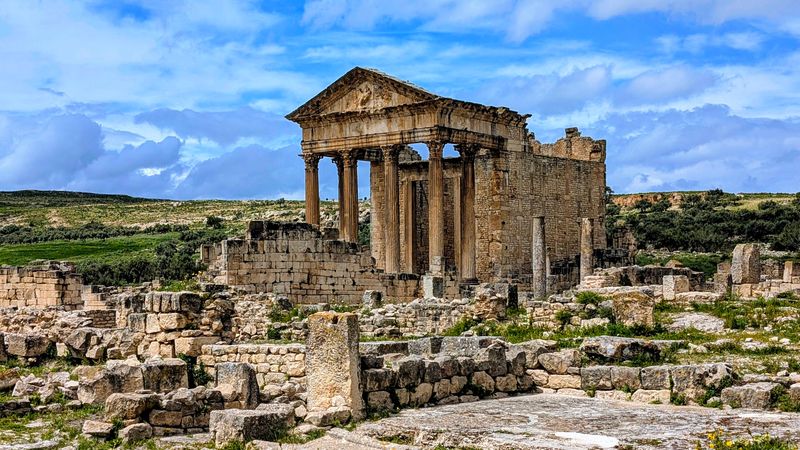
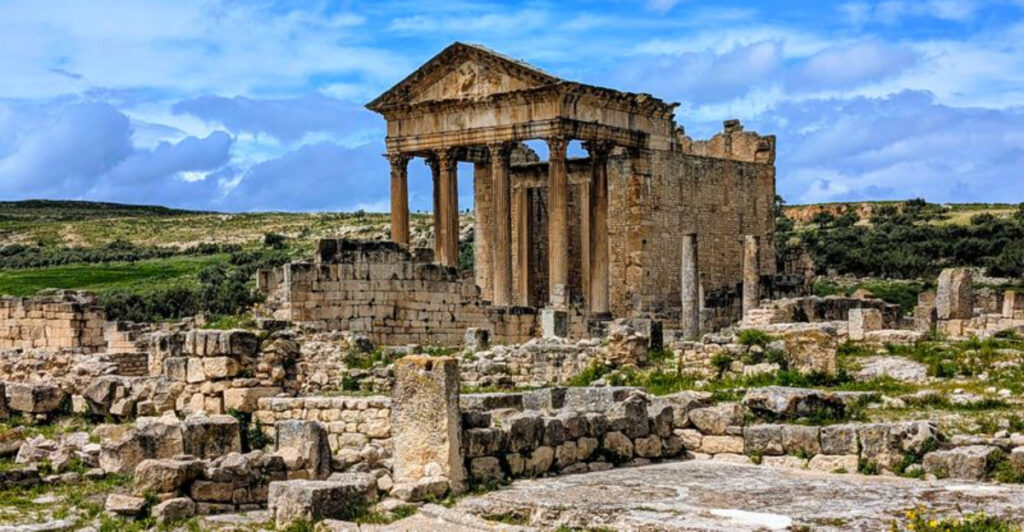
While Carthage draws the bigger crowds, Dougga offers something that feels more rare: the sensation of wandering through an actual ancient city rather than standing before a single famous monument. Perched on a hill in northwestern Tunisia, the ancient settlement of Thugga predates Roman control and has roots in the indigenous Numidian world.
Under Roman administration, the city expanded significantly. Temples, bathhouses, public squares, a well-preserved theater, private homes, and civic buildings were all added across the hillside.
UNESCO recognizes Dougga as an outstanding example of a North African settlement that evolved through Numidian, Punic, Hellenistic, and Roman influences without losing its local character entirely.
That layered identity is what makes Dougga genuinely interesting. It is not simply a Roman ruin transplanted into an African setting.
It tells a more complicated and honest story about local societies interacting with outside powers over centuries. The ancient theater has even been used for cultural events in modern times, which says something about how alive the site still feels.
Volubilis, Morocco
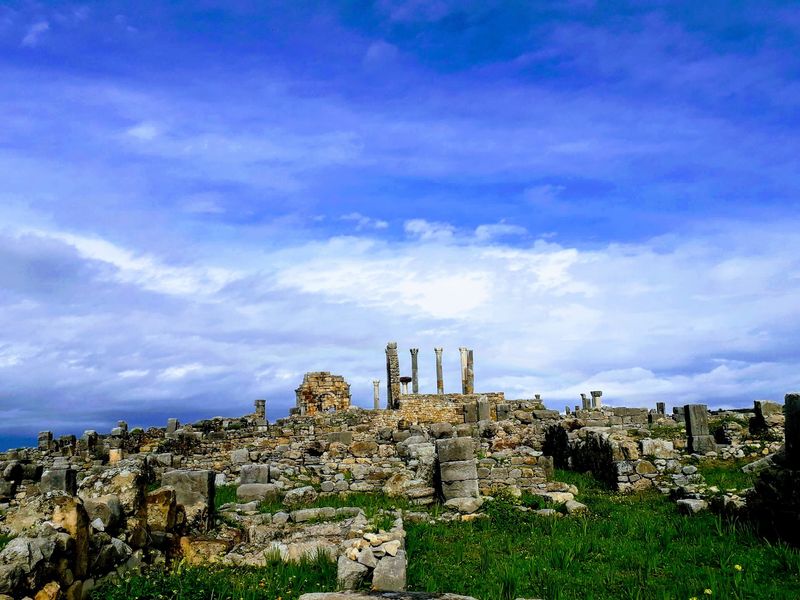
Rising from the agricultural landscape near Meknes, Volubilis is one of Morocco’s most rewarding archaeological destinations and one of the best-preserved Roman sites in all of North Africa. The settlement predates Roman control and served as an important city in the ancient kingdom of Mauretania before becoming part of the Roman provincial world.
After Rome took hold of the region, Volubilis expanded with monumental public buildings, wealthy private homes, elaborate floor mosaics, and civic infrastructure. Many of those mosaics remain in place today, which is relatively uncommon for sites of this age.
Visitors walk among standing columns, carved arches, oil press foundations, and detailed mosaic panels still located where prosperous residents once lived.
One of the pleasures of visiting Volubilis is the open, rural setting. Unlike many ancient sites that are now surrounded by modern cities, this one sits against a wide agricultural backdrop that makes the ruins feel especially vivid.
Morocco’s National Tourist Office currently promotes Volubilis as a major stop near Meknes.
Timgad, Algeria
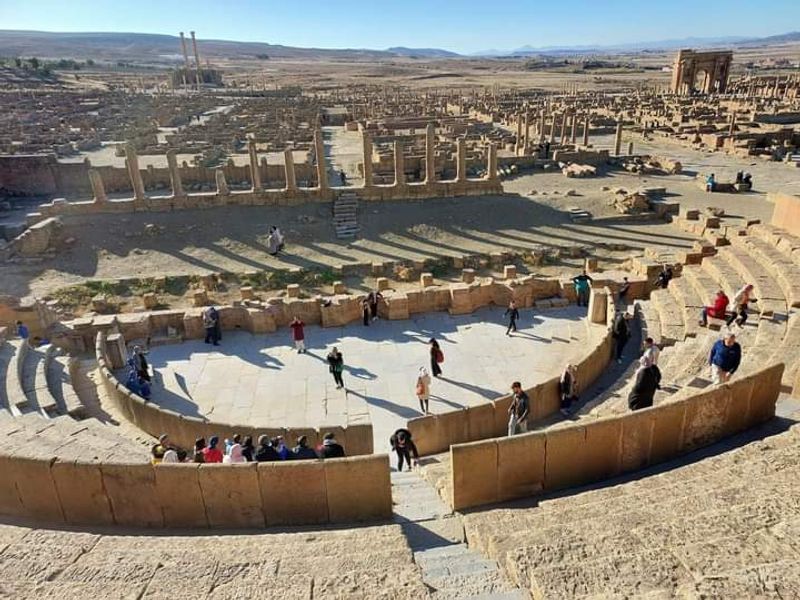
Timgad is the kind of ancient city that makes urban planners look twice. Founded by Roman Emperor Trajan around the beginning of the second century A.D. as the settlement of Thamugadi, it was designed on a precise grid plan that is still clearly visible from above more than 1,900 years later.
Walking through the ruins, visitors encounter paved streets, public baths, temples, residential foundations, and the impressive Arch of Trajan. The city’s organized layout demonstrates just how systematically the Romans introduced their urban model into North Africa.
What is particularly striking is how far from Rome this city actually is, sitting in the Aures Mountains of northeastern Algeria.
Timgad’s value lies partly in how clearly its structure survives compared to many other Roman settlements. The archaeological site remains an active heritage destination in Algeria and is listed as a UNESCO World Heritage Site.
Travelers interested in Roman urban planning will find few better-preserved examples anywhere on the continent.
Djemila, Algeria
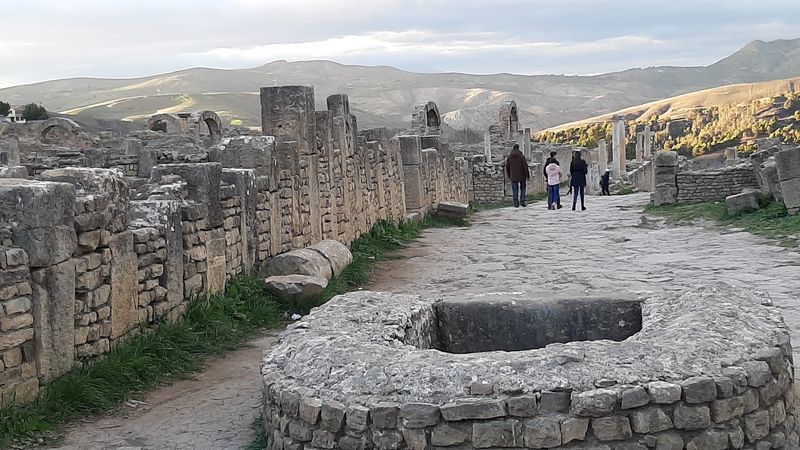
Roman engineers were famous for building cities on open plains with predictable terrain, which is what makes Djemila so interesting. Known in antiquity as Cuicul, the settlement was established during the reign of Emperor Nerva around A.D. 96-97, but unlike most Roman colonial cities, it was built approximately 900 meters above sea level in a mountainous region of northeastern Algeria.
The surviving remains include forums, temples, basilicas, residential structures, triumphal arches, and paved streets, all adapted to fit the demands of a highland landscape rather than a flat Roman grid. UNESCO considers Djemila a particularly significant example of Roman town planning modified for difficult terrain, which is a distinction not many sites can claim.
An on-site archaeological museum displays artifacts recovered from excavations in the area. Algeria’s local tourism authority continues to present both the site and museum as active visitor attractions.
For travelers exploring Algeria’s ancient heritage, Djemila offers a genuinely different perspective on how Roman civilization spread across North Africa’s varied geography.
Lalibela, Ethiopia
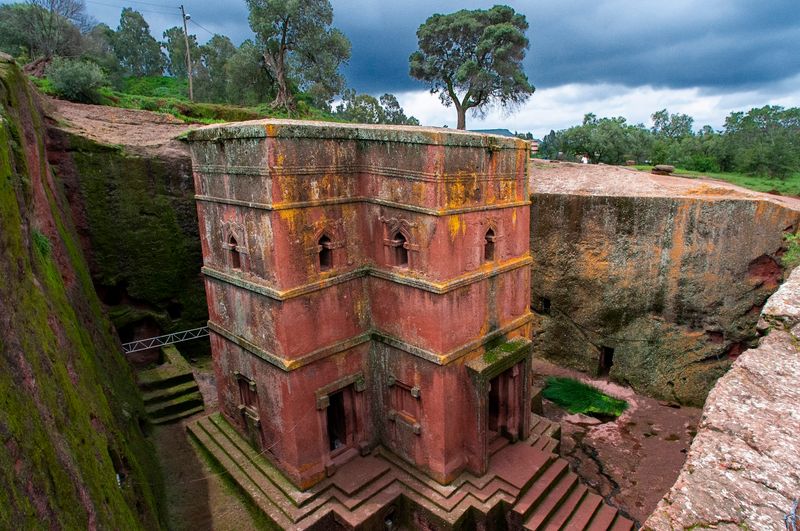
Lalibela is not the oldest destination on this list, but it may be the most visually extraordinary. Eleven medieval churches were carved directly into and out of volcanic rock in the highlands of northern Ethiopia, a construction method that set this complex apart from virtually every other religious site in the world.
The complex is associated with the Zagwe dynasty and King Lalibela, and UNESCO describes it as a 13th-century “New Jerusalem.” Some churches are cut deeply below ground level and surrounded by trenches, while others are connected through passages, tunnels, courtyards, and walkways carved into the rock itself. The engineering required to create these structures using medieval-era tools is difficult to fully comprehend even standing beside them.
What makes Lalibela especially meaningful is that it is not an abandoned ruin. The churches remain active places of Ethiopian Christian worship and pilgrimage.
In July 2026, UNESCO reported on an official visit involving ambassadors and development partners, confirming ongoing international conservation attention. Travelers should check current regional advisories before planning a trip.
Olduvai Gorge, Tanzania
Some places carry the weight of centuries. Olduvai Gorge carries something far heavier: the weight of millions of years of human prehistory.
Located within Tanzania’s Ngorongoro Conservation Area, this eroded ravine is one of the most significant paleoanthropological sites on the planet.
Excavations here have produced hominin fossils, ancient stone tools, and evidence of extinct animals that have helped researchers piece together critical chapters of human evolutionary history. The discoveries made at Olduvai fundamentally shaped scientific understanding of where and how early humans developed in Africa.
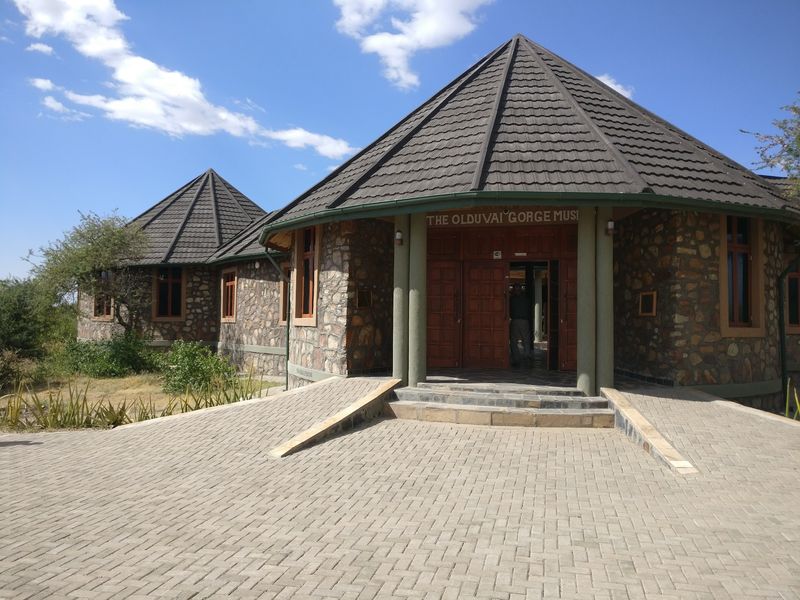
A modern visitor center, which replaced the original museum structure in 2017, displays fossils, tools, and animal remains recovered from the gorge. Because the site sits within one of Tanzania’s most visited conservation regions, Olduvai can be combined naturally with trips to the Ngorongoro Crater or the Serengeti.
For anyone fascinated by deep prehistory, this gorge represents a kind of origin point that very few places on earth can match.
Kilwa Kisiwani, Tanzania
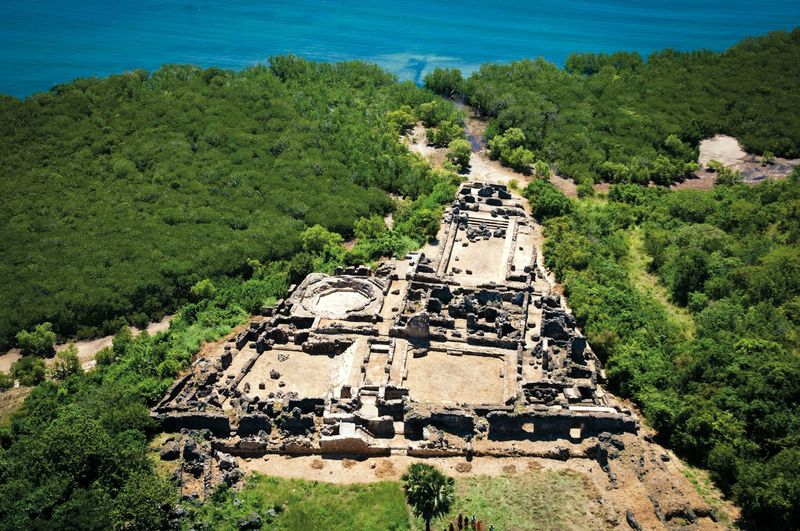
Long before European ships dominated Indian Ocean commerce, the Swahili Coast of East Africa was home to prosperous city-states deeply connected to international trade networks. Kilwa Kisiwani, located on a small island off the southern coast of Tanzania, was among the most powerful of those cities between roughly the 13th and 16th centuries.
Gold and ivory moving through regional trade routes helped support Kilwa’s prosperity and its connections with Arabia, Persia, India, and other distant markets. The surviving ruins include mosques, palatial structures, tombs, and residential buildings constructed largely from coral stone, a material that gives the site a distinctive texture unlike stone ruins found elsewhere in Africa.
Together with the nearby island of Songo Mnara, Kilwa provides some of the most significant archaeological evidence for Swahili civilization and East Africa’s maritime trading history. A management plan covering 2025 to 2035 confirms that the World Heritage property remains actively administered and preserved, which is reassuring for travelers making the journey to this relatively remote destination.
Tsodilo Hills, Botswana
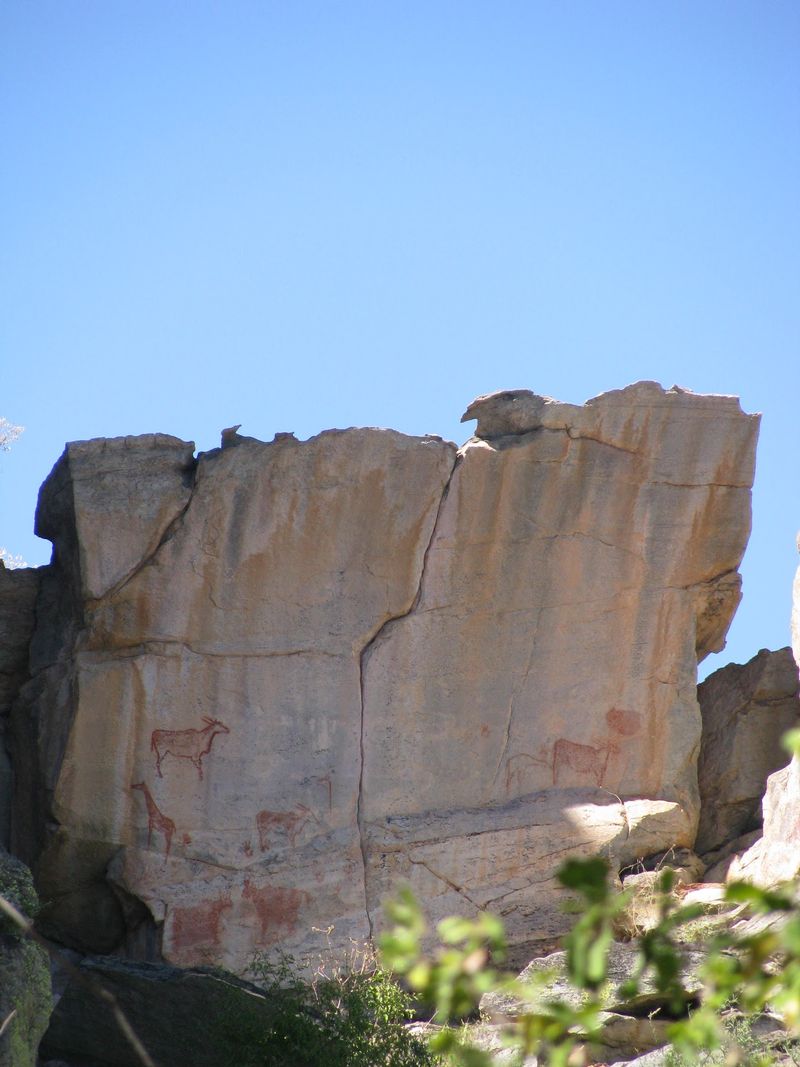
From a distance, the Tsodilo Hills look like a cluster of rocky outcrops rising unexpectedly from the flat Kalahari landscape of northwestern Botswana. Up close, they become something else entirely: an open-air archive of human creativity stretching back tens of thousands of years.
More than 4,500 rock paintings have been recorded within an area of roughly 10 square kilometers. Animals, human figures, and geometric forms cover the stone surfaces, created by generations of inhabitants across an enormous span of time.
UNESCO notes that the site’s archaeological record extends back at least 100,000 years, making it one of the oldest continuously significant landscapes in southern Africa.
Tsodilo also holds deep cultural and spiritual importance for local communities today, which adds a living dimension to a site that might otherwise feel purely historical. Botswana’s official tourism organization promotes hiking, rock-art viewing, visits to the Tsodilo Museum, and community-based cultural activities at the site.
This is ancient history measured not in dynasties or empires, but in the quiet persistence of human memory on stone.
Mapungubwe, South Africa
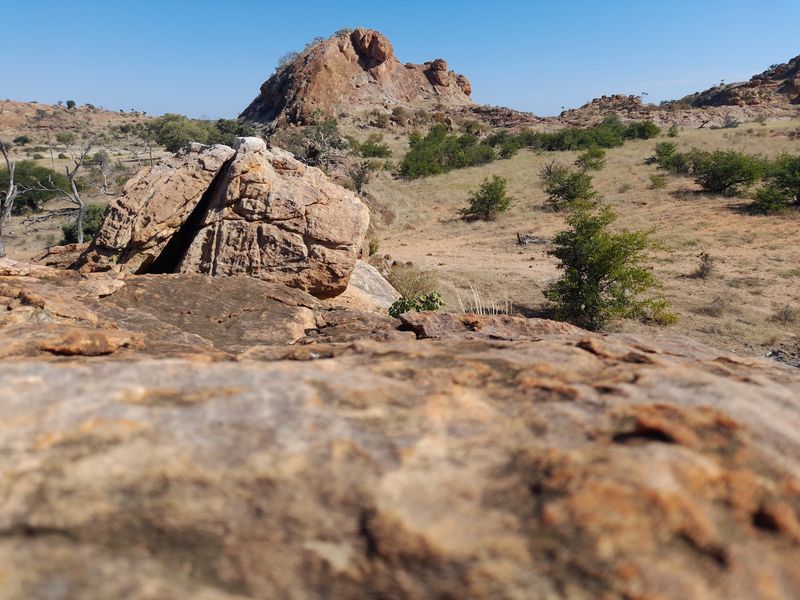
Long before colonial cities reshaped southern Africa, a sophisticated kingdom was flourishing near the point where modern South Africa, Botswana, and Zimbabwe converge. Mapungubwe reached its peak during the 13th century, and its rulers were engaged in long-distance trade networks that connected this inland kingdom with the Indian Ocean commercial world far to the east.
One of the site’s most celebrated archaeological discoveries is the golden rhinoceros, a small artifact covered in gold foil that has become one of the most recognized symbols of precolonial southern African civilization. Its existence challenges older assumptions about the region’s historical complexity, demonstrating that sophisticated political structures and international commerce existed here long before European contact.
South African National Parks describes Mapungubwe as an early southern African kingdom that flourished through trade. The park remains open to visitors, and its Interpretation Centre displays archaeological finds and operates seven days a week, including public holidays, though hours can change seasonally.
It is a destination that genuinely shifts how you think about southern Africa’s past.
Great Zimbabwe, Zimbabwe
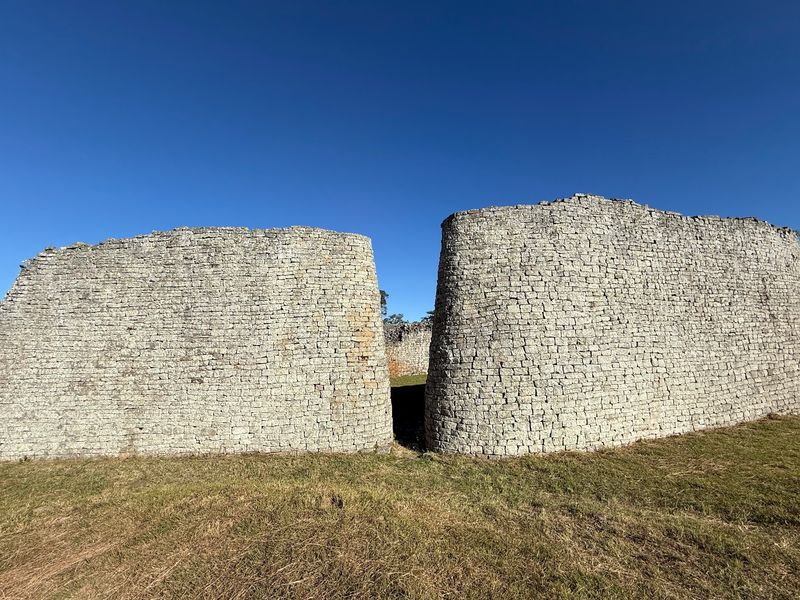
Enormous dry-stone walls rise from the Zimbabwean plateau without a single drop of mortar holding the granite blocks together. That construction technique alone sets Great Zimbabwe apart from almost every other ancient site in sub-Saharan Africa, and the walls have been standing since the city flourished primarily between the 11th and 15th centuries.
The settlement became an important political and commercial center associated with the ancestors of Shona-speaking peoples. Its ruins are divided into three major areas: the Hill Complex, the Great Enclosure, and structures spread across the valley below.
The Great Enclosure is particularly impressive, featuring carefully layered stone walls that demonstrate the architectural sophistication of the civilization that built and inhabited this city.
Great Zimbabwe also participated in Indian Ocean trade networks, connecting southern Africa with distant markets in ways that often surprise visitors unfamiliar with the region’s precolonial history. Far from being a remote or neglected site, Great Zimbabwe is one of Zimbabwe’s flagship tourist destinations, actively promoted by the Zimbabwe Tourism Authority and Zimbabwe Parks and Wildlife Management Authority.
Share this story