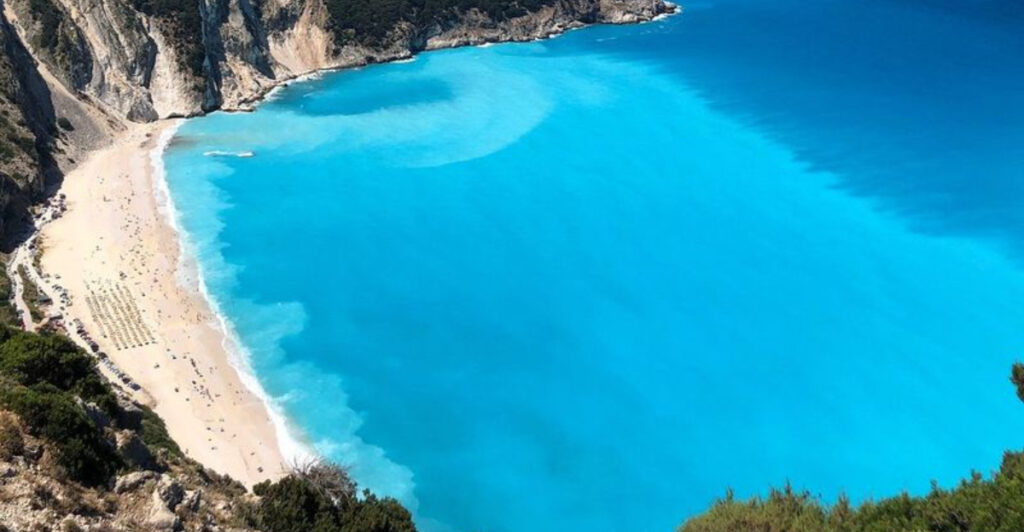
Greece has thousands of miles of coastline, and picking the best beaches feels like trying to choose your favorite star in the sky. From volcanic black sand to lagoons so shallow you can wade halfway across them, the variety is genuinely surprising.
Some of these beaches are easy to reach, while others reward the extra effort with scenery that stays with you long after you leave. Whether you are planning your first Greek island trip or your tenth, this list covers 15 beaches that consistently deliver on clear water, striking scenery, and that feeling of being somewhere truly special.
Elafonissi Beach, Crete
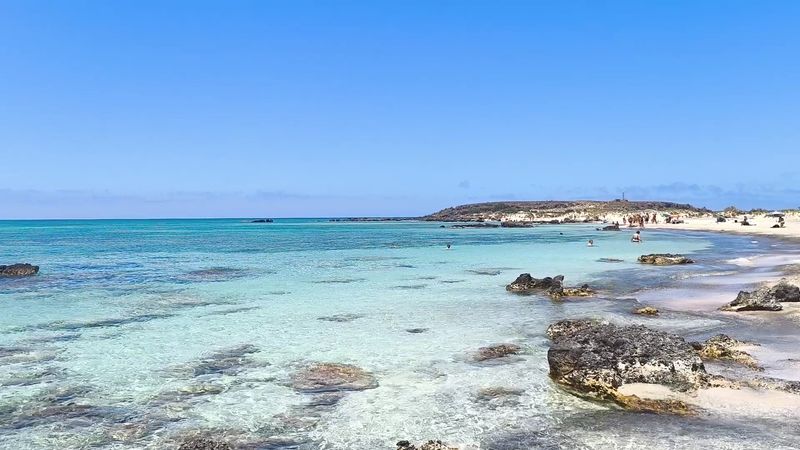
Shallow enough to wade across and colorful enough to stop you mid-step, Elafonissi sits on the western tip of Crete in the Chania region and earns its reputation every single summer. The beach is technically a peninsula connected to the mainland by a shallow lagoon that barely reaches knee height in many spots, creating that calm, glowing turquoise color that photographs almost too well.
The pale sand occasionally takes on a pink tint because of tiny shell fragments and marine organism particles mixed into the shoreline. The effect varies naturally, so not every section looks the same, which makes exploring the full stretch genuinely worthwhile.
Crowds build fast here during July and August, so arriving early in the morning makes a real difference. Getting there before 9 a.m. gives you time to explore the lagoon, find a comfortable spot, and appreciate the scenery before the beach fills up completely.
Balos Lagoon, Crete
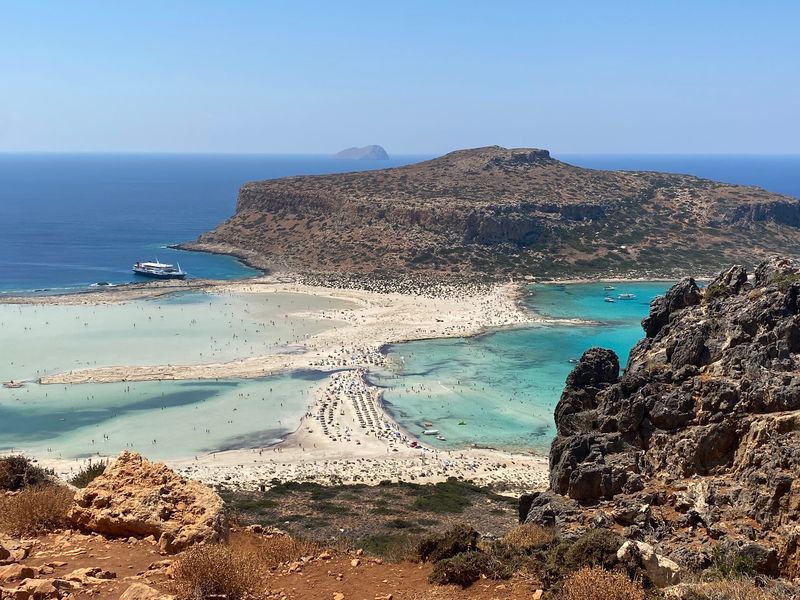
Balos does not follow the usual Mediterranean beach template. Located northwest of Chania near the Kissamos area, this lagoon produces a layered color effect, with bands of pale turquoise shifting into deeper blue as the water moves toward the open sea.
Viewed from the elevated path above, it is the kind of landscape that makes people stop walking and just stare.
Getting there involves a choice. You can join a boat excursion from Kissamos port, which is the easier option, or take the overland route and walk down toward the lagoon.
The overland path gives you that famous high vantage point, but the walk is exposed and can feel demanding in peak summer heat.
Because Balos is a natural coastal environment rather than a developed resort beach, packing your own water, sun protection, and sturdy footwear is essential before you set off. Plan accordingly and the experience is hard to match anywhere else on the island.
Sarakiniko Beach, Milos
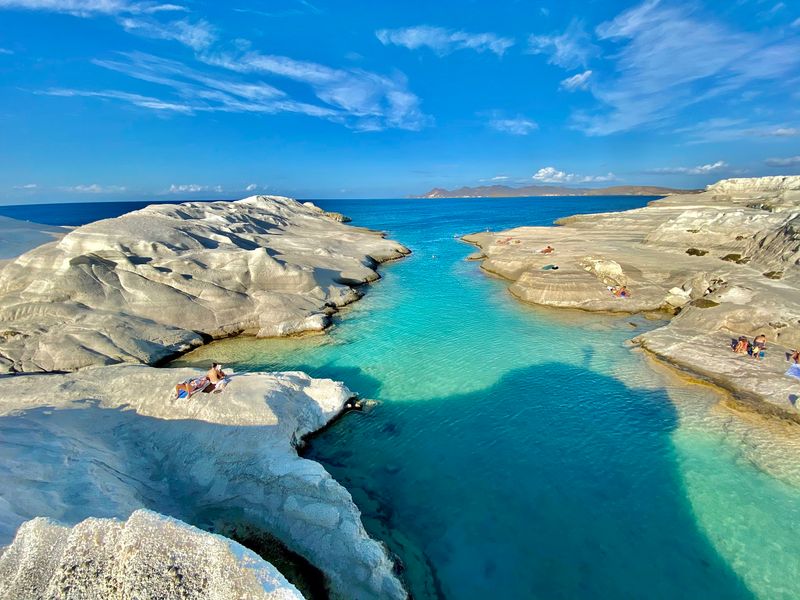
Sarakiniko is unlike any other beach in Greece, and that is not an overstatement. Milos was shaped by volcanic activity over thousands of years, and the landscape at Sarakiniko shows exactly what that process left behind.
Smooth white volcanic rock formations curve around a narrow inlet of intensely clear water, creating a setting that feels more geological wonder than typical beach destination.
Most visitors spread towels across the flat white stone, photograph the formations from different angles, and swim in the clear water below the rocks. There is no wide sandy shore here, which is part of what makes Sarakiniko so distinctive and so frequently photographed.
One practical note worth keeping in mind: the exposed white rock reflects sunlight intensely, and there is almost no natural shade across the main area. Midday in July and August becomes very hot very quickly.
Arriving early in the morning gives you cooler conditions, better light for photos, and a quieter atmosphere before tour groups arrive.
Myrtos Beach, Kefalonia
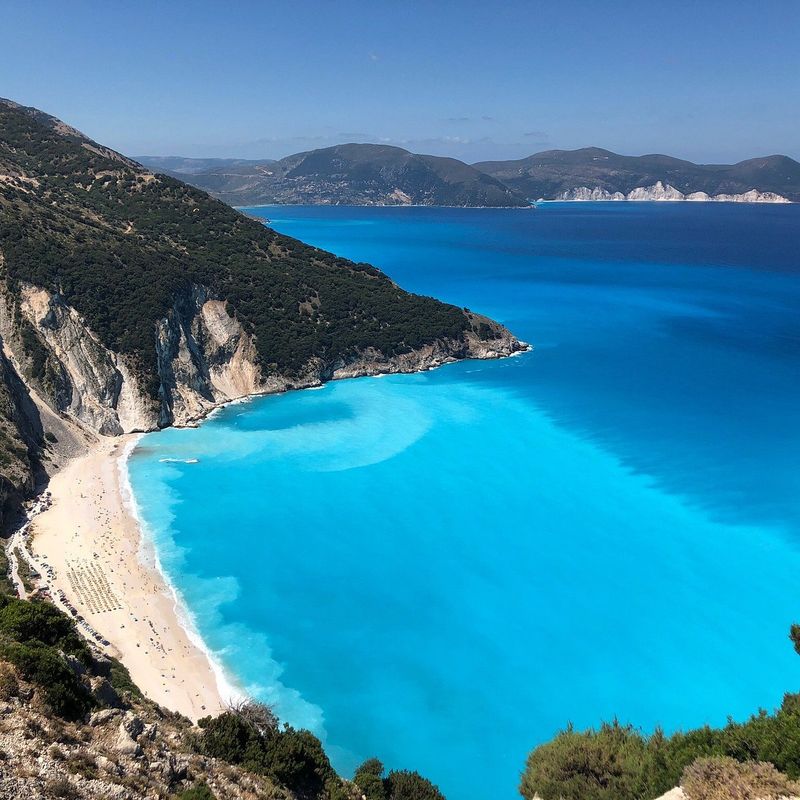
The first view of Myrtos from the mountain road above is genuinely one of the most dramatic moments in Greek island travel. As the road curves through Kefalonia’s rugged interior, the enormous crescent-shaped bay suddenly appears far below, framed by steep slopes covered in scrub and rock.
The white pebble shoreline and electric blue water make the color contrast almost unreal from that height.
Myrtos is one of Kefalonia’s signature natural landmarks and one of the most recognized beaches across the entire Ionian Islands group. The light-colored pebbles play a real role in creating those brilliant shades of blue, reflecting light up through the water from below.
Unlike a sheltered lagoon, Myrtos faces the open Ionian Sea, which means conditions can change and waves can become powerful. Swimmers should pay close attention to the sea state and any posted warnings before going in.
The viewpoints along the road above the beach are absolutely worth stopping for on the way down.
Porto Katsiki, Lefkada
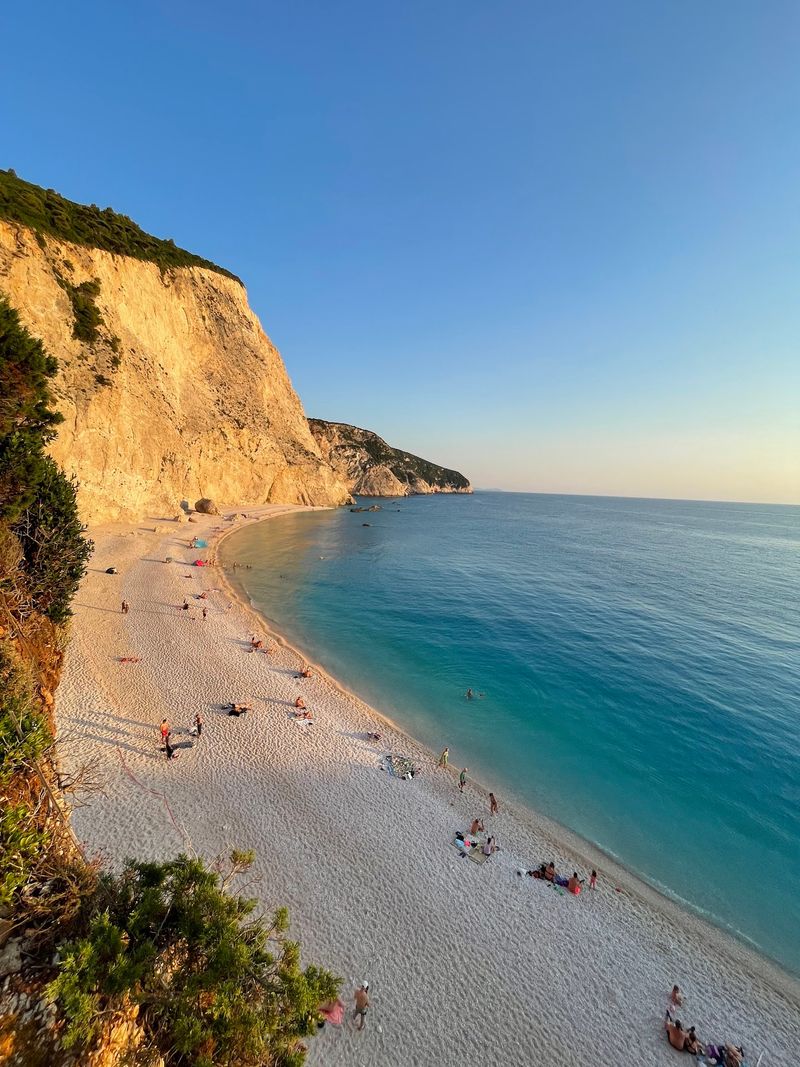
Porto Katsiki is the kind of beach that makes you understand why people keep returning to the Ionian Islands. Enormous white limestone cliffs rise steeply above a small beach of pale pebbles, and the water below shifts between shades of blue and green that feel almost artificially vivid.
The contrast between the pale cliff face and the sea is especially striking in the middle of the day when sunlight hits the water directly.
The beach sits on Lefkada’s spectacular western coast and remains one of the island’s most celebrated natural destinations. Visitors arriving by road descend a long staircase to reach the shore, while boat excursions also run along this section of coastline during the summer season.
Facilities are far more limited here than at developed resort beaches, so this is a place to visit primarily for the landscape and the swim rather than for comfort and convenience. Bring what you need, wear good footwear for the stairs, and prepare for strong sun on the exposed shoreline.
Egremni Beach, Lefkada
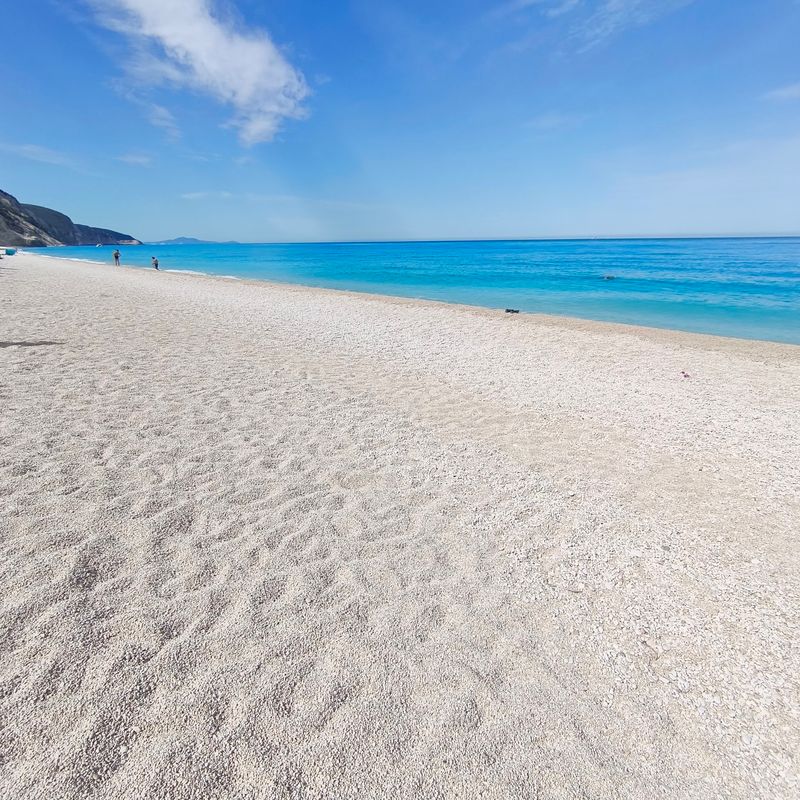
Just north of Porto Katsiki along Lefkada’s western coast, Egremni offers something that its famous neighbor cannot: space. Rather than a compact sheltered bay, Egremni stretches out as a long, wide strip of pale sand and pebbles running beneath towering cliffs, with the open Ionian Sea extending toward the horizon.
The scale of it feels surprisingly remote for a beach on a relatively well-known island.
That sense of remoteness is a genuine draw, but getting down to the shore requires navigating a substantial staircase carved into the cliff. The descent takes real effort, and the return trip back up is more demanding.
For visitors who are comfortable with that kind of access, the reward is significant space, fewer people than at more accessible beaches, and some of the most intensely blue water you will see on Lefkada.
Facilities at the beach are minimal, so pack water, food, and sun protection before making the trip. Egremni suits travelers who prefer wild coastal scenery over convenience.
Voidokilia Beach, Peloponnese
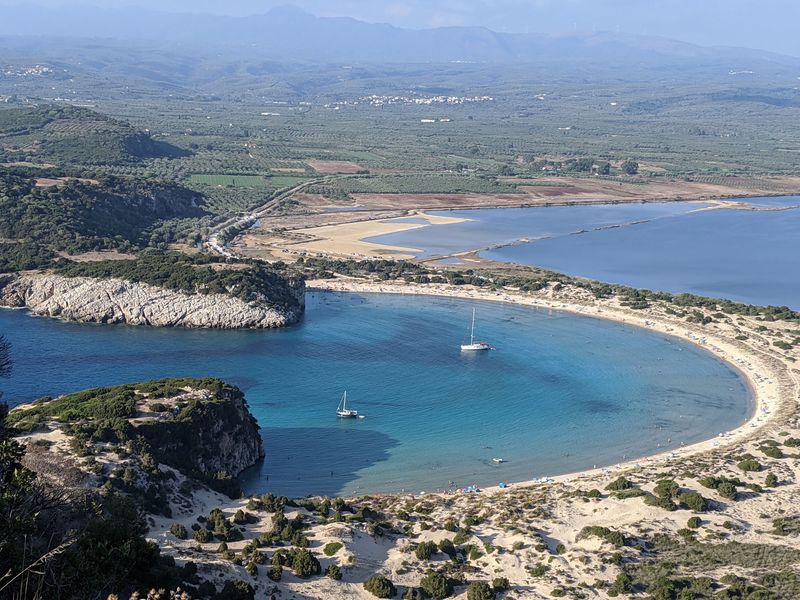
Not every standout Greek beach requires a ferry crossing or a long island hop. Voidokilia sits in the Messenia region of the southwestern Peloponnese, close to the town of Pylos, and its almost perfectly circular bay shape makes it immediately recognizable from above.
The pale sand curves around calm, clear water in a near-perfect arc that looks almost designed rather than natural.
Unlike the dramatic cliff-backed beaches of the Ionian Islands, Voidokilia has a softer, quieter character. The nearby Gialova Lagoon is an environmentally important wetland area, and the broader landscape around the beach is treated as a protected natural zone rather than a conventional resort destination.
That means visitors should approach Voidokilia with care. Avoid leaving any litter, stay off the dunes and vegetation, and resist the urge to treat it like a typical fully-serviced beach.
Bring everything you need for your visit. The reward for that extra preparation is a genuinely beautiful and relatively peaceful stretch of coastline on the Greek mainland.
Simos Beach, Elafonisos
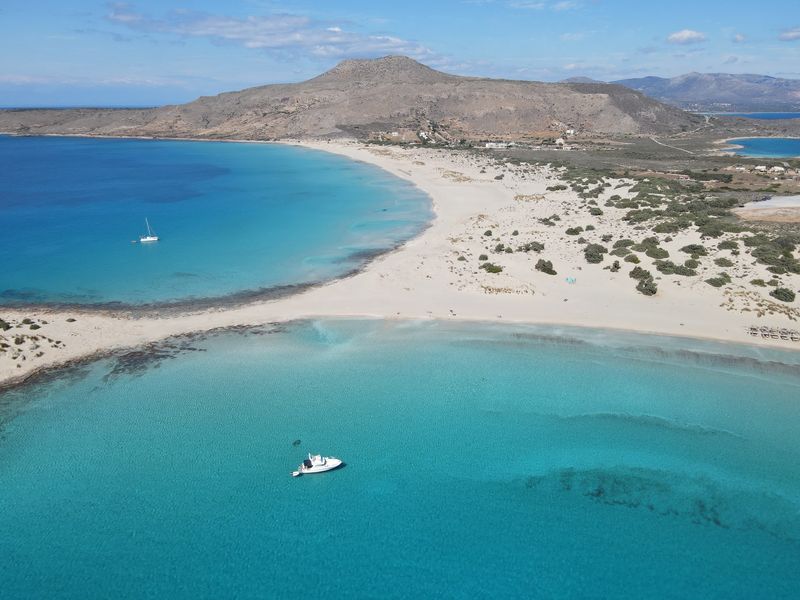
Tropical-looking water does not require a long-haul flight or a remote Pacific island. Simos Beach on the tiny island of Elafonisos, just off the southeastern Peloponnese, delivers the kind of clear, shallow, pale-blue water that most people associate with faraway destinations.
The island itself is small and easy to underestimate on a map, but Simos is its undeniable centerpiece.
The area is known for its twin beach sections, fine pale sand, and water that stays shallow and calm enough to be genuinely relaxing. Sand dunes and low Mediterranean vegetation run behind the shoreline, adding a natural buffer that gives the whole setting a wilder feel than a typical developed beach.
Reaching Elafonisos involves a short ferry crossing from the mainland, which adds a pleasant sense of arrival to the experience. The island gets noticeably busier during the height of summer, so earlier in the season or earlier in the day tends to offer a more comfortable visit with more room on the sand.
Agios Prokopios Beach, Naxos
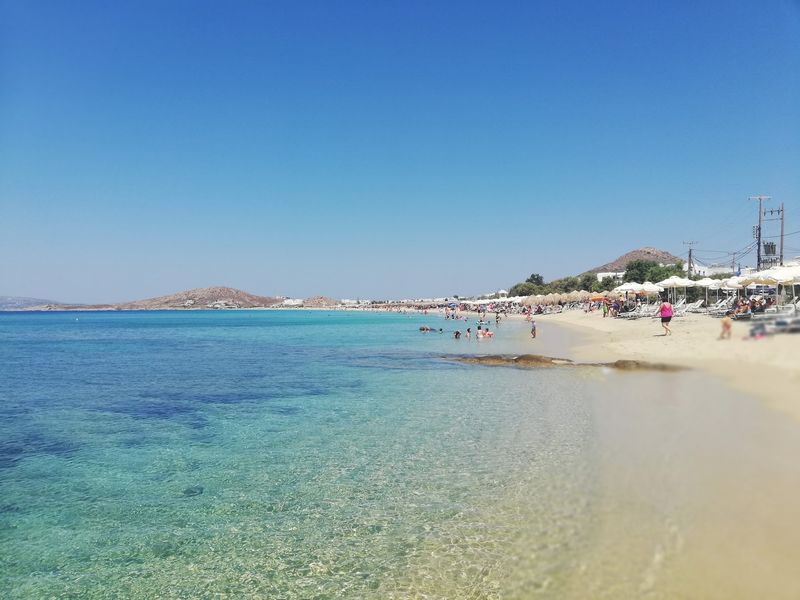
Naxos is the largest of the Cyclades and has some of the best sandy coastline in the entire island group. Agios Prokopios is one of the island’s most consistently popular beaches, and its appeal comes largely from being genuinely easy to enjoy.
Clear water, broad sandy shoreline, nearby restaurants, accommodation options, and tourist facilities all sit within comfortable reach of each other.
For travelers who want impressive water and scenery without the physical effort of a long descent or a boat-dependent excursion, Agios Prokopios solves the problem neatly. This is the kind of beach where you can arrive with minimal planning and still have a great day.
It does get busy during peak summer, which is the honest tradeoff for all that convenience. Staying somewhere nearby makes it easy to get there early and claim a good spot before the crowds build through the morning.
For couples, families, or anyone who simply wants a solid, beautiful, low-stress beach day on a Greek island, Agios Prokopios consistently delivers.
Paleokastritsa, Corfu
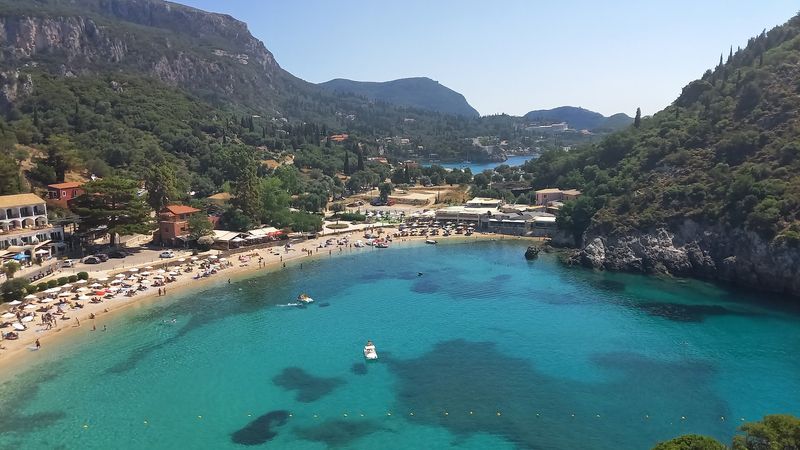
Paleokastritsa is not a single beach. It is an entire coastal area made up of small bays, rocky coves, sea caves, and cliff faces covered in green vegetation, all arranged along Corfu’s western side.
The overall effect is lush and dramatic in a way that feels very different from the drier, more open landscapes of the Cycladic islands.
The water here is known for its depth and clarity, with rocky formations and sea caves making the area genuinely interesting for snorkeling and boat exploration. Boat trips operate around the surrounding bays and caves during the summer season, which is one of the best ways to see the full stretch of coastline rather than staying fixed to one small section of shore.
The combination of deep green hills and rich blue water gives Paleokastritsa a visual character that sets it apart from most other Greek beach destinations. Exploring beyond the central beach area reveals quieter coves that tend to attract fewer people and offer a more relaxed version of the same beautiful setting.
Anthony Quinn Bay, Rhodes
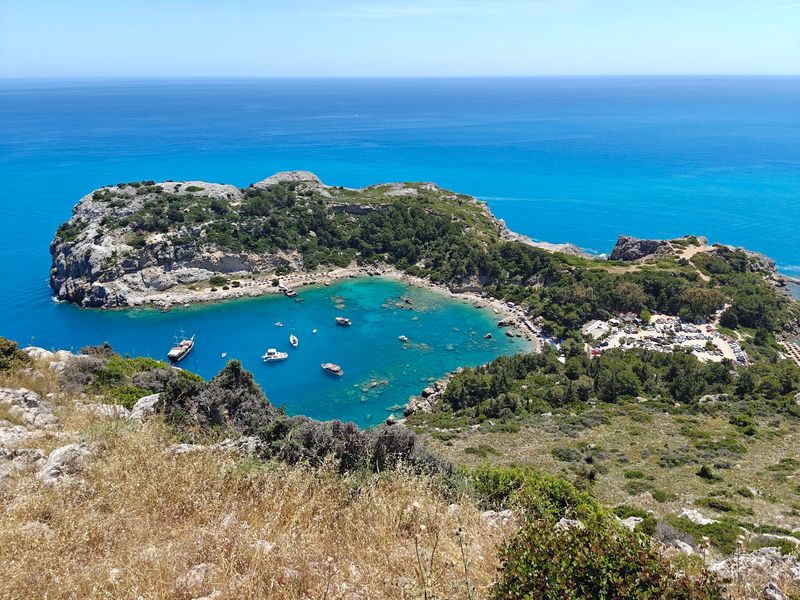
Small bays can punch well above their size, and Anthony Quinn Bay on Rhodes is a good example of exactly that. The cove is compact, surrounded by rocky slopes and scattered pine trees, and the water inside shifts between deep blue and emerald green depending on the angle and time of day.
The combination of those colors against the pale rock makes the bay particularly photogenic.
The beach takes its name from actor Anthony Quinn and remains one of the most well-known swimming spots on the island. The rocky seabed and high water clarity make it especially well-suited to snorkeling, and water shoes are genuinely useful here rather than just optional.
Because the bay is small, it fills up quickly during peak summer months. Getting there early in July or August gives you a better position near the water and a more comfortable experience overall.
For those visiting Rhodes primarily to swim and snorkel in clear water, this bay belongs near the top of the itinerary.
Lalaria Beach, Skiathos
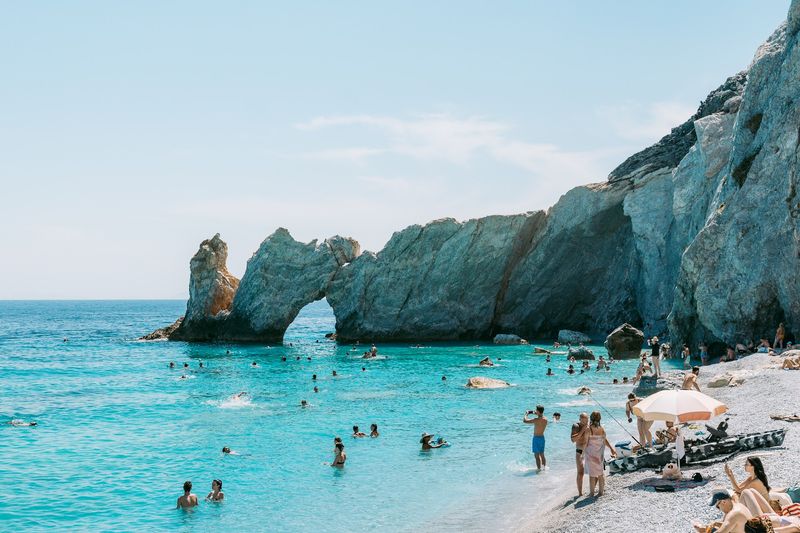
Lalaria rewards the extra effort it takes to get there. Located on the northeastern coast of Skiathos, the beach is not accessible by road, which means a boat trip is the standard way in.
That boat-dependent access is actually part of what keeps Lalaria feeling special, because it limits the volume of visitors and preserves the character of the place.
The shoreline is covered in smooth white pebbles rather than sand, and the surrounding pale rock formations include a distinctive natural arch that has become one of Skiathos’ most recognizable images. The water is intensely clear and deeply blue, partly because of how the cliffs channel and shelter the small bay.
One rule worth taking seriously: never remove the pebbles as souvenirs. The smooth white stones are part of what makes Lalaria look the way it does, and removing them gradually changes the beach for everyone who visits after you.
Boat access depends on sea and weather conditions, so always check before planning your trip around it.
Mylopotas Beach, Ios
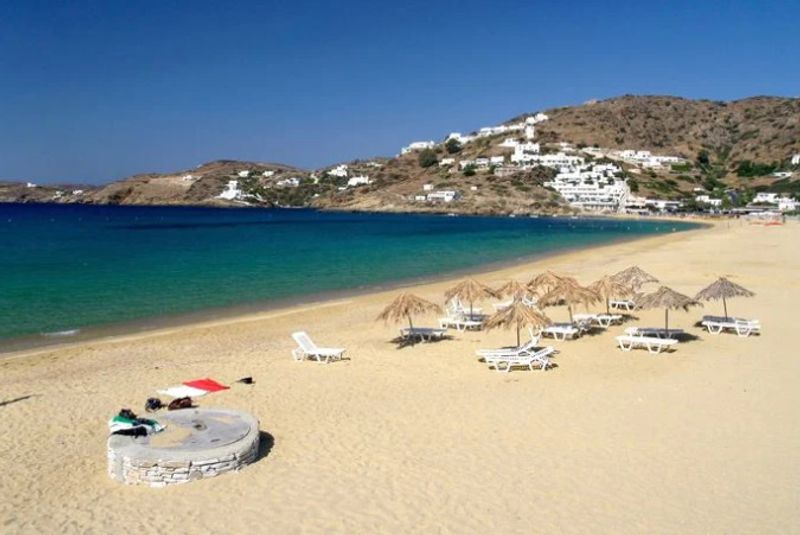
Ios has a well-established reputation for its nightlife scene, but Mylopotas makes a strong case for spending the daylight hours somewhere equally enjoyable. The long sandy bay sits close to Chora, the island’s main town, and combines golden sand with clear Cycladic water and a full range of beach facilities.
It is one of the most developed and accessible beaches on the island.
If total isolation is your priority, Mylopotas is not the right choice. The beach gets busy, services are plentiful, and the atmosphere skews social.
But for travelers who want swimming, food, water activities, and a lively setting all within easy reach of each other, it covers everything comfortably in one location.
Staying until later in the afternoon is worth considering. The harshest midday sun begins to soften, the light shifts over the surrounding hills, and the beach takes on a noticeably warmer and more relaxed atmosphere.
Mylopotas works well as a full-day base during a stay on Ios, especially for travelers who prefer convenience alongside good water.
Perissa Beach, Santorini
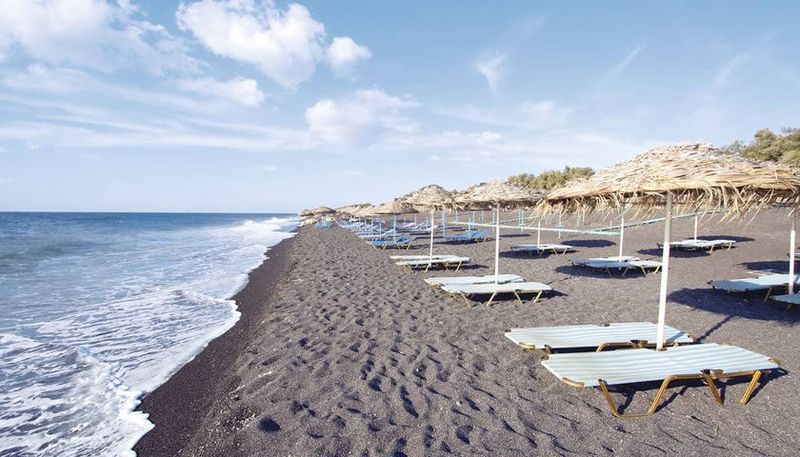
Santorini’s volcanic history shapes almost everything about the island, including its beaches. Perissa stretches along the southeastern coast beneath the imposing rocky mass of Mesa Vouno and offers one of the most accessible ways to experience the island’s distinctive black sand coastline.
The contrast between the dark shoreline and the clear Aegean water is genuinely striking in a way that no other Greek beach quite replicates.
The beach is well-developed, with restaurants, cafés, hotels, sunbeds, and tourist services all close to the shore. That makes Perissa a comfortable and practical base for a beach day on Santorini, even if the setting feels very different from the pale sandy beaches of Naxos or Crete.
One very practical point: dark volcanic sand absorbs heat at a rate that can make walking barefoot genuinely painful during peak summer. Sandals are not just a comfort choice here, they are a sensible one.
Plan accordingly and Perissa delivers a beach experience that is entirely unique to Santorini’s volcanic landscape.
Koukounaries Beach, Skiathos
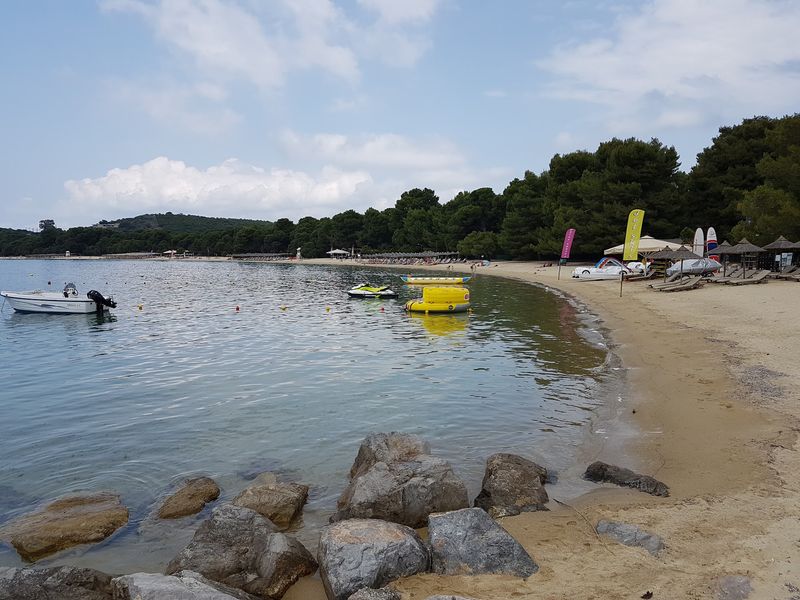
For a very different side of Skiathos from the boat-access-only Lalaria, the southwestern coast offers Koukounaries, one of the island’s most famous and frequently visited beaches. Golden sand, clear water, and a dense backdrop of pine and other greenery combine to create a setting that feels lush and welcoming rather than stark or dramatic.
That green backdrop is genuinely refreshing after time spent on the more barren landscapes of islands like Santorini or Milos. The trees provide visual depth behind the shoreline and offer some natural shade at the edges of the beach, which becomes a real bonus during the hottest part of a summer afternoon.
Koukounaries is also considerably more convenient than Lalaria, with facilities nearby and straightforward road access from the rest of the island. That accessibility makes it well-suited to a full day by the sea without the logistical planning that remote beaches require.
Peak season brings plenty of company, so arriving earlier in the day helps you settle in before the beach reaches its busiest point.
Share this story