Red hair has fascinated, puzzled, and sometimes frightened people for centuries. From medieval Europe to modern internet culture, redheads have been surrounded by wild stories, strange superstitions, and outright strange accusations.
Some of these myths were taken completely seriously by entire communities. Reading through them today, you might laugh, shake your head, or feel genuinely surprised at how far human imagination can stretch when faced with something a little different.
Redheads Are Witches

Red hair picked up a dark reputation in medieval and early-modern Europe that went far beyond simple curiosity. The unusual color became symbolically tied to fire, heresy, and eventually witchcraft in the popular imagination.
Red-haired Judas figures appeared frequently in European religious paintings, which steadily strengthened the negative associations people attached to the color.
Historical research does confirm that suspicions surrounding red hair existed during these periods. However, sweeping claims that red-haired women were routinely prosecuted simply because of their hair should be treated with real caution.
Hair color was never actual evidence of supernatural powers.
The stereotype grew from cultural symbolism and prejudice toward an uncommon physical trait. Communities often treated anything rare or visually striking as suspicious.
Red hair was simply uncommon enough to attract that kind of attention, and the symbolism of the color red did the rest of the work.
They Have No Souls

The idea that redheads have no souls is considerably newer than most people assume. Rather than being a well-documented ancient belief, it is best understood as a modern joke that picked up speed through pop culture and internet humor.
The concept became recognizable largely through online memes and comedy sketches, not dusty old manuscripts.
Older societies certainly created harsh stereotypes about red-haired people, but the specific “no soul” framing does not have a strong medieval foundation. Presenting it as an established historical belief exaggerates its pedigree quite significantly.
There is obviously no connection between pigmentation and whether someone possesses a soul, however you choose to define that word.
The joke built on a much older tradition of treating red hair as suspicious or supernatural. It took existing cultural discomfort with the unusual hair color and repackaged it into something that could travel easily across social media feeds.
Redheads Are More Temperamental

The phrase “fiery redhead” did not come from biology. Red has long symbolized heat, anger, passion, and danger across Western culture, which made it easy for writers and artists to project those same qualities onto people who happened to share the color in their hair.
The connection feels logical only because of shared symbolism, not shared science.
Medieval and later European traditions sometimes characterized red-haired people as hot-tempered, unreliable, or morally questionable. Those stereotypes survived remarkably well and still appear regularly in movies and television today.
The fiery redhead has become a reliable stock character in storytelling.
Hair pigmentation, however, does not determine whether someone is patient, aggressive, cheerful, or quick to anger. Personality develops through a complicated mix of genetics, environment, upbringing, and individual experience.
The supposedly temperamental redhead is a cultural character type rather than a personality category supported by any credible science.
They’re All Descended From Neanderthals

This particular myth contains a genuinely fascinating scientific twist. Genetic evidence does suggest that some Neanderthals may have had pale pigmentation and reddish hair.
That part of the story is real. However, the MC1R mutation identified in Neanderthal remains was different from the major variants responsible for red hair in modern humans.
Researchers concluded that similar pigmentation likely evolved independently in Neanderthals and in modern humans. Modern redheads therefore did not simply inherit their distinctive color from red-haired Neanderthal ancestors.
The parallel evolution of similar traits in separate populations is a well-documented biological phenomenon.
Like many people with Eurasian ancestry, individual redheads may carry some Neanderthal DNA in their genome. However, red hair itself is not proof of unusually close Neanderthal ancestry.
The science here is genuinely interesting without needing to be exaggerated, and the exaggerated version has unfortunately spread much further than the accurate one.
Redheads Are Going Extinct

Every few years, a headline resurfaces claiming that natural redheads will disappear from the human population within a century or two. The story tends to travel fast because it sounds surprising and a little sad.
Genetics, however, does not actually work that way.
Red hair is strongly associated with variants of the MC1R gene and often behaves somewhat like a recessive inherited trait. A recessive trait can become less visible in a population when two copies are uncommon, but the underlying gene variants can continue circulating quietly through people who do not display red hair themselves.
Those carriers can still pass the variants along to future generations.
Unless those specific variants somehow disappeared from the population entirely, red-haired children can continue being born to parents who show no red hair at all. There is no accepted genetic model or credible scientific countdown predicting the disappearance of redheads.
The extinction story is compelling but scientifically hollow.
They’re More Likely To Be Left-Handed

Red hair and left-handedness share one obvious characteristic: both are relatively uncommon compared to the general population. That similarity appears to have been enough encouragement for people to connect the two traits and assume they must be biologically linked in some meaningful way.
Rarity alone, however, does not establish a biological relationship between two separate characteristics. Red hair is heavily influenced by pigmentation genes, particularly MC1R, while handedness is a complex trait shaped by numerous genetic and developmental factors that researchers are still working to fully understand.
No established scientific evidence supports the idea that people with red hair are inherently more likely to be left-handed. The two traits travel independently through the population.
This is a classic example of a pattern humans find irresistible: spotting two unusual characteristics and assuming they must somehow belong together. Our brains love connections, but not every connection reflects an actual biological relationship worth taking seriously.
Redheads Feel Pain Differently

Unlike most claims on this list, this one should not simply be brushed aside as pure myth. Scientific research has found real differences associated with red hair and MC1R gene variants in responses to certain types of pain and anesthesia.
The science here is nuanced and genuinely worth understanding.
One small controlled study found that natural red-haired women required approximately 19 percent more of the inhaled anesthetic desflurane than dark-haired women. Other research has produced a more complicated picture involving thermal pain, local anesthetics, and overall pain tolerance.
Results across studies have not always been consistent.
That does not mean every redhead has the same pain threshold or will automatically need extra anesthesia during medical procedures. Individual variation matters enormously.
The scientifically accurate conclusion is that differences may exist at a population level, but they are nuanced rather than dramatic or supernatural. This is one myth that turned out to have a real, if complicated, thread of truth running through it.
They Smell Different

Historical stereotypes about redheads became surprisingly specific in certain old texts, including claims that red-haired people possessed a distinctive natural odor unlike other people. Older writings occasionally attributed unusual physical characteristics to people with red hair, covering everything from body temperature to sweat and scent.
One frequently repeated claim that red-haired women naturally smelled like ambergris has even been traced back to what appears to be a misreading of a nineteenth-century source. The detail traveled through references and repetition until it took on a life of its own, completely detached from any reliable evidence.
Hair pigmentation results largely from differences in melanin production, specifically whether cells produce more dark eumelanin or reddish-yellow pheomelanin. That biological mechanism does not produce a universal scent shared by every red-haired person on the planet.
The strange stereotype belongs comfortably in the world of folklore rather than biology, and it is a good reminder of how easily specific-sounding claims can spread without a solid foundation.
Redheads Are More Prone To Violence

For centuries, physical appearance was used as a convenient shorthand for character and morality. Red hair became associated with anger, treachery, criminality, and dangerous behavior across parts of European literature and popular thought.
The color red carried enough negative cultural symbolism to make the leap from hair to behavior feel natural to people who wanted simple explanations for complex human behavior.
Some nineteenth-century writers attempted to give these prejudices a supposedly scientific foundation by linking physical characteristics with criminal tendencies. That approach, sometimes called physiognomy or phrenology, has been thoroughly rejected by modern science.
Physical appearance cannot reliably predict personality, behavior, or moral character.
Modern science provides no credible reason to conclude that natural redheads are inherently more violent than people with any other hair color. Aggression and criminal behavior are shaped by social, psychological, economic, and environmental factors.
The stereotype is another example of cultural symbolism surrounding the color red being unfairly transferred onto actual people who simply have an uncommon hair color.
They Can’t Grow Beards

Redheaded men are perfectly capable of growing beards. Beard density and growth vary enormously from person to person and depend on genetics, hormones, age, and other biological factors.
Hair color alone has no special power to prevent facial hair from growing in.
Pigmentation genetics can actually produce some genuinely surprising combinations that confuse people. A man whose scalp hair appears brown or blond can sometimes grow noticeably reddish facial hair because different follicles across the body can express pigmentation genes differently.
This phenomenon is relatively common and has nothing to do with any inability to grow a beard.
Unlike many older redhead superstitions, the claim that redheads cannot grow beards does not appear to have a particularly deep historical foundation. It reads more like a peculiar modern misconception than an ancient established belief.
The beard myth is a good example of how new and unfounded ideas about redheads can still take hold and spread even without centuries of folklore behind them.
Redheads Are All Irish Or Scottish
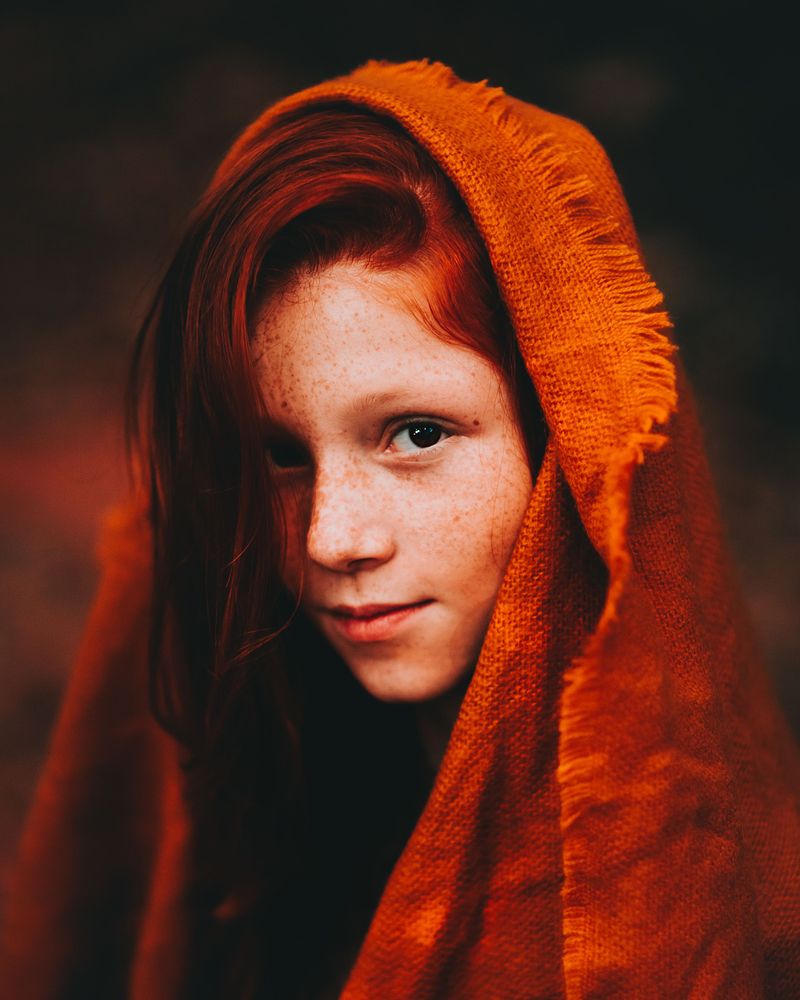
Scotland and Ireland are genuinely famous for their relatively high proportions of red-haired residents, and that reputation is not entirely without basis. Variants associated with red hair are particularly prevalent in northern and northwestern European populations, which helps explain the strong Celtic association that most people recognize immediately.
Natural red hair, however, occurs far beyond the borders of Ireland and Scotland. Human pigmentation genetics are complex, and similar visible characteristics can appear in people from many different backgrounds and geographic origins.
The gene variants involved can and do appear in populations across a wide range of ancestries.
Someone with red hair may certainly have Irish or Scottish ancestry, but the hair color itself cannot tell you where that person or their family actually came from. Genetics is considerably more complicated than the familiar shorthand of red hair equaling a Celtic background.
The association is culturally strong but biologically incomplete, and treating it as a reliable rule misrepresents how human genetic variation actually works across populations.
They Turn Into Vampires After Death

Red hair has occasionally appeared in European folklore surrounding witches, werewolves, and vampires. Sources discussing older folk traditions do record associations between unusual reddish hair and supposedly dangerous supernatural beings.
The visual distinctiveness of red hair made it a useful marker of otherness in communities where the unusual was treated with suspicion.
Broad claims that an entire culture universally believed every redhead would rise from the grave as a vampire should be approached with healthy skepticism. Folklore versions differ considerably between regions and historical periods.
Generalizing a specific regional belief into a continent-wide rule misrepresents how folk traditions actually developed and spread.
What can be said safely is that red hair’s rarity helped make it a convenient visual symbol in stories about creatures that existed outside normal human boundaries. Red-haired figures appeared in these stories as markers of danger or difference, not because of any real biological connection between pigmentation and anything that happens after someone passes away.
Redheads Are More Sexually Promiscuous

Red-haired women in particular have been repeatedly portrayed as unusually passionate, seductive, or sexually adventurous across literature, art, advertising, and popular entertainment. The stereotype has an extremely long shelf life and remains recognizable in contemporary media today.
Tracing where it came from reveals more about cultural symbolism than about actual people.
The association developed largely from the longstanding cultural symbolism of red as the color of passion and desire. Older writings went considerably further, sometimes claiming that red hair directly revealed a person’s sexual morality or behavior.
That kind of thinking reduced real individuals to a single physical characteristic and drew sweeping conclusions from it.
There is no scientific foundation for judging anyone’s personal life or behavior from their hair pigmentation. Modern portrayals of the seductive redhead may seem lighter in tone than accusations of witchcraft, but the underlying logic is similar.
Both approaches assign personality traits and moral judgments to people based entirely on how their hair looks rather than who they actually are.
They’re Bad Luck On Ships

Sailors have historically accumulated an extraordinary collection of superstitions, and red hair found its way into maritime folklore with surprising regularity. Historical accounts record beliefs that encountering or sailing alongside a red-haired person could invite misfortune on a voyage.
The belief shows up in multiple seafaring traditions.
Irish maritime folklore also preserved specific taboos involving references to red-haired people and objects associated with the color red before departing on a sea journey. Mentioning the wrong thing before setting sail was considered genuinely dangerous by sailors who took these beliefs seriously.
The taboos were observed carefully in certain fishing communities.
Such beliefs developed in a profession where unpredictable weather, shipwrecks, illness, and accidents were regular realities. Sailors searched constantly for signs of good or bad fortune because so much was genuinely beyond their control.
Red hair was simply incorporated into a much larger existing world of seafaring superstition, sharing space with black cats, whistling on deck, and a long list of other things sailors once preferred to avoid.
Redheads Are Actually Magic

Perhaps the most entertaining myth on this list is the idea that such an unusual hair color must come packaged with unusual abilities. Across different periods and cultures, red hair has been used to visually distinguish witches, supernatural figures, mysterious outsiders, dangerous characters, and eventually fantasy heroes.
The color became an easy shorthand for magical power in storytelling.
Biology offers a much less mysterious but genuinely fascinating explanation. Red hair is strongly associated with variants affecting MC1R, a receptor involved in determining whether melanocytes produce more dark eumelanin or reddish-yellow pheomelanin.
The genetics behind the color are complex, well-studied, and interesting in their own right without requiring any supernatural additions.
Redheads are uncommon, and their distinctive appearance comes from human genetic variation rather than spells or otherworldly origins. The science is compelling enough on its own terms.
The magic myth is a reminder that humans have always been drawn to explain the unusual through extraordinary stories, even when the real explanation is just as worth knowing.
Share this story