There is a particular kind of European café that treats time as optional. You order a coffee, you sit down, and somehow an hour disappears without anyone looking annoyed about it.
These are places where the architecture alone could keep you busy for a morning, where the pastry menu reads like a short history of Central European baking, and where the waiter has clearly seen people try to rush and found the whole idea unconvincing. Across Vienna, Budapest, Paris, Porto, Prague, Salzburg, Madrid, Venice, Florence, and Pamplona, a surprisingly large number of grand cafés from the Belle Époque era are still fully operational today.
Some have been restored to their original theatrical interiors. Others never stopped serving in the first place.
All 15 on this list have been selected because they are currently open, historically significant, and genuinely worth a visit rather than just a photograph from the doorway.
1. Café Landtmann, Vienna, Austria
Sigmund Freud was a regular at Café Landtmann, and given how much time he spent analyzing human behavior, it is fair to say he picked an excellent spot for observation. The café opened in 1873 on Vienna’s grand Ringstrasse, directly opposite the Burgtheater.
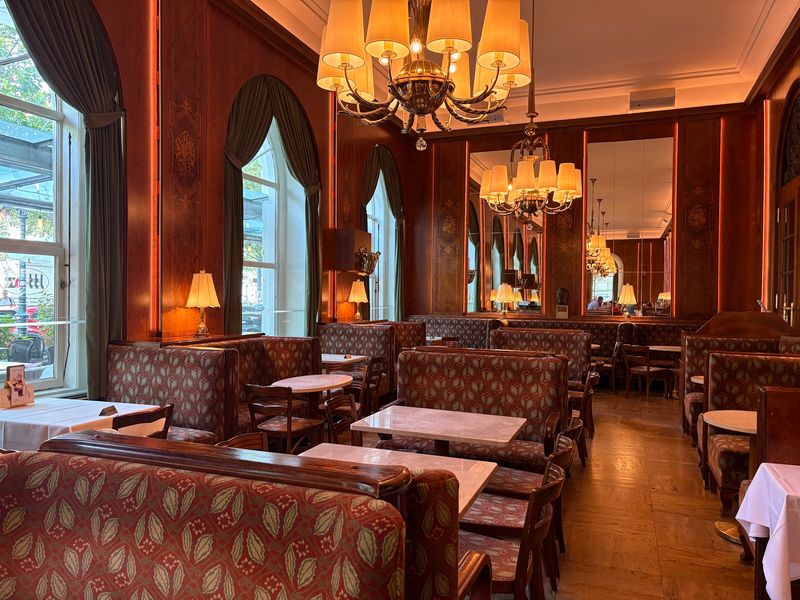
Its interior follows the classic Viennese coffeehouse template: upholstered seating, marble-topped tables, polished wood paneling, and a pace of service that gently discourages any sense of urgency. The terrace faces some of the city’s most impressive 19th-century architecture.
Unlike some historic cafés that have drifted toward tourist spectacle, Café Landtmann remains a working institution where locals read newspapers and business meetings unfold over coffee and Apfelstrudel. The menu covers Viennese classics from Melange to Wiener Schnitzel.
Politicians from the nearby parliament have long been regulars, giving the place a distinctly lively, real-world energy.
2. Majestic Café, Porto, Portugal
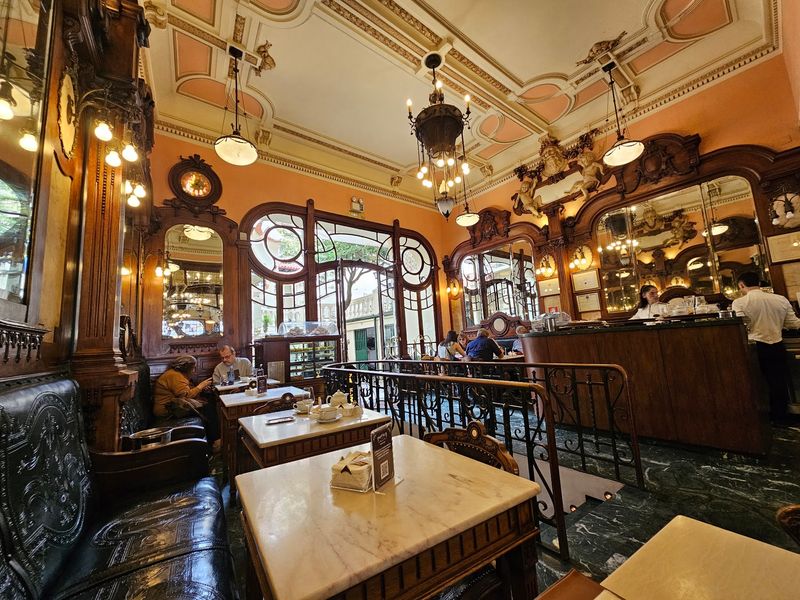
Porto’s Majestic Café opened in 1922 under the name Elite Café, which tells you exactly what its founders had in mind. The Art Nouveau interior remains one of the most photographed in all of Portugal, featuring carved wood paneling, ornamental plasterwork, oversized mirrors, and bronze figurines that decorate the walls and entrance.
Writers, artists, and members of Porto’s intellectual circles gathered here throughout the 20th century, and the café has made a point of preserving that identity. J.K.
Rowling is among the more recent notable visitors, reportedly writing parts of her early work during her time teaching in Porto during the 1990s.
The menu includes traditional Portuguese pastries and coffee, with a full lunch and dinner service available. Queues form outside during peak tourist season, so arriving early or booking ahead is the practical move.
The interior alone justifies the wait.
3. Café Gerbeaud, Budapest, Hungary
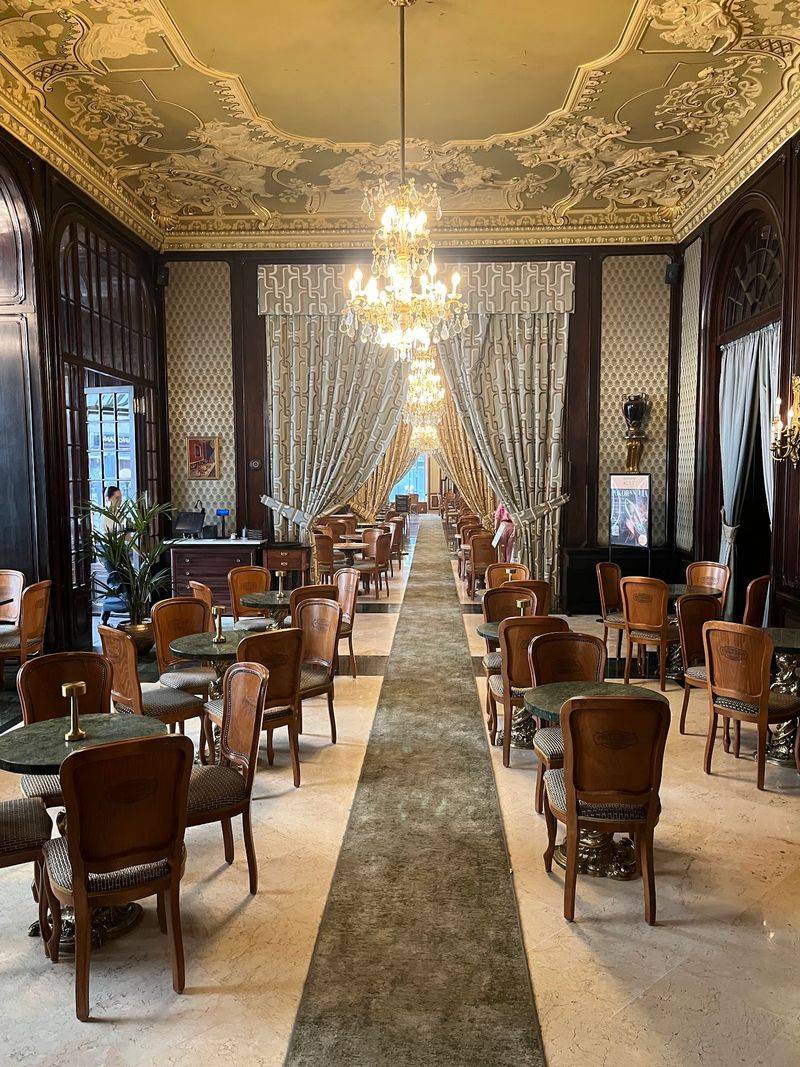
Henrik Kugler founded this café in 1858, but it was Swiss confectioner Emil Gerbeaud who transformed it into one of Central Europe’s most celebrated sweet destinations after taking over in 1884. The name stuck, and so did the cakes.
Facing Vörösmarty Square in the heart of Budapest’s historic center, Gerbeaud occupies several interconnected rooms with high ceilings, chandeliers, and richly decorated interiors that set a very specific expectation before anything arrives at the table. The display cases near the entrance are stacked with layer cakes, chocolate confections, and pastries that represent decades of refined Hungarian patisserie tradition.
The café also operates a terrace overlooking the square, which fills quickly on warm days. Service is formal by modern standards, but that formality is part of what makes the experience feel genuinely different from an ordinary coffee stop.
Prices reflect the setting.
4. Caffè Florian, Venice, Italy
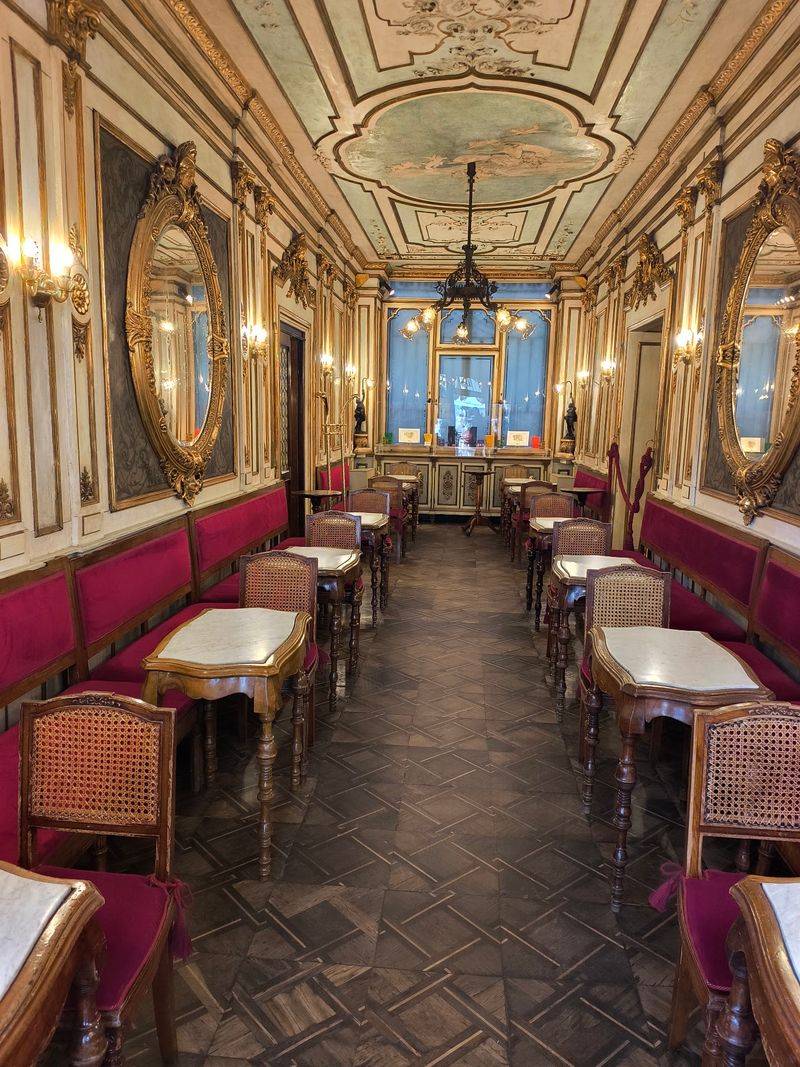
Caffè Florian has been open since 1720, which makes it not just one of Europe’s oldest continuously operating cafés but also one of the oldest in the world. That is a remarkable track record for any business, let alone one that survived Napoleon, the fall of the Venetian Republic, and two world wars.
Its position under the arcades of Piazza San Marco places it at the center of Venetian public life. The interior divides into several intimate salons decorated with gilding, mirrors, painted panels, and velvet seating, each room named after a theme such as the Senate Room or the Oriental Room.
Tables extend outdoors into the piazza, where an orchestra often performs. Prices are considerably higher than anywhere else in Venice, and regulars tend to consider that entirely fair given the setting.
Casanova was reportedly a patron, which adds a certain historical drama to ordering a hot chocolate.
5. Café Sperl, Vienna, Austria
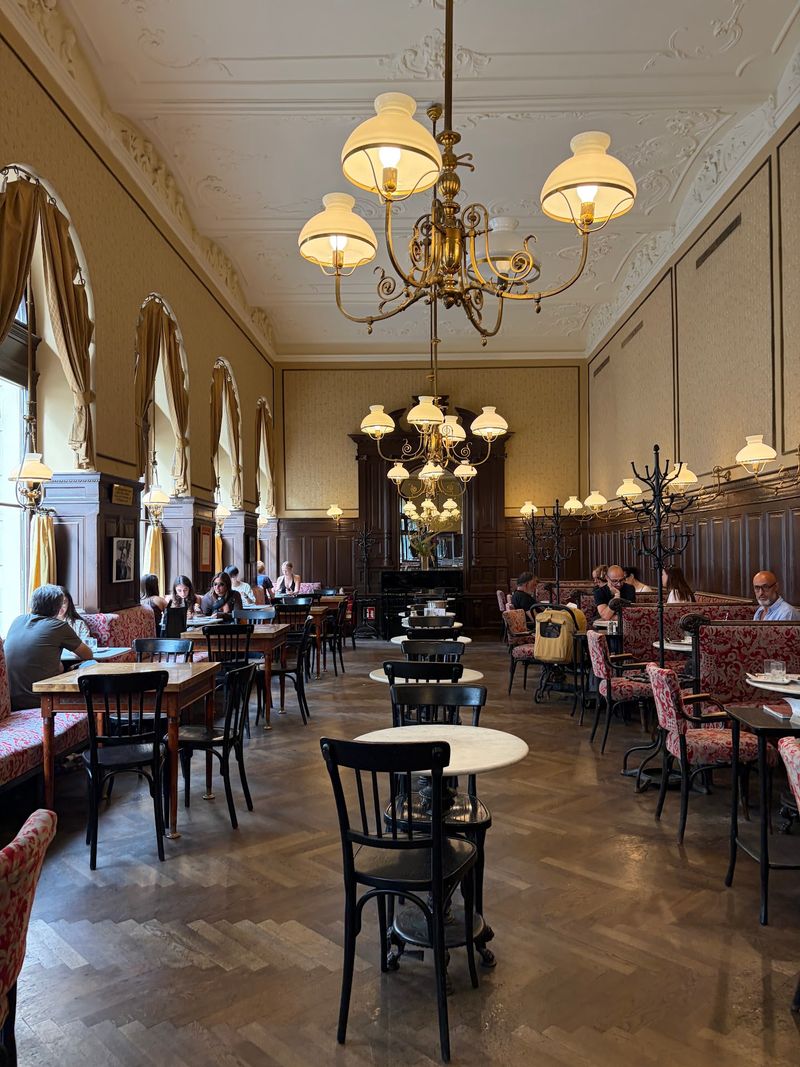
Café Sperl is the kind of place that makes you feel slightly guilty about owning a smartphone. Open since 1880 in Vienna’s 6th district, it has maintained its traditional coffeehouse layout with a consistency that borders on principled stubbornness, and the result is one of the most convincingly preserved historic interiors in the city.
Marble-topped tables, bentwood chairs, upholstered seating along the walls, a billiard table at the back, and a rack of international newspapers still greet visitors much as they would have a century ago. The café was designated as part of Vienna’s intangible cultural heritage in 2011 when UNESCO recognized the Viennese coffeehouse tradition.
Gustav Klimt and Johannes Brahms were among its historical regulars. The pastry selection includes a well-regarded Sperl Torte.
Live piano music appears on certain afternoons. The pace here is deliberately unhurried, and the staff operates on the understanding that a single coffee can last as long as necessary.
6. Café Imperial, Prague, Czech Republic
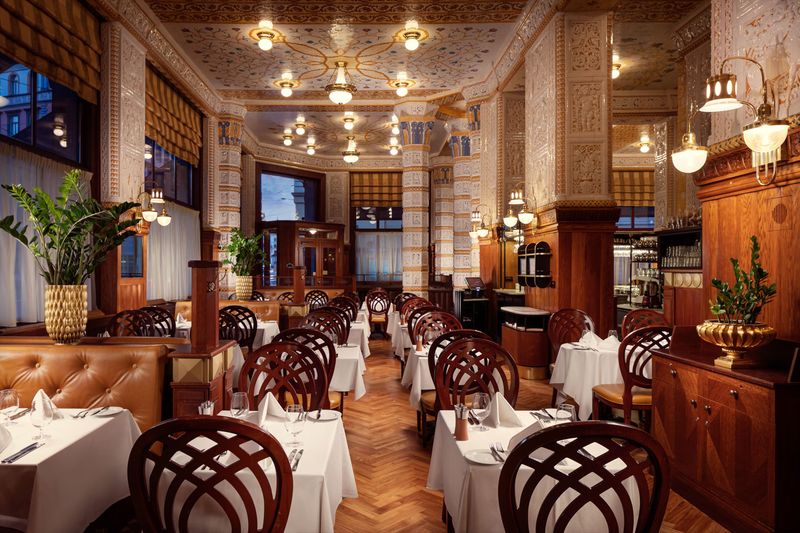
Café Imperial opened in 1914 and promptly covered every available surface in ceramic tiles, which turned out to be an excellent long-term decision. The interior is one of the most visually distinctive in Central Europe, with floor-to-ceiling mosaic decoration, patterned columns, relief sculptures, and a coffered ceramic ceiling that makes the room look more like an architectural museum than a place to order eggs.
After a thorough restoration in 2007, the café returned to full operation as both a restaurant and coffeehouse, now managed under the Marriott group’s Prague property. The menu covers Czech classics alongside international options, with breakfast service that draws hotel guests and locals in roughly equal measure.
The ceramic work alone rewards a slow lap around the room before sitting down. Unlike some restored historic cafés that feel slightly staged, Café Imperial manages to feel genuinely busy and purposeful, which keeps the atmosphere grounded rather than theatrical.
7. New York Café, Budapest, Hungary
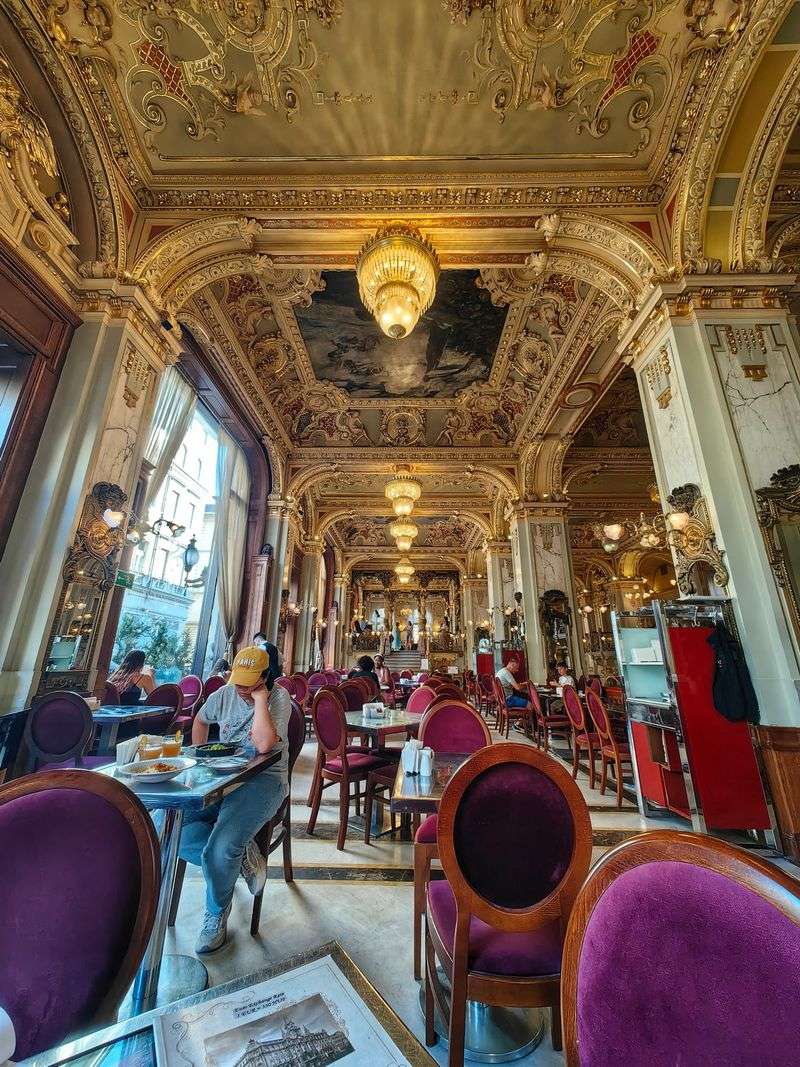
Legend has it that when the New York Café opened in 1894, a group of writers threw the building’s keys into the Danube River so it could never be locked and forced to close. That story says everything about how seriously Budapest took its café culture.
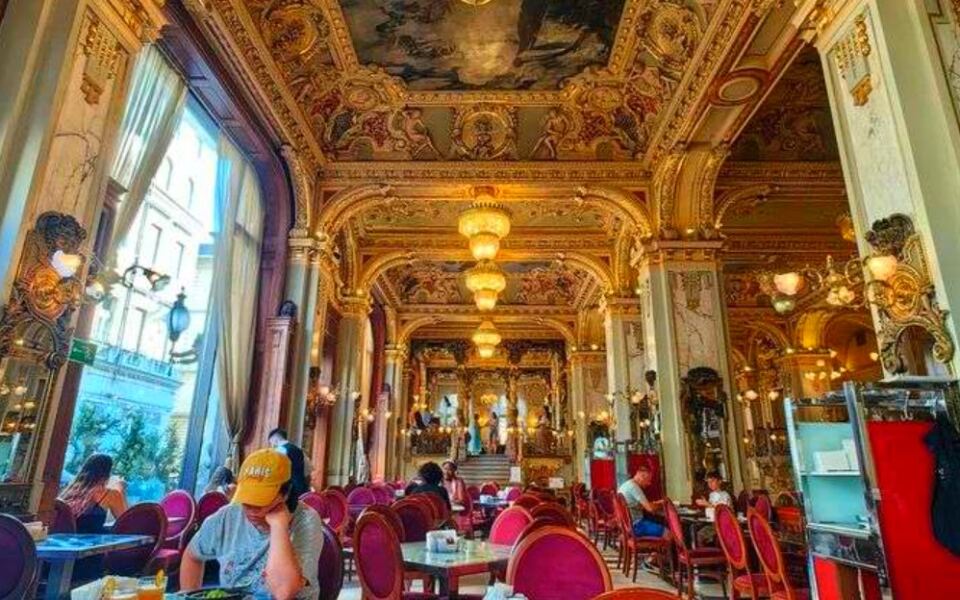
Architects Alajos Hauszmann, Flóris Korb, and Kálmán Giergl designed a four-story palace with the café on the ground floor, decorated with frescoes by Gusztáv Mannheimer and Károly Lotz, gilded stucco, marble columns, and crystal chandeliers blending Renaissance Revival, Baroque, and Art Nouveau styles.
After periods of decline and even a stint as a sports goods store, it reopened in 2006 following a meticulous restoration. Today it attracts over 2,000 visitors daily.
The menu runs from Hungarian egg Benedict at breakfast to Dobos and Eszterházy cakes in the afternoon. Reservations are strongly recommended.
8. Café de Flore, Paris, France
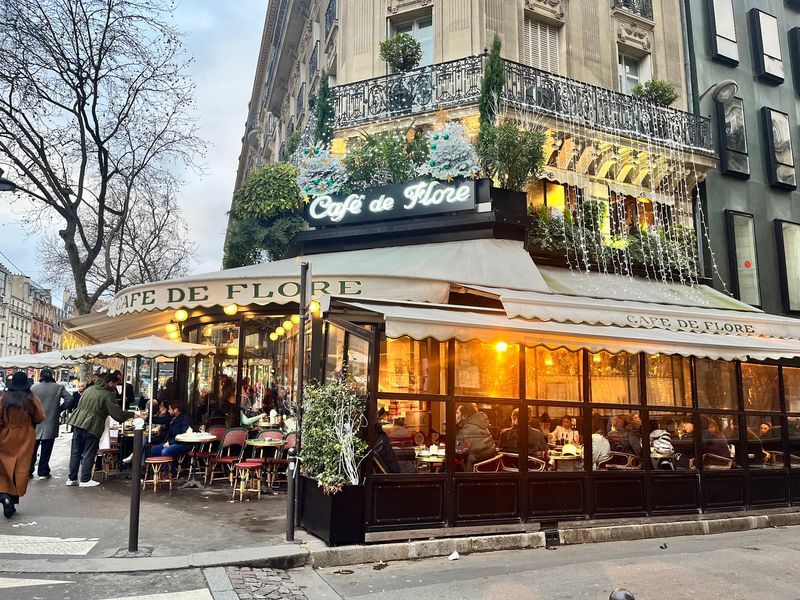
Jean-Paul Sartre and Simone de Beauvoir practically used Café de Flore as a second address during the 1940s, working through entire manuscripts at their preferred corner table. The management was apparently fine with this arrangement, which tells you something about the Left Bank’s traditional relationship with productive procrastination.
The café opened in 1887 on Boulevard Saint-Germain in the 6th arrondissement. Its red banquette seating, mirrored interior, and sidewalk terrace have remained largely consistent in layout, even as the clientele shifted from existentialist philosophers to a more international mix of tourists, journalists, and fashion industry regulars.
The menu runs to French café classics: croissants, croque-monsieurs, club sandwiches, and strong coffee. Prices are Parisian, meaning noticeably higher than the surrounding neighborhood.
Arriving before 9 AM on a weekday gives the best chance of experiencing the café at something close to its original working pace.
9. Café Louvre, Prague, Czech Republic
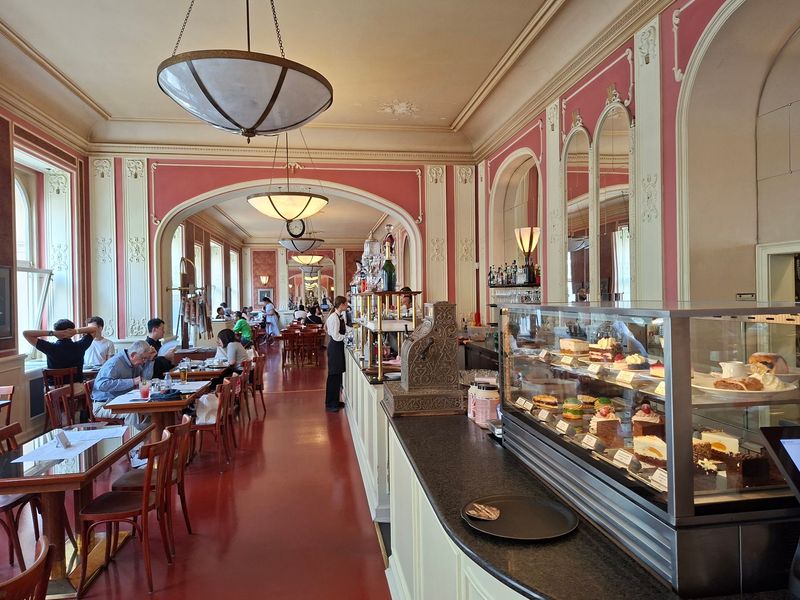
Albert Einstein played billiards here. Franz Kafka was a regular.
If a café’s historical guest list reads like a university syllabus, that is generally a sign that the place had something worth returning to beyond the coffee.
Café Louvre originally opened in 1902 on Národní Street, closed during the Communist period, and reopened in 1992 after a careful restoration. The current interior preserves the expansive proportions of a genuine Central European grand café, with tall windows flooding the upstairs dining room with natural light and a billiard room that still operates at the back.
Breakfast here is a genuinely leisurely affair, with Czech pastries, open sandwiches, and strong coffee served at a pace that encourages a second cup. The café also hosts occasional cultural events and exhibitions.
Its location on a busy Prague street keeps it connected to the city rather than marooned in nostalgia.
10. Les Deux Magots, Paris, France
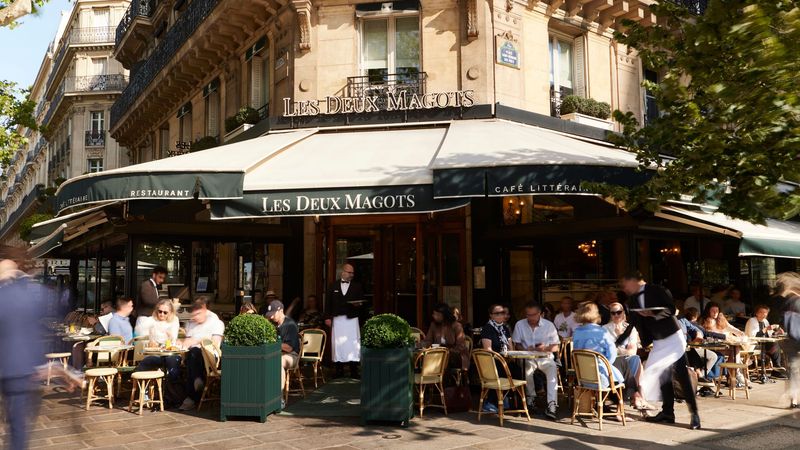
The name refers to two wooden Chinese figurines mounted on a column inside the café, which is a wonderfully odd origin story for one of Paris’s most famous addresses. Les Deux Magots began as a fabric shop in 1812 before becoming a café in 1884, and the figurines stayed through the transition.
Ernest Hemingway, James Baldwin, Pablo Picasso, and André Breton all spent time at its tables, which gave the café a literary reputation it has maintained with considerable dedication ever since. The café even created its own annual literary prize in 1933, awarded each January to a work the judges consider overlooked by the mainstream.
The terrace facing the church of Saint-Germain-des-Prés remains one of the best outdoor seats in Paris for watching the 6th arrondissement go about its business. The house hot chocolate is a long-standing specialty and worth ordering specifically.
11. Café Schwarzenberg, Vienna, Austria
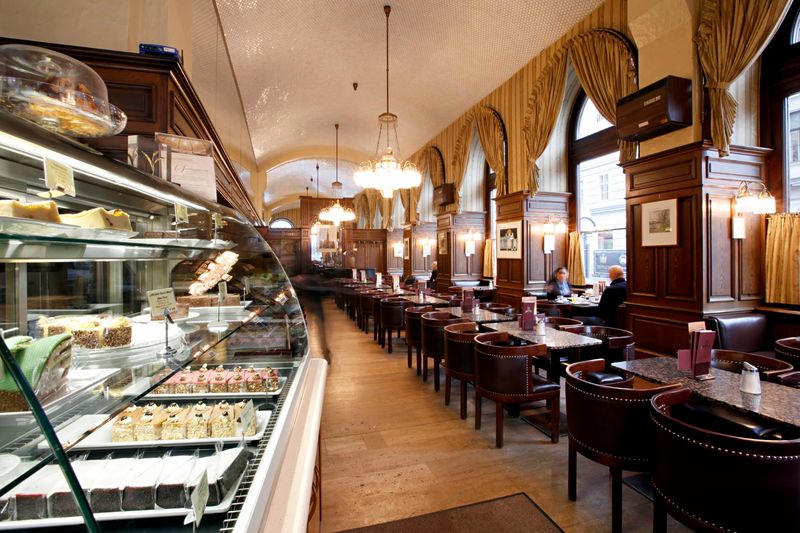
Café Schwarzenberg holds a specific distinction: it was the first café to open on Vienna’s famous Ringstrasse after the boulevard’s construction in the 1860s. That makes it not just a historic institution but a founding fixture of one of Europe’s most architecturally ambitious urban projects.
The interior follows the traditional Viennese coffeehouse format with marble tables, upholstered seating, chandeliers, and large windows that frame the Ringstrasse outside like a moving painting. The menu covers the expected range of Viennese classics, from Melange coffee to Tafelspitz and seasonal pastries.
What makes Schwarzenberg particularly worth noting is its ongoing program of live classical piano music on weekend afternoons, which keeps the café functioning as a cultural venue rather than simply a restaurant with old furniture. It is a working example of how Vienna’s coffeehouse tradition was always about more than the beverages.
12. Caffè Gilli, Florence, Italy
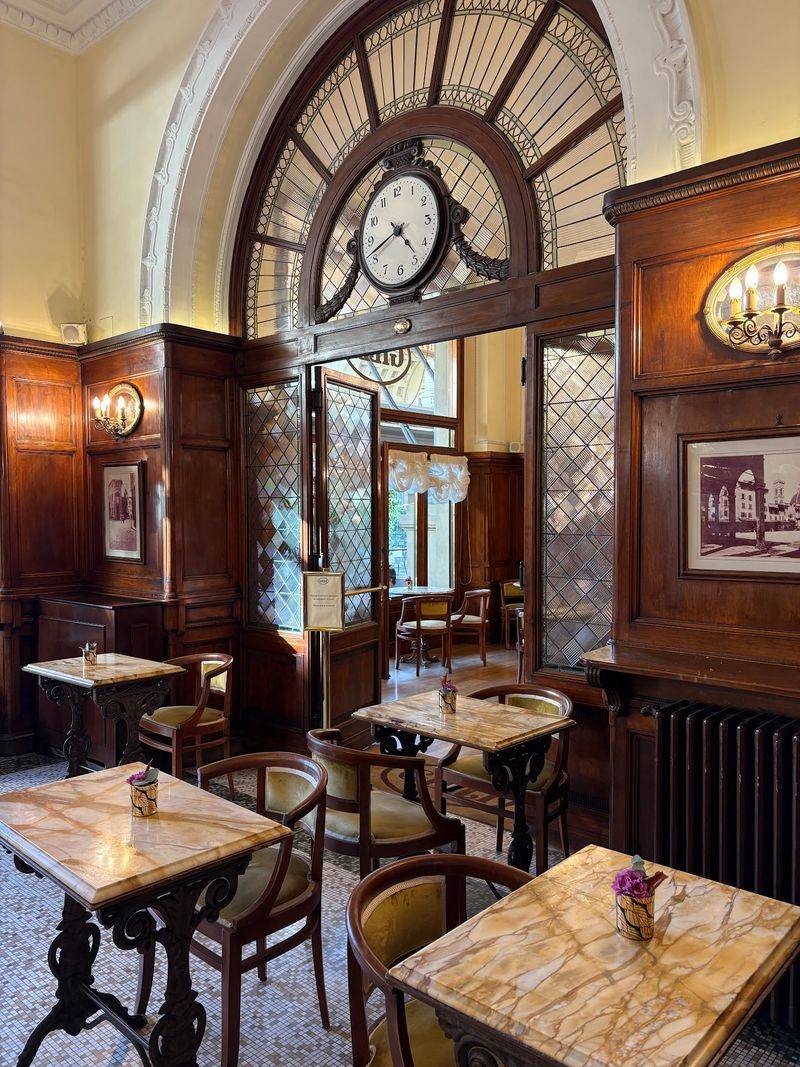
Caffè Gilli has been operating in Florence since 1733, which gives it a founding date that predates the United States by more than four decades. The current location near Piazza della Repubblica dates to 1910, when the café moved into its present premises and installed the wood-paneled interior and display counters that remain largely intact today.
The pastry counter is a serious point of pride here. Florentine classics sit alongside seasonal confections, and the counter staff tends to take the selection process as seriously as the customers do.
Coffee service follows the Italian espresso tradition rather than the lingering Viennese model.
The café also has a more formal dining room for sit-down service, with a menu that covers Tuscan lunch dishes alongside the full pastry and coffee range. Piazza della Repubblica itself is surrounded by historic arcaded buildings, making the outdoor terrace one of the more pleasant spots for a mid-morning break in central Florence.
13. Café Tomaselli, Salzburg, Austria
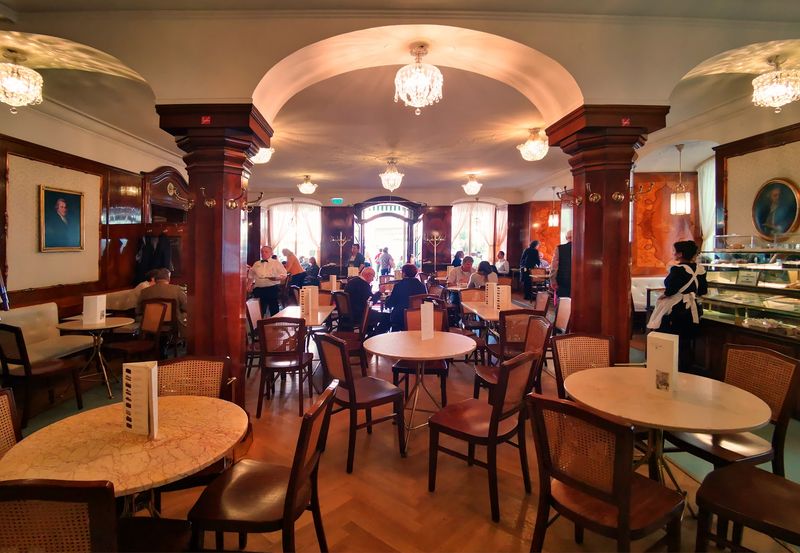
Café Tomaselli has been part of Salzburg’s Alter Markt square since 1705, which makes it Austria’s oldest continuously operating coffeehouse and one of the oldest in Europe. Mozart’s father Leopold was a regular, and the café has been trading on that connection with dignified restraint ever since.
The interior features oil portraits covering the walls, dark wood paneling, and marble tables that have been in place long enough to feel genuinely earned rather than decorative. A pastry stand near the entrance displays the daily selection, which typically includes a rotating range of Austrian classics alongside Tomaselli’s own signature cakes.
Service is conducted in the traditional Austrian manner, meaning attentive but unhurried. The café occupies a corner of Alter Markt that places it within easy walking distance of Salzburg’s cathedral, the Residenz, and the Getreidegasse.
Morning visits tend to be quieter; afternoon service gets busy with visitors combining coffee with a break from sightseeing.
14. Café Comercial, Madrid, Spain
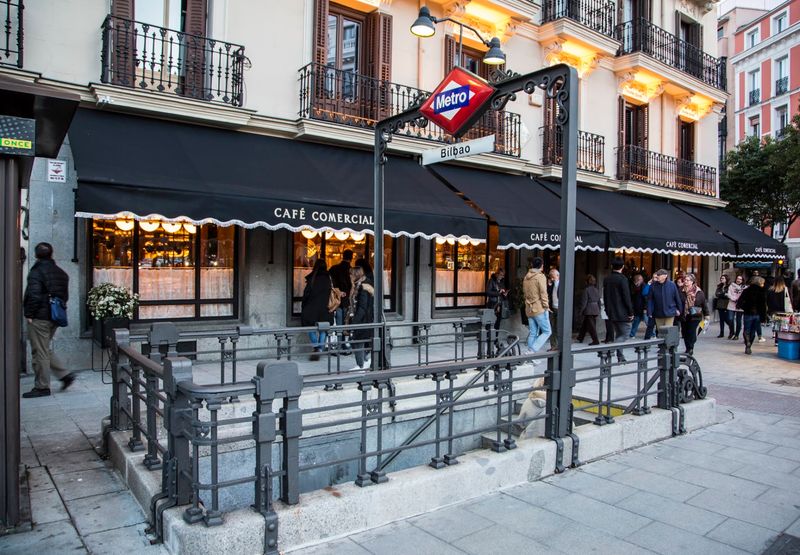
When Café Comercial closed in 2015 after 128 years of operation, Madrid reacted with enough public outcry to prompt a full restoration and reopening in 2017. That level of civic attachment to a café tells you something about what the place meant to the city.
Founded in 1887 near the Glorieta de Bilbao in the Malasaña district, the café has a two-level interior with a mezzanine balcony, marble tables, bentwood chairs, and large mirrors that give the room its characteristic depth. The setting has served as a backdrop for Spanish literature and film, and the walls carry a visible sense of accumulated history.
The current menu balances traditional Spanish café offerings with a contemporary restaurant approach, covering breakfast through dinner. The neighborhood around Bilbao metro is one of Madrid’s more characterful areas, and Café Comercial sits at its social center with the easy confidence of a place that knows exactly what it is.
15. Café Iruña, Pamplona, Navarre, Spain
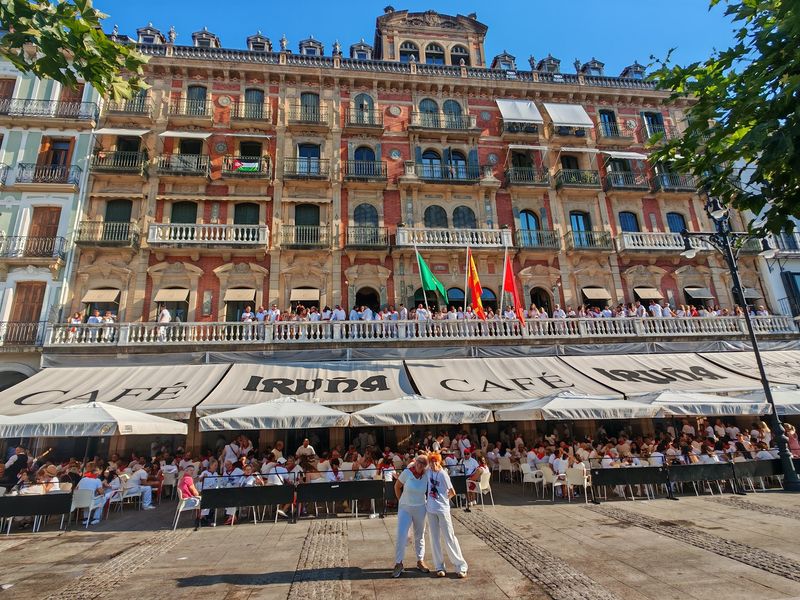
Ernest Hemingway made Café Iruña internationally famous in his 1926 novel ‘The Sun Also Rises,’ and the café has maintained a bronze statue of the author at his preferred spot at the bar ever since. That is either charming or slightly over-invested in a literary connection, depending on your tolerance for author tributes.
The café opened in 1888 on Plaza del Castillo, Pamplona’s central square, and its interior features painted ceiling panels, a carved wooden bar, and Moorish-influenced decorative arches that give it a distinctly Spanish Belle Époque character. The terrace directly faces the square, which serves as the social hub of Pamplona throughout the year and not just during the famous July festival.
The menu covers Spanish café staples including pintxos, bocadillos, and coffee, with a fuller restaurant menu available inside. The combination of an active local clientele and a manageable tourist presence keeps the atmosphere pleasantly balanced rather than overwhelmingly staged.
Share this story