Some hotels are more than just places to sleep. Over the centuries, certain grand hotels around the world became gathering spots for writers, painters, political exiles, and rebels who needed a safe place to think, create, and plan.
These historic buildings witnessed history being made in their lobbies, restaurants, and rooms. From Havana to Paris and Singapore to Vienna, these fifteen hotels carry stories that textbooks rarely tell.
1. Hotel Chelsea – New York City, New York, USA
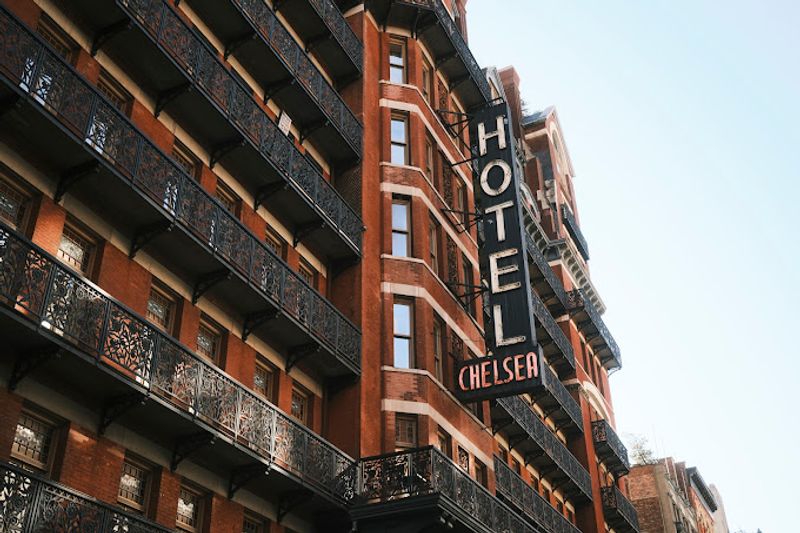
Few addresses in New York City carry as much creative weight as 222 West 23rd Street. The Hotel Chelsea opened in 1884 and quickly became a magnet for writers, musicians, and artists who could not quite afford uptown rents but refused to give up on their dreams.
Mark Twain, Dylan Thomas, Arthur Miller, and Janis Joplin all called it home at various points. Bob Dylan wrote “Sad Eyed Lady of the Lowlands” here, and Leonard Cohen famously referenced the hotel in his song “Chelsea Hotel No. 2.”
The Chelsea was never a luxury retreat in the traditional sense. It was a working hotel for working creatives, a place where rent could sometimes be paid with a painting or a manuscript.
That spirit of artistic exchange made it one of the most legendary addresses in American cultural history.
2. Hotel Lutetia – Paris, France
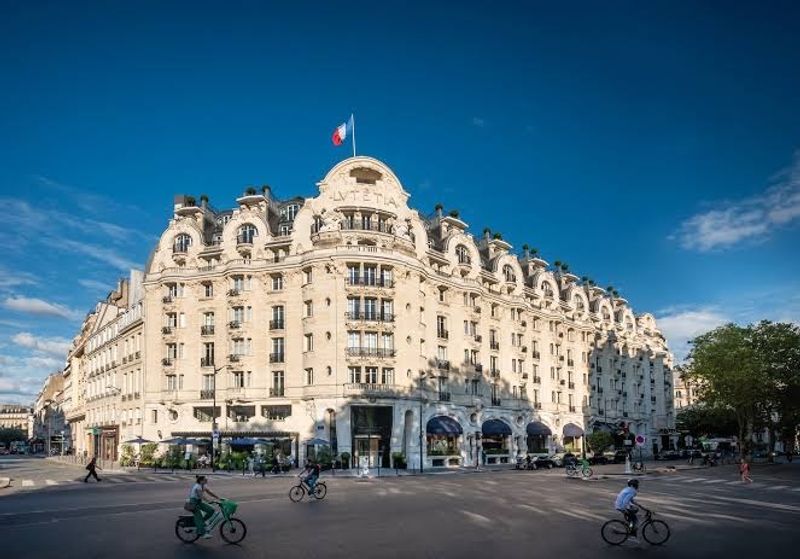
Built in 1910 on the Left Bank of Paris, the Hotel Lutetia has always attracted a crowd with something important on their minds. The hotel sits in the Saint-Germain-des-Pres neighborhood, a district long associated with free thinking, philosophy, and literary ambition.
During the 1930s, the Lutetia sheltered Jewish refugees and intellectuals fleeing Nazi persecution across Europe. Writers like James Joyce and Samuel Beckett passed through its doors, as did General Charles de Gaulle before the fall of France.
After World War II, the hotel was used as a reception center for Holocaust survivors returning from the concentration camps. Families gathered in its lobby hoping to find loved ones.
That chapter of its history turned the Lutetia from a fashionable address into a symbol of both grief and resilience. Today it operates as a five-star luxury hotel that honors its complicated past.
3. Hotel Nacional de Cuba – Havana, Cuba
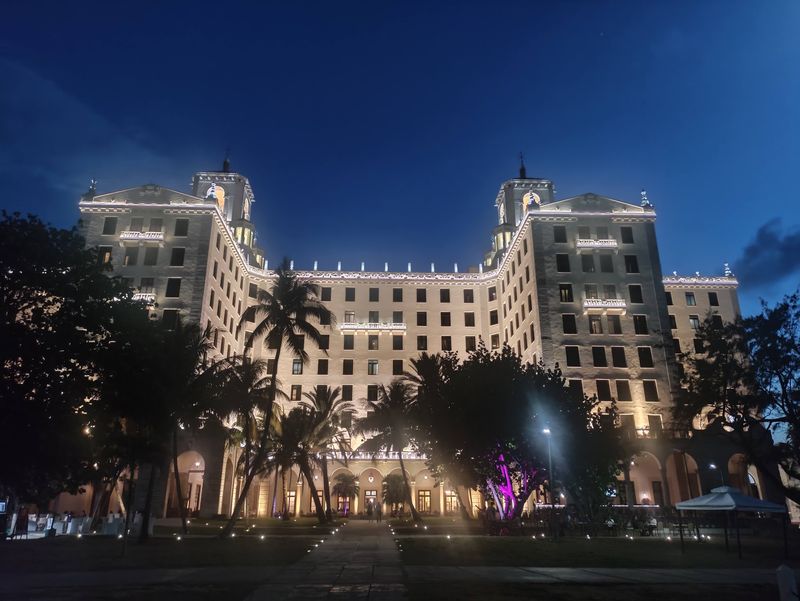
Perched on a rocky bluff above the Malecon seawall, the Hotel Nacional de Cuba opened in 1930 and immediately became the most important address in Havana. Its guest list reads like a who’s who of the twentieth century, including Winston Churchill, Ernest Hemingway, Frank Sinatra, and Marlene Dietrich.
In 1946, the hotel hosted a secret summit of American organized crime figures organized by mobster Lucky Luciano. The meeting, held under the cover of a Frank Sinatra concert, helped reshape criminal networks across the Western Hemisphere.
Hemingway, meanwhile, practically lived at the bar.
When the Cuban Revolution succeeded in 1959, Fidel Castro chose not to destroy the Nacional. Instead, it became a showcase for Cuban sovereignty.
Che Guevara even used one of its rooms as a temporary office during the early revolutionary period. The hotel remains open today as a national monument.
4. Raffles Hotel – Singapore
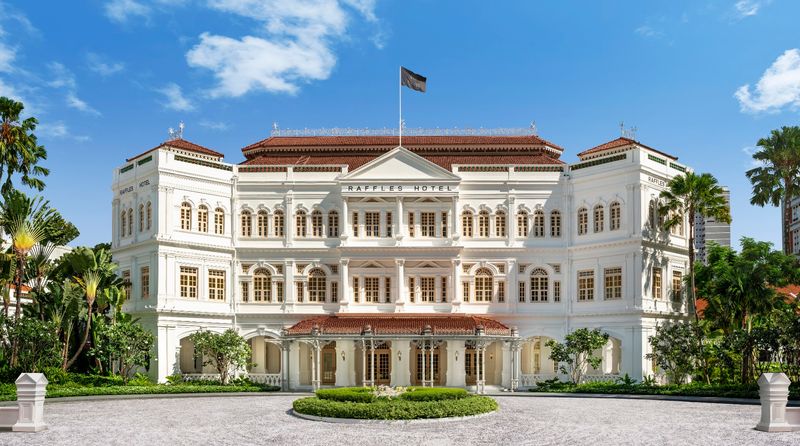
Opened in 1887 and named after Singapore’s founder Sir Stamford Raffles, Raffles Hotel became the social center of colonial Southeast Asia almost immediately. Its long colonnaded verandas and tropical gardens made it a haven for travelers, diplomats, and writers passing through one of the world’s busiest ports.
Rudyard Kipling visited and reportedly praised its food. Somerset Maugham spent long stretches at Raffles gathering material for his short stories set across the region.
He once said that the hotel stood for all the fables of the exotic East.
During World War II, the Japanese military occupied the hotel and used it as a temporary camp for British prisoners of war. After liberation, it reopened and resumed its role as a gathering place for journalists, diplomats, and postwar travelers rebuilding their lives across Asia.
The Singapore Sling cocktail was invented here around 1915 and is still served today.
5. Brown’s Hotel – London, England
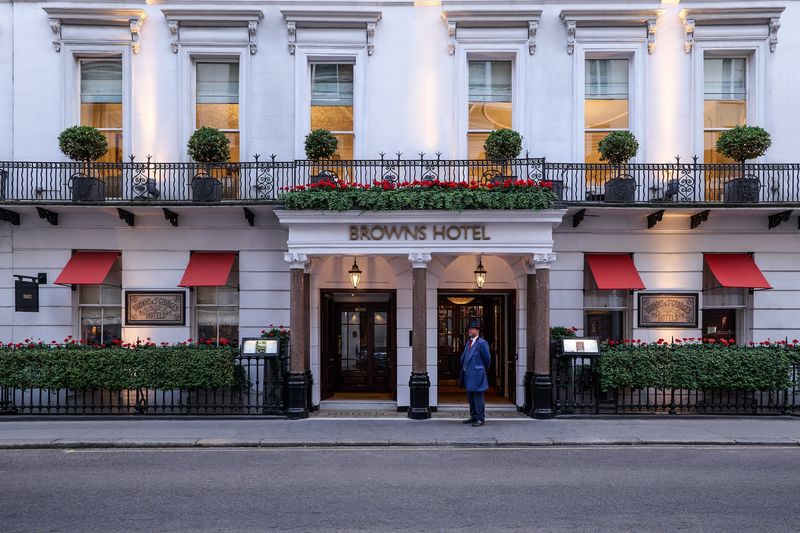
Brown’s Hotel opened in 1837 in the Mayfair district of London, making it the city’s first purpose-built hotel. Its founder, James Brown, had previously worked as a manservant to the poet Lord Byron, which perhaps explains why the hotel developed such a strong connection to literary and political figures from the start.
Rudyard Kipling wrote “The Jungle Book” while staying at Brown’s. Theodore Roosevelt held his wedding reception in the hotel’s drawing rooms.
Napoleon III lived here during his exile from France, and Alexander Graham Bell made the first telephone call in the United Kingdom from a room in this building.
The hotel’s calm, clubhouse atmosphere made it a preferred retreat for those who needed privacy during difficult periods. Agatha Christie, Bram Stoker, and Henry James were all regulars.
Brown’s still operates today as one of London’s most respected luxury hotels, blending history with quiet elegance.
6. Pera Palace Hotel – Istanbul, Turkiye
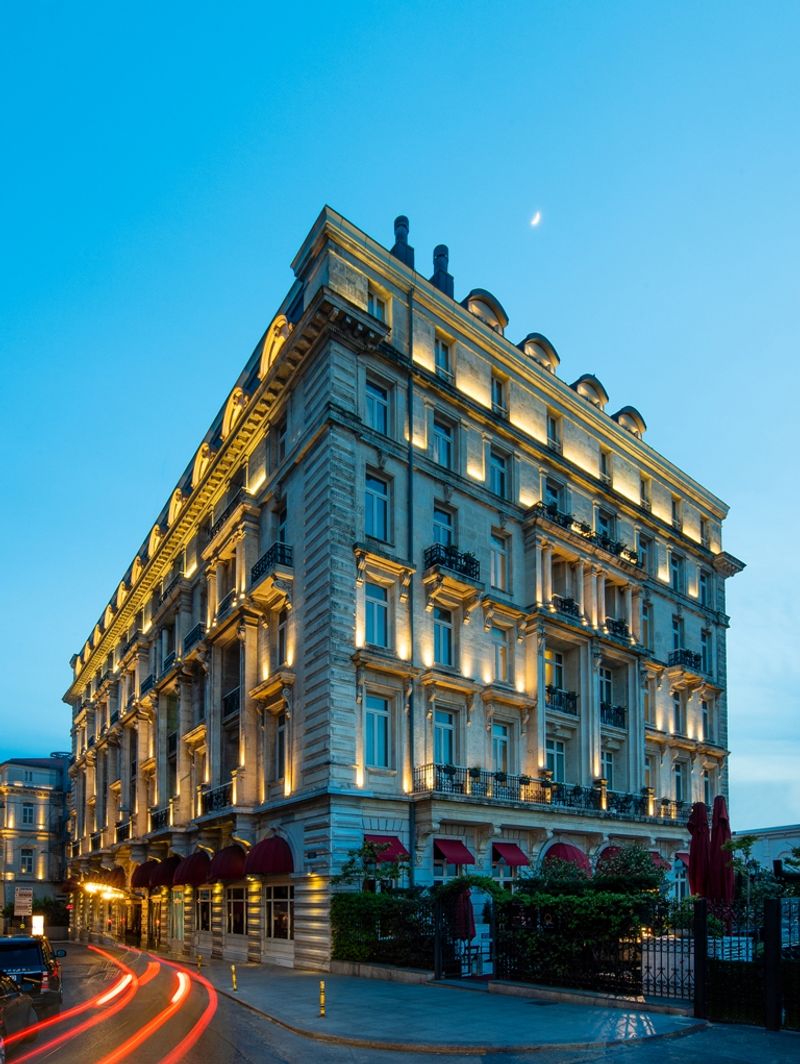
The Pera Palace Hotel was built in 1892 specifically to accommodate passengers arriving on the Orient Express, the legendary train that connected Paris to Constantinople. Perched in the Beyoglu district, the hotel became a crossroads for spies, diplomats, royals, and adventurers from across the world.
Agatha Christie stayed in Room 411 and is said to have written parts of “Murder on the Orient Express” there. The room is now preserved as a museum suite.
Mata Hari, the infamous World War I spy, was a guest. So was Leon Trotsky during one of his many exiles from Russia.
During both World Wars, the hotel was a buzzing hub of intelligence activity. Agents from rival nations dined in the same restaurant, exchanged coded glances across the lobby, and passed information in whispered conversations.
The Pera Palace has been restored and reopened, and it still attracts travelers drawn to its remarkable past.
7. Hotel Sacher – Vienna, Austria
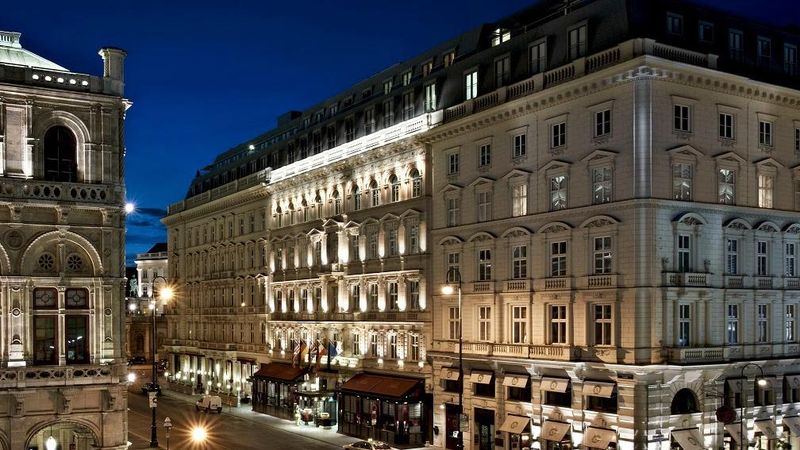
Founded in 1876 by Eduard Sacher, the son of the man who invented the famous Sachertorte chocolate cake, Hotel Sacher quickly became the preferred meeting place for Viennese aristocracy, foreign royalty, and political figures navigating the final decades of the Austro-Hungarian Empire.
The hotel’s back rooms and private dining salons witnessed deals struck and secrets traded as the old European order began to crumble. After World War I ended the empire, Vienna became a city full of displaced nobles and exiled politicians, many of whom found refuge in Sacher’s warm, wood-paneled rooms.
The hotel survived two world wars, Soviet occupation, and decades of political upheaval without losing its identity. Writers like Graham Greene visited regularly, and the hotel’s coffee house culture made it a natural gathering place for intellectuals and artists rethinking Europe’s future.
The Sachertorte is still baked here daily using the original secret recipe.
8. Hotel Metropole – Brussels, Belgium
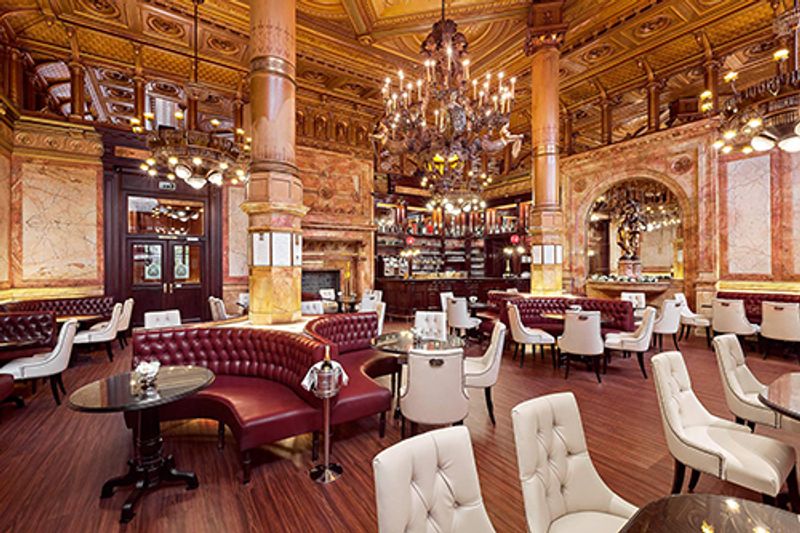
Opened in 1895, the Hotel Metropole is the last surviving grand hotel from Brussels’ Belle Epoque era. Its stunning interior, filled with gilded mirrors, marble columns, and painted ceilings, made it a natural gathering place for Europe’s cultural and political elite at the turn of the twentieth century.
Albert Einstein stayed here during lecture tours. Sarah Bernhardt, the most famous actress of her era, made the Metropole her Brussels address.
During World War I, the hotel was seized by German military forces and used as their headquarters while Belgium was under occupation.
Between the wars, the hotel became a meeting point for Belgian artists connected to the Surrealist movement, including figures in the circle of Rene Magritte. The Metropole’s cafe, which opens directly onto the Place de Brouckere, became a place where displaced writers and painters from across occupied Europe exchanged ideas over long afternoon coffees.
9. Grand Hotel et des Palmes – Palermo, Italy
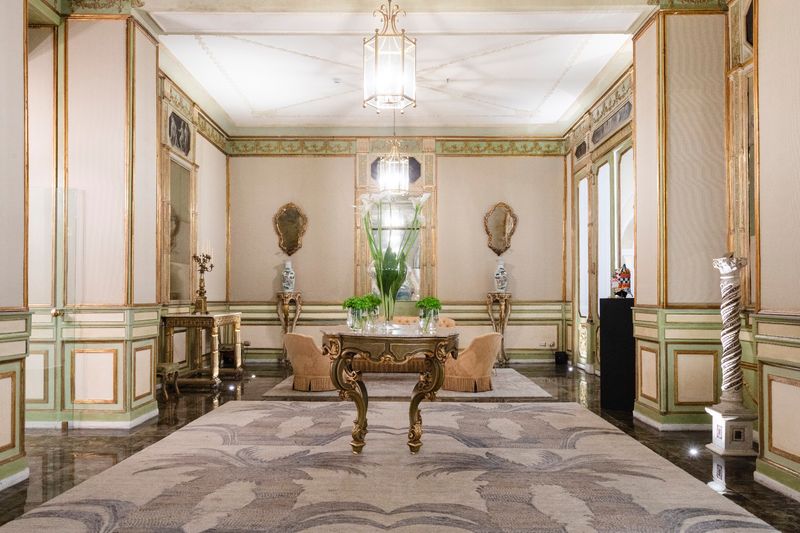
Richard Wagner checked into the Grand Hotel et des Palmes in Palermo in 1881 and stayed for five months. During that time, he completed his final opera, “Parsifal,” in one of the hotel’s quiet suites.
That connection alone would make the hotel historically significant, but its story goes much further.
Built in the 1870s in a former aristocratic palace, the hotel became Palermo’s most prestigious address for visiting artists, composers, and writers escaping the colder climates of northern Europe. Guy de Maupassant and Gabriele D’Annunzio both spent time here, drawn by the warmth of Sicily and the hotel’s generous hospitality.
In 1957, the Grand Hotel et des Palmes hosted another kind of gathering entirely. American and Sicilian Mafia bosses met in the hotel’s private rooms to divide territories and establish cooperation agreements.
That meeting, known as the Palermo Conference, changed organized crime on both sides of the Atlantic for decades.
10. Hotel Adlon Kempinski – Berlin, Germany
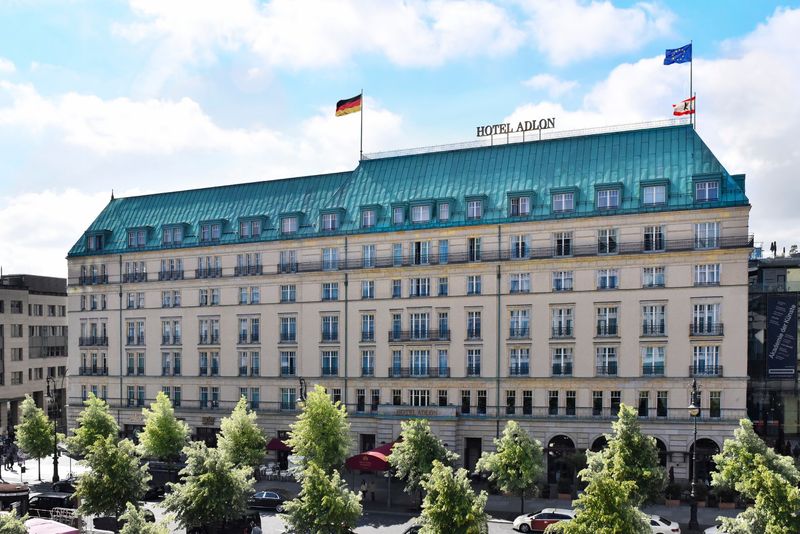
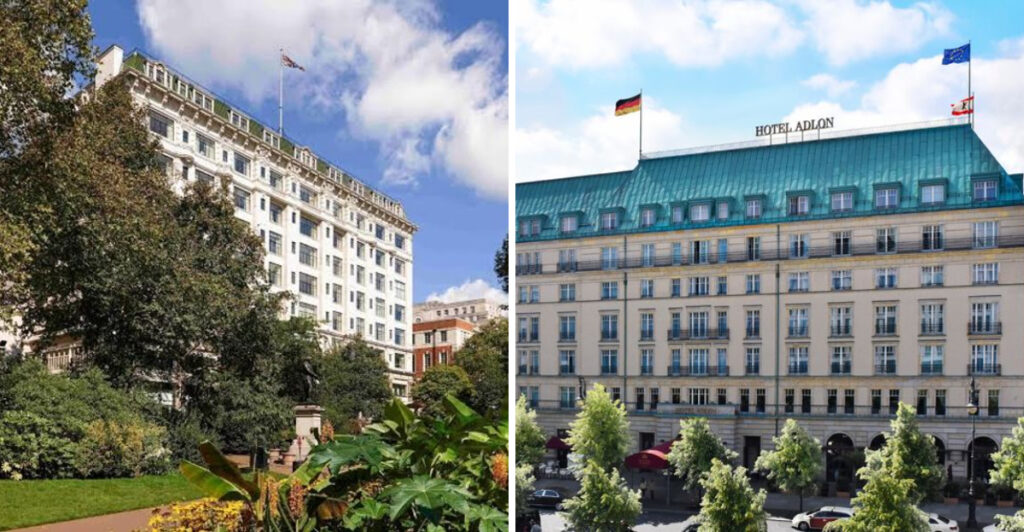
When the original Hotel Adlon opened in 1907 near the Brandenburg Gate, Kaiser Wilhelm II attended the ceremony personally. That set the tone for what the Adlon would become: a place where power, money, and influence gathered under one gilded roof in the heart of Berlin.
Charlie Chaplin stayed here. So did Enrico Caruso, Greta Garbo, and Franklin D.
Roosevelt. During the Weimar Republic years, the Adlon’s lobby was a swirling mix of diplomats, journalists, artists, and political refugees from across Europe trying to make sense of Germany’s chaotic transformation.
As the Nazi regime tightened its grip on Germany during the 1930s, the Adlon became one of the few places where foreign journalists and diplomats could still speak relatively freely. The original building was largely destroyed in 1945, but a rebuilt Adlon reopened in 1997 and reclaimed its position as Berlin’s most storied address.
11. Hotel Imperial – Vienna, Austria
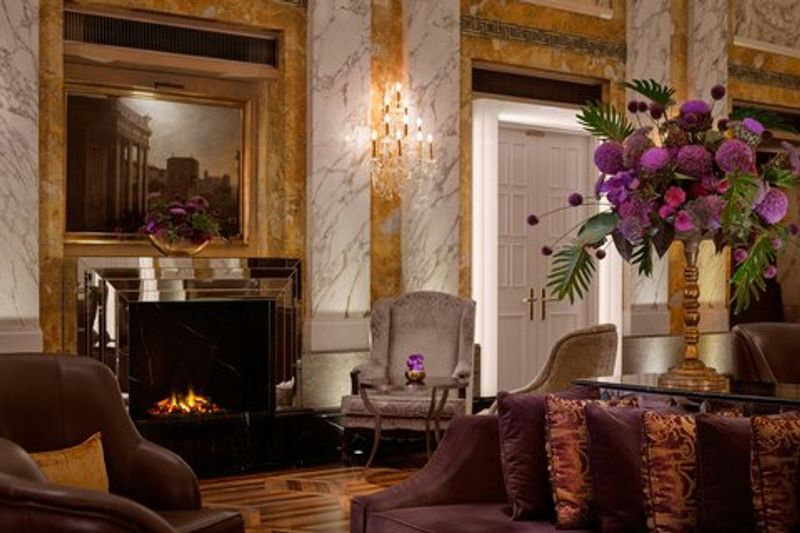
Originally built as the palace of the Duke of Wurttemberg, the Hotel Imperial in Vienna was converted into a hotel in 1873 in time for the World Exhibition. Its imperial-scale rooms and grand staircases made it the natural choice for visiting heads of state and royalty who needed more than just a comfortable bed.
Richard Wagner stayed here during the premiere of his Ring Cycle at the nearby Vienna Opera. Adolf Hitler, before his rise to power, reportedly slept in a cheap workers’ room in the basement while struggling artists lived in luxury upstairs.
The contrast was not lost on later historians.
After World War II, Vienna was divided into Allied occupation zones, and the Hotel Imperial fell within the Soviet sector. Soviet officers used it as a headquarters, creating a strange chapter in the hotel’s long story.
Today it operates as a five-star property and remains one of Europe’s most historically layered hotels.
12. Hotel Inglaterra – Havana, Cuba
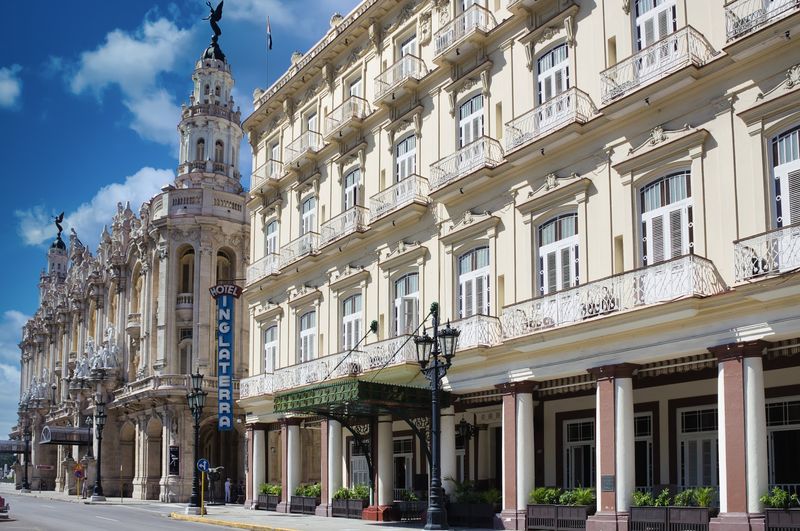
Cuba’s oldest surviving hotel, the Hotel Inglaterra opened in 1875 on the edge of Havana’s Central Park. Its Moorish-inspired arches, tiled floors, and open-air terrace made it a gathering spot for journalists, poets, and independence fighters during one of the most turbulent periods in Cuban history.
Jose Marti, Cuba’s national hero and the poet who inspired the independence movement, gave speeches from the hotel’s balcony. American journalist Richard Harding Davis reported from the Inglaterra during the lead-up to the Spanish-American War in 1898, sending dispatches that shaped American public opinion about Cuba’s struggle for freedom.
The hotel sat at the intersection of culture and politics for over a century. Playwrights, musicians, and revolutionary organizers all passed through its doors.
After 1959, the Cuba government preserved the Inglaterra as a functioning hotel and national landmark. Its rooftop bar still offers one of the best views of Central Park in Havana.
13. Hotel Ritz Paris – Paris, France
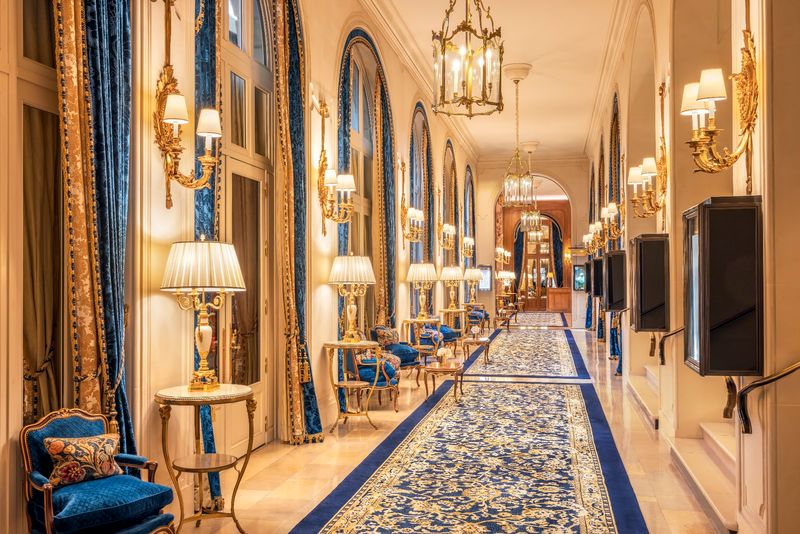
Cesar Ritz opened his legendary hotel on the Place Vendome in 1898, and within a few years it had become the most glamorous address in Europe. Marcel Proust was such a regular guest that he reportedly based descriptions in his novel sequence “In Search of Lost Time” on the Ritz’s dining rooms and hallways.
Ernest Hemingway famously “liberated” the Ritz Bar from German occupation in August 1944, arriving with a group of Allied soldiers and journalists to find the hotel nearly intact. The Germans had treated it with unusual care during their four-year occupation of Paris, which angered many French citizens after the war.
Coco Chanel lived in a Ritz suite for more than thirty years, using the hotel as her primary residence while running her fashion empire from nearby. F.
Scott Fitzgerald, Charlie Chaplin, and the Duke of Windsor were all regulars. The Ritz remains one of the world’s most storied luxury hotels today.
14. Mount Washington Hotel (Omni Mount Washington Resort) – Bretton Woods, New Hampshire, USA
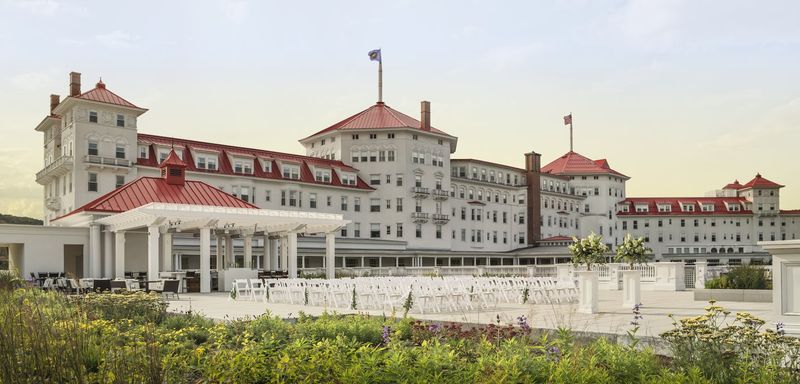
Completed in 1902, the Mount Washington Hotel sits in the White Mountains of New Hampshire and looks like something out of a storybook. Its bright white facade, red roof, and sweeping mountain views made it a summer escape for presidents and industrialists in the early twentieth century.
The hotel’s most significant moment came in July 1944, when it hosted the United Nations Monetary and Financial Conference, better known as the Bretton Woods Conference. Representatives from 44 Allied nations gathered in the hotel’s grand ballroom to design the postwar international financial system.
The agreements reached there created the International Monetary Fund and the World Bank.
In a very real sense, the global economic rules that still shape daily life today were written in a mountain resort hotel in New Hampshire. Delegates worked in the hotel’s rooms and hallways for three weeks, debating currency, trade, and reconstruction.
Few hotels can claim to have shaped the world economy quite so directly.
15. The Savoy – London, England
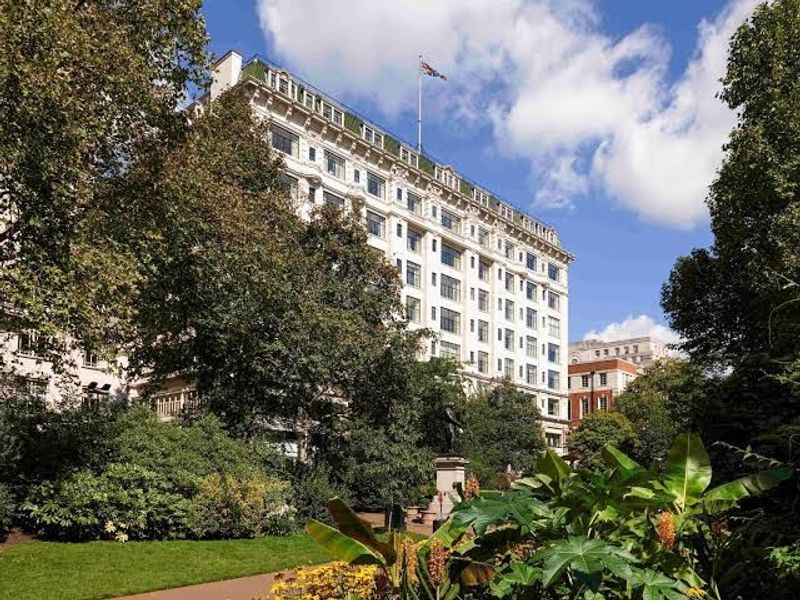
Built in 1889 by impresario Richard D’Oyly Carte using profits from Gilbert and Sullivan operettas, The Savoy was London’s first truly modern luxury hotel. It had electric lights, elevators, and private bathrooms long before those things were common, and it attracted a crowd who appreciated both comfort and spectacle.
Claude Monet painted the Thames from his Savoy window, producing a series of misty river scenes that became some of his most celebrated works. Oscar Wilde entertained at the Savoy frequently before his arrest and imprisonment in 1895.
Marlene Dietrich, Humphrey Bogart, and Frank Sinatra all became regulars over the following decades.
During both World Wars, the hotel served as a refuge for European royals and politicians forced from their home countries. King Zog of Albania lived at the Savoy during his wartime exile.
The hotel’s American Bar, opened in 1893, became famous for inventing dozens of classic cocktails that are still mixed today.
Share this story