Istanbul is one of those cities that genuinely earns every superlative thrown at it. Straddling two continents, carrying thousands of years of history, and somehow still feeling like a living, breathing modern city, it rewards curious travelers in ways that are hard to fully describe before you go.
I spent time exploring its mosques, bazaars, neighborhoods, waterways, and underground spaces, and came back with a list of experiences I keep recommending to anyone planning a trip. Whether you have three days or two weeks, these fifteen things will help you understand why Istanbul stays with people long after they leave.
Step Inside the Legendary Hagia Sophia
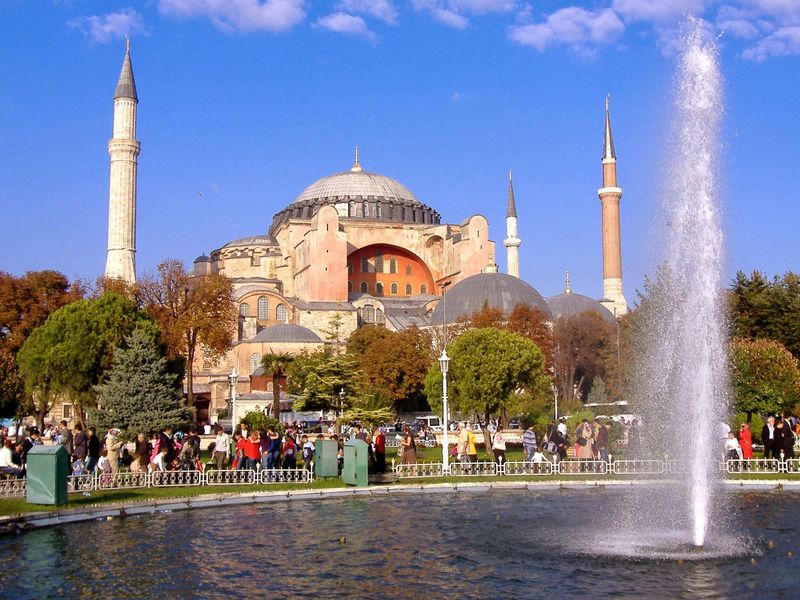
No photograph, no matter how well composed, fully captures the scale of Hagia Sophia. Standing inside for the first time, the sheer size of the dome overhead makes everything else feel small.
Completed in the sixth century under Eastern Roman Emperor Justinian I, the building has served as a church, a mosque, a museum, and since 2020, an active mosque once again. Every era left its mark, and that layering is what makes Hagia Sophia unlike anything else.
Byzantine mosaics survive alongside enormous Ottoman calligraphy medallions. The architecture reflects additions and repairs from multiple centuries, making the building feel like a compressed timeline of the city itself.
Because it functions as an active place of worship, visitor access is shaped by the five daily prayer periods. Dress modestly, cover your head if required, and remove your shoes before entering.
Even travelers who rarely seek out historic sites tend to leave quietly impressed.
Walk Across Sultanahmet Square to the Blue Mosque
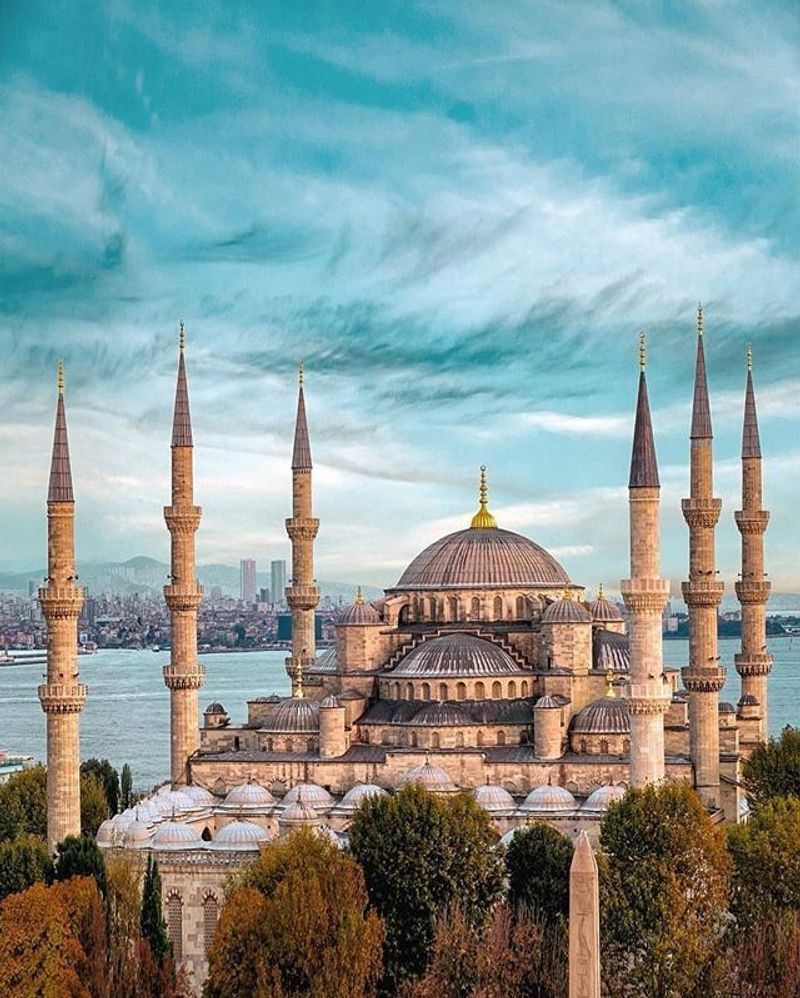
The distance between Hagia Sophia and the Blue Mosque is only a short walk across Sultanahmet Square, but that walk is one of the most satisfying in Istanbul. You turn around and see one architectural wonder, then face another.
The Sultan Ahmed Mosque, completed in 1616, is famous for its six minarets, cascading dome structure, and the thousands of hand-painted Iznik tiles covering its interior walls. Entry remains free for visitors, and the mosque stays open every day outside the five daily prayer periods.
Most people glance around briefly and move on. That is a mistake.
Stand still and look upward. The patterns, colors, stained glass, and sheer volume of decorative detail in the prayer hall are far more impressive when you give them proper attention.
Modest clothing is required, and shoes must be removed before entering. Scarves are available at the entrance for visitors who need them.
Spend a Few Hours Exploring Topkapi Palace
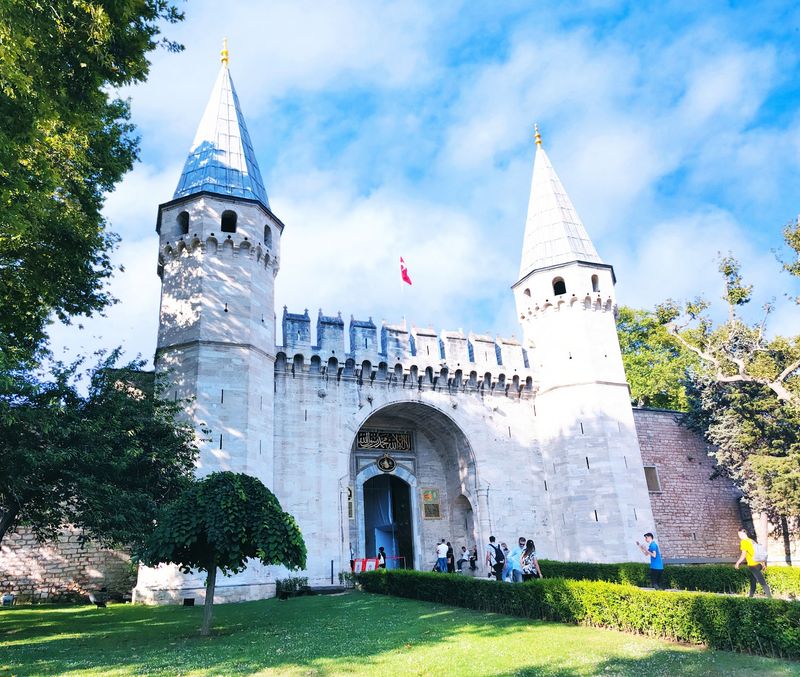
Topkapi Palace does not look like most people expect. There is no single grand building to walk through.
Instead, the complex spreads across a promontory above the Bosphorus as a series of courtyards, gates, gardens, pavilions, and chambers that once formed the administrative heart of the Ottoman Empire.
Sultan Mehmed II began construction after the conquest of Constantinople in 1453, and the palace served as an imperial residence and center of government for roughly four centuries. The imperial treasury, sacred relics, harem quarters, and tiled pavilions are all part of the museum today.
Rushing through Topkapi in an hour would genuinely shortchange the experience. The collections are fascinating, but some of the best moments come simply from pausing at the courtyard viewpoints overlooking the water below.
The palace currently operates as a museum and is closed on Tuesdays. Ticket offices generally open from 9 a.m. to 5 p.m., and separate tickets are required for the harem section.
Get Completely Lost Inside the Grand Bazaar
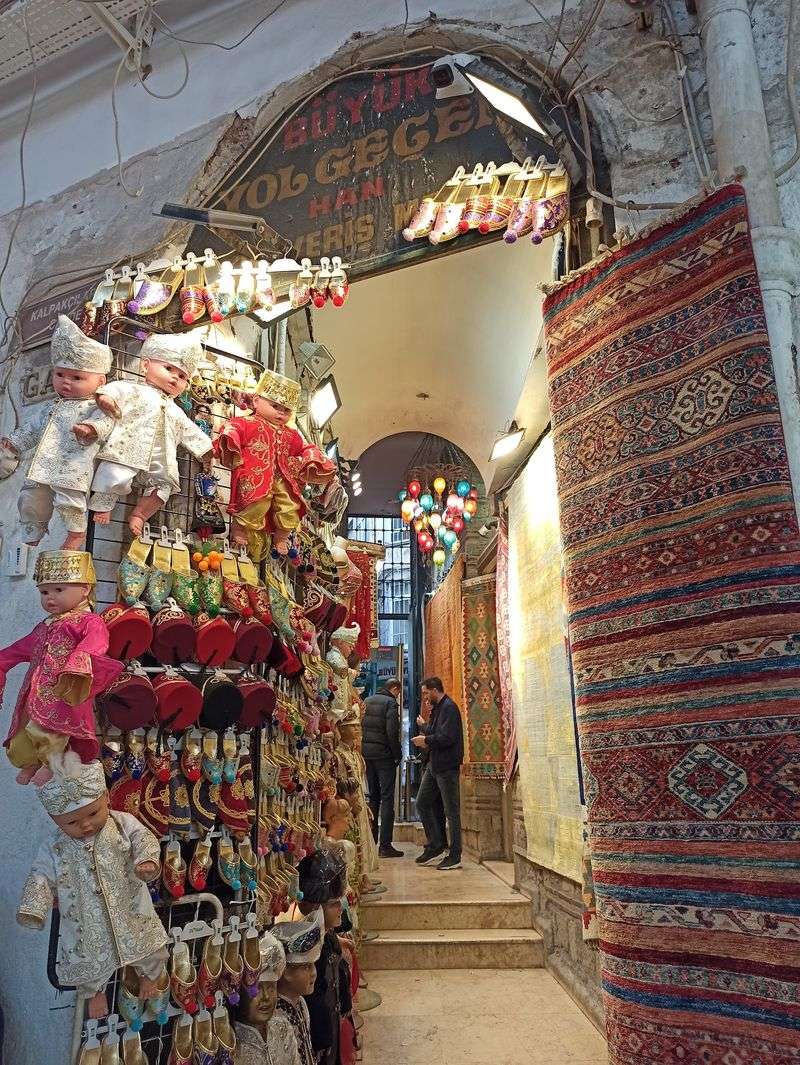
Getting lost is usually something travelers work hard to avoid. At Istanbul’s Grand Bazaar, it becomes the actual experience.
The covered market is enormous, with over four thousand shops spread across dozens of interconnected streets and passages under painted vaulted ceilings.
Jewelry, carpets, leather goods, ceramics, textiles, spices, and souvenirs fill every corner. The bazaar has operated continuously since the 15th century, making it one of the oldest covered markets in the world.
Its traders’ association remains active, and the complex is very much still operating in 2026.
Bargaining continues to be part of the culture in many shops. Prices are rarely fixed, and a polite back-and-forth is expected rather than awkward.
If a shopkeeper offers tea, accepting it carries no obligation to buy anything.
Even if you leave without purchasing a single item, the painted ceilings, narrow side passages, and constant movement through the space make the Grand Bazaar genuinely worth your time.
Smell Your Way Through the Spice Bazaar
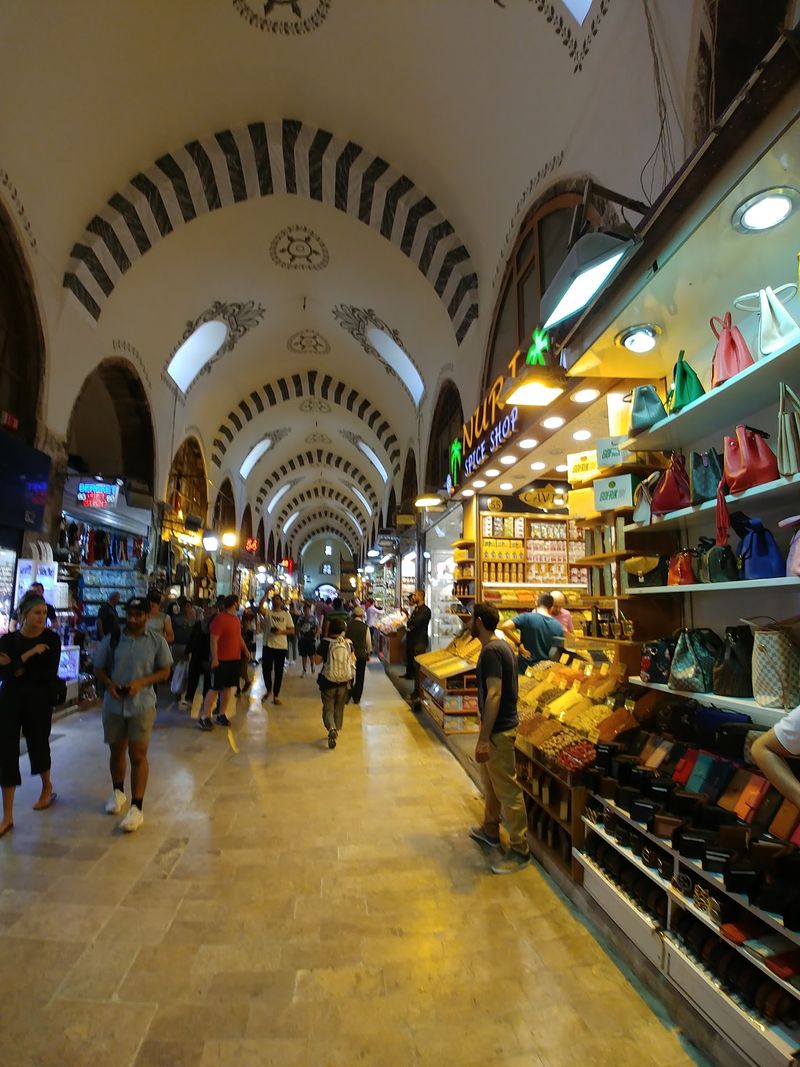
The Spice Bazaar operates on a completely different sensory register than the Grand Bazaar. Where the Grand Bazaar overwhelms your eyes with color and variety, this one hits you the moment you step through the entrance gates with layered aromas from hundreds of open spice displays.
Located in Eminonu beside the New Mosque, the market has been selling spices, dried fruits, nuts, teas, seeds, and Turkish sweets since the 17th century. The current displays mix traditional goods with modern packaged products, but the atmosphere remains distinctly historic.
Try a piece of Turkish delight before committing to a purchase. Shops often offer samples, and quality varies between vendors.
Tea blends and saffron make popular souvenirs that travel well.
After walking through the covered section, continue into the surrounding outdoor market streets. The area outside the historic building extends into an open-air market that is busier, noisier, and frankly just as interesting as the covered section inside.
Take a Bosphorus Cruise and See Istanbul From the Water
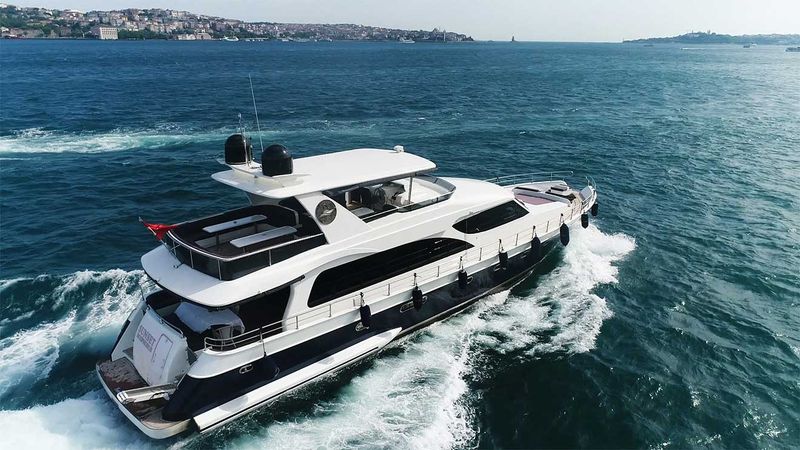
From street level, Istanbul can feel like a collection of separate neighborhoods and monuments. From the water, it suddenly becomes one coherent city, and the scale of it is remarkable.
A Bosphorus cruise is the single most relaxing and visually rewarding activity available in Istanbul. The waterway separates the city’s European and Asian sides, and from a boat you pass mosques, Ottoman palaces, wooden waterfront mansions, hillside neighborhoods, fortifications, and bridges in a single continuous view.
Istanbul’s municipal ferry company, Sehir Hatlari, operates dedicated Bosphorus sightseeing routes, including a Short Bosphorus Tour, making this accessible without booking a private tour. The price is reasonable, and the route covers the most visually impressive stretches of the strait.
Sit on the outer deck if the weather cooperates. Order tea from the onboard service.
Keep your camera close because the views shift constantly, and some of the best angles appear when you least expect them.
Climb Galata Tower for One of the City’s Classic Views
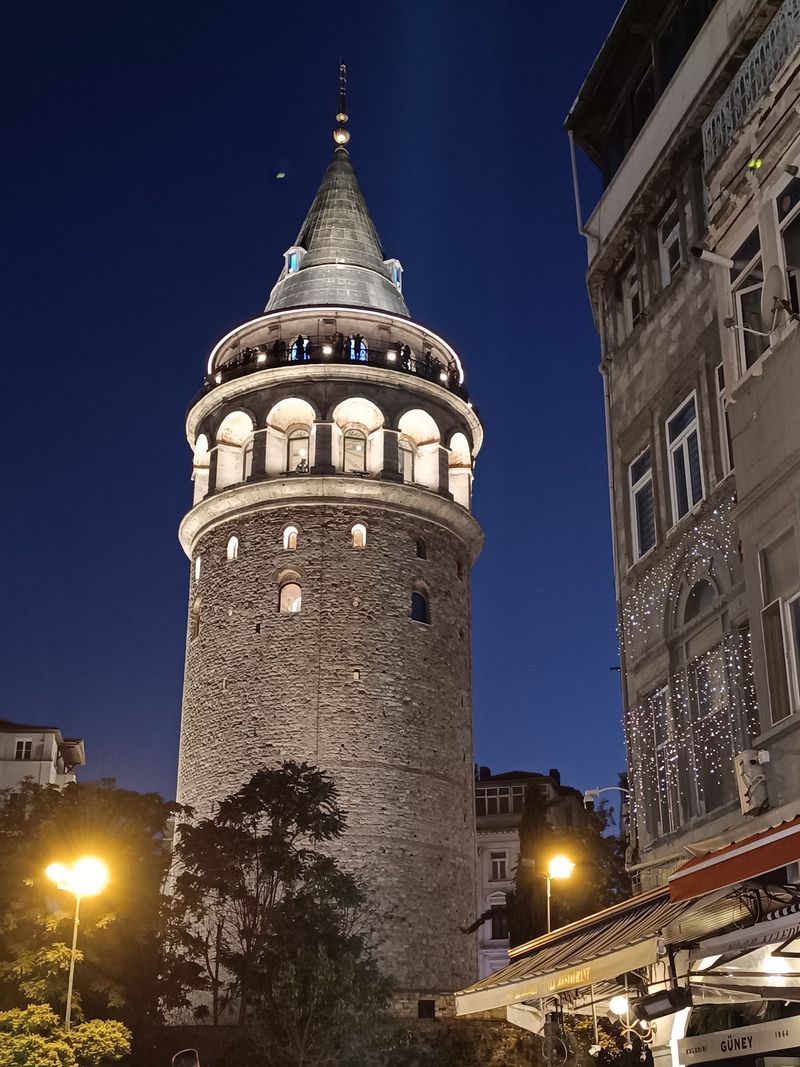
Built by the Genoese in the 14th century when Galata was a Genoese trading colony, this cylindrical stone tower has watched Istanbul change for nearly seven hundred years. Under the Ottomans it served as a fire lookout, among other purposes.
Today it operates as the Galata Tower Museum.
Most visitors come for the panorama, and the view genuinely earns its reputation. From the upper gallery, you can see the Golden Horn, the Bosphorus, the historic peninsula with its mosque silhouettes, the bridges, and rooftops spreading in every direction.
On a clear day the view is extraordinary.
The official museum site lists Galata Tower as open daily, with both daytime and evening museum hours available. Evening visits offer a completely different atmosphere as the city lights up below.
The surrounding Galata neighborhood is worth exploring before or after your climb. Independent bookshops, instrument stores, cafes, and historic buildings fill the steep streets leading down toward the waterfront.
Walk Down Istiklal Avenue
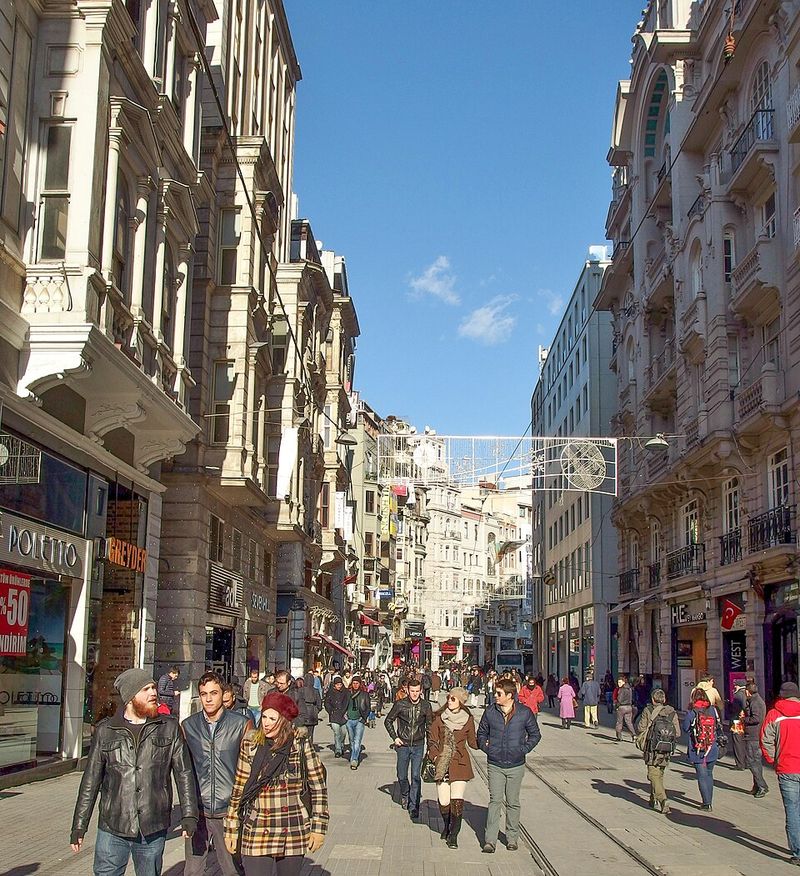
Some of the most memorable travel experiences have nothing to do with monuments. Istiklal Avenue is a reminder that simply being part of a city’s daily life can be just as rewarding as visiting its famous sites.
The long pedestrian boulevard runs through the Beyoglu district, connecting Taksim Square to the Galata neighborhood below. It is lined with shops, restaurants, cafes, historic passages, cinemas, consulates, and buildings that reflect Istanbul’s late Ottoman and early Republican architectural periods.
The street is busy on weekdays and extraordinarily crowded on weekends. That energy is part of its character rather than a reason to avoid it.
Walk slowly. Peel off into the side streets and historic shopping passages that branch away from the main boulevard.
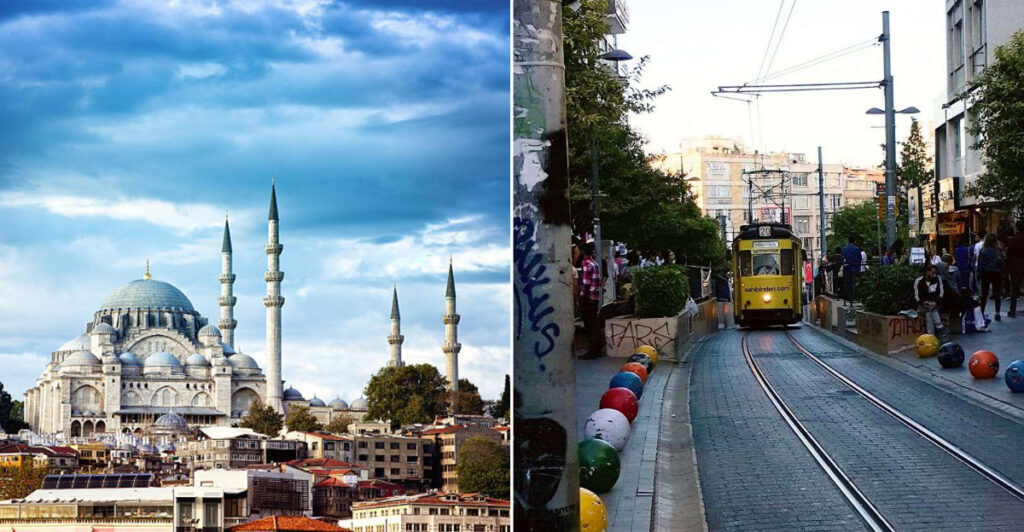
Istanbul’s famous red nostalgic tram still runs the Taksim-Tunel line, maintained and operated by IETT, though temporary suspensions occasionally occur during public events. Catching it in motion makes for one of Istanbul’s most photographed street scenes.
Visit the Magnificent Suleymaniye Mosque
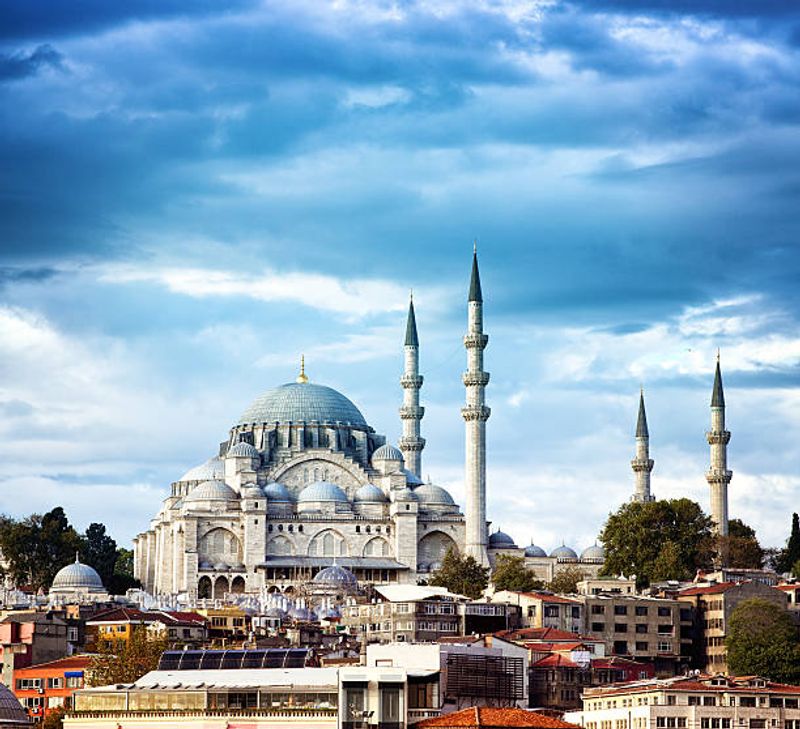
Tourists tend to concentrate around the Blue Mosque and Hagia Sophia, which means Suleymaniye Mosque often gets less attention than it deserves. That relative calm is actually one of the reasons to go.
Designed by Mimar Sinan, the most celebrated architect of the Ottoman Empire, the mosque was completed in 1558 during the reign of Sultan Suleiman the Magnificent. It sits on a hill above the historic peninsula, and the approach through the surrounding neighborhood already hints at how commanding the position is.
Once you reach the outer terraces, the view opens across the Golden Horn and Bosphorus in a way that genuinely stops people mid-sentence. The mosque interior is calmer and more restrained than the Blue Mosque, which many visitors find more moving rather than less.
The complex is open to visitors daily outside prayer times. The surrounding neighborhood has cafes and traditional restaurants worth exploring after your visit rather than rushing back toward Sultanahmet.
Cross From Europe to Asia on a Public Ferry
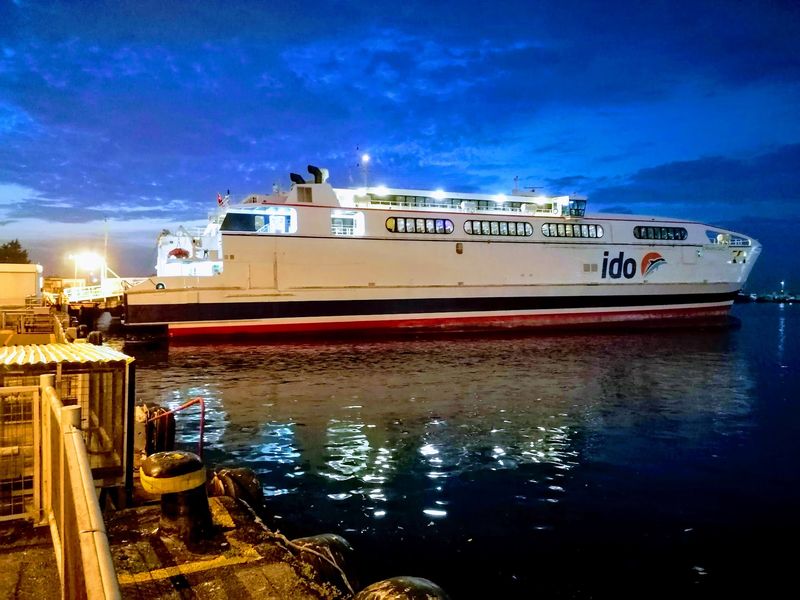
There is something quietly remarkable about casually crossing between two continents on a commuter ferry. Istanbul is the only city in the world where this is an ordinary part of daily life, and joining that routine even briefly feels special.
Istanbul’s public ferry network connects stops including Karakoy and Kadikoy, making the crossing straightforward and inexpensive. No tour booking required, no complicated logistics.
Buy a transit token, find an outdoor seat, and watch the city rearrange itself around you as the boat crosses the strait.
Seagulls follow the ferries consistently, often landing on the railings or swooping close enough to photograph easily. The skyline behind you shifts as you move across the water, and the Asian shore comes into focus gradually.
The novelty of having breakfast on the European side and wandering a neighborhood on the Asian side before noon never really fades. It is a simple experience that consistently ranks among travelers’ most memorable moments in the city.
Eat Your Way Through Kadikoy and Wander Into Moda
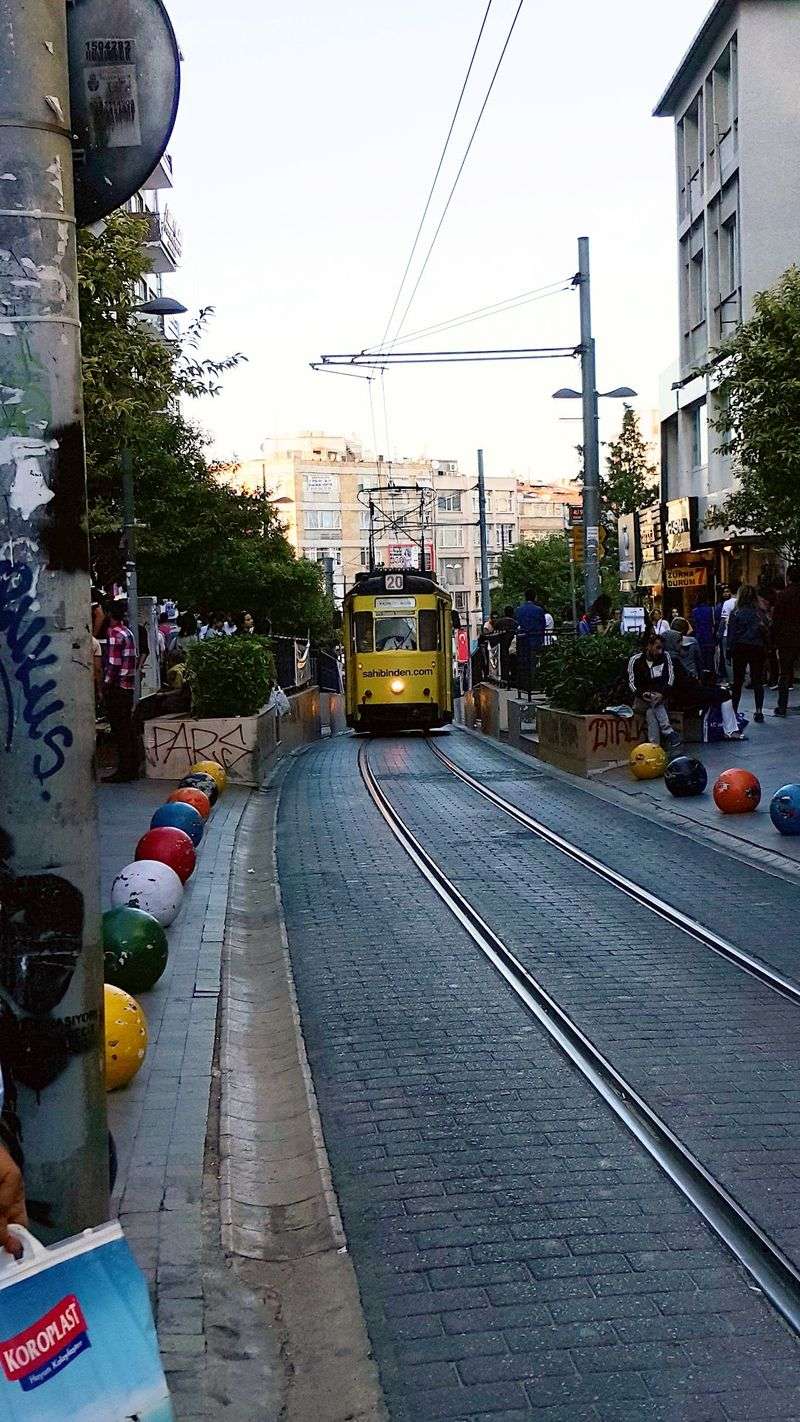
Kadikoy rewards the kind of traveler who prefers eating their way through a neighborhood over checking off another monument. The streets around the ferry terminal on Istanbul’s Asian side are packed with food shops, restaurants, cafes, fresh produce markets, and small boutiques that serve a local rather than tourist crowd.
Come hungry and graze rather than sitting down for one large meal. The covered market halls offer cheese, cured meats, olives, pastries, and fresh produce.
Street food options fill the surrounding blocks. The neighborhood’s food culture is genuine and varied.
The nearby Yeldeğirmeni area has developed a reputation for colorful large-scale street murals and independent cafes. Moda, a short walk south along the waterfront, has a quieter, more residential character with pleasant waterfront paths.
Kadikoy is one of those places that reminds you Istanbul is not simply a collection of historic sites. Millions of people live here, and this neighborhood gives you a real glimpse of contemporary city life.
Wander Through the Colorful Streets of Fener and Balat
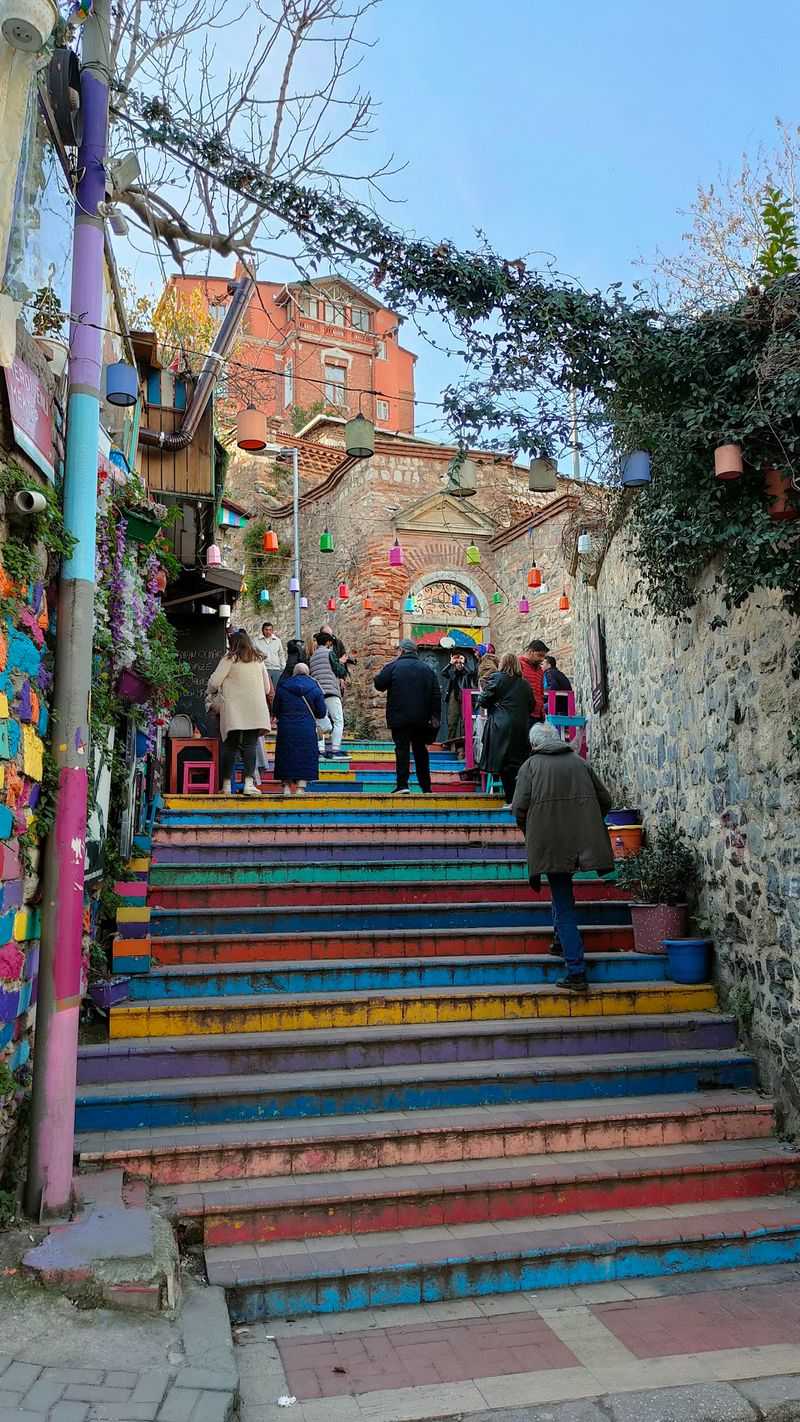
Balat is the kind of neighborhood where you stop every twenty meters to photograph something. Brightly painted houses in mismatched colors climb steep cobblestone streets, and historic buildings from multiple eras appear between ordinary homes and small cafes.
Together with neighboring Fener, the area reflects centuries of multicultural Istanbul history. Significant landmarks include the Ecumenical Patriarchate of Constantinople, the Bulgarian St. Stephen Church constructed from cast iron, the Ahrida Synagogue, and the distinctive red-brick Fener Greek High School sitting above the neighborhood.
Comfortable shoes are genuinely necessary here. The streets are steep and uneven, and trying to navigate them in anything less practical will make the experience miserable rather than pleasant.
Many of the colorful buildings that appear frequently in travel photography are people’s actual homes. Photographing respectfully and wandering away from the most-photographed corners will lead you to quieter streets that are equally interesting and far less crowded with cameras pointed at facades.
See the Extraordinary Interior of Dolmabahce Palace
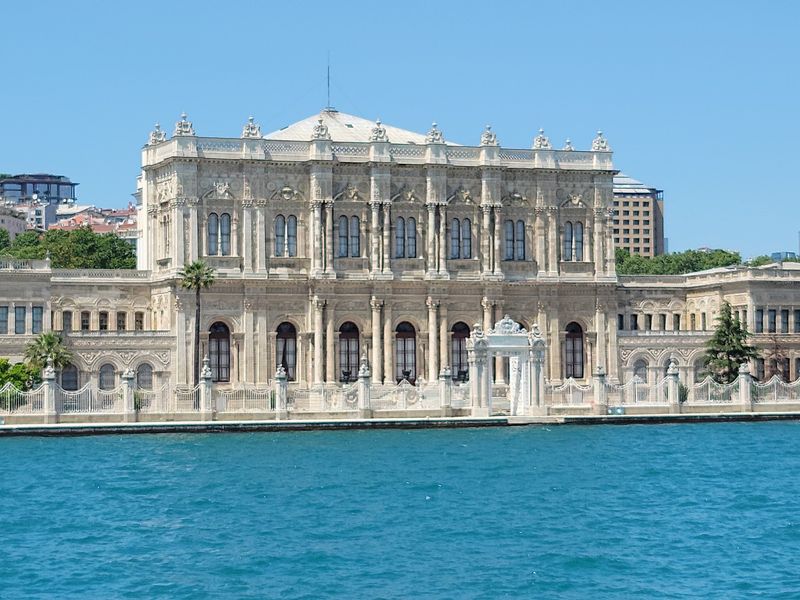
Topkapi Palace tells the story of Ottoman power at its height. Dolmabahce tells a different chapter, one shaped by the 19th century and the empire’s efforts to modernize and engage with European architectural traditions.
Built under Sultan Abdulmecid I and completed in 1856, the waterfront palace blends Ottoman design with Baroque, Rococo, and Neoclassical European influences. The result is an interior unlike anything else in Istanbul: hundreds of rooms, dozens of ceremonial halls, enormous crystal chandeliers, painted ceilings, gilded surfaces, and collections of European paintings and porcelain.
Its position directly on the Bosphorus shore gives the building an exceptional setting. Approaching from the waterfront path makes the scale immediately apparent in a way that photographs rarely convey.
Dolmabahce is closed on Mondays, with ticket offices generally operating from 9 a.m. to 5 p.m. Do not try to squeeze it between two other major attractions.
The interior is dense with detail and deserves unhurried attention rather than a quick walk-through.
Go Underground at the Serefiye Cistern
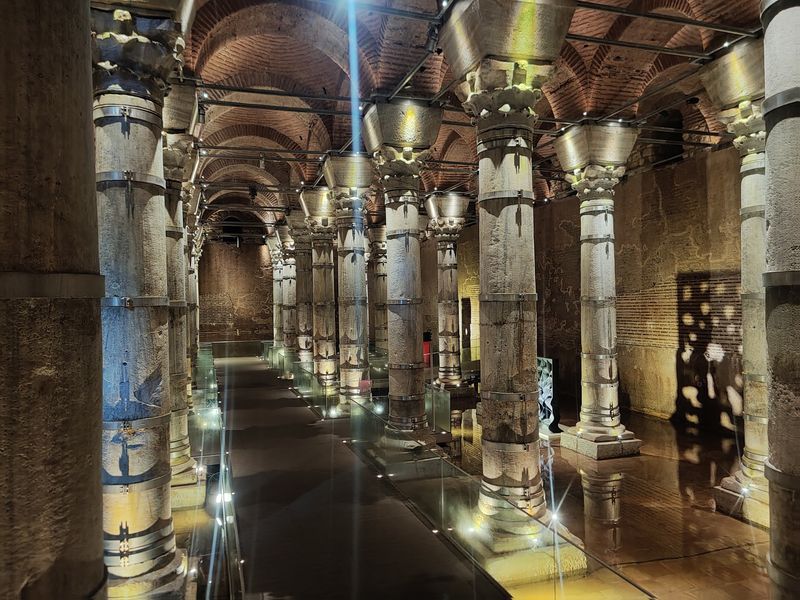
Istanbul’s underground water systems are among its least-discussed but most atmospheric historic spaces. While the Basilica Cistern is the more famous option, its official website currently shows a temporary-closure notice, making the Serefiye Cistern the practical and genuinely worthwhile alternative right now.
Also known as the Theodosius Cistern, the Serefiye dates to the fifth century and was rediscovered and restored in recent decades. It currently confirms daily opening hours on its official site.
Descending into the space means stepping out of the city’s noise and heat into something completely different.
Ancient columns stand in rows, their reflections visible in the water below. The vaulted brick ceilings and dim lighting create an atmosphere that feels genuinely removed from the street-level city above.
The temperature drops noticeably underground, which is a welcome relief after hours of walking.
The cistern is also considerably less crowded than the Basilica Cistern was before its closure, making for a calmer and more contemplative visit overall.
Finish With a Turkish Hammam and a Piece of Baklava
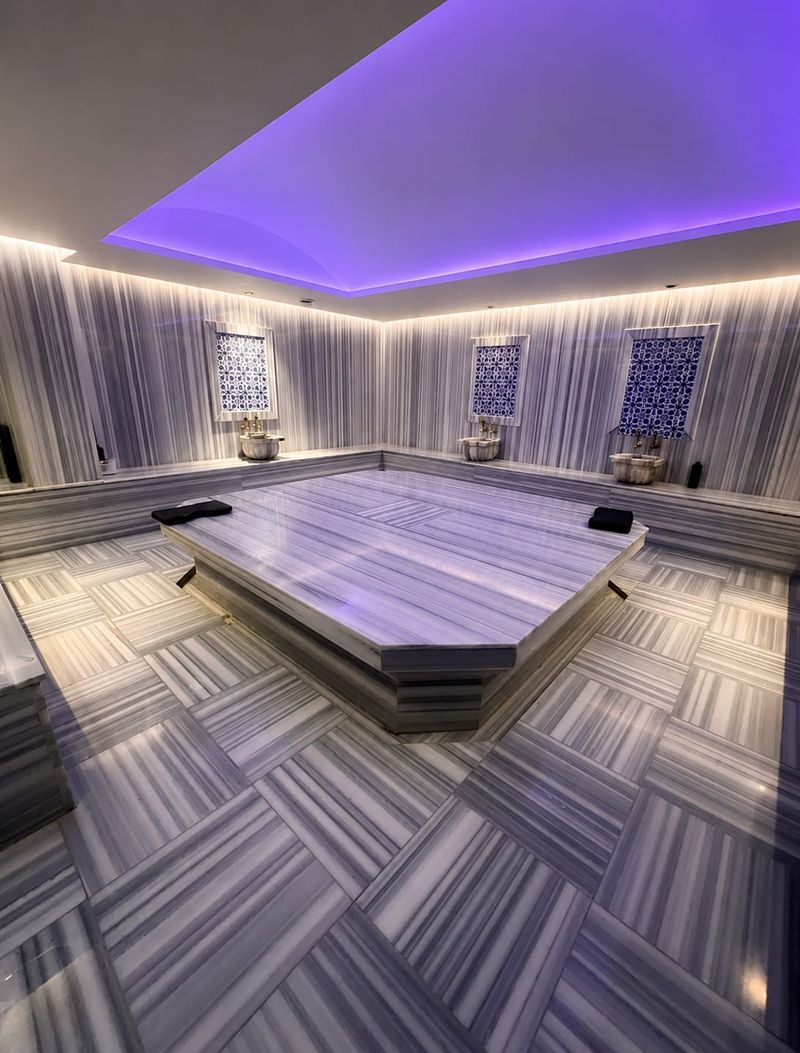
After several days of climbing Istanbul’s hills, crossing the Bosphorus, and walking through bazaars and palace courtyards, a traditional Turkish hammam stops feeling like a tourist activity and starts feeling like a genuine necessity.
A hammam session typically includes time on a heated marble platform, a thorough scrub, and a foam massage in a warm stone environment. For a historic setting, Hurrem Sultan Hammam stands directly between Hagia Sophia and the Blue Mosque.
Commissioned by Hurrem Sultan and designed by Mimar Sinan in the 16th century, the restored hammam is currently operating and offers traditional bath treatments.
Afterward, end the day with baklava. Karakoy Gulluoglu’s Karakoy shop is still operating and serves baklava alongside other Turkish sweets.
The family’s baklava-making tradition traces back to 1843, and the pistachio baklava remains the signature item.
Crispy layered pastry, ground pistachios, and syrup after a hammam is about as satisfying a way to close an Istanbul day as you are likely to find.
Share this story