Italy has thousands of hill towns, and many were built high for one practical reason: defense. Walls, towers, and steep lanes kept enemies out, and today those same features make the towns fun to explore on foot.
This list covers 17 towns from Liguria to Sicily, each with a historic center and a view of the land beyond. Some sit among Tuscan vineyards, while others perch on volcanic rock, mountain slopes, or coastal ridges.
Expect uphill walks, old stone, and plenty of places to stop and look out over the countryside. Wear comfortable shoes, because the best viewpoints usually come after a climb.
San Gimignano, Tuscany
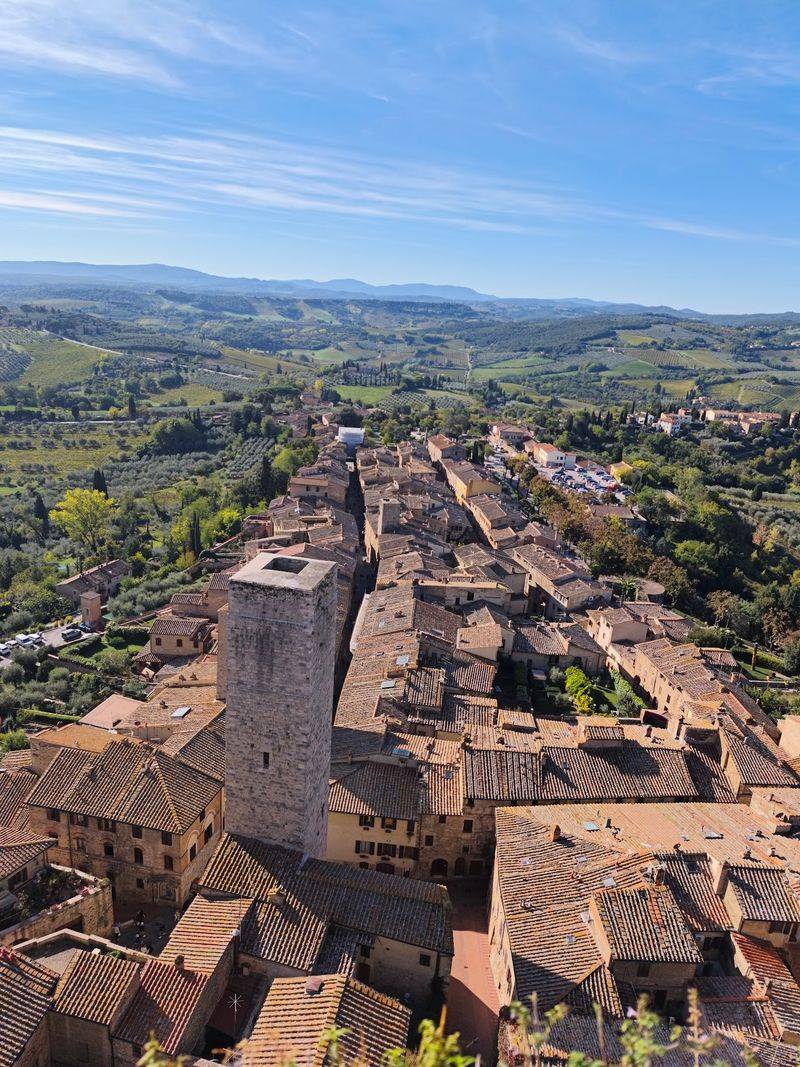
Count the towers as you approach, and you will see why San Gimignano has such an unusual skyline. Medieval families built dozens of fortified tower houses here, and 14 still stand today.
The historic center is a UNESCO World Heritage site. Inside the old walls you will find stone streets, piazzas, churches, and those tall towers packed close together.
The old town keeps a strong medieval feel, which makes it easy to picture how the place worked centuries ago.
Because the town sits on high ground, the countryside is always close by. Look between buildings or walk toward the edge of town, and you will spot vineyards, farmland, and rolling hills in the Val d’Elsa.
Short side lanes often end with a view, so do not stick only to the main street.
For the calmest walk, try exploring the narrow side streets early or late in the day, when day trip crowds are usually thinner. Comfortable shoes help on the uneven stone paving.
Montepulciano, Tuscany
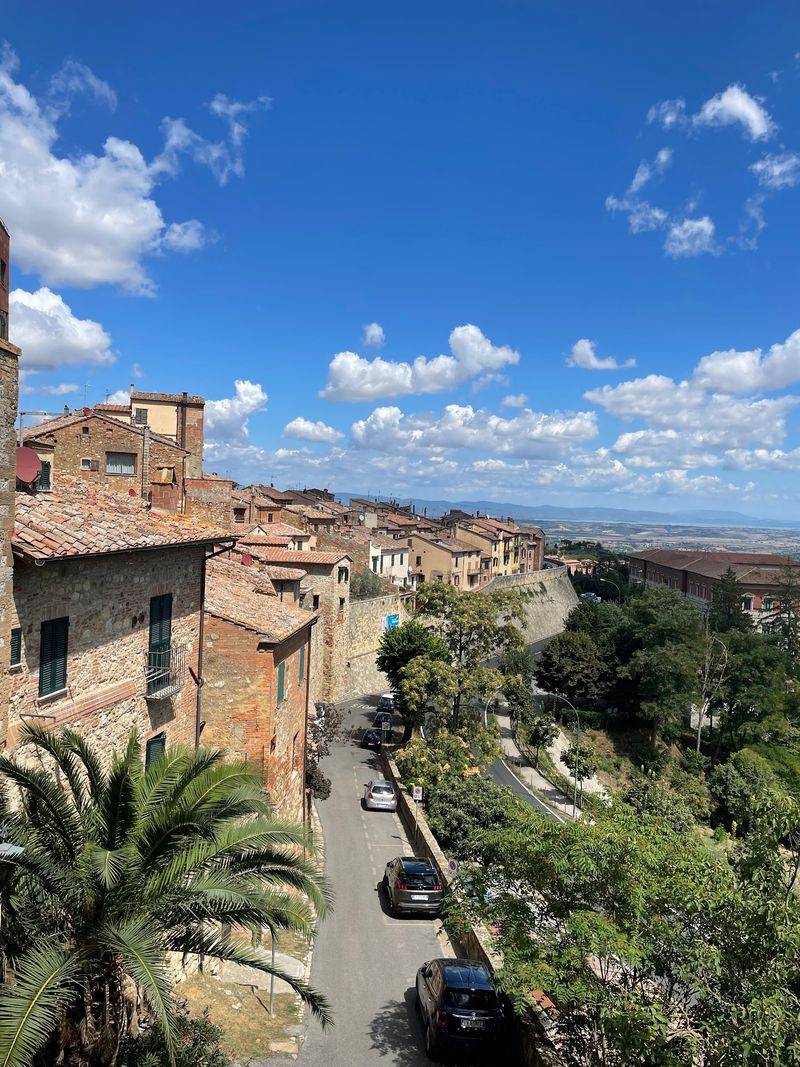
Bring your legs along for Montepulciano, because the streets here go uphill almost the whole way. The town sits on a limestone ridge between the Val d’Orcia and the Valdichiana.
Many of the grand buildings show Renaissance style, yet the town still follows its medieval street plan. A good route starts at Porta al Prato and heads toward Piazza Grande.
Along the way you will pass stone palaces, churches, arches, and narrow side streets that branch off the main road.
Each small gap between buildings can turn into a lookout. Past the edge of town, cypress trees, vineyards, fields, and rolling hills form the classic scenery people picture when they think of southern Tuscany.
Take the climb slowly and pause often. The upper part of town is where the best viewpoints are, so save some energy for the final stretch to the top.
Pienza, Tuscany
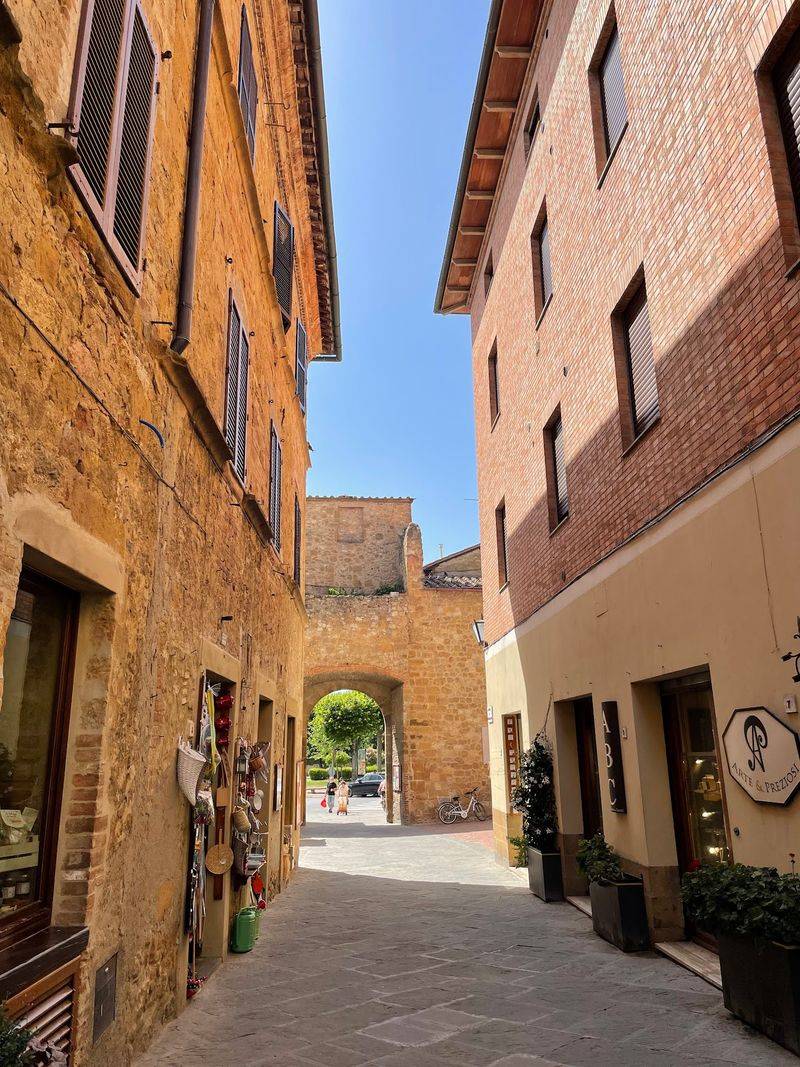
Few towns changed names and personalities like Pienza did. It started as the medieval settlement of Corsignano, and today it is celebrated as a masterpiece of Renaissance planning.
The town sits high above the UNESCO-listed Val d’Orcia, so it pairs small old streets with one of Tuscany’s best-known rural landscapes. Around Piazza Pio II you will see elegant 15th-century buildings, all arranged with a clear sense of design.
Smaller lanes lead away from the square toward overlooks above the valley. The garden at Palazzo Piccolomini is especially known for its panorama, which stretches across the countryside toward Monte Amiata.
Pienza is compact, so you can see its main sights without rushing. Leave extra time for the side lanes, since the valley views often appear when you least expect them, right at the end of a narrow passage.
Volterra, Tuscany
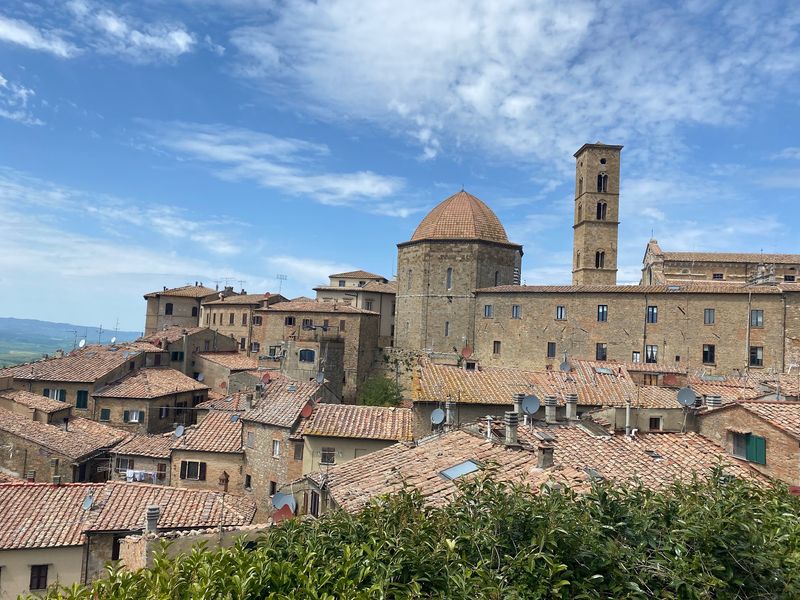
Walls on top of walls tell the story of Volterra. The town stands high between the Era and Cecina valleys, and it is enclosed by layers of Etruscan and medieval fortifications.
Inside, the historic center is full of stone lanes, ancient buildings, and small squares. Medieval architecture stands out, including the Palazzo dei Priori, which was begun in the early 13th century.
The high setting matters just as much as the buildings. Walk toward the edge of town and the streets suddenly open onto broad views across an understated landscape of fields, valleys, and distant Tuscan hills.
The scenery is quieter than the postcard vineyards farther east, and many travelers find that calm appealing.
Plan a loop that mixes the central streets with the town edges. That way you get both the dense medieval core and the wide open outlook in a single walk.
Cortona, Tuscany
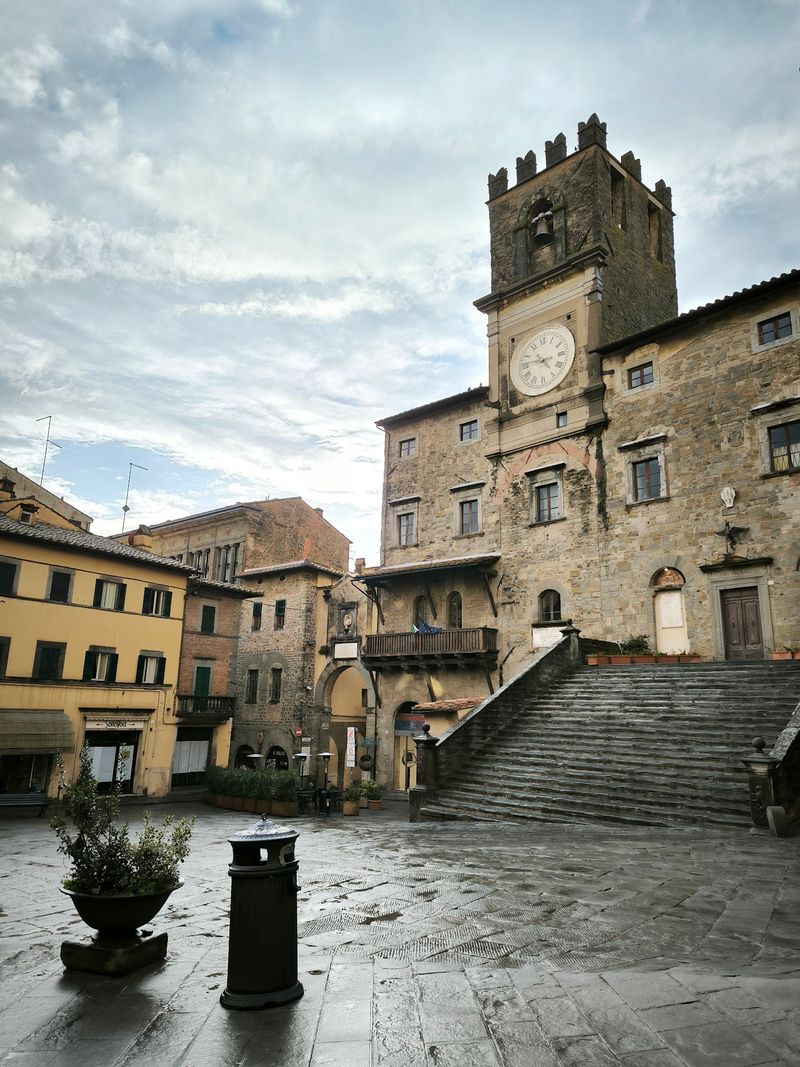
Cortona sits above the Valdichiana near the Umbrian border, and it mixes Etruscan history with a center that looks distinctly medieval.
Narrow cobbled streets climb past ancient palaces, artisan shops, churches, and small piazzas. The slopes are steep, so expect a workout, but the effort pays off.
The higher you go through town, the wider the views across the valley become.
That blend of steep stone lanes and open countryside helps explain why Cortona has become one of Tuscany’s most recognizable hill towns. It has gained that fame without losing the historic feel of its old center.
Browse the artisan shops as you climb, since they give you a natural excuse to catch your breath. Then keep going upward for the best valley outlooks, and bring a light jacket if the breeze picks up at the top.
Pitigliano, Tuscany
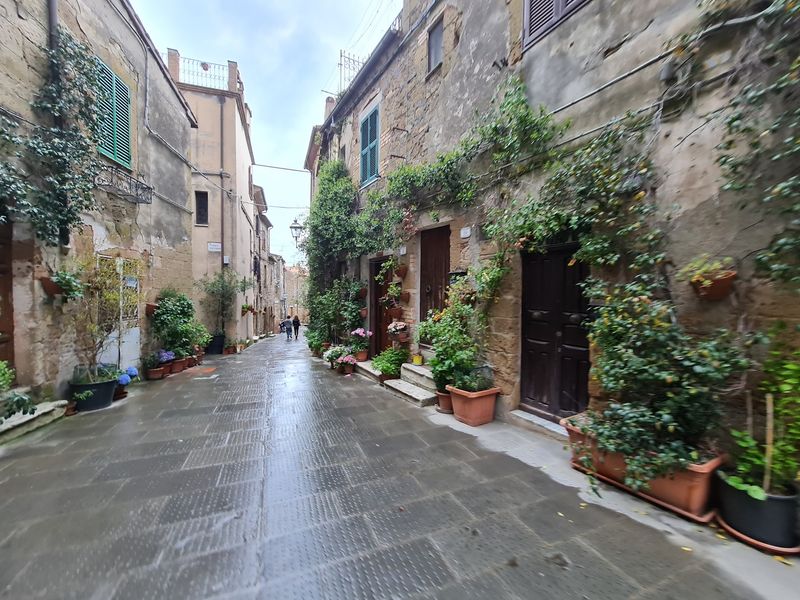
Where does the rock end and the town begin? At Pitigliano, it is hard to tell.
The historic center rises straight from a volcanic tuff cliff, so the stone houses look like an extension of the rock itself.
Inside, narrow medieval lanes twist between tightly packed buildings. Then, without warning, they open onto terraces above deep ravines.
Those sudden openings are a big part of the fun.
The area around town is also crossed by the Vie Cave, ancient pathways carved deep into the tuff landscape. They add another layer of history to an already unusual setting in southern Tuscany.
If you like walking, set aside time for the countryside paths as well as the town streets. Sturdy shoes are a good idea, since both the lanes and the trails can be uneven.
The contrast between built stone and carved stone is what makes this place stand apart.
Sorano, Tuscany
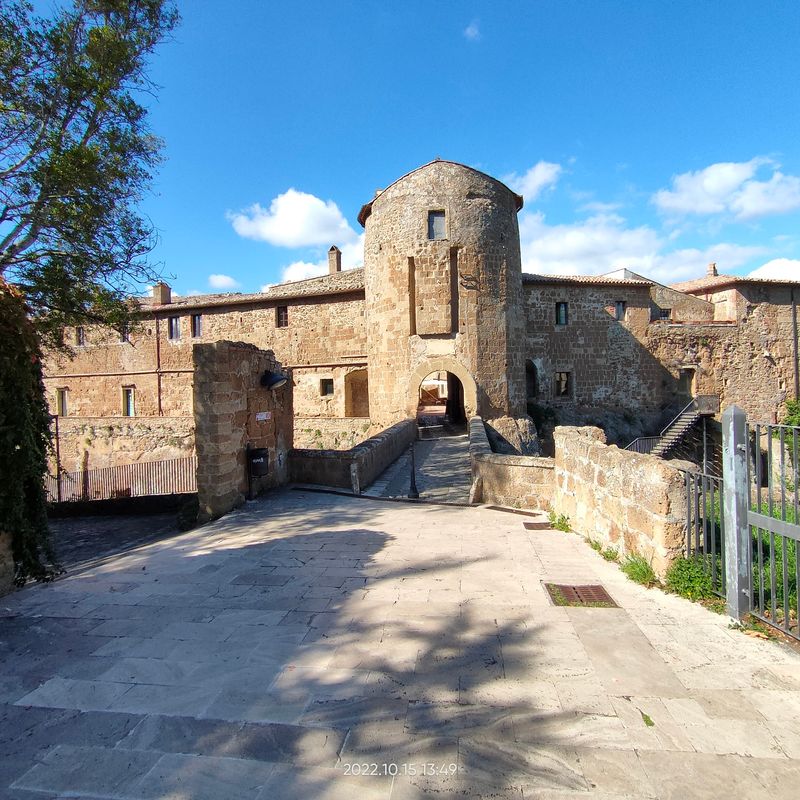
Shaped by volcanic rock, Sorano is another southern Tuscan settlement that seems to grow out of the ground. Houses, fortifications, stairways, and lanes cling to the tuff cliffs above the Lente River valley.
The historic center keeps the irregular pattern you would expect from a medieval defensive town, not a carefully planned city. Streets bend, stairs appear suddenly, and buildings sit at odd angles to one another, which makes wandering feel like solving a puzzle.
For a wider view, head to the Masso Leopoldino. This elevated viewpoint looks out over the rooftops, the surrounding rocky formations, wooded slopes, and the deep countryside below.
Sorano pairs nicely with Pitigliano on a southern Tuscany trip, since both towns share the same volcanic landscape. Give yourself time for the stairways, though.
They are steep, and the best perspectives come from taking them slowly.
Orvieto, Umbria
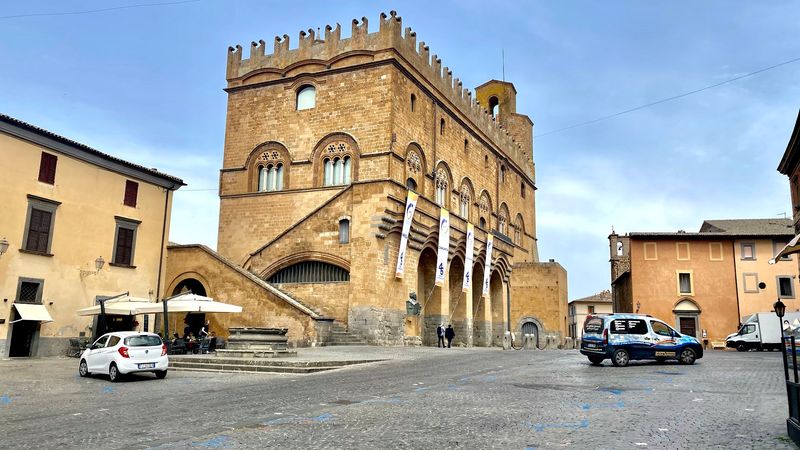
Picture a town sitting on a giant stone platform. That is Orvieto, which occupies a massive volcanic plateau high above the Paglia River valley.
The dramatic position made the site naturally defensible. Today the historic center is filled with medieval streets, palaces, stone houses, and the famous Gothic cathedral, which is the main landmark most visitors head for first.
Several spots along the edge of town show just how high Orvieto stands over the Umbrian landscape. The gardens around the Albornoz Fortress and the Torre del Moro are particularly good places to see the rolling hills stretching away from the cliff.
A smart plan is to see the cathedral and central streets first, then walk out toward the edge for the views. Doing it in that order lets you compare the tight medieval center with the huge open space just beyond it.
Spello, Umbria
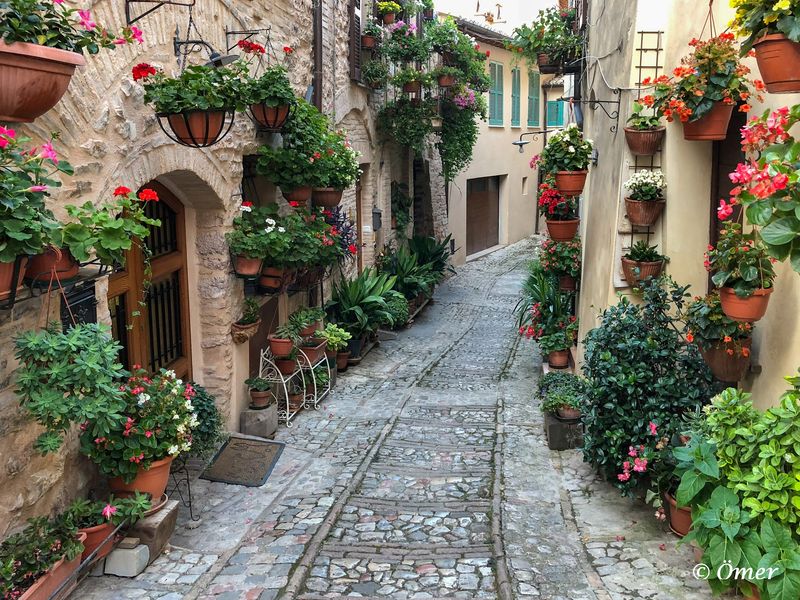
Flower pots line many of the lanes in Spello, which climbs the lower slopes of Monte Subasio. The town is a maze of stone houses, arches, and winding medieval streets.
Roman remains survive alongside the later medieval town, so the historic center feels layered, with different eras sitting side by side. You may notice ancient stonework close to buildings from much later periods.
One of the best things about Spello is how quickly the enclosed streets open toward the countryside. From the Belvedere, you can look across the Topino Valley and toward hills extending between Montefalco and Assisi.
Because the town is built on a slope, plan for steady uphill walking. Take your time with the side lanes, since they often lead to small corners that most quick visitors miss.
The reward is a mix of old stone close up and Umbrian farmland in the distance.
Gubbio, Umbria
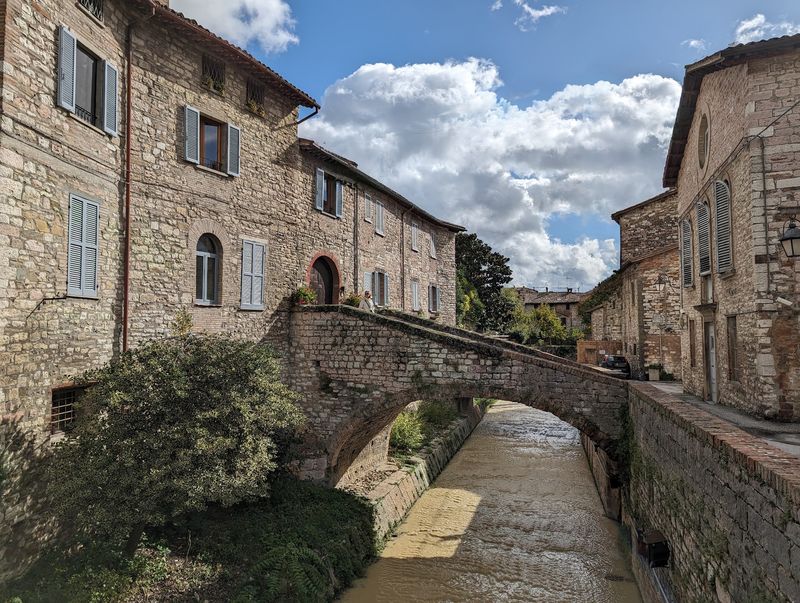
Gray stone is the signature material in Gubbio, a town built against the slopes of Monte Ingino. It is one of Umbria’s most atmospheric medieval towns, thanks to steep streets and monumental civic palaces.
Broad historic squares add to the well-preserved look of the center. Piazza Grande, begun in the 14th century, works almost like a giant balcony above the surrounding territory.
Its panoramic terrace faces outward toward the Umbrian countryside. That creates a striking contrast between Gubbio’s dense medieval architecture and the open valley below, and it is easy to see both in a single glance.
The streets here rise and fall quickly, so wear shoes with good grip. Walk the upper lanes slowly and look for the stone details on the old civic buildings.
The mix of heavy stonework and wide views gives Gubbio a serious, solid character that stands out among Umbrian towns.
Civita di Bagnoregio, Lazio
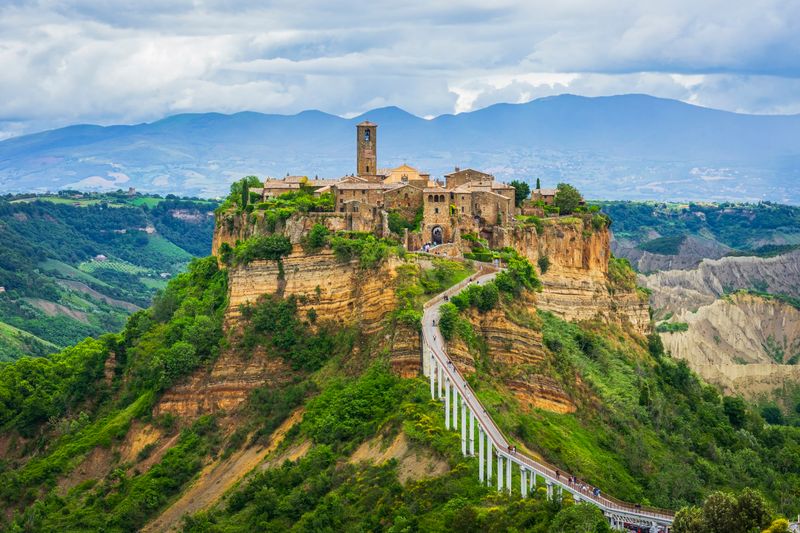
Getting there takes a walk. Visitors approach Civita di Bagnoregio on foot, then pass through Porta Santa Maria into a compact maze of medieval alleys, stone houses, and tiny squares.
The village sits on a fragile tuff outcrop surrounded by the eroded landscape of the Valle dei Calanchi. That isolation is part of what makes it so unusual among Italian hill towns.
From the village and nearby viewpoints, the land falls away into clay ridges, gullies, wooded slopes, and strangely sculpted hills that erosion keeps reshaping.
Because the outcrop is delicate, it is worth treating the place gently and staying on the proper paths. The approach on foot is part of the experience, so allow time for it.
Bring water and comfortable shoes, and check current access details before you go, since conditions and entry arrangements can change.
Sermoneta, Lazio
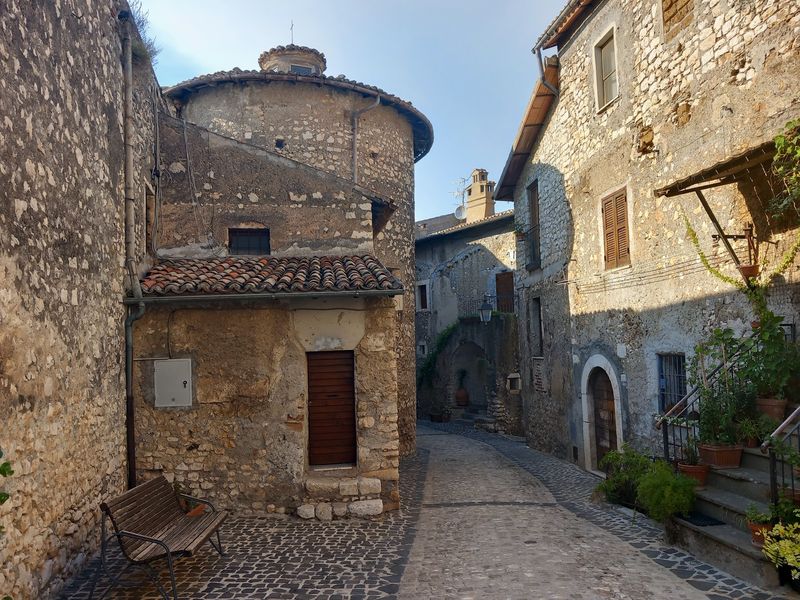
High in the Lepini Mountains, Sermoneta looks down on the broad Pontine Plain. Its historic center remains enclosed within old walls and is considered one of the area’s best-preserved medieval settlements.
Stone streets climb past churches, ancient houses, and arches. The imposing Caetani Castle anchors the town and gives the skyline a strong, fortified profile.
The Belvedere delivers the landscape that the elevated position promises. It opens toward the plain below, while olive groves, chestnut woods, and forested hills surround the settlement itself.
Sermoneta makes a relaxed stop for anyone exploring between Rome and the southern coast, though a car or local transport plan helps. Keep your walk unhurried and look for the arches along the lanes.
They show how tightly the old town was built inside its walls, and the viewpoint rounds out the visit nicely.
Gradara, Marche
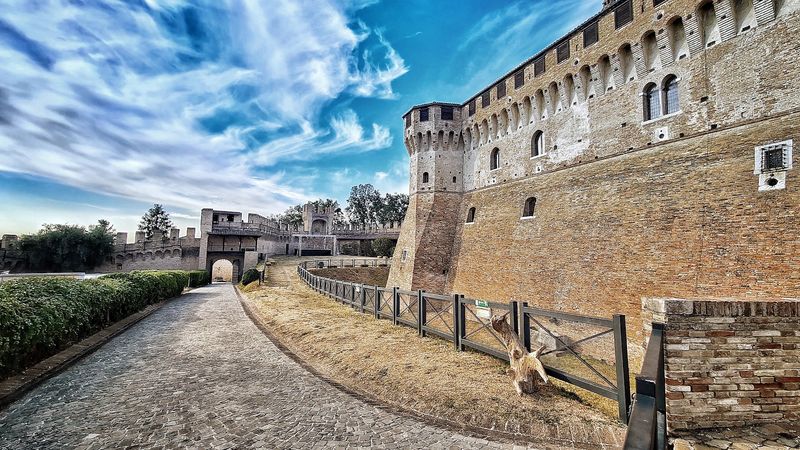
Walls define Gradara. The village is wrapped in a remarkably intact system of medieval fortifications, and its hilltop fortress dominates the scene.
Visitors enter through the walls and follow old streets through the compact fortified village. The atmosphere still reflects the settlement’s defensive past, since everything is arranged around protection.
Outside the walls, walking routes circle the hill and offer views over the rural landscape of the Pesaro area. Cultivated fields, Mediterranean vegetation, gentle hills, and glimpses toward the Adriatic make Gradara especially rewarding beyond the fortress itself.
Do both the inside and the outside. The inner streets show how a fortified village worked, while the outer path gives you the distance to see the walls as a whole.
It is a short, easy way to understand medieval defense, with countryside views added in.
Santo Stefano di Sessanio, Abruzzo
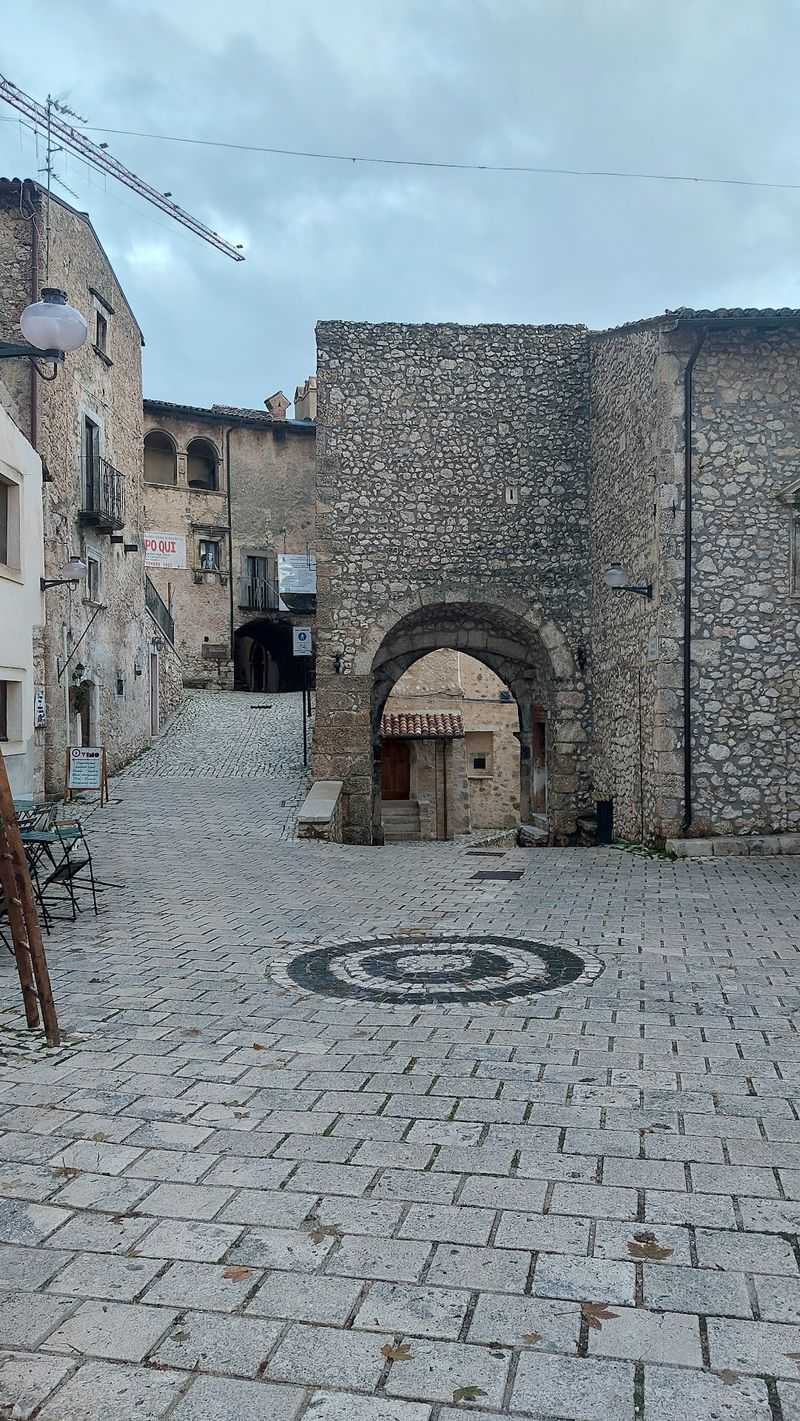
At around 4,100 feet above sea level, Santo Stefano di Sessanio feels far from the vineyard-covered hill towns of central Italy. This fortified medieval village sits high in the mountains of Abruzzo, within the Gran Sasso region.
Its compact center is made of limestone buildings, narrow passages, arches, and a labyrinth of lanes shaped over centuries. The mountain setting gives the stonework a rugged look that differs from the softer Tuscan scenery.
Historic houses have also been restored as part of an albergo diffuso project. This approach spreads accommodations through existing old buildings, which helps bring new life to the village while preserving its traditional character.
Pack layers, since altitude means cooler air than in the lowlands. The village rewards slow walking, so allow time to follow the lanes without a fixed plan and let the mountain scenery frame each turn.
Brisighella, Emilia-Romagna
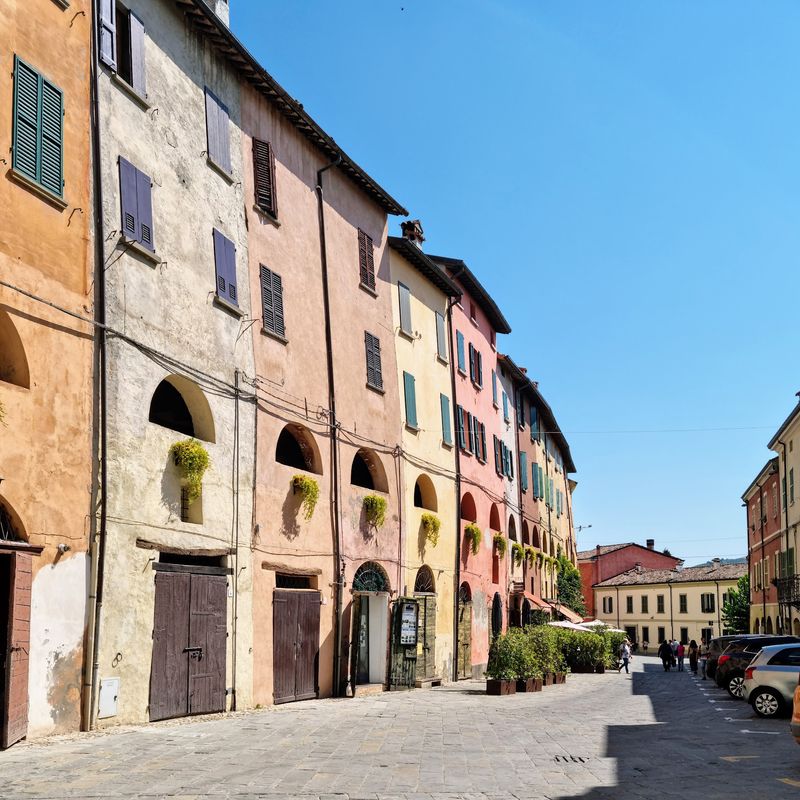
Gypsum ridges and rocky spurs give Brisighella a landscape that is easy to recognize. The village lies among the hills of the Tuscan-Romagna Apennines, where historic buildings meet unusual geology.
The medieval village invites visitors into cobbled alleys and small squares surrounded by colorful houses. The mix of warm building colors and pale rock makes the setting stand out from the stone-gray towns elsewhere on this list.
Climb higher and the setting becomes even more impressive. Panoramic points around the historic center look across olive groves, wooded hills, caves, rocky formations, and the distinctive badlands known locally as calanchi.
Wear shoes that handle slopes well, because the best outlooks sit above the village streets. Take a moment at each high point to compare the tidy town below with the rough, sculpted land around it.
That contrast is what gives Brisighella its personality.
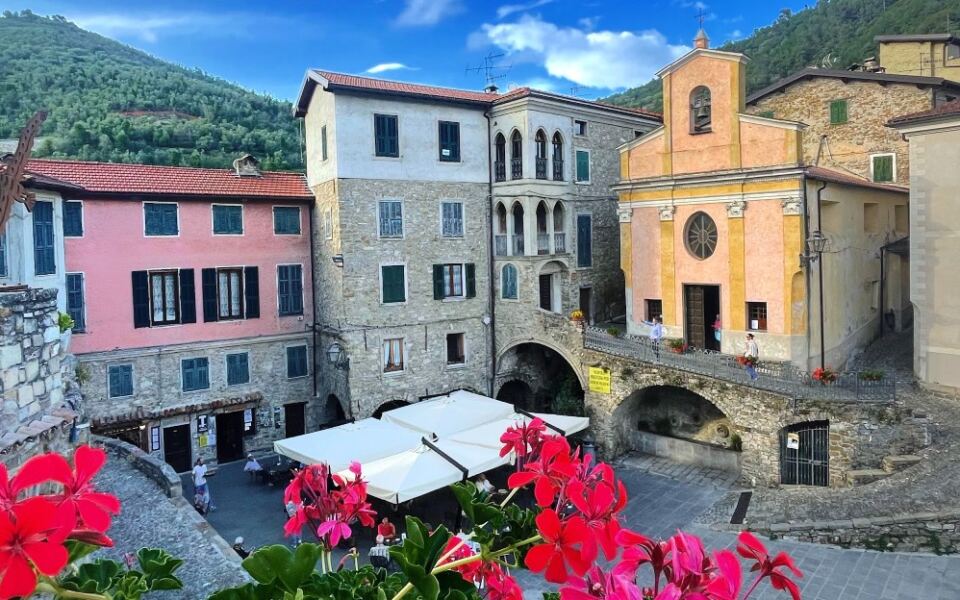
Apricale, Liguria
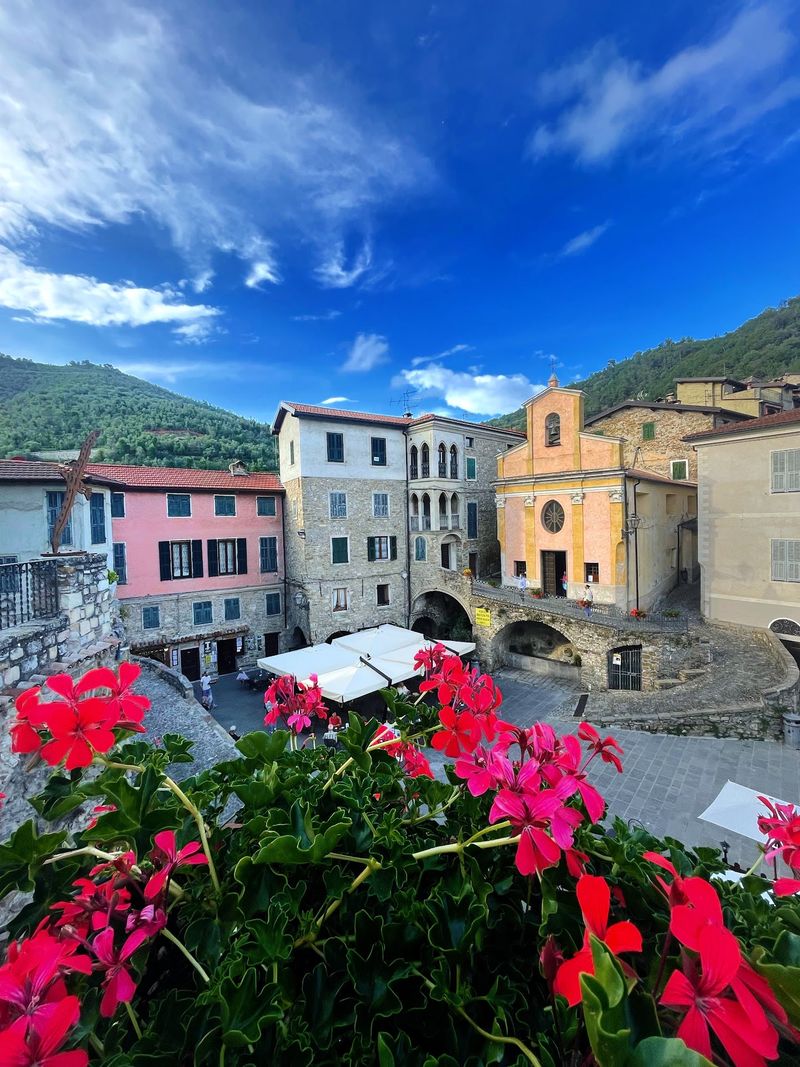
Most people think of Liguria as a coastline, yet Apricale shows another side. This quieter village sits in the hills between the Italian Riviera and the Ligurian Alps.
The medieval hilltop village dates back centuries and is surrounded by mountains, olive groves, and green valleys. That setting feels far from the beach crowds, even though the sea is not so distant.
Within the center, covered passages and narrow caruggi climb between stone houses toward the castle at the top of the settlement. The dense network of lanes makes wandering part of the experience, not just a way of reaching individual sights.
Let yourself get a little lost here. The lanes are short and the village is small, so it is easy to find your way back.
Sturdy shoes help on the steady upward slope toward the castle.
Erice, Sicily
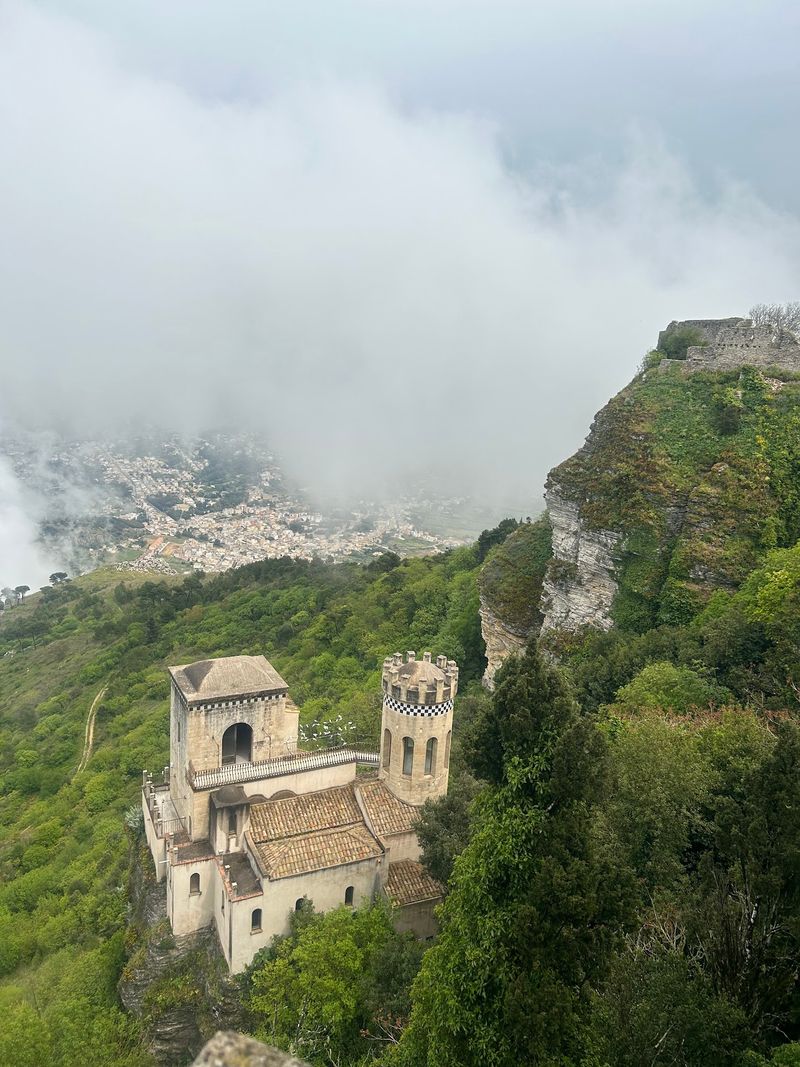
About 2,460 feet above sea level, Erice rises on a mountain overlooking western Sicily. It is a town where weather can change the whole experience, so a clear day makes a real difference.
Inside the historic walls, stone-paved medieval lanes lead past churches, convents, courtyards, and the Norman-era Castle of Venus.
From viewpoints around the fortress and town, the landscape drops dramatically toward Trapani. You can see its salt pans, the surrounding countryside, and the Egadi Islands offshore, which gives Erice one of the broadest panoramas on this list.
Check the forecast before heading up, since clouds can cover the mountaintop and hide the scenery. Bring a light layer, as the elevation can feel cooler than the coast.
Wear shoes with good grip for the polished stone lanes, which can be slippery in damp conditions.
Share this story