Governments and leaders have always found ways to shape what people believe, often without those people ever realizing it. Some of the most powerful messages in history never came from dramatic speeches or obvious slogans. They arrived through school lessons, religious ceremonies, newspaper headlines, and everyday images repeated so often they started to feel like facts. These 15 campaigns show just how quietly and effectively public opinion has been steered throughout history, and why understanding them matters more than ever.
1. Augustus’ Image as Rome’s Savior
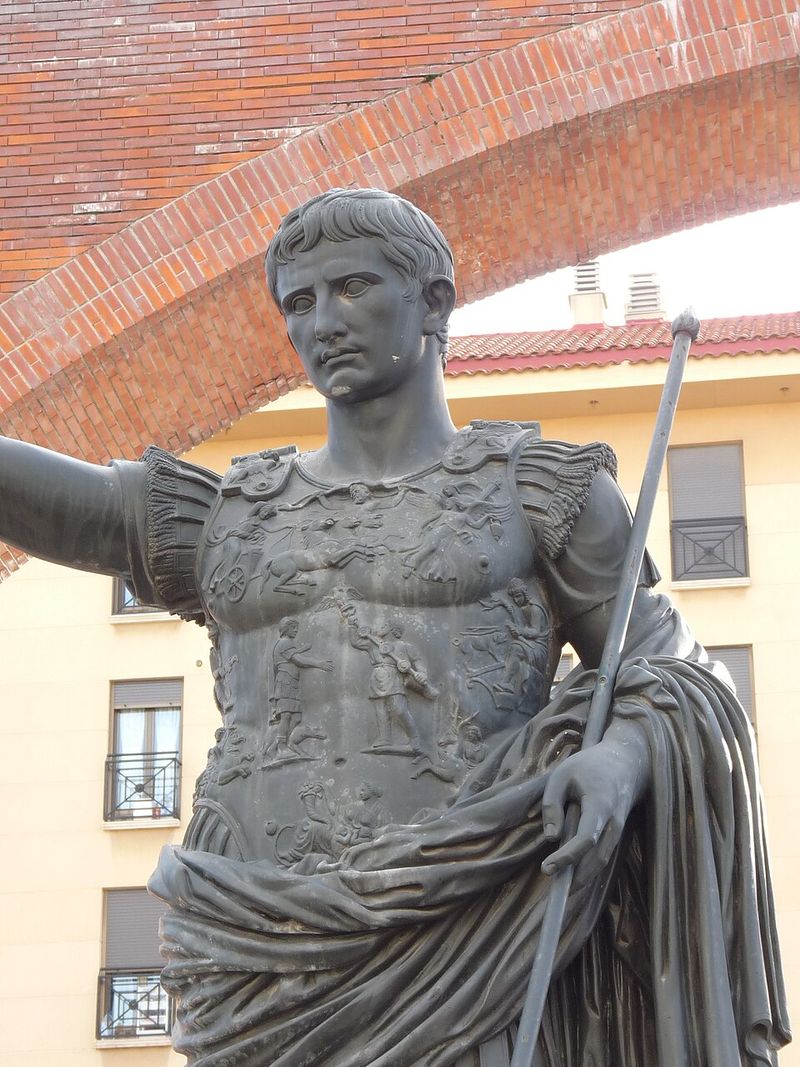
Winning a civil war was one thing, but convincing an entire empire you were its rightful savior required a completely different strategy. Octavian, who later took the title Augustus, launched a deliberate campaign to reshape his public identity after decades of political chaos in Rome.
He commissioned monuments, temples, and public buildings on a massive scale, each one reinforcing the idea that Rome was thriving under his care. Coins bearing his face circulated daily, carrying inscriptions that called him “son of the divine” and “father of the people.”
Poets like Virgil wrote about Rome’s glorious destiny, subtly tying that destiny to Augustus himself. By controlling art, architecture, and literature simultaneously, he transformed from a ruthless political operator into the empire’s beloved restorer, all without a single formal declaration of dictatorship.
2. Qin Shi Huang’s Standardization Campaign
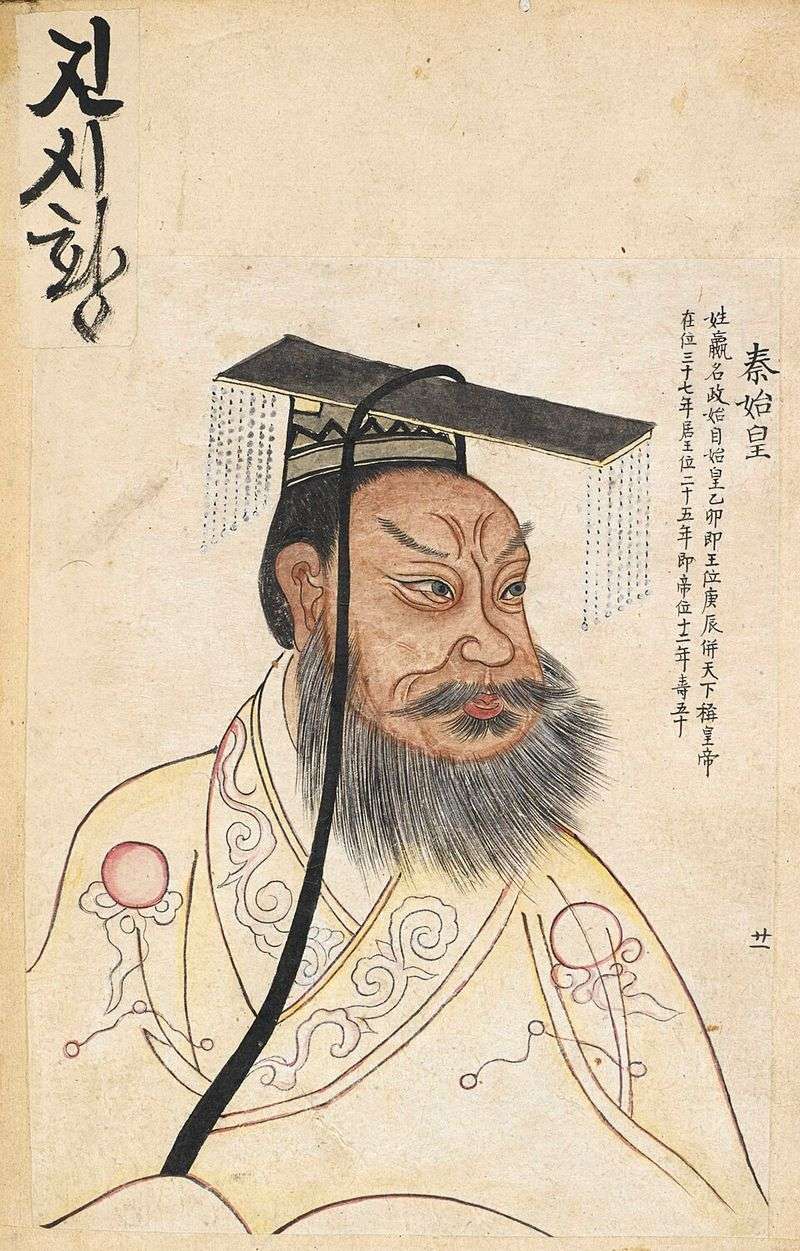
China’s first emperor conquered six rival kingdoms, but unifying land through military force was only the beginning of his ambition. Qin Shi Huang understood that lasting control required people to think of themselves as part of one nation, not as citizens of their former states.
He standardized the written script across the empire in 221 BCE, ensuring that a merchant in the east and an official in the west could read the same documents. He also unified currency, weights, and measurements, making daily economic life consistent from one region to the next.
These reforms were practical on the surface, but their deeper purpose was ideological. By erasing the visible differences between former kingdoms, Qin Shi Huang made the idea of a single centralized Chinese state feel natural and inevitable, embedding loyalty to the empire into the routines of everyday life.
3. Ashoka’s Rock Edicts
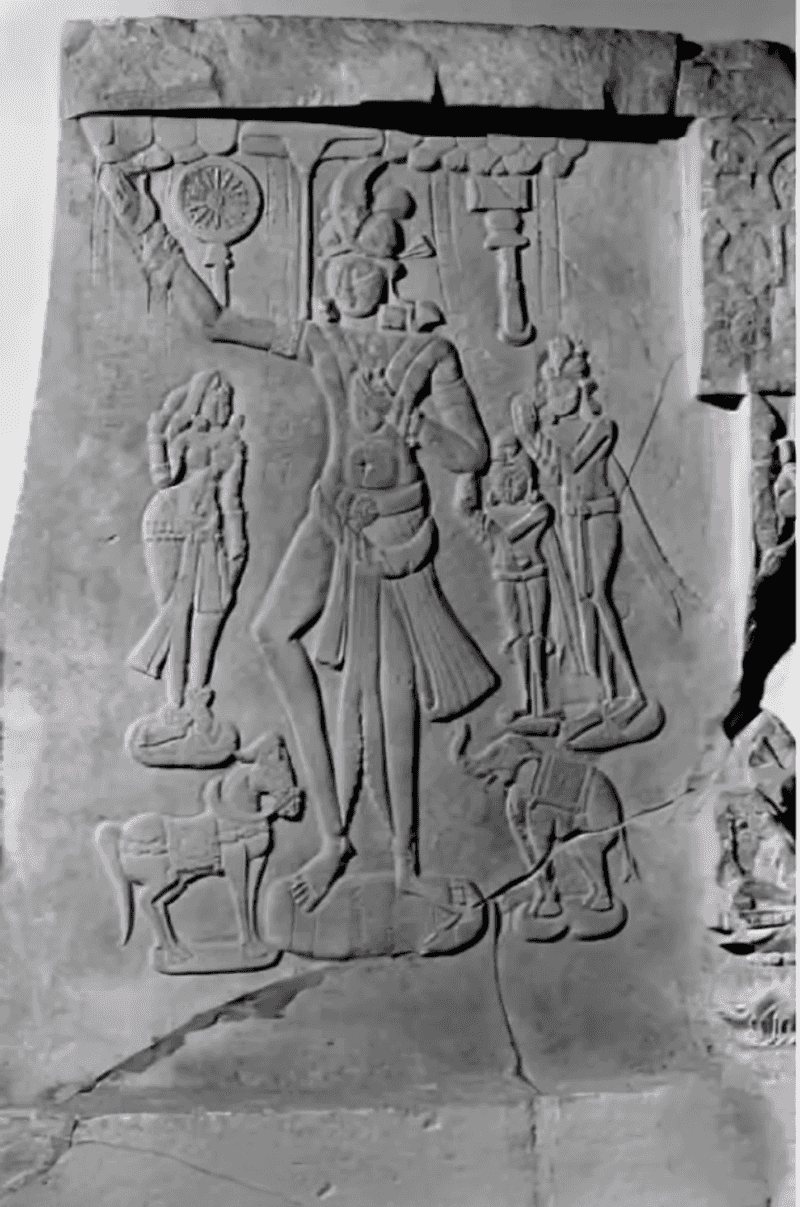
After the Kalinga War left him shaken by the scale of its destruction, Emperor Ashoka made a decision that no ancient ruler had made quite so publicly before: he admitted that conquest had come at too great a cost and committed to governing differently.
His response was to carve his new moral philosophy directly into rocks and stone pillars across the Mauryan Empire, in local languages people could actually read. The inscriptions promoted nonviolence, religious tolerance, and fair treatment of all subjects, presenting Ashoka as a ruler guided by ethical principles rather than raw power.
Strategically placed near trade routes and pilgrimage sites, these edicts reached merchants, travelers, and local communities alike. The campaign was remarkable for its transparency, yet it also served a political purpose by positioning Ashoka as uniquely compassionate, distinguishing his reign from every conqueror who came before him.
4. Medieval Divine Right of Kings
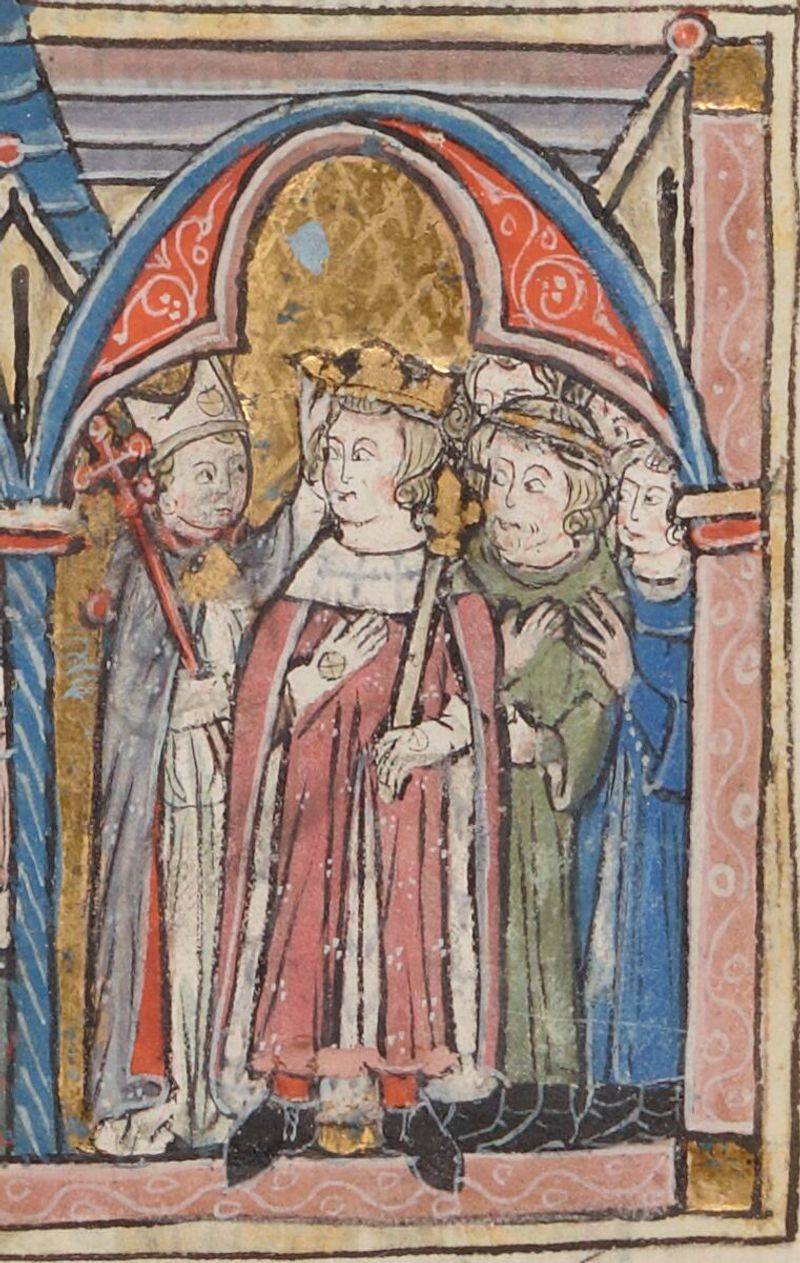
Few political ideas have proven as durable or as convenient as the belief that kings ruled because God personally chose them. Across medieval Europe, this concept gave monarchs a layer of authority that no army or parliament could easily challenge.
Church coronations were elaborate rituals designed to make this divine appointment visible and public. Bishops anointed kings with holy oil, priests delivered sermons connecting obedience to the monarch with obedience to God, and religious artwork in cathedrals visually linked rulers to heavenly figures.
The practical result was that questioning the king became morally dangerous, not just politically risky. This messaging was reinforced through generations of religious education, royal symbolism, and official ceremonies until it became widely accepted as simply how the world worked. The Divine Right doctrine kept monarchies stable across much of Europe for centuries, demonstrating how effectively religion and governance could be woven together.
5. The Spanish Empire’s Missionary Narrative
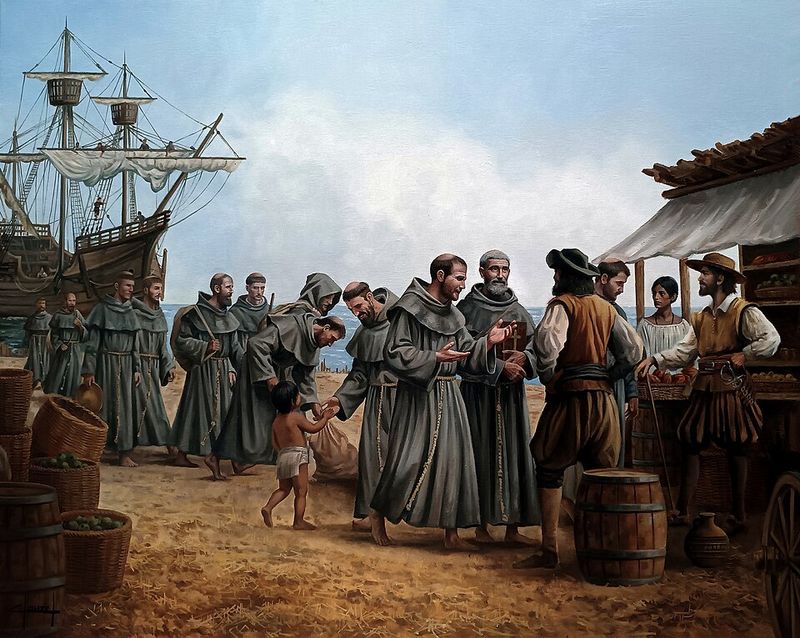
Spain’s expansion into the Americas after 1492 was driven by gold, land, and political ambition, but the official story told to European audiences emphasized something else entirely: spiritual salvation. The monarchy and the Catholic Church framed colonization as a sacred duty to bring Christianity to indigenous populations.
Official chronicles sent back to Spain consistently highlighted conversion numbers and the construction of churches, while minimizing the exploitation and displacement that accompanied conquest. Missionaries were presented as heroes of civilization, and indigenous cultures were often depicted as backward or spiritually lost.
This narrative served a crucial function at home and abroad. It gave the Spanish Empire a moral justification that made its actions appear divinely sanctioned rather than purely self-interested. The missionary framing helped secure Church support, reassured Spanish citizens, and presented colonial expansion to other European powers as a legitimate and even admirable enterprise rather than straightforward territorial aggression.
6. Napoleon’s Carefully Managed Public Image
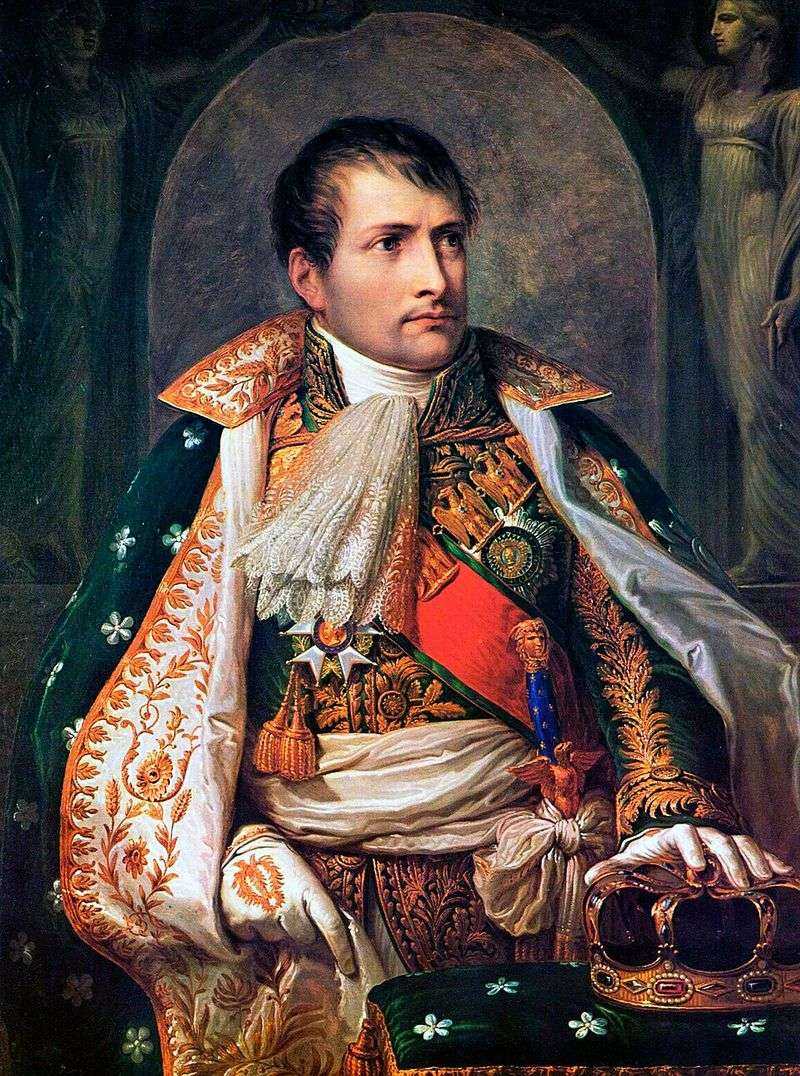
Napoleon Bonaparte won battles, but he was equally focused on winning public perception. He recognized early that controlling his image was as strategically important as controlling the battlefield, and he approached both with the same calculated discipline.
Artists were commissioned to paint him as calm, heroic, and physically commanding, regardless of the actual circumstances. Jacques-Louis David’s famous depiction of Napoleon crossing the Alps shows him serenely astride a rearing horse, a far cry from historical accounts that place him on a mule. Official newspapers strictly reported victories while burying defeats, creating a consistent narrative of near-invincibility.
Grand ceremonies, legal reforms like the Napoleonic Code, and the creation of the Legion of Honor all reinforced his image as a modernizing statesman rather than just a military strongman. Through this coordinated management of art, media, and public ritual, Napoleon shaped how millions of French citizens understood their own era.
7. Britain’s World War I Recruitment Campaigns
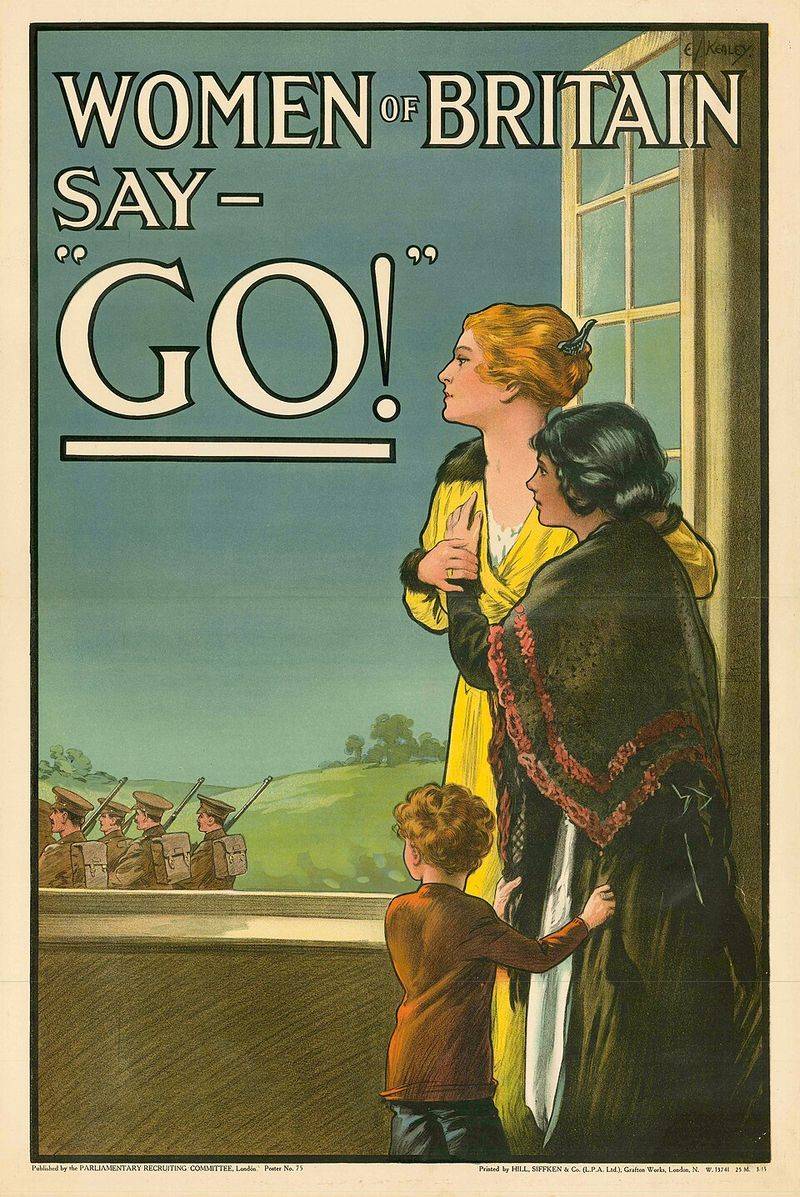
When Britain entered the First World War in 1914, its army was far smaller than those of continental European powers, and voluntary enlistment was the only option before conscription was introduced. The government responded with one of the most concentrated poster campaigns in modern history.
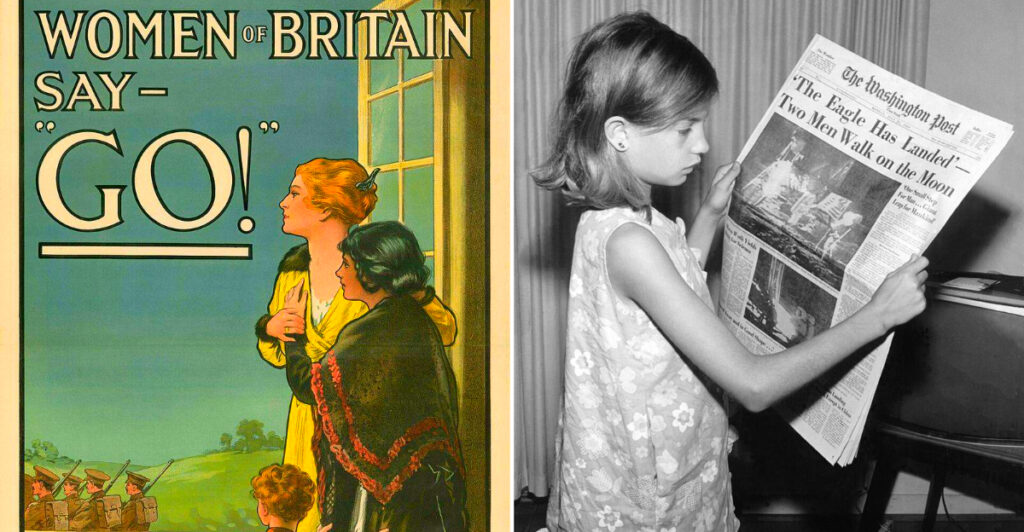
The image of Lord Kitchener pointing directly at the viewer with the words “Your Country Needs YOU” became instantly iconic. Thousands of additional posters targeted different emotions, from patriotic pride and personal honor to social shame, with messages asking men what they had done to contribute.
The campaign extended beyond recruitment, encouraging civilians to conserve food, purchase war bonds, and view sacrifice as a national identity. It was remarkably effective at mobilizing public sentiment and remains one of the clearest examples of how visual messaging, repeated widely and consistently, can shift how an entire population understands its obligations during a national crisis.
8. The Soviet Cult of Lenin
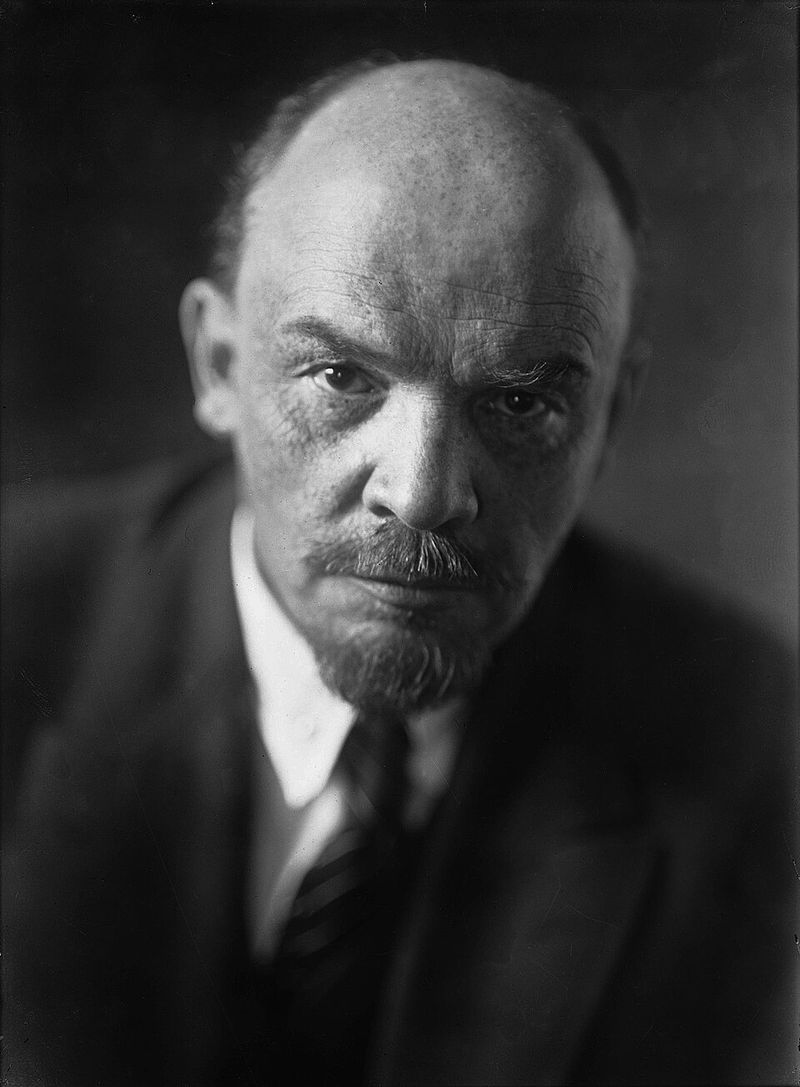
Vladimir Lenin died in January 1924, but Soviet leadership quickly decided his influence would be far more useful preserved than simply mourned. Within days, plans were made to embalm his body and place it on permanent public display in a mausoleum at Moscow’s Red Square.
His writings became mandatory reading in schools and workplaces, his portraits appeared in virtually every public building, and cities across the Soviet Union were renamed in his honor. Children joined the Young Pioneers, an organization that carried his ideological legacy directly into the next generation.
The campaign served a clear political purpose: by making Lenin eternal and infallible, Soviet leaders could frame their own policies as a direct continuation of his revolutionary vision. Any dissent from official doctrine could be portrayed as a betrayal of Lenin himself. The cult transformed a political figure into something closer to a state religion, shaping how millions of Soviet citizens understood authority, history, and loyalty for decades.
9. Franklin D. Roosevelt’s Fireside Chats
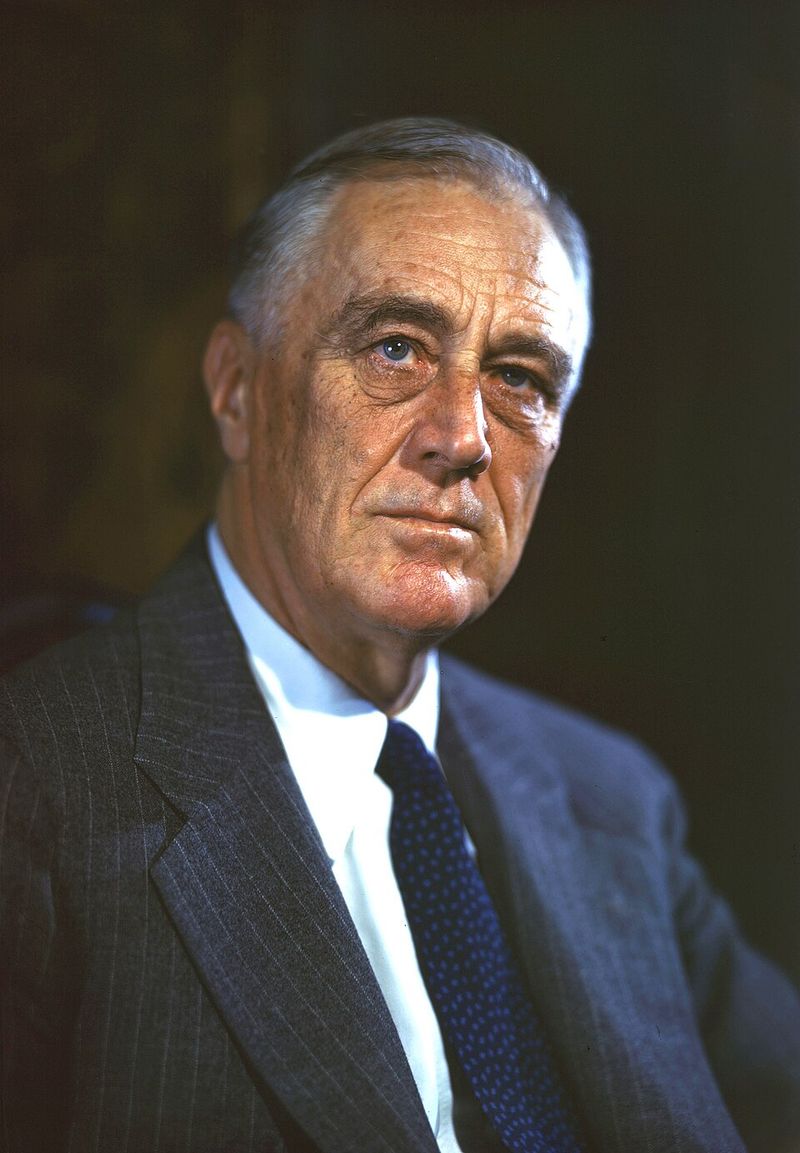
Radio was still a relatively new technology when Franklin D. Roosevelt began using it in 1933 to speak directly to Americans in their own homes, and his instinct for the medium turned out to be politically transformative. His Fireside Chats bypassed newspaper editors and political intermediaries entirely.
Speaking in plain, conversational language, Roosevelt explained banking crises, New Deal programs, and wartime strategies in terms that ordinary families could follow. His calm, measured tone during the 1933 banking crisis helped restore public confidence in financial institutions at a moment when panic was spreading rapidly.
The chats also functioned as a framing tool, presenting national challenges consistently from the administration’s perspective. By reaching millions of households simultaneously, Roosevelt shaped how Americans interpreted major events before competing narratives could take hold. The broadcasts redefined the relationship between the presidency and the public, establishing a template for direct political communication that influenced every president who followed.
10. Nazi Germany’s Ministry of Propaganda
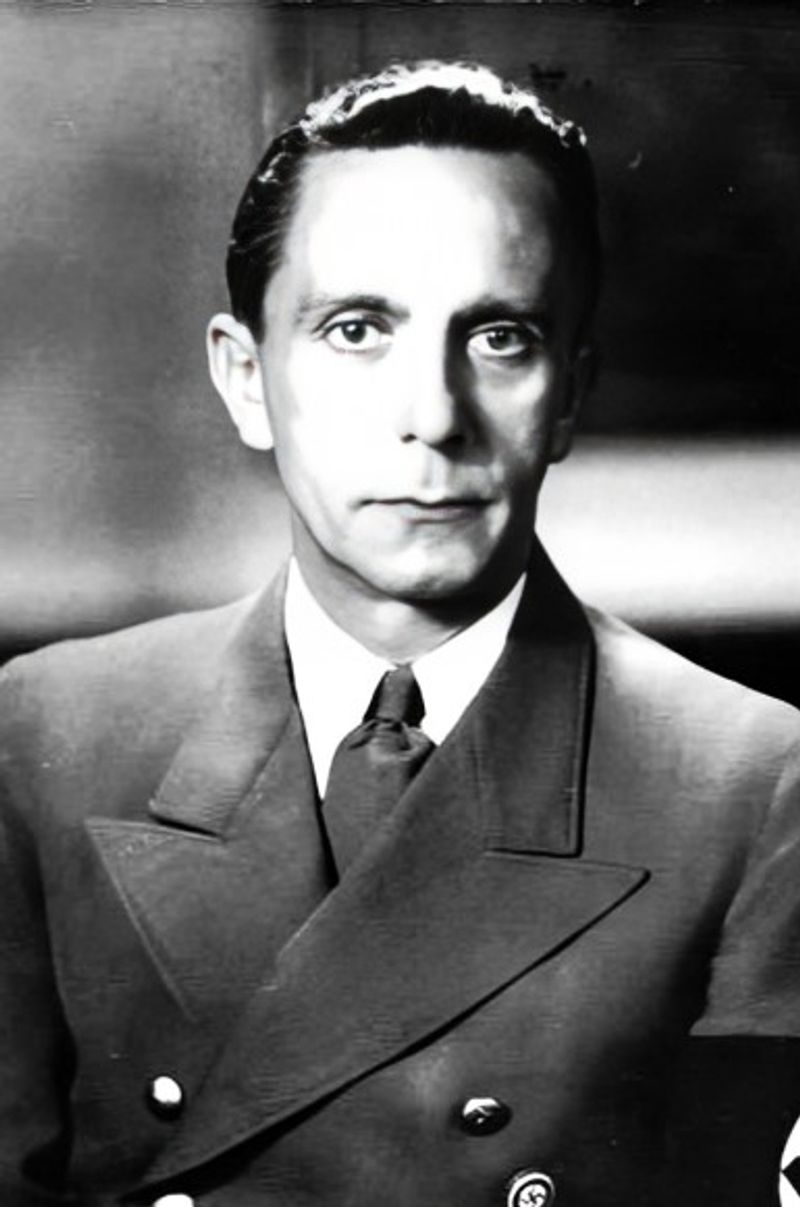
Joseph Goebbels was appointed head of the Reich Ministry of Public Enlightenment and Propaganda in 1933, and he approached the role with a systematic thoroughness that had few historical precedents. Every major channel of public communication was placed under state control within months.
Radio receivers were mass-produced cheaply so that Nazi messaging could reach nearly every German household. Films, school curricula, newspapers, theater, and music were all rewritten or replaced to serve ideological goals. The Nuremberg Rallies were choreographed on a massive scale to manufacture visible enthusiasm and a sense of unstoppable collective momentum.
What made this system particularly effective was the simultaneous elimination of alternative information. With no competing voices permitted, the regime’s version of reality became the only version most citizens encountered. The Nazi propaganda machine stands as a documented case study in how complete information control, combined with constant repetition and spectacle, can reshape the moral reasoning of an entire society.
11. American “Rosie the Riveter” Campaign
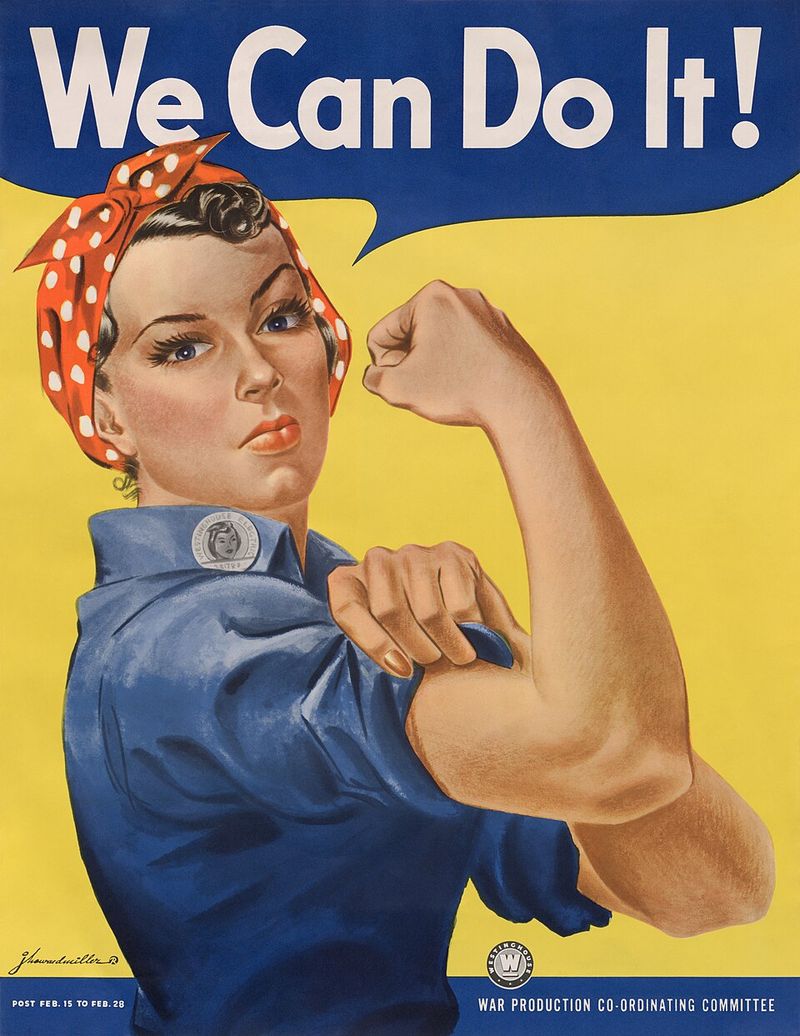
By 1942, millions of American men had enlisted or been drafted, leaving factories, shipyards, and aircraft plants critically short of workers at exactly the moment when wartime production needed to reach its highest levels ever. The solution the government promoted was straightforward: recruit women into industrial roles at scale.
The Rosie the Riveter campaign used posters, films, and magazine features to present women working in heavy industry as patriotic, capable, and admirable. The image of a woman in overalls flexing her bicep with the phrase “We Can Do It” challenged the assumption that such work was inherently masculine.
The campaign succeeded in meeting its immediate labor goals, with over six million women entering the workforce during the war years. Its longer-term impact was equally significant. By publicly celebrating female competence in demanding industrial roles, the campaign planted ideas about gender and work that resurfaced with growing force in subsequent decades, influencing conversations about equality that continued long after the war ended.
12. Mao’s Little Red Book
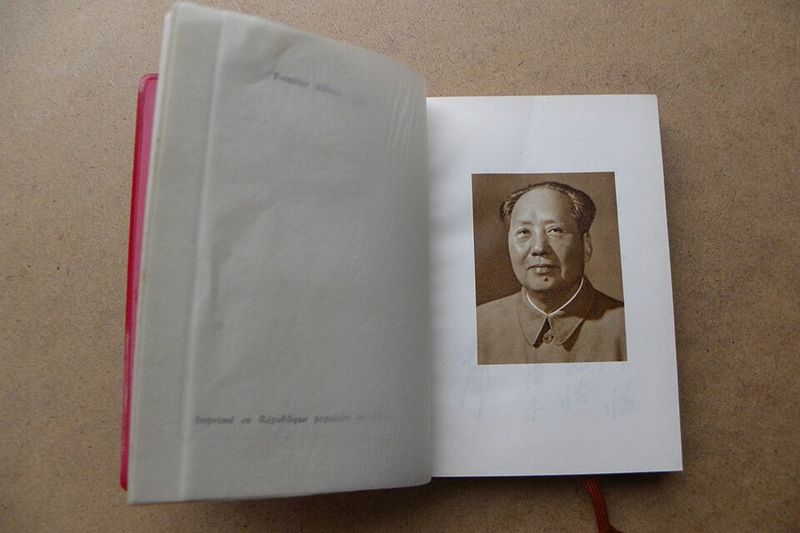
Printed in the billions and distributed to virtually every person in China, the Little Red Book was one of the most physically widespread publications in human history. During the Cultural Revolution of the 1960s, carrying it was not optional, and quoting it publicly was expected as a demonstration of political loyalty.
The book contained 427 of Mao Zedong’s quotations organized across 33 chapters, covering topics from revolutionary theory to personal conduct. Study sessions were held regularly in schools, workplaces, and military units, where participants were expected to apply Mao’s words to their daily decisions and challenges.
Red Guards used possession and recitation of the book as a measure of ideological purity, and those who failed to demonstrate sufficient familiarity faced serious consequences. The campaign effectively replaced independent thought with a single authorized framework for understanding the world. Few propaganda tools in history have achieved such direct and measurable control over daily intellectual life across such a large population.
13. The Space Race as National Prestige
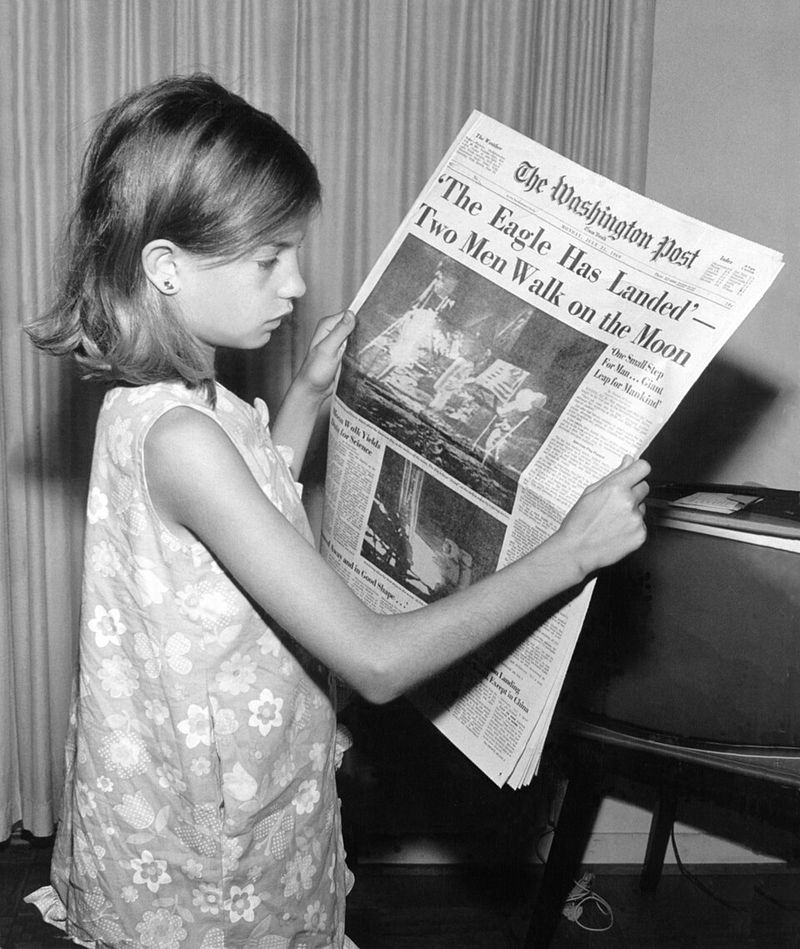
When the Soviet Union launched Sputnik in October 1957, the small metal sphere orbiting Earth carried a message that had nothing to do with science and everything to do with ideology. Both superpowers understood immediately that space was a new arena for demonstrating which political system worked better.
Soviet propaganda celebrated Yuri Gagarin’s 1961 orbital flight as proof that a centrally planned communist economy could outperform capitalist democracies in the most demanding technological arena imaginable. American propaganda responded by framing the space program as a contest between freedom and authoritarianism, with each mission presented as evidence of democratic innovation and individual ingenuity.
The Apollo 11 moon landing in 1969 was broadcast live to an estimated 600 million viewers worldwide, making it the most watched propaganda event of the Cold War era. Both nations invested enormous resources not just in reaching space but in ensuring that their populations and the watching world interpreted each achievement as ideological validation rather than purely scientific progress.
14. North Korea’s Personality Cult
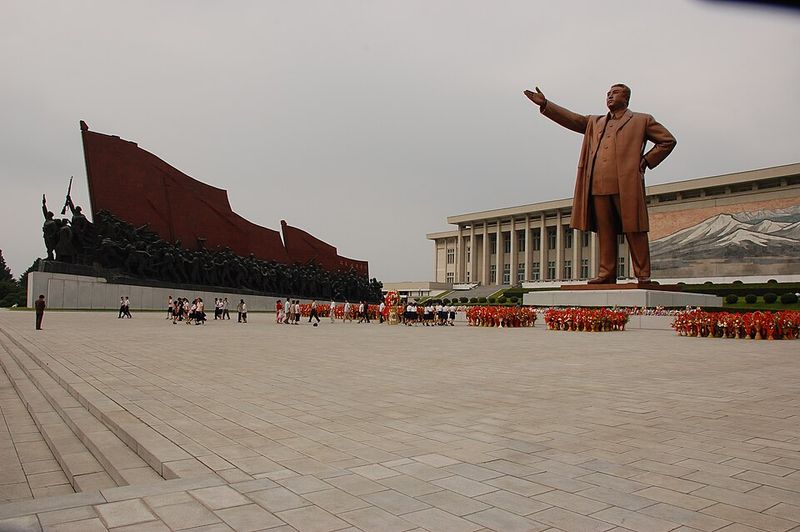
No modern state has constructed a personality cult with the same systematic completeness as North Korea. Since Kim Il Sung founded the regime in the late 1940s, the ruling Kim family has been presented to citizens not merely as capable leaders but as extraordinary beings whose wisdom and sacrifice sustain the entire nation.
School curricula from kindergarten onward are built around the family’s history, with textbooks framing their decisions as infallible. Every household is required to display official portraits of the leaders, and government inspectors have historically checked for proper placement and condition.
State media broadcasts daily reports on the current leader’s activities, always framing them in terms of personal sacrifice for the people’s benefit. Grand public ceremonies, mass games, and national holidays are all structured around celebrating the Kim family’s legacy. The result is a population exposed from birth to a single, unchallenged narrative about authority, history, and national identity, with no permitted alternatives in sight.
15. “Keep Calm and Carry On”
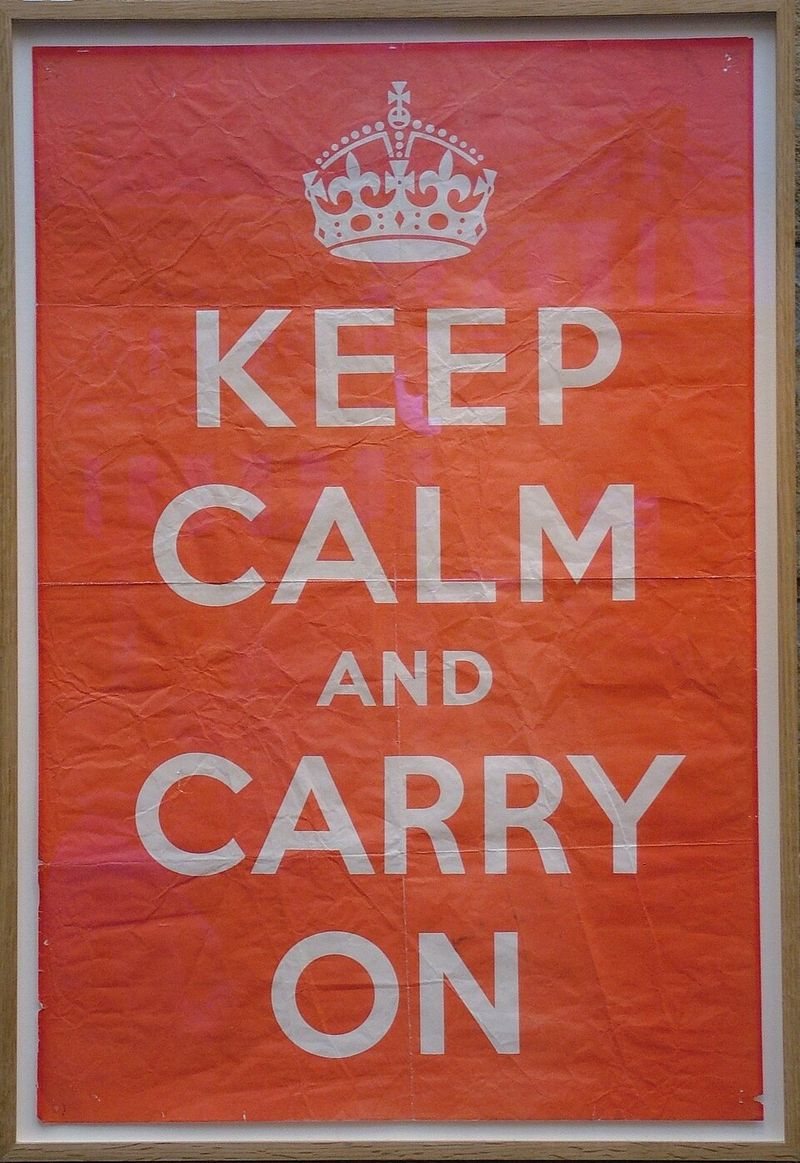
Produced in 1939 by Britain’s Ministry of Information, the Keep Calm and Carry On poster was printed in a run of approximately 2.5 million copies but never widely distributed during the war itself. It was held in reserve for a moment of extreme national crisis, such as a successful German invasion, that fortunately never came.
The two companion posters from the same series, including “Your Courage, Your Cheerfulness, Your Resolution Will Bring Us Victory,” were far more visible during the actual conflict. Together, these posters reflected a deliberate government strategy to manage civilian morale by promoting stoicism, collective discipline, and quiet confidence rather than dramatic displays of emotion.
The poster’s modern rediscovery at a bookshop in Alnwick in 2000 launched a global revival that turned it into a commercial phenomenon. Its widespread adoption across mugs, prints, and social media posts demonstrates how a piece of wartime government messaging can outlast its original context entirely, becoming a cultural shorthand for composed resilience recognized far beyond its British origins.
Share this story