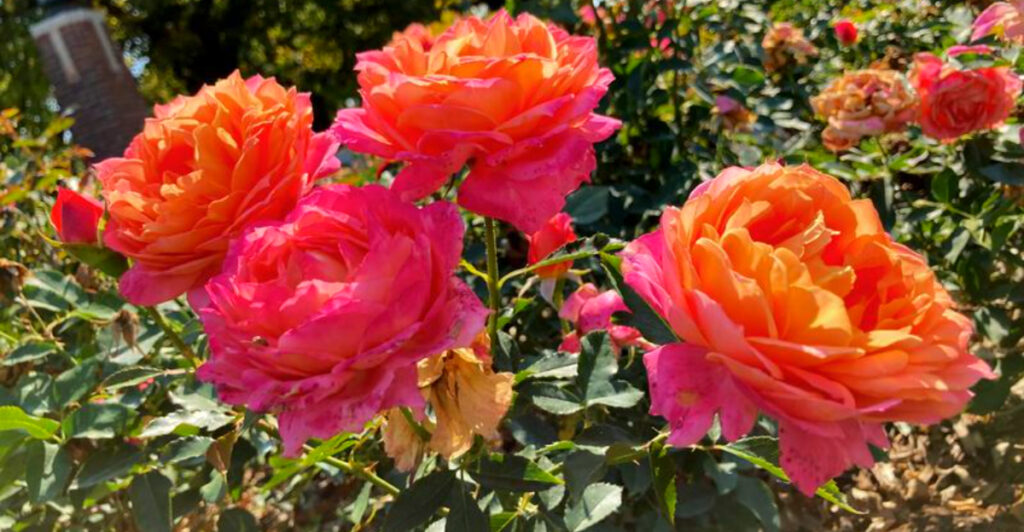
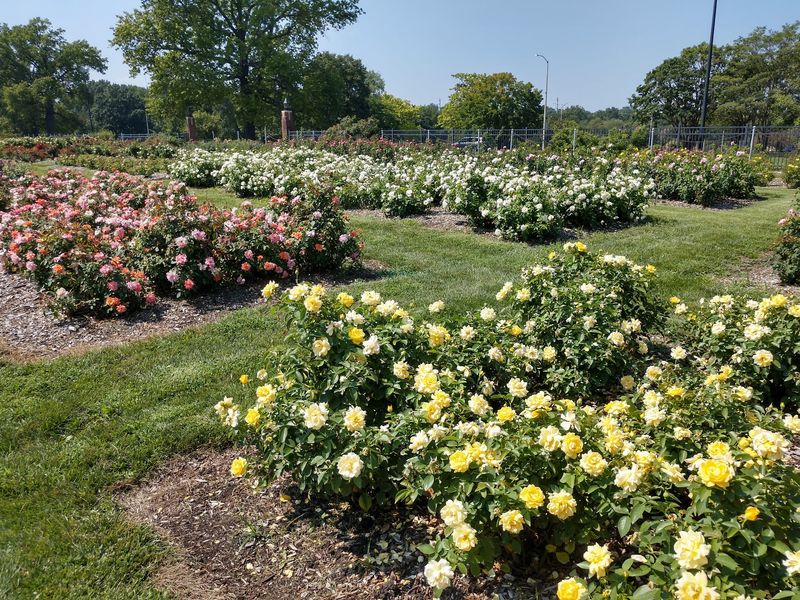
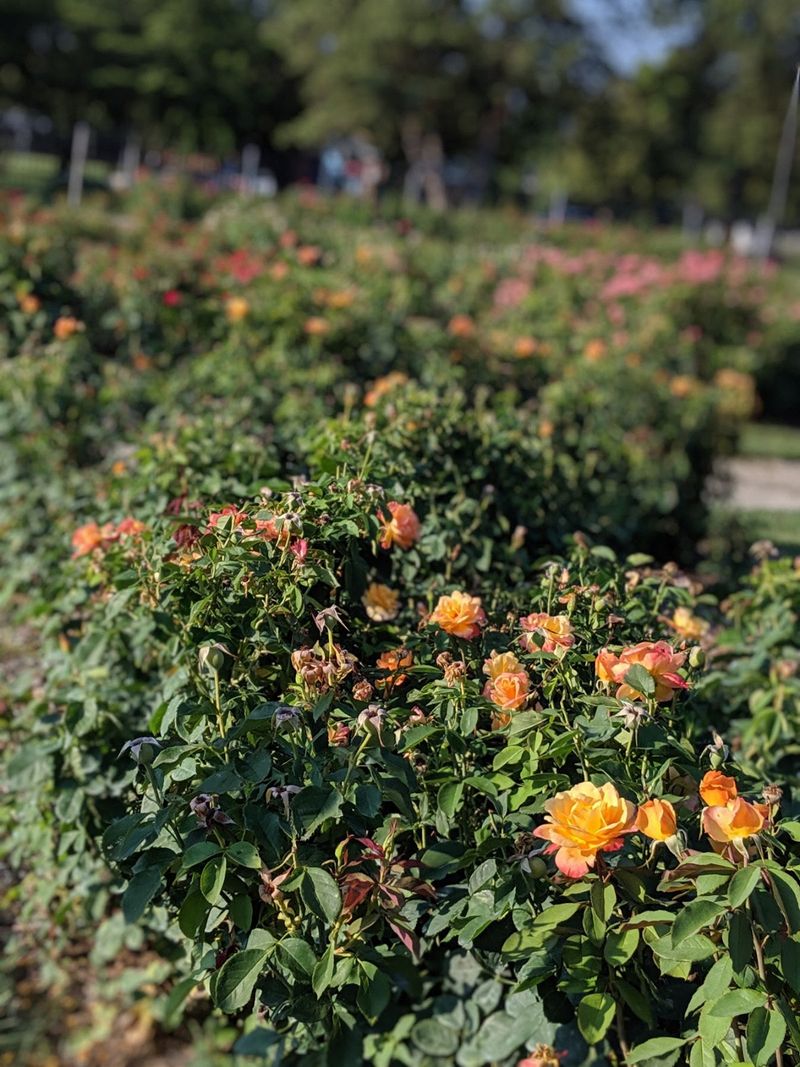
More than 6,500 rose plants, over 400 varieties, a peaceful reflecting pool, and a picturesque stone bridge turn this Topeka garden into one of Kansas’ most colorful warm-weather escapes. Admission is completely free, yet visitors can wander among everything from classic hybrid teas to rare heirloom roses that are no longer commercially available.
What makes the garden especially unusual is what happens behind the scenes. It serves as an official rose test garden, where new varieties are evaluated for qualities such as fragrance, disease resistance, and bloom performance. Some flowers visitors encounter may therefore be varieties that have not yet reached garden centers. Time a visit for late May or early June, and the garden reaches its first major peak bloom, with another colorful period arriving in September.
Here’s why Reinisch Rose Gardens has become one of Topeka’s most rewarding free attractions—and why flower lovers may want to plan their visit around peak bloom.
A Visionary’s Dream That Took Root in 1926
Not every great garden starts with a shovel in the ground. This one started with a single person’s belief that a city deserved something truly beautiful. Topeka’s first landscape architect and horticulturist, E. F.
A. Reinisch, conceived the idea for a grand municipal rose garden in 1926, though funding proved elusive in the early years.
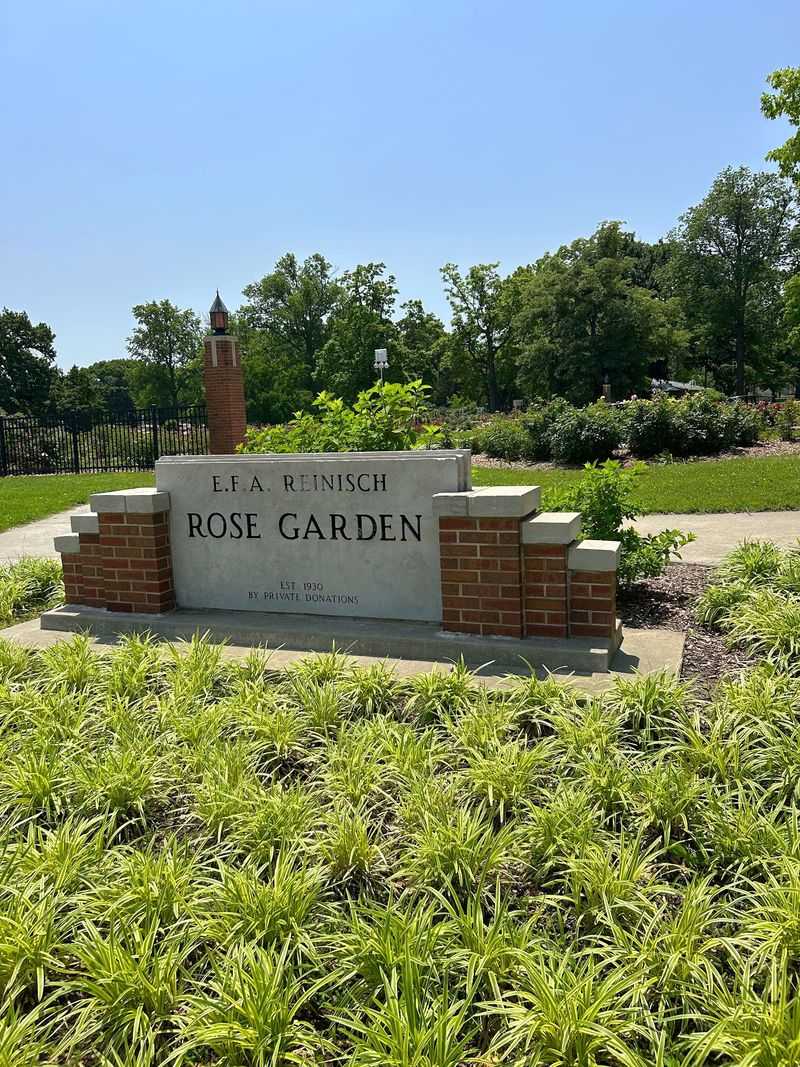
Reinisch passed away in 1929 before seeing his vision completed, but the Topeka Horticultural Society picked up where he left off. By June 1930, the garden was officially dedicated, funded entirely by $30,000 in private donations from community members who believed in the project.
Chicago landscape architect Emmett Hill and landscape gardener L. R. Quinlan of the Kansas State Agriculture College brought the design to life. That origin story, built on community dedication and one man’s lasting dream, gives the Reinisch Rose Garden at 635 SW Gage Blvd, Topeka, Kansas 66604, a sense of purpose that you can almost feel when you walk through it.
Over 400 Varieties Packed Into One Spectacular Space
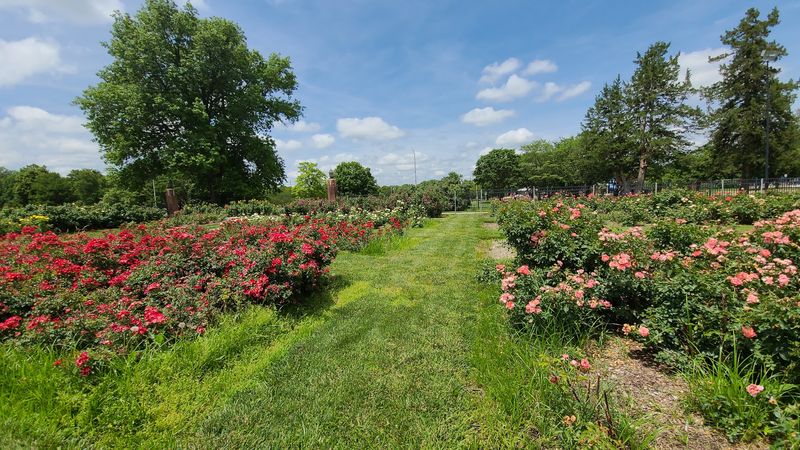
The sheer variety here is what separates this garden from a simple neighborhood flower bed. More than 6,500 rose plants representing over 400 distinct varieties grow across the grounds, creating a living catalog of rose breeding history that spans decades of cultivation.
Classic hybrid teas stand alongside rare heirloom varieties that are no longer sold commercially anywhere, making a visit feel like a tour through a living museum. Each plant is labeled, so curious visitors can actually learn the names and histories of what they are looking at as they wander the paths.
Some of the roses on display exist here because breeders submitted them specifically for testing and evaluation. That means on any given visit, you could be looking at a variety that has never been grown anywhere else in the world outside of a breeder’s private greenhouse. That kind of rarity is genuinely hard to find in a free, publicly accessible outdoor space.
The National Test Garden Status That Sets It Apart
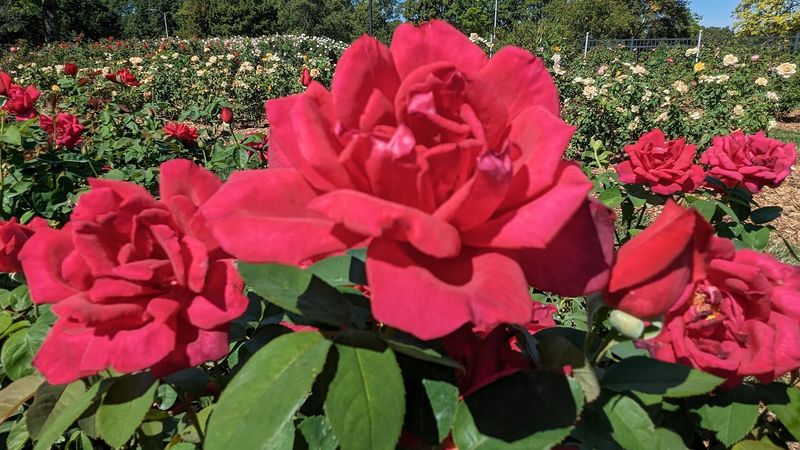
Most public gardens grow established favorites. This one grows the future of roses. The Reinisch Rose Garden holds an official designation as one of only 23 All-America Rose Selections test gardens in the entire United States, a distinction that places it in rare company.
Hybridizers from around the country submit new rose varieties to these test gardens for multi-year evaluation. The plants are assessed for disease resistance, bloom quality, fragrance, and overall performance before being approved for commercial release. Topeka’s garden has been part of this process for years, quietly contributing to the rose industry behind the scenes.
That scientific role adds a layer of significance that most casual visitors might not immediately notice. When you stop to smell a bloom here, there is a real chance it represents years of careful breeding work and that its name on the label is one you will eventually see in garden centers across the country. That connection between beauty and science makes every row feel a little more meaningful.
Peak Bloom Windows You Will Want to Plan Around
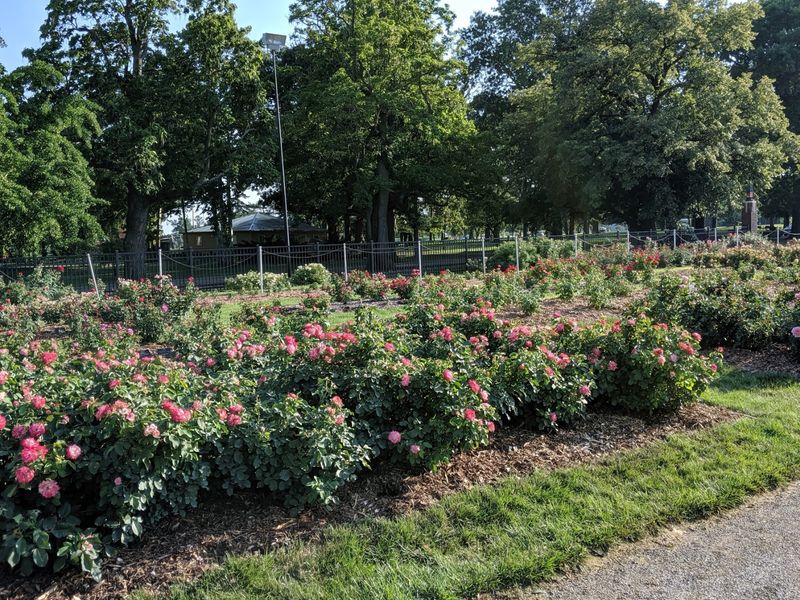
Timing a visit to catch the roses at their most spectacular takes a little planning, but the payoff is absolutely worth the effort. The garden reaches its first and most dramatic peak between late May and early June, when the majority of varieties burst open simultaneously and the fragrance becomes almost overwhelming in the best possible way.
A second, quieter bloom period arrives from early to mid-September, offering another chance to see the garden at full color before cooler temperatures arrive. Visitors who come outside these windows will still find the grounds attractive, but the density of open blooms during peak periods is on a completely different level.
Early morning visits during peak bloom are particularly rewarding. The light is soft, the air is cool, and the fragrance is at its freshest before the heat of the day sets in. The garden opens at 6 AM every day, which means arriving before most of the crowds is entirely possible and makes for a genuinely peaceful experience that feels almost private.
Tulips, Annuals, and a Garden That Never Truly Sleeps
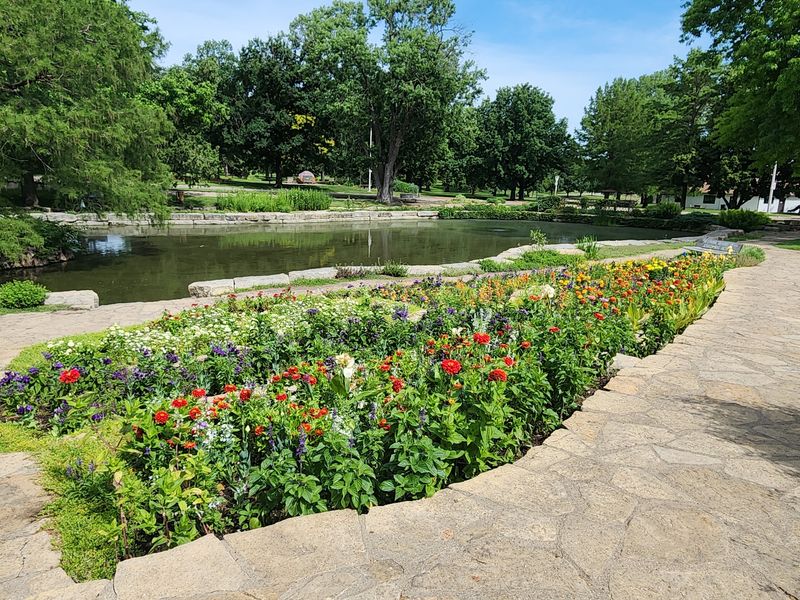
Roses get most of the attention here, but the broader garden calendar stretches the color season well beyond the summer months. From early to mid-April, the adjacent Doran Rock Garden puts on a spectacular tulip display that draws visitors specifically for that show alone.
Once the tulips fade, annual flowers take over and maintain continuous color from June through August, bridging the gap between the spring tulip season and the rose garden’s fall bloom period. The result is a garden that offers something visually rewarding across nearly the entire growing season, not just during a narrow window.
This thoughtful planting calendar reflects the level of horticultural expertise that has defined the garden since its founding. The staff clearly approaches each season as its own design challenge, ensuring that no visit feels like a wasted trip regardless of when it falls on the calendar. That kind of year-round commitment to visual interest is rarer than it sounds in a free public garden, and it speaks well of everyone involved in its care.
The Doran Rock Garden Next Door
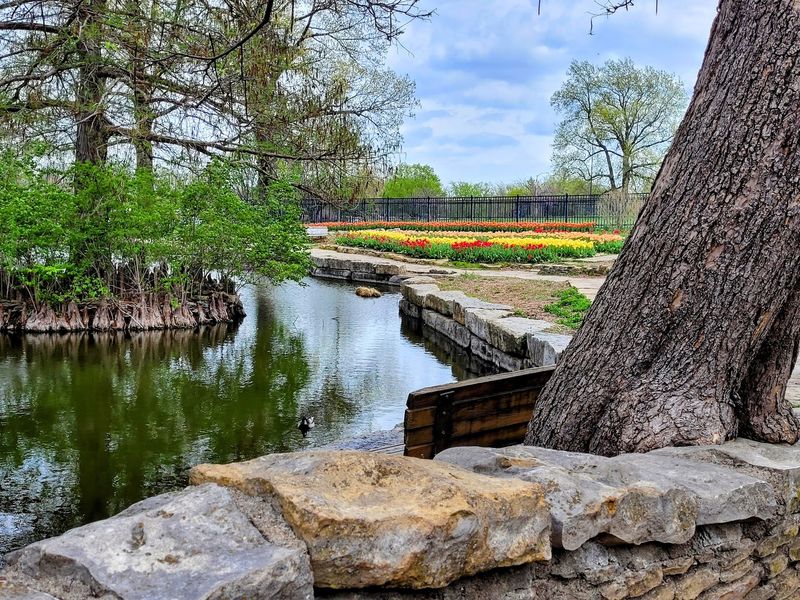
Right beside the rose displays sits one of the garden’s quieter treasures. The Doran Rock Garden, completed in 1932, was designed to complement the more formal rose beds with a naturalistic arrangement of stone, water, and native plantings that feels entirely different in mood and character.
A small reflecting pool sits at the heart of the rock garden, often dotted with lily pads and occasionally visited by ducks that seem completely unbothered by human company. A stone pedestrian bridge arches over the water, creating one of the most photographed spots in the entire park and offering a vantage point that feels genuinely picturesque from every angle.
The contrast between the structured geometry of the rose beds and the organic, wandering layout of the rock garden makes moving between the two feel like shifting between two completely different worlds within the same visit. That variety of experience within such a compact space is one of the things that keeps people coming back to explore what they might have missed the first time around.
A Fragrant Backdrop for Weddings and Special Occasions
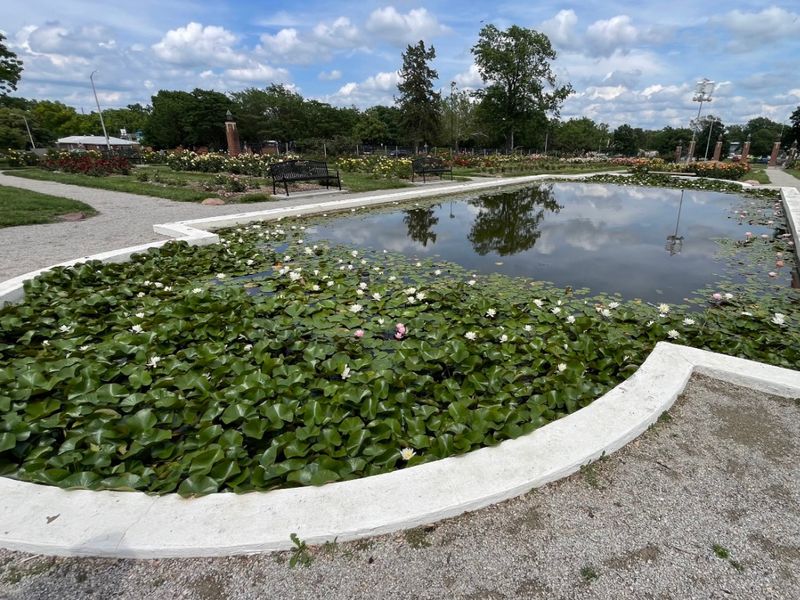
Few natural settings in Kansas offer the kind of romantic atmosphere that this garden delivers effortlessly. The combination of thousands of blooming roses, manicured paths, and the soft sound of water near the reflecting pool creates an environment that feels almost custom-built for celebrating meaningful moments.
Weddings are held here regularly, and the garden’s rental options make it accessible for couples who want something more distinctive than a standard event venue. The idea of exchanging vows surrounded by hundreds of fragrant rose varieties, with a stone bridge and lily pad pond nearby, is genuinely hard to beat for sheer visual impact.
Beyond formal events, the garden draws couples, families, and photographers throughout the year for portraits, anniversary photos, and casual outings that become lasting memories. The setting does a lot of the creative work for photographers automatically, with color, texture, and natural light available from nearly every angle. That photographic richness is one reason visitors return repeatedly rather than treating it as a single-visit destination.
National Recognition That Confirms What Locals Already Know
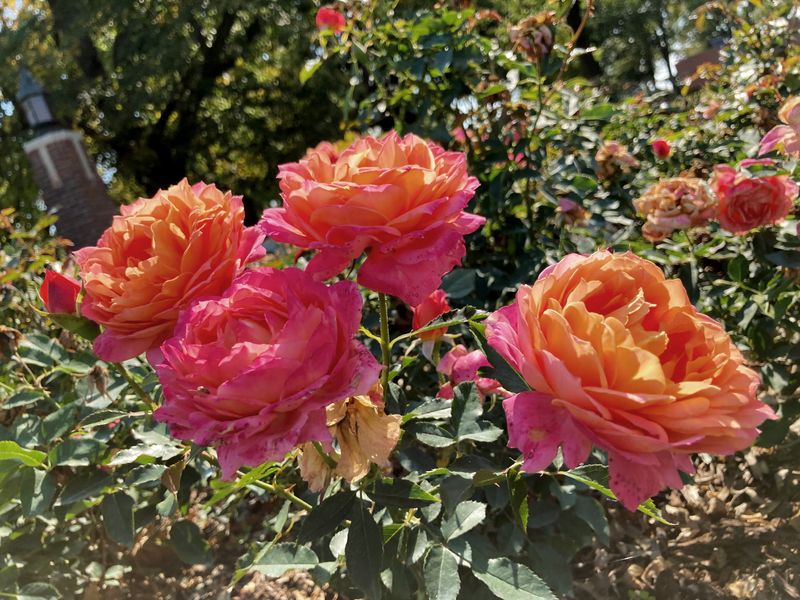
Local pride is one thing, but national recognition from credible sources adds a different kind of validation. The Reinisch Rose Garden has received the prestigious More Beautiful America recognition from Better Homes and Gardens magazine, an honor that reflects both its aesthetic quality and the consistent effort required to maintain it at that level.
Closer to home, the garden also received the Historic Topeka Inc. Preservation Award, acknowledging its historical significance as a community landmark that has been carefully maintained across nearly a century of operation. Both honors point to the same underlying truth: this is not a garden that coasts on its original design.
A rating of 4.7 stars across hundreds of public reviews reinforces what the formal awards suggest. Visitors consistently describe the grounds as well-kept, peaceful, and genuinely impressive, with many noting that the level of maintenance exceeds what they expected from a free public space. That combination of professional recognition and authentic visitor enthusiasm is a reliable indicator that the experience consistently delivers.
Accessible Paths That Welcome Every Visitor
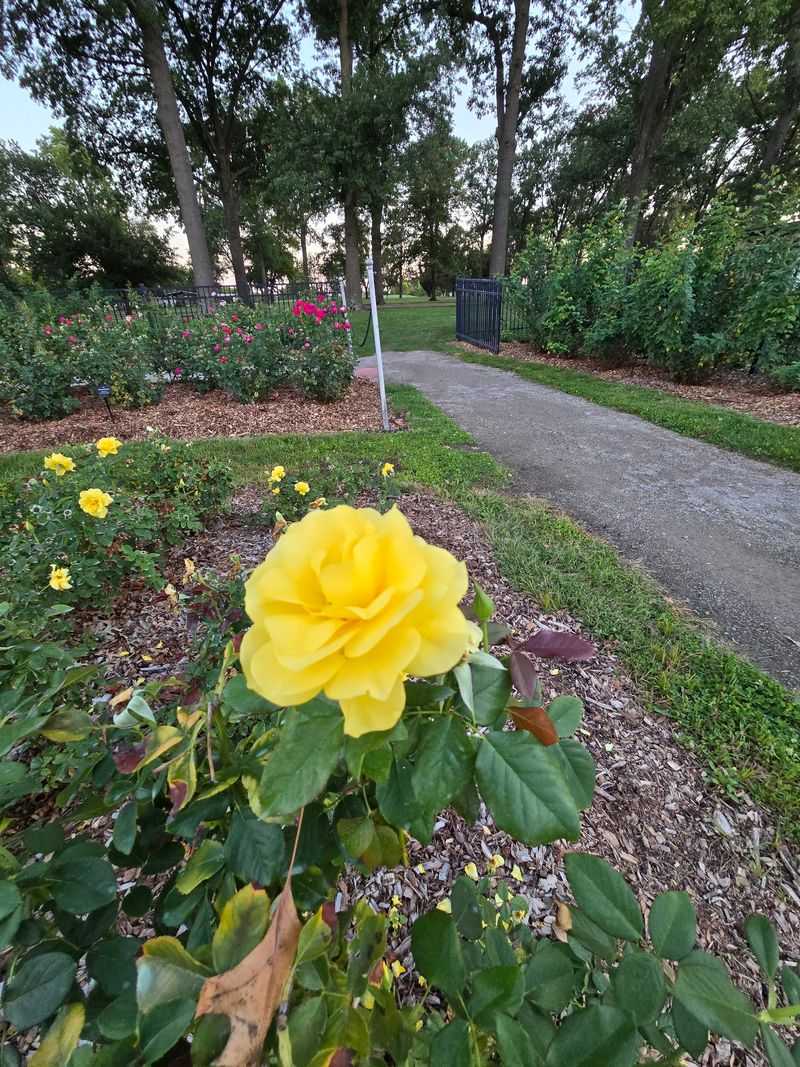
A beautiful garden is only fully enjoyable when everyone can actually move through it comfortably. The paths throughout both the Reinisch Rose Garden and the Doran Rock Garden are paved and flat, making them genuinely accessible for strollers, wheelchairs, and anyone who prefers a smooth surface for walking.
The terrain throughout the grounds stays level without significant inclines or uneven surfaces that might make navigation difficult. Benches are positioned at intervals along the paths, offering places to sit, rest, and simply absorb the surroundings without needing to keep moving constantly.
This attention to physical accessibility reflects a broader philosophy that the garden belongs to everyone in the community, not just those who can handle rough terrain or long walks without a break. Families with young children in strollers report easy navigation, and visitors with mobility considerations consistently note that the layout accommodates them well. That kind of inclusive design, built into the garden’s physical infrastructure rather than added as an afterthought, makes a real difference in how welcoming the space actually feels.
Simple Rules That Keep the Garden Beautiful for Everyone
A garden this well-maintained does not stay that way by accident. A clear set of visitor guidelines helps protect the plants and preserve the experience for everyone who comes after you. The most fundamental rule is one that makes obvious sense: stay on the paths and do not enter the flower beds, even for a photo.
Climbing on garden structures or trees is not permitted, and wading into the ponds or fountains is off-limits as well. Pets are welcome but must remain leashed, and owners are expected to clean up after them. Plants, flowers, leaves, seeds, and rocks should all be left exactly as found.
These guidelines are not unusual for a public garden of this caliber, but they are worth reviewing before your visit so nothing interrupts the experience. The rules exist because the garden serves a large number of people and because some of the rose varieties growing here are genuinely rare and irreplaceable. Respecting those boundaries is the simplest way to contribute to keeping this place as remarkable as it currently is for future visitors.
A Stephen King Connection That Surprises First-Time Visitors
Most public parks do not have a cameo in one of the most celebrated fiction series of the past 50 years. This one does. The Reinisch Rose Garden earned a mention in Stephen King’s 1997 novel Wizard and Glass, the fourth book in his epic Dark Tower series, which gave the garden a small but devoted following among readers who make literary pilgrimages to locations referenced in the story.
The connection adds a layer of cultural intrigue that sits interestingly alongside the garden’s more conventional attractions. Fans of the series occasionally visit specifically to see the real-world setting that inspired a passage in the book, turning a pleasant afternoon stroll into something with a slightly more adventurous personal meaning.
For visitors who have never read the Dark Tower series, the connection still makes for an entertaining piece of trivia to share while walking the paths. It is a reminder that truly special places have a way of finding their way into the broader culture, often in unexpected forms, long after the people who built them are gone.
Share this story