Kansas has a reputation for wide open spaces and flat horizons, but the state has been quietly collecting some of the most bizarre, fascinating, and genuinely jaw-dropping attractions in the country. A ball of twine the size of a small car. An underground world carved out of ancient salt. Concrete sculptures built by a Civil War veteran with a lot of strong opinions.
These are not the kinds of things you expect to find scattered across the Sunflower State, yet here they are, waiting patiently for curious travelers who are willing to veer off the main highway. This list covers 12 stops that range from geological wonders millions of years in the making to roadside landmarks that exist simply because one determined person decided to make something unforgettable. If you think Kansas is just cornfields and wind, these attractions are about to change your mind completely.
1. World’s Largest Ball of Twine, Cawker City, Kansas
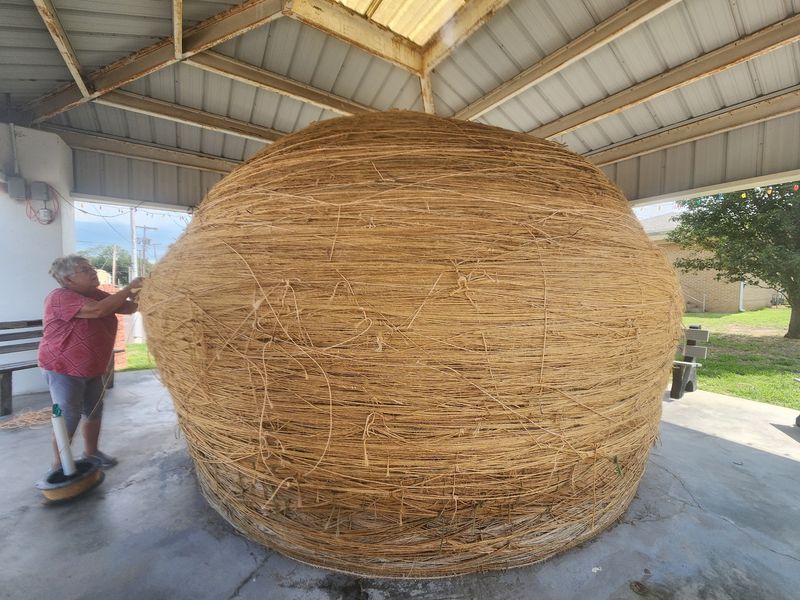
Farmer Frank Stoeber started rolling leftover baling twine in 1953, probably never imagining that his frugal habit would one day attract visitors from across the country.
By 1961, Cawker City had officially adopted the growing sphere, and the community has been adding to it ever since. As of early 2025, the ball measures 46 feet in circumference, stretches over 8.5 million feet in length, and weighs more than 27,000 pounds.
Every August, the town hosts its annual Twine-A-Thon, inviting visitors to contribute their own twine to the ever-expanding mass. Outside of the event, city hall and local businesses keep twine available for anyone who wants to leave a personal mark.
The ball rests beneath an open gazebo on Main Street, fully visible and accessible at any time. Few roadside attractions in America can claim this level of genuine community pride wrapped around a single, gloriously impractical object.
2. Mushroom Rock State Park, Brookville, Kansas
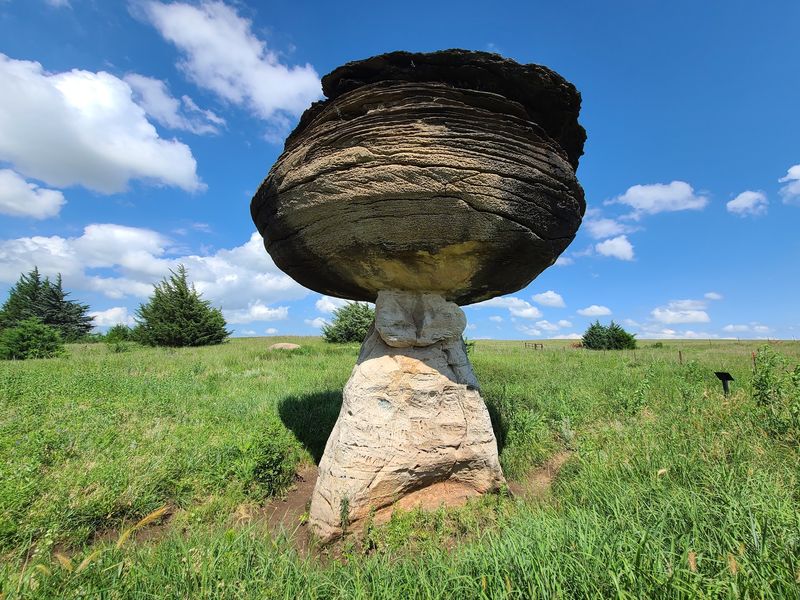
Kansas’s smallest state park packs an outsized geological punch, covering just five acres but containing some of the most visually striking rock formations in the entire region.
The park’s signature mushroom-shaped sandstone pillars formed during the Cretaceous Period, roughly 80 to 144 million years ago, when ancient beach sands and sediments hardened into Dakota rock. Softer material at the base eroded faster than the harder caps above, leaving the distinctive mushroom silhouettes that visitors see today.
Natural calcium carbonate cement holds the formations together, and the largest concretion measures an impressive 27 feet in diameter. Established in 1965 following a donation from the Ellsworth County Historical Society, the park has long served as a gathering point for Native Americans, early settlers, and now modern-day travelers.
Short, easy trails make it accessible for families, and the open prairie backdrop gives photographers a clean, dramatic setting that requires very little creative effort to capture well.
3. Big Brutus Inc, West Mineral, Kansas
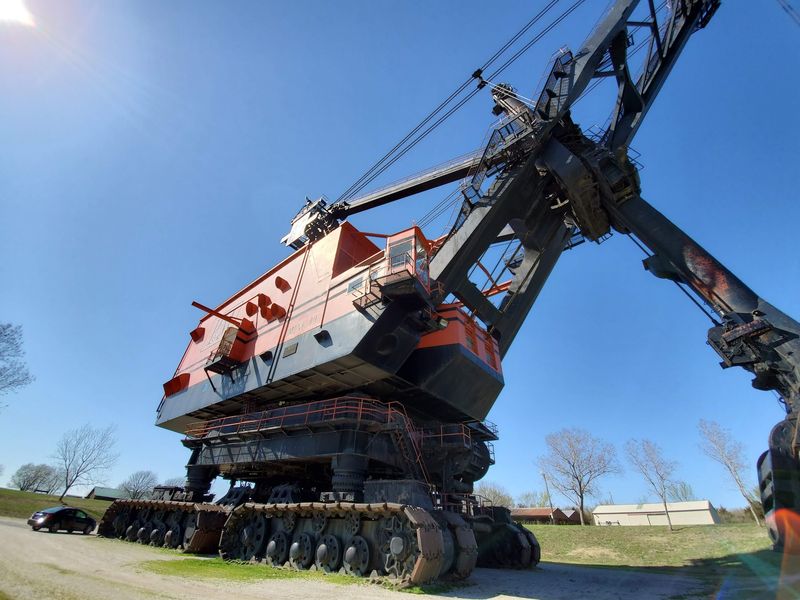
Nothing quite prepares you for the moment Big Brutus comes into view, and suddenly every description you read beforehand feels like a dramatic understatement.
Officially recognized as the world’s largest electric shovel, Big Brutus stands 160 feet tall and weighs 9.3 million pounds. Built by Bucyrus-Erie for the Pittsburg and Midway Coal Mining Company, it cost six million dollars and required 150 railroad cars just to deliver its parts to the site.
From 1963 to 1974, a three-person crew operated the machine around the clock, moving approximately one square mile of earth per year at a top speed of 0.22 miles per hour. Each scoop of its massive bucket could fill three railroad cars at once.
Preserved since 1984, the site now includes a full visitor center, interactive exhibits, and access to the shovel’s interior, including the operator’s cab. The attraction is open year-round, closing only for Thanksgiving and Christmas.
4. S. P. Dinsmoor’s Garden of Eden, Lucas, Kansas
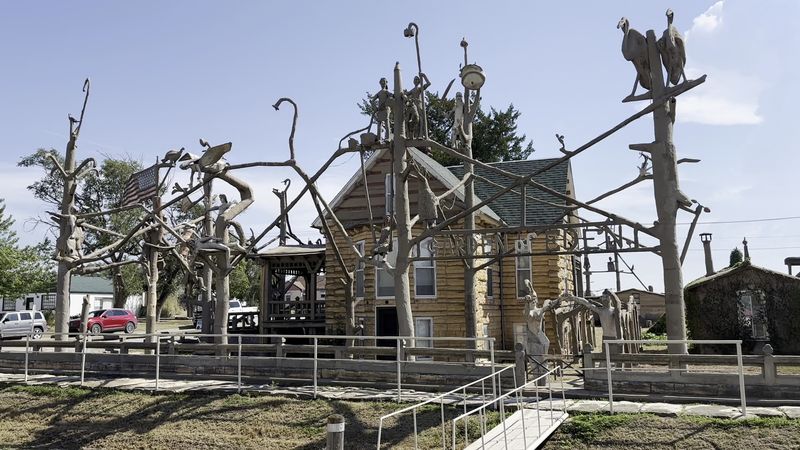
Most people retire quietly. Samuel Perry Dinsmoor retired by hauling 113 tons of concrete onto his residential lot and building one of the most unusual folk-art environments in American history.
A Civil War veteran, former schoolteacher, and committed Populist, Dinsmoor began his project in 1907 at age 64. He constructed an eleven-room limestone cabin and surrounded it with more than 150 allegorical sculptures, some reaching 40 feet high, depicting biblical scenes, political commentary, and his personal views on labor and power.
Figures of Cain and Abel share space with sculptures showing workers being crushed by societal forces, making the property equal parts art installation and political statement. Dinsmoor even wired an All-Seeing Eye to wink at passing trains, ensuring no one missed his message.
Listed on the National Register of Historic Places, the site offers guided tours today. Dinsmoor himself remains on the property, interred in a glass-topped coffin exactly as he requested.
5. Strataca, Kansas Underground Salt Museum, Hutchinson, Kansas
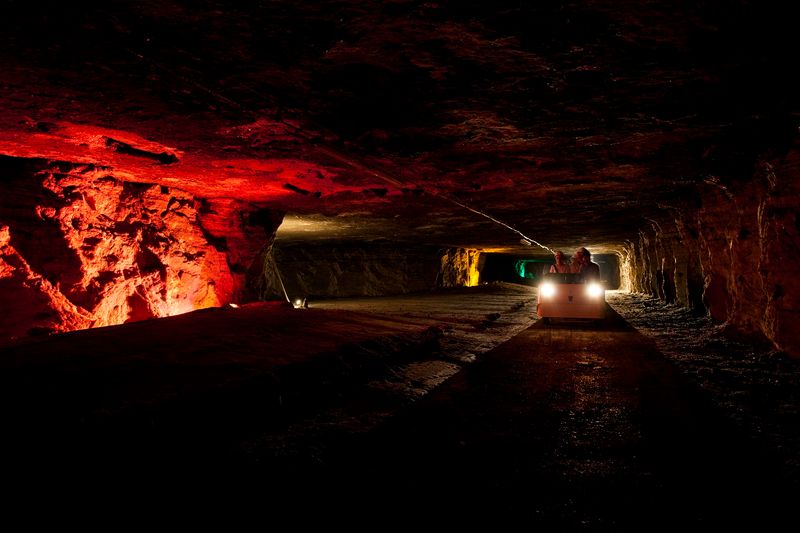
An elevator ride in Hutchinson drops visitors 650 feet straight down into a world that most people never knew existed beneath the Kansas plains.
Strataca is a working salt mine turned public museum, one of only three such underground museum experiences in the world. The Hutchinson Salt Company has operated the mine continuously since 1923, tapping into a Permian salt deposit that formed approximately 275 to 280 million years ago.
The descent takes just 90 seconds in a double-deck hoist, opening into massive caverns where the air stays around 68 degrees Fahrenheit year-round with very low humidity. That stable environment has made the mine a popular storage facility for over seven million documents, Hollywood films, and even costumes.
Tours include a ride on the Salt Mine Express train and longer tram excursions through historic tunnels. Visitors can touch the ancient salt walls and collect salt rock samples, making the experience genuinely hands-on rather than purely observational.
6. Big Well Museum, Greensburg, Kansas
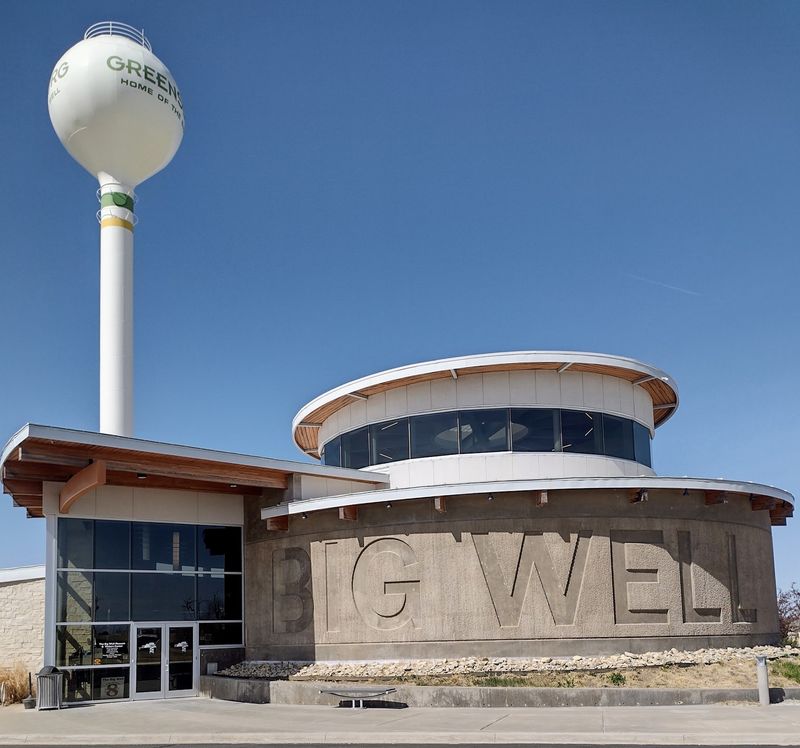
A museum built around a well sounds like the setup for a joke, but Greensburg’s Big Well earned its National Museum designation in 1972 for very good reason.
Completed in 1888 after nine months of work by a crew of 12 to 15 men, the well measures 109 feet deep and 32 feet in diameter, making it the world’s largest hand-dug well. It originally supplied water to the Santa Fe and Rock Island railroads and served the town until 1932.
An EF5 tornado devastated Greensburg in 2007, severely damaging the original well house. A new museum building opened in 2012, designed with a spiral motif reflecting the town’s commitment to rebuilding and sustainability. Inside, visitors can descend metal stairs into the well itself or climb a spiral stairway to a crow’s nest for a broader view.
As a bonus, the museum also displays a pallasite meteorite weighing over 1,000 pounds, discovered nearby in 1949, adding a cosmic chapter to an already remarkable local story.
7. Worlds Largest Hand Painted Czech Egg, Wilson, Kansas
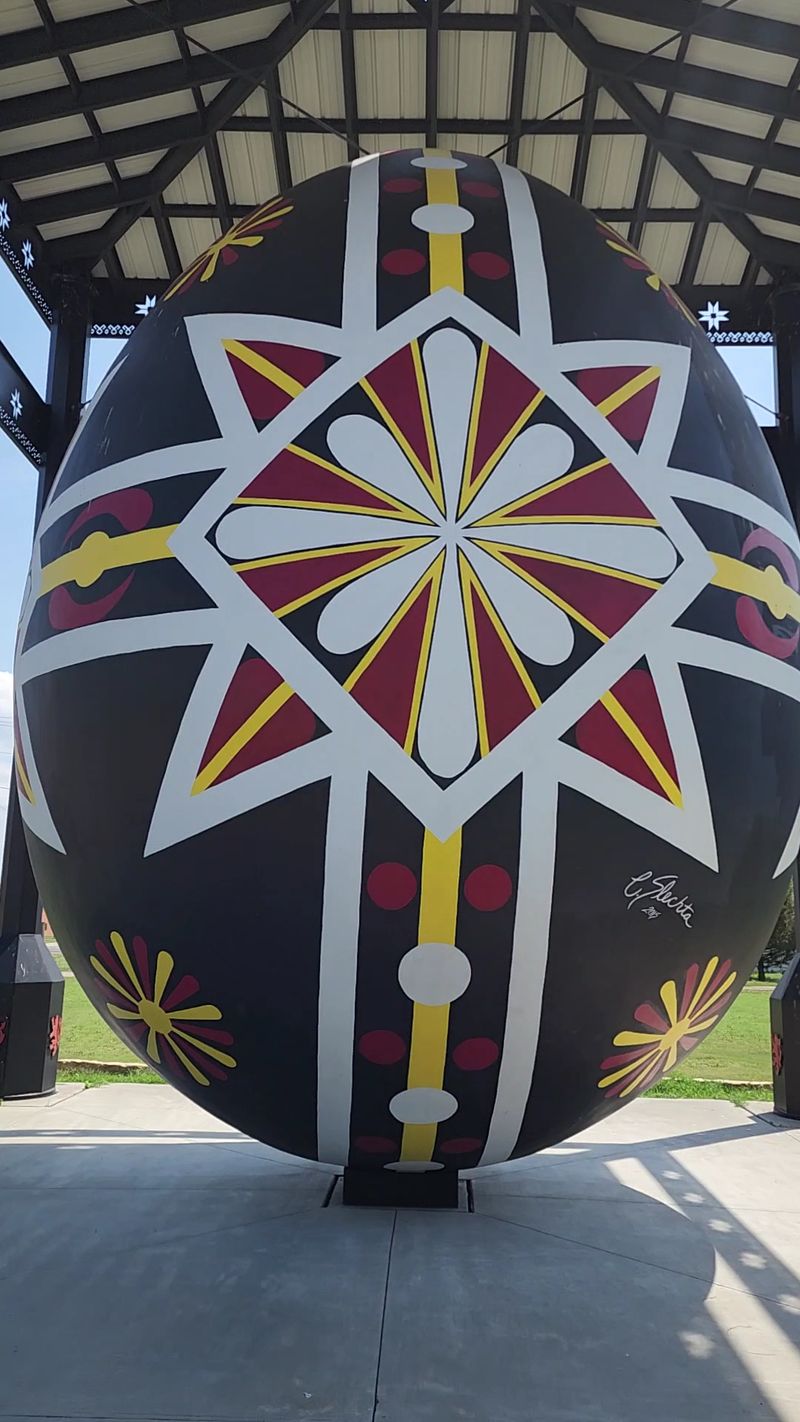
Wilson, Kansas, has a bold way of announcing its Czech heritage, and it involves a very large egg that absolutely no one drives past without doing a double take.
The World’s Largest Hand Painted Czech Egg is decorated in the intricate geometric patterns of traditional Czech kraslice, the centuries-old art of egg decoration brought to Kansas by immigrant settlers. Its sheer scale against the central Kansas sky turns what could have been a modest cultural nod into a genuinely eye-catching roadside statement.
Wilson has long embraced its nickname as the Czech Capital of Kansas, and the egg fits naturally into a town that holds its heritage with visible pride. The landmark draws travelers who might otherwise have no reason to stop, offering a quick but memorable photo opportunity that tends to generate a lot of curiosity about the town itself.
Cheerful, eccentric, and culturally specific, this giant egg is exactly the kind of roadside attraction that makes a long Kansas road trip feel genuinely worthwhile.
8. The Lessman Farm & Truckhenge, Topeka, Kansas
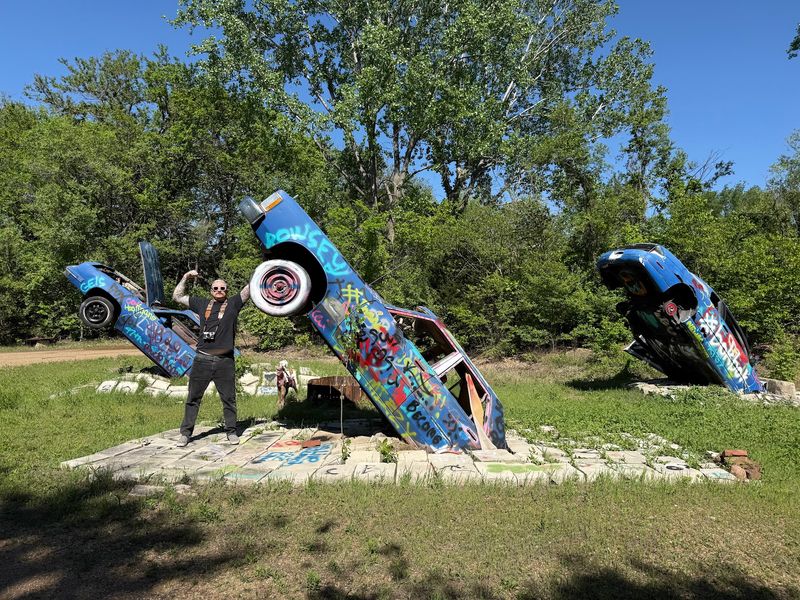
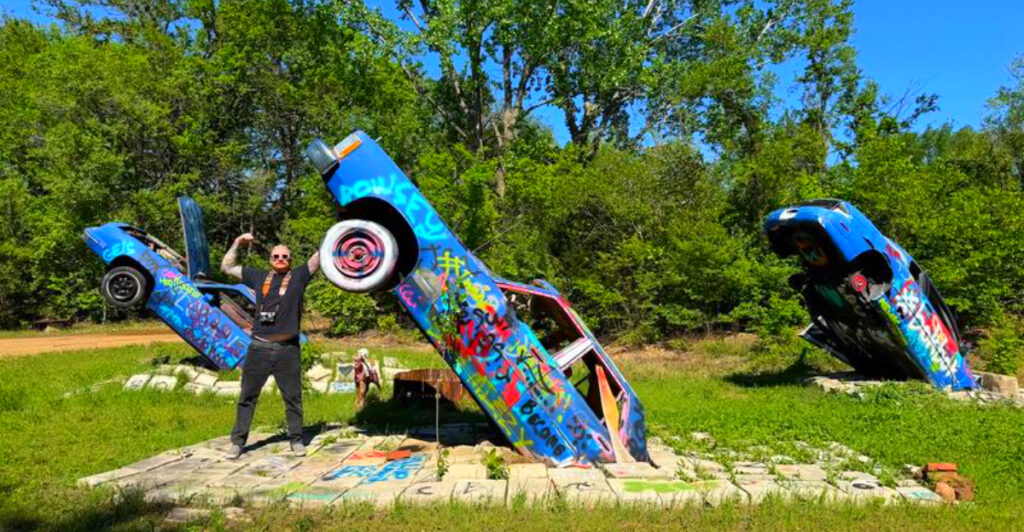
Ron Lessman looked at a collection of old trucks and saw something most people miss entirely: a sculpture garden waiting to happen.
Truckhenge is exactly what its name suggests. Antique vehicles have been thrust dramatically upright into the ground on Lessman’s farm outside Topeka, creating a striking silhouette that references its ancient stone-circle namesake while remaining defiantly, cheerfully American. The installation grew organically over time as Lessman continued adding to the collection.
Unlike polished gallery installations, Truckhenge carries the rough, unfiltered energy of a personal creative vision pursued without asking anyone’s permission. That authenticity is a big part of what makes it so appealing to visitors who appreciate art that doesn’t take itself too seriously.
Because the attraction sits on private property, travelers need to call ahead and arrange a visit before showing up at the gate. That small extra step is absolutely worth the effort for anyone who appreciates grassroots creativity done on a genuinely impressive scale.
9. OZ Museum, Wamego, Kansas
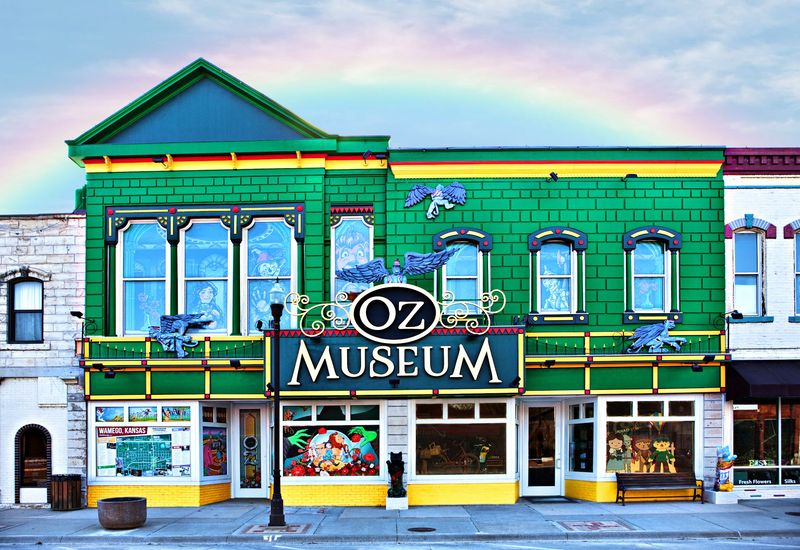
Wamego could have simply acknowledged its Kansas connection to Dorothy and Toto with a small plaque. Instead, it built an entire museum housing the world’s largest privately owned collection of Oz memorabilia.
The OZ Museum holds over 2,000 rare artifacts spanning more than a century of Oz history, covering L. Frank Baum’s original book series, the iconic 1939 MGM film, silent film adaptations, and modern interpretations including Broadway’s Wicked. Guests follow a yellow brick road through the exhibits, beginning in a sepia-toned gift shop before entering the full-color displays, a deliberate nod to the film’s famous visual transition.
Original costumes, props from the 1939 production, and rotating special exhibits give repeat visitors new reasons to return. Guided tours are available for those who want the deeper historical context, while self-guided exploration suits travelers moving at their own pace.
Wamego itself extends the Oz theme beyond the museum walls, with a Yellow Brick Road featuring painted murals of famous scenes throughout the downtown area.
10. The Geographic Center of the United States, Lebanon, Kansas
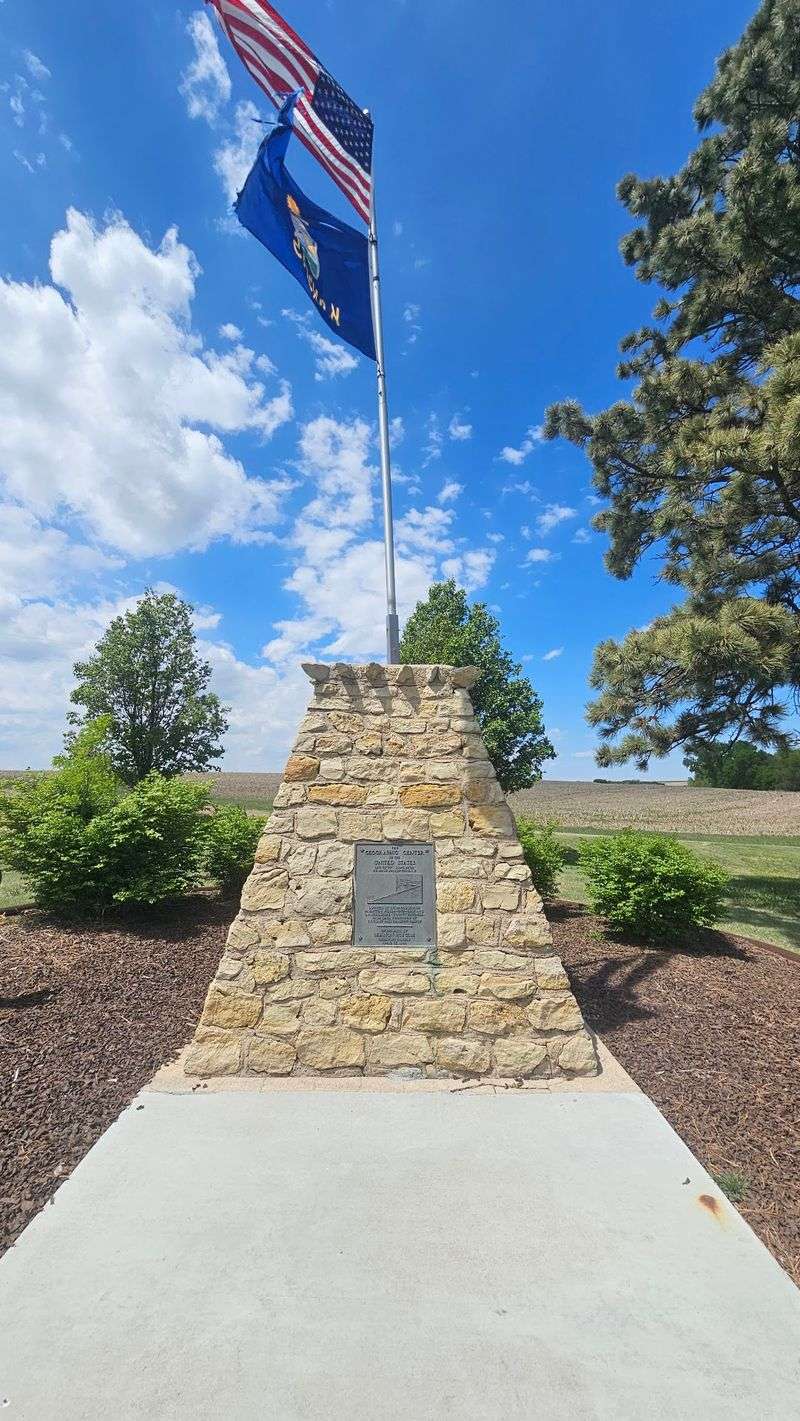
Standing at the official center of the contiguous United States turns out to be a surprisingly quiet and understated experience, which somehow makes it even more memorable.
A pyramidal stone monument near Lebanon, Kansas, was erected on June 29, 1941, by the local Hub Club to mark the spot designated by the U.S. Coast and Geodetic Survey in 1918. The survey used a center of gravity method involving a cardboard cutout of the lower 48 states to pinpoint the location.
Here is the quirky footnote: the precise mathematical center was actually located in a nearby farmer’s hog pen. The landowner preferred not to host a steady stream of curious tourists, so the monument was placed at a more accessible hilltop site instead.
The Geographical Center Park includes a 7-foot, 6-inch limestone monument, a flagpole, picnic tables, and a small chapel with wooden pews. While Alaska and Hawaii later shifted the broader national center to South Dakota, Lebanon’s monument remains a genuinely popular historical stop.
11. Monument Rocks, Oakley, Kansas
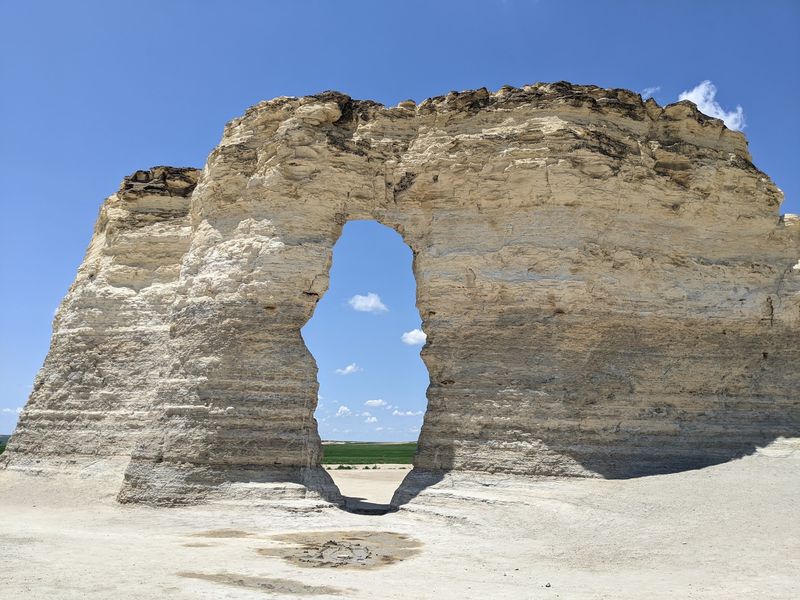
Eighty million years ago, a vast inland sea covered western Kansas. Today, Monument Rocks are what that sea left behind, and they are genuinely spectacular.
These chalk formations, remnants of Niobrara Chalk sediments deposited during the late Cretaceous Period, rise 50 to 70 feet from the surrounding flatlands. Erosion sculpted the remaining chalk into arches, columns, and weathered walls that make the site look borrowed from a completely different landscape. Kansas’s first National Natural Landmark designation came in 1968, and the formations are also recognized as one of the Eight Wonders of Kansas.
Historically, the rocks served as navigation landmarks for travelers on the Smoky Hill Trail during the 1860s, guiding wagon trains across an otherwise featureless expanse. Fossil hunters have long been drawn to the site, though collecting fossils is strictly prohibited today.
Monument Rocks sits on private land, but the owners permit public access via unpaved roads. Visitors should check road conditions before heading out, as rain can make those routes difficult to navigate.
12. Rock City Park, Minneapolis, Kansas
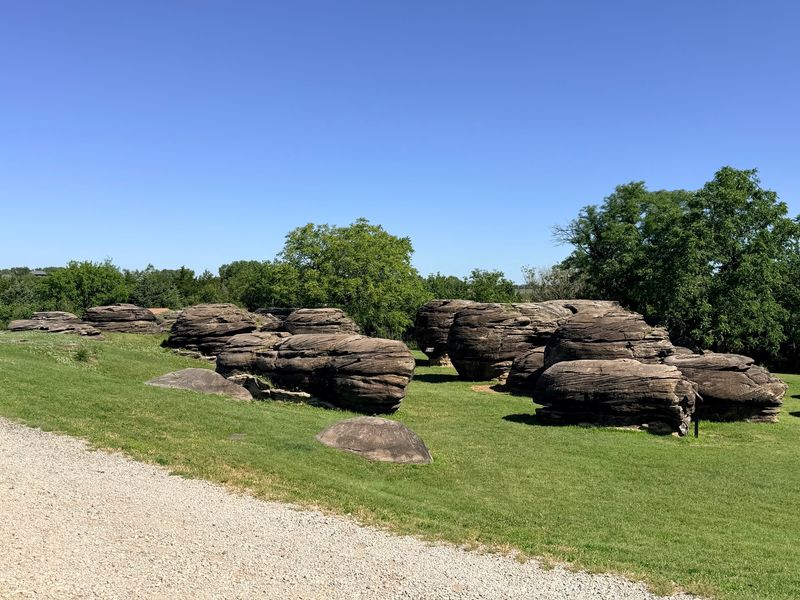
Rock City looks like something a giant left behind after a particularly chaotic game, and the geological explanation for these formations is almost as hard to believe as the formations themselves.
The park contains approximately 200 spherical sandstone concretions, giving it the highest concentration of such formations anywhere in the world, a fact that earned it National Natural Landmark status. These boulders formed millions of years ago when an ancient inland sea covered the region. Groundwater rich in calcium carbonate seeped through porous sandstone, cementing sand grains into spheres that erosion later exposed at the surface.
Some concretions measure up to 27 feet in diameter, and visitors are actively encouraged to climb them, making Rock City one of the more physically interactive geological sites in Kansas. Mowed trails wind through native grasses between the formations, and a gazebo and picnic areas provide spots to rest.
Local children have given some formations playful names, and a scavenger hunt for named rocks like Doughnut-Hole Rock adds an extra layer of fun for younger visitors.
Share this story