Kansas is mostly known for wheat, wide skies, and rolling prairie, but the rocks beneath all that grass have a very different story to tell. About 80 to 300 million years ago, shallow seas repeatedly flooded the region, leaving behind chalk towers, marine fossils, and limestone layers that still shape the landscape today. Some of those fossils belong to creatures that make modern animals look small, including 20-foot predatory fish and massive swimming reptiles that ruled an inland ocean stretching from the Gulf of Mexico all the way to Canada. The places on this list let you see that prehistoric world up close, whether you prefer hiking past towering chalk formations, peering at ancient shark teeth, or standing face-to-face with a 45-foot marine reptile in a world-class museum.
Kansas turns out to be one of the best places in North America to trace the story of a vanished sea, and these 12 spots prove it.
1. Little Jerusalem Badlands State Park, Oakley, Kansas
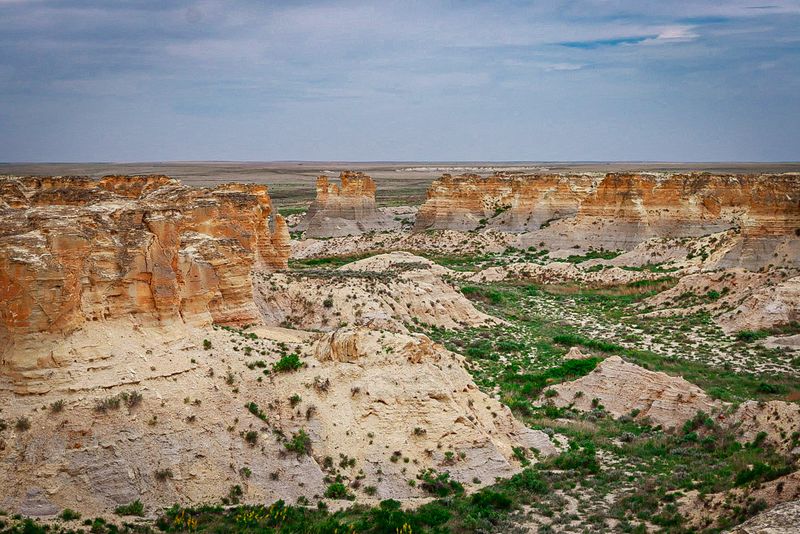
Most people do not expect to find a badlands landscape in Kansas, which makes the first view of Little Jerusalem genuinely surprising. The park gets its name from the way its jagged chalk formations suggest a distant skyline of towers and walls, all carved from the same Niobrara Chalk that built Monument Rocks nearby.
These chalk layers formed about 80 million years ago at the bottom of the Western Interior Seaway. Wind and water have been chipping away at them ever since, creating the pale cliffs, narrow corridors, and sculpted ridges that visitors explore today.
The park shares a geological marker layer with both Monument Rocks and Castle Rock, connecting all three sites to the same ancient ocean. A nature center on site provides helpful context before you head out on the trails. The park opened to the public in 2019, making it one of the newer additions to Kansas’s state park system.
2. Castle Rock Badlands, Quinter, Kansas
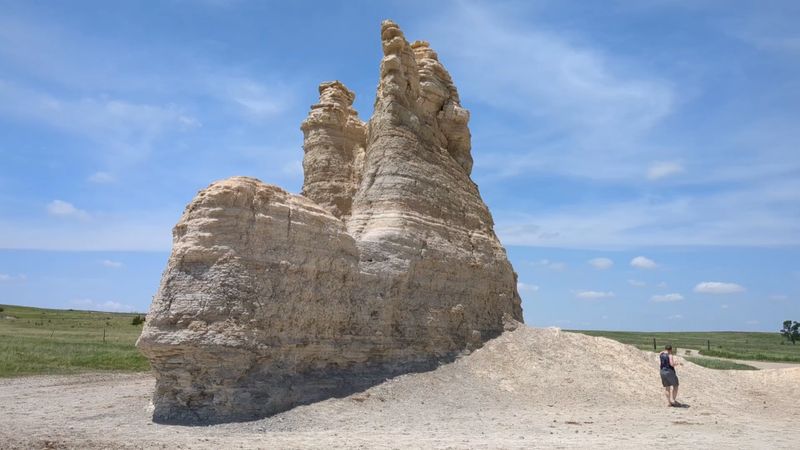
Castle Rock earns its name honestly. The central chalk spire rises from the surrounding badlands with the kind of presence that makes you stop the car and stare for a minute before you even think about getting out.
The formation is part of the Niobrara Chalk, laid down during the Cretaceous Period roughly 80 million years ago when a warm inland sea covered this part of North America. Single-celled organisms accumulated on the seafloor in enormous quantities, eventually compressing into the fine-grained chalk visible in the cliffs and pinnacles today.
The chalk here has yielded some remarkable fossil finds over the years, including specimens that helped establish just how diverse the Western Interior Seaway’s ecosystem really was. The famous fish-within-a-fish fossil, now housed at the Sternberg Museum, came from these chalk beds. Castle Rock sits on private land, but visitors are welcome to walk the area respectfully and take in the stark, eroded landscape.
3. Rock City Park, Minneapolis, Kansas
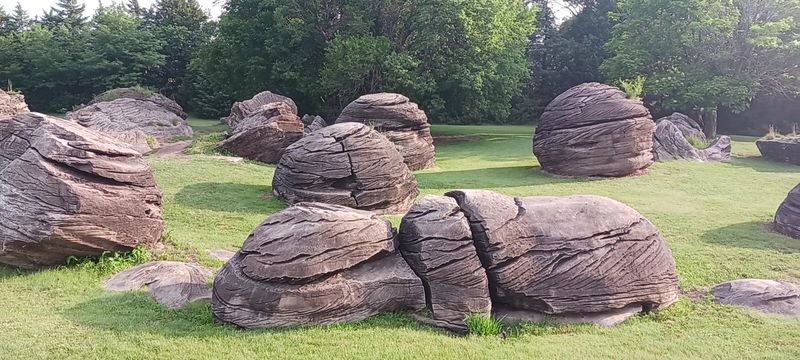
Nobody stumbles across Rock City without doing a double take. The park holds roughly 200 giant sandstone spheres, some of them 27 feet across, scattered across a five-acre hillside as if placed there deliberately by something very large with unusual taste in yard decorations.
These concretions formed within the Dakota Formation about 100 million years ago, when an inland sea covered western Kansas. Groundwater carrying dissolved calcium carbonate moved through porous sandstone and slowly cemented the grains together in rounded clusters. As the softer surrounding rock eroded away over millions of years, the harder spheres were left behind sitting on the surface.
Some of the concretions display cross-bedding inside, with angled lines that record the direction of ancient water currents in that Cretaceous sea. A local non-profit operates the park and charges a small admission fee. Visitors are welcome to climb on the formations, which makes this one of the more hands-on geological sites in the state.
4. Monument Rocks Natural Landmark, Oakley, Kansas
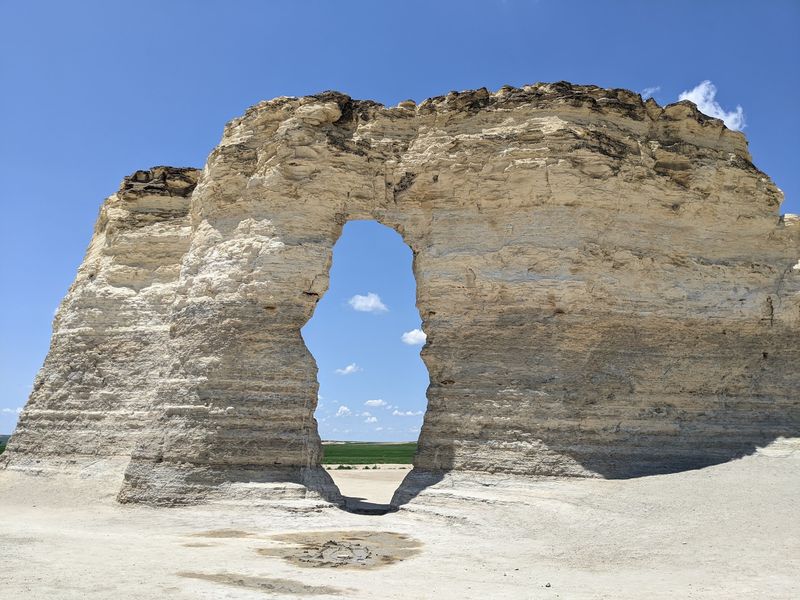
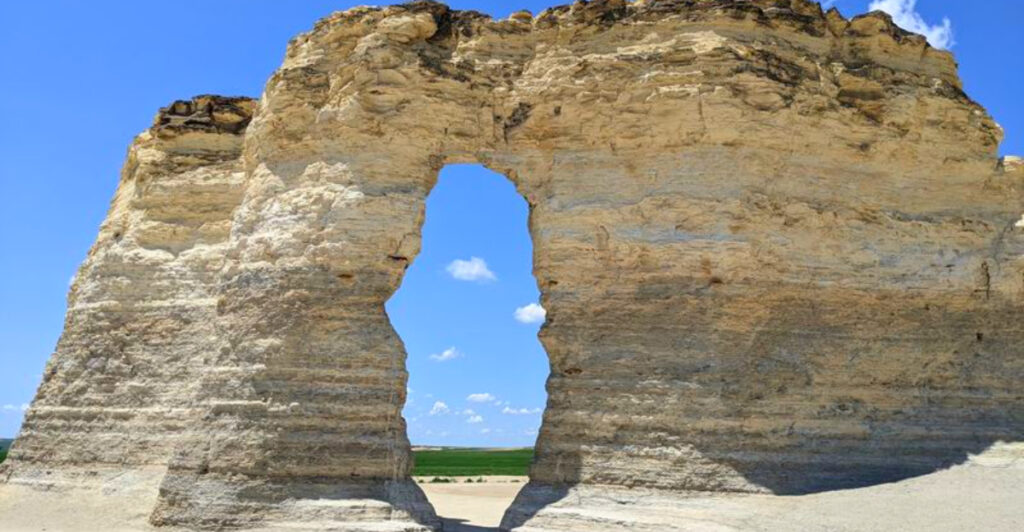
Out on the flat western Kansas prairie, a cluster of chalk towers rises without warning, looking like the ruins of something far older than any human civilization. Monument Rocks, also called the Chalk Pyramids, earned the distinction of being Kansas’s first National Natural Landmark back in 1968, and the honor is well deserved.
The formations are built from the Smoky Hill Chalk Member of the Niobrara Chalk, deposited roughly 80 million years ago when the Western Interior Seaway covered this region. Microscopic marine organisms died and drifted to the seafloor by the trillions, building up thick layers of chalky sediment over millions of years.
Fossils found here include mosasaurs, plesiosaurs, giant fish, toothed birds, and clams as wide as six feet across. The site sits on private land, but the landowners welcome respectful visitors. Climbing on the formations is discouraged, since erosion is already doing plenty of work on its own.
5. Mushroom Rock State Park, Brookville, Kansas
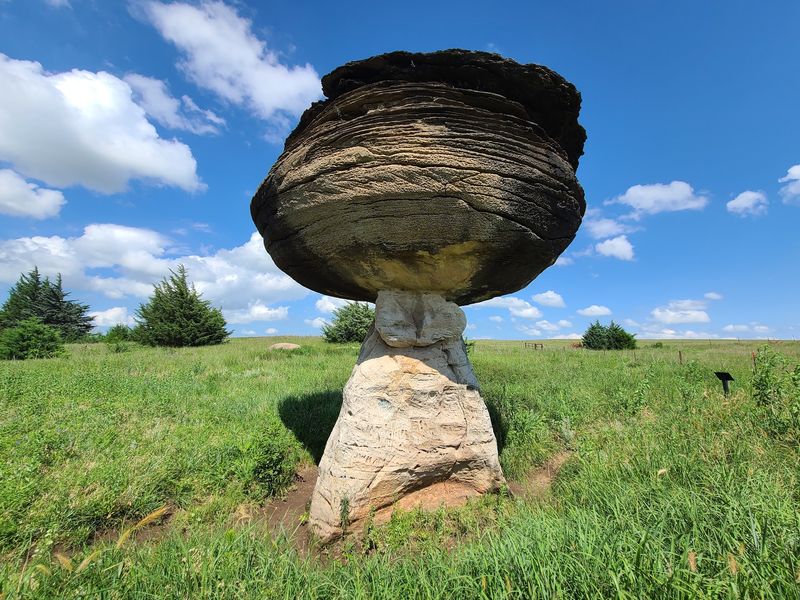
Kansas holds the title of smallest state park in the country right here at Mushroom Rock, which covers just five acres but manages to pack in some genuinely peculiar geology. The formations look exactly like their name suggests, with wide elliptical caps balanced on narrower sandstone stems.
They formed from the Dakota Formation, deposited near the edge of a Cretaceous sea about 100 million years ago. Groundwater cemented certain zones of sandstone more thoroughly than others, creating harder pockets within the softer surrounding rock. Erosion did the rest, leaving the resistant caps elevated while the material around them wore away.
Some of the larger mushrooms reach 27 feet in diameter. Beyond the geology, these formations served as landmarks for Native American tribes and later for travelers like Kit Carson moving across the open plains. The park is managed by Kanopolis State Park and makes a natural pairing with nearby Kanopolis for anyone doing a geology-focused road trip through central Kansas.
6. Kanopolis State Park, Marquette, Kansas
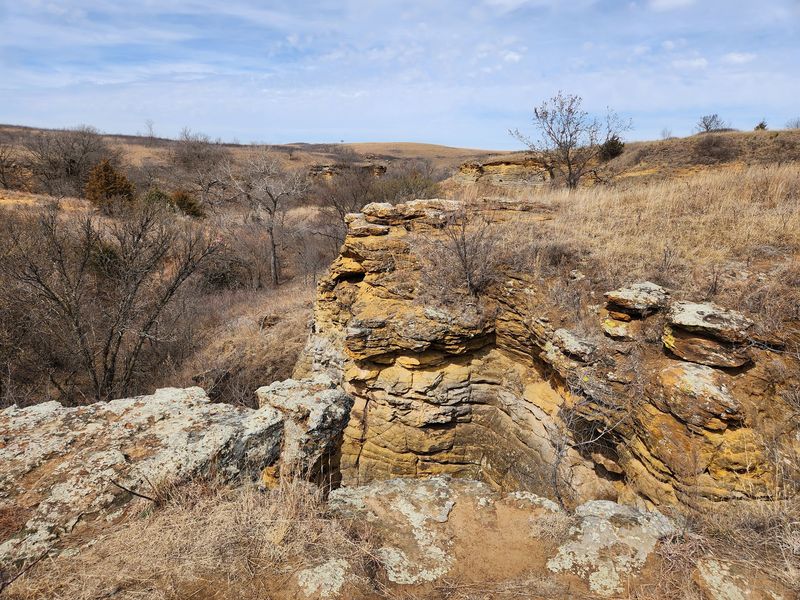
Kansas’s oldest state park surprises visitors who expect flat, featureless terrain. Kanopolis delivers sandstone bluffs, deep crevices, and canyon-like passages that feel more like the American Southwest than the central plains.
The geology here reflects the shifting edge of a Cretaceous inland sea roughly 100 million years ago. The Dakota Formation captures sandy coastal and river deposits, while the older Kiowa Formation below it preserves more clearly marine sediments. Together they tell the story of a coastline that moved back and forth across this region over millions of years.
Fossil hunters have found bivalves, gastropods, shark teeth, and other marine remains within these formations. The rocks also contain selenite crystals, cone-in-cone structures, and various types of iron-rich concretions. The park offers over 30 miles of trails for hiking, biking, and horseback riding, along with a reservoir for water activities. The geological variety alone makes it worth a dedicated visit, but the trail network adds serious practical appeal for outdoor enthusiasts.
7. Sternberg Museum of Natural History, Hays, Kansas
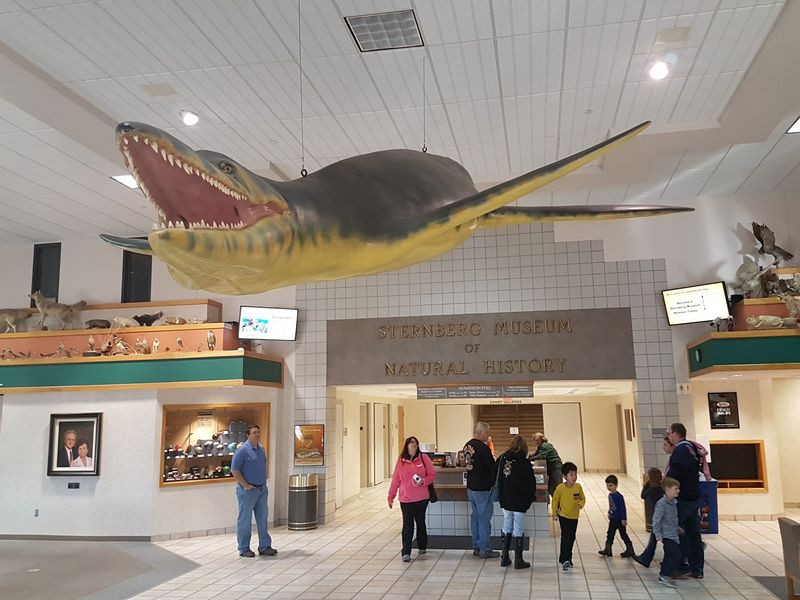
Few museums in the country can claim a fossil as dramatic as the one greeting visitors near the entrance at the Sternberg. A 45-foot cast of Tylosaurus, Kansas’s official state marine fossil, makes it immediately clear that this is not a typical regional history museum.
Tylosaurus was an apex predator in the Western Interior Seaway, a massive marine reptile capable of taking on nearly anything that shared its ocean. The original specimen, known as the Bunker Mosasaur, was collected in Wallace County in 1911 and remains one of the most complete mosasaur fossils ever found.
The fish-within-a-fish exhibit draws equal fascination. A preserved Xiphactinus, a giant predatory fish that reached 20 feet in length, contains the skeleton of another fish still visible inside its body cavity, frozen in the moment of its last meal. The museum also features plesiosaurs, sharks, turtles, and flying reptiles, covering nearly every major group that inhabited or flew over the ancient Kansas sea.
8. Fick Fossil & History Museum, Oakley, Kansas
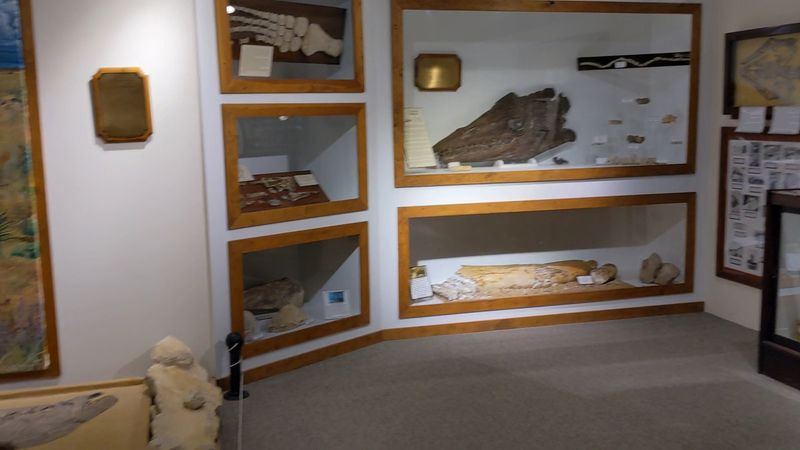
Oakley sits in the heart of chalk country, surrounded by some of the most fossil-rich terrain in North America. The Fick Fossil and History Museum takes full advantage of that location, housing specimens that would be at home in much larger institutions.
The star fossil here is what researchers consider the oldest documented mosasaur skull ever recorded, a 30-foot Tylosaurus proriger discovered in Gove County. A 15-foot Xiphactinus audax found locally by the legendary paleontologist George F. Sternberg rounds out the prehistoric marine collection.
Beyond the fossils, the museum holds a collection of folk art created by Ernest and Vi Fick, the benefactors whose donations made the museum possible. The couple incorporated actual local fossils into their artwork, adding a quirky creative layer to an already interesting stop. The combination of world-class specimens and community history gives the Fick Museum a personality that larger institutions rarely manage to replicate. It pairs naturally with a visit to Monument Rocks just down the road.
9. Keystone Gallery, Scott City, Kansas
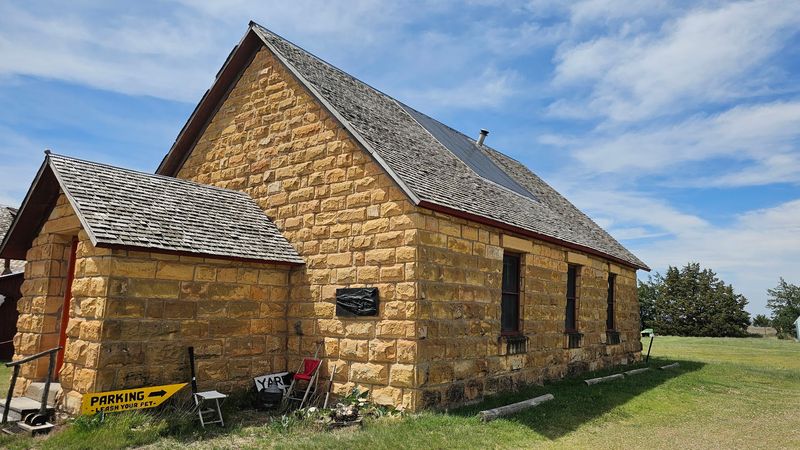
A restored 1916 stone church along U.S. 83 might seem like an unlikely home for one of western Kansas’s most interesting fossil collections, but Keystone Gallery has made it work in a way that feels completely natural. The building’s history adds character to an already compelling stop.
Inside, visitors find a 20-foot mosasaur and a 14-foot Xiphactinus among the locally collected specimens, both representing creatures that swam through the Western Interior Seaway between 82 and 87 million years ago. A large mural by artist Chuck Bonner illustrates what that ancient sea and its inhabitants may have looked like in life.
Owners Chuck Bonner and Barbara Shelton are practicing field paleontologists, which means the collection reflects genuine, ongoing fieldwork rather than purchased specimens assembled for display. The gallery also functions as an art space and gift shop, making it an unusually layered destination. Its position near Monument Rocks and Little Jerusalem Badlands puts it at the center of western Kansas fossil country.
10. KU Natural History Museum, Lawrence, Kansas
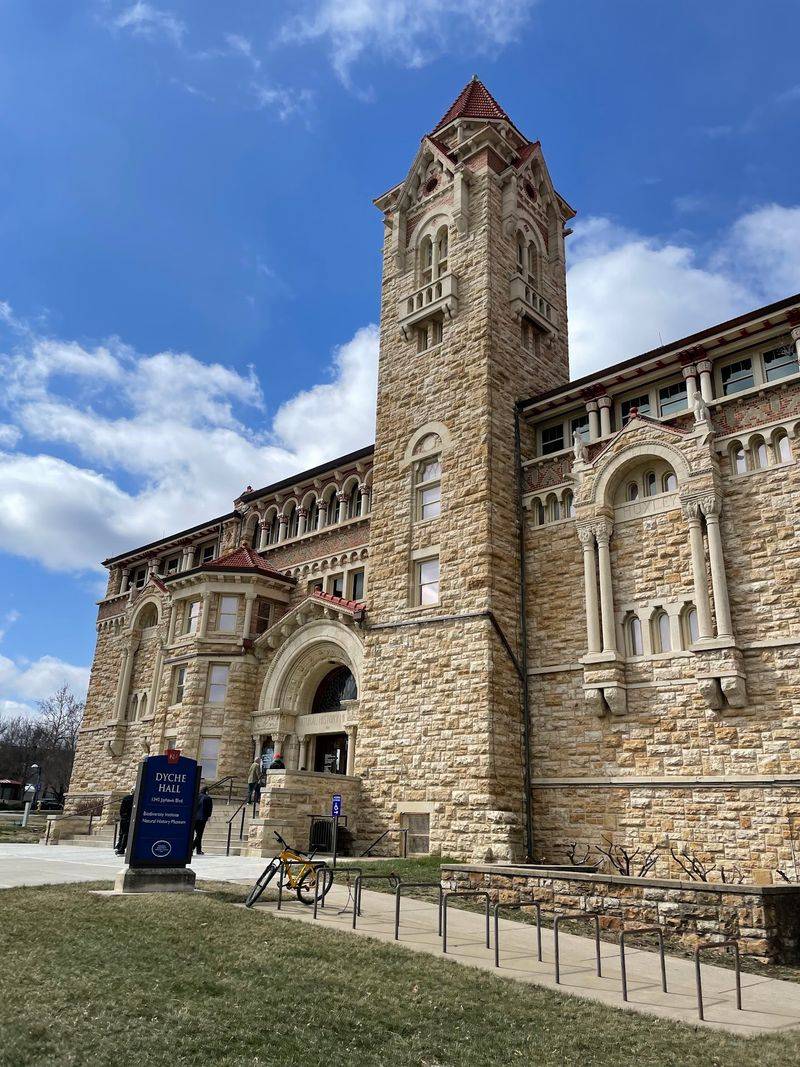
The University of Kansas has been collecting fossils from the state’s ancient seas since the 1860s, and the Natural History Museum in Lawrence is where the best of that collection goes on public display. The results are genuinely impressive on a national scale.
A 45-foot Tylosaurus cast dominates the space near the entrance, representing the same species that serves as Kansas’s official state marine fossil. The original specimen came from Wallace County in 1911 and remains one of the most complete mosasaur skeletons in existence. A 16-foot Xiphactinus nearby shows off the jagged teeth that made it one of the more intimidating predators in the Cretaceous sea.
A newer exhibit in Slawson Hall features a mosasaur in the act of attacking a sea turtle, with actual bite marks preserved on the turtle’s fossilized shell. The museum also displays plesiosaurs and Pteranodon, Kansas’s state flying fossil. Together these exhibits cover the full range of large animals that inhabited the Western Interior Seaway above this very spot.
11. Flint Hills Discovery Center, Manhattan, Kansas
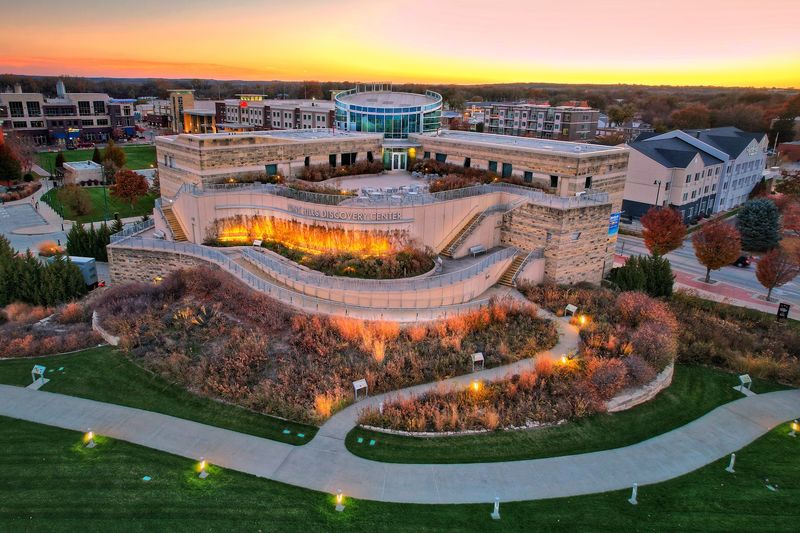
The rolling landscape around Manhattan looks the way it does for a very specific geological reason, and the Flint Hills Discovery Center does an excellent job of explaining exactly what that reason is.
The Flint Hills formed from limestone and shale deposited during the Pennsylvanian and Permian periods, roughly 320 to 245 million years ago, when shallow tropical seas covered this part of the continent. The hard, flint-rich limestone resists erosion far better than the softer shale layers between it, producing the characteristic stepped slopes and broad benches that define the terrain. That resistance to plowing is also why the Flint Hills still hold one of the largest surviving expanses of tallgrass prairie in North America.
Close inspection of the limestone reveals marine fossils including corals, brachiopods, crinoids, and fusulinids, the last being tiny single-celled organisms shaped like wheat grains that appear frequently in local building stones. The Discovery Center connects all of this geology to the ecology and human history of the prairie above it, making it a strong starting point for any Flint Hills visit.
12. Tallgrass Prairie National Preserve, Strong City, Kansas
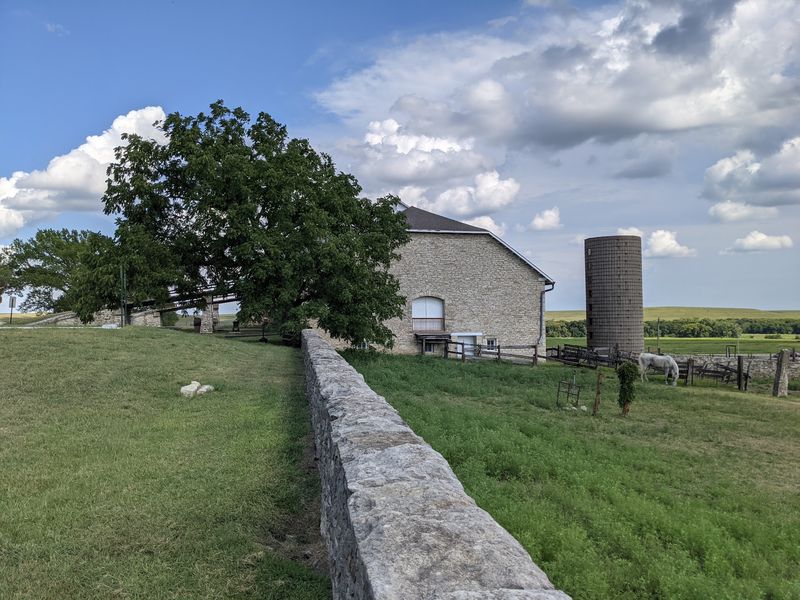
The ancient sea at Tallgrass Prairie National Preserve is not a metaphor. Around 280 million years ago, shallow tropical waters covered this exact ground, depositing the limestone and shale that now form the Flint Hills bedrock.
Those Pennsylvanian and Permian marine sediments are full of fossils. Corals, brachiopods, crinoids, snails, clams, bryozoans, and fusulinids appear in the limestone outcrops scattered across the preserve, preserving a detailed record of the invertebrate life that thrived in those ancient waters. The hard, flint-rich limestone resisted the plow, which is the main reason this stretch of tallgrass prairie survived when so much of it was converted to farmland.
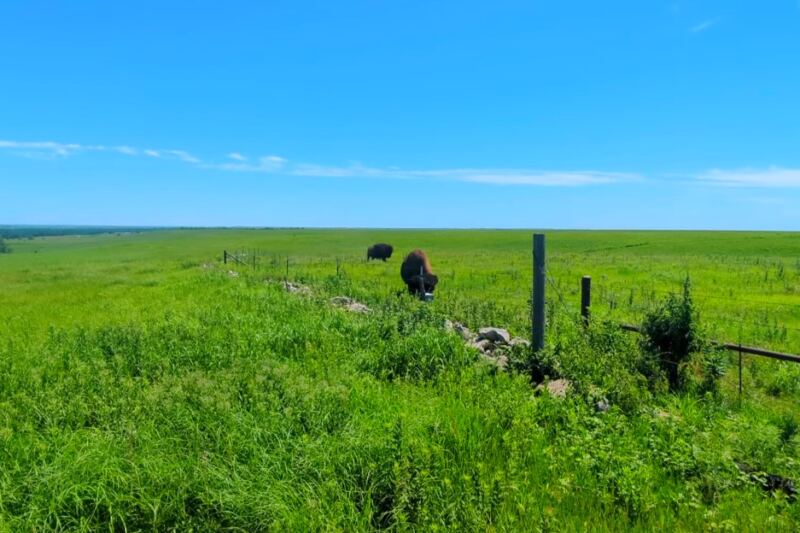
The preserve protects roughly 11,000 acres and supports one of the most biologically diverse grassland ecosystems remaining in North America. Bison were reintroduced to the preserve in 2009 and now roam freely across the landscape. The old Spring Hill Ranch headquarters, a National Historic Landmark, adds a layer of 19th-century history on top of the 280-million-year geological foundation beneath your feet.
Share this story