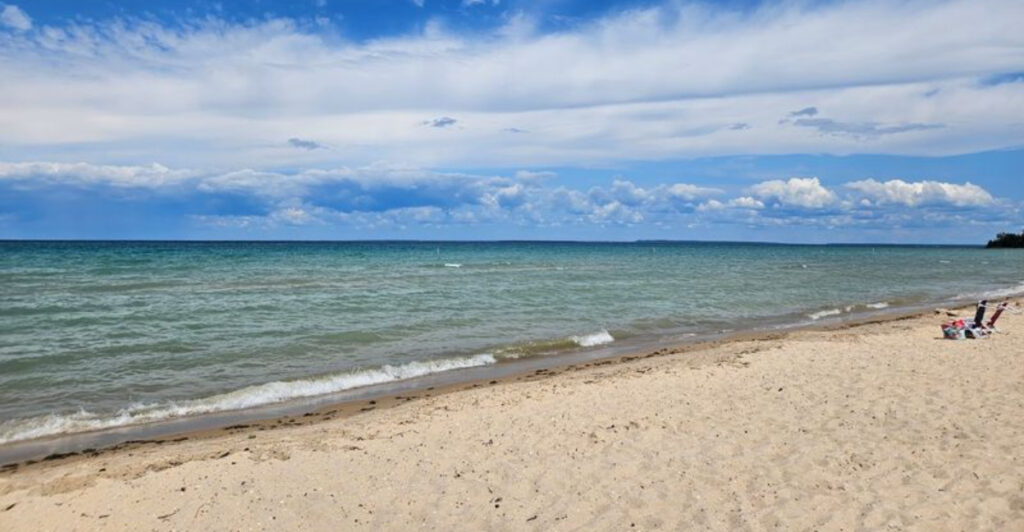
Summer beach season doesn’t have to mean fighting for a patch of sand between a thousand strangers and a row of souvenir shops. Some of the most rewarding shorelines in the country sit just outside the tourist radar, waiting for travelers willing to look a little further.
From Georgia’s ferry-access barrier islands to Oregon’s rugged sea-stack coastline, these 14 beaches offer genuine escapes without the gridlock, the noise, or the packed parking lots. Whether you prefer warm Gulf water, cool Pacific fog, or the glassy calm of a Great Lakes morning, this list covers real places with real open beaches that are worth the extra planning.
Save this one before summer slips away.
Cumberland Island National Seashore, Georgia
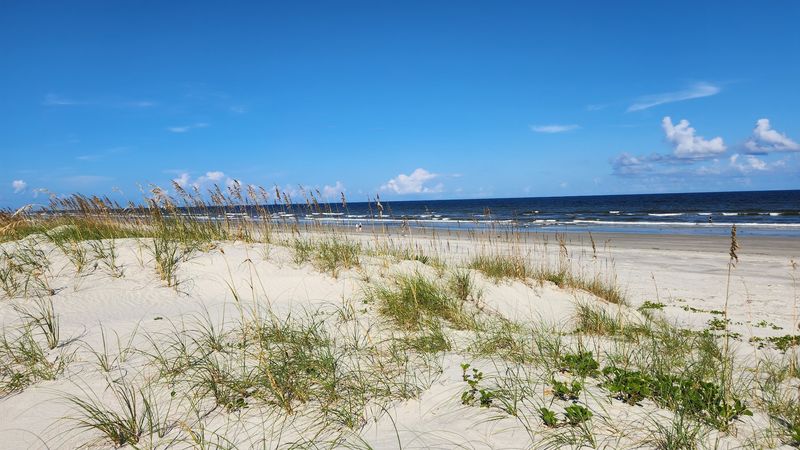
Getting to Cumberland Island requires a passenger ferry from St. Marys or a private boat, and that single requirement changes everything about what you find on the other side. There are no roads built for tourist traffic, no beachfront hotels, and no commercial strips competing with the view.
The Atlantic shoreline stretches for miles in both directions with very little between you and the water.
Sea Camp is the most accessible entry point for most visitors. The campground sits roughly half a mile from the dock, with trails and boardwalks connecting to the beach.
The National Park Service currently lists Sea Camp as open and recommends coordinating ferry reservations with campground plans well in advance.
Walking the beach here feels genuinely different from a typical summer trip. Wild horses roam the island, the dunes are intact, and the pace drops considerably once the ferry pulls away.
For a real coastal reset, this one delivers.
Cape Lookout National Seashore, North Carolina
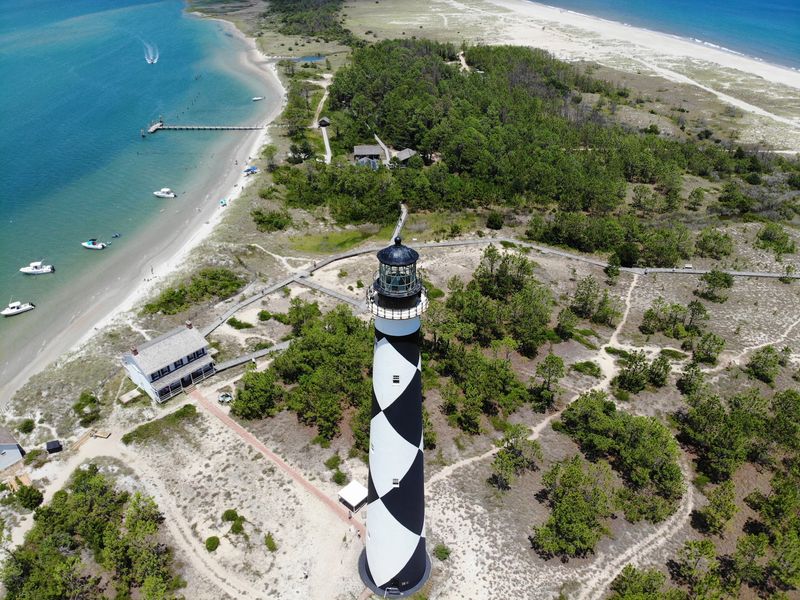
The Outer Banks get most of the attention in North Carolina, but Cape Lookout National Seashore offers roughly 56 miles of undeveloped barrier island coastline that most summer travelers never reach. There are no paved resort strips here, no carnival rides, and no traffic lights.
The barrier islands are accessible by ferry or private boat and remain open throughout the year, weather permitting.
There is no general entrance fee for Cape Lookout, which makes it a genuinely affordable escape. Rustic beachfront cabins are available in parts of the seashore, with Great Island Cabins scheduled to operate from March through late November in 2026.
One current detail worth knowing: the Cape Lookout Lighthouse remains closed, so plan around the beach experience rather than the climb.
Come for long surf-side walks, serious shell hunting, surf fishing, and wild dunes that stretch further than you expect. This is the version of the Outer Banks that feels like an actual escape rather than a beach resort.
False Cape State Park, Virginia
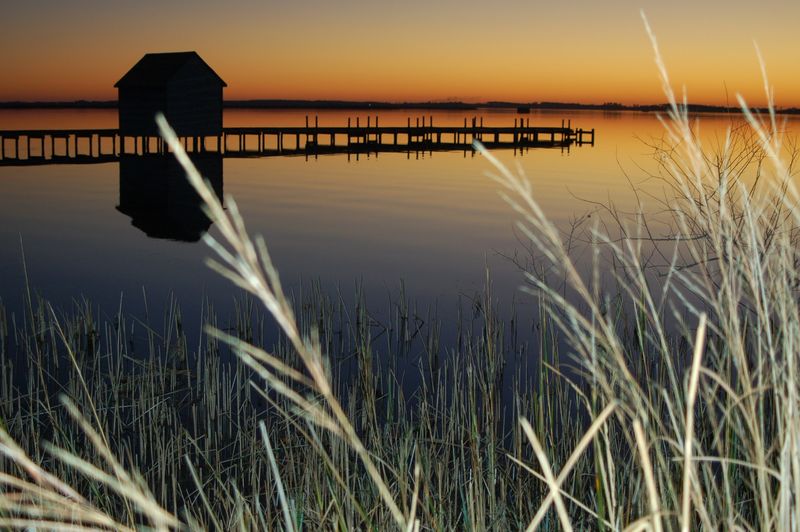
No public vehicles are allowed into False Cape State Park, which sits between Back Bay and the Atlantic south of Virginia Beach. That single rule is responsible for nearly everything that makes this place worth the effort.
Virginia State Parks describes it as one of the few remaining undeveloped coastal stretches along the entire Atlantic seaboard, and that description holds up.
Visitors reach the park on foot, by bicycle, by paddle craft, by boat, or through scheduled tram experiences. The park is currently open daily from sunrise to sunset, with the visitor center operating from 9 a.m. to 4 p.m.
Summer hikers and cyclists can use the refuge trail system to travel into the park from the Back Bay National Wildlife Refuge entrance.
Pack everything you need before you leave because this is a primitive experience rather than a boardwalk vacation. Bring water, sunscreen, and food.
The reward is nearly six miles of oceanfront that most Virginia Beach visitors never see.
Padre Island National Seashore, Texas
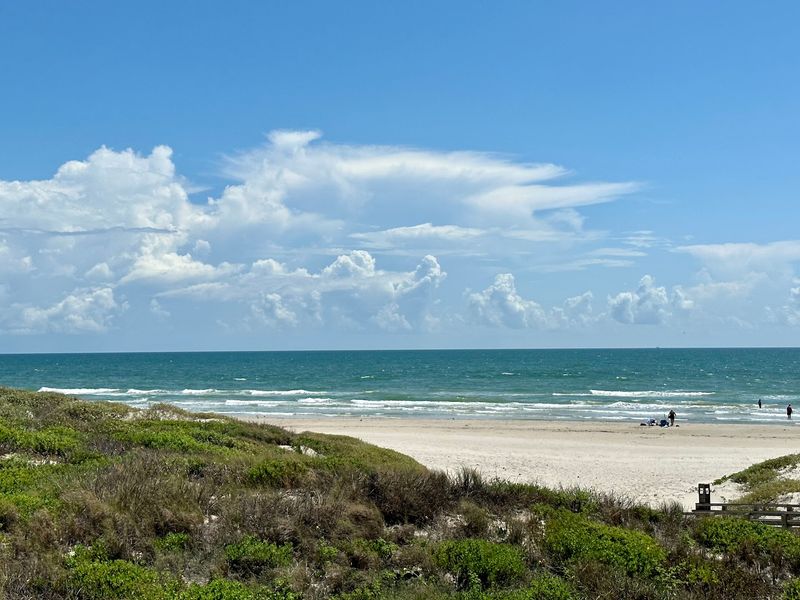
Texas has a lot of coastline, and Padre Island National Seashore protects a significant portion of it south of Corpus Christi. The park covers a vast stretch of barrier island beach, and current National Park Service conditions list North Beach, Malaquite Beach, South Beach, and Yarborough Pass as open.
Malaquite Beach sits closest to the visitor center and works well for first-time visitors who want straightforward beach access.
The Malaquite Visitor Center operates 363 days per year from 9 a.m. until 5 p.m. Travelers who want more solitude can drive further along South Beach, where development fades quickly and the landscape opens up into dunes, surf, and wide sky.
Some sections farther along require driving on sand and may need four-wheel-drive capability.
Check tide tables and beach conditions before heading deep into the park. Do that preparation, and Padre Island trades the condo-and-entertainment-strip experience for something much more open and genuinely wild along the Texas Gulf Coast.
Dr. Julian G. Bruce St. George Island State Park, Florida
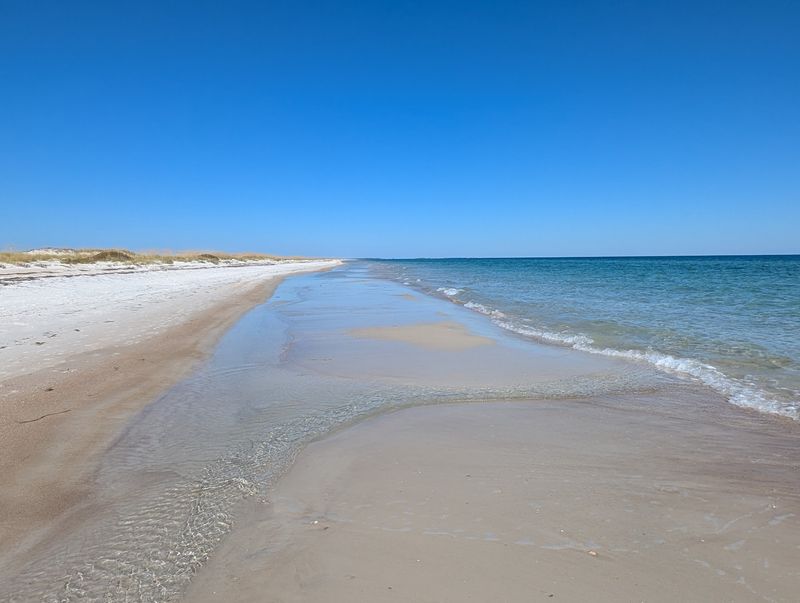
Florida’s Forgotten Coast earned that nickname for a reason, and St. George Island sits right at the heart of it. Located on the eastern end of a barrier island near Apalachicola, Dr. Julian G.
Bruce St. George Island State Park offers Gulf shoreline backed by dunes rather than high-rise condos. The state park operates from 8 a.m. until sunset throughout the year.
Visitors come for swimming, shelling, fishing, kayaking, and birding. The further you move from major Florida tourist corridors, the easier it becomes to find a beach that moves at its own pace, and this park delivers that feeling reliably.
Shorebirds work the dunes while the Gulf rolls in without much competition for your attention.
Spend the morning walking the shoreline and the afternoon watching the light shift over the water. This is Florida beach time without needing a roller coaster or a souvenir district nearby.
The Forgotten Coast lives up to its name in the best possible way.
T.H. Stone Memorial St. Joseph Peninsula State Park, Florida
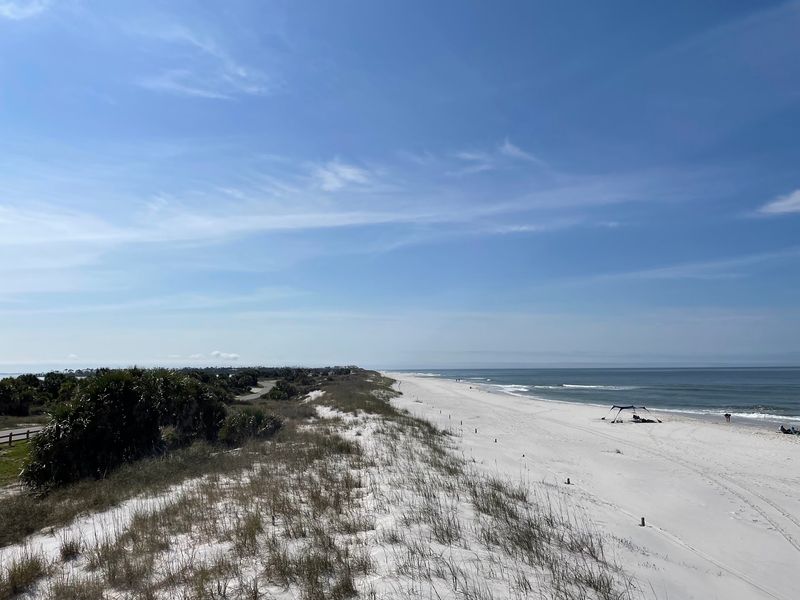
Another stretch of the Florida Panhandle coast that rewards visitors willing to skip the more famous resort beaches, St. Joseph Peninsula State Park protects approximately 10 miles of white-sand Gulf shoreline. Some of the tallest intact dunes in the Florida Panhandle rise within the park, creating a striking landscape that looks very different from the flat beach strips most people associate with the region.
The park is open from 8 a.m. until sunset, 365 days per year. The Gulf Breeze Day Use Area is also open and provides beach access north of Eagle Harbor.
There are no lifeguards stationed here, so visitors need to check surf conditions carefully before swimming, especially during summer months when afternoon wind patterns can shift quickly.
The appeal is straightforward: Gulf water, dunes, wildlife, and enough protected shoreline to walk well past the first busy access point. For travelers who want the Panhandle without the resort-town energy, this peninsula is a strong option.
Gold Bluffs Beach, California
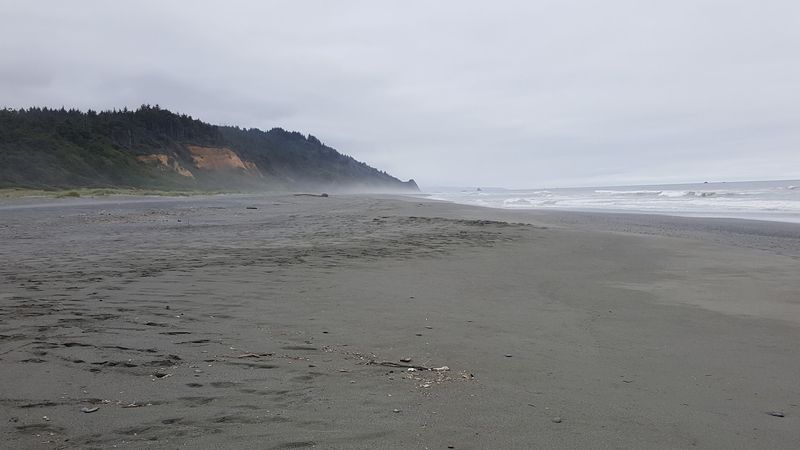
Gold Bluffs Beach sits inside Prairie Creek Redwoods State Park in far Northern California, which means your beach day comes with coastal redwoods practically at your back. That combination alone separates this spot from nearly every other beach on this list.
The park operates year-round, and Gold Bluffs Beach along with nearby Fern Canyon is reached via Davison Road off U.S. Highway 101.
Summer visitors need to plan ahead: day-use permits are required for Gold Bluffs Beach and the Fern Canyon area from May 15 through September 15. That reservation system limits spontaneous visits but also keeps the area from becoming overrun during the busiest months.
The permit requirement is part of why the experience stays manageable.
Expect cool temperatures and frequent fog along this stretch of coast, which is a welcome change for travelers tired of hot, crowded beaches. Come for misty bluffs, dramatic Pacific scenery, and a beach day that feels nothing like Southern California.
Grayland Beach State Park, Washington
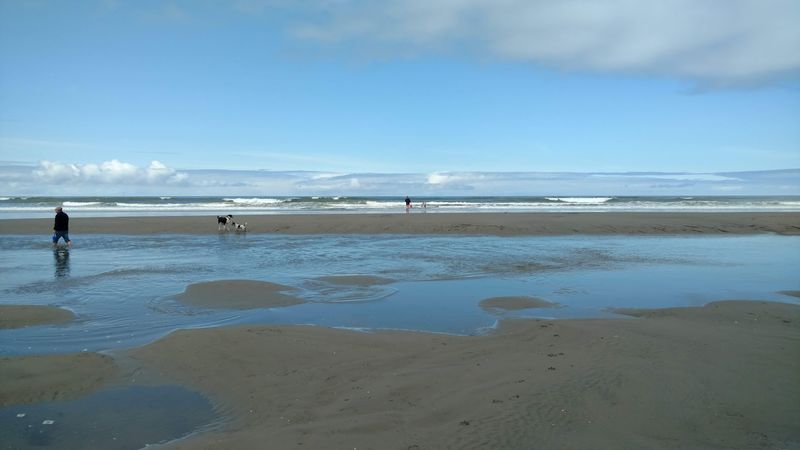
Washington’s Pacific coast stretches for miles without attracting the national beach attention that California or Florida receive, and Grayland Beach State Park is a good example of what that quieter stretch looks like. Located along Washington’s southwestern coastline, the park offers direct access to a wide Pacific beach alongside camping and yurts nestled in coastal vegetation.
Washington State Parks confirms Grayland Beach is open from 8 a.m. until dusk throughout the year, with beach access and restrooms available year-round. The Pacific here runs cool and the skies tend toward dramatic rather than postcard-perfect, which is part of the character rather than a drawback.
Think long beach walks, serious beachcombing, driftwood-lined shorelines, and sunsets that stretch across a wide horizon. For travelers who prefer a fleece pullover and a thermos to a beach umbrella and a vendor cart, Grayland delivers the kind of Pacific coast experience that feels genuinely unhurried.
The crowds simply never materialized here.
Janes Island State Park, Maryland
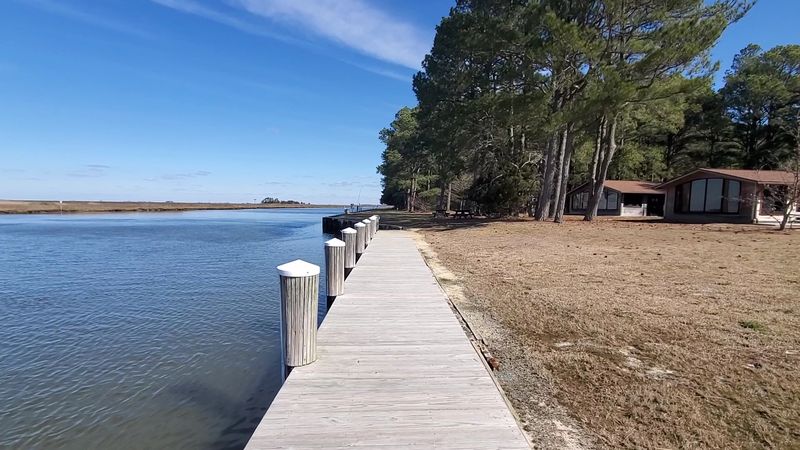
Janes Island gives beach travelers something most summer destinations don’t offer: a shoreline you actually reach by paddling. The developed section of the park sits near Crisfield on Maryland’s Eastern Shore, but the majority of the park consists of marshy island wilderness threaded with waterways.
Most of the park’s wild beach lies on the undeveloped island portion rather than along the road-access side.
Maryland’s Department of Natural Resources notes that a boat dock along the Yellow Trail provides boaters access to roughly five miles of unspoiled beach along the island’s bay side. Kayaking is central to the Janes Island experience, which immediately makes it different from any destination where visitors walk straight from a parking lot onto the sand.
If paddling through Chesapeake Bay marsh, watching wildlife, and landing on an isolated shoreline sounds more appealing than fighting for a beach chair, this is one of the most genuinely distinctive options on the entire list. Come prepared for a wilderness trip, not a resort visit.
Roque Bluffs State Park, Maine
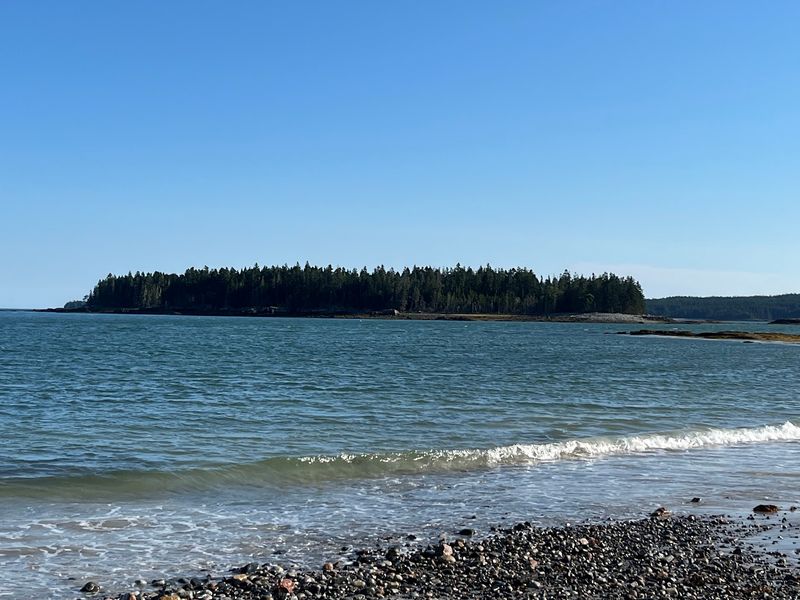
Travel far enough up the Maine coast and the whole idea of a summer beach day shifts into something cooler, quieter, and more rugged. Roque Bluffs State Park sits in Downeast Maine and features a sand-and-pebble beach that looks nothing like the crowded resort beaches further south.
Maine’s official park materials identify Roque Bluffs as one of its designated state park beaches, and the 2026 outdoor recreation guide includes it among operating public recreation properties.
Water temperatures here run cold by most standards, and the surrounding landscape leans heavily toward forest, rocky coastline, and open sky. Bringing a fleece for a summer beach day is not an overreaction; it’s reasonable planning for this part of the coast.
The appeal is the atmosphere rather than the swimming conditions. Quiet surroundings, rocky scenery, and the kind of unhurried pace that Downeast Maine is known for make this one of the most refreshingly low-key options on the list.
Expect solitude more than sunshine.
Newport State Park, Wisconsin
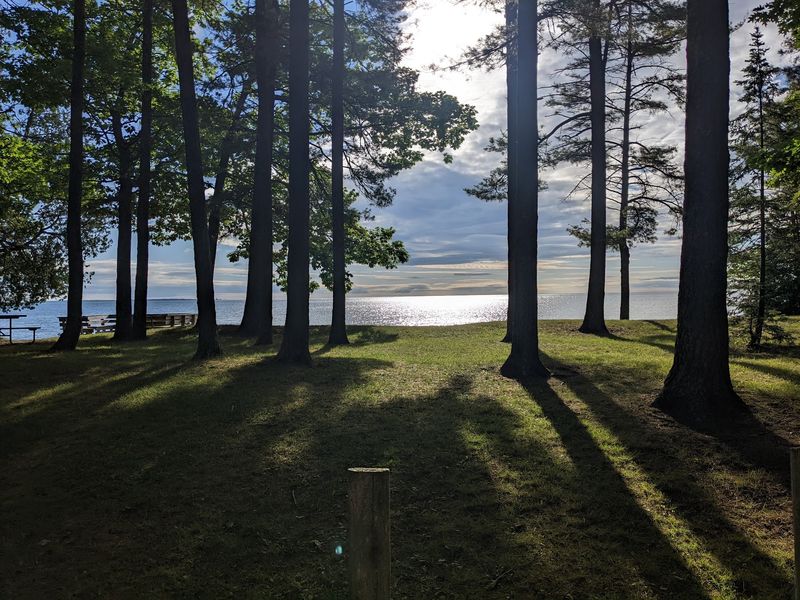
An ocean isn’t required for a spectacular summer beach escape, and Newport State Park makes that case convincingly. Located near the tip of Wisconsin’s Door Peninsula along Lake Michigan, the park protects more than 2,300 acres and approximately 11 miles of Great Lakes shoreline.
Wisconsin’s Department of Natural Resources explicitly describes Newport as a quiet alternative to the busier parts of Door County, which is exactly why it belongs on this list.
The park is open from 6 a.m. until 11 p.m. year-round, with a paved walkway leading to the beach and a beach wheelchair available for visitors who need it. Beyond swimming and shoreline walks, Newport offers hiking trails and backpack camping for travelers who want to stay longer than a day trip allows.
When evening arrives, the absence of a major resort town nearby becomes another advantage rather than a limitation. If Door County traffic and restaurant noise aren’t your idea of a summer escape, Newport State Park is the obvious answer.
Wilderness State Park, Michigan
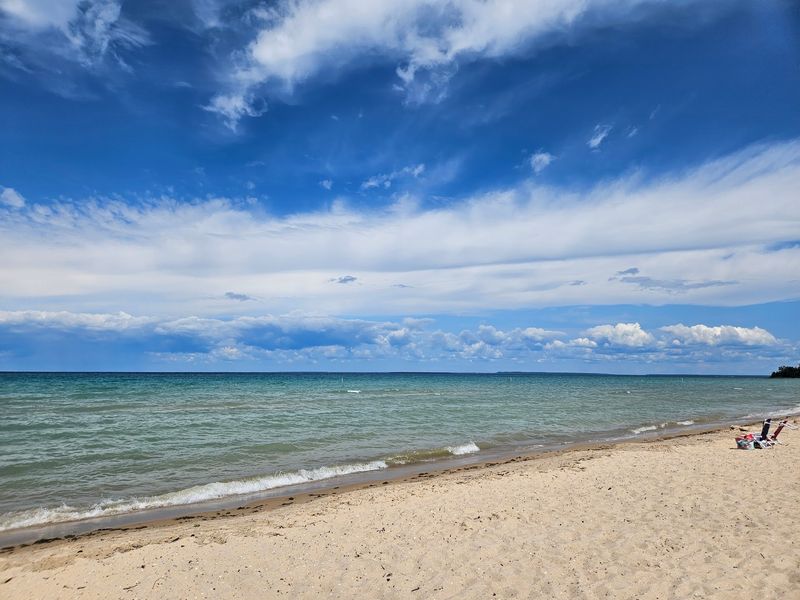
Twenty-six miles of Lake Michigan shoreline is a remarkable amount of coastline for a single state park, and Wilderness State Park delivers exactly that. Located roughly 11 miles west of Mackinaw City in Michigan’s northern Lower Peninsula, the park also includes more than 20 miles of trails alongside a buoyed swimming area, pet-friendly beach sections, and multiple camping options.
Michigan DNR’s current beach-safety guidance includes Wilderness State Park among locations using the Great Lakes warning-flag system. Those flags matter here because wind, waves, and cold-water conditions can shift quickly, particularly along exposed northern Lake Michigan shoreline.
Pay attention to the flags before heading into the water.
Beyond safety, the scale of the park is what separates it from smaller beach destinations. Forests, dramatic Lake Michigan sunsets, hiking, and proximity to the Straits of Mackinac all add to the experience.
Travelers who want the classic summer-beach feeling without traveling to an ocean coast will find Wilderness State Park easy to appreciate.
Cape Blanco State Park, Oregon
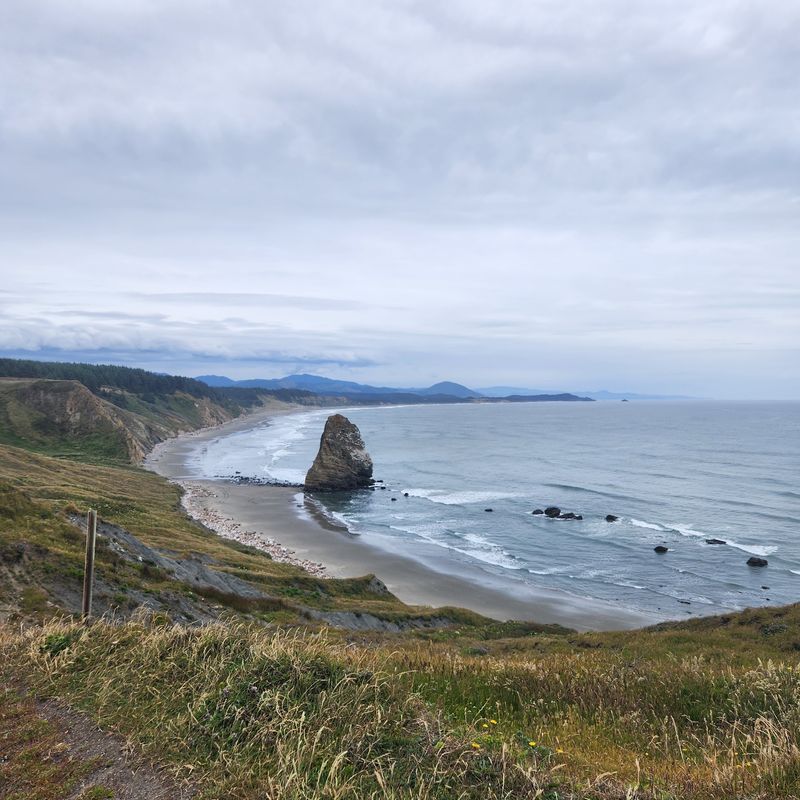
Cape Blanco juts further west into the Pacific than any other point in Oregon, which gives it a coastal exposure that is both dramatic and reliably windy. Oregon State Parks lists more than eight miles of hiking trails connecting visitors with beaches, ocean viewpoints, and fishing access along the Sixes River.
Current park information is active for the 2026 season and includes South Coast tide resources for planning beach visits.
The surrounding coastline is rugged and beautifully undeveloped, with the kind of scenery that makes a packed resort beach feel genuinely irrelevant by comparison. Hiking boots and a windproof jacket are more useful here than a beach umbrella, and that shift in gear reflects the shift in experience.
Cape Blanco works particularly well for road-trippers moving along U.S. Highway 101 who want beaches that feel like wild landscapes rather than tourist attractions.
Walk toward the bluffs, watch the Pacific push against the rocks, and let the wind do the rest.
Samuel H. Boardman State Scenic Corridor, Oregon
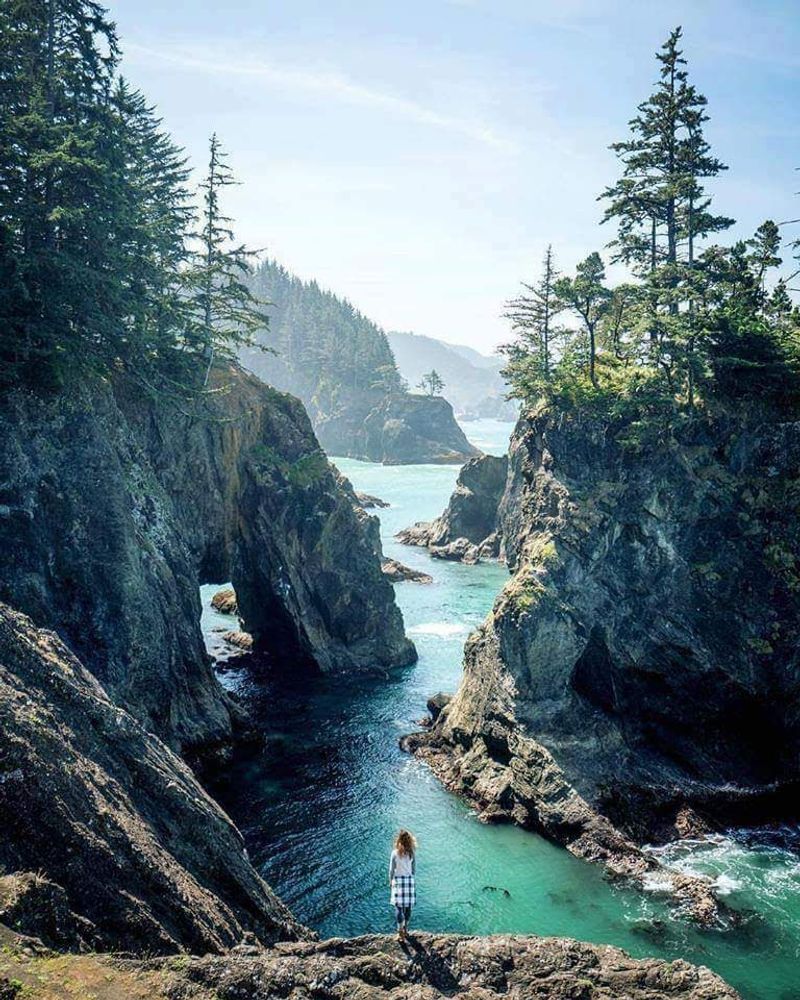
Samuel H. Boardman State Scenic Corridor runs for roughly 12 miles between Brookings and Gold Beach along Oregon’s southern coast.
Oregon State Parks describes the area as containing secluded beaches, craggy bluffs, and offshore rock formations, and that description is accurate without being exaggerated. The corridor is open for day use year-round and offers a series of trailheads, overlooks, picnic areas, and coastal trails rather than one large parking lot.
Whaleshead Beach provides relatively straightforward beach access, while trails near House Rock lead toward more secluded shoreline. Natural Bridge and Arch Rock add sea stacks and dramatic rock formations that make even short stops feel worthwhile.
Each pullout reveals something slightly different from the last.
One current summer 2026 restriction applies: an open-flame ban has been in effect in the corridor’s day-use areas and beaches since July 20, 2026. Portable propane cooking devices with shutoff valves remain permitted under current rules.
Plan meals accordingly and enjoy one of Oregon’s most rewarding coastal stretches.
Share this story