Europe has no shortage of stunning coastlines, but some beaches stand out so far above the rest that they deserve a spot on your summer planning list right now. From pink-tinted sand in Greece to black volcanic shores in Iceland, the variety is genuinely surprising.
Whether you prefer calm lagoons, dramatic cliffs, wild northern landscapes, or lively city beaches, there is something on this list worth bookmarking. These 15 beaches span nine countries and represent some of the most beautiful coastal scenery the continent has to offer this summer.
Praia da Marinha, Algarve, Portugal
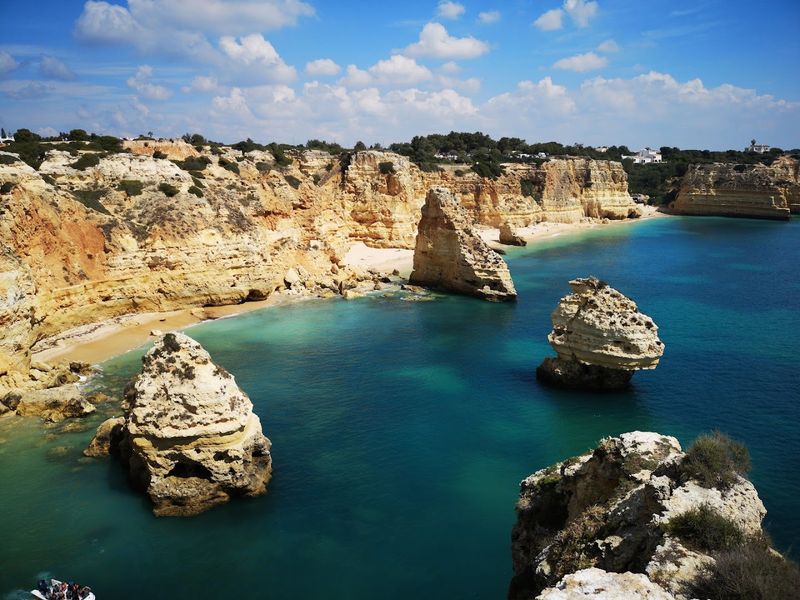
Few beaches in Portugal make as strong a first impression as Praia da Marinha. The golden limestone cliffs rise dramatically above the shore, shaped by centuries of erosion into natural arches and formations that photographers love to capture from every angle.
Visit Portugal describes Marinha Beach as backed by tall cliffs that have kept much of their original natural character, which is part of why it still feels special even during busy summer months. The long staircase leading down to the sand gives you a gradual reveal of the cove below, and arriving early in the morning means you get that view mostly to yourself.
Swimming here is best on calmer days when the water settles into clear, inviting blue. Pairing the beach with the nearby Algarve cliff walk trail adds real value to the visit, especially if you enjoy coastal scenery beyond the shoreline itself.
Ses Illetes, Formentera, Spain
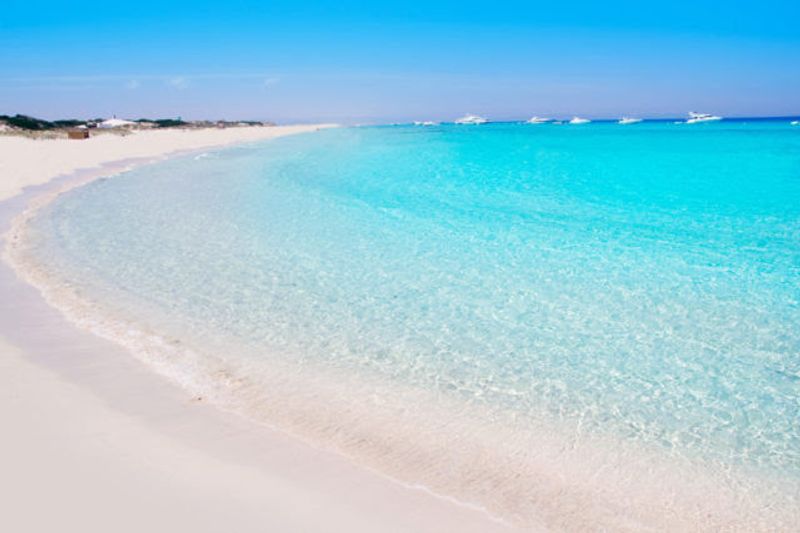
Formentera is one of Spain’s smaller Balearic Islands, and Ses Illetes is the beach that puts it on the map every summer. The sand here is pale and fine, the water is a shallow, almost lagoon-like turquoise, and the setting inside Ses Salines de Eivissa and Formentera Natural Park keeps the surrounding landscape protected and relatively undeveloped.
Formentera’s official tourism site calls it the island’s most emblematic beach, occupying part of the narrow Es Trucadors peninsula in the north. That geography means the water is calm on both sides, which makes it feel like swimming in a warm, oversized pool rather than the open sea.
Arriving early is genuinely important here. The beach’s beauty draws visitors quickly once the day gets going, and the best spots along the shoreline go fast.
Plan your ferry and arrival time with that in mind for the smoothest summer experience.
Zlatni Rat, Bol, Croatia
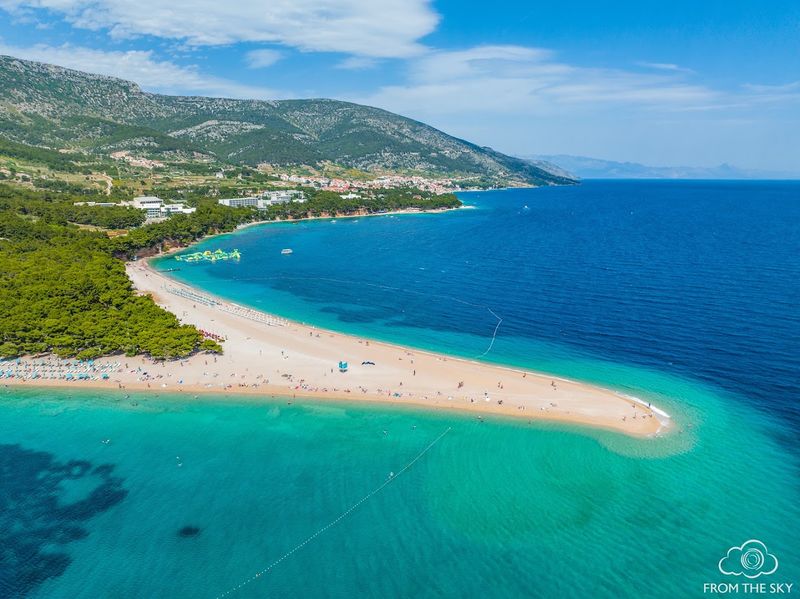
Croatia has plenty of beautiful coastline, but Zlatni Rat earns its fame by looking like no other beach in the country. The long shingle point stretches out into the Adriatic like a natural arrow, shifting slightly in shape depending on wind and current, which gives it a dynamic quality that a standard sandy beach simply does not have.
The official Brač tourism site notes that the beach sits about two kilometers from the town of Bol and can be reached by car, a 20-minute seaside walk, tourist train, or boat during summer. That variety of access options makes it practical for different types of travelers.
Wind conditions along the point make it a reliable spot for windsurfing and kitesurfing alongside regular swimming. If you want a beach that gives you a strong visual memory and a few activity options beyond sunbathing, Zlatni Rat delivers both in one location on the island of Brač.
Cala Goloritzé, Sardinia, Italy
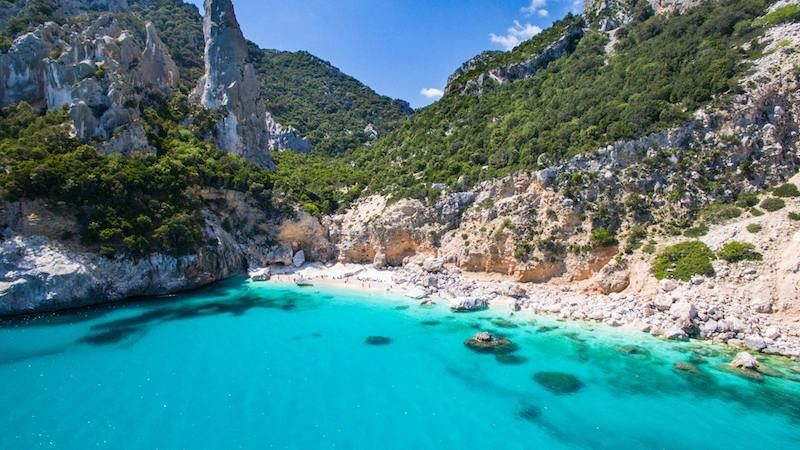
Cala Goloritzé is the kind of beach that earns its reputation not just through beauty but through the effort required to reach it. Tucked along Sardinia’s eastern coast within the Gulf of Orosei, the cove features towering limestone cliffs, a natural stone arch, and water so clear it barely looks real in photographs.
Access is carefully controlled, and current visitor information confirms that entry is managed through a ticketing app or website with capacity limits in place. That system exists to protect a landscape that is genuinely fragile and worth preserving.
You can arrive by hiking trail or by boat, and both approaches offer their own rewards. The hike brings you through Sardinian backcountry before the cove appears, while the boat gives you a sea-level view of the cliffs that is hard to beat.
Either way, planning ahead is essential because walk-up access is not how this beach works in summer.
Elafonisi Beach, Crete, Greece
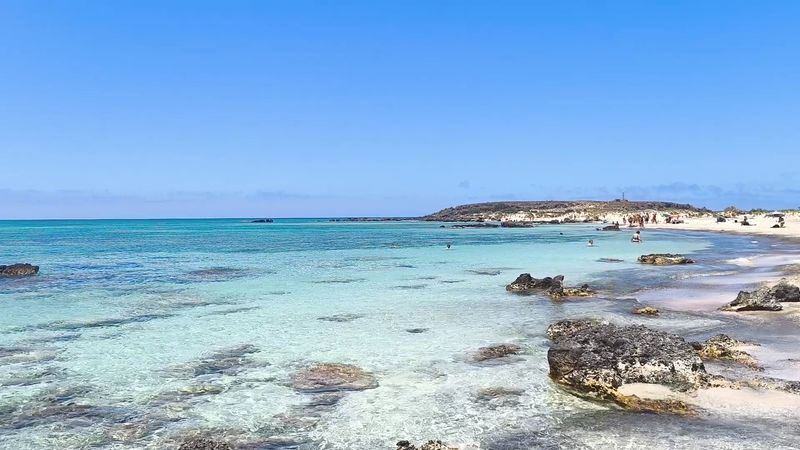
The pink-tinted sand at Elafonisi is not a trick of lighting or a travel photo filter. It comes from crushed shell and coral fragments that mix with the pale sand, giving the shoreline a rosy hue that looks especially vivid in morning light.
The shallow lagoon between the beach and the small island of Elafonisi is calm enough for easy wading and relaxed swimming.
Crete beach guides describe Elafonisi as a Natura 2000 protected area, home to sand dunes and rare plant and animal species. That designation means the beach carries ecological weight beyond its visual appeal, and visitors are expected to behave accordingly.
Staying on marked paths, avoiding sand removal, and keeping noise levels respectful are all part of visiting responsibly. The southwestern Crete location means the drive from Chania takes around 90 minutes, so building this into a day trip with some planning makes for a much smoother and more rewarding experience overall.
Myrtos Beach, Kefalonia, Greece
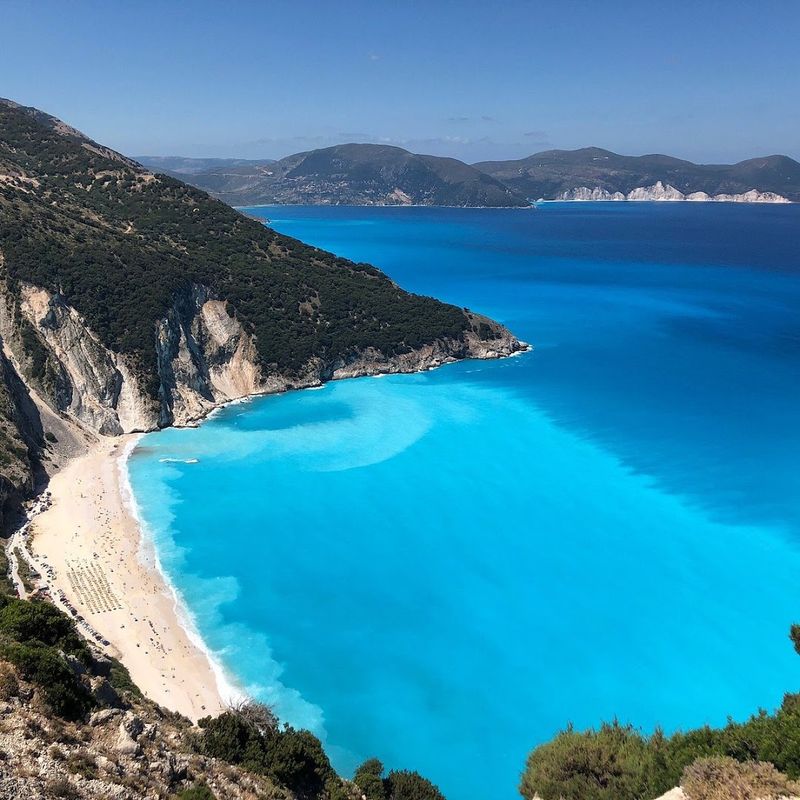
Myrtos Beach does not ease you in gently. The road winds down through the mountains of Kefalonia before suddenly revealing a bay of such intense blue that it stops most first-time visitors in their tracks at the overlook above.
Visit Kefalonia describes the beach as lying between the foot of two mountains, accessible by a winding road, with a viewpoint that functions almost like a balcony above the sea. That elevated first look is genuinely part of what makes Myrtos memorable, and many visitors spend time at the top before heading to the water.
The beach itself is white pebble rather than sand, and the water is famously clear and cool. The setting between steep mountain walls creates a sense of scale that is rare on a beach.
Myrtos works best for travelers who want dramatic coastal scenery alongside their swim, and sunset from the overlook above is one of the stronger views in the Ionian Islands.
Cala Macarella, Menorca, Spain
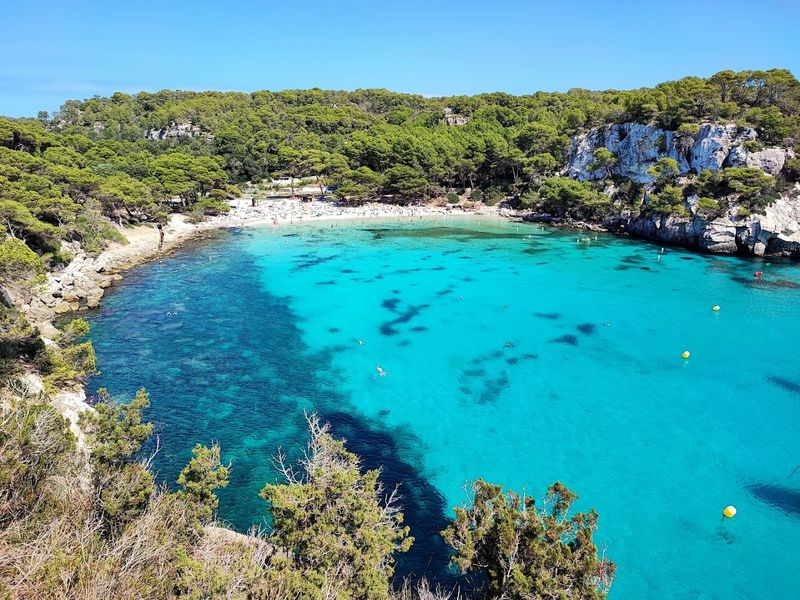
Menorca has earned a reputation for protecting its coastline better than most Spanish islands, and Cala Macarella is one of the best examples of why that matters. The cove sits near Ciutadella in the island’s southwest, framed by limestone cliffs and pine trees that come right down toward the shore.
Spain’s official tourism site lists Cala Macarella among the island’s notable beaches, while Menorca guides consistently describe the area as having white sand and turquoise-blue water that stays clear even in high summer. The smaller adjacent cove of Cala Macarelleta is reachable by a short footpath and offers a quieter alternative when the main beach fills up.
Getting there requires some planning, especially in peak season when parking is limited and shuttle services from Ciutadella are the more practical option. Going early in the morning or later in the afternoon makes a real difference in how the beach feels, both in crowd levels and in the quality of light on the water.
Rabbit Beach, Lampedusa, Italy
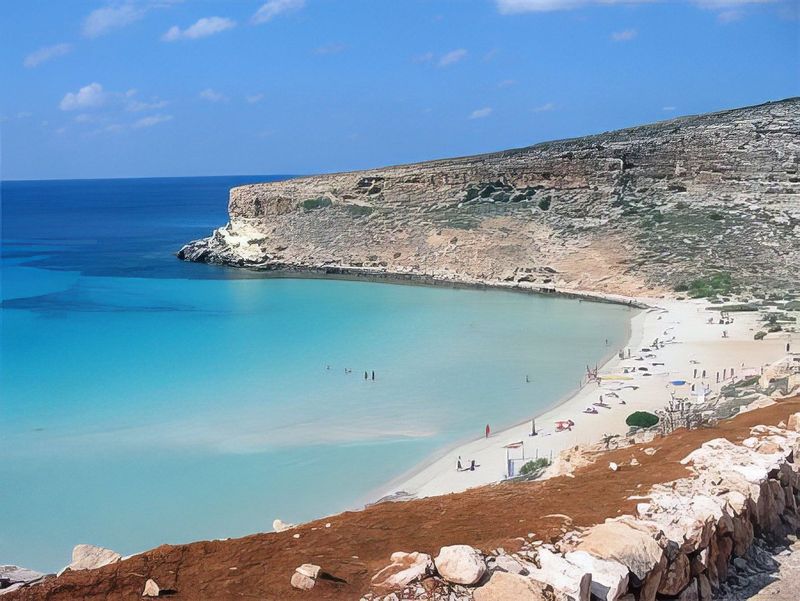
Lampedusa sits closer to Tunisia than to mainland Italy, which helps explain why Rabbit Beach feels like a different category of Mediterranean shore entirely. The sand is pale, almost powdery white, and the water shifts from clear shallow turquoise near the shore to deeper blues further out toward the small island of Isola dei Conigli just offshore.
Visit Sicily’s official page notes that the area is associated with Caretta caretta sea turtles, which nest along this stretch of coast and make the beach one of the more ecologically significant sites in the Italian islands. That connection shapes how the beach is managed, particularly in summer when access rules are in effect to protect nesting areas.
Visitors should check current access guidelines before arriving, as restrictions can change depending on the season and nesting activity. The combination of remarkable water clarity, pale sand, and genuine wildlife importance puts Rabbit Beach in a category that goes well beyond the typical summer beach list.
Nissi Beach, Ayia Napa, Cyprus
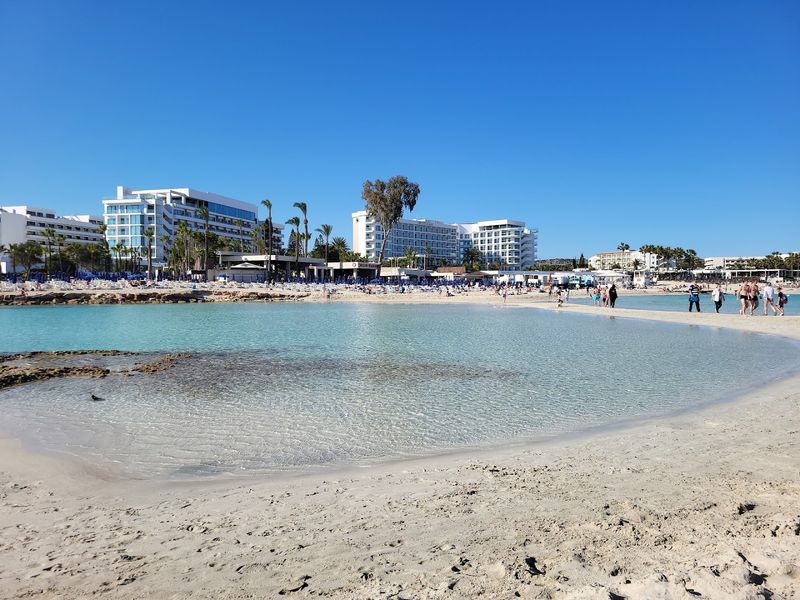
Nissi Beach is the kind of summer beach that does not pretend to be anything other than what it is: lively, well-equipped, and very popular. The water is a bright, clear blue, the sand is pale and wide, and the range of beach services available makes it one of the most accessible and comfortable beach days you can have in Cyprus.
The Nissi Beach Resort notes that the area has been part of Ayia Napa’s development as a tourism destination for more than 50 years, which gives it a long-established infrastructure that newer beach spots simply do not have yet. A small rocky islet sits just offshore, connected to the main beach by a shallow sandbar you can walk across at low water.
Restaurants, sunbeds, water sports rentals, and easy transport links from Ayia Napa town center make this a practical choice as well as a scenic one. For a classic, full-service Mediterranean summer beach day, Nissi delivers reliably and without much fuss.
Corniche Beach and Dune du Pilat, Arcachon, France
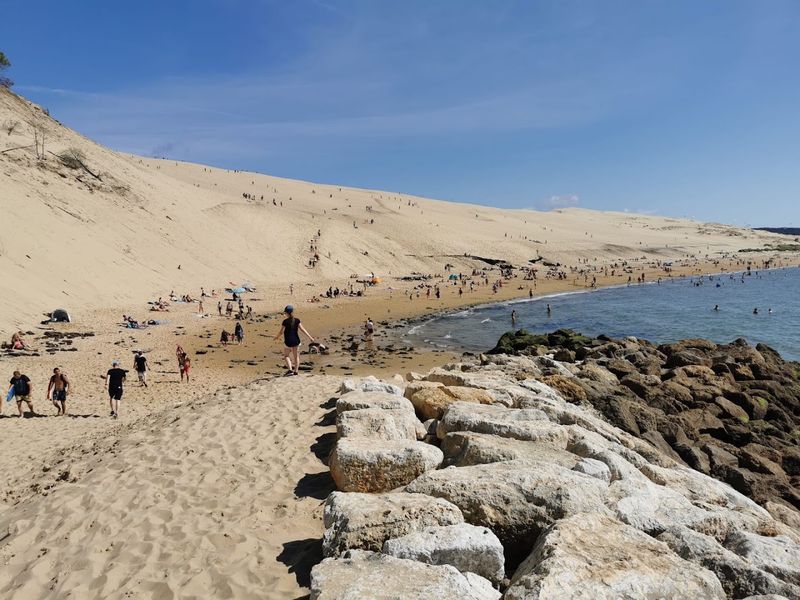
The beach below Dune du Pilat earns its place on a European beach list for reasons that have nothing to do with palm trees or turquoise lagoons. The dune itself is the tallest in Europe, rising more than 100 meters above the Atlantic coast of France, and the view from the top is genuinely unlike anything else on the continent.
The official Arcachon Bay tourism site says the summit offers views of the Banc d’Arguin Nature Reserve, the pine forest, and Cap Ferret across the bay, while Corniche Beach sits directly at the base of the dune for swimming and relaxing after the climb.
The combination of physical activity, panoramic views, and beach access in one stop makes this a strong summer day-trip option from Bordeaux, which is roughly an hour away by road. Going in the morning before the dune gets crowded makes the ascent more comfortable and the views cleaner and less interrupted.
Reynisfjara Black Sand Beach, Iceland
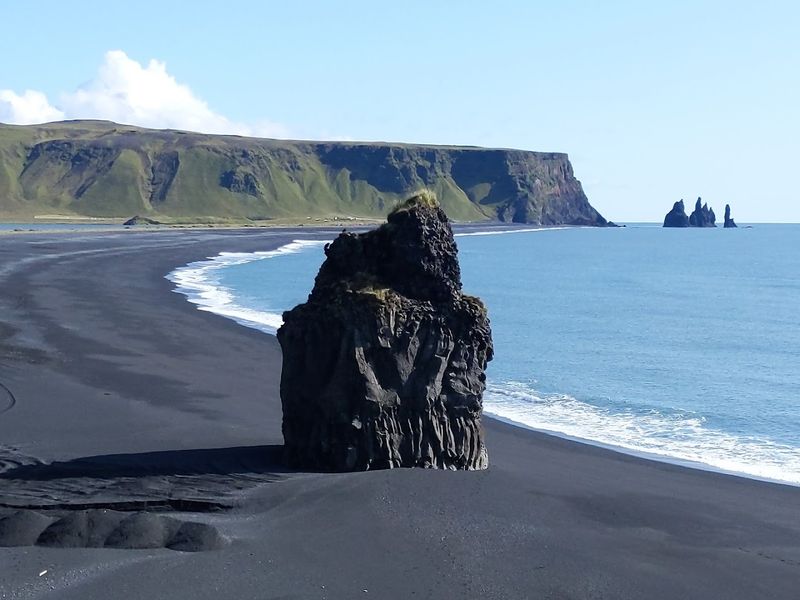
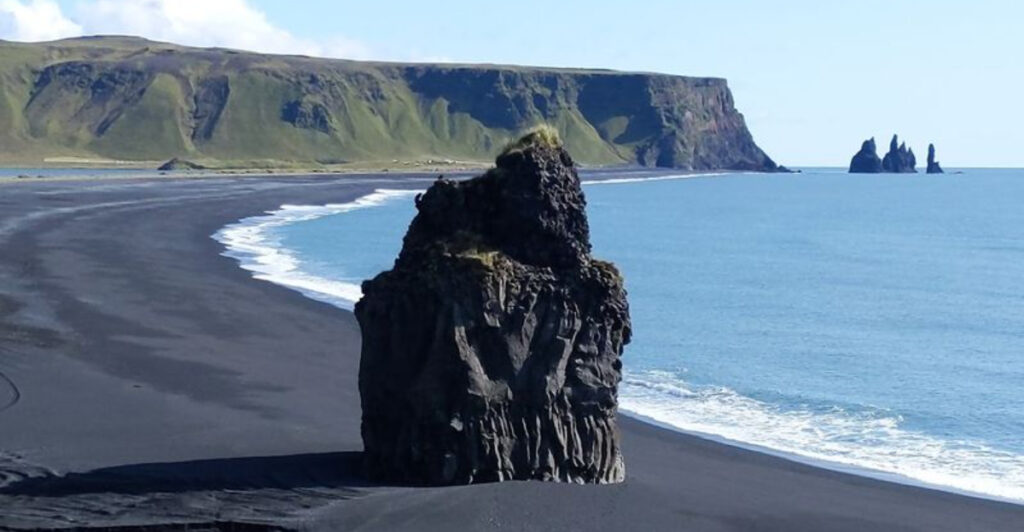
Reynisfjara operates on a completely different definition of beach beauty than anywhere else on this list. There is no warm, shallow water for lounging, and the sand is black volcanic basalt that stretches along the south coast of Iceland with a raw, almost otherworldly quality.
South Iceland tourism notes that the beach remains open after winter storm changes and asks visitors to explore responsibly and follow posted safety guidance at all times. The sneaker waves at Reynisfjara are a genuine hazard, arriving with little warning, which is why staying well back from the waterline is a firm recommendation rather than a casual suggestion.
The basalt column formations at Hálsanef headland and the Reynisdrangar sea stacks rising from the ocean are the visual highlights, alongside puffins that nest in the cliffs during summer. For travelers who prefer wild, dramatic coastal landscapes over resort beaches, Reynisfjara brings a completely different kind of summer beauty to the table.
Balos Lagoon, Crete, Greece
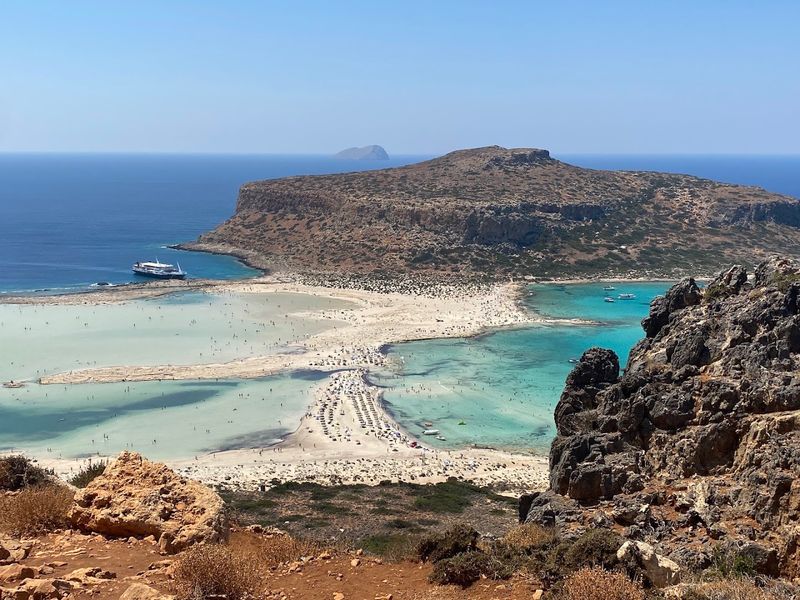
Balos Lagoon sits at the northwestern tip of Crete on the Gramvousa peninsula, and the aerial view of the place has become one of the most shared coastal images in all of Greece. The water is extraordinarily shallow near the sandbar, shifting between pale turquoise, white, and soft pink depending on the light and the sandy bottom beneath.
The official Kissamos tourism site highlights Balos among the area’s signature destinations, and local visitor guides describe two main ways to get there: by boat from Kissamos port, or by road with a walk down from the parking area above the lagoon. Both options work, but the boat gives you the added experience of approaching the cove from the sea.
Balos is a high-demand summer destination, and the logistics require real planning. Going early, booking boat tickets in advance, and bringing enough water and supplies for the day are all practical steps that make the difference between a smooth visit and a frustrating one.
La Concha Beach, San Sebastián, Spain
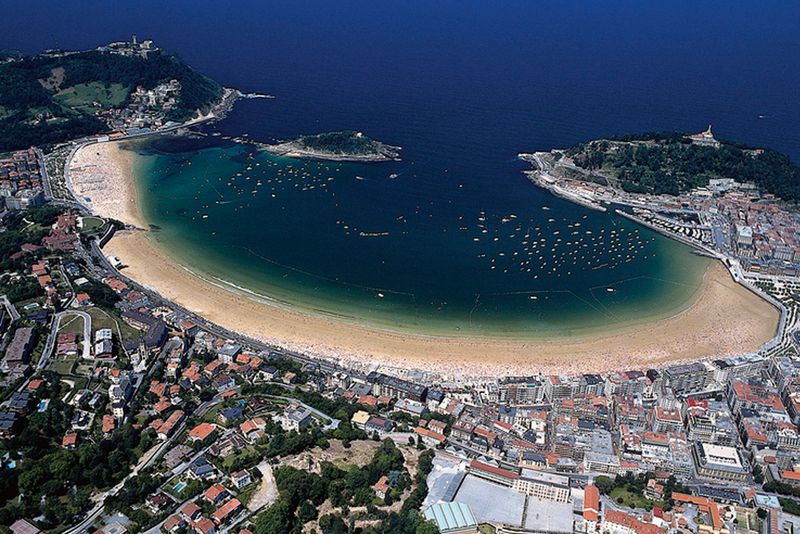
Urban beaches rarely compete with remote coves on a beauty list, but La Concha is a legitimate exception. The crescent-shaped bay curves through the heart of San Sebastián with golden sand, calm water, and a backdrop of mountains, islands, and one of the best-preserved city promenades in Spain.
Euskadi tourism describes La Concha as one of the city’s defining features, stretching about 1,350 meters with views of Santa Clara Island and the surrounding Urgull and Igeldo mountains framing the bay. The promenade that runs alongside the beach is wide, well-maintained, and busy with locals year-round, not just in summer.
What makes La Concha especially worth including here is the combination it offers. A morning swim, a walk along the promenade, and an afternoon in the old town with access to some of the best food in northern Spain all fit into a single day without any rush.
That kind of layered experience is hard to find at a beach anywhere in Europe.
Tropea Beach, Calabria, Italy
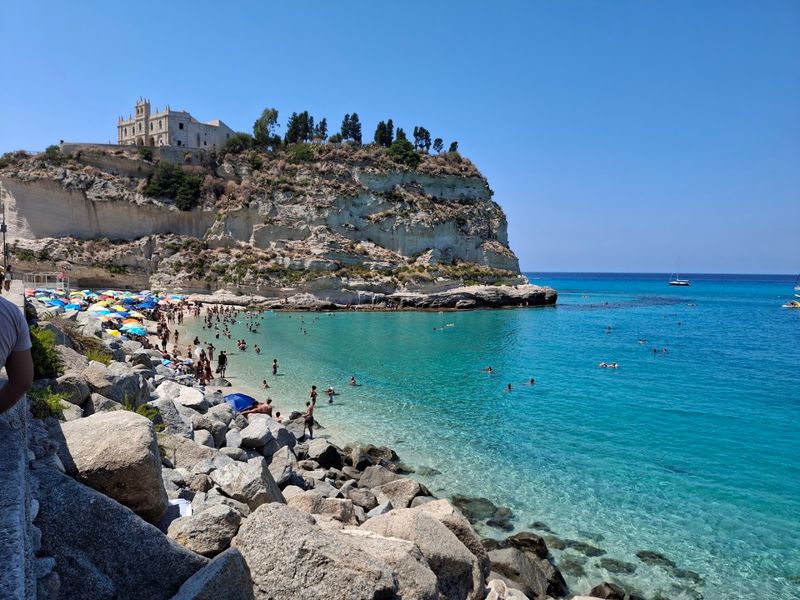
Southern Italy’s Calabria region does not always get the attention it deserves, but Tropea has been quietly building a strong reputation among travelers who prefer character over convenience. The beach sits below a sandstone cliff, and the historic old town rises directly above the shore in a way that makes the whole scene look almost theatrical from the water.
Calabria’s official tourism site calls Tropea the Pearl of the Tyrrhenian Sea and notes that it sits along the Costa degli Dei, with Blue Flag beach recognition and local specialties including the PGI Tropea red onion, which appears in dishes throughout the town’s restaurants and markets.
The combination of a genuinely beautiful beach, a walkable historic center, seafood-forward local cooking, and clifftop views over the sea makes Tropea one of the more complete summer destinations in Italy. It rewards travelers who stay at least two nights rather than passing through on a single day trip from elsewhere in Calabria.
Kvalvika Beach, Lofoten, Norway
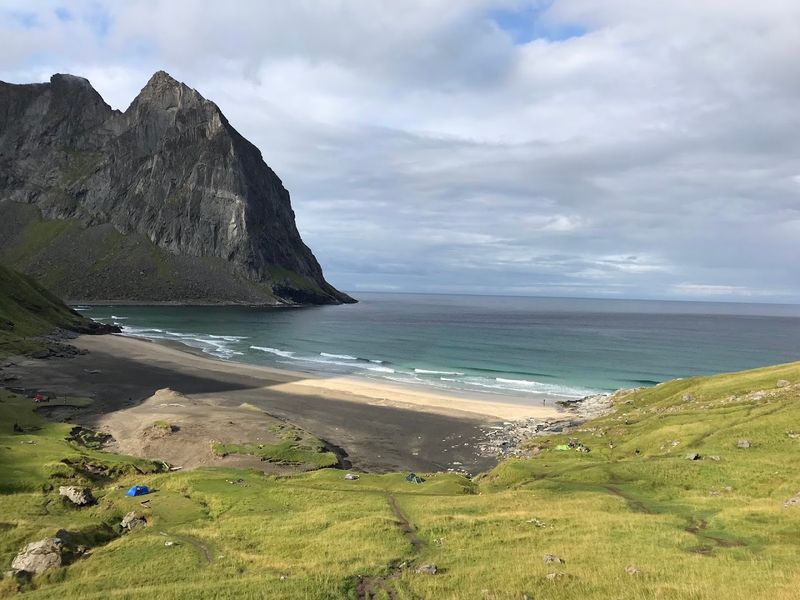
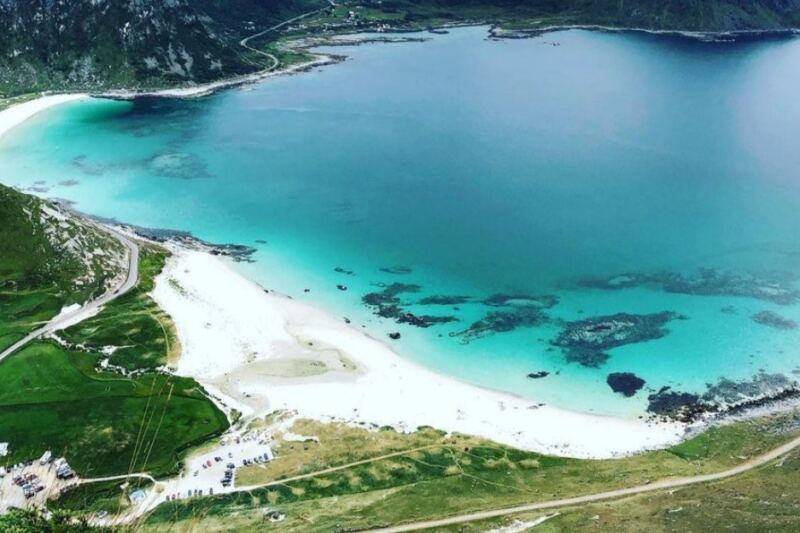
Getting to Kvalvika Beach requires a hike, and that is precisely the point. The trail from the trailhead near Fredvang crosses varied terrain before the beach appears below, framed by steep Lofoten mountain peaks with the Arctic sea stretching out in front.
Visit Lofoten describes the hike to Ryten and Kvalvika as one of the archipelago’s most popular walks, offering fantastic views and terrain that changes noticeably from start to finish. The summit of Ryten above the beach adds an optional elevation element that rewards hikers with one of the more dramatic coastal panoramas in northern Europe.
Summer is the right season for most visitors, because the long days and midnight-sun conditions make both the hike and the beach scenery significantly more rewarding than in other months. The water is cold, and this is not a beach for long swims, but for photography, wide open coastal scenery, and the particular calm of a remote northern shore, Kvalvika stands apart from every other beach on this list.
Share this story