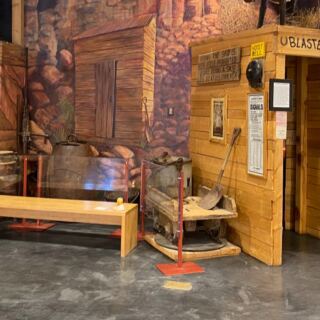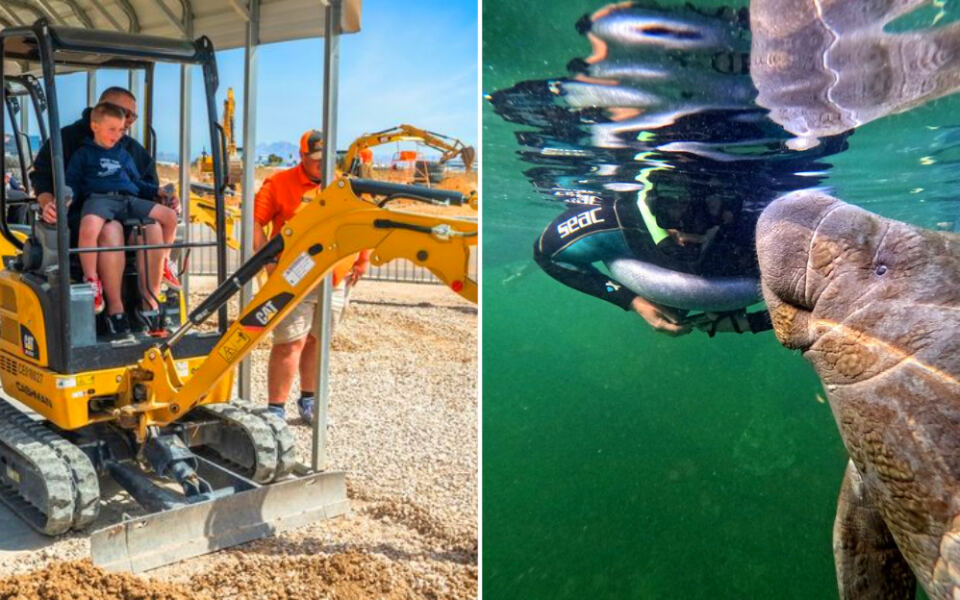
Most people plan a trip around beaches, national parks, or city skylines. But the United States has a quietly impressive collection of experiences that go far beyond the usual checklist, from operating actual military tanks in the Georgia mountains to floating above desert landscapes before the morning rush begins.
These are not novelty gimmicks. Many have been running for years, drawing visitors who want something genuinely different from a standard vacation.
Whether you are drawn to history, outdoor thrills, or just a good story to bring home, the 15 entries below cover real, bookable adventures spread across the country that most travelers never hear about until it is too late to add them to the itinerary.
1. Tank Town USA, Morganton, Georgia

Most tourist attractions let you look at military vehicles from behind a rope. Tank Town USA skips that entirely and hands you the controls.
Located near Blue Ridge in Fannin County, the facility opened in 2013 and has been expanding its offerings ever since.
The Car Crushing package gives drivers roughly 25 minutes behind the wheel of a 17-ton military tank, finishing with the machine rolling over an actual car. Guests can even spray paint the car before the big moment.
Beyond tanks, visitors can operate a 40,000-pound excavator for about 15 minutes. Participants must be at least 15 years old with a valid learner’s permit or driver’s license.
Machine gun shooting with an M-1919 was added more recently, rounding out one of the more genuinely unusual afternoons available anywhere in the American South.
2. Crater of Diamonds State Park, Murfreesboro, Arkansas
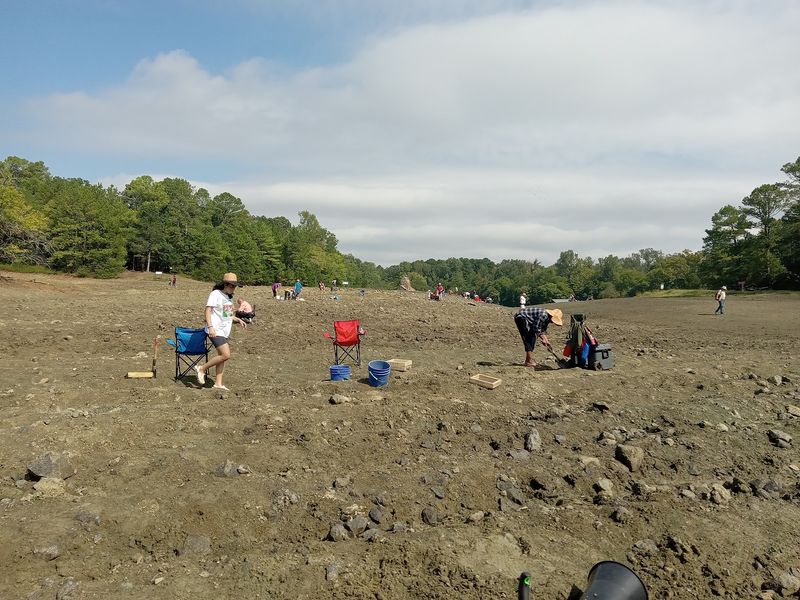
Arkansas is not the first state most people associate with diamond hunting, but Crater of Diamonds State Park has been turning that assumption around since it opened to the public in 1972. The park sits on top of a genuine diamond-bearing volcanic crater, and visitors can search a 37.5-acre plowed field themselves.
Any diamond found on the property belongs to the finder, regardless of size or value. That policy has produced some remarkable discoveries over the decades, including stones exceeding 8 carats found by ordinary day visitors.
Park staff are available to help identify finds, and tools can be rented on-site. The field is regularly plowed to bring new material to the surface, keeping the odds reasonably consistent.
For families, the combination of outdoor activity and genuine treasure-hunt stakes makes this one of the more memorable stops in the mid-South region.
3. Vance Creek Railriders, Shelton, Washington
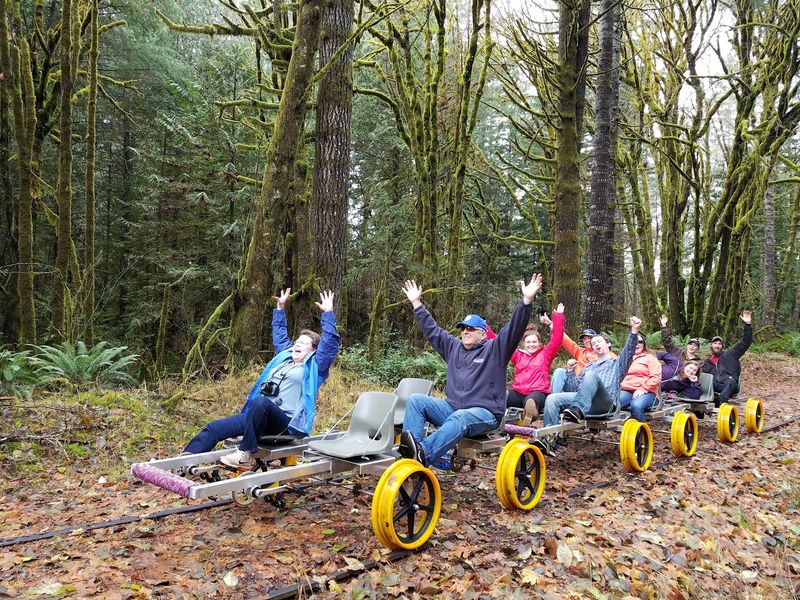
Railroad infrastructure in the Pacific Northwest was built primarily for timber operations, and much of it has sat quiet for decades. Vance Creek Railriders found a productive use for one such line, sending visitors out on four-seat pedal-powered railbikes through the forests surrounding Shelton, Washington.
The daytime route covers approximately 13 miles round trip, passing through second-growth forest along a corridor that once served active logging operations. No prior cycling experience is required, and the flat-to-gentle grade keeps the pedaling manageable for most fitness levels.
Groups share a single railbike unit, which makes the experience social by design. The route crosses a historic trestle, adding a structural landmark to what is otherwise a quiet woodland ride.
For visitors who want to engage with Washington’s logging history in a hands-on way, this is considerably more interesting than reading an interpretive panel at a trailhead.
4. Dig This Las Vegas, Las Vegas, Nevada
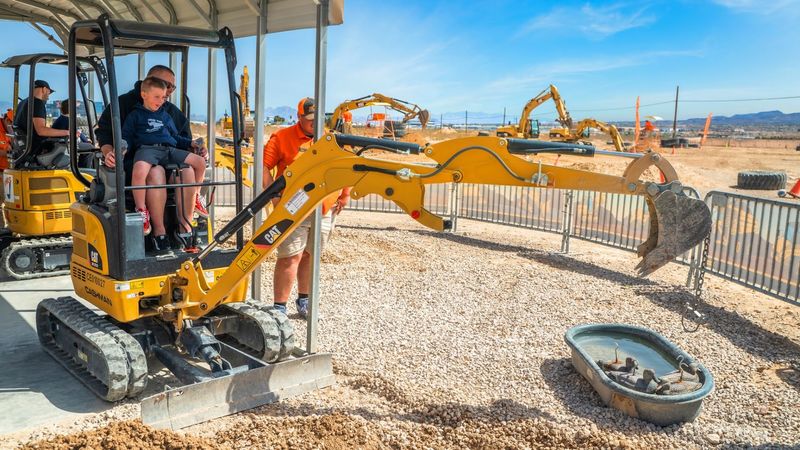
Las Vegas built its reputation on outsized experiences, and Dig This fits right in without requiring a single chip or card. The attraction gives paying guests the chance to operate real construction equipment, including full-size excavators and bulldozers, after a proper safety briefing.
Wireless headsets keep participants connected to instructors throughout, which matters when you are maneuvering several tons of machinery around a dirt yard. The setup is designed for people with no prior equipment experience, making it genuinely accessible rather than just marketed that way.
Skid steers and other machines round out the equipment lineup, and packages can be combined for longer sessions. The experience sits outside the typical casino-and-show circuit, offering something that requires actual physical engagement rather than passive entertainment.
Few places in the country let a first-time visitor legally operate a bulldozer on the same afternoon.
5. River Ventures, Crystal River, Florida
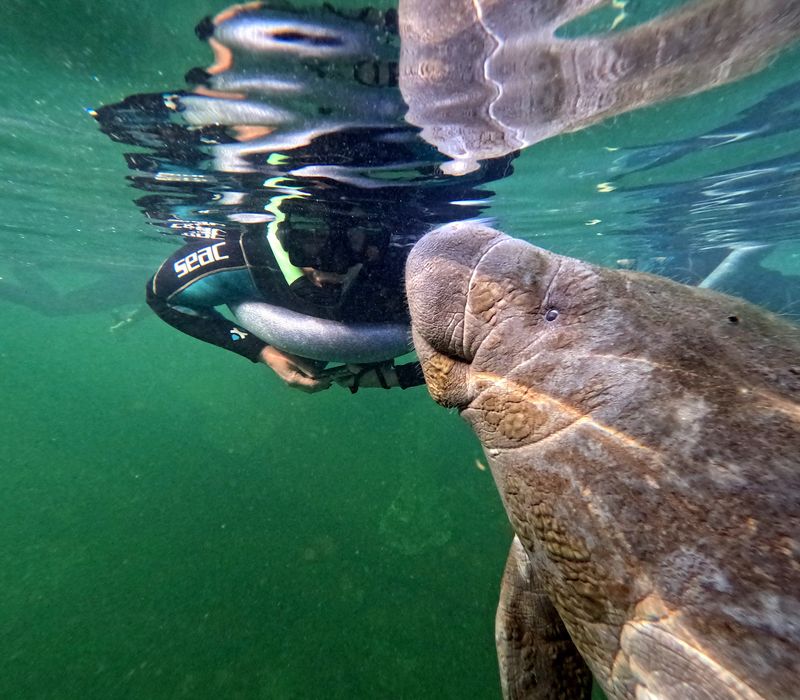
Crystal River holds a distinction that few Florida destinations can claim: it is one of the only places in the United States where swimming alongside wild manatees in their natural habitat is a legal, guided activity. River Ventures has been running these trips into the spring-fed waters of Kings Bay for years.
Wetsuits, snorkeling gear, and in-water guides are all included, and participants receive instruction before entering the water. The passive-observation rules are strict, meaning the manatees control the interaction entirely.
If they approach, that is their choice.
The springs maintain a consistent water temperature year-round, which is exactly why manatees gather there during cooler months. Kings Bay is a federally designated manatee sanctuary, adding a layer of conservation context to what is already a genuinely unusual wildlife encounter available within a short drive of several major Florida cities.
6. U-Dig Fossils: Quarry, Delta, Utah
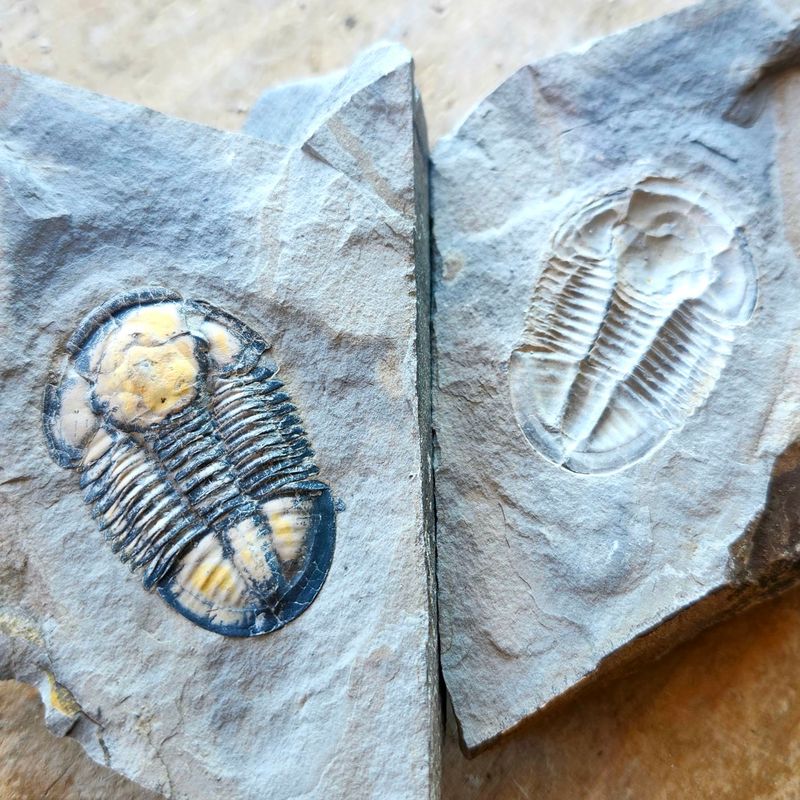
Trilobites are among the most recognizable creatures from the Cambrian Period, and they have been gone for roughly 252 million years. U-Dig Fossils gives visitors the unusual opportunity to find them personally, by splitting shale in a working quarry located in the fossil-rich Wheeler Formation of western Utah.
The site sits far enough from major highways that getting there feels like a deliberate choice rather than a casual detour. That remoteness is part of the appeal.
Visitors receive basic instruction on how to split rock properly, and the quarry provides tools or allows guests to bring their own.
Fossils found during a session can be taken home, which makes the experience considerably more satisfying than browsing a museum gift shop. The Wheeler Formation has been studied by paleontologists since the 1870s, giving this otherwise simple activity a legitimate scientific backstory that holds up well under curiosity.
7. Titan Missile Museum, Green Valley, Arizona
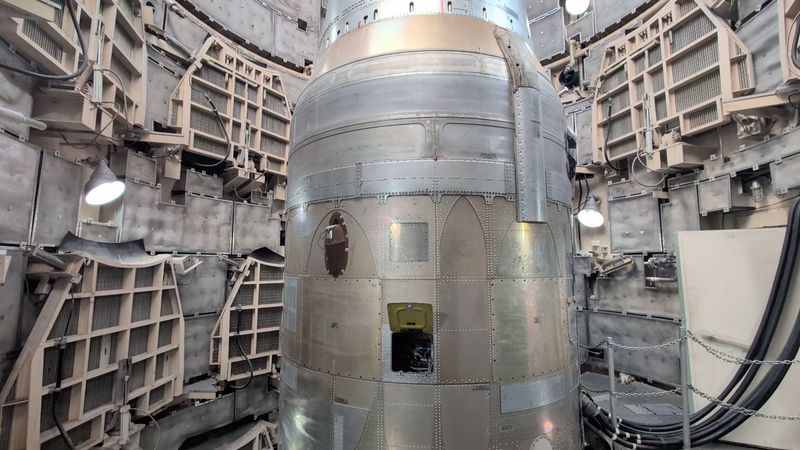
Preserved exactly as it stood on its last operational day in 1982, this former Titan II missile complex sits beneath a quiet patch of Arizona desert and operates today as the only publicly accessible site of its kind in the country. The tour takes visitors 35 feet underground into the launch control center.
A simulated launch sequence is part of the experience, walking guests through the exact procedure crews once followed. From there, the tour continues toward the silo, where the actual Titan II missile remains on display, rendered permanently inoperable but otherwise intact.
The Titan II was the largest intercontinental ballistic missile ever deployed by the United States, standing 103 feet tall and capable of reaching its target in under 30 minutes. That historical context turns what could be a simple underground tour into something considerably more thought-provoking, particularly for visitors who remember the Cold War firsthand.
8. Louisville Mega Cavern, Louisville, Kentucky

Beneath downtown Louisville lies a former limestone quarry that operated from the 1930s through the 1970s, eventually growing to cover 100 acres and 17 miles of mapped passages. Today, part of that space houses a fully underground zipline course, which is a claim very few attractions anywhere can make.
The Mega Ziplines experience includes multiple lines and challenge bridges suspended above the cavern floor, with participants clipped into a harness throughout. The cavern maintains a year-round temperature of approximately 58 degrees Fahrenheit, making it a genuinely cool retreat during Kentucky summers.
The quarry’s history adds depth to the visit. During the Cold War, the cavern was designated as a fallout shelter capable of housing 50,000 people.
Tram tours of the space are also available for visitors who prefer to keep their feet on the ground while still exploring one of Louisville’s more unexpected underground landmarks.
9. Moab Adventure Center, Moab, Utah
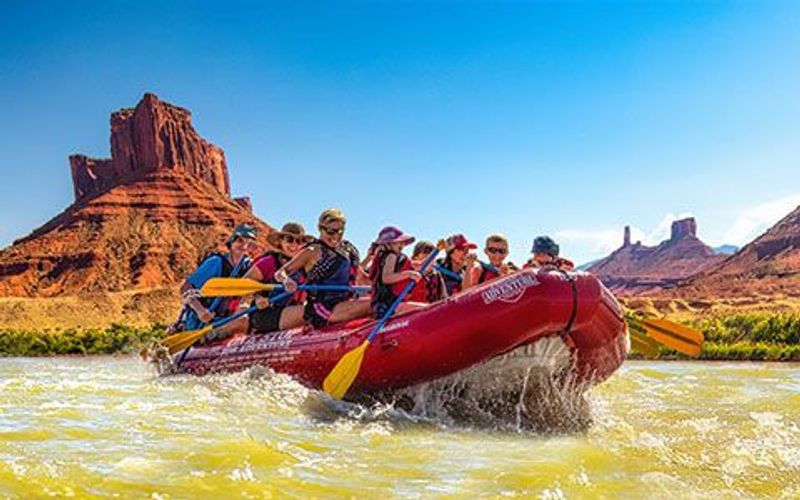
Hell’s Revenge is one of Moab’s most recognized off-road trails, and it earns that reputation by sending vehicles up near-vertical slickrock fins and across terrain that looks more like a geological obstacle course than a road. Moab Adventure Center runs guided trips on that exact route using custom Hummers built for the terrain.
Passengers get the full experience without needing off-road driving skills themselves. Guides handle navigation and vehicle control, while guests focus on the views and the occasional stomach-drop moment as the vehicle tips over a ledge edge.
The trail covers sandstone formations that date back roughly 150 million years to the Jurassic Period, giving the landscape a geological scale that ordinary hiking barely captures. Half-day and full-day options are available, and the guided format keeps group sizes small enough that the experience retains a sense of actual adventure rather than a motorized sightseeing loop.
10. Revolution Adventures, Clermont, Florida
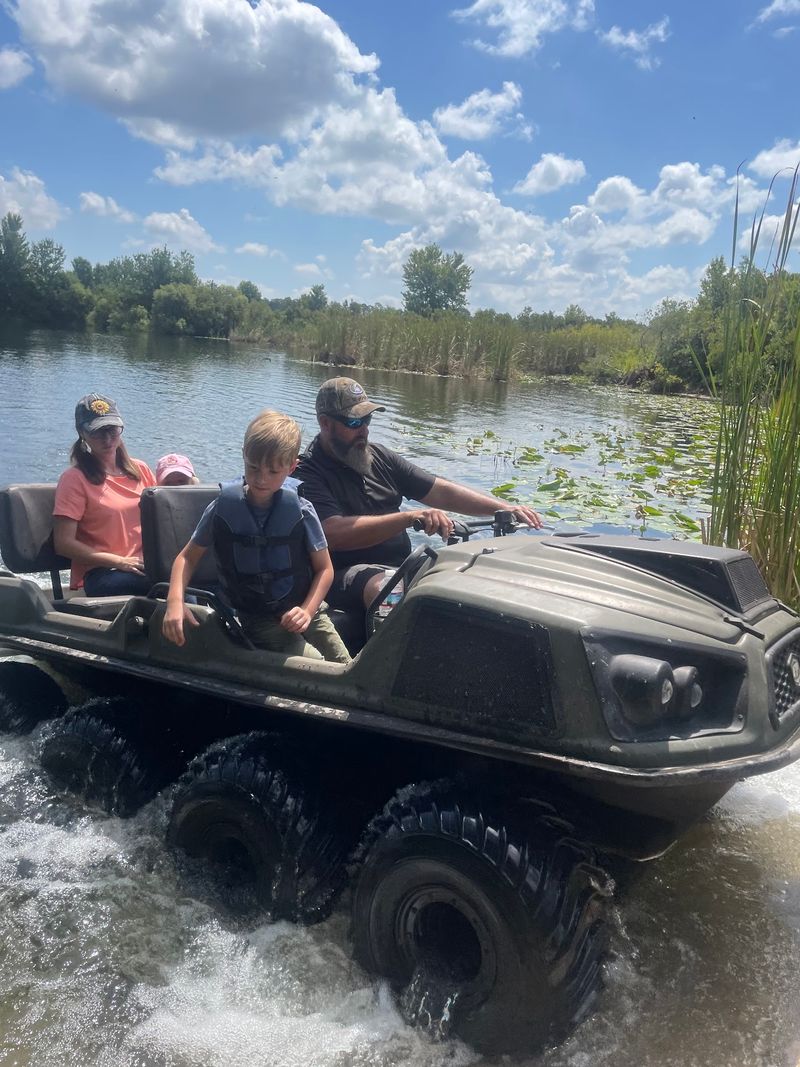
Central Florida’s outdoor options extend well beyond theme parks, and Revolution Adventures operates one of the more creative alternatives. The Mucky Duck experience places visitors inside an amphibious Argo vehicle, a machine that travels equally well across dirt trails and open water.
The route combines overland sections with stretches across a lake, giving the trip a genuinely varied character. No special skills are required from passengers, and the guides manage the vehicle throughout.
The Argo’s low profile and wide footprint make it stable on both surfaces, which helps when transitioning from dry ground to floating.
Clermont sits in Lake County, a region defined by its chain of lakes and rolling terrain, which makes the amphibious format a logical fit for the landscape. Revolution Adventures also offers ATV tours, airboat rides, and other outdoor activities, so the Mucky Duck can be combined with other experiences for a fuller day outdoors.
11. Horseshoe Bend Slot Canyon Tours, Page, Arizona
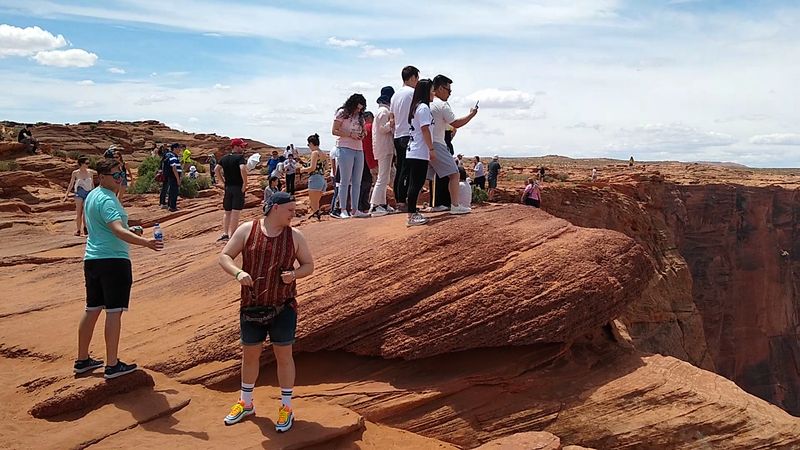
The overlook at Horseshoe Bend draws enormous crowds, and the roadside viewpoint for Antelope Canyon is equally familiar from travel photography. What fewer visitors realize is that guided tours can take small groups into slot canyons via an off-road 4×4 ride through the surrounding desert, making the approach part of the experience.
The Secret Antelope Canyon tour offered by Horseshoe Bend Slot Canyon Tours travels through Navajo Nation land, where access requires authorization from the Navajo Nation and is managed through licensed operators. Small group sizes are a deliberate policy, keeping the canyon walk quieter than the heavily trafficked main sections.
The sandstone walls of these canyons were carved primarily by flash flooding over thousands of years. The geology is well documented, and guides typically explain the formation process during the tour.
For visitors who have seen the famous photographs, walking through the real space provides a completely different sense of scale.
12. Paragon Adventures, St. George, Utah
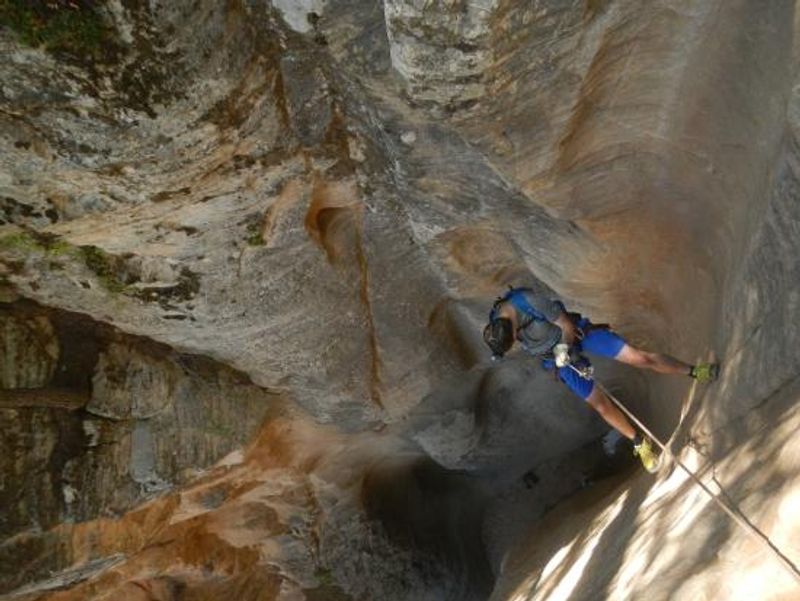
Canyoneering combines hiking, scrambling, and rappelling into a single activity, and southern Utah’s canyon systems are among the best terrain in the country for it. Paragon Adventures runs guided canyoneering trips near St. George that are specifically designed to accommodate visitors without prior experience.
Routes are organized by difficulty, so beginners can start with shorter rappels and less technical terrain while more confident visitors can request routes with longer drops and more complex navigation. All technical gear is provided, and guides cover technique before the group begins moving through the canyon.
The red-rock landscape around St. George formed largely during the Jurassic Period, and the canyons cut through layers of Navajo Sandstone that record hundreds of millions of years of geological history. That context is available to anyone willing to look up at the canyon walls while rappelling, which is admittedly a lot to take in at once.
13. New Mexico River Adventures, Embudo, New Mexico
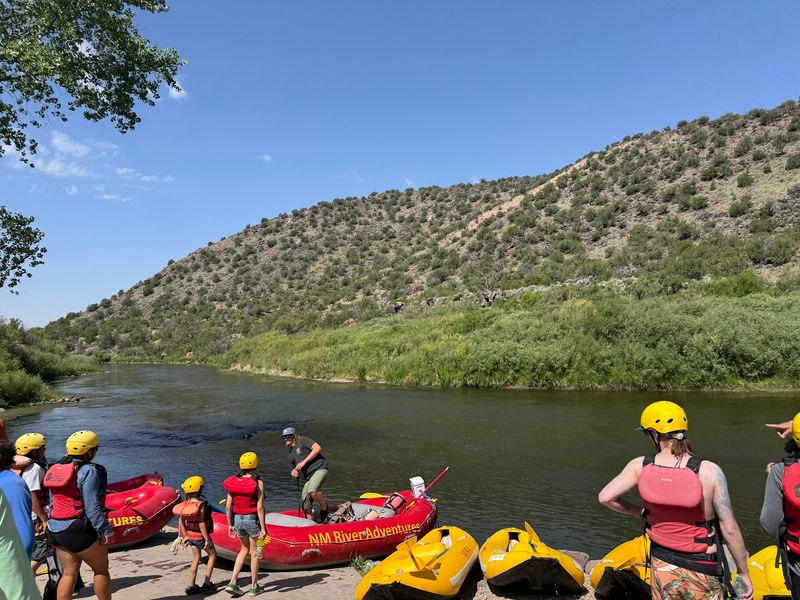
The Rio Grande Gorge is one of the more dramatic geological features in the American Southwest, reaching depths of around 800 feet near Taos. Most visitors see it from the rim.
New Mexico River Adventures takes a different approach, running rafting trips through the Taos Box that put paddlers at river level inside the gorge itself.
The Taos Box section includes Class III and IV whitewater, making it suitable for participants with a reasonable comfort level around moving water. Guided trips handle logistics, safety equipment, and on-water instruction, so prior rafting experience is helpful but not mandatory for all trip levels.
The basalt walls of the gorge were formed by volcanic activity roughly 25 million years ago. From river level, the scale of that geology becomes much more apparent than it does from a highway pullout.
The combination of active paddling and canyon scenery makes this one of northern New Mexico’s most physically engaging visitor experiences.
14. Hot Air Expeditions, Phoenix, Arizona
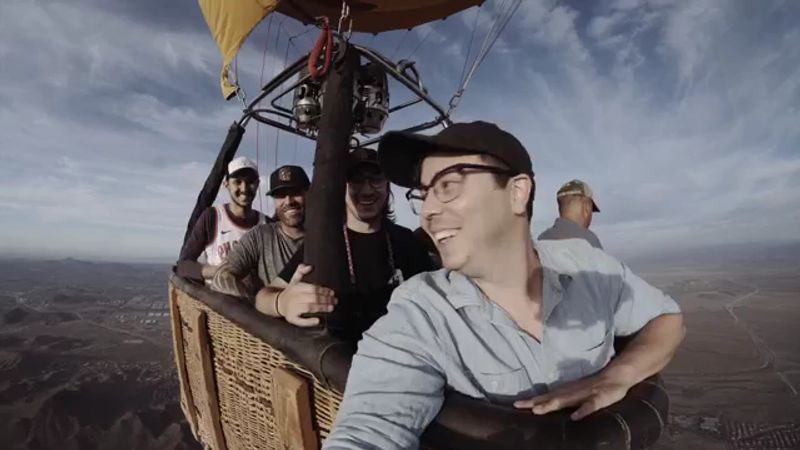
Hot air ballooning over the Sonoran Desert is one of those activities that sounds like a luxury add-on but has been operating as a structured tourist experience around Phoenix for decades. Hot Air Expeditions runs flights over the desert landscape surrounding Phoenix and Scottsdale, typically launching in the early morning hours when wind conditions are most stable.
Watching the balloon inflate before departure is built into the experience, giving the whole outing a longer arc than simply riding and landing. Flights typically last around an hour, covering desert terrain that includes saguaro cacti, dry washes, and mountain ridges visible from an altitude that makes the scale of the Sonoran Desert genuinely apparent.
The Sonoran Desert covers roughly 100,000 square miles across Arizona, California, and northwestern Mexico. From balloon altitude, the size of that landscape becomes concrete in a way that no map or overlook quite replicates.
Hot Air Expeditions has operated since 1992, making it one of the more established balloon operators in the region.
15. High Life Adventures Zip Line Tours, Warrenton, Oregon
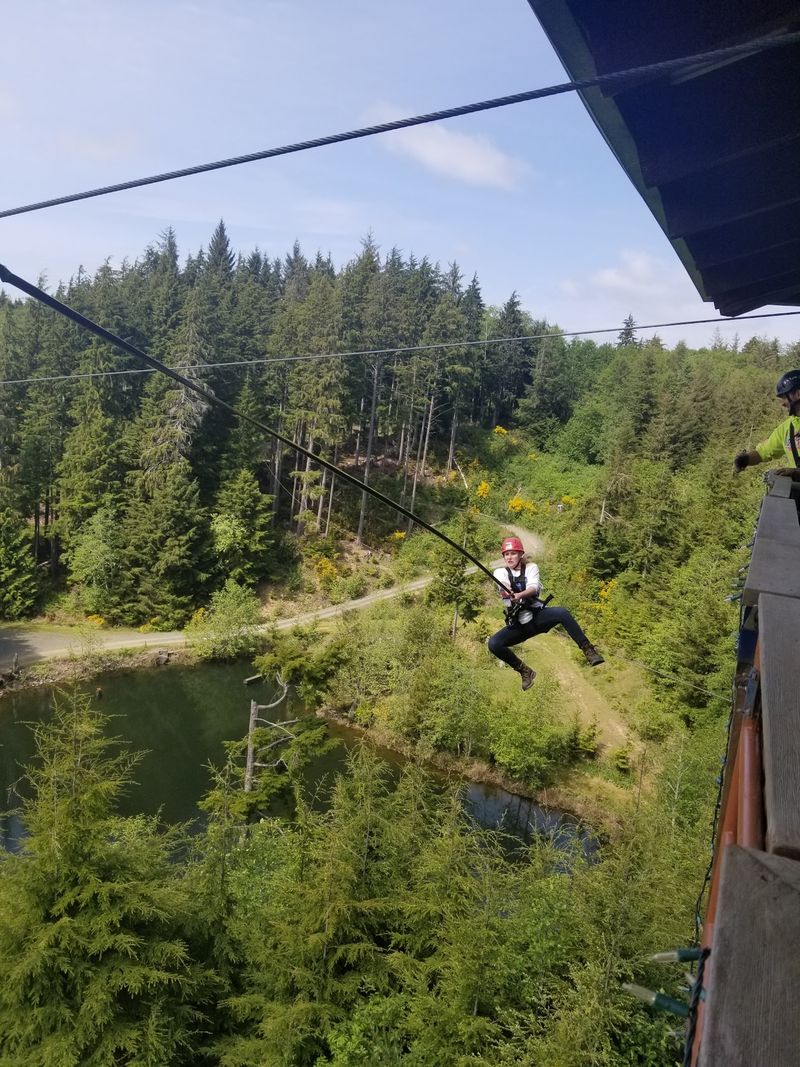
Oregon’s north coast is better known for its dramatic shoreline and fishing history than for aerial adventure, but High Life Adventures operates an eight-line zipline course near Warrenton that covers more than a mile of total distance. Several of the lines pass directly over or around a seven-acre lake, which changes the visual experience considerably compared to a forest-only course.
One optional section of the course can send riders close enough to the water surface to get wet, adding a physical element that most zipline parks do not offer. The course is situated in second-growth timber that reflects the region’s long logging history, and guides typically provide context about the land during the tour.
Warrenton sits at the mouth of the Columbia River, near the Lewis and Clark National Historical Park. The area has been a working waterfront community since the late 1800s, giving High Life Adventures a location with considerably more historical texture than a generic adventure park setting would suggest.
Share this story