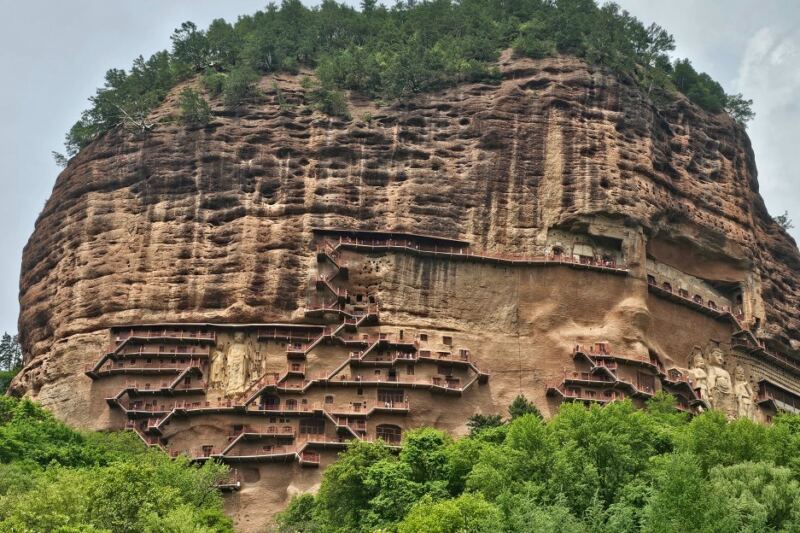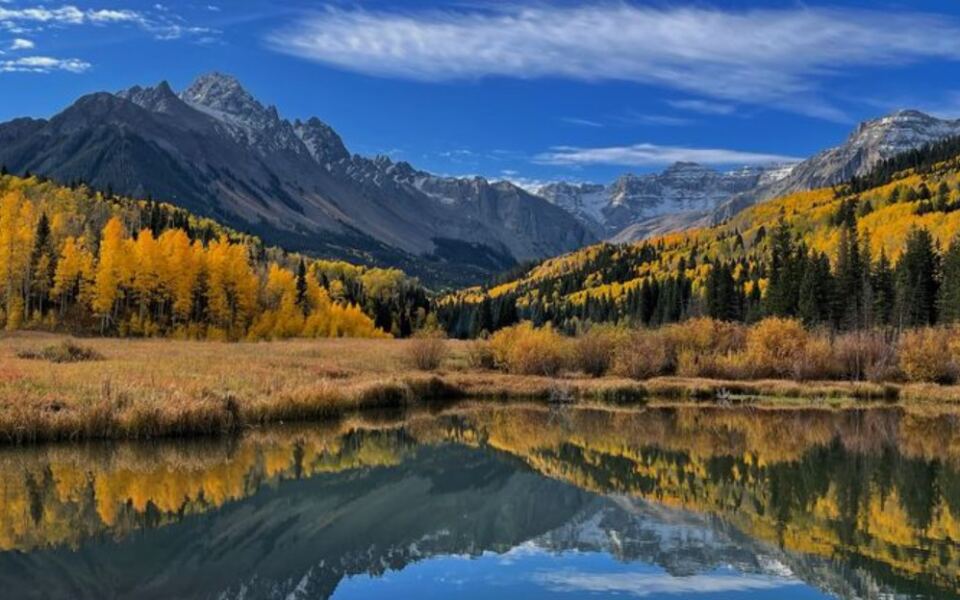
The United States is home to some of the most breathtaking mountains on Earth, stretching from the frozen peaks of Alaska to the rocky summits of New England. These natural giants draw millions of hikers, photographers, and nature lovers every year.
Whether you are an experienced climber or simply someone who loves a stunning view, American mountains offer something truly special for everyone. Here are 15 of the most beautiful mountains across the country worth knowing about.
1. Denali, Alaska
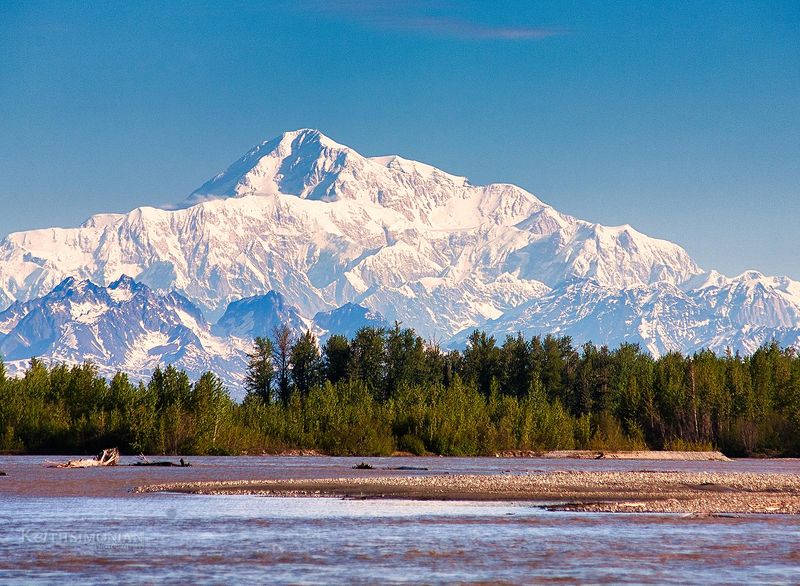
Standing at 20,310 feet, Denali is the tallest mountain in all of North America, and its sheer size is almost hard to believe. Located in Denali National Park in Alaska, this massive peak dominates the surrounding landscape in a way few mountains can match.
On clear days, its snow-capped summit can be seen from over 200 miles away.
Denali attracts serious mountaineers from around the world, with climbing season running from April through July. The mountain’s weather is notoriously unpredictable, with fierce storms that can roll in without much warning.
Only about half of climbers who attempt the summit actually reach the top.
Even if you never plan to climb it, visiting Denali National Park offers stunning views, wildlife sightings, and a true sense of wilderness that is hard to find anywhere else in the country.
2. Mount Rainier, Washington
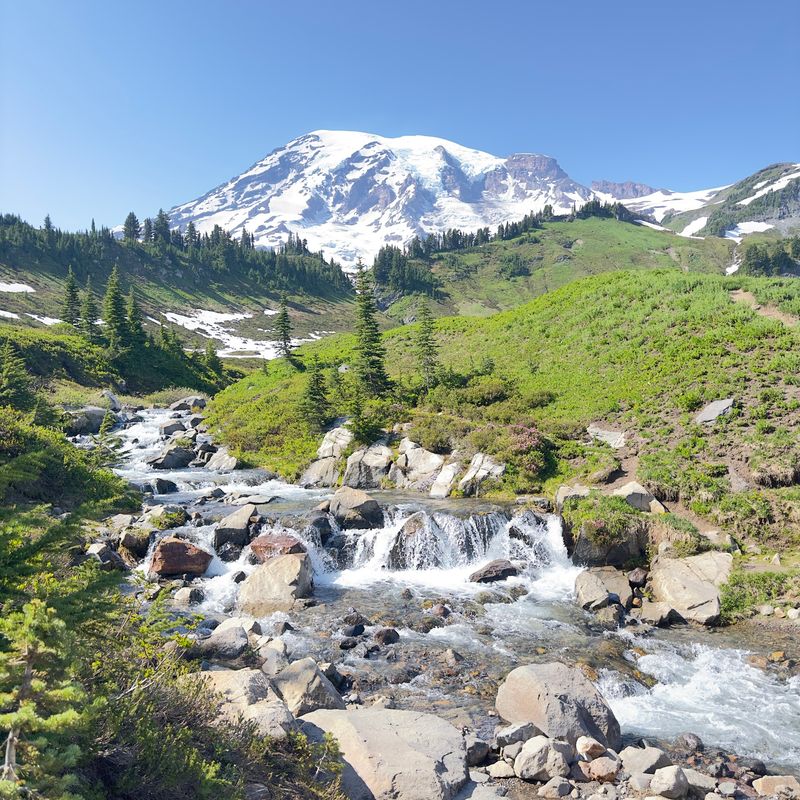
Mount Rainier is one of the most iconic mountains in the Pacific Northwest, rising 14,411 feet above sea level near Seattle, Washington. It is an active stratovolcano covered by more glaciers than any other mountain in the contiguous United States.
The sight of its massive, snow-draped cone towering over green forests is genuinely unforgettable.
Mount Rainier National Park surrounds the mountain and offers some of the best hiking trails in the country. During summer, the meadows below the peak burst into color with wildflowers, making it a paradise for photographers and nature walkers alike.
The park welcomes around two million visitors every year.
Climbing Rainier is considered a serious challenge, even for experienced mountaineers. High altitude, unpredictable weather, and heavily crevassed glaciers make proper preparation essential.
Still, thousands attempt the summit climb each season.
3. Grand Teton, Wyoming
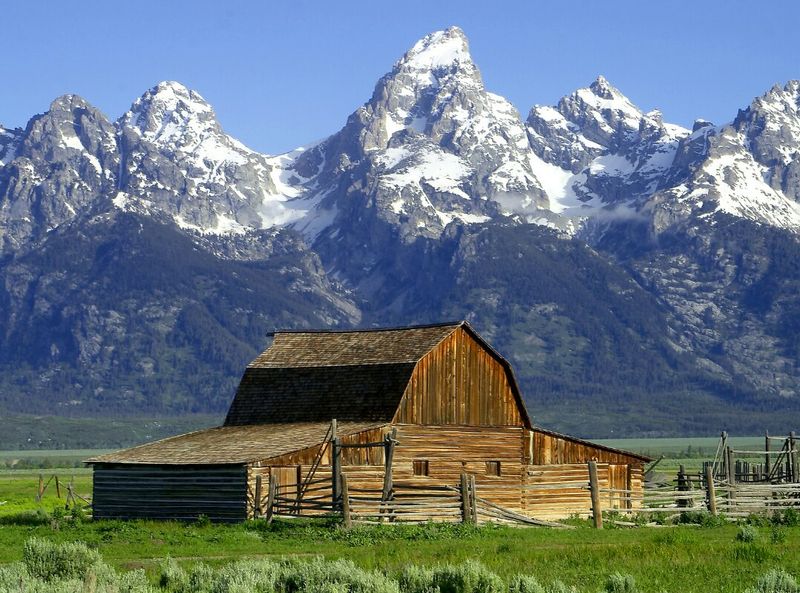
Few mountain silhouettes in America are as instantly recognizable as the Grand Teton, rising sharply to 13,775 feet above the flat valley floor of Jackson Hole, Wyoming. Without the gradual foothills that soften most mountain views, the Teton Range seems to shoot straight up from the earth, creating one of the most dramatic landscapes in the country.
Grand Teton National Park is a year-round destination, offering world-class hiking, rock climbing, kayaking, and wildlife watching. Moose, bison, and black bears are commonly spotted throughout the park.
The Snake River winding through the valley adds another layer of natural beauty to the scenery.
Photographers especially love the famous Oxbow Bend, where the Tetons reflect perfectly in still water at sunrise. Whether you visit in summer or winter, the Grand Teton never fails to impress even the most well-traveled nature enthusiasts.
4. Mount Shasta, California
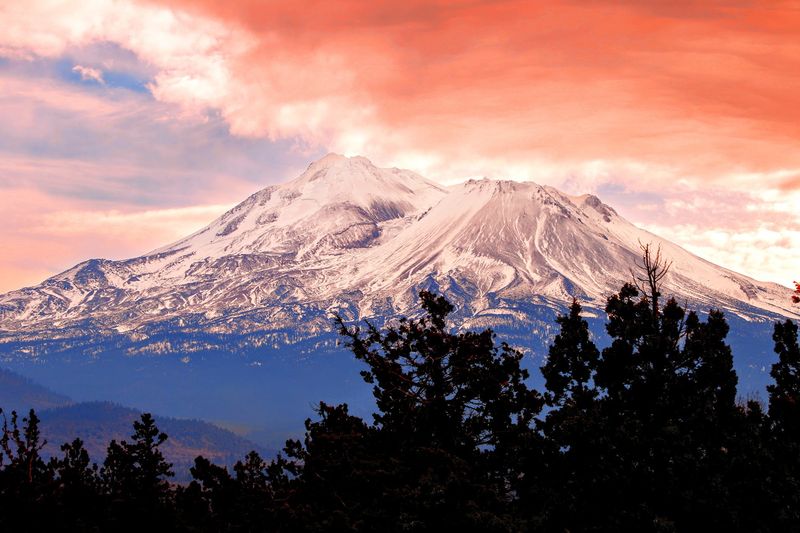
Mount Shasta stands at 14,179 feet in northern California, and its isolated volcanic cone makes it one of the most visually striking mountains in the entire country. Unlike peaks surrounded by other tall mountains, Shasta rises alone above the surrounding terrain, giving it a commanding presence that is visible from miles around.
The mountain holds deep spiritual significance for several Native American tribes, including the Shasta and Wintu peoples, who have lived in the region for thousands of years. Today, it continues to draw visitors seeking both outdoor adventure and a sense of spiritual connection with nature.
Hiking and skiing opportunities on Mount Shasta are plentiful, with routes suitable for beginners and advanced climbers alike. The mountain’s five active glaciers make it one of the most glaciated peaks in the lower 48 states.
A visit here feels both adventurous and deeply peaceful at the same time.
5. Mount Hood, Oregon
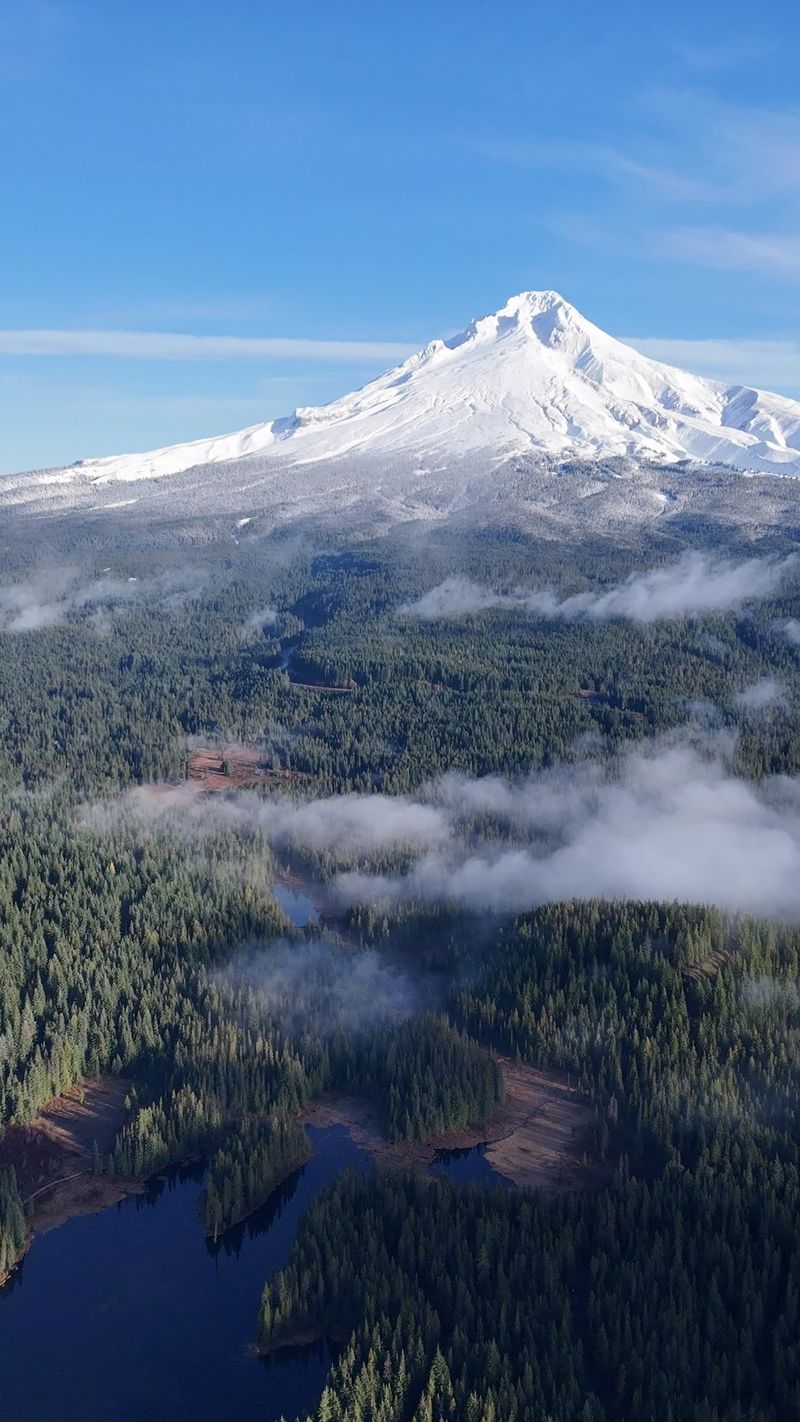
Oregon’s highest peak, Mount Hood, rises to 11,249 feet and is one of the most visited mountains in the United States. Its perfectly symmetrical volcanic cone covered in year-round snow makes it a postcard-worthy sight from almost any direction.
Portland residents can even see it clearly on cloudless days from the city streets.
Timberline Lodge, a historic ski resort built during the 1930s, sits on Mount Hood’s southern slope and operates one of the longest ski seasons in North America. The lodge itself is a stunning piece of craftsmanship and was designated a National Historic Landmark in 1977.
Hikers enjoy the Timberline Trail, a 40-mile loop that circles the entire mountain through forests, meadows, and glacial terrain. Mount Hood National Forest also offers camping, fishing, and kayaking nearby.
For outdoor lovers in the Pacific Northwest, Mount Hood is practically a backyard treasure.
6. Half Dome, California
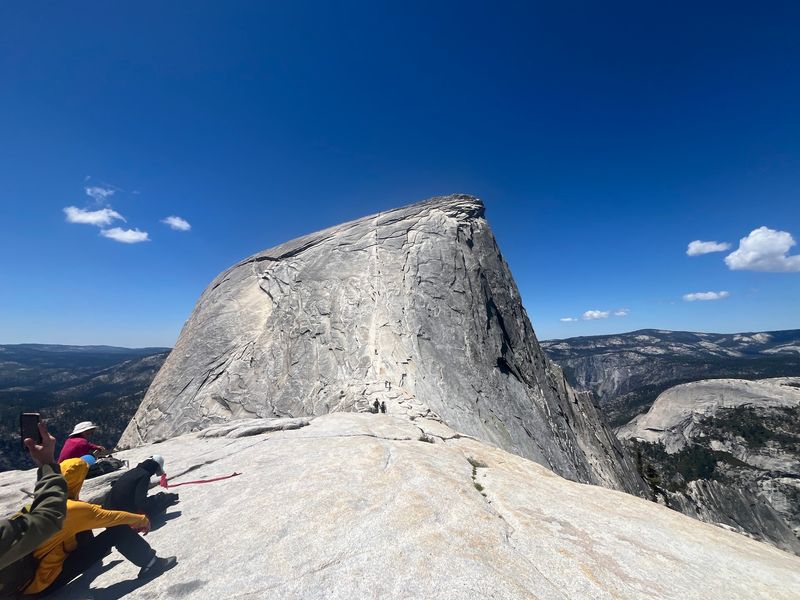
Half Dome is one of the most recognizable rock formations in the world, rising 8,839 feet above sea level in Yosemite National Park, California. Its sheer granite face, which drops nearly 2,000 feet on one side, is a jaw-dropping sight that has inspired painters, photographers, and adventurers for over a century.
Ansel Adams made it famous through his stunning black-and-white photography.
The hike to Half Dome’s summit is one of the most popular and challenging day hikes in the country, covering about 14 to 16 miles round trip. The final stretch requires climbers to pull themselves up a nearly vertical granite face using fixed steel cables.
A permit system limits the number of hikers to protect both visitors and the environment.
Even from the valley floor, Half Dome commands attention. Its unique shape, formed by glacial erosion millions of years ago, makes it a geological wonder that feels almost otherworldly.
7. Mount Whitney, California
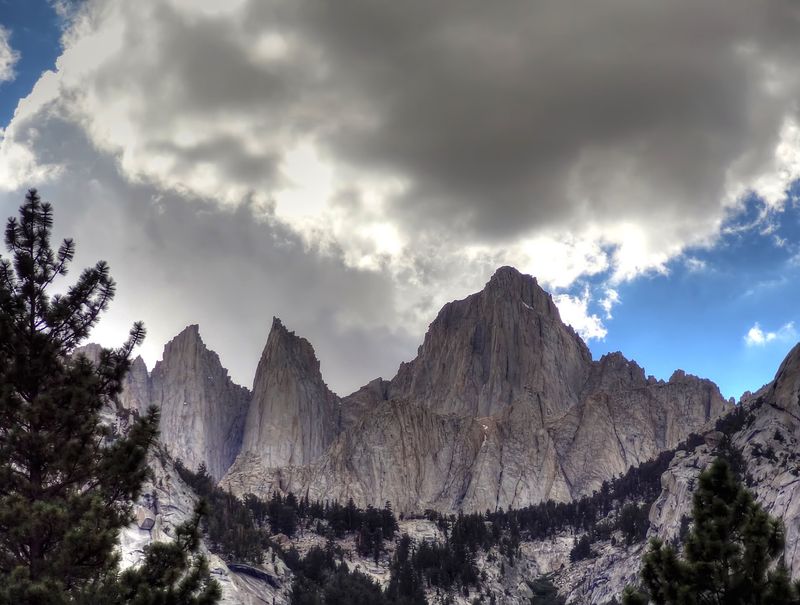
At 14,505 feet, Mount Whitney holds the title of the highest peak in the contiguous United States, making it a bucket-list destination for hikers and mountaineers across the country. Located on the border of Tulare and Inyo counties in California, it sits within the Sierra Nevada range, just west of the town of Lone Pine.
The main trail to the summit is about 22 miles round trip and gains over 6,000 feet in elevation. While the route does not require technical climbing skills, the altitude and distance make it physically demanding.
Hikers must obtain a permit in advance, as the trail is extremely popular, especially from late spring through early fall.
Standing on the summit on a clear day offers sweeping views stretching for hundreds of miles. The contrast between Whitney’s rocky heights and the desert far below is one of the most striking sights in American wilderness.
8. Mount Saint Elias, Alaska
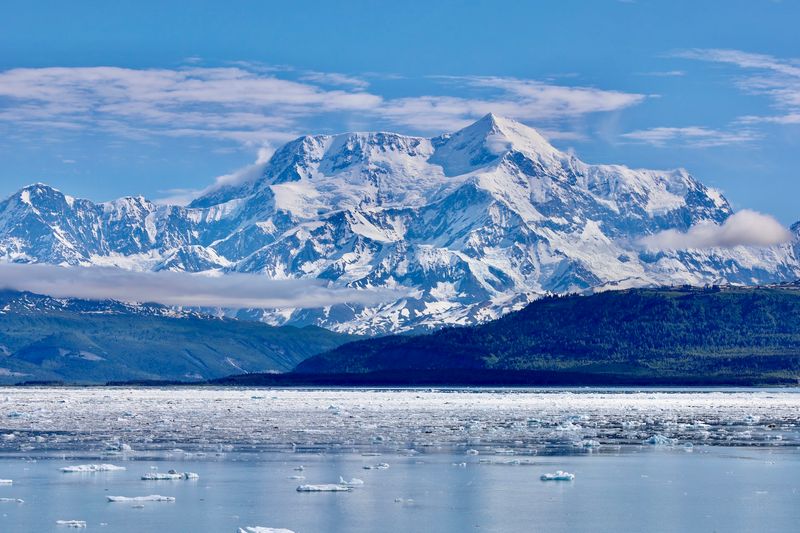
Mount Saint Elias is the second-highest peak in the United States and in Canada, topping out at an impressive 18,008 feet on the Alaska-Yukon border. What makes it especially remarkable is how close it rises to the Gulf of Alaska coastline, creating one of the steepest vertical rises from sea to summit found anywhere on Earth.
First climbed in 1897 by an Italian expedition led by the Duke of Abruzzi, Saint Elias has a rich mountaineering history. Today, it remains one of the most remote and technically challenging peaks in North America.
Very few climbers attempt it each year due to its extreme weather and difficult access.
The surrounding Wrangell-St. Elias National Park is the largest national park in the United States, covering an area bigger than the entire country of Switzerland. The park’s raw, untouched beauty makes the whole region feel like another world entirely.
9. Mount Baker, Washington
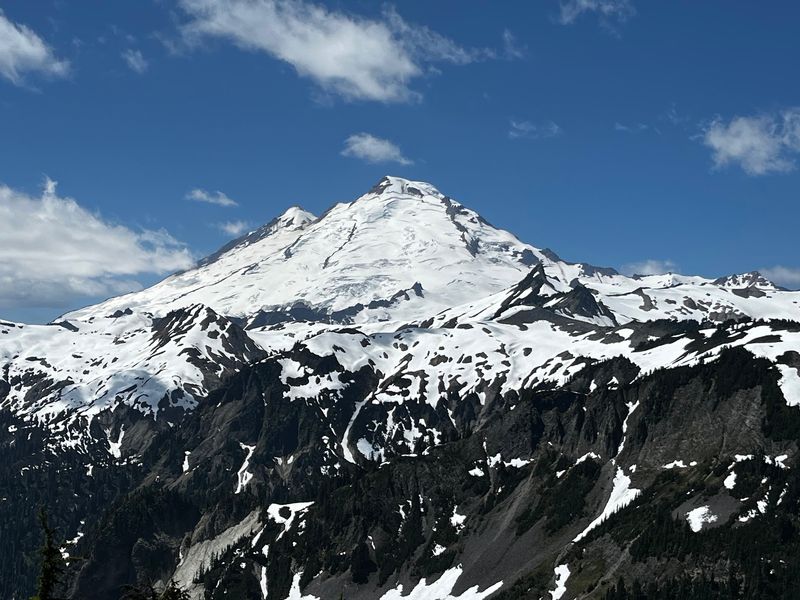
Mount Baker is a stunning stratovolcano in the North Cascades of Washington, standing 10,781 feet tall and covered by one of the largest accumulations of snow and ice found on any American mountain outside of Alaska. In 1998 and 1999, Mount Baker set a world record for the most snowfall measured in a single season at a weather station, receiving over 1,140 inches of snow.
The mountain is a favorite destination for backcountry skiers, snowshoers, and mountaineers who are drawn to its deep powder and challenging terrain. Mount Baker Ski Area, located on the mountain’s south side, is known for its reliable snowpack and laid-back atmosphere.
Hikers enjoy trails through old-growth forests and alpine meadows with views of glaciers and volcanic rock. The nearby Nooksack River valley adds lush greenery to the overall landscape.
Mount Baker is truly a year-round outdoor playground for adventure seekers.
10. Longs Peak, Colorado
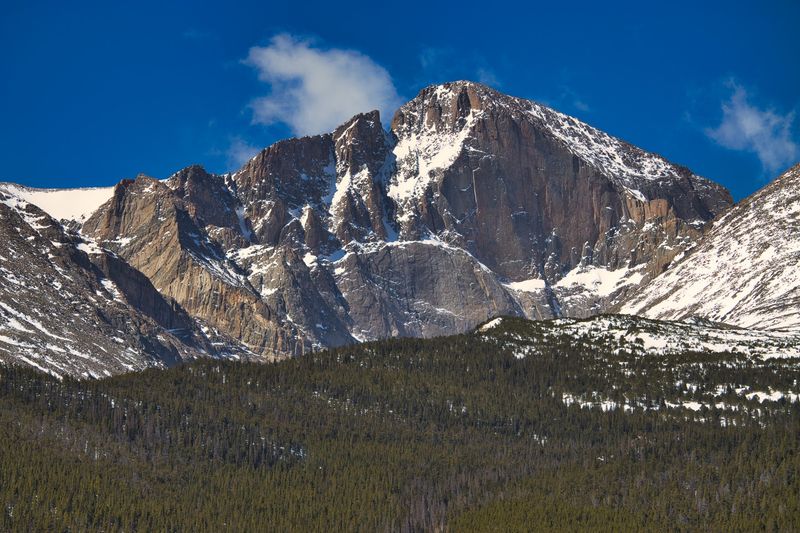
Longs Peak is the highest summit in Rocky Mountain National Park, reaching 14,259 feet above sea level. Its broad, flat-topped summit called the Keyhole Route makes it one of the most recognizable fourteeners in Colorado.
From a distance, the mountain’s distinctive square shape stands out clearly against the Colorado sky.
Climbing Longs Peak is no small feat. The standard Keyhole Route is about 15 miles round trip and involves scrambling over large boulders and navigating exposed ledges near the top.
Most hikers start before sunrise to avoid afternoon thunderstorms, which are common during summer months in Colorado.
Despite the challenge, Longs Peak is one of the most frequently climbed fourteeners in the state. The views from the top stretch for dozens of miles across the Rocky Mountain landscape.
Whether you make it to the summit or simply hike partway, the experience leaves a lasting impression.
11. Mount Katahdin, Maine
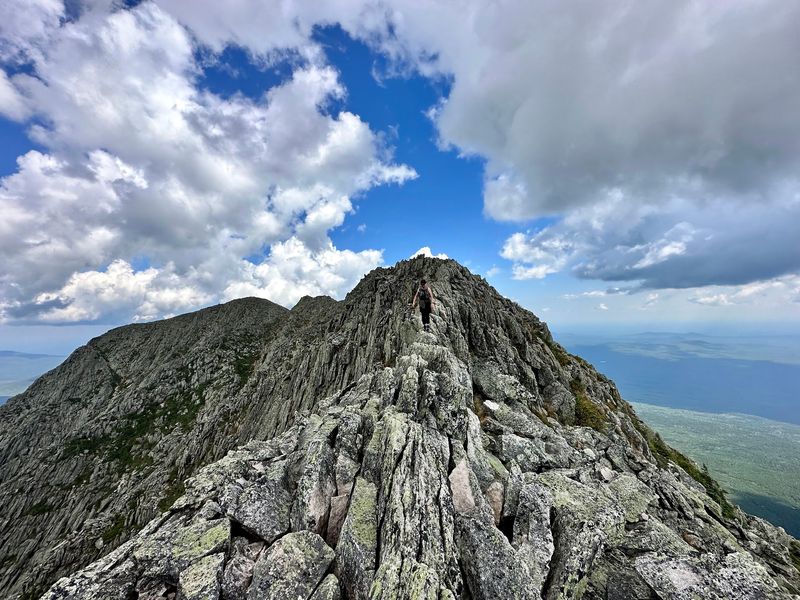
Mount Katahdin is the highest peak in Maine, rising to 5,269 feet, and it holds a special place in American hiking culture as the northern terminus of the Appalachian Trail. Thousands of thru-hikers complete their roughly 2,190-mile journey from Georgia here every year, making the summit a deeply emotional destination for many.
Located in Baxter State Park, Katahdin is surrounded by pristine wilderness, clear lakes, and dense forests that turn brilliant shades of red, orange, and gold each autumn. The park was gifted to the people of Maine by former Governor Percival Baxter, who believed strongly in preserving wild spaces.
The Knife Edge trail near the summit is one of the most thrilling hikes in the eastern United States, crossing a narrow rocky ridge with steep drop-offs on both sides. It demands careful footing but rewards hikers with unbeatable panoramic views across the Maine wilderness.
12. Mount Sneffels, Colorado
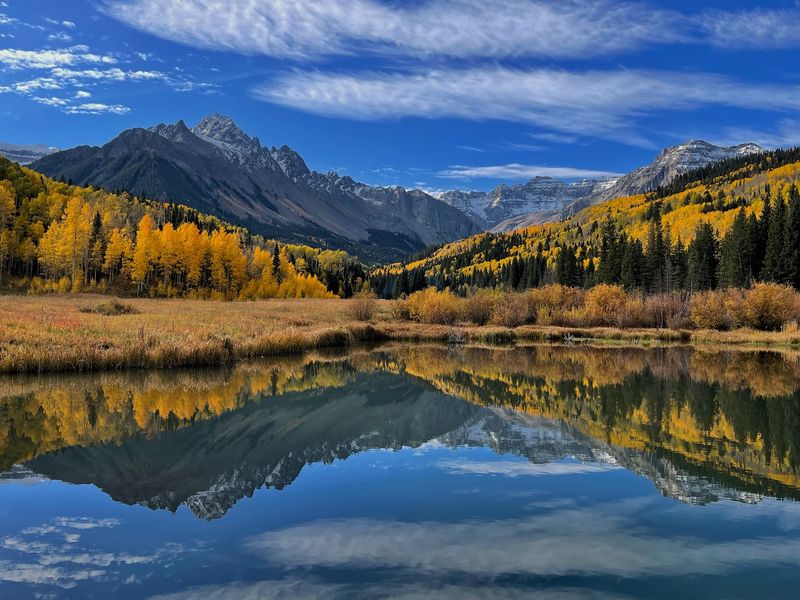
Tucked into the rugged San Juan Mountains of southwestern Colorado, Mount Sneffels rises to 14,158 feet and is widely considered one of the most photogenic mountains in the entire state. Its jagged, sculpted ridgeline and the colorful wildflower meadows that bloom at its base each summer create a scene straight out of a painting.
The mountain takes its unusual name from Jules Verne’s novel “Journey to the Center of the Earth,” in which a fictional Icelandic volcano called Sneffels plays a key role. That literary connection gives the peak a quirky charm that most mountains simply do not have.
Hiking to the summit via the standard southwest ridge route is a rewarding challenge that offers panoramic views of the surrounding San Juan peaks. The nearby town of Ouray, often called the Switzerland of America, makes an excellent base camp for exploring this stunning region of Colorado.
13. Mount Moran, Wyoming
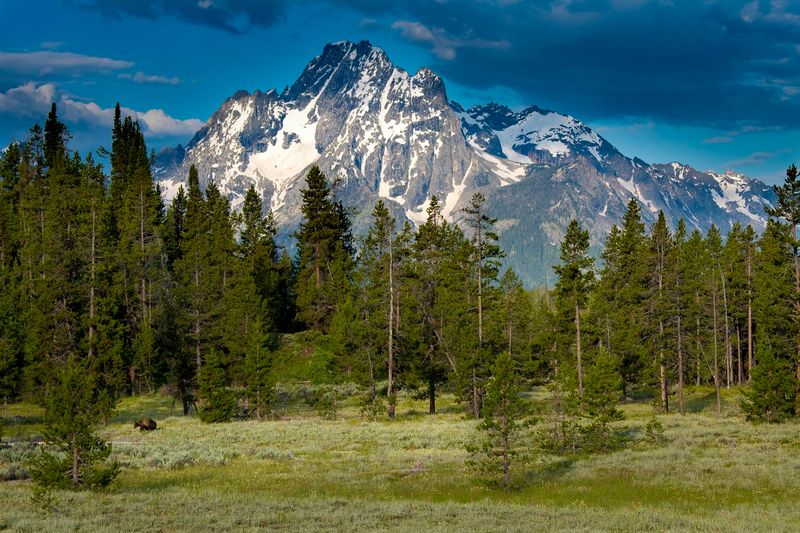
Mount Moran may not be the tallest peak in the Teton Range, but many visitors and photographers argue it is the most beautiful. Rising to 12,605 feet, its broad, glacier-striped face reflected in Jackson Lake creates one of the most photographed mountain scenes in all of North America.
The dark vertical dike of igneous rock cutting through its face adds a dramatic visual detail unlike anything nearby.
Unlike the Grand Teton, which requires technical climbing skills to summit, Mount Moran is accessible to experienced hikers willing to put in the effort. The approach involves crossing Leigh Lake and traveling through dense forest before reaching the mountain’s base.
The view of Mount Moran from the shores of Jackson Lake at sunrise is considered one of the great natural spectacles in American wilderness. Wildlife including eagles, ospreys, and moose are commonly spotted along the lake’s edges during early morning hours.
14. Mount Redoubt, Alaska
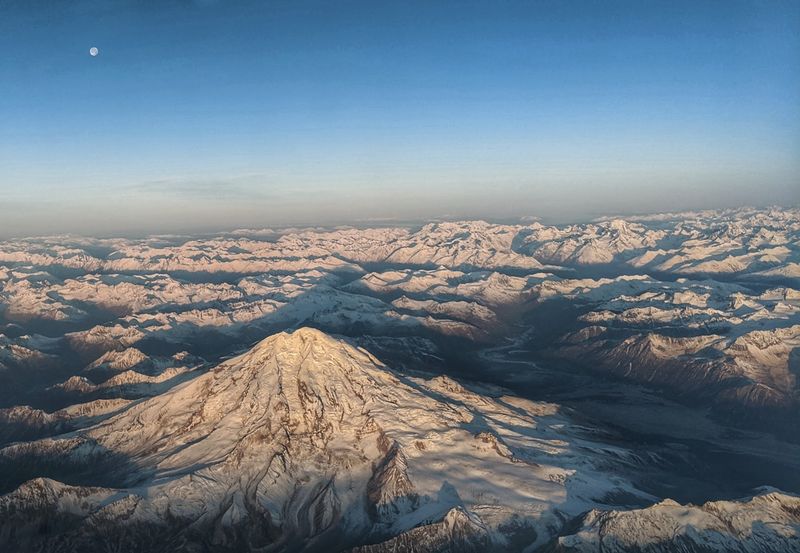
Mount Redoubt is one of Alaska’s most active volcanoes, standing at 10,197 feet on the western side of Cook Inlet, roughly 100 miles southwest of Anchorage. Its perfectly conical, snow-draped shape is stunning from a distance, especially when a thin plume of steam or ash drifts from its summit, reminding observers that this mountain is very much alive.
Redoubt has erupted multiple times in recorded history, with major eruptions occurring in 1989 and 2009. The 1989 eruption famously caused a KLM passenger jet to temporarily lose engine power after flying through an ash cloud, though the plane landed safely.
Such events highlight just how powerful and unpredictable volcanic mountains can be.
Despite its volcanic nature, the area around Mount Redoubt within Lake Clark National Park is a haven for wildlife, including brown bears, beluga whales, and sockeye salmon. The combination of fire and wilderness makes it an extraordinary place.
15. Mount Washington, New Hampshire
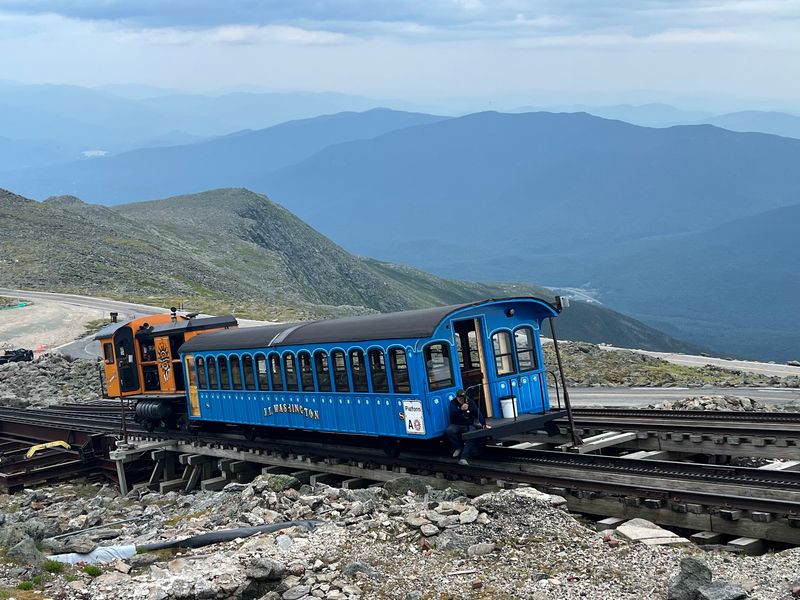
Mount Washington stands at 6,288 feet, making it the highest peak in the northeastern United States. Despite its relatively modest height compared to western mountains, it has earned a fierce reputation for having some of the worst weather on Earth.
In 1934, a wind gust of 231 miles per hour was recorded at its summit, a world record that stood for decades.
The mountain sits within the White Mountain National Forest and is accessible by foot, by car on the famous Mount Washington Auto Road, or by the historic Cog Railway, which has been carrying passengers to the summit since 1869. The observatory at the top operates year-round, monitoring extreme weather conditions.
Above the treeline, the barren, windswept summit feels more like the Arctic tundra than New England. Hikers tackling the Presidential Range trails experience dramatic changes in weather and terrain that make every trip feel like a genuine adventure worth remembering.
Share this story