If you grew up going to school in the 1980s, certain objects can send you straight back to those hallways, classrooms, and cafeteria tables faster than almost anything else. A particular binder cover, a specific smell, or even the sound of a wall-mounted pencil sharpener grinding away can bring it all back in an instant.
School supplies from that era were not just tools for learning. They were part of daily life, personal expression, and the shared experience of being a kid in a very specific decade.
This list covers 13 school supplies that practically every ’80s student remembers, from the iconic Trapper Keeper to the permanent marker that wrote on absolutely everything.
Trapper Keeper
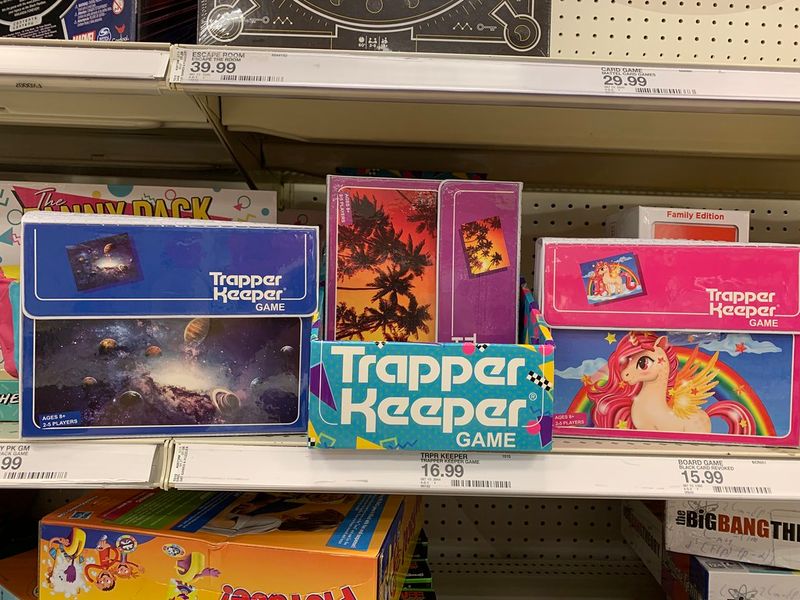
Choosing the right Trapper Keeper cover was practically a personality statement in the 1980s. Mead test-marketed the organizational binder in Wichita, Kansas, in 1978 before rolling it out nationally in 1981, and it quickly became one of the most recognizable school supplies of the decade.
The concept was straightforward: one colorful binder that held folders, worksheets, and loose papers all in one place. The satisfying Velcro-style closure became part of the experience, and students knew that sound well.
By the late 1980s, Mead had introduced its Designer Series, offering covers featuring everything from bold geometric patterns to vivid animal artwork. Picking a cover was almost as important as picking the notebooks that went inside.
For many students, the Trapper Keeper was not just an organizational tool. It was the centerpiece of the whole back-to-school shopping trip, and carrying the right one on the first day of school mattered more than most teachers ever realized.
No. 2 Wooden Pencils
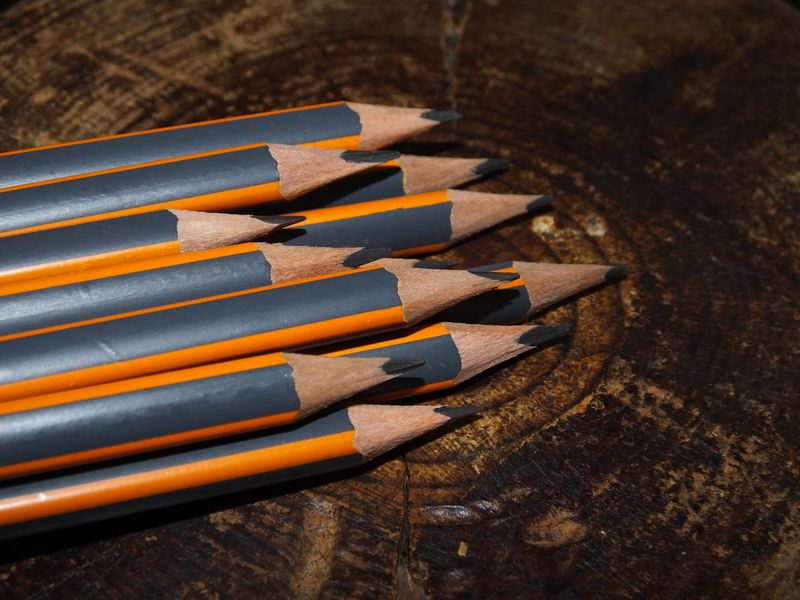
There was no escaping the No. 2 pencil. Math homework, spelling tests, standardized exams, and practically anything else teachers wanted completed in pencil all required one.
Before mechanical pencils became as common as they are today, sharpened wooden pencils filled pencil cases and desk trays across every grade level.
They also created one of the most recognizable sounds of the era: the grinding of a wall-mounted pencil sharpener while everyone else tried to stay focused. Walking up to sharpen a pencil mid-class was both a necessity and a minor social event.
Keeping several on hand was smart because one always seemed to break at the worst moment or vanish entirely by lunchtime. Short stubs accumulated at the bottom of backpacks.
Scantron-style answer sheets made a reliable No. 2 especially important on test days, since the machine-graded sheets needed dark, clean pencil marks to register correctly. A bad pencil on exam day was a genuine problem.
Pink Pearl Erasers
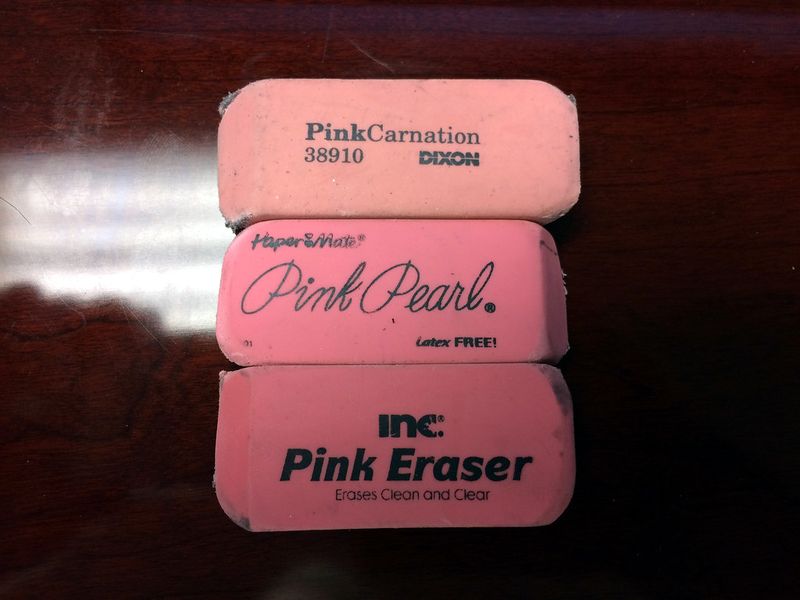
The Pink Pearl eraser was a backpack regular for good reason. Simple, sturdy, and far more effective than the tiny eraser attached to the end of a pencil, it could handle math mistakes, rewritten spelling words, and entire sections of handwritten assignments without much effort.
After enough use, the sharp rectangular edges gradually rounded off and turned a grayish tone from accumulated graphite. A well-used Pink Pearl told the story of a busy school year all by itself.
They were also remarkably easy to lose. A brand-new eraser could look pristine at the start of September and somehow disappear before the first report card came home in October.
Many eraser styles existed by the 1980s, including novelty shapes and scented varieties that briefly captured student attention. But the large pink rectangular block remained so associated with traditional American school supplies that it still reads as the default eraser decades later, appearing on school supply lists without anyone questioning it.
Crayola 64-Count Crayon Box
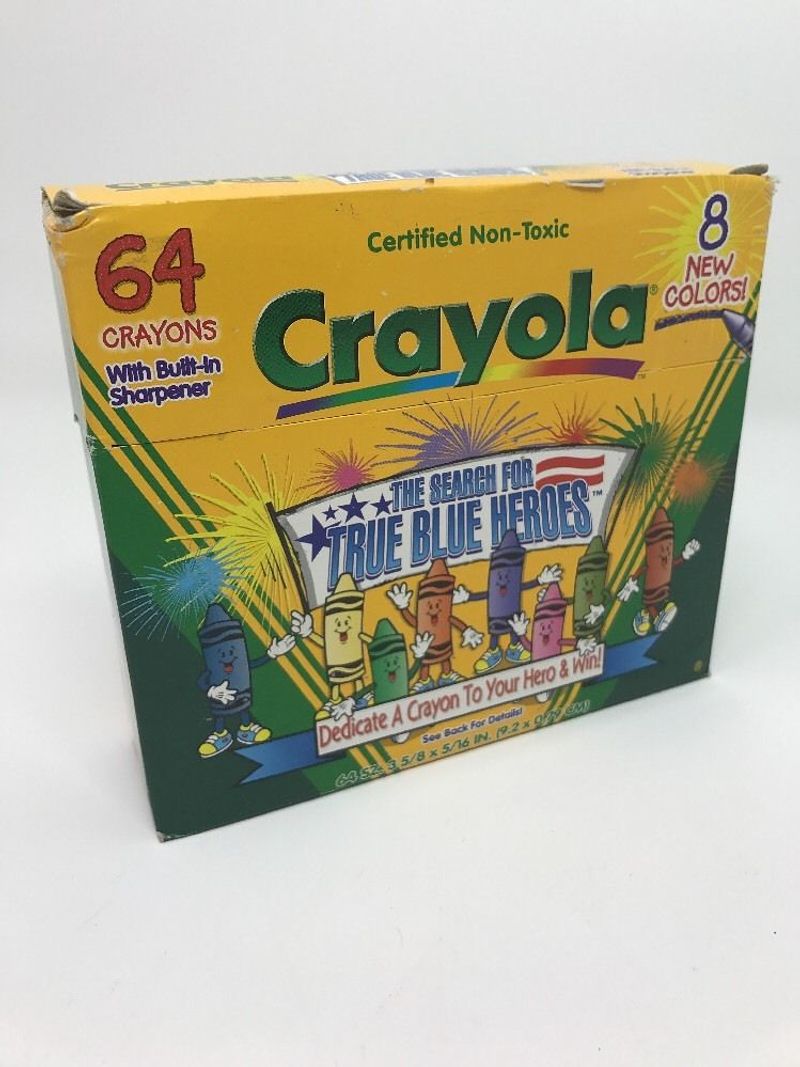
Opening a fresh 64-count Crayola box at the start of the school year had a specific kind of satisfaction that is hard to overstate. Crayola introduced the 64-crayon box in 1958, and it came with one of its most memorable features already built in: a crayon sharpener tucked into the back of the box.
For younger students in the 1980s, having 64 colors meant real creative freedom compared to a basic eight- or sixteen-count set. Beyond standard reds and blues, there were enough shades to make school art projects feel considerably more serious.
The condition of a crayon box changed quickly. Favorite colors became short stubs, wrappers peeled away, and several crayons ended up snapped in half inside the box.
Still, nothing quite matched the beginning of a new school year like lifting the lid on an untouched box with every crayon still perfectly pointed and neatly arranged. Crayola still manufactures versions of this classic package today.
Elmer’s School Glue
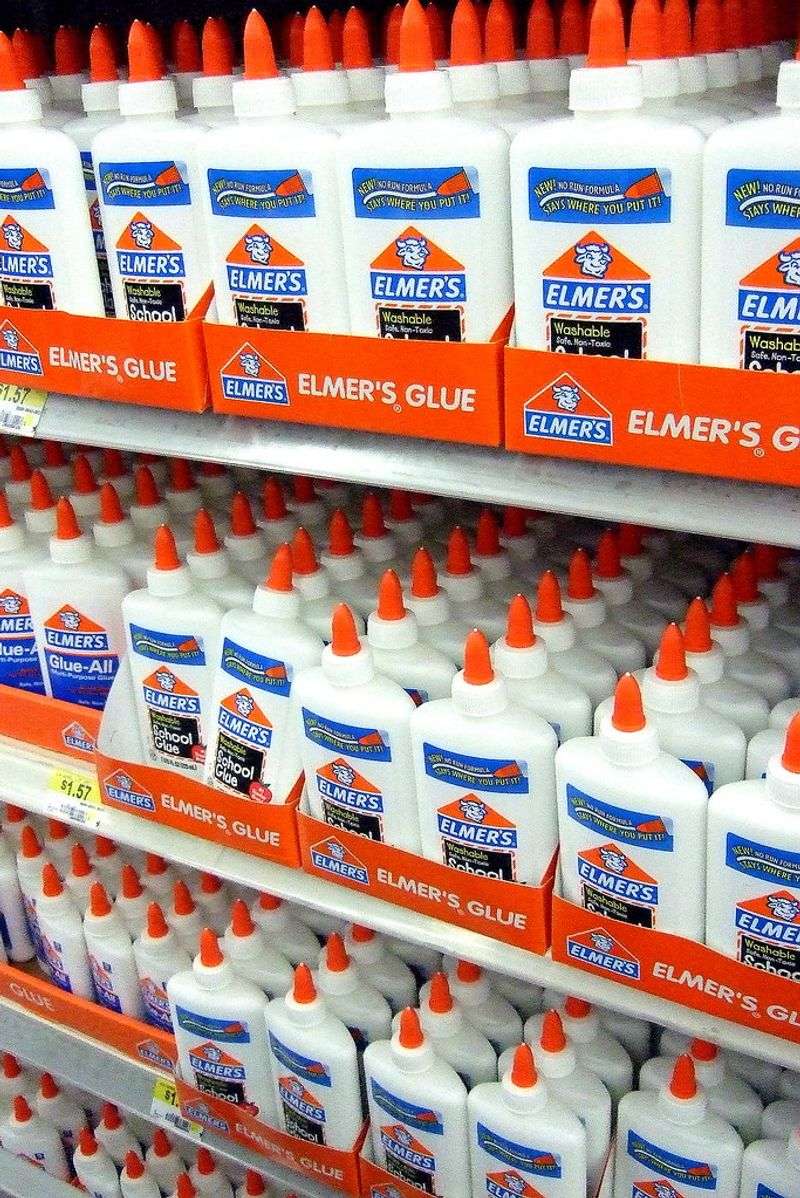
Paper construction projects usually meant reaching for the glue bottle. Elmer’s white school glue was standard equipment for countless elementary classroom crafts throughout the 1980s, showing up on supply lists year after year without fail.
Students squeezed it onto construction paper, cardboard, cotton balls, popsicle sticks, and whatever else teachers decided should become an art project that week. The real skill was figuring out how much to use.
A careful student produced a clean, thin line. An enthusiastic student could soak an entire sheet of paper and then wait an eternity for it to dry flat again.
Neither approach was always wrong, depending on the project.
Dried glue around the bottle cap was another constant, often requiring someone to peel it away before the bottle could open at all. For generations of students, the white bottle with its bright orange cap became almost synonymous with classroom crafting, as familiar as the construction paper it held together.
Fiskars Scissors
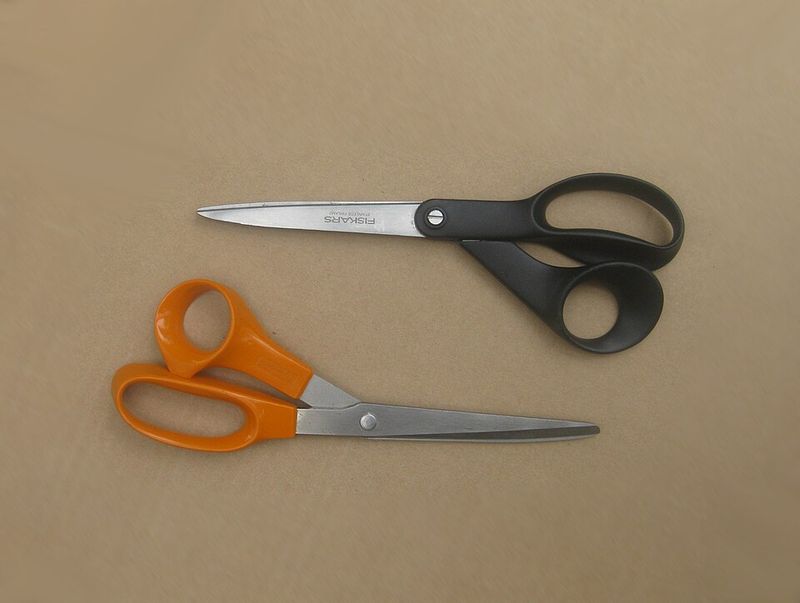
Orange-handled Fiskars scissors became one of the most recognizable designs in classroom history, and their presence in 1980s schools was practically unavoidable. Fiskars introduced its plastic-handled scissors back in 1967, well before the decade that made them a staple, and the company reports that its famous orange-handled design has since sold more than a billion pairs worldwide.
In the classroom, scissors handled everything from cutting construction paper and magazine pictures to trimming worksheets for art projects. For younger students, rounded-tip safety scissors were the more likely option, which reduced the drama of someone getting too ambitious with a craft project.
Either way, scissors appearing on the supply list was a reliable signal that paper cutting was coming, whether students were enthusiastic about it or not.
Fiskars still actively markets scissors for schoolwork and children’s crafts today, which makes them one of the few 1980s classroom staples that never really left. The orange handles remain instantly familiar to anyone who grew up crafting in that era.
BIC Ballpoint Pens
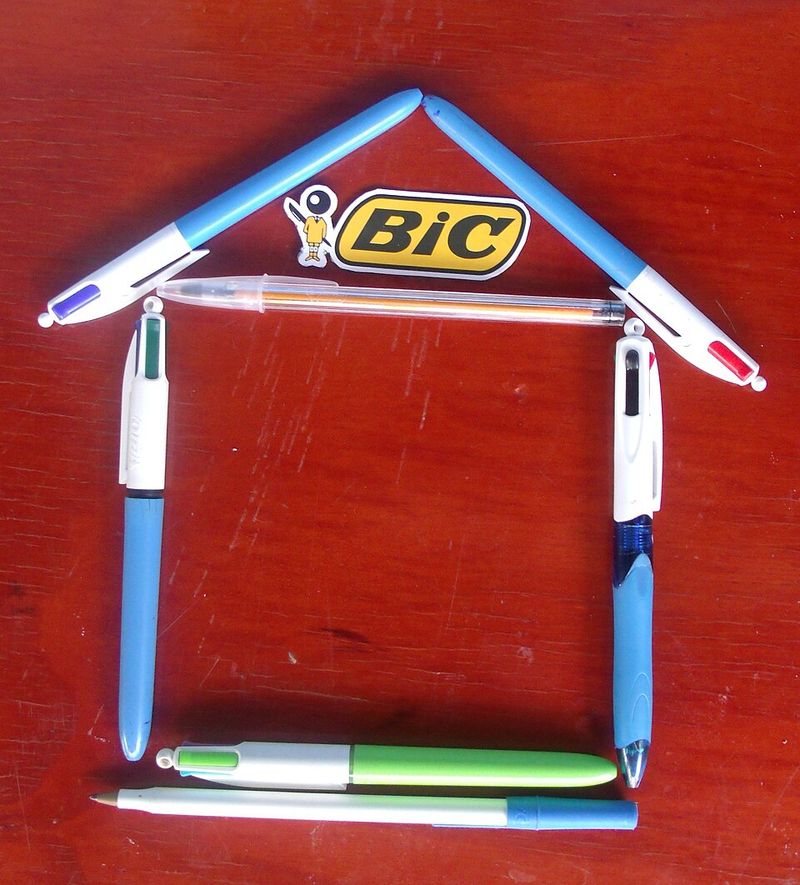
By middle school and high school, pens became just as essential as pencils. BIC ballpoints were inexpensive, dependable, and already well established long before the 1980s arrived.
The BIC Cristal debuted in France in 1950, and BIC entered the North American market in 1958, building a reputation for pens that simply worked without much fuss.
Students commonly carried blue, black, and red. Blue or black handled notes, essays, and homework.
Red occasionally made an appearance when teachers handed back graded assignments covered in corrections, which was never a welcome sight.
A pen also served other purposes. Carefully folded notes passed across the classroom were a BIC-powered communication system that no teacher had officially approved.
Then there was the universal school experience of lending someone a pen and never seeing it again. BIC pens were disposable enough that losing one was not a crisis, which probably explains why students handed them out so freely in the first place.
Spiral Notebooks
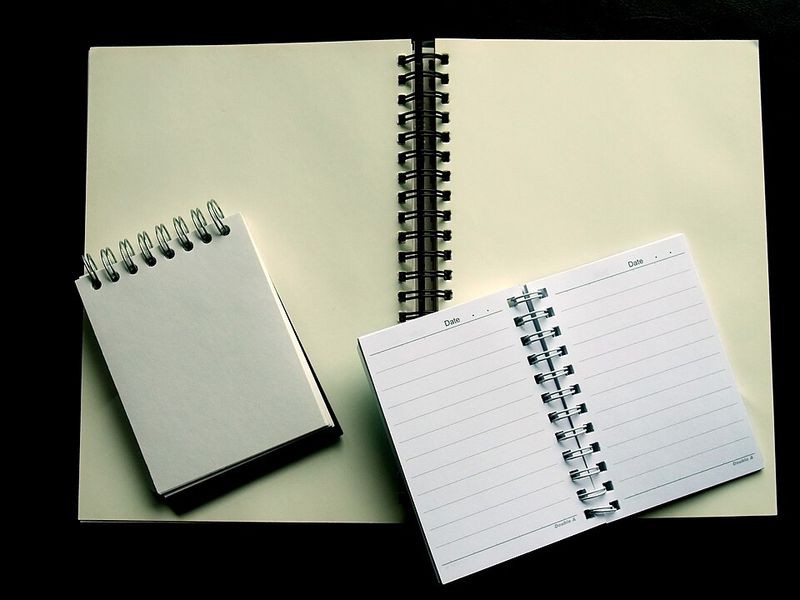
Long before notes were stored on devices, students filled page after page of spiral notebooks by hand. They were inexpensive, easy to carry, and simple to assign by subject.
One notebook might be labeled math, another science, another English, while the least organized student wrote everything in whichever notebook still had blank pages.
By the middle of the school year, the wear showed clearly. Covers bent, corners curled, and metal spirals became twisted and occasionally sharp enough to catch on things.
Pages were torn out regularly for assignments or folded into notes passed to friends during class.
Despite all that, spiral notebooks remained one of the most practical ways to keep a semester’s worth of handwritten work in one place. The format required almost no explanation and worked for every subject.
Few school supplies better represent the paper-heavy classroom experience of the 1980s. They were unglamorous, reliable, and completely central to surviving a school year with your notes reasonably intact.
Loose-Leaf Notebook Paper
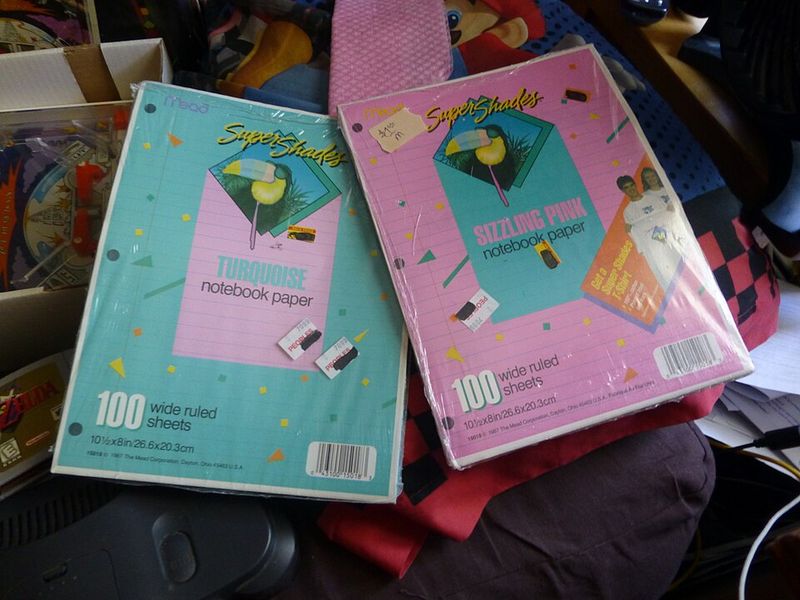
Three-ring binders needed something to hold, and packs of ruled loose-leaf paper filled that role throughout the decade. Students used individual sheets for homework, essays, class notes, and assignments meant to be turned in separately at the end of a lesson.
The punched holes made pages easy to store in binders, at least until the paper tore around the rings after too many flips. Reinforcement sticker rings could rescue damaged pages, but plenty of students simply lived with notebooks full of half-detached sheets that fluttered out at inconvenient moments.
Loose-leaf paper also made passing handwritten notes remarkably easy. Fold a sheet enough times, write a name on the outside, and ordinary notebook paper became the 1980s version of instant messaging, moving from desk to desk with varying degrees of subtlety.
It was not glamorous, but loose-leaf paper was everywhere in 1980s classrooms, quietly holding together the written record of an entire generation’s school days one three-hole-punched sheet at a time.
Three-Ring Binders
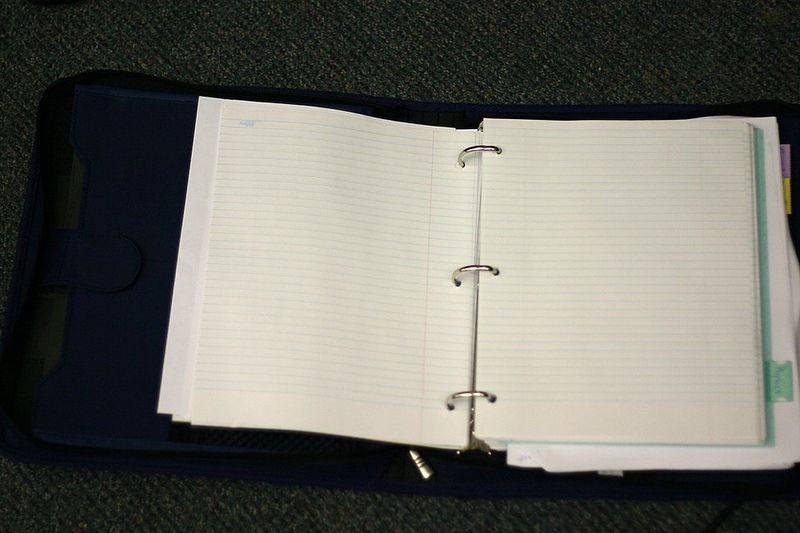
Not everyone had a Trapper Keeper, and the traditional three-ring binder remained one of the most dependable organizational tools in any 1980s classroom. Students divided them by subject using paper or plastic tabs and filled them with worksheets, notes, and loose-leaf paper throughout the year.
Some students preferred one enormous binder that held everything for every class, while others carried several smaller ones. Neither approach was perfect.
The big binder got heavy fast, and smaller ones multiplied until a locker could barely close.
Binders also offered unexpected personalization opportunities. Students slipped drawings, photos, magazine clippings, stickers, and handwritten schedules into clear front covers when available, turning a basic organizational tool into something more personal.
The biggest physical hazards were real. Opening the metal rings incorrectly could pinch a finger sharply enough to be memorable.
Dropping an overloaded binder and watching an entire semester’s worth of carefully organized papers scatter across the hallway was a different kind of painful experience entirely.
Pencil Boxes and Zippered Pencil Cases
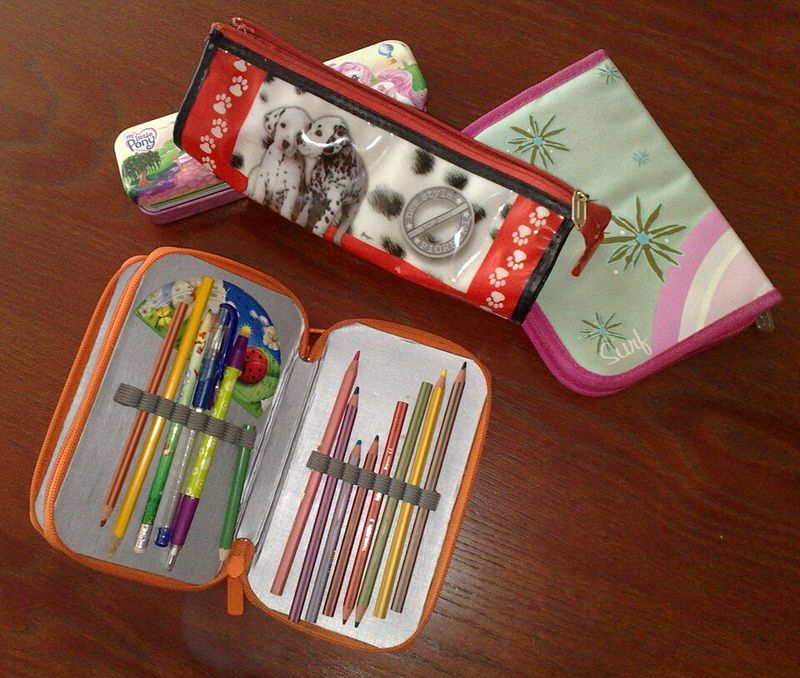
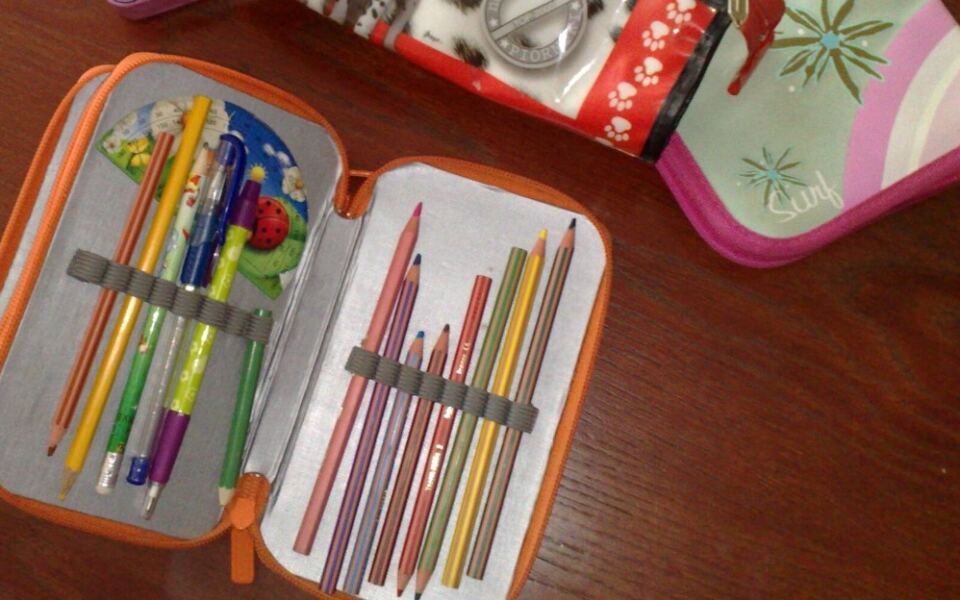
Loose pens and pencils rolling around at the bottom of a backpack were annoying, which is exactly why pencil cases became essential. Hard plastic pencil boxes were especially common for younger students, while older students often moved to soft zippered pouches that fit more easily alongside textbooks.
Inside were pencils, pens, erasers, sharpeners, markers, and a collection of miscellaneous objects that had very little to do with school. Somehow a pencil case always ended up holding things nobody could quite explain.
A pencil box often became unexpectedly personal over the course of a school year. Stickers appeared on the lid, names were written in permanent marker, and particularly prized pens were guarded with real seriousness.
By the final weeks of school, the inside usually contained pencil shavings, broken crayon pieces, dried-out markers, and at least one mysterious object nobody remembered putting there. That combination of useful and chaotic made pencil cases feel like a small, honest portrait of student life in the 1980s.
Handheld Calculators
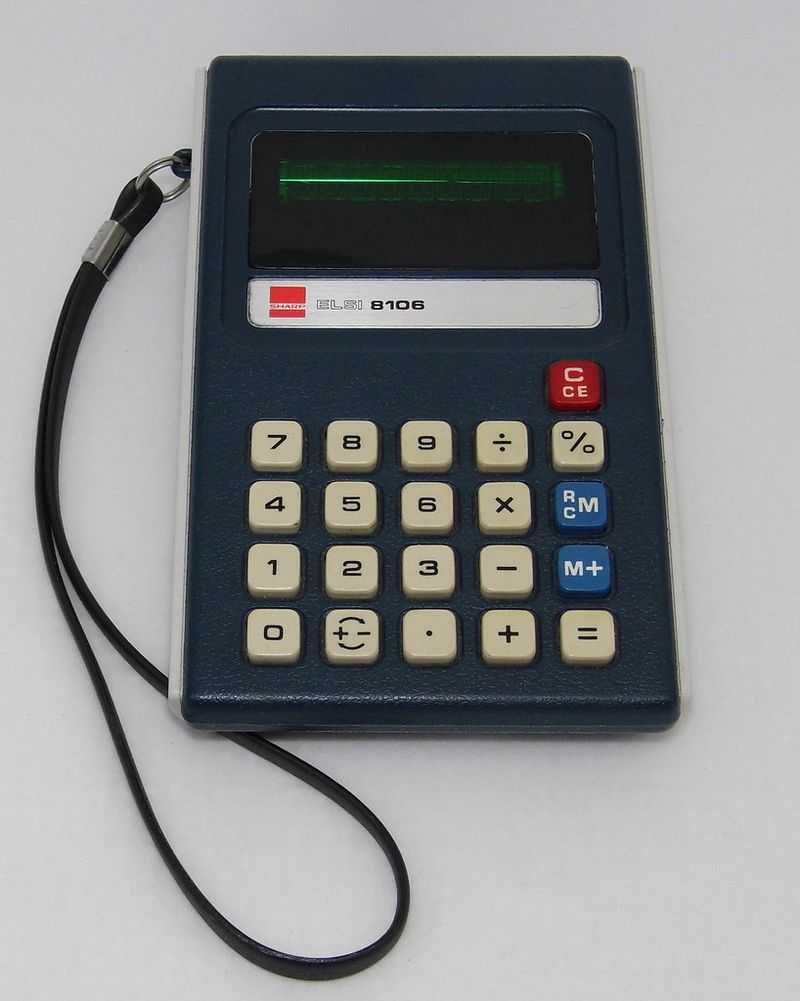
By the 1980s, handheld electronic calculators had moved from novelty to practical classroom tool, especially for older students working through math and science courses. Texas Instruments had developed the first electronic handheld calculator in 1967, helping set the stage for increasingly affordable and portable models throughout the following decades.
Students still had to show their work. Teachers were not interested in grading a page that contained nothing but an answer punched into a machine, and they made that expectation very clear.
Basic models handled arithmetic efficiently, while more advanced scientific calculators could assist with increasingly complicated equations as students moved through higher-level courses. Owning a good scientific calculator became something of a status marker in certain math classes.
Calculators also provided students with a universally appreciated side activity: typing numbers that looked like words when the device was flipped upside down. Spelling out messages on a calculator screen was a classroom tradition that appeared in no textbook but survived the entire decade without any official encouragement.
Permanent Markers
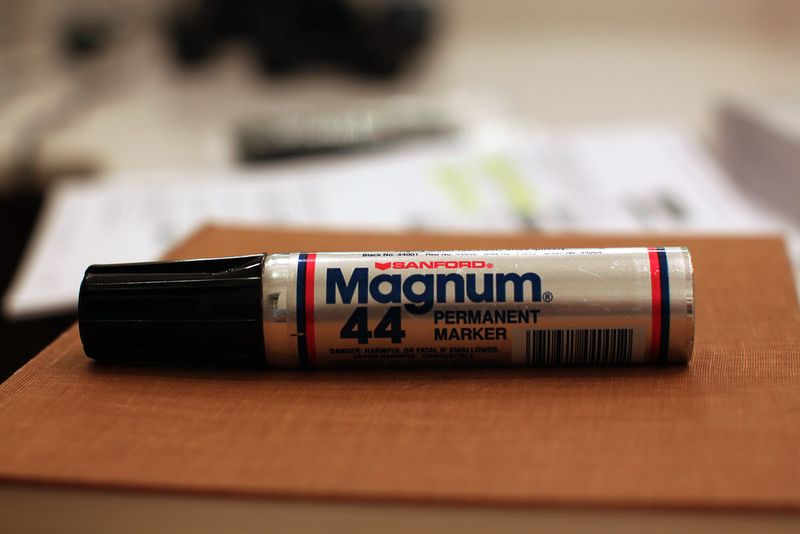
Permanent markers were useful, powerful, and occasionally a problem for anything teachers preferred kept clean. Sharpie dates back to 1964, meaning the familiar permanent marker was already a well-established product long before students carried them to school in the 1980s.
Students and teachers used them for posters, project labels, writing names on personal belongings, and marking anything that had a habit of wandering off. The unmistakable smell immediately announced to everyone nearby that a marker was open, which was useful information in a quiet classroom.
Unlike ordinary pens, permanent markers demanded a certain commitment. Write your name incorrectly on a plastic folder or lunch container and there was no convenient eraser waiting to fix the situation.
That permanence was precisely what made them valuable for labeling possessions.
One often found its way into the mix of pens and pencils rattling around inside an ’80s school backpack, ready for the next poster project, the next label, or the next student who needed their name written somewhere it absolutely would not come off.
Share this story