Once one of the biggest cities on Earth, Ayutthaya now rests as a field of towering ruins just north of Bangkok. Its temples, Buddha statues, and crumbling brick towers tell the story of a proud kingdom that thrived for over 400 years.
UNESCO named it a World Heritage Site in 1991, and it is easy to see why. Here are 13 wonders that make the park worth every step.
Wat Mahathat and the Buddha Head in the Tree Roots
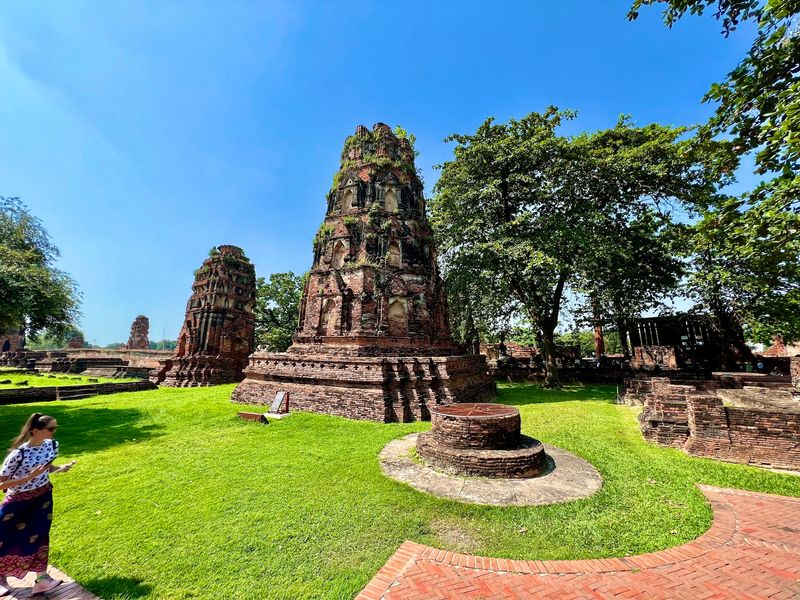
Picture a serene stone face peeking out from a tangle of roots. That is the star of Wat Mahathat, and it stops almost every visitor in their tracks.
The tree grew around the fallen head over many years.
Founded in the 14th century, the temple once held relics of the Buddha and served as a major religious center. Today, rows of headless Buddha statues and broken brick towers fill the grounds.
Reviewers call it one of the park’s absolute standouts.
Respect matters here. Never stand higher than the Buddha head, and do not pose with your own head resting near it.
Staff ask visitors to crouch low when taking photos so that your head stays below the statue.
Dress with care too. Cover your shoulders and knees, or you may be turned away at the gate.
Arrive early, because the midday heat can be fierce and the tour buses pile in fast.
A quick tip: the tree is small, so the photo line moves fast. Be patient, take your shot, and then wander the quiet corners behind it.
Those ruined walls are where the temple feels most alive.
Wat Phra Si Sanphet
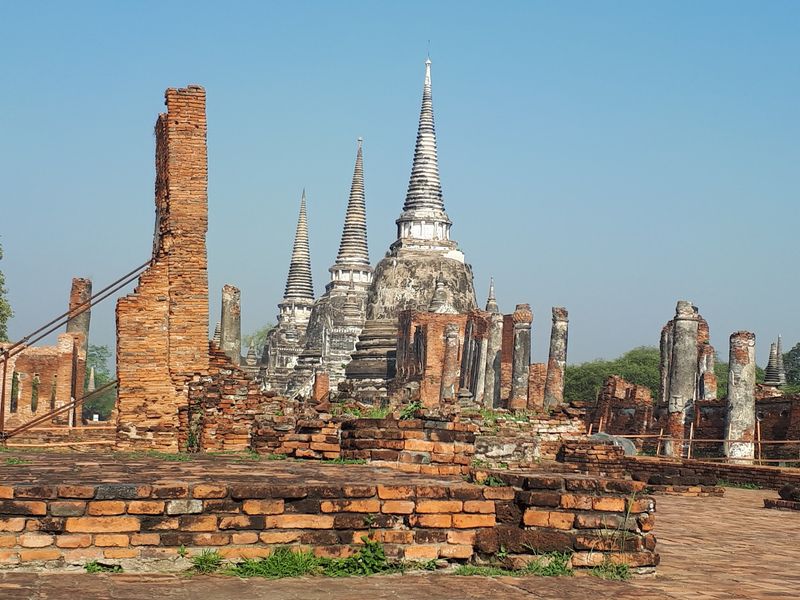
Three tall chedis line up like silent guards, and you feel small the moment you see them. Wat Phra Si Sanphet was the royal temple inside the old palace grounds.
No monks lived here, since it was meant for kings and ceremonies.
Each chedi holds the ashes of a different Ayutthaya ruler. Once, a giant standing Buddha covered in gold stood nearby.
Invaders melted the gold in 1767, when the city fell.
Many travelers begin their day here because it is one of the two most famous stops. Morning light turns the stone a warm cream color, and the lawns are quiet before the crowds arrive.
Bring water and a hat, since shade is scarce.
The ticket here is separate from some other sites, so ask about the combo pass before you pay. Several visitors said they wished they had known sooner.
A little planning can save you a few hundred baht.
Take a slow lap around the chedis, then peek at the palace foundations next door. Only low brick outlines remain, yet they hint at a royal home that was once grand.
Wat Chaiwatthanaram at Sunset
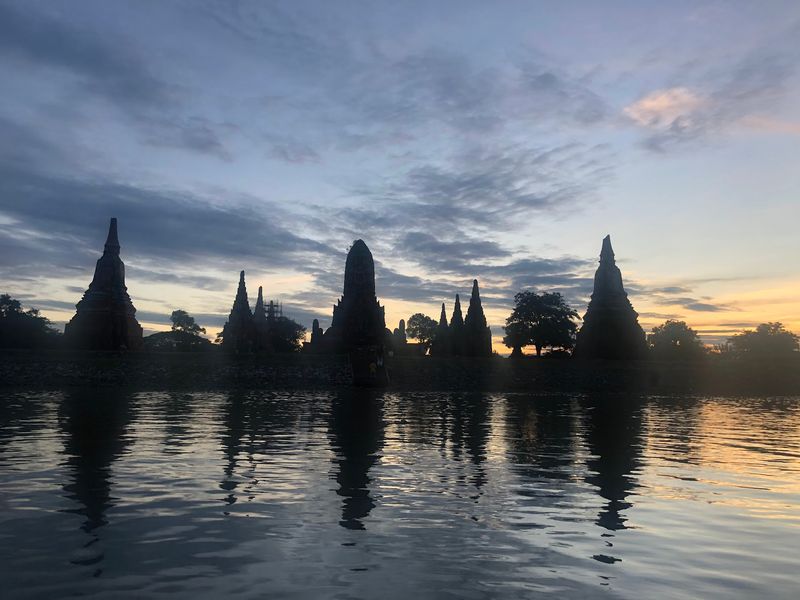
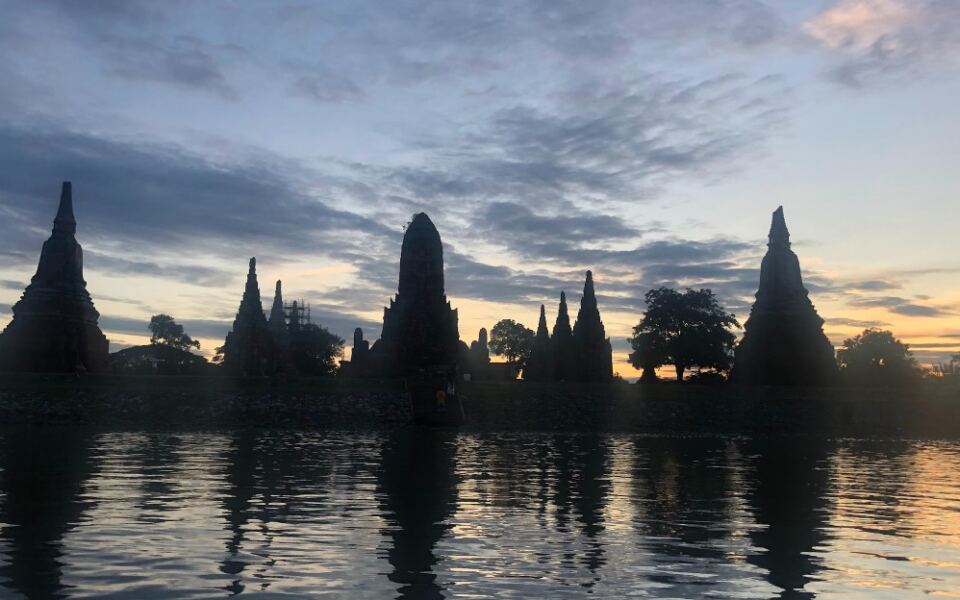
Golden hour was invented for this place. Wat Chaiwatthanaram sits on the bank of the Chao Phraya River, and its towers glow orange as the sun sinks.
One reviewer said it is especially beautiful later in the day.
King Prasat Thong built it in 1630 to honor his mother. The central prang, in Khmer style, is ringed by smaller towers that make a neat, balanced layout.
Many visitors find it the most photogenic spot in the whole park.
A river breeze keeps evenings pleasant, and the crowds thin out after the tour groups leave. Tickets are valid until about 6:30 p.m., so plan your timing.
Arrive an hour before sunset to explore without rushing.
Wear shoes with good grip, because the old steps are steep and uneven. Bring a camera with a full battery, since you will take far more photos than expected.
A tripod is handy but not needed.
After the sun sets, stay a few minutes for the soft blue glow. It is a calm way to finish a busy day of temple hopping.
Wat Ratchaburana
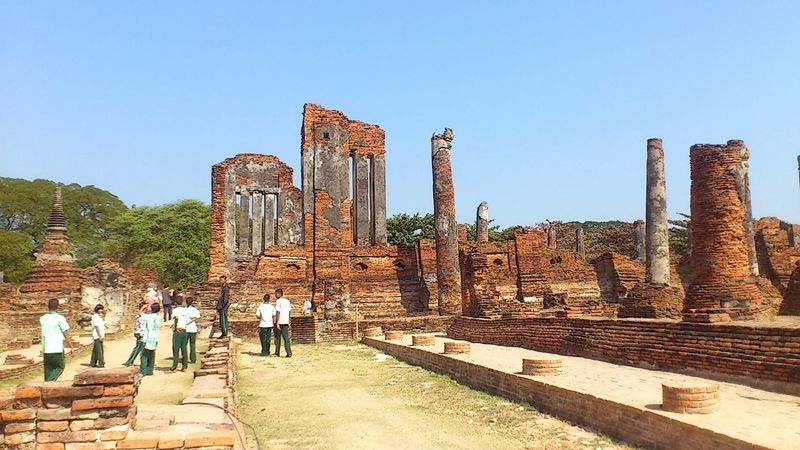
Few ruins let you climb inside and go underground. At Wat Ratchaburana, a steep stairway leads down into a crypt in the main prang.
Faded paintings still cling to the walls.
King Borommarachathirat II built the temple in 1424 for his two older brothers, who died fighting for the throne. Treasure hunters looted the crypt in 1957 and took gold items.
Thai authorities later recovered many pieces, which now sit in a local museum.
The tall prang is carved with delicate stucco figures, including mythical birds and guardians. Reviewers love its beauty and note it is easy to reach by bike.
It sits close to Wat Mahathat, so you can visit both in one trip.
Climbing is a workout. The steps are narrow, so go slowly and keep your hands free.
Skip flip-flops and wear shoes with good grip.
Go early or late to dodge the heat, and keep a bottle of water handy. Once at the top, you can look across the plain of ruins and picture the old city bustling below.
Wat Phra Ram
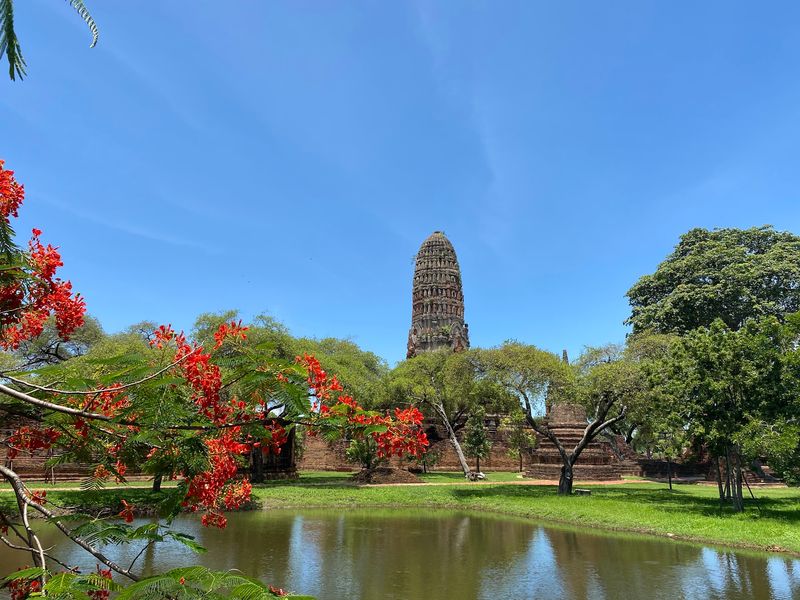
Reflections make this temple a showoff. Wat Phra Ram stands beside a quiet pond, and its large prang doubles itself in the water.
The scene is calm, spacious, and surprisingly peaceful.
King Ramesuan is said to have built it in 1369 on the site where his father was cremated. Fires and storms damaged it over the centuries, and it was restored more than once.
Reviewers mention its big prang as a highlight of a full day tour.
Statues of mythical giants and old Buddha figures sit around the base. Look closely at the stucco details, where lines of tiny carved figures still survive.
Few visitors linger, so you can often study them in peace.
Benches near the pond are great for a rest. Pack a snack, since food stalls are scarce inside.
Bring some insect repellent too, because the water draws mosquitoes at dusk.
Photographers love the late afternoon, when the stone turns soft gold. A wide-angle lens helps catch the tower and its mirror image in one frame.
Wihan Phra Mongkhon Bophit
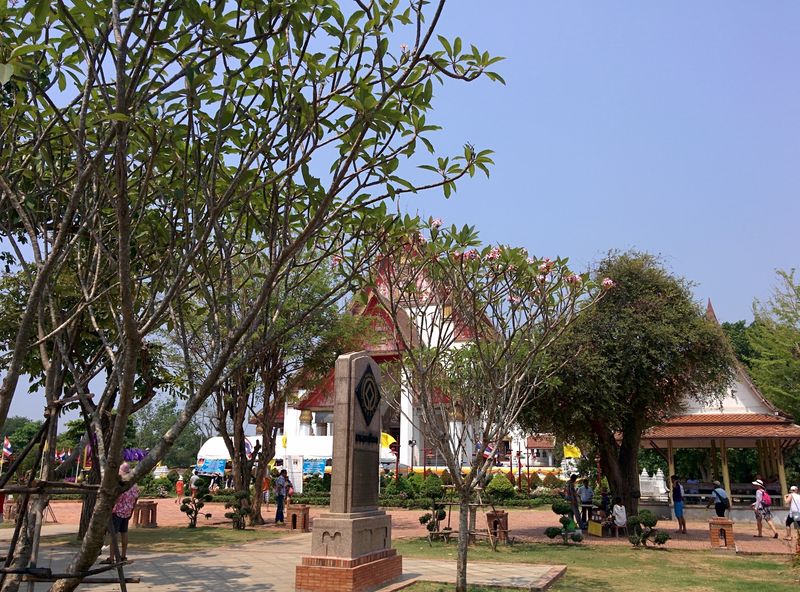
Step inside and a huge bronze Buddha looks down at you. Phra Mongkhon Bophit is one of the largest seated Buddha images in Thailand.
Unlike most sites in the park, this one is still an active place of worship.
The statue dates back to the 1500s. Lightning once struck the roof and broke the head, and the Burmese attack in 1767 caused more damage.
The hall was rebuilt in the 1950s, and the statue still gleams today.
Locals come to pray, light incense, and press gold leaf onto small offerings. Visitors are welcome, but quiet voices are expected.
Remove your shoes at the door and dress modestly.
The hall is next to Wat Phra Si Sanphet, so it fits nicely into a morning walk. Entry is often free, which is a pleasant surprise after buying other tickets.
It is also cooler inside, a real treat on a hot day.
Take a moment to sit on the floor and look up. The calm face and the scent of incense make this a restful pause between ruin hopping.
Wat Yai Chai Mongkhon
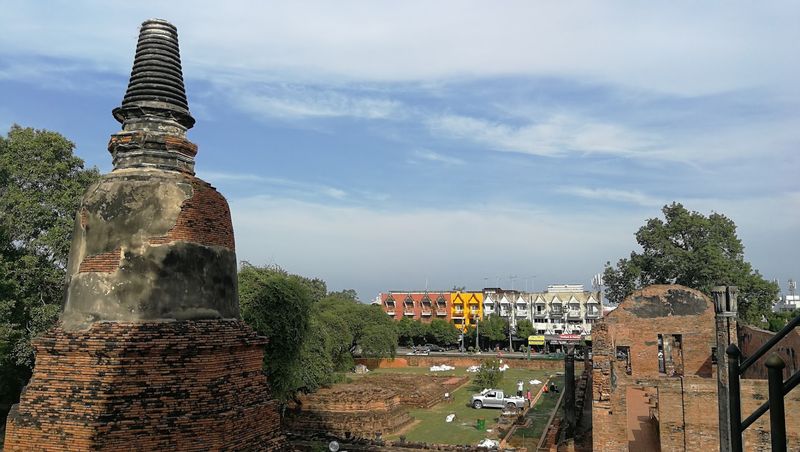
Rows of saffron-wrapped Buddhas greet you here, and they feel oddly like a welcome committee. Wat Yai Chai Mongkhon is known for its massive chedi and its big reclining Buddha.
Unlike many ruins, it still has resident monks.
King U Thong founded the temple in 1357 for monks who had studied in Sri Lanka. Later, King Naresuan built the huge chedi to celebrate a famous victory on elephant back.
You can climb part of it for a wide view.
The grounds feel lively and lived in. Locals bring offerings, and a few friendly dogs nap under the trees.
It is an easy temple to visit by bicycle, though traffic nearby can be busy.
Look for the shaded nooks where small Buddha statues sit in neat rows. Many wear robes in bright orange, which makes for striking photos.
Be gentle and keep your distance from the monks.
Tuck a few small bills in your pocket for donations or for a drink from a nearby vendor. Go late in the day, when the white tower catches the evening light.
Wat Lokayasutha Reclining Buddha
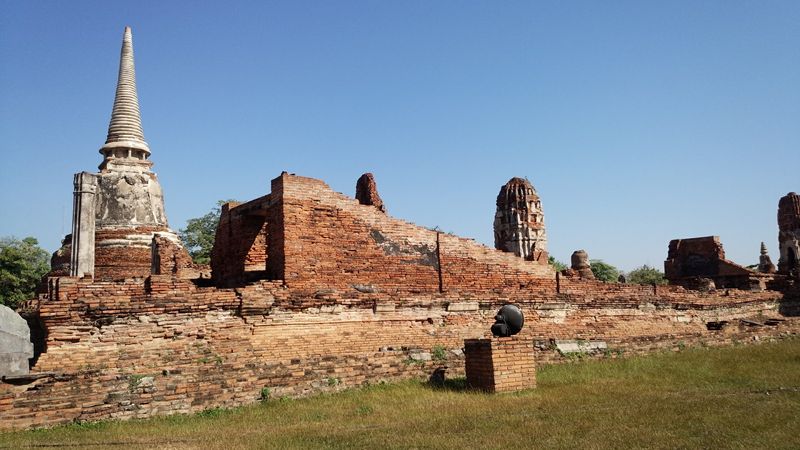
Forty-two meters of calm. That is the length of the giant white reclining Buddha at Wat Lokayasutha.
It lies on its side in an open field, with no walls or roof to hide it.
The temple’s original buildings have vanished, and only brick outlines remain. The statue itself was rebuilt in the 20th century after it collapsed into ruin.
A golden sash draped across the body is changed with care by local worshippers.
Visitors often arrive by tuk-tuk, and the stop takes only a short while. Because the statue is outside, light changes the mood all day.
At noon it glares, and in the evening it turns soft and warm.
Walk slowly along its full length and notice the tiny feet at the end. Local vendors sell flowers and incense nearby.
Offerings are optional, but they are a nice way to join the local tradition.
There is little shade, so wear sunscreen and carry water. A borrowed umbrella helps too.
Photos look best from a low angle, which makes the Buddha seem even bigger.
Wat Phanan Choeng
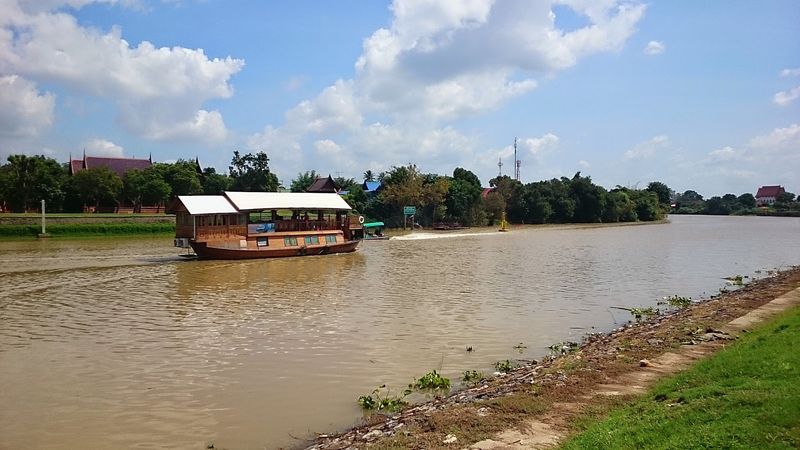
A Buddha that predates the city itself? That is the claim at Wat Phanan Choeng.
The temple sits by a river bend and is said to be older than Ayutthaya’s founding in 1350.
Inside, a 19-meter golden Buddha fills the hall. Locals believe it was once a source of great protective power.
Worshippers press gold leaf onto the statue, and the room hums with soft chanting.
The temple also draws a mix of Thai and Chinese visitors. You will see red lanterns and shrine offerings next to saffron-robed monks.
That blend gives the place a lively, colorful feel.
Fish feeding along the riverbank is another small joy. Buy a bag of food and watch large catfish swarm the water.
Kids tend to love this part.
Since the temple is a living place of worship, dress respectfully. Remove your shoes before entering the main hall.
Bring a little cash for offerings and snacks, and plan time for a slow wander along the water.
Wat Na Phra Meru
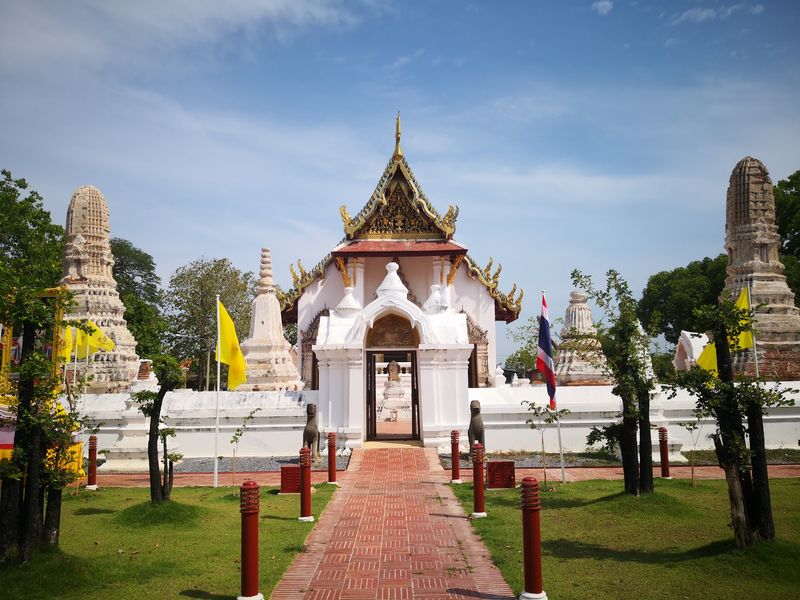
Here is a quiet survivor. Wat Na Phra Meru was one of the few temples spared during the Burmese attack of 1767.
Its original wooden hall still stands today.
Inside sits a rare Buddha dressed in royal robes, carved from green stone and known as Dvaravati style. The figure is thought to be more than a thousand years old.
Its calm face and ornate crown make it feel special.
Look up and notice the old timber ceiling. Few buildings in Ayutthaya kept this much of their old structure.
A smaller hall nearby holds another Buddha image from the Dvaravati era.
Burmese forces reportedly used the site as a base during the siege. Cannon fire from the other side of the river even damaged parts of it.
Stories like this add an extra layer to your visit.
This temple is not part of the main ruin cluster, so it is less crowded. Plan a short detour by bike.
A little time here makes a nice contrast to all the open-air stone.
Wat Thammikarat
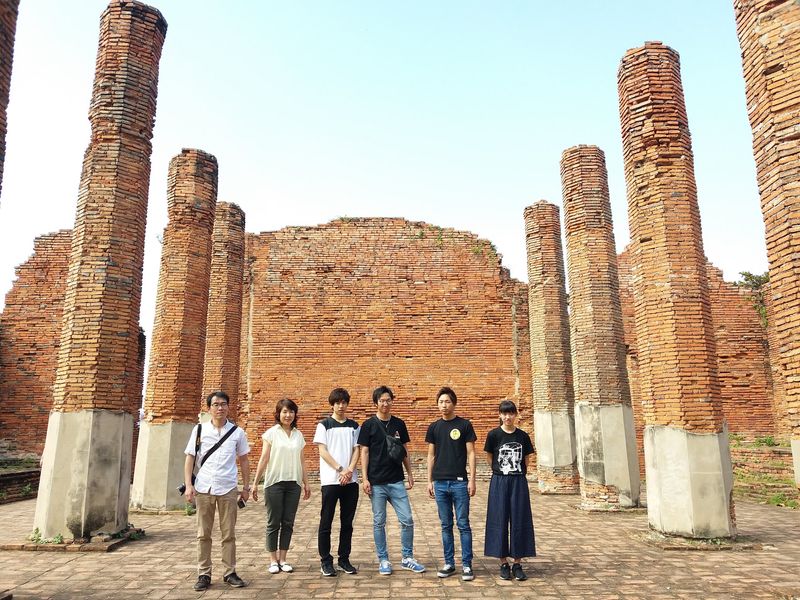
Stone lions stand guard in the grass like they have been waiting centuries for you. Wat Thammikarat is full of quirky details that most visitors skip.
The ruins are quiet and shady, so it is a nice rest from the sun.
Look for the ring of lion statues around the main chedi. Some are worn smooth, and some have lost their faces.
A small group of elephants and mythical creatures also appears near the base.
The temple is old enough that its origins are debated. Some records place it before the founding of Ayutthaya.
Legend says a king took shelter here during troubled times.
A reclining Buddha and a few seated figures sit in a newer hall on the grounds. Local families sometimes drop by to pray.
Wander slowly and keep your voice low.
Bring a notebook or sketchpad if you like to draw. The textures of old brick and moss are great practice.
Combine this stop with a bike ride to keep the pace easy and fun.
Exploring by Bicycle, Tuk-Tuk, or Boat
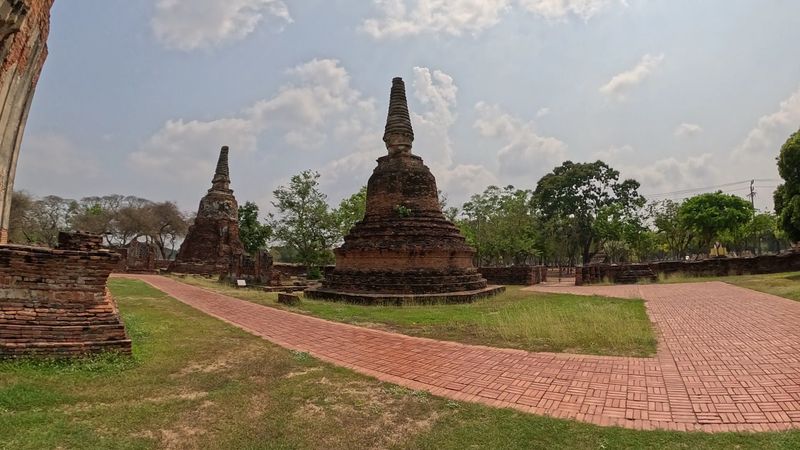
Your feet will thank you for wheels. The park spreads across several kilometers, and many reviewers suggest renting a bicycle.
It is the easiest way to link the main temples at your own speed.
Tuk-tuks are another popular choice. Drivers often offer set routes with several stops, and you can negotiate the price before you hop in.
Boat rides along the rivers show the ruins from a different angle, with fewer crowds.
Heat is the main challenge. Start early, take breaks in the shade, and drink water often.
Some travelers prefer cloudy days or light rain for fewer people and better photos.
Stick to the paved roads when you can. One recent visitor warned that some park paths and small bridges were falling apart, so choose main routes.
Safety first is a smart rule here.
Remember that ride apps are hard to find in the area. Arrange your return trip in advance.
A hired car from Bangkok is a handy choice for the day.
Smart Tickets and Visiting Tips
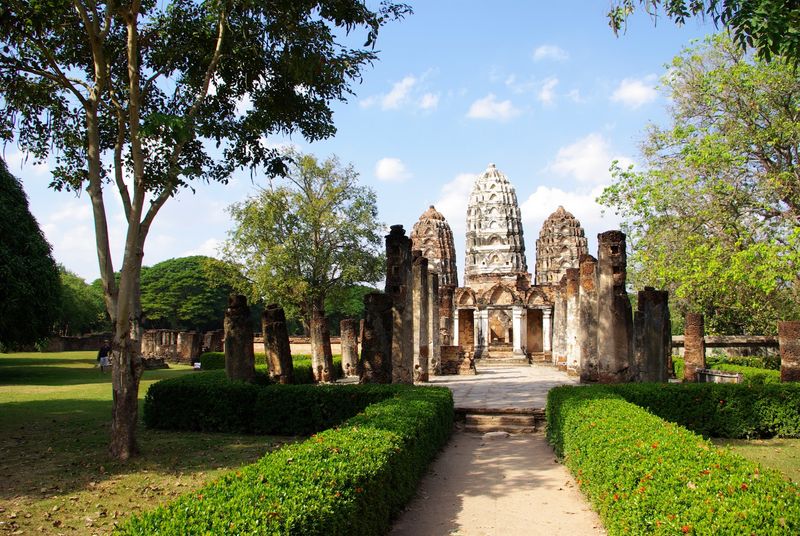
A little ticket know-how can save you money and stress. Several reviewers found the pricing confusing, so it pays to ask questions at the first booth.
Single-site tickets cost about 50 to 80 baht for foreigners, while a multi-site pass costs about 300 baht.
The combo pass usually covers several major temples and stays valid until around 6:30 p.m. If you plan to see more than three or four sites, it is likely the better deal.
Keep your ticket handy, because staff stamp it at each entrance.
Dress code matters. Cover your shoulders, elbows, and knees, or you may be refused entry.
Free umbrellas are available at some sites, which is a nice touch.
The best months are November to February, when the weather is cooler. Come early to beat the heat and the crowds.
Pack sunscreen, a hat, and water.
After the ruins, try Roti Sai Mai, a sweet treat of thin roti with cotton candy strands. Local stalls near the walls sell it fresh.
It is a tasty reward for a long day.
The Story Behind the Ruins
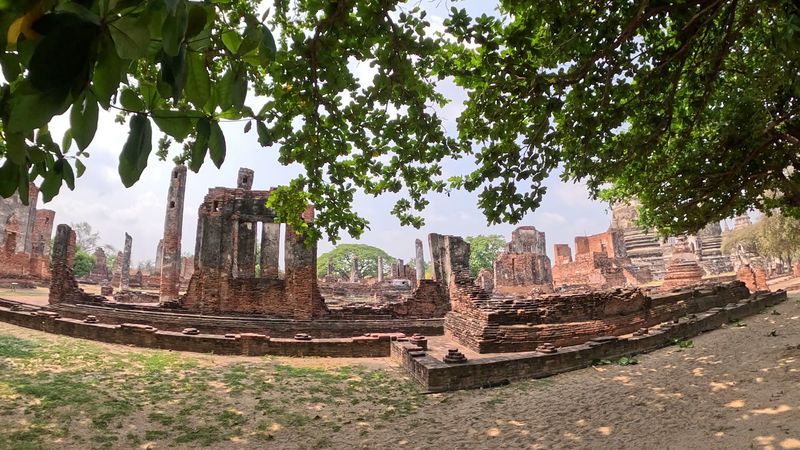
Founded in 1350, Ayutthaya grew into one of the busiest trading cities in Asia. Merchants from Portugal, China, Japan, and beyond sailed up the river to do business.
At its peak, it was among the biggest cities in the world.
The kingdom lasted over 400 years. Then in 1767, the Burmese army captured the city and burned much of it to the ground.
The survivors moved south and eventually built a new capital in Bangkok.
Restoration began in 1969, and the area became a historical park in 1976. UNESCO listed it as a World Heritage Site in 1991.
More than 400 sites are scattered across the region, though only a handful are open for regular visits.
Walking among the ruins, you can still see the layout of an old royal city. Brick towers, moats, and canals hint at how busy life once was.
Reading a few facts before you go makes every stop more meaningful.
Consider a guide for one day and a self-paced day after. That mix helped one traveler enjoy both the stories and the quiet.
Share this story