Some buildings stop you in your tracks because they break every rule of what a building should look like. Think giant stone forests, pink honeycombs, and silver rings covered in calligraphy.
From palaces to apartment blocks, these structures pack serious design ideas behind their jaw-dropping looks. Ready to take a trip around the globe without leaving your seat?
Sagrada Família, Spain
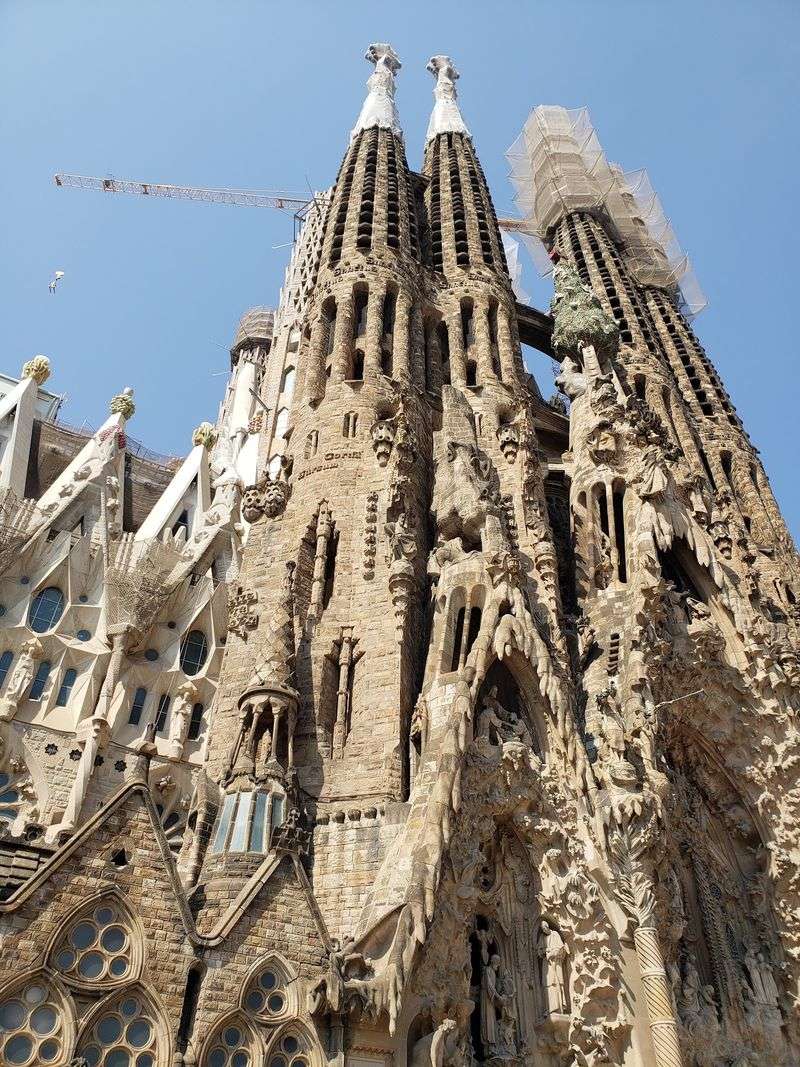
Barcelona has a building that has been under construction since 1882, and visitors still line up to watch it grow. Sagrada Família looks like an enormous stone organism more than a normal church.
Antoni Gaudí took over the project in 1883 and tossed out the original neo-Gothic plan. His version has towers that taper upward, sculpted facades packed with biblical scenes, and a mood that feels wonderfully strange.
Step inside and look up. The columns branch overhead like trees, and colored light spills across the floor as if the sun were painting the room.
It really does feel like standing in a stone forest.
Here is a twist for trivia night: only Gaudí’s Nativity Façade and crypt belong to the UNESCO-listed Works of Antoni Gaudí, not the whole basilica. The rest is still growing.
More than 140 years after the cornerstone was laid, the cranes are still part of the story. Book tickets ahead of time, since this spot is popular, and bring a neck pillow for all that upward staring.
Your camera will thank you, and so will your sense of wonder.
Pena Palace, Portugal
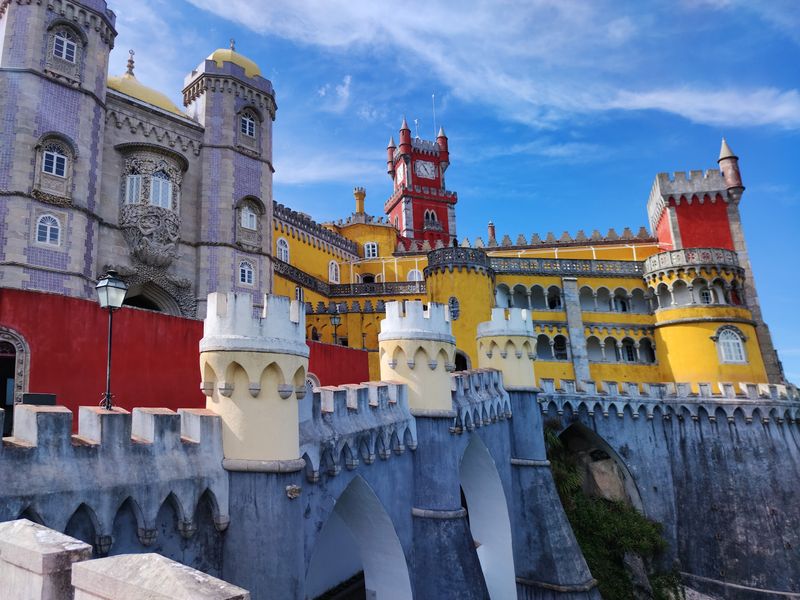
Try describing Pena Palace in one style and you will fail. High above Sintra, its red and yellow walls, domes, arches, and crenellated towers mix Gothic, Moorish, Egyptian, and Renaissance ideas.
King Ferdinand II began turning the remains of a monastery into this palace around 1840. The result became one of Europe’s pioneering works of Romantic architecture, and it still looks like a storybook that got a little carried away.
The gardens deserve just as much attention. The surrounding park was designed with the same imaginative spirit and planted with species from different parts of the world, so every path feels like a mini adventure.
UNESCO considers Sintra the first major center of European Romantic architecture. Pena Palace is its most flamboyant expression, which is a polite way of saying it is gloriously over the top.
If you visit, wear comfortable shoes because the hilltop paths are steep. Go early to beat the crowds, and keep your camera ready when the morning mist rolls through the towers.
Lotus Temple, India
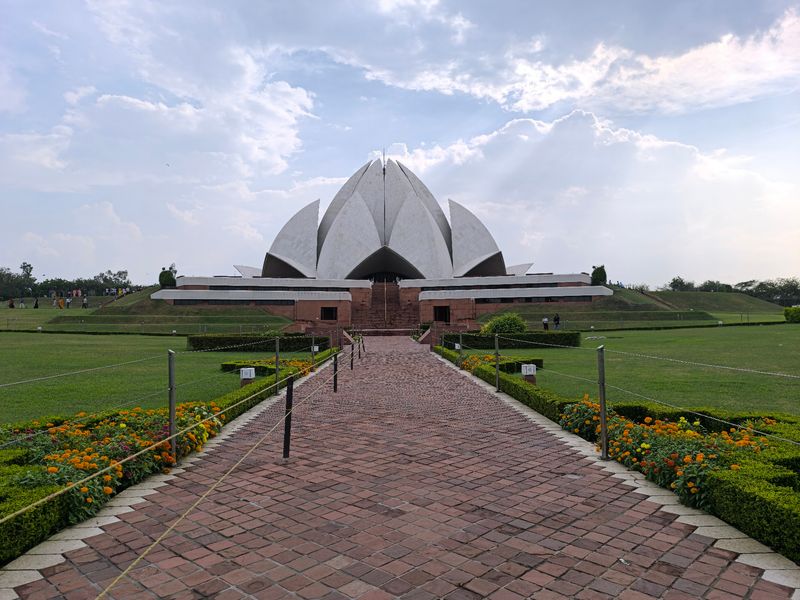
Picture a giant white flower blooming right in the middle of Delhi. That is the Bahá’í House of Worship, better known as the Lotus Temple, and it opened for worship in 1986.
The building is made of 27 petal-like elements arranged in groups of three. Together they form a nine-sided structure, a pattern used in Bahá’í Houses of Worship everywhere.
The lotus shape carries strong meaning in India, so the design feels both global and local. Nine pools surround the building, and they also help cool the air around the prayer hall, which is a clever bonus on hot days.
Many grand religious buildings come with entry rules. This one welcomes people of any background, reflecting the Bahá’í belief in the unity of humanity.
Expect a quiet, calm visit. Visitors usually walk through the gardens first, then enter the hall in silence.
Late afternoon light makes the white petals glow, so plan your trip around that for the best photos.
Hawa Mahal, India
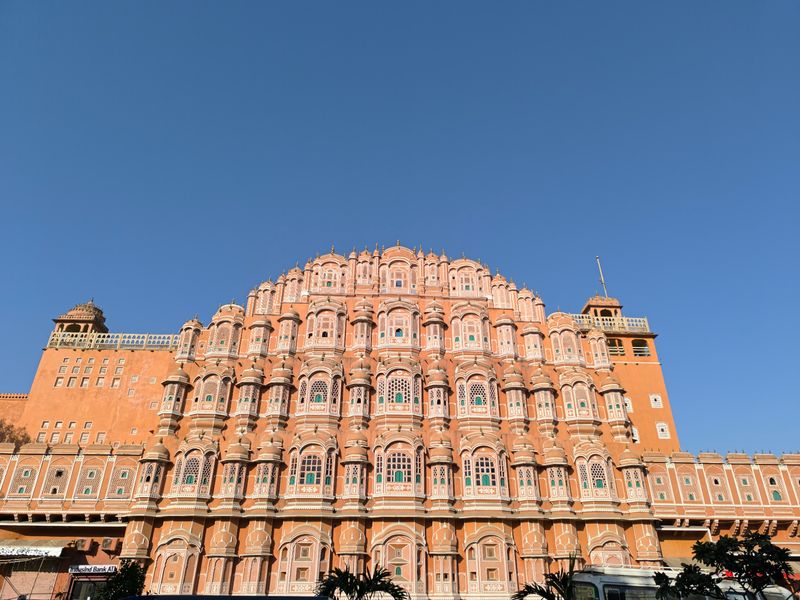
Nine hundred fifty-three windows. That is the number that makes Jaipur’s Hawa Mahal look like a pink honeycomb standing beside a busy street.
Built in 1799, the five-story building is full of tiny windows and jharokhas. They let breezes drift through, which explains the name, Palace of the Winds.
The design had a social purpose too. Women of the royal household could watch street life and processions while staying hidden from public view.
Rajasthan Tourism describes the palace as a blend of Rajput and Mughal styles. You can spot it in the domed canopies, pillars, arches, and delicate stonework.
Here is a fun surprise: the front looks huge, yet the building is quite narrow. From the street, the facade can seem far larger and deeper than the structure really is.
For the best view, grab a seat at a cafe across the road and watch the pink stone change color as the sun moves. Morning light is especially lovely.
Sheikh Lotfollah Mosque, Iran
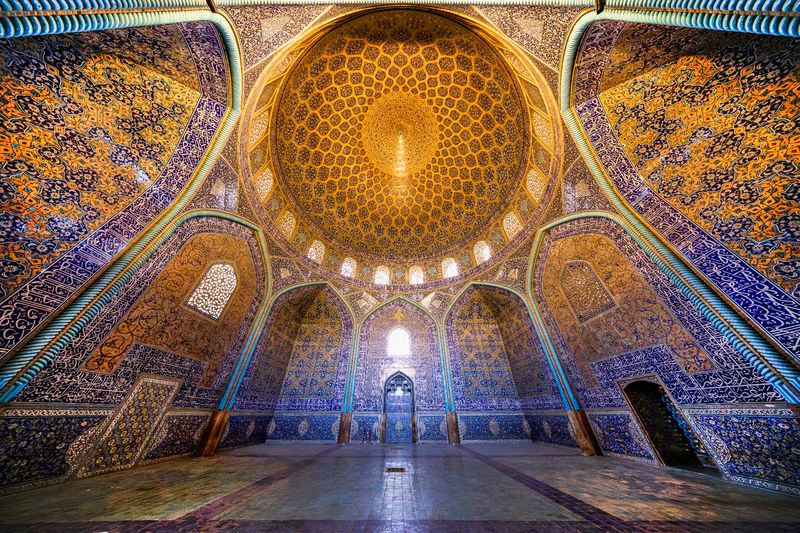
Colors seem to shift across the dome of the Sheikh Lotfollah Mosque as the day goes on. Tiles shimmer from cream to rose to gold, and it feels like the building is quietly changing its mind.
Shah Abbas I had it built in the early 17th century. It sits on the eastern side of the vast Meidan Emam, also called Naqsh-e Jahan Square, in Isfahan.
This mosque has a different personality from a typical large congregational one. It was linked with the royal court, and it has no towering minarets to dominate its profile.
All the drama comes from its surface. Intricate geometric patterns and tilework show the height of Safavid architectural art.
UNESCO names it among the masterpieces of an urban ensemble that shows Persian social, artistic, and architectural achievement under the Safavids.
Tip for visitors: look up once you are inside. The ceiling pattern is the real showstopper, and it rewards a slow, quiet look.
Sheikh Zayed Grand Mosque, United Arab Emirates
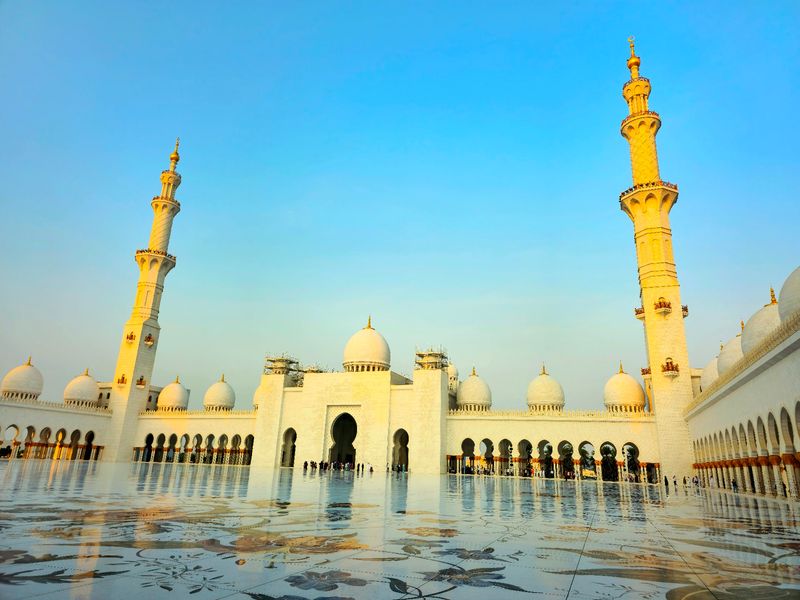
Eighty-two domes, and not one of them looks the same size as its neighbor. Abu Dhabi’s Sheikh Zayed Grand Mosque turns white marble into a sparkling puzzle of domes, minarets, columns, and floral ornament.
The mosque itself describes its style as mostly Moroccan and Mughal. Reflective pools around the complex double the view, so the whole place seems to float on water.
The central dome over the main prayer hall is about 32.6 meters wide and rises roughly 84 meters. Inside, gold-glass mosaics, calligraphy, floral stone inlays, and chandeliers keep the details coming.
Sheikh Zayed bin Sultan Al Nahyan commissioned it with a strong focus on peace, tolerance, and coexistence. Visitors from many backgrounds walk its halls every day.
Plan to arrive near sunset. The marble shifts from bright white to soft pink, then glows under evening lights.
Dress modestly and bring patience, because you will want to stop and stare at every corner.
Museum of the Future, United Arab Emirates
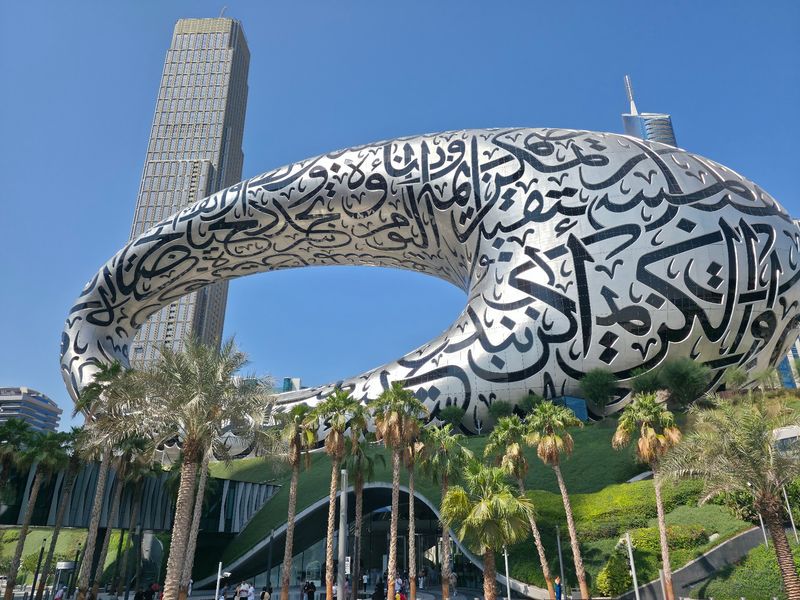
Imagine a giant silver ring with a hole in the middle, and then make it a museum. That is Dubai’s Museum of the Future, and it looks like nothing else on the skyline.
Killa Design created it and Buro Happold engineered it. At 77 meters tall, it skips the boxy skyscraper shape that dominates much of the city.
The stainless-steel facade is built from 1,024 panels covering about 17,600 square meters. Flowing Arabic calligraphy by artist Mattar bin Lahej is part of the exterior, working as decoration and as windows at once.
Each part of the shape carries a message. The ring stands for humanity, the landscaped mound for Earth, and the empty center for the unknown future.
Want a great photo? Visit in the evening, when the calligraphy lights up and the metal glows.
Inside, the exhibits keep up the futuristic mood, so reserve tickets early and leave plenty of time to explore.
Sydney Opera House, Australia
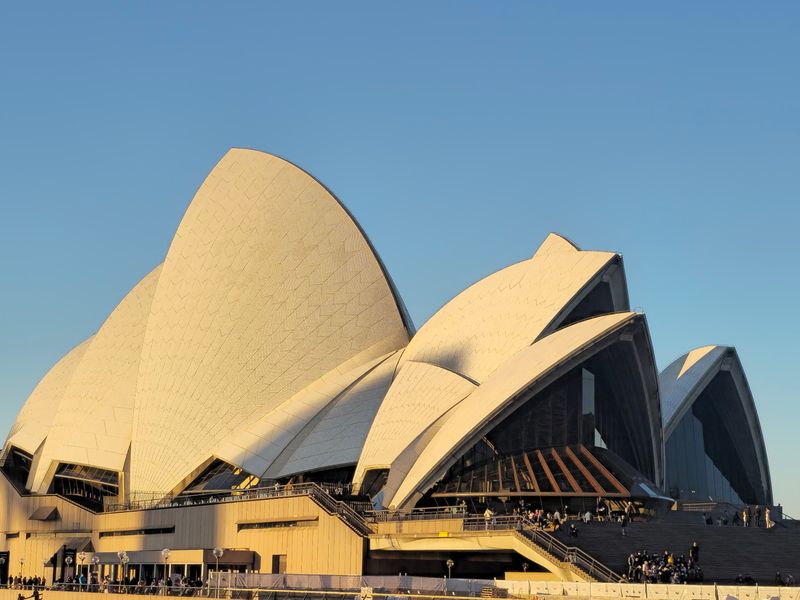
Sails, wings, or pieces of a sphere? Ask ten visitors what the Sydney Opera House shells look like and you may get ten answers.
Danish architect Jørn Utzon won the international design competition in 1957. His idea was a series of interlocking vaulted shells perched on a massive podium beside Sydney Harbour.
Building it was no picnic. The opening came in 1973, after years of technical experimentation and tough construction challenges.
UNESCO points out that its value goes beyond looks. Structural solutions worked out with engineer Ove Arup advanced modern construction technology and influenced later architecture.
Much of its power comes from how it plays with water and changing daylight. At sunrise the shells blush pink, and at midday they glare a crisp white.
Take a ferry across the harbour for a lovely view, or join a guided tour to see the inside. Either way, bring a camera and a bit of curiosity about how all those curves were figured out.
Neuschwanstein Castle, Germany
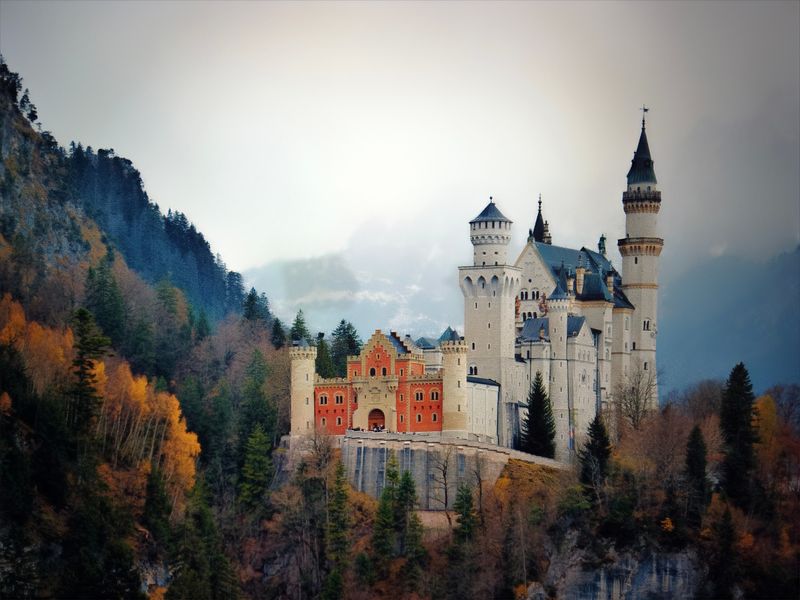
Plot twist: the medieval castle is not medieval at all. Neuschwanstein is a theatrical 19th century creation, and that is part of its charm.
King Ludwig II of Bavaria laid the foundation stone in 1869. He dreamed of an idealized knights’ castle inspired by legend, the Wartburg, and the operas of Richard Wagner.
Behind the romantic towers and pale limestone walls, builders used modern technology. Cemented foundations, brick construction, and an iron structure for the huge Throne Hall all kept the fantasy standing.
Ludwig moved into parts of the unfinished complex in 1884. He never saw it fully completed.
In 2025, Neuschwanstein and three other palaces linked to Ludwig II joined UNESCO’s World Heritage List.
Visitors often hike up for the classic view from Marienbrücke bridge. Wear sturdy shoes, book your castle tour in advance, and expect a fairy-tale backdrop that seems to float above the trees.
Hundertwasserhaus, Austria
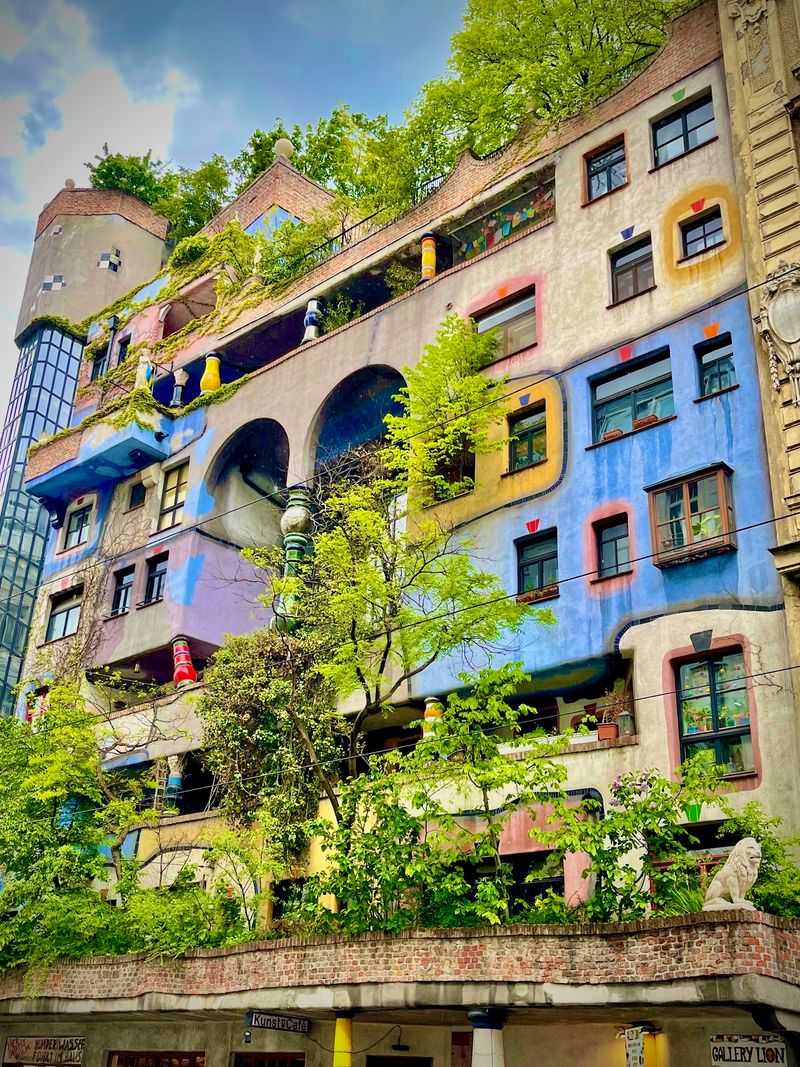
Straight lines are practically banned at Vienna’s Hundertwasserhaus. Floors undulate, windows refuse to match, and the colors shout rather than whisper.
Artist Friedensreich Hundertwasser imagined an apartment block that felt alive. He worked with architectural collaborators Josef Krawina and Peter Pelikan, and the complex was finished in the 1980s.
Plants are a big deal here. More than 200 trees and shrubs grow on balconies and rooftop terraces, as if vegetation were just another tenant.
Hundertwasser also argued that residents should be free to personalize the exterior around their own windows. It is a cheerful idea that treats a home as something personal.
One note for travelers: people really live here, so visitors can see the building only from the outside. Enjoy the view from the street, then stop by the nearby village-style shopping area for a snack and a few extra photos.
Dancing House, Czech Republic
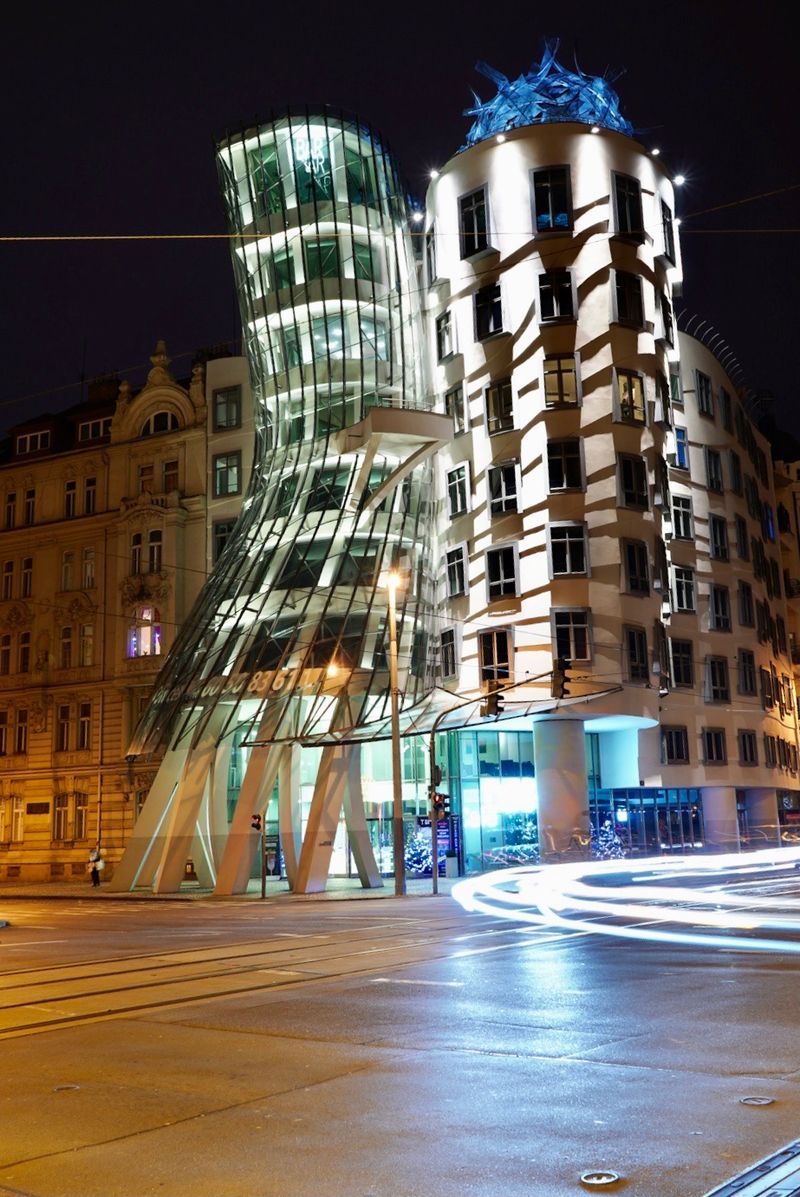
Two towers are caught mid-twirl on the banks of the Vltava. Prague’s Dancing House seems to sway, and the locals have long enjoyed the joke.
Architects Vlado Milunić and Frank Gehry developed it between 1992 and 1996. The site had held an earlier building destroyed during World War II.
People link the pair of towers with dancers Fred Astaire and Ginger Rogers. One tower is solid and upright, while the other narrows behind a curved glass facade.
The deconstructivist style was a bold choice in a city known for Gothic, Baroque, and Art Nouveau buildings. At first it stirred up controversy.
Time has softened opinions. Today it counts among Prague’s best-known works of post-communist contemporary architecture.
Stroll along the river for a good angle, then look for the rooftop terrace if you want a city view. It makes a fun contrast to the old town’s pointed spires.
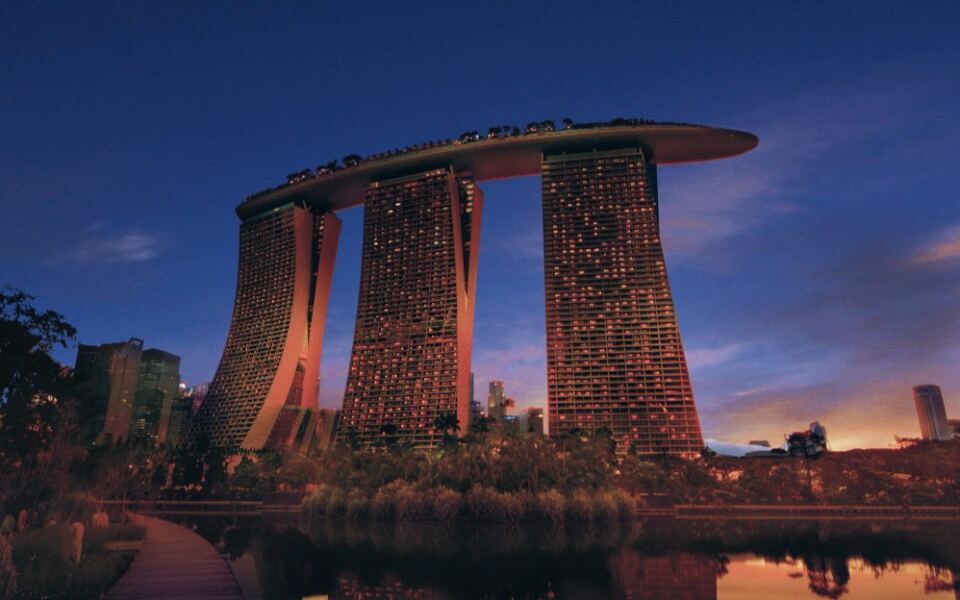
Marina Bay Sands, Singapore
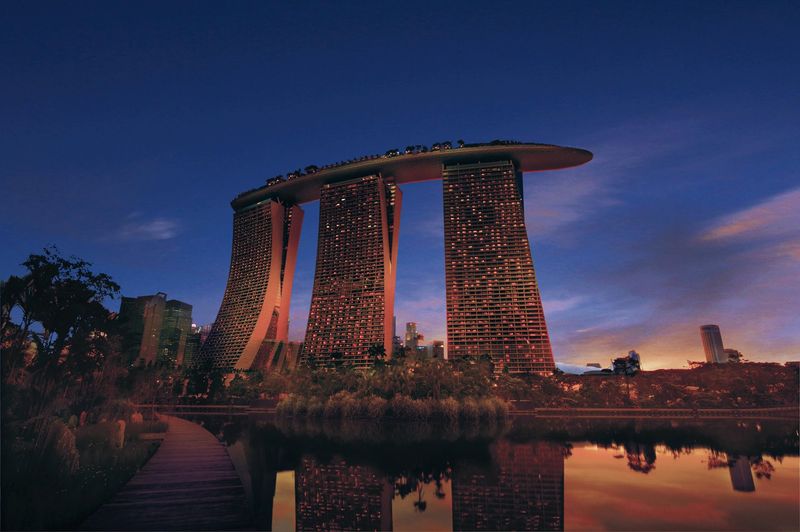
A ship seems to be parked on top of three skyscrapers. That unlikely sight has made Marina Bay Sands one of Singapore’s most famous modern outlines.
Architect Moshe Safdie designed the mixed-use resort on 16 hectares of reclaimed land. It holds hotel towers, theaters, convention space, shops, a casino, and the nearby ArtScience Museum.
Up top sits the SkyPark, a landscaped platform stretching across all three towers. Its infinity pool measures about 151 meters long, which is something to think about before your next swim practice.
The towers are not perfectly vertical. Parts of them lean at angles reaching about 26 degrees, adding to the gravity-defying effect.
The huge rooftop platform ties the whole composition together. Visit at night when the skyline lights up, and walk along the waterfront for a view that shows how bold the design really is.
Hassan II Mosque, Morocco
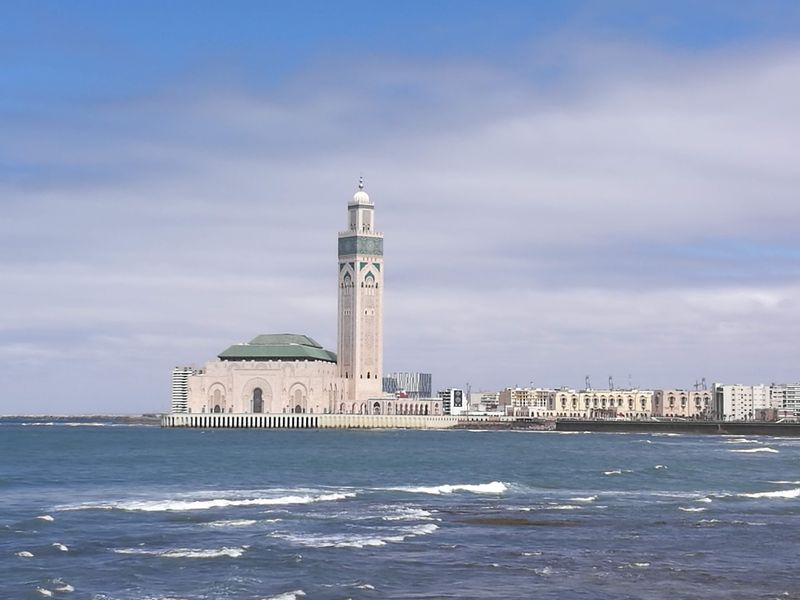
Waves crash almost at the foundations of Casablanca’s Hassan II Mosque. Part of the enormous complex actually extends over the Atlantic Ocean.
The foundation stone was laid in 1986. Moroccan craftsmanship shines across the building through zellige tilework, carved wood, plaster ornament, marble, and geometric patterns.
The minaret reaches about 200 meters, which makes it one of the mosque’s most striking features. Traditional Moroccan design mixes with modern engineering and large-scale construction here.
From the seafront, the green roof, tall minaret, and ocean setting create a profile you will not forget. It looks very different from the dense modern city around it.
If you go, a guided tour is a great way to see inside, since the details are everywhere you look. Time your visit for late afternoon, when the sea breeze cools the plaza and the sunlight warms the stone.
Cathedral of Brasília, Brazil
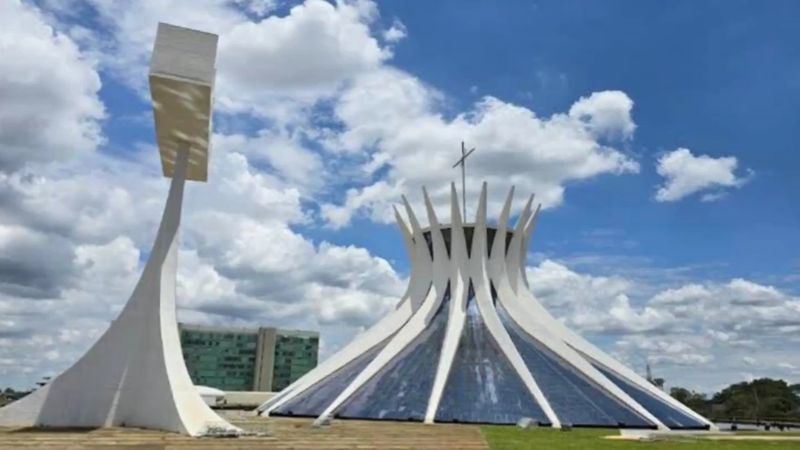
Crown, flower, or hands reaching toward the sky? The Cathedral of Brasília is whatever you want it to be.
Oscar Niemeyer designed it with 16 reinforced-concrete columns forming a hyperboloid around a circular plan about 70 meters across. Construction began in 1959 and the shell was substantially ready by 1960.
The cathedral officially opened in 1970.
Between the white ribs, stained-glass panels fill the interior with blue, green, and white light. It feels like standing inside a calm, glowing lantern.
The entrance adds drama. Visitors walk down through a dark passage and then emerge into the bright nave, a small surprise that makes the light feel even bigger.
The cathedral remains one of the clearest examples of Brasília’s experimental modernist language. Visit on a sunny day so the stained glass can do its best work, and take time to circle the outside to see how the columns change from every angle.
Wat Rong Khun, Thailand
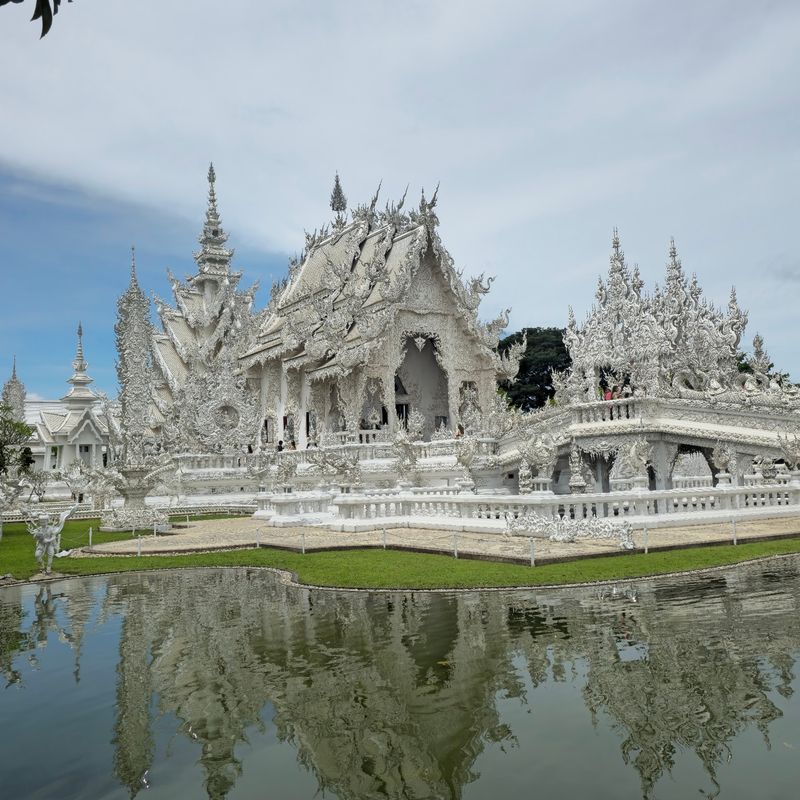
At first glance, Wat Rong Khun near Chiang Rai looks ancient. Look closer and you will find it is a living contemporary artwork, known as the White Temple.
Thai artist Chalermchai Kositpipat began transforming the site in the late 1990s. A brilliant white surface is covered with mirrored details that flash in the sunlight.
Thailand’s official tourism sources explain that white stands for the Buddha’s purity, while the reflective glass stands for wisdom.
Visitors cross a highly symbolic bridge toward the main ubosot. Along the way they pass sculptural imagery of desire and the move toward enlightenment, which can feel a little dramatic and a lot memorable.
Traditional Buddhist and Lanna references mix with the artist’s very personal modern imagery. The result is one of Thailand’s most unusual religious complexes.
Go early in the morning before the crowds arrive. The sunlight makes the mirrored pieces sparkle, and you will have more space to study the fine details.
Share this story