Some hotels are more than a place to drop your bags. They are the reason people book the trip in the first place.
This list gathers twenty real, operating hotels where the building itself steals the show, from a sail-shaped tower in Dubai to a lodge hugging a cliff in South Australia. You will find glass igloos in Finland, a hotel built into a quarry in Shanghai, and treehouse rooms hanging in a Swedish forest.
Some are bold and loud, while others are quiet and built to blend in with the land. Every one of them gives you a good reason to look up, look around, and maybe plan a trip just to see the architecture in person.
Burj Al Arab, Dubai, United Arab Emirates
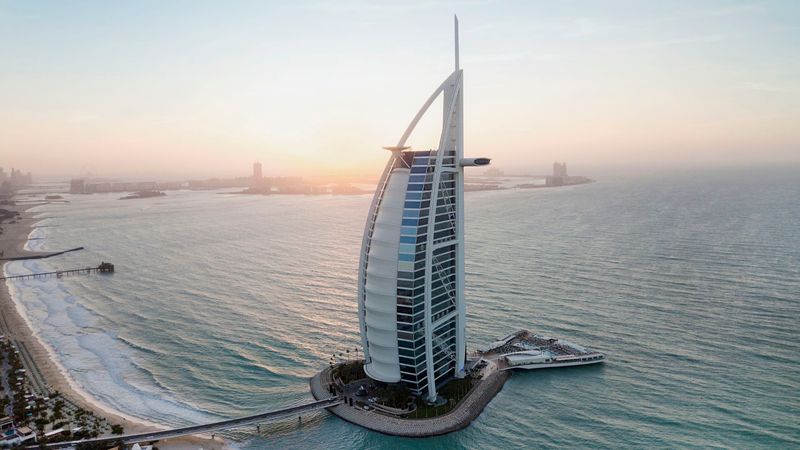
Few hotels have a silhouette this easy to spot. Burj Al Arab opened in 1999 and rises from its own artificial island, with a curved profile inspired by the sail of a traditional Arabian dhow.
The white structure has become an unofficial symbol of Dubai. It remains one of the most photographed buildings in the city, and plenty of visitors come just to snap a picture from the shoreline.
Step inside and the design keeps going. A soaring atrium, bold colors, fountains, elaborate patterns, and generous use of gold make the interior anything but understated.
Nobody walks in here expecting a quiet, minimalist lobby.
More than two decades after opening, the hotel still operates as one of Jumeirah’s flagship luxury properties. If you care about landmark buildings, I would put this one near the top of a Dubai architecture day, even if you only admire it from outside.
Marina Bay Sands, Singapore
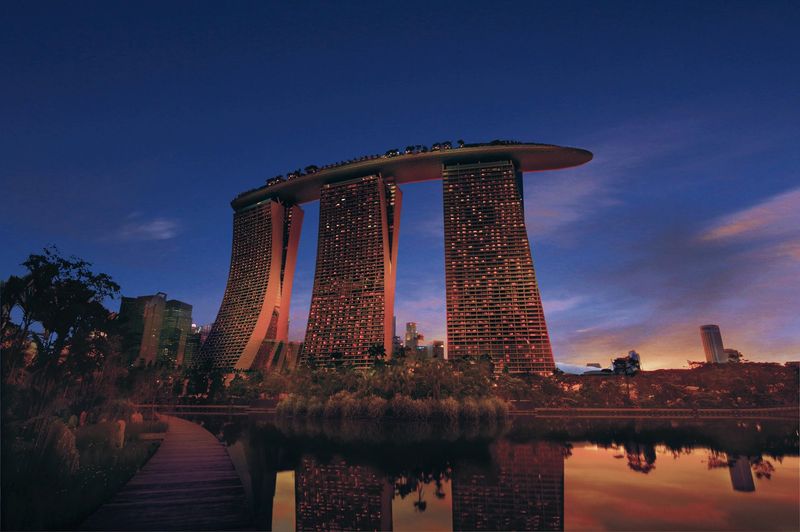
Singapore’s skyline changed in 2010 when Marina Bay Sands opened. Architect Moshe Safdie conceived three enormous hotel towers joined at the top by the long Sands SkyPark, and the result is one of the most recognizable hotel complexes anywhere.
Each of the three towers has 57 stories and rises roughly 191 meters. The rooftop is home to the hotel’s famous infinity pool, which shows up in countless travel photos.
From a distance, the SkyPark looks like a ship balanced across the buildings. That bold shape is the main reason the complex stands out from every other tower around the bay.
The property is fully operational, with approximately 1,850 hotel rooms and suites alongside restaurants, shopping, and entertainment. It works well as a place to stay, but it is just as popular as a landmark to admire from the waterfront.
Hotel Marqués de Riscal, Elciego, Spain
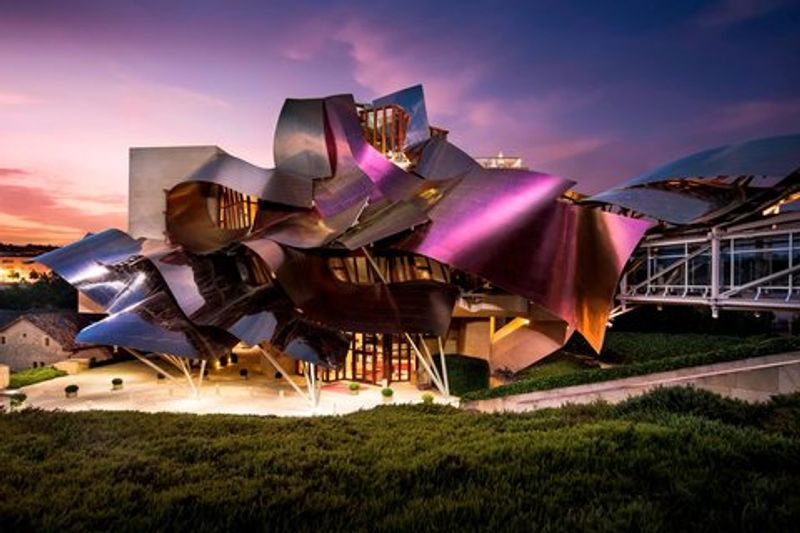
Imagine driving through quiet vineyards in Spain’s Rioja Alavesa region and spotting rippling sheets of metal in the distance. That is Frank Gehry’s Hotel Marqués de Riscal, and it makes no effort to hide in the countryside.
Sweeping titanium sheets curl and twist above the winery. The pink, gold, and silver tones reference colors associated with wine, while asymmetrical walls and unconventional spaces carry on inside.
Marriott describes the property as the only hotel created by Gehry. That detail alone makes it an unusual stop for architecture lovers who have seen his museums and concert halls elsewhere.
The 61-room hotel remains open within the Marqués de Riscal City of Wine. Pair a stay with a look around the grounds, since the building is clearly the star of the village of Elciego.
The Silo Hotel, Cape Town, South Africa
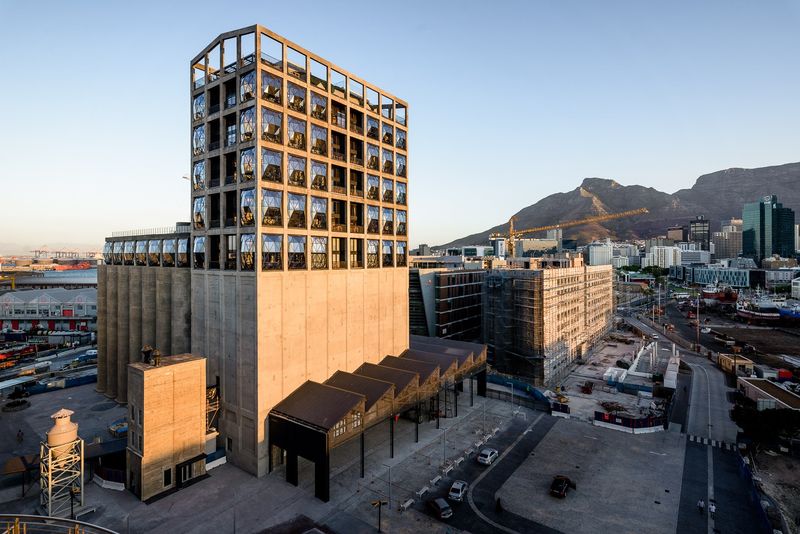
A former grain silo does not sound like a promising hotel site. Cape Town’s version could easily have faded into the city’s industrial history, but Heatherwick Studio gave it a new life as one of South Africa’s most distinctive contemporary buildings.
The Silo Hotel occupies six floors above the Zeitz Museum of Contemporary Art Africa. Its defining feature is a series of huge pillowed glass windows that bulge outward from the old concrete structure.
That contrast between the rugged industrial shell and the modern addition is what makes the building so eye-catching. You can see the geometry from the street without stepping inside.
The 28-suite hotel remains open above the V&A Waterfront, with views toward Table Mountain and Table Bay. Art fans can combine a visit to the museum below with a look at the architecture above.
Treehotel, Harads, Sweden
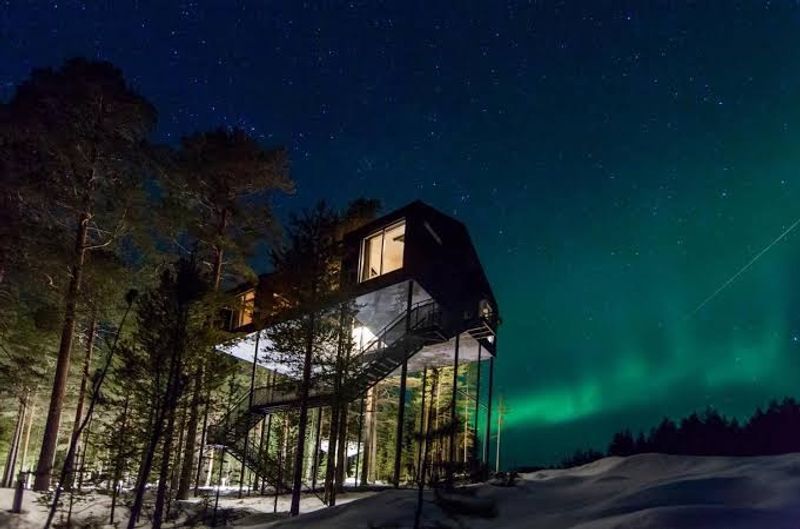
Sleeping in the forest is a childhood daydream, and Treehotel turns it into serious architecture. Rather than repeating a single cabin design, the Swedish retreat invited different architects to create completely different rooms suspended among the trees.
Guests can book the reflective Mirrorcube, the enormous Bird’s Nest, or a UFO-shaped pod. There is also the Biosphere, designed by Bjarke Ingels Group and surrounded by hundreds of birdhouses.
Other cabins were created by studios including Snøhetta and Rintala Eggertsson Architects. That mix of names gives the place the feel of a small outdoor design gallery.
All of these rooms remain available through the operating hotel in Harads. If you like choosing a stay based on shape and concept, this is a fun place to scroll through before you decide which cabin suits you.
ICEHOTEL, Jukkasjärvi, Sweden
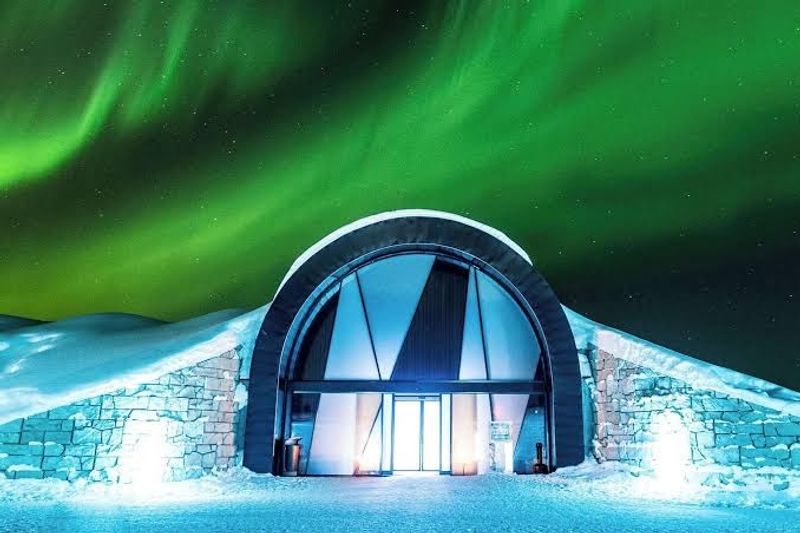
Come back to ICEHOTEL next winter and it will look different. Every year, artists and designers travel to Jukkasjärvi to build a new seasonal structure from snow and ice harvested from the nearby Torne River.
Individually designed art suites turn frozen rooms into temporary sculptures. Walls, furniture, and decorative installations are all carved from ice.
The traditional winter hotel eventually melts, but ICEHOTEL 365 provides frozen rooms throughout the year. That makes it possible to see the concept even outside the cold season.
The 2026-27 edition, ICEHOTEL 37, is scheduled to feature 12 new art suites alongside ice rooms and ceremonial spaces. For anyone who enjoys art that exists only for a short time, this is a rare chance to see it up close.
Kakslauttanen Arctic Resort, Saariselkä, Finland
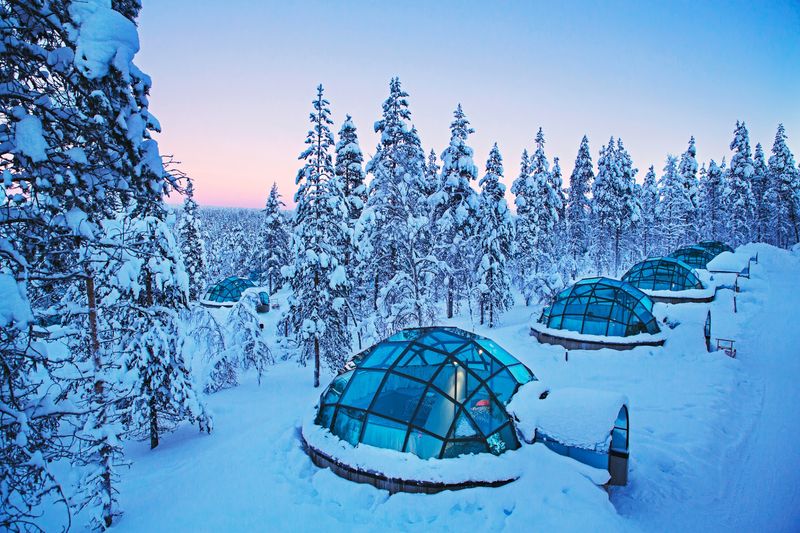
Glass igloos became one of the defining images of Arctic travel, and Kakslauttanen helped make that happen. Instead of leaving a warm room to hunt for the northern lights, guests can lie in bed beneath a transparent glass roof and watch the sky.
The Finnish resort now offers several versions of the idea. Choices include compact glass igloos and larger Kelo-Glass Igloos, which combine traditional log construction with glass-domed sleeping areas.
The glass accommodation operates during the northern lights season. Other cabins and facilities make up a much larger resort complex in Finnish Lapland.
If you are planning around the aurora, check the season before booking. The architecture is simple but smart, and the transparent roof is what makes it so memorable.
InterContinental Shanghai Wonderland, Shanghai, China
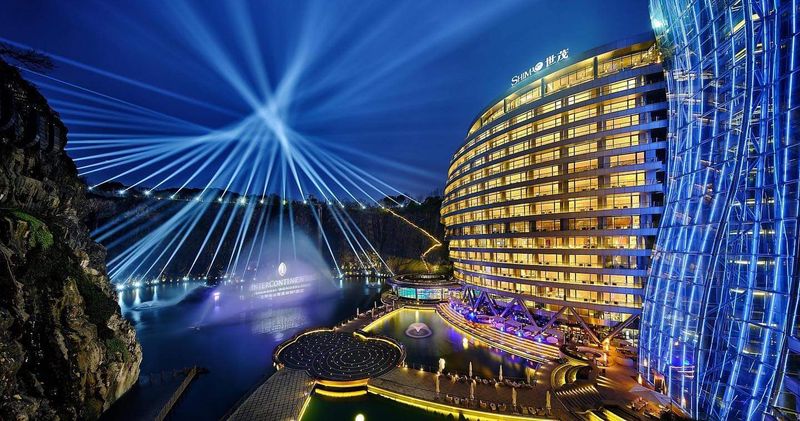
Most hotels reach for the sky, but this one goes down. The designers of InterContinental Shanghai Wonderland built into the wall of an abandoned quarry in Shanghai’s Songjiang district, descending deep below the surrounding landscape.
Guest floors follow the dramatic rock face, so the quarry itself becomes part of the hotel’s visual identity. The design turns a damaged industrial site into the main feature.
IHG describes it as the world’s first luxury hotel constructed inside a quarry. The structure extends approximately 88 meters below the surrounding level.
The hotel remains open with rooms, dining, and resort facilities built around this unusual setting. It is a strong pick for travelers who like to see how architects solve difficult sites.
Aman Tokyo, Tokyo, Japan
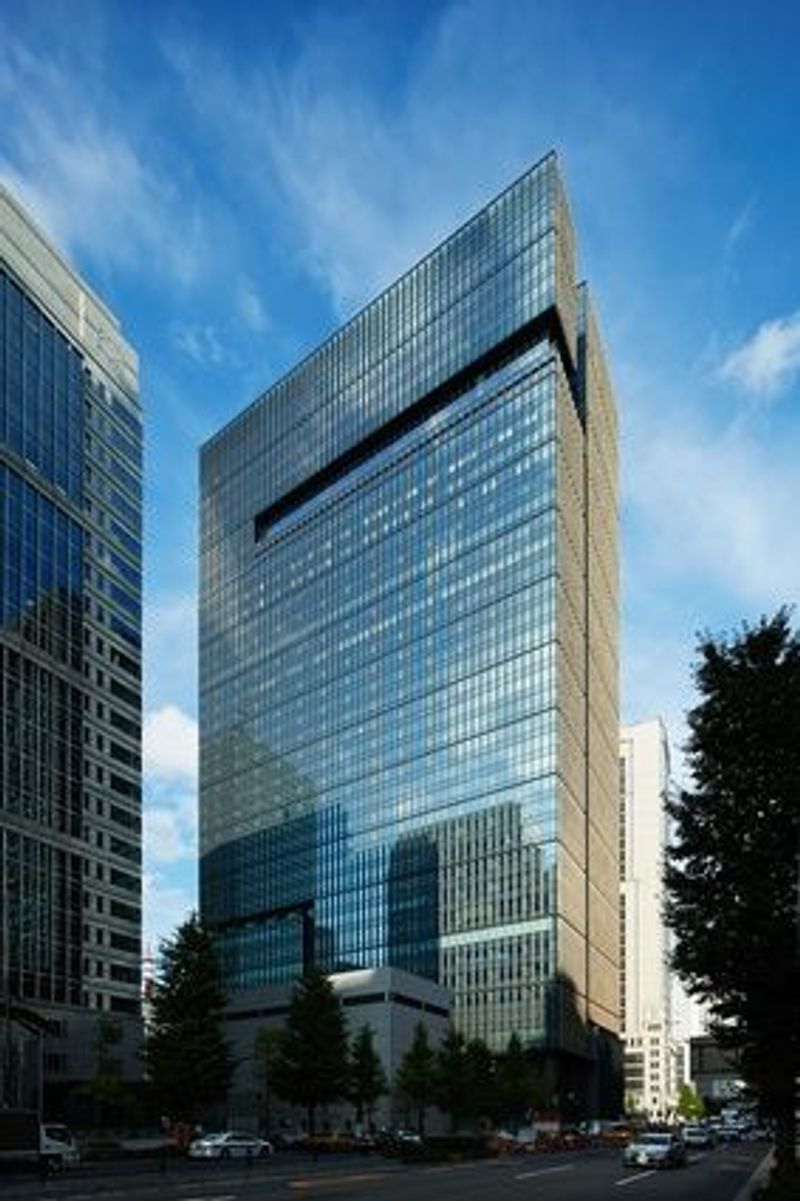
Dramatic hotel design does not always need a wild exterior. Aman Tokyo proves it by tucking its striking spaces into the upper levels of the Otemachi Tower.
Architect Kerry Hill created a modern interpretation of Japanese residential architecture. Wood, granite, and washi paper soften the scale of the skyscraper interiors.
Shoji-inspired screens, engawa-style platforms, and traditional furo baths bring recognizable Japanese design elements into a contemporary urban hotel. The vast lobby rises nearly 30 meters, yet the mood stays deliberately restrained.
Aman Tokyo continues to operate with 84 suites high above central Tokyo. It suits travelers who prefer calm, thoughtful design over flashy shapes.
W Osaka, Osaka, Japan
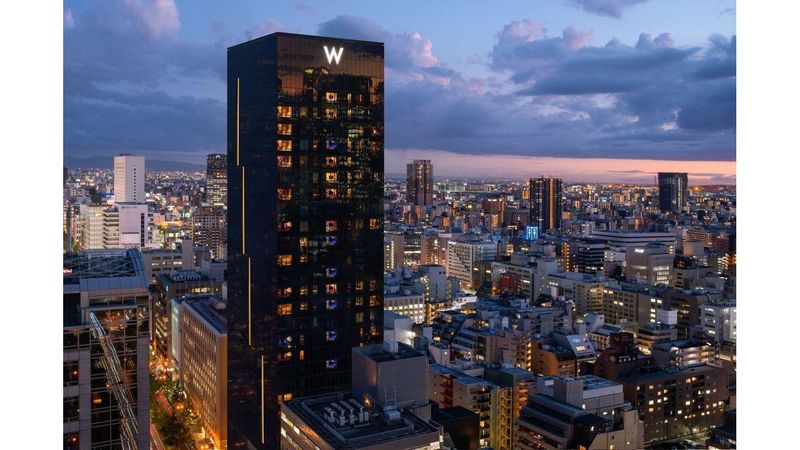
Think of W Osaka as a coat with a surprise lining. Tadao Ando supervised the building’s almost severe black exterior, which gives it a tall monolithic presence on Midōsuji Boulevard.
Step inside and the restraint disappears. Amsterdam studio Concrete filled the interiors with saturated colors, neon-inspired lighting, and playful references to Osaka’s nightlife.
The concept has been compared to a traditional Japanese haori coat, which is understated on the outside and unexpectedly expressive within. That contrast is the whole point of the design.
W Osaka remains open in the Shinsaibashi area. It makes a handy base if you want to see the city’s shopping district and a notable Ando-supervised exterior in one trip.
Morpheus, Macau
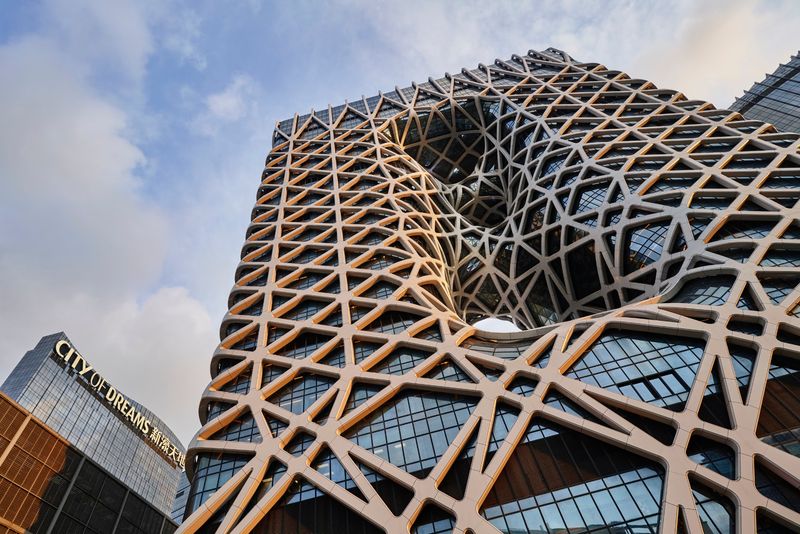
Morpheus looks less like a hotel tower and more like a futuristic sculpture. Designed by Zaha Hadid Architects, the building is wrapped in a free-form structural exoskeleton that lets large voids cut through the center of the tower.
City of Dreams describes Morpheus as the world’s first high-rise supported by this type of free-form steel exoskeleton. That engineering detail is a big part of why the shape looks so unusual.
Bridges span the dramatic internal spaces. Futuristic guest rooms continue the building’s science-fiction look.
The hotel remains part of the operating City of Dreams Macau resort. Fans of Hadid’s work will want to see how her curving style plays out in a full-size tower.
Taj Lake Palace, Udaipur, India
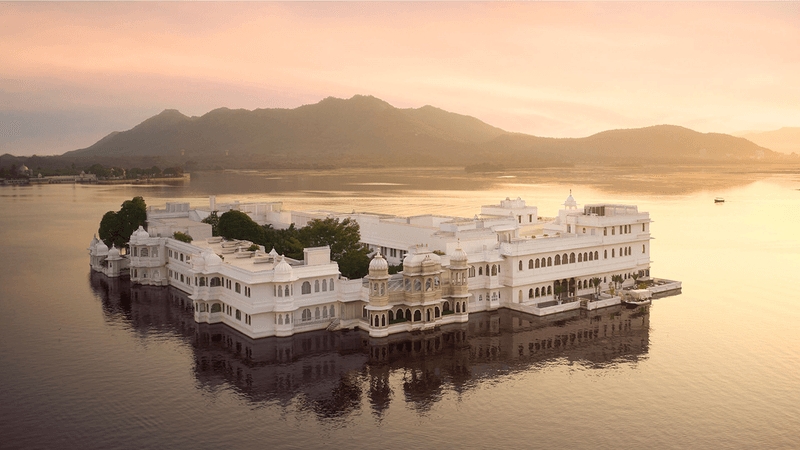
Arriving by boat is part of the show. The white marble Taj Lake Palace seems to float in the middle of Lake Pichola, with Udaipur’s hills and palaces behind it.
The building began as an 18th-century royal pleasure palace. It still preserves characteristic Mewari elements, including cupolas, jharokha-style windows, and ornate decorative work.
Today, Taj operates it as a luxury hotel with 65 rooms and 18 suites. That small size keeps the focus on the palace itself.
It stands as one of India’s most recognizable palace stays. Even if you cannot book a room, the view from the lakeshore gives a good sense of why it is so famous.
Fairmont Le Château Frontenac, Québec City, Canada
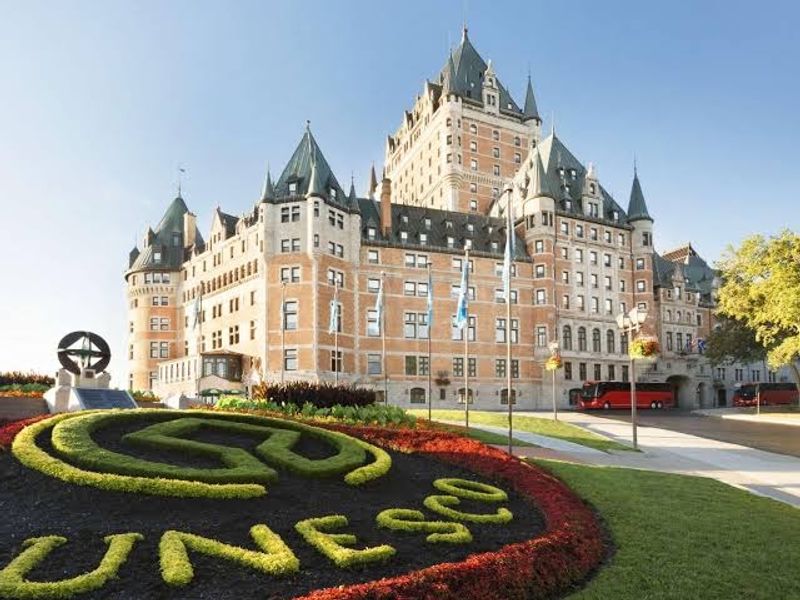
Turrets, steep roofs, and a commanding spot above the St. Lawrence River give Fairmont Le Château Frontenac the look of a European castle that landed in North America.
Its château-style architecture has become inseparable from the skyline of Old Québec. The look is so distinctive that many visitors assume it was once a royal residence.
In fact, it was created as a grand railway hotel. That history explains the scale and the stately design.
Today, the property continues to operate with 610 rooms and suites inside Québec City’s UNESCO-listed historic district. You can admire it from the nearby boardwalk or stay inside for a closer look.
The Lindis, Ahuriri Valley, New Zealand
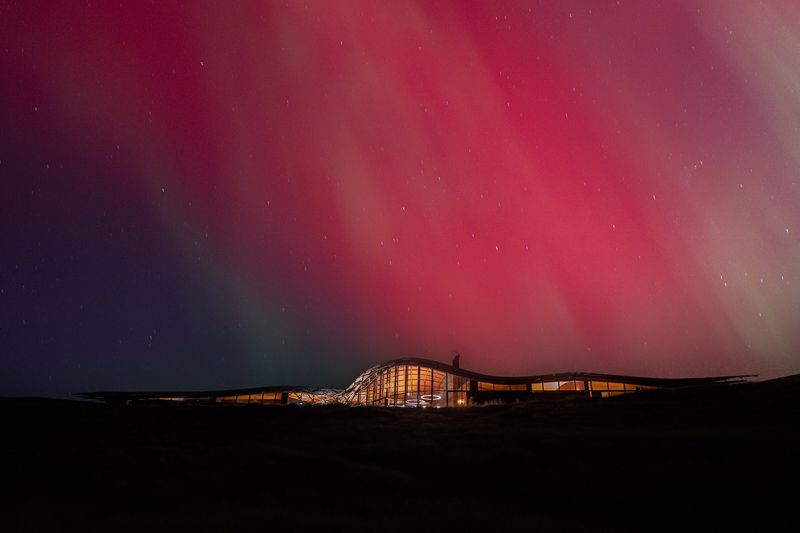
Not every showpiece hotel competes with the skyline. The Lindis does the opposite, with architecture designed to follow the curves of New Zealand’s Ahuriri Valley rather than overpower them.
The main lodge has a sweeping wooden roof whose shape echoes the surrounding landscape. Stone, timber, and floor-to-ceiling glass help blur the boundary between interior and wilderness.
Separate mirrored pods offer another striking take on the landscape-hotel idea. They reflect the valley, which keeps them from standing out too sharply.
The luxury lodge remains open and bookable on New Zealand’s South Island. It is a good fit for travelers who want design that respects the setting.
7132 Hotel, Vals, Switzerland
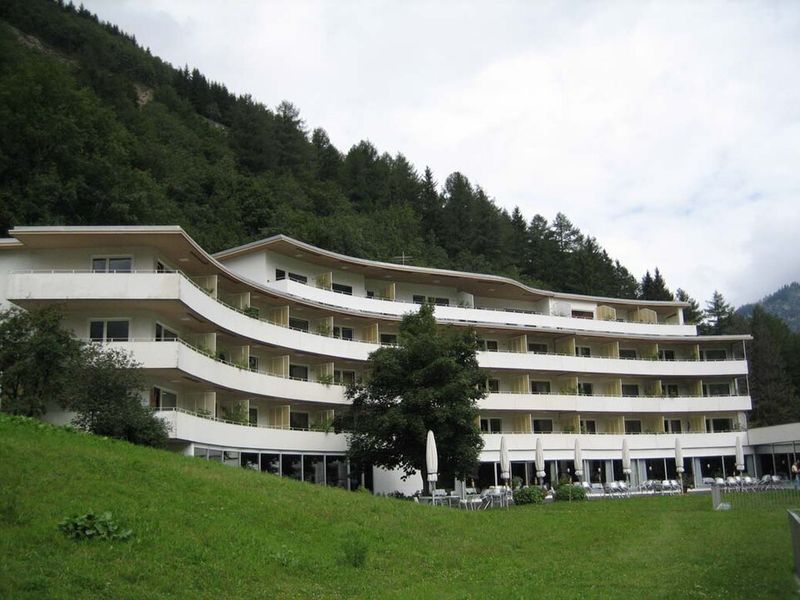
Architecture fans have more than one reason to head to the Swiss village of Vals. The 7132 complex pairs hotel accommodation with the celebrated thermal baths designed by Peter Zumthor.
The wider property also includes the House of Architects. Its rooms represent the visions of four major architects: Zumthor, Tadao Ando, Kengo Kuma, and Thom Mayne.
That turns a stay into a miniature architectural tour without leaving the hotel grounds. You can compare four design styles in one place.
Both the 7132 Hotel and House of Architects are currently operating. It is a smart pick if you like to study how different designers handle the same type of space.
Capella Ubud, Bali, Indonesia
Sometimes the boldest design choice is to build less. Designer Bill Bensley originally faced the possibility of a much larger conventional hotel at Capella Ubud, but the concept evolved into a small tented retreat woven among the existing forest.
Twenty-two one-bedroom tents and a two-bedroom lodge are positioned around the trees rather than replacing them. Each includes a private pool.
Bensley has said the aim was minimal intervention, creating a hotel difficult to see from outside the jungle. That goal shapes the whole layout.
The property remains open near Ubud. It suits travelers who want a building that fades into the trees instead of dominating them.
Desert Rock, Red Sea Region, Saudi Arabia
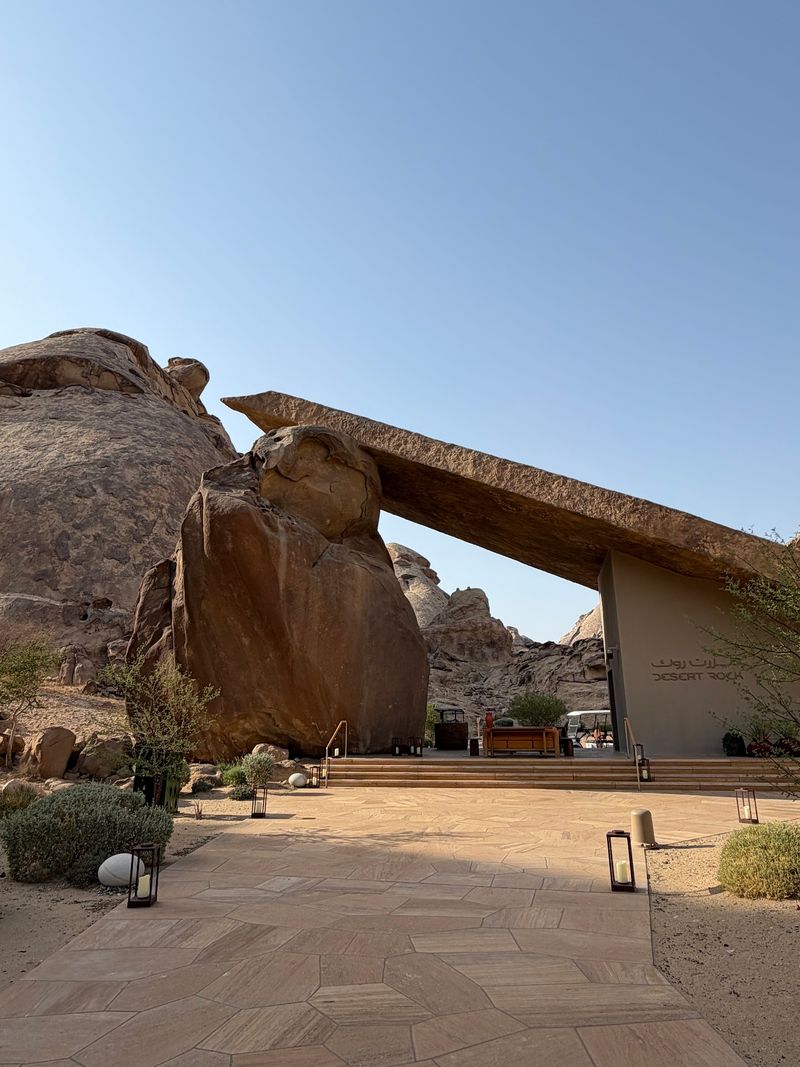
Here the building and the landscape are nearly one and the same. Instead of placing an ordinary resort in front of Saudi Arabia’s Hejaz Mountains, Desert Rock built accommodation into and among the rock formations themselves.
Suites and villas occupy natural crevices and sections of the mountain terrain. That gives portions of the resort an almost cave-like quality.
The development emphasizes maintaining the silhouette of the surrounding geology rather than hiding it behind new construction. The rocks remain the main visual feature.
Desert Rock is currently operating near Red Sea International Airport. For anyone curious about hotels shaped by terrain, it is a striking example.
Atlantis The Royal, Dubai, United Arab Emirates
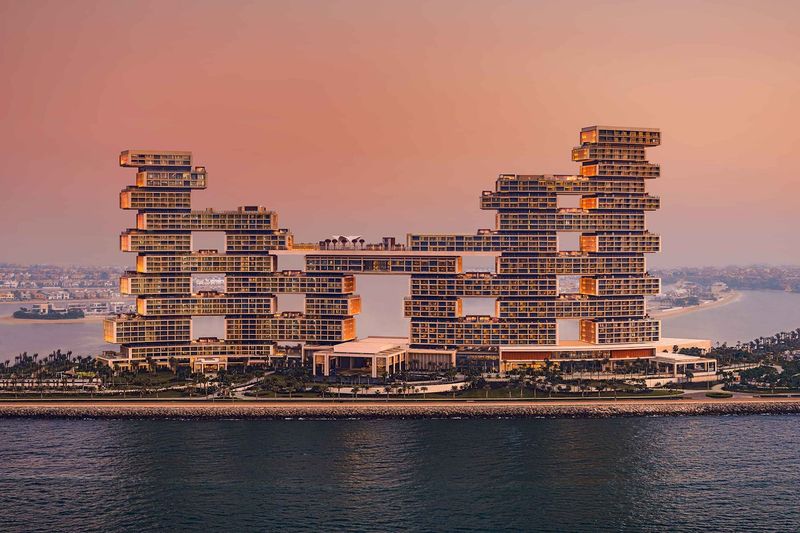
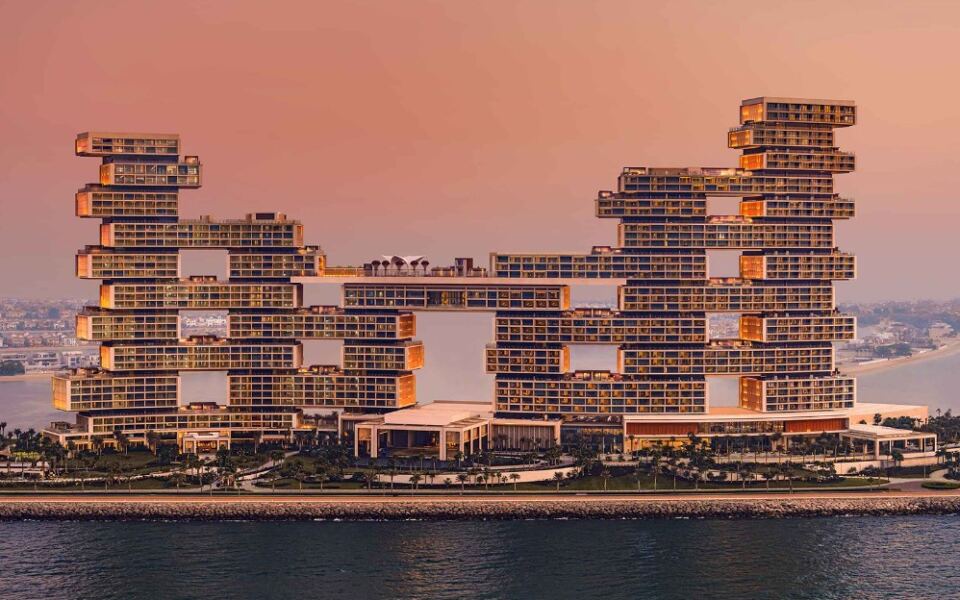
Picture a tower built from oversized blocks balanced on top of each other. Atlantis The Royal has quickly become one of Dubai’s most recognizable new buildings.
Rather than a conventional continuous tower, the resort uses large stacked and cantilevered blocks separated by enormous openings. The resulting silhouette looks like a set of building pieces held in place.
Pools, terraces, and sky-high outdoor spaces are built throughout the structure, which further breaks up its mass.
The hotel rises 43 stories on Palm Jumeirah and remains fully operational. It offers rooms, suites, and private-pool penthouses, so the exterior is only part of the draw.
Share this story