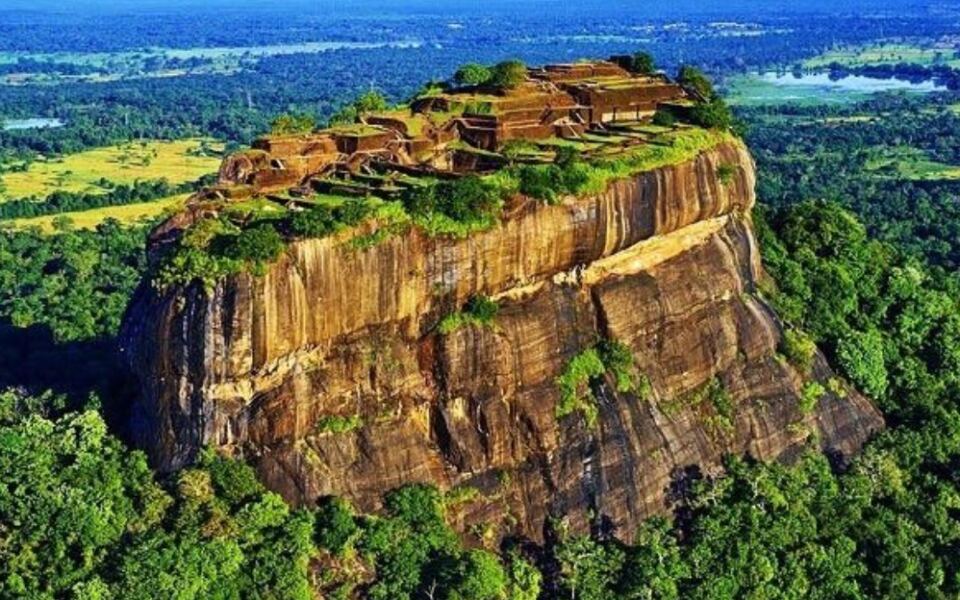
Picture a giant rock rising out of the green jungle, with a royal palace once perched on its flat top. That is Sigiriya, a 5th-century fortress in Sri Lanka built by King Kashyapa.
Today it is a UNESCO World Heritage Site that draws visitors from around the world. Here are ten things that make this Lion Rock unforgettable.
The King Who Chose the Clouds
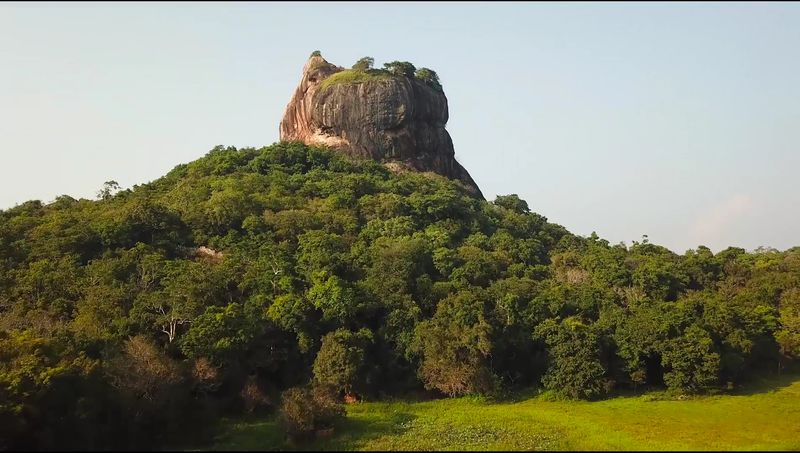
Ruling from the ground was too ordinary for King Kashyapa. In the 5th century, he took the throne from his father, King Dhatusena, and then picked a towering rock as his new home.
It was part palace, part fortress, and part dramatic statement.
Many believe he feared revenge, so he wanted a home that enemies could not easily reach. A sheer cliff makes a pretty good security guard.
Nobody could sneak up on him without a very long walk and plenty of puffing.
The story is full of family drama, ambition, and fear. That is why guides love telling it, and why visitors lean in to listen.
Locals share the tale with real pride, since it is one of the most famous chapters in Sri Lankan history.
Reading about the king before you go, as one visitor advised, makes every step feel like part of the plot. You are not just climbing stairs.
You are following a ruler who bet everything on a rock in the sky, and the view from the top shows why he thought it was a great idea.
Lion Rock and Its Giant Paws
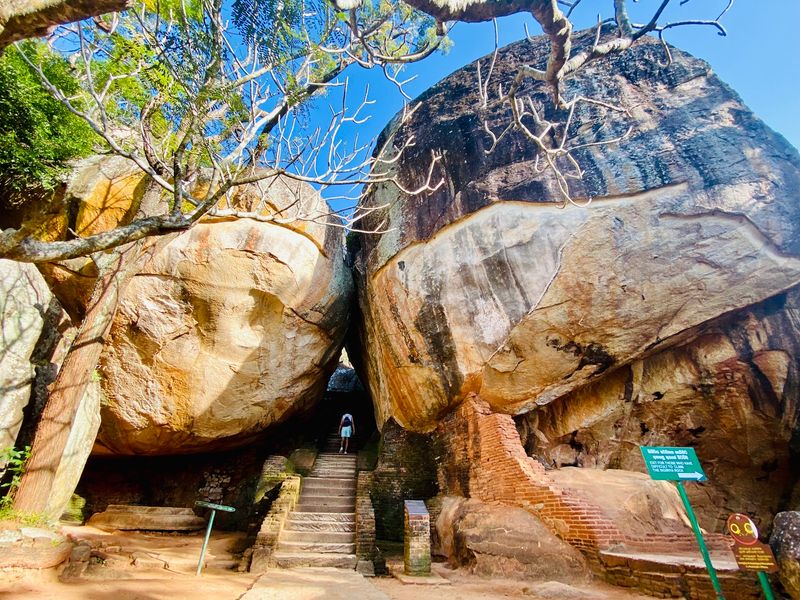
Halfway up the climb, you walk right between two enormous stone paws. They are all that remains of a giant lion that once guarded the entrance to the palace.
Visitors entered through the lion’s open mouth, which must have been quite the welcome.
The name Sigiriya comes from this idea of a lion’s rock. Even though the head is long gone, the paws still make people stop and stare.
Expect lots of photos here.
Fun fact: the lion was built from bricks and plaster over the natural rock. Imagine hauling those materials up a cliff without elevators or trucks.
The builders had serious skill and plenty of patience.
Take a moment at the paws to catch your breath, since the toughest and most exciting stretch is still ahead. Look up at the rock face and picture that grand entrance in its full glory.
It helps you feel how impressive the palace was to anyone who arrived.
Gardens Fit for a King
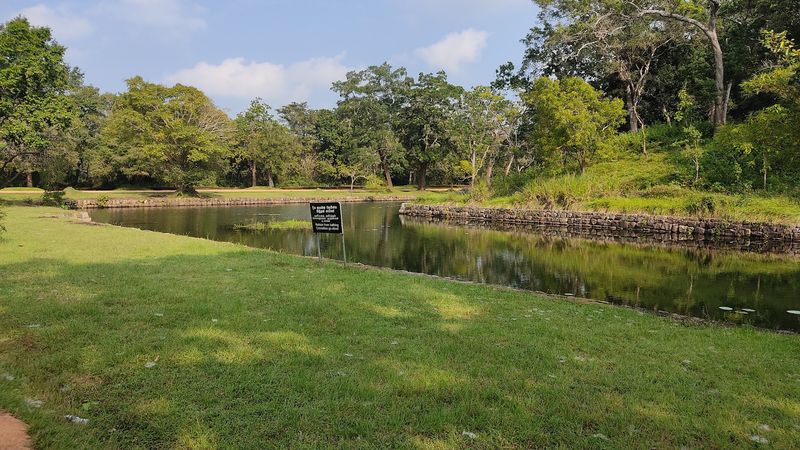
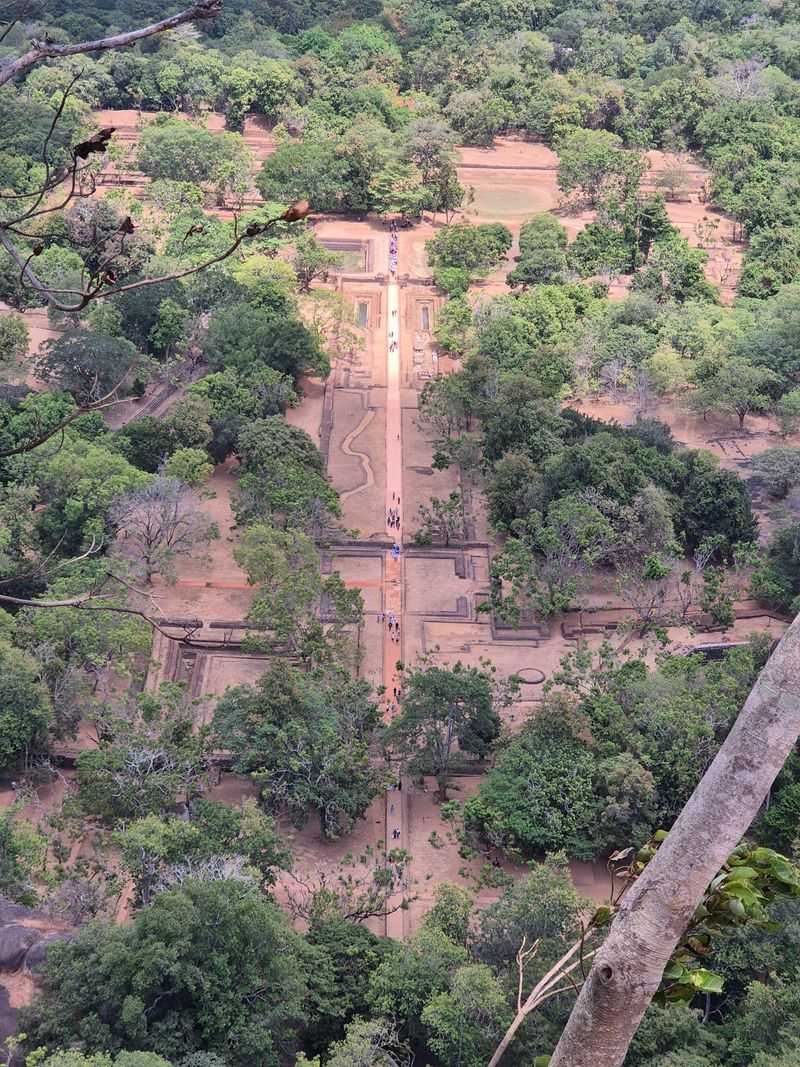
Before you even touch a step, the walk through the gardens sets the mood. Neat pathways, calm pools, and fountains lead straight toward the rock.
Visitors often say the grounds are beautifully kept and worth a slow stroll.
The Water Garden is a highlight, with a design that is more than 1,500 years old. Some of the ancient fountains are said to still work after rain.
That is a long time for plumbing to last.
Spend some time here instead of rushing to the stairs. The shade is lovely, and the paths are flat, so it is a gentle warm-up for your legs.
You will also spot the rock framed perfectly between the trees.
If you love photography, the gardens give you some of the best angles. Early morning light is soft and golden, and the crowds are thin.
Bring a camera, take your time, and let the royal landscaping do its magic before the big climb begins.
Frescoes Painted on a Cliff
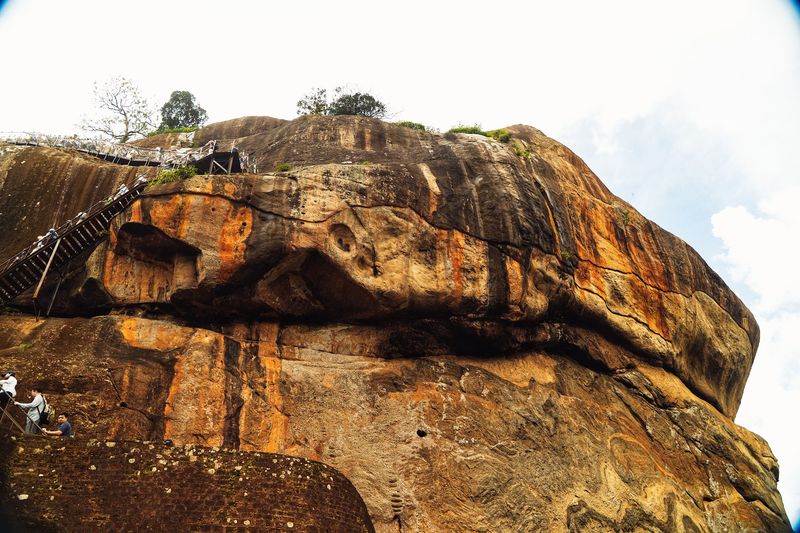
Squint at the rock wall and you will see faces looking back at you. These frescoes date back to around 480 AD, and the colors are still surprisingly bright.
They show graceful women, and experts still debate who they are.
To see them, you take a spiral staircase that curls up to a sheltered pocket in the cliff. One visitor said it was a detour that is absolutely worth it.
The sheltered spot helped protect the paint over the centuries.
Photos are usually not allowed here, so use your eyes and memory instead. Stand still for a minute and look at the fine lines and soft shades.
It is hard to believe an artist worked while hanging off a cliff.
Guides can explain the possible meanings, which makes the visit more fun. Some say the women are royal ladies, others think they are celestial beings.
Whatever the answer, the paintings are among the most loved parts of the entire site.
The Mirror Wall Mystery
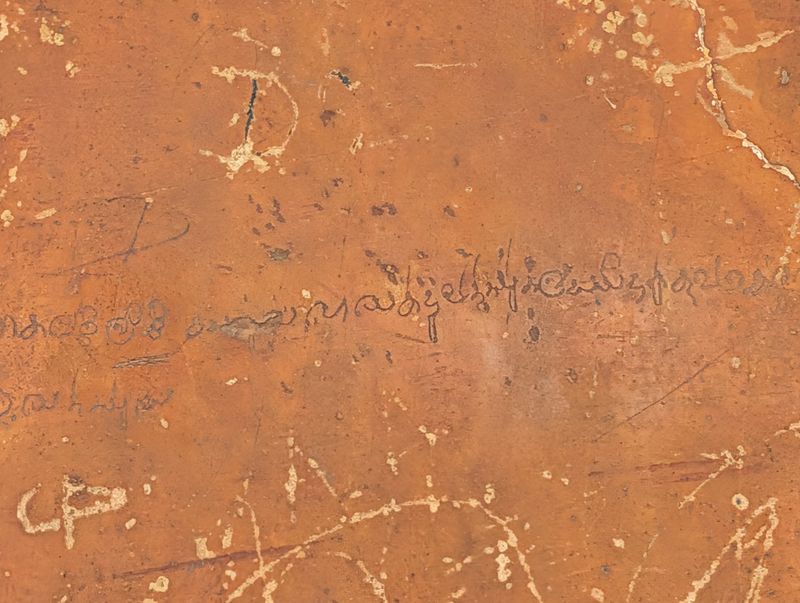
Once upon a time, this wall was so polished that the king could see himself in it. Not bad for a wall made without modern tools.
The shine came from a special plaster that was buffed until it gleamed.
Today the surface is less shiny, but it holds a fun secret. Visitors from centuries ago scribbled poems and comments on it.
Think of it as the world’s oldest guest book.
Many of these verses praise the beauty of the paintings above and the grandeur of the palace. Some are simple notes, and some are real poetry.
They give a peek into how ordinary people felt when they saw Sigiriya long ago.
As you walk along the narrow path, take it slow. The wall runs right beside the cliff, and the walkway is not wide.
Look closely at the surface, and you may spot the old scratches that tell stories from a thousand years back.
Climbing 1,200 Steps
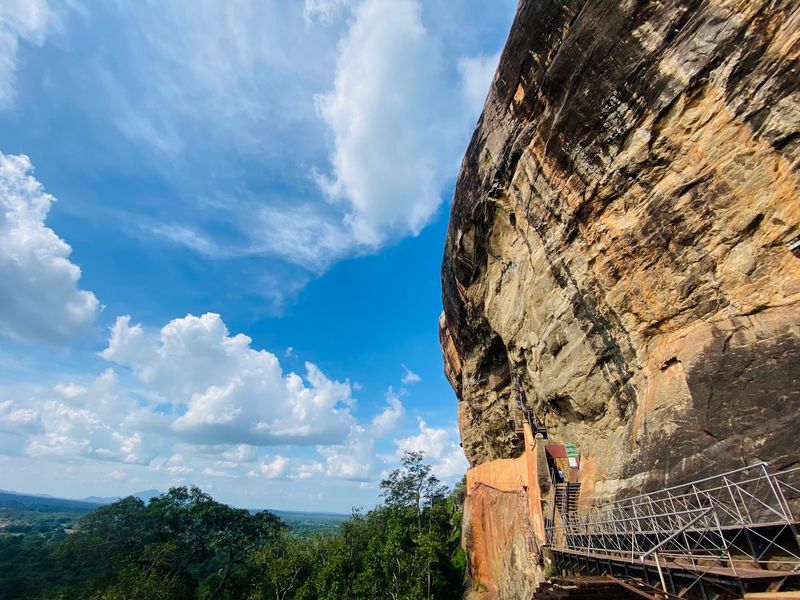
About 1,200 steps stand between you and the top. Most visitors need around 20 to 40 minutes, depending on how many photo stops they make.
Some steps are worn and uneven, so watch your footing.
Reviewers have mixed feelings about the climb. Some find it easy, kids of six and eight managed it just fine.
Others say it is tiring, especially for anyone with sore knees.
A few stretches feel a bit scary if you do not like heights. The metal staircases cling to the cliff, and the drop is real.
Take it slow, hold the rail, and look at the horizon instead of your toes.
Pack plenty of water and wear comfortable shoes with good grip. Rest at the platforms along the way, because nobody is timing you.
Also, hold on to your hat. One visitor reported howling wind near the top, and it will happily steal a cap.
Views from the Summit
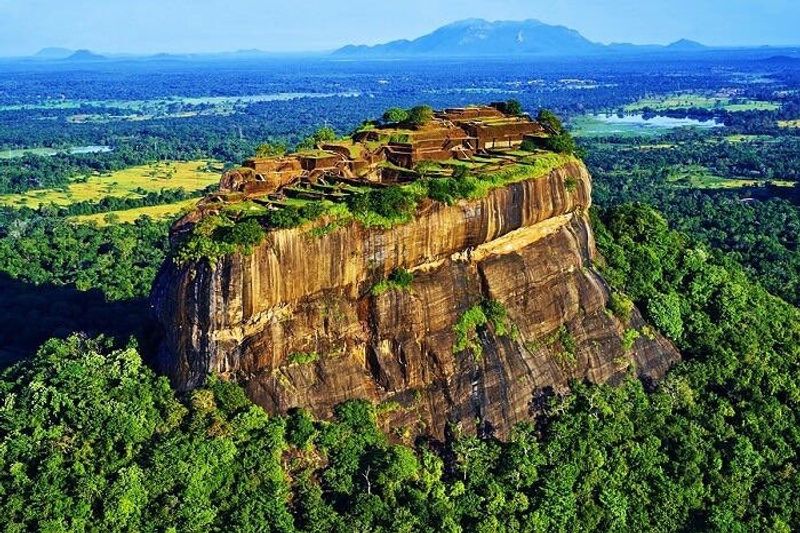
Reach the top and the whole island seems to open up. A 360-degree view of forest and countryside stretches into the distance.
After all those steps, the sight feels like a prize.
The summit is wide and flat, covered with the remains of the old palace. You can spot foundations, pools, and stone outlines of rooms.
Some visitors wish for more information boards up here, so a guide or some reading beforehand helps a lot.
Not everyone is wowed by the ruins themselves. A few say the fortress is less impressive than the scenery around it.
Honestly, the view is the star, and the ruins are the supporting cast.
Give yourself time to wander and sit quietly. Once the early crowd thins out, you can explore with less jostling.
Bring a snack, sip some water, and let your legs recover while the breeze cools you off.
Timing Your Visit
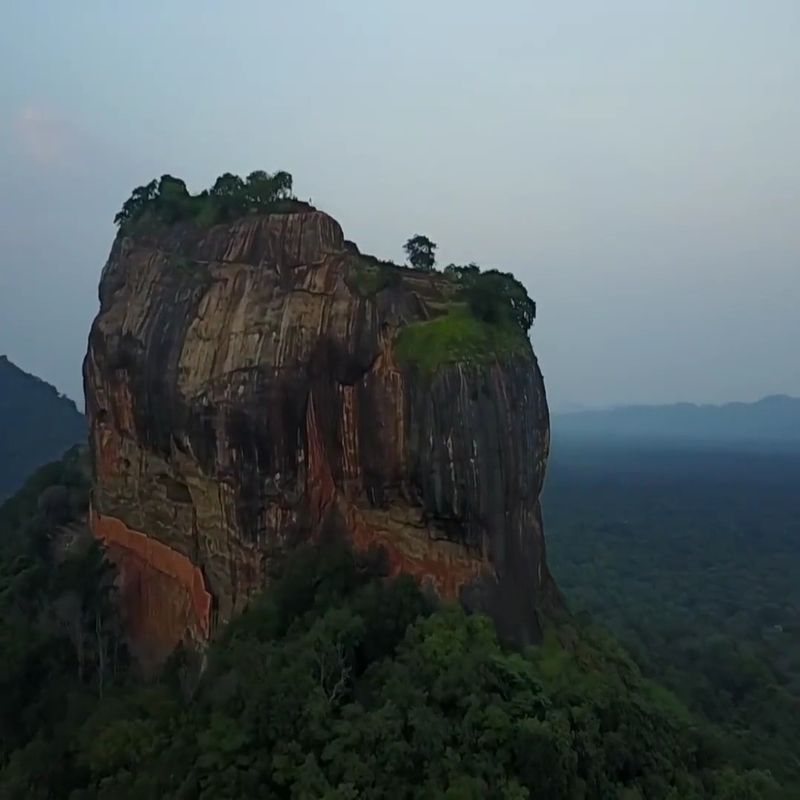
Choose your hour wisely, because it changes everything. The site opens at 5 AM, and the gates have even been reported to open a little earlier.
Early birds get cooler air and softer light.
Sunrise hikers should bring a torch or use a phone light, since there are no lamps on the stairs. Once the sun comes up, the views glow and the monkeys wake up too.
Tickets are bought at the museum counter, so allow time for the walk there.
Not a morning person? Some visitors swear by early afternoon, when the rush has gone home.
One traveler had the place almost to themselves at 1 PM. Others loved the late afternoon before sunset, when the heat fades.
The one time to skip is the middle of a hot, sunny day. The steps have little shade, and the sun can be fierce.
Pick a cooler window, and your climb will feel much friendlier.
Tickets, Guides and the Museum
Money talk first: foreign visitors pay around 35 US dollars for entry at the time of these reviews. Some travelers feel that is steep, while others say the experience is worth it.
The ticket also lets you explore the grounds afterward.
There is just one ticket counter, located at the museum. If you enter from the southern gate, you may need to walk around to reach it.
Plan a few extra minutes so you are not caught off guard.
Hiring a guide costs about 20 dollars, and many visitors call it money well spent. Guides share the history, point out hidden details, and keep the climb interesting.
One group praised their guide for explaining the creation of the site and its big moments.
Do stop by the museum before climbing. It is not flashy, but it gives a clear story of Sigiriya.
With that background, the ruins make a lot more sense when you reach them.
Monkeys, Dogs and Other Locals
Sigiriya comes with a fluffy welcome crew. Friendly local dogs often trot around the paths in the early morning.
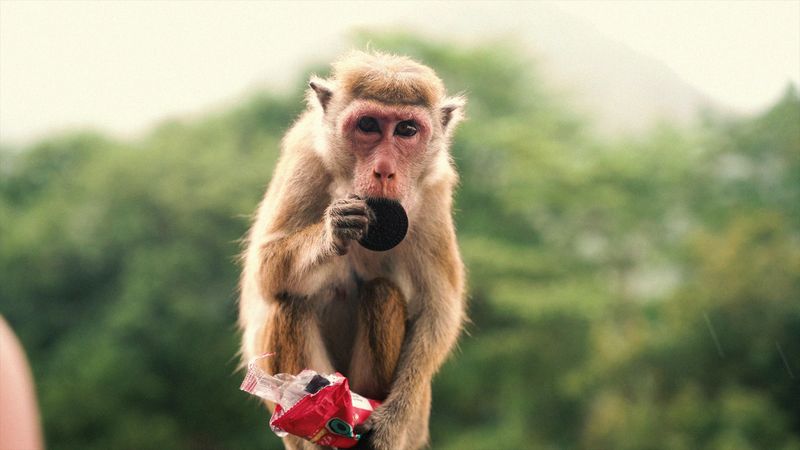
Once the sun is up, the monkeys arrive and start watching your snacks with great interest.
Keep food tucked away in your bag and do not wave it around. Monkeys are clever and can be pushy.
Admire them from a distance, and your sandwich will survive.
The area around the rock is full of nature too. Nearby jungle safaris let visitors spot wild elephants, which one family called a highlight of their trip.
Elephant experiences nearby are popular with children.
If you want a calmer vibe, the surrounding villages have small restaurants and pubs. Some travelers say two nights are enough to enjoy the area.
For another angle, visitors suggest the nearby rock Pidurangala, where you can look at Sigiriya from above instead of standing on it.
Share this story